
Cell Growth Division Mitosis Why do Cells Reproduce
- Slides: 17
Cell Growth & Division Mitosis
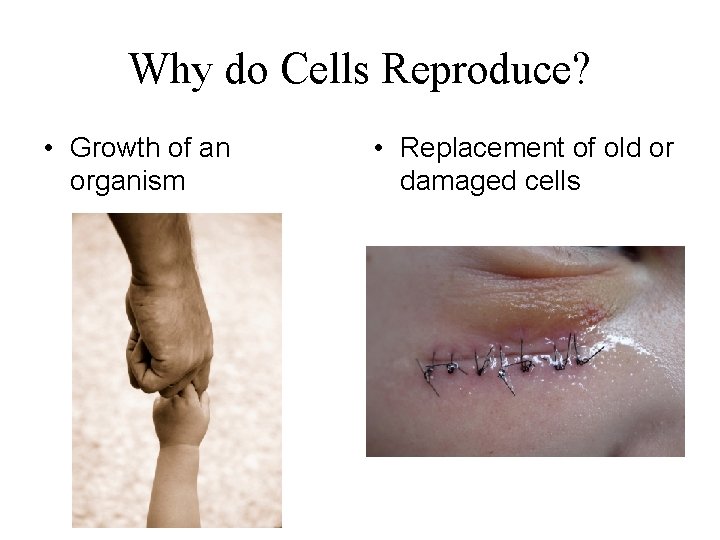
Why do Cells Reproduce? • Growth of an organism • Replacement of old or damaged cells
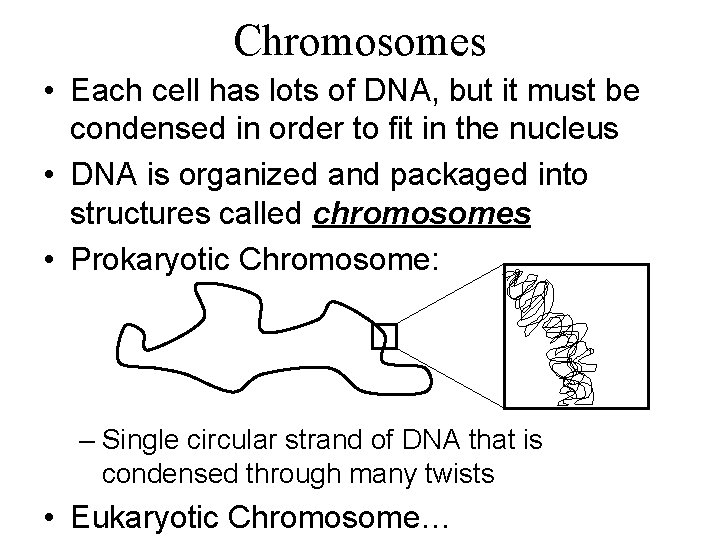
Chromosomes • Each cell has lots of DNA, but it must be condensed in order to fit in the nucleus • DNA is organized and packaged into structures called chromosomes • Prokaryotic Chromosome: – Single circular strand of DNA that is condensed through many twists • Eukaryotic Chromosome…
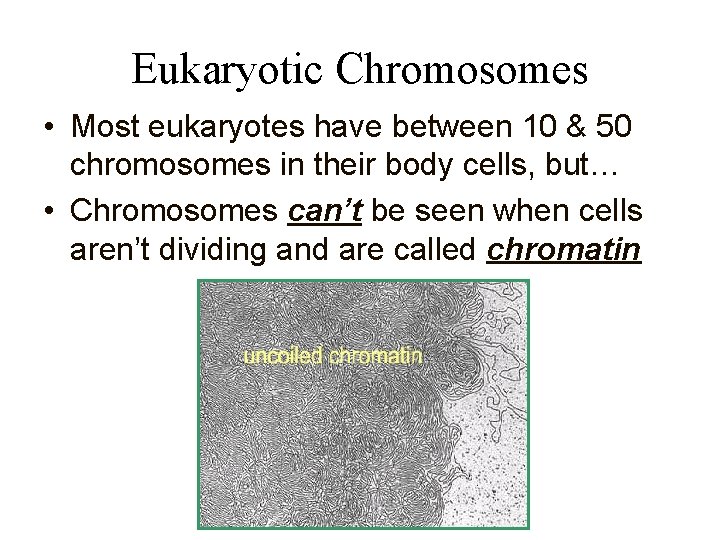
Eukaryotic Chromosomes • Most eukaryotes have between 10 & 50 chromosomes in their body cells, but… • Chromosomes can’t be seen when cells aren’t dividing and are called chromatin
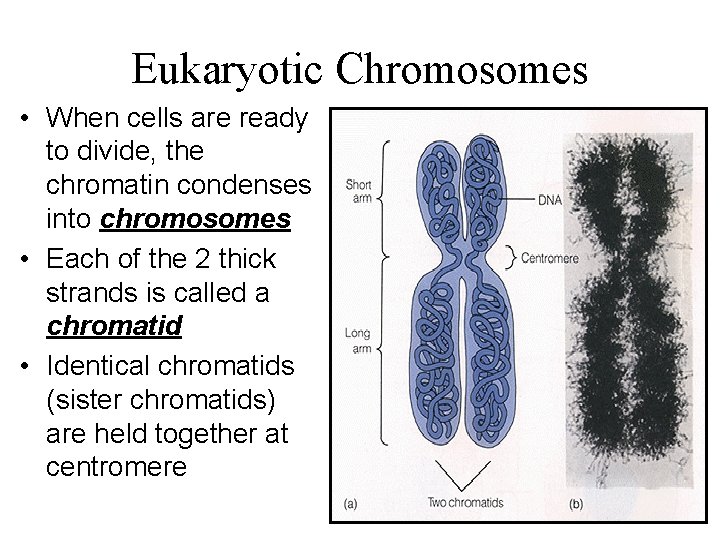
Eukaryotic Chromosomes • When cells are ready to divide, the chromatin condenses into chromosomes • Each of the 2 thick strands is called a chromatid • Identical chromatids (sister chromatids) are held together at centromere
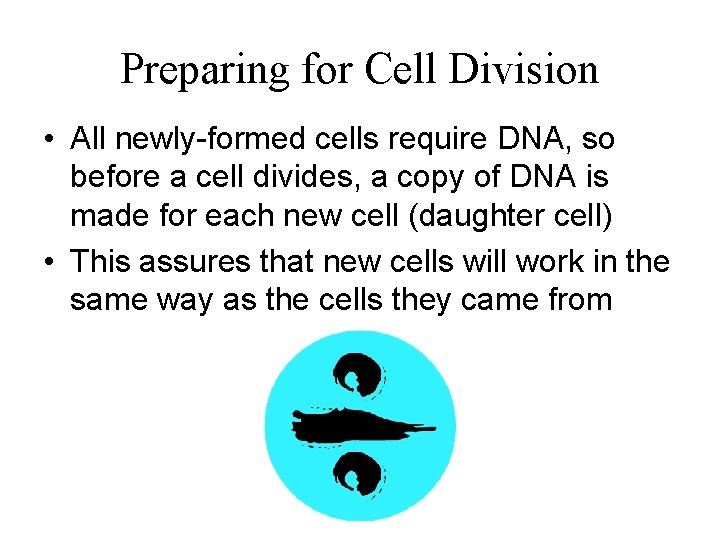
Preparing for Cell Division • All newly-formed cells require DNA, so before a cell divides, a copy of DNA is made for each new cell (daughter cell) • This assures that new cells will work in the same way as the cells they came from
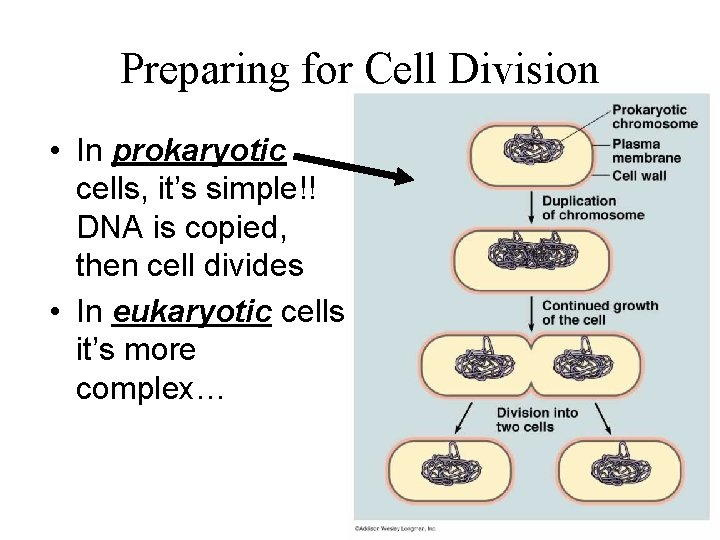
Preparing for Cell Division • In prokaryotic cells, it’s simple!! DNA is copied, then cell divides • In eukaryotic cells, it’s more complex…
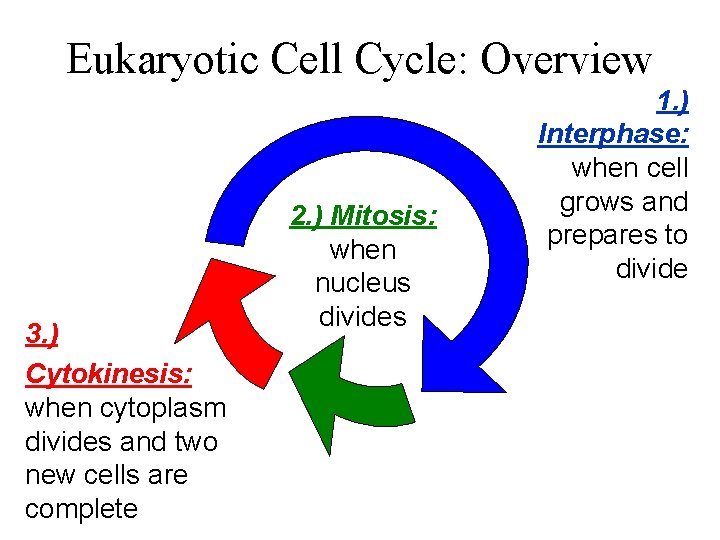
Eukaryotic Cell Cycle: Overview 3. ) Cytokinesis: when cytoplasm divides and two new cells are complete 2. ) Mitosis: when nucleus divides 1. ) Interphase: when cell grows and prepares to divide
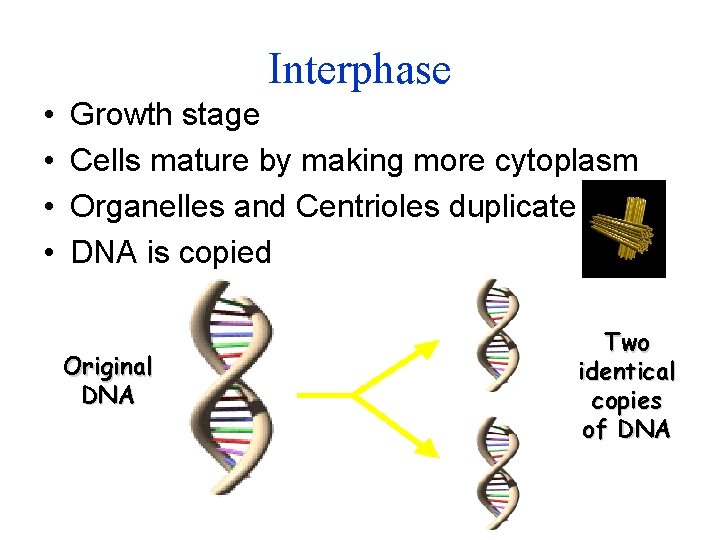
Interphase • • Growth stage Cells mature by making more cytoplasm Organelles and Centrioles duplicate DNA is copied Original DNA Two identical copies of DNA
Mitosis • • Prophase Metaphase Anaphase Telophase • PMAT!!
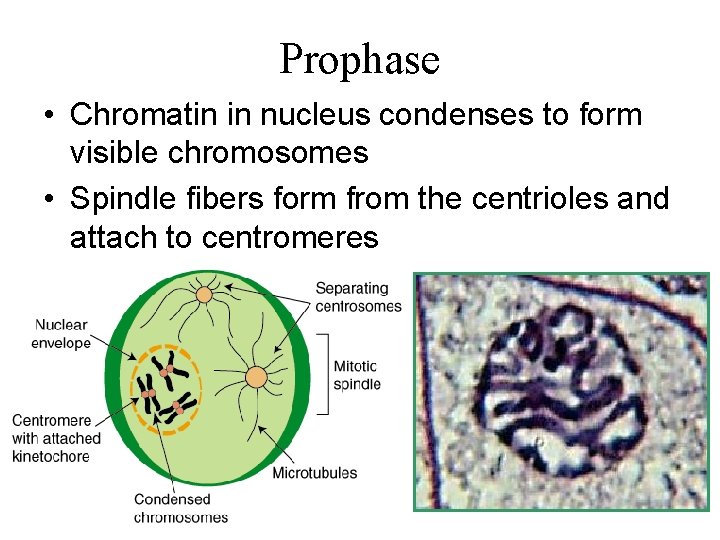
Prophase • Chromatin in nucleus condenses to form visible chromosomes • Spindle fibers form from the centrioles and attach to centromeres
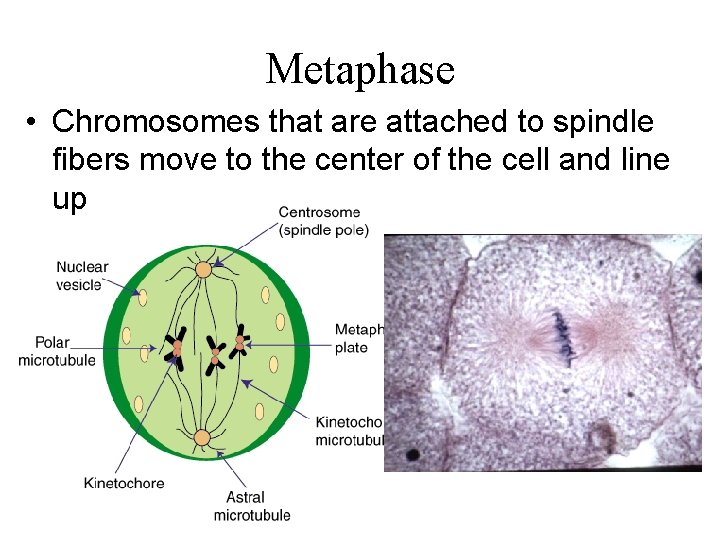
Metaphase • Chromosomes that are attached to spindle fibers move to the center of the cell and line up
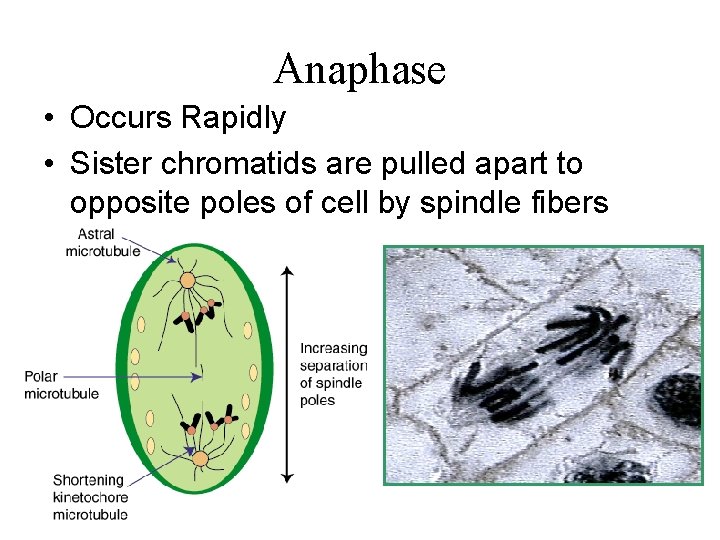
Anaphase • Occurs Rapidly • Sister chromatids are pulled apart to opposite poles of cell by spindle fibers
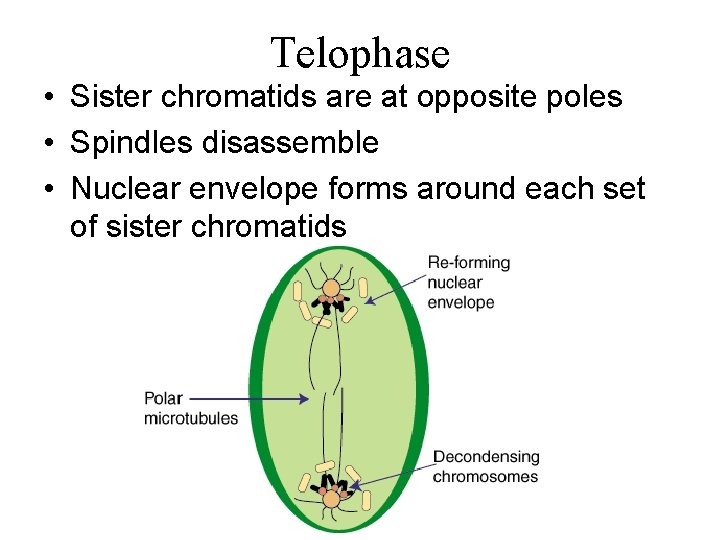
Telophase • Sister chromatids are at opposite poles • Spindles disassemble • Nuclear envelope forms around each set of sister chromatids
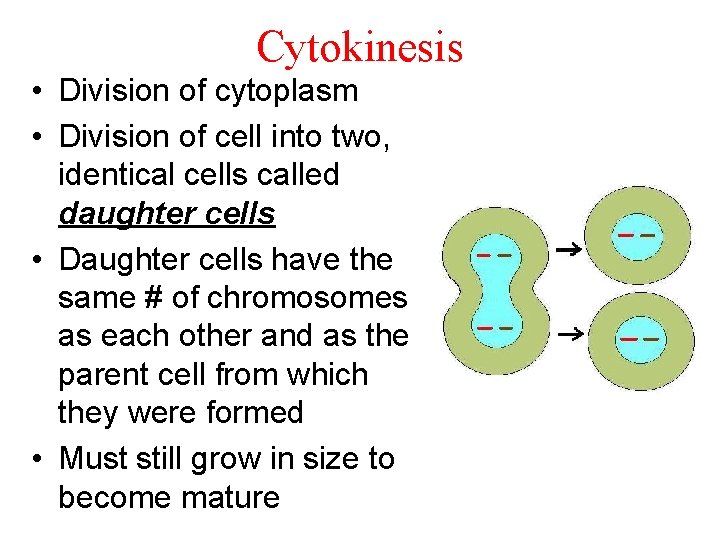
Cytokinesis • Division of cytoplasm • Division of cell into two, identical cells called daughter cells • Daughter cells have the same # of chromosomes as each other and as the parent cell from which they were formed • Must still grow in size to become mature
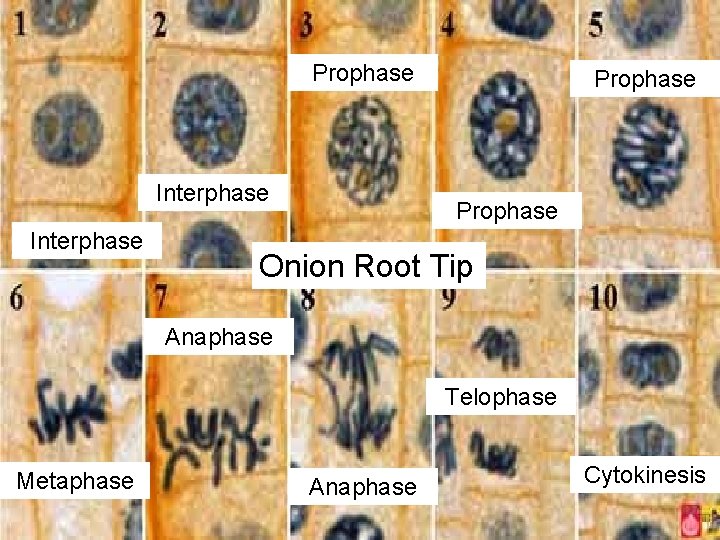
Prophase Interphase Prophase Onion Root Tip Anaphase Telophase Metaphase Anaphase Cytokinesis
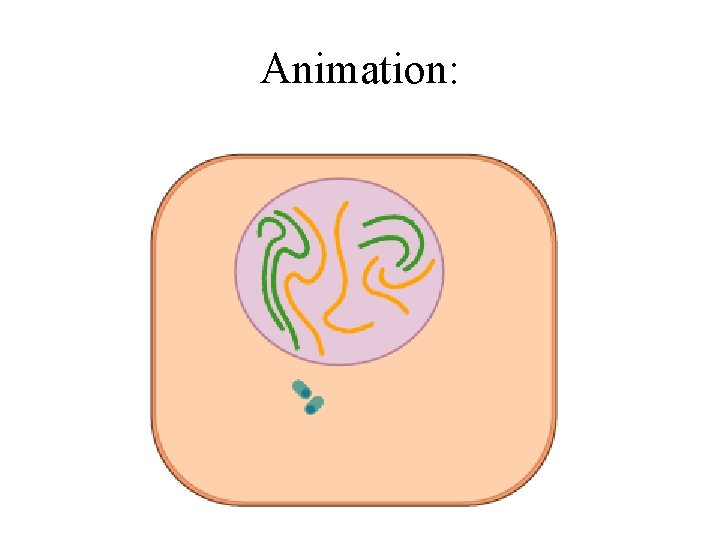
Animation: