
Cell Growth Differentiation Specialization Stem Cells How does



- Slides: 47
Cell Growth - Differentiation & Specialization Stem Cells
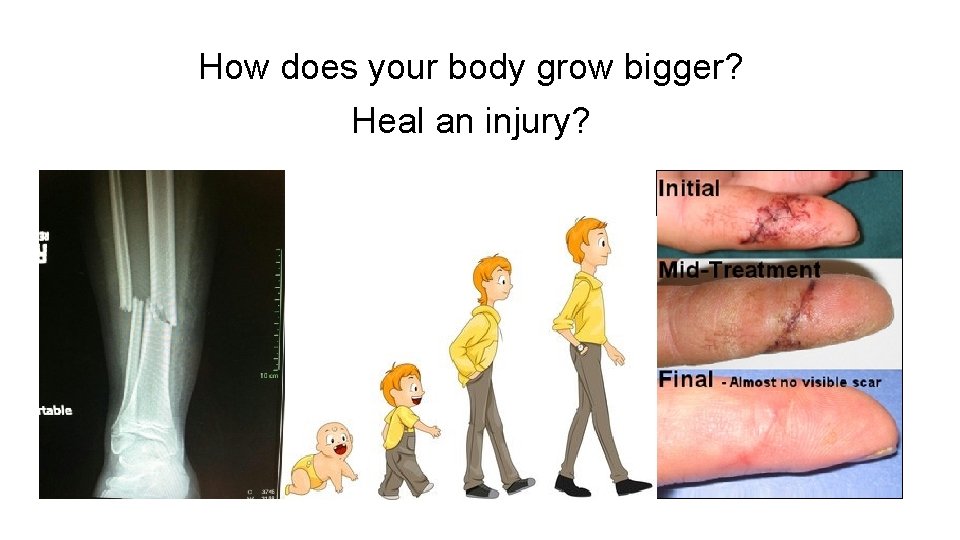
How does your body grow bigger? Heal an injury?
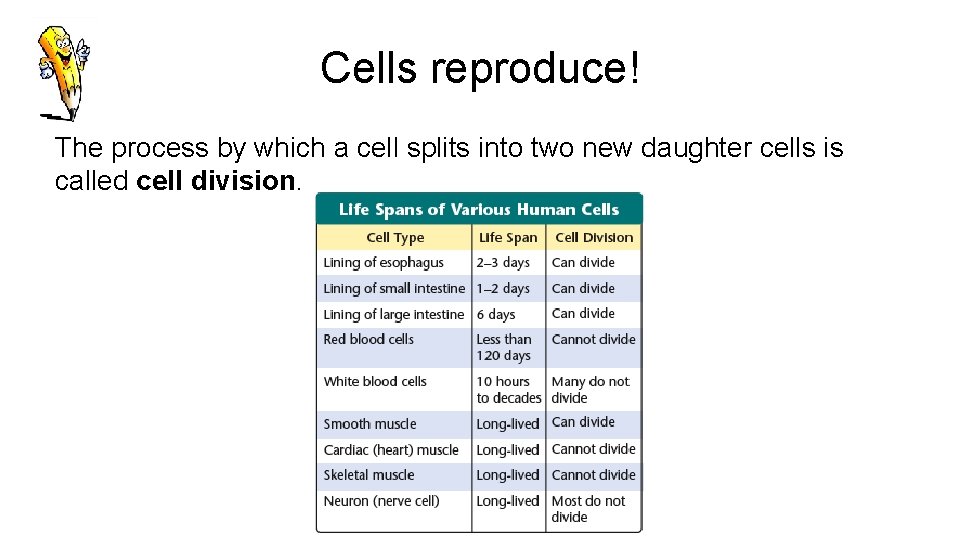
Cells reproduce! The process by which a cell splits into two new daughter cells is called cell division.
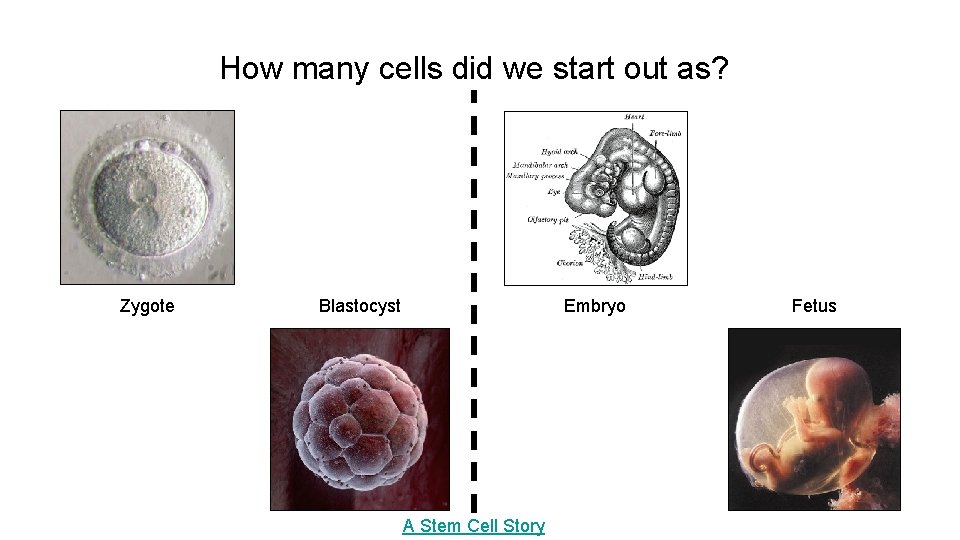
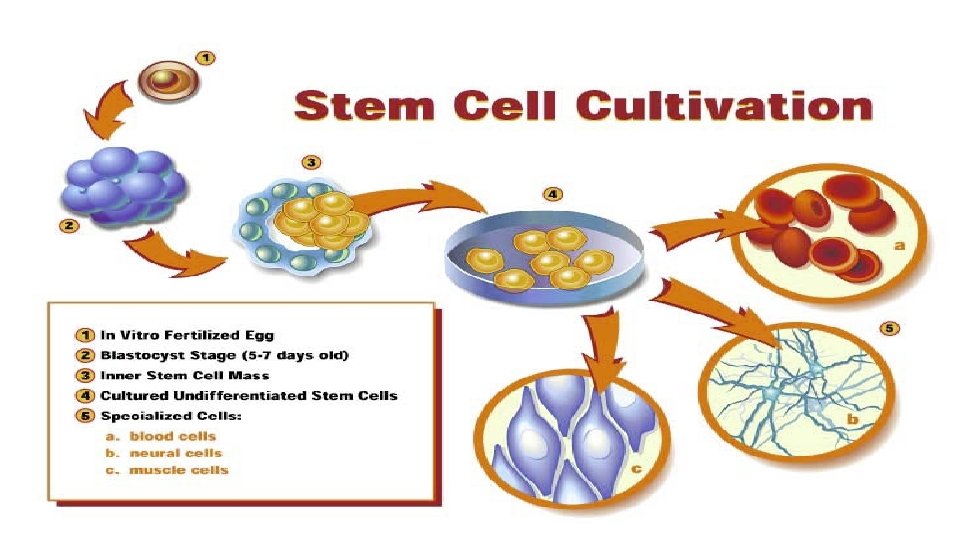
How many cells did we start out as? Zygote Blastocyst Embryo A Stem Cell Story Fetus
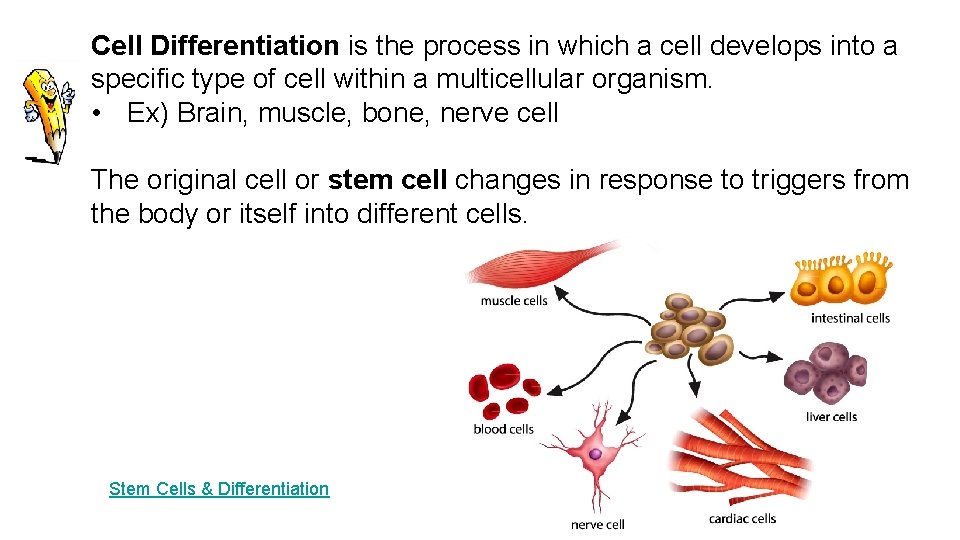
Cell Differentiation is the process in which a cell develops into a specific type of cell within a multicellular organism. • Ex) Brain, muscle, bone, nerve cell The original cell or stem cell changes in response to triggers from the body or itself into different cells. Stem Cells & Differentiation
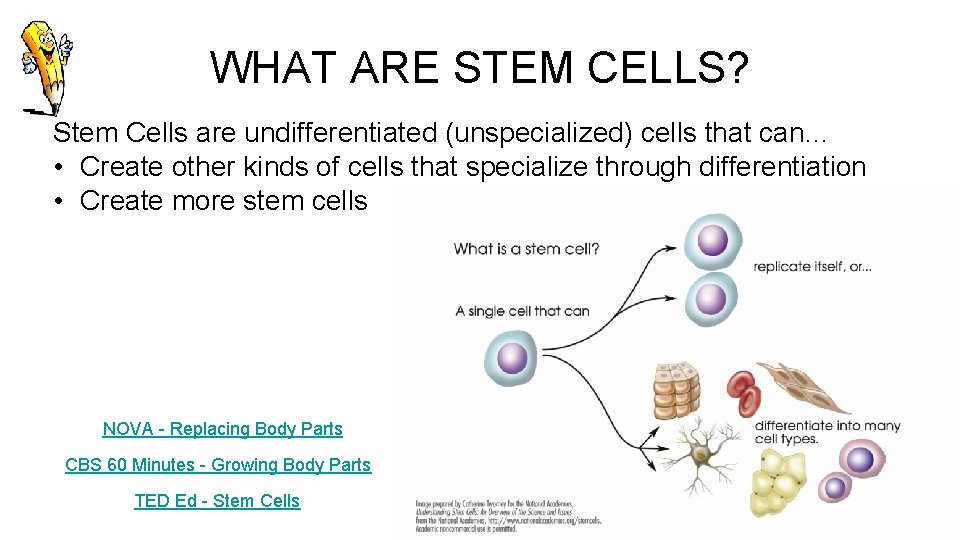
WHAT ARE STEM CELLS? Stem Cells are undifferentiated (unspecialized) cells that can… • Create other kinds of cells that specialize through differentiation • Create more stem cells NOVA - Replacing Body Parts CBS 60 Minutes - Growing Body Parts TED Ed - Stem Cells
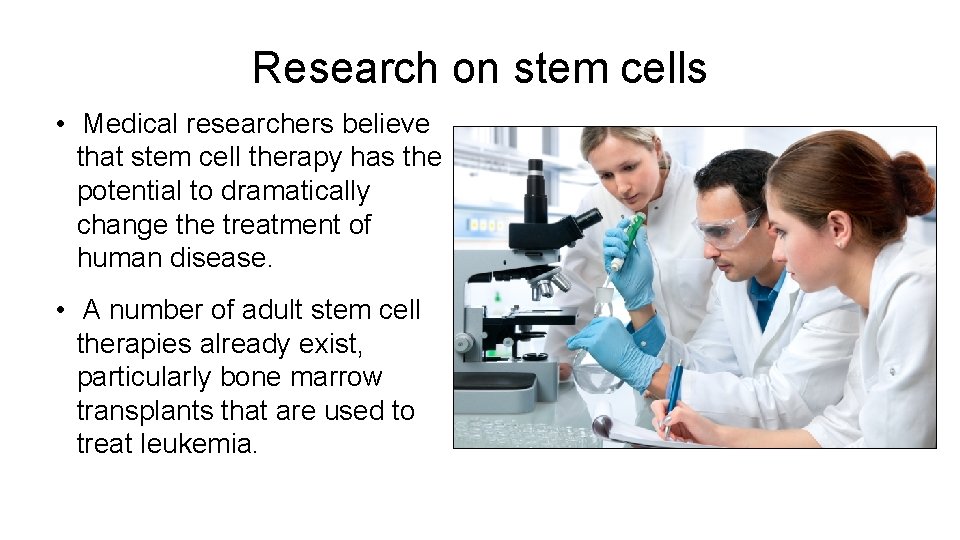
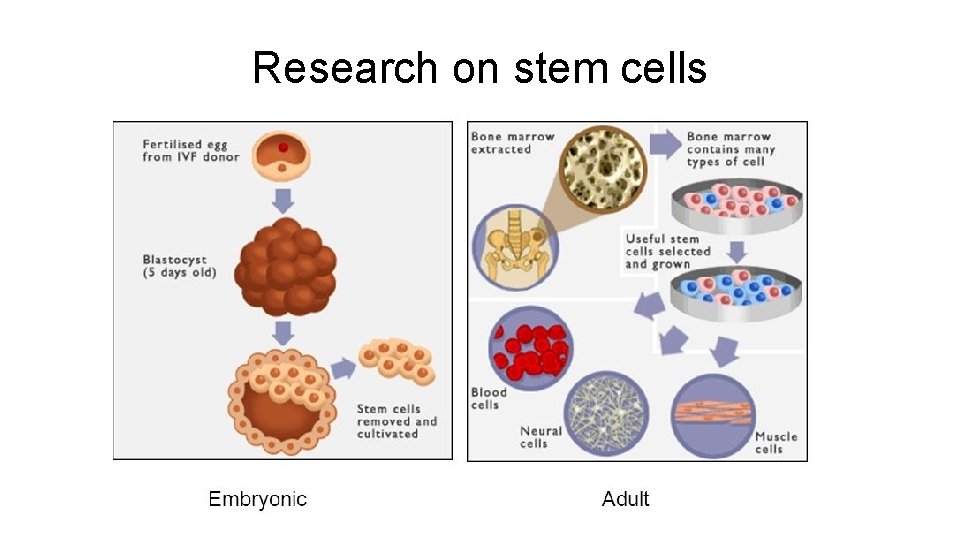
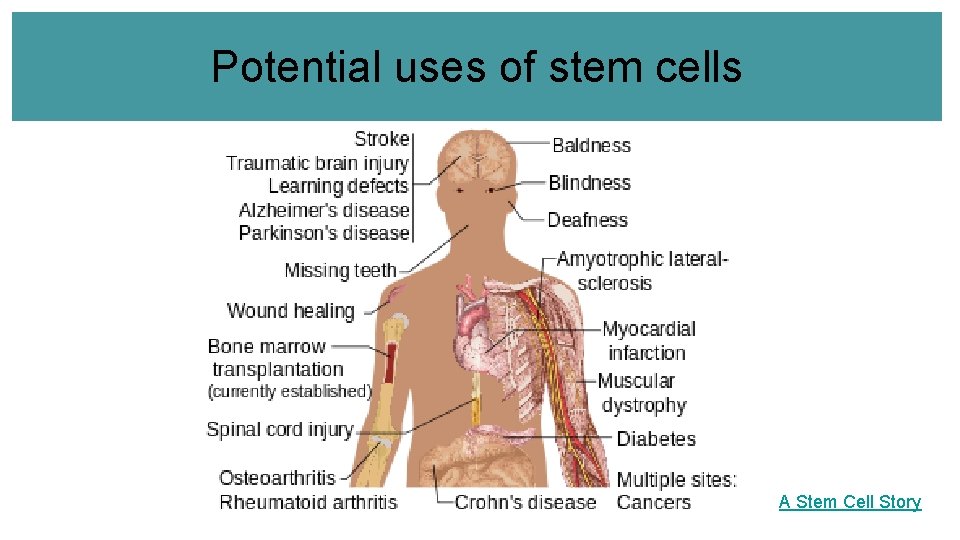
Research on stem cells • Medical researchers believe that stem cell therapy has the potential to dramatically change the treatment of human disease. • A number of adult stem cell therapies already exist, particularly bone marrow transplants that are used to treat leukemia.
Research on stem cells
Potential uses of stem cells A Stem Cell Story
Potential problems • One concern of treatment is the risk that transplanted stem cells could form tumors and become cancerous if cell division continues uncontrollably. • Medical vs. Ethical Debate (embryonic cells) Science Show - Stem Cells What Can Stem Cells Do? NOVA - Replacing Body Parts
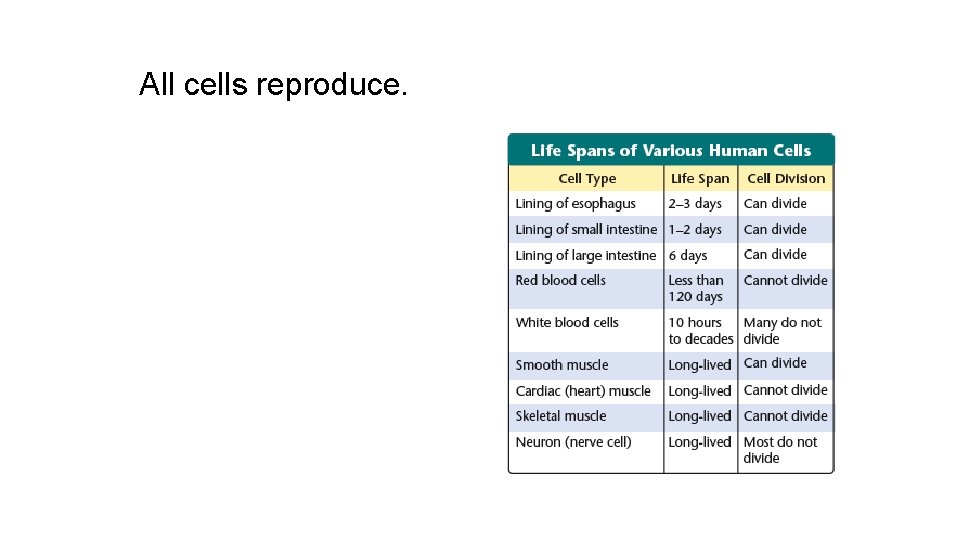
All cells reproduce.
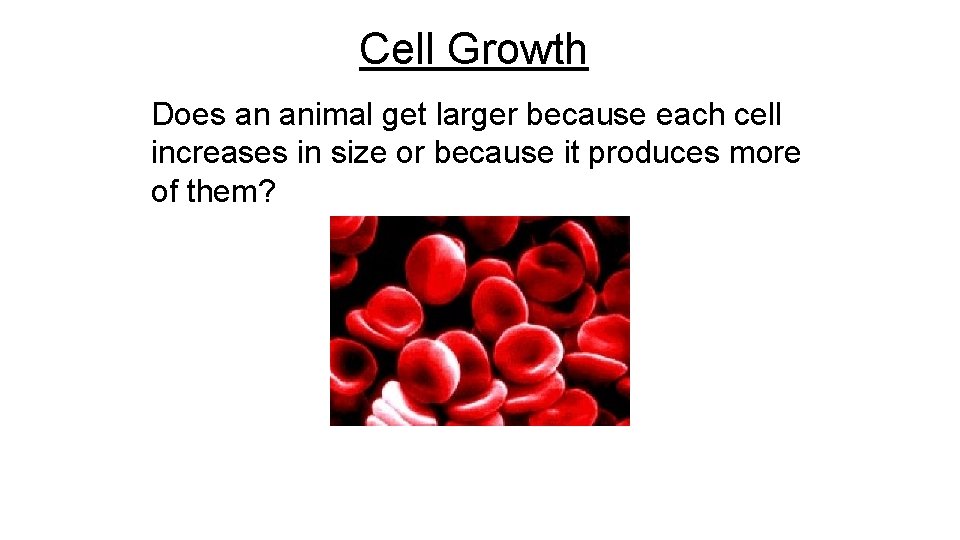
Cell Growth Does an animal get larger because each cell increases in size or because it produces more of them?
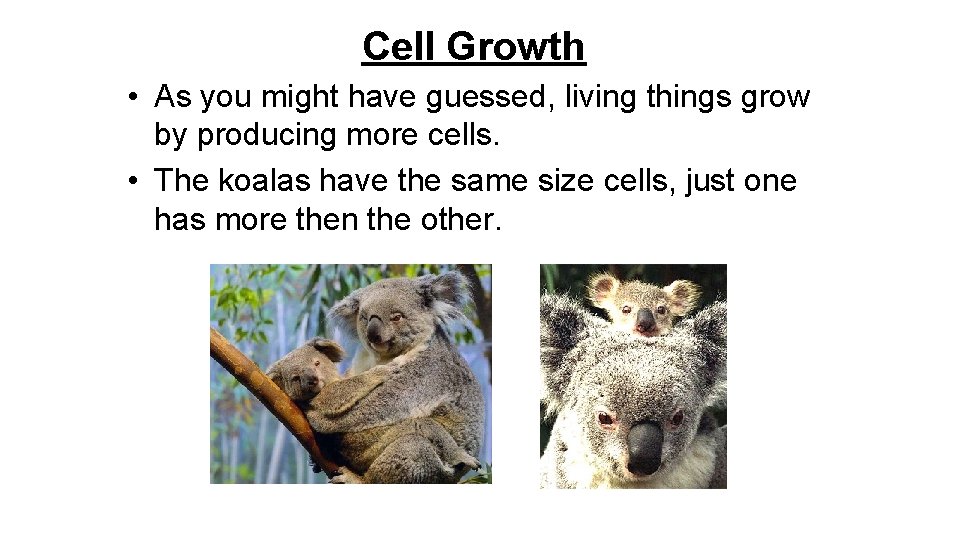
Cell Growth • As you might have guessed, living things grow by producing more cells. • The koalas have the same size cells, just one has more then the other.
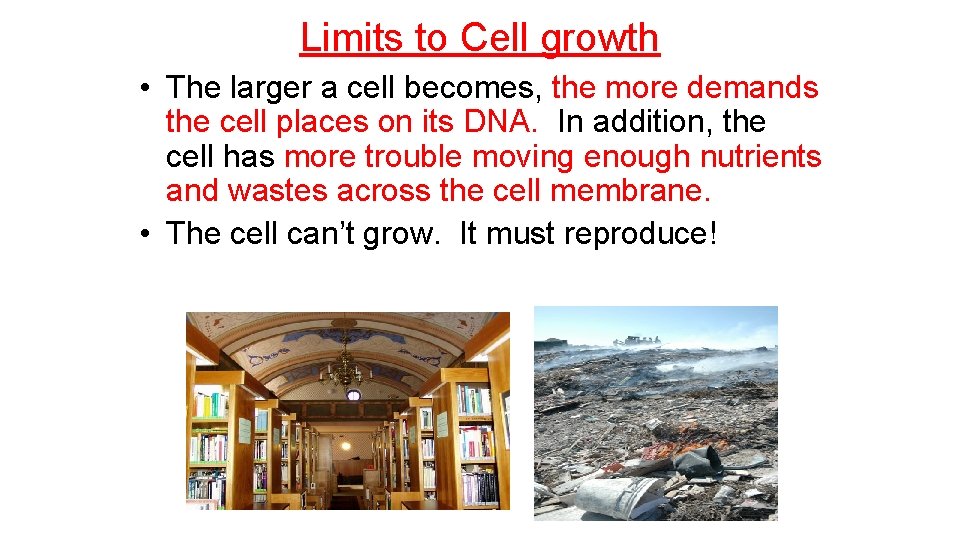
Limits to Cell growth • The larger a cell becomes, the more demands the cell places on its DNA. In addition, the cell has more trouble moving enough nutrients and wastes across the cell membrane. • The cell can’t grow. It must reproduce!
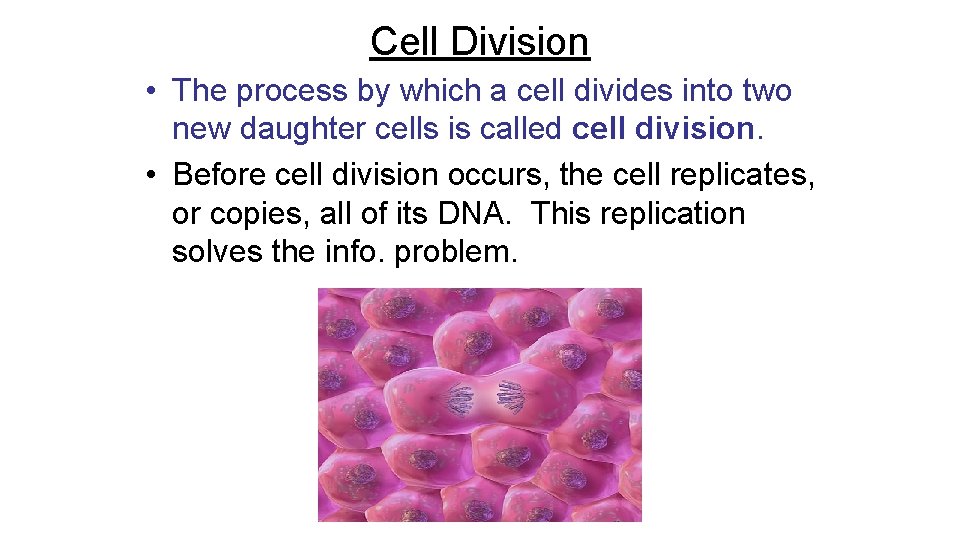
Cell Division • The process by which a cell divides into two new daughter cells is called cell division. • Before cell division occurs, the cell replicates, or copies, all of its DNA. This replication solves the info. problem.
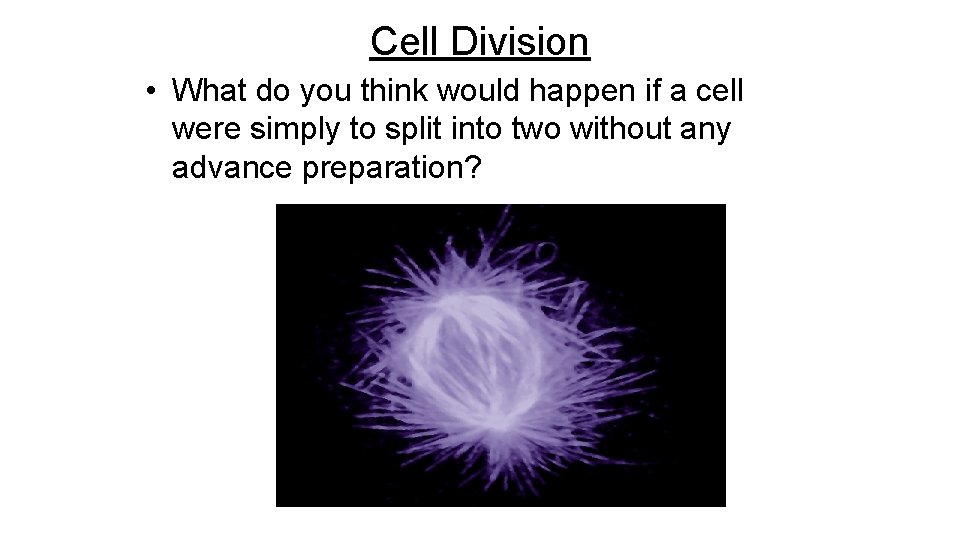
Cell Division • What do you think would happen if a cell were simply to split into two without any advance preparation?
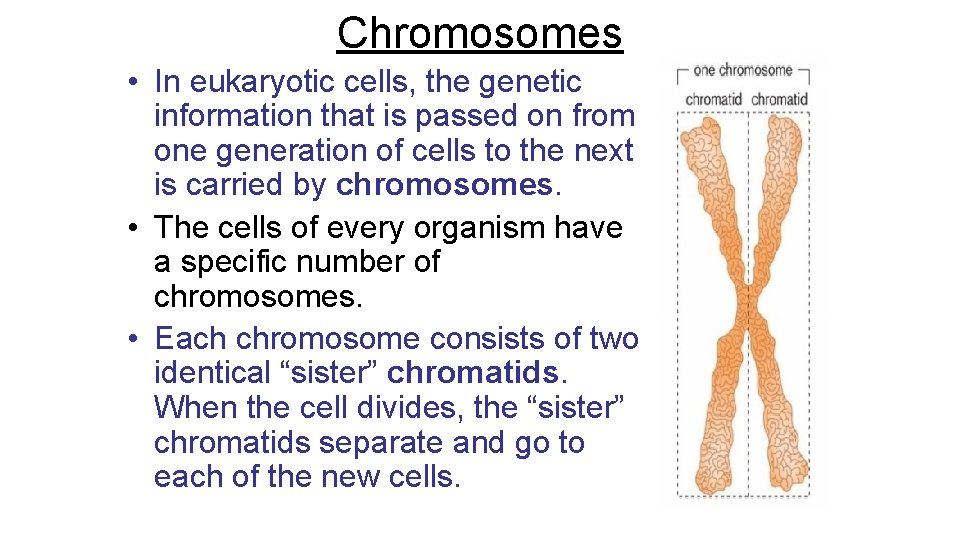
Chromosomes • In eukaryotic cells, the genetic information that is passed on from one generation of cells to the next is carried by chromosomes. • The cells of every organism have a specific number of chromosomes. • Each chromosome consists of two identical “sister” chromatids. When the cell divides, the “sister” chromatids separate and go to each of the new cells.
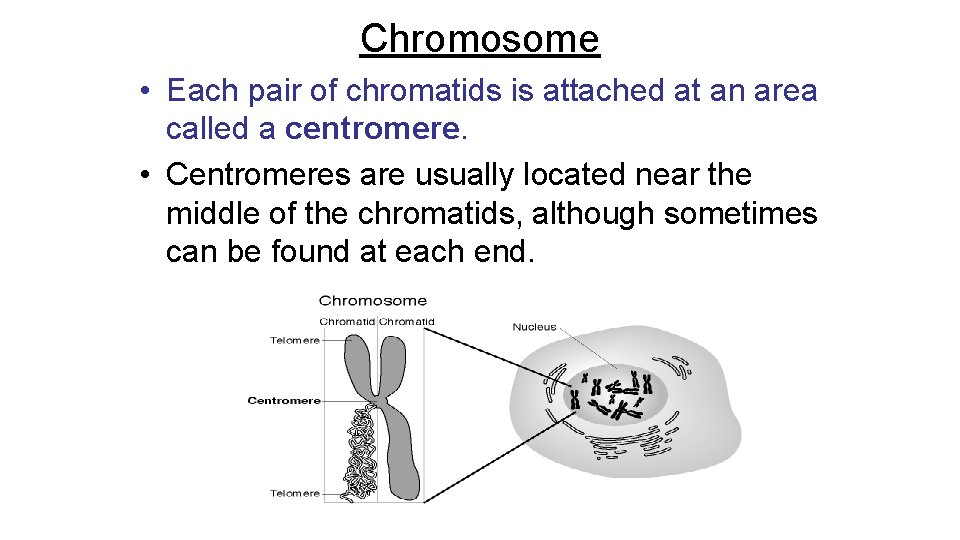
Chromosome • Each pair of chromatids is attached at an area called a centromere. • Centromeres are usually located near the middle of the chromatids, although sometimes can be found at each end.
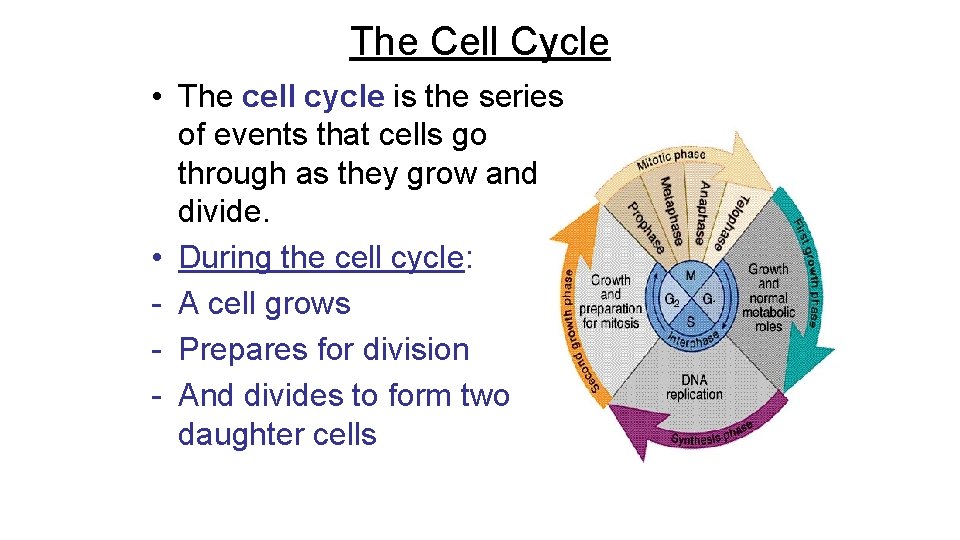
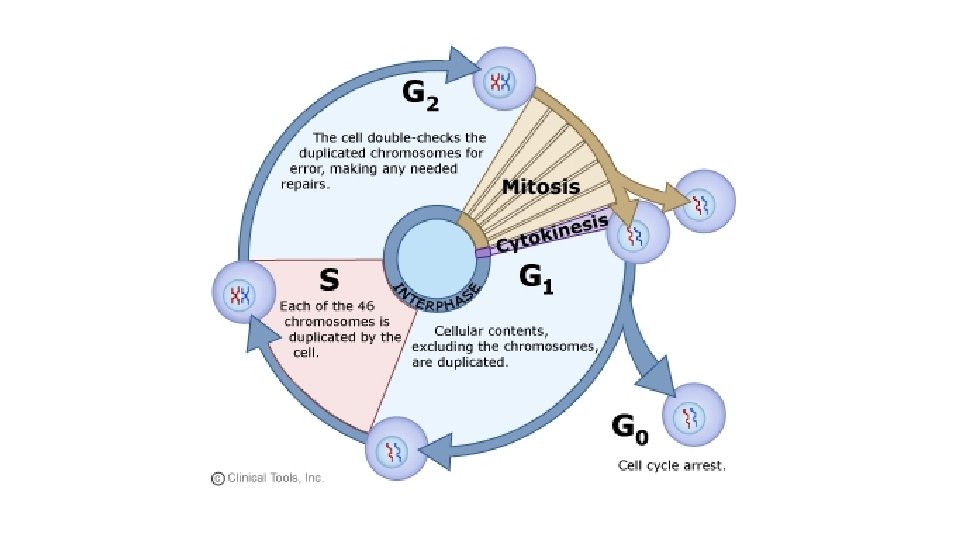
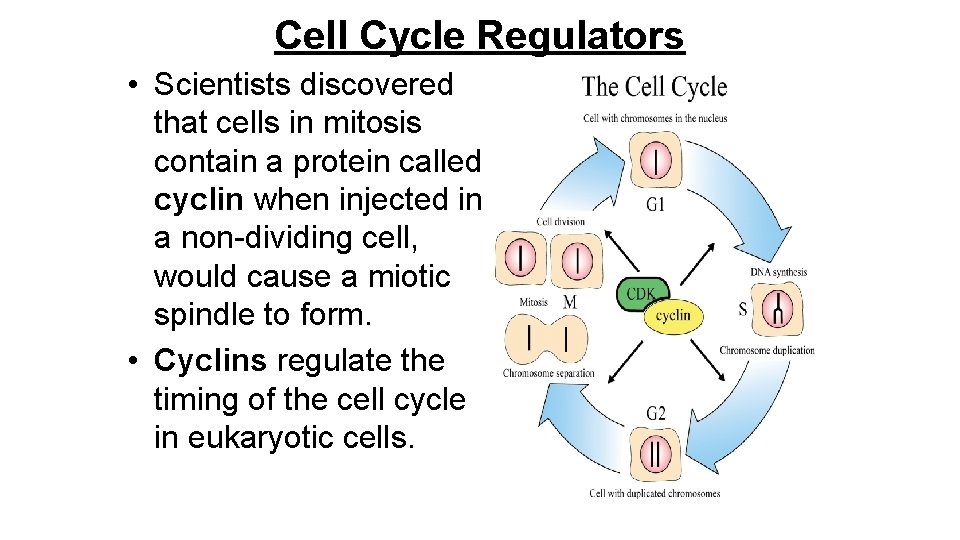
The Cell Cycle • The cell cycle is the series of events that cells go through as they grow and divide. • During the cell cycle: - A cell grows - Prepares for division - And divides to form two daughter cells
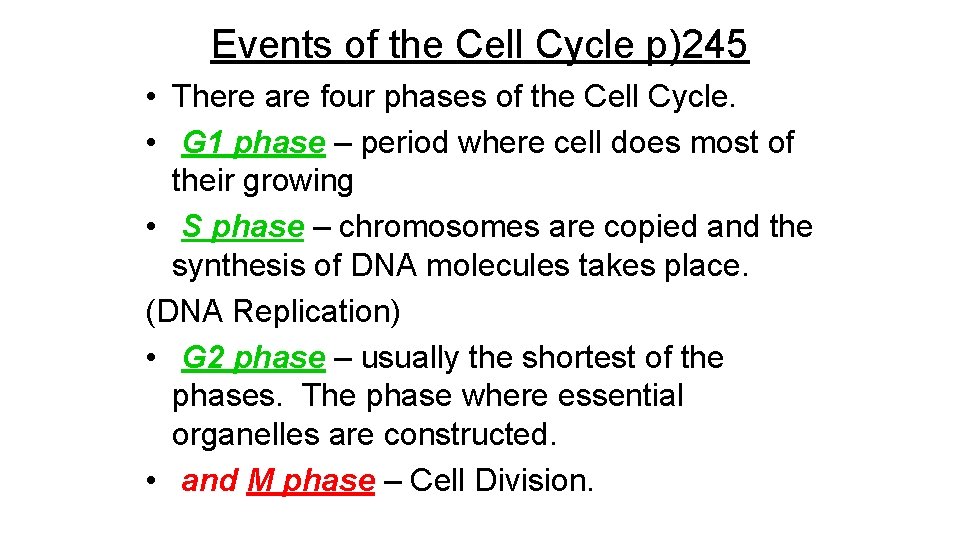
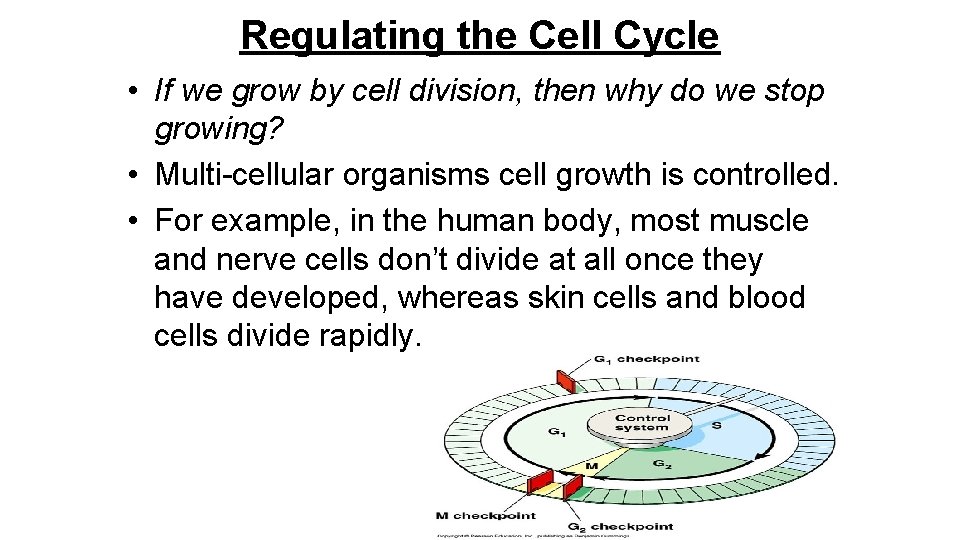
Events of the Cell Cycle p)245 • There are four phases of the Cell Cycle. • G 1 phase – period where cell does most of their growing • S phase – chromosomes are copied and the synthesis of DNA molecules takes place. (DNA Replication) • G 2 phase – usually the shortest of the phases. The phase where essential organelles are constructed. • and M phase – Cell Division.
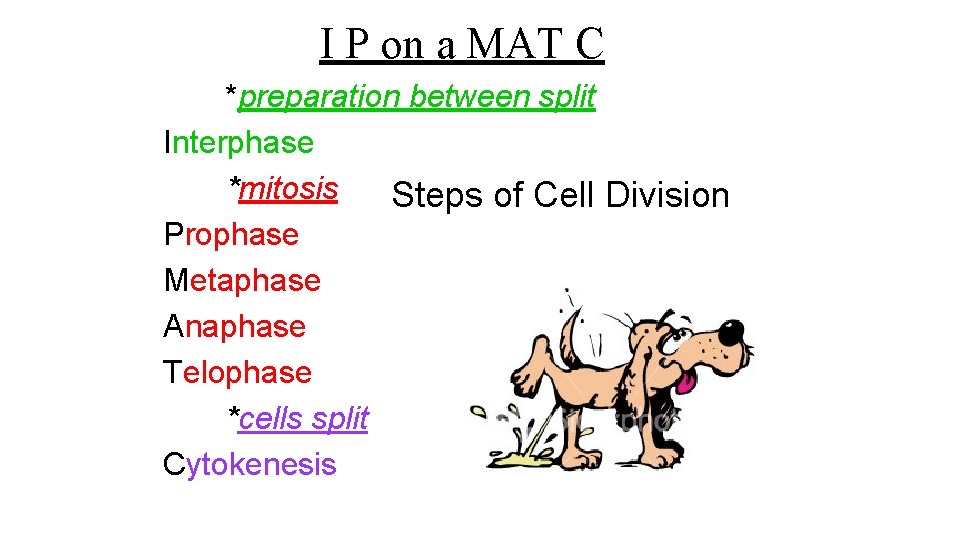
I P on a MAT C *preparation between split Interphase *mitosis Steps of Cell Division Prophase Metaphase Anaphase Telophase *cells split Cytokenesis
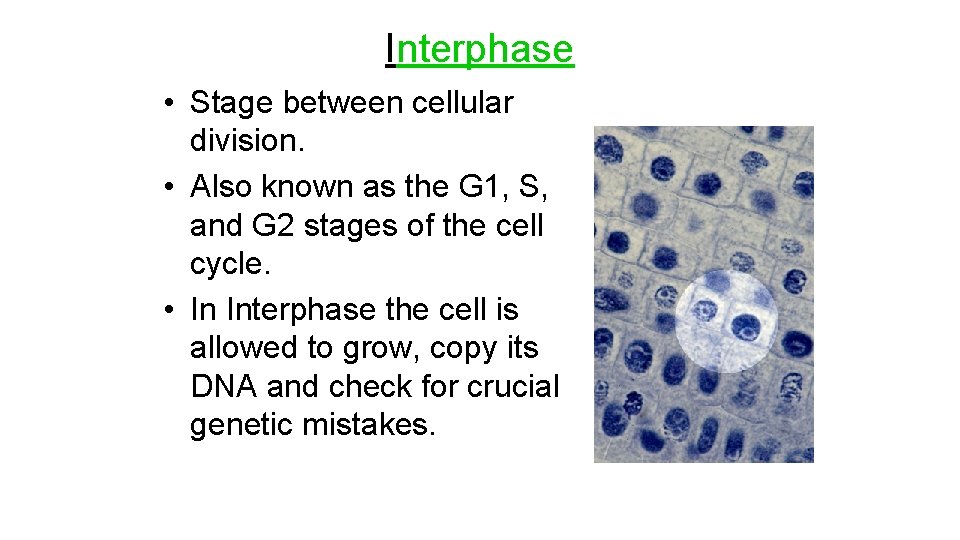
Interphase • Stage between cellular division. • Also known as the G 1, S, and G 2 stages of the cell cycle. • In Interphase the cell is allowed to grow, copy its DNA and check for crucial genetic mistakes.
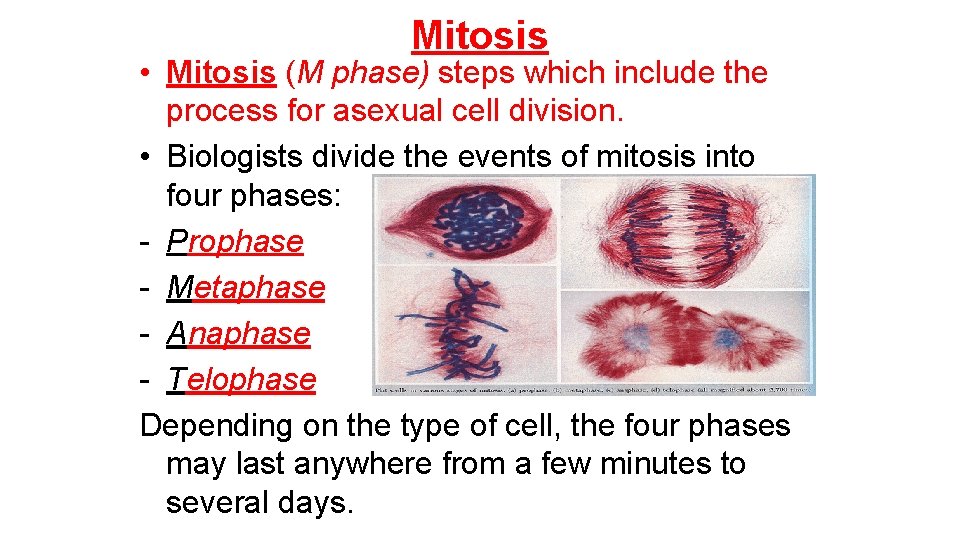
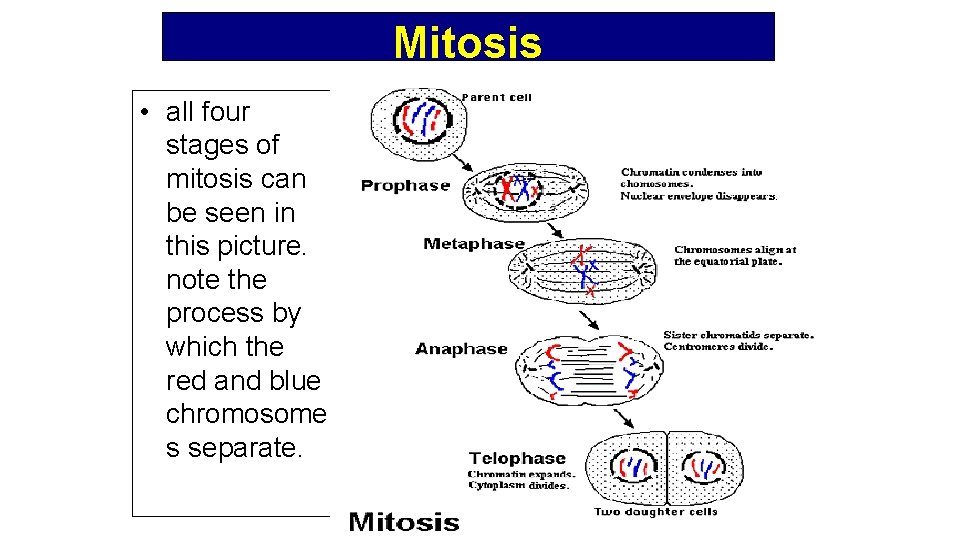
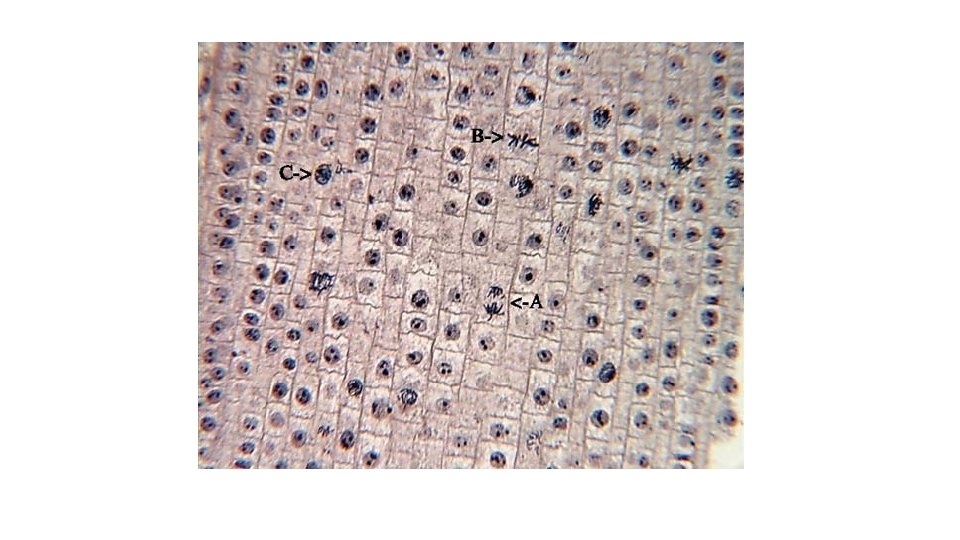
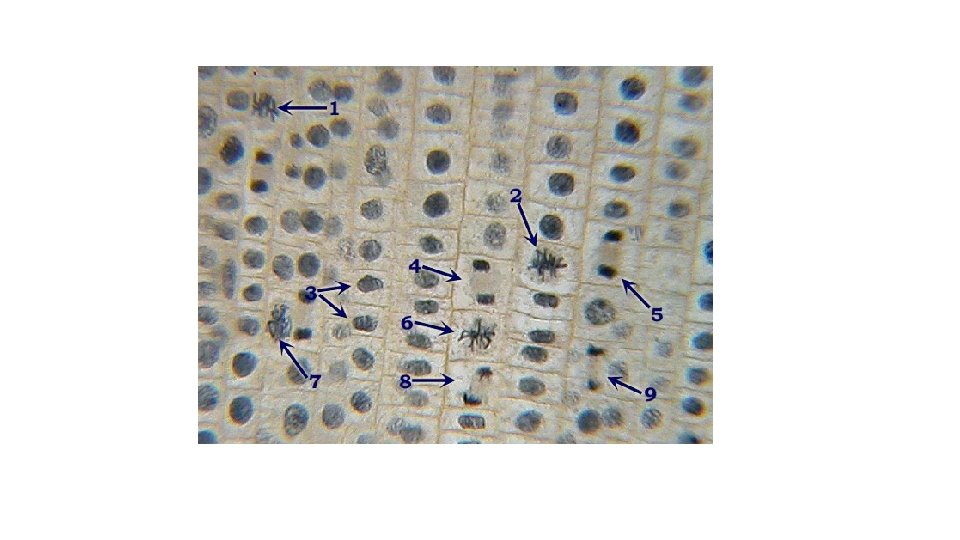
Mitosis • Mitosis (M phase) steps which include the process for asexual cell division. • Biologists divide the events of mitosis into four phases: - Prophase - Metaphase - Anaphase - Telophase Depending on the type of cell, the four phases may last anywhere from a few minutes to several days.
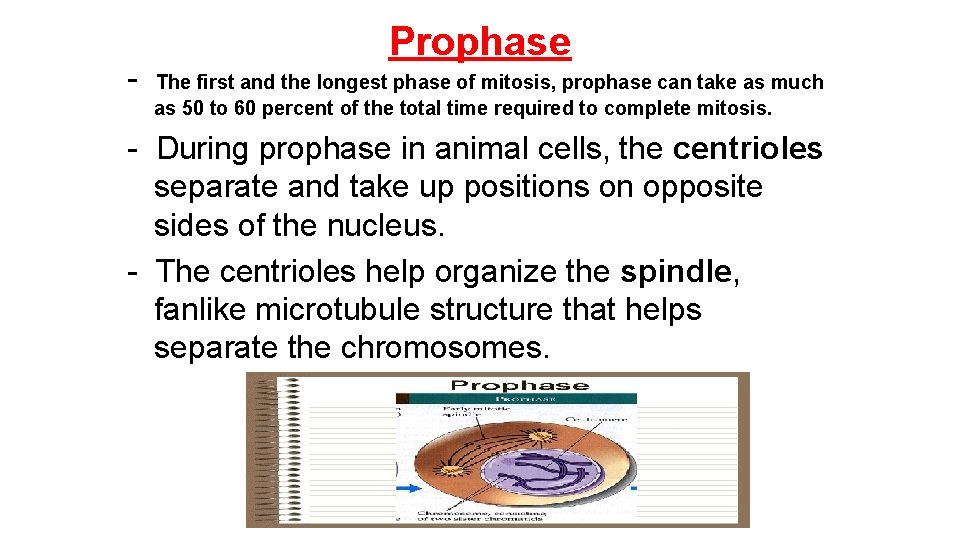
- Prophase The first and the longest phase of mitosis, prophase can take as much as 50 to 60 percent of the total time required to complete mitosis. - During prophase in animal cells, the centrioles separate and take up positions on opposite sides of the nucleus. - The centrioles help organize the spindle, fanlike microtubule structure that helps separate the chromosomes.
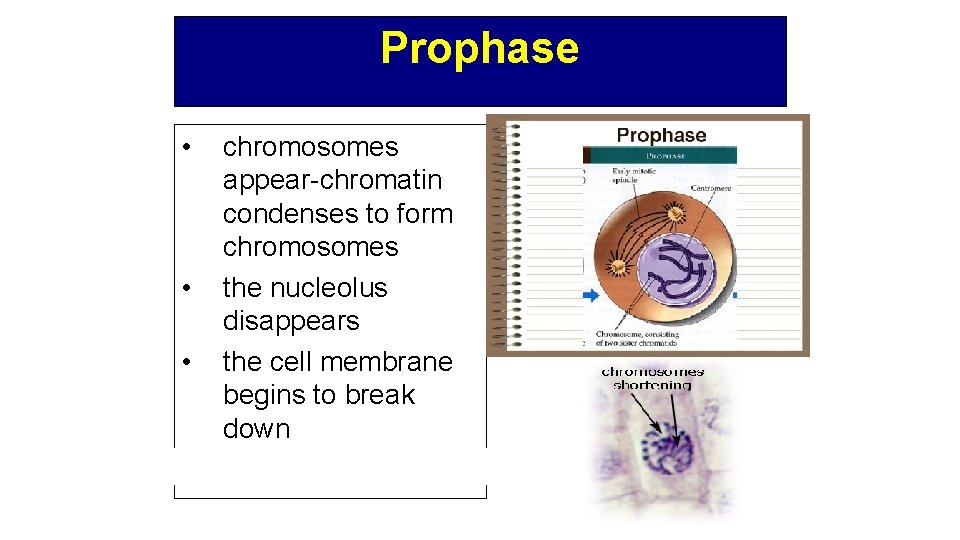
Prophase • • • chromosomes appear-chromatin condenses to form chromosomes the nucleolus disappears the cell membrane begins to break down
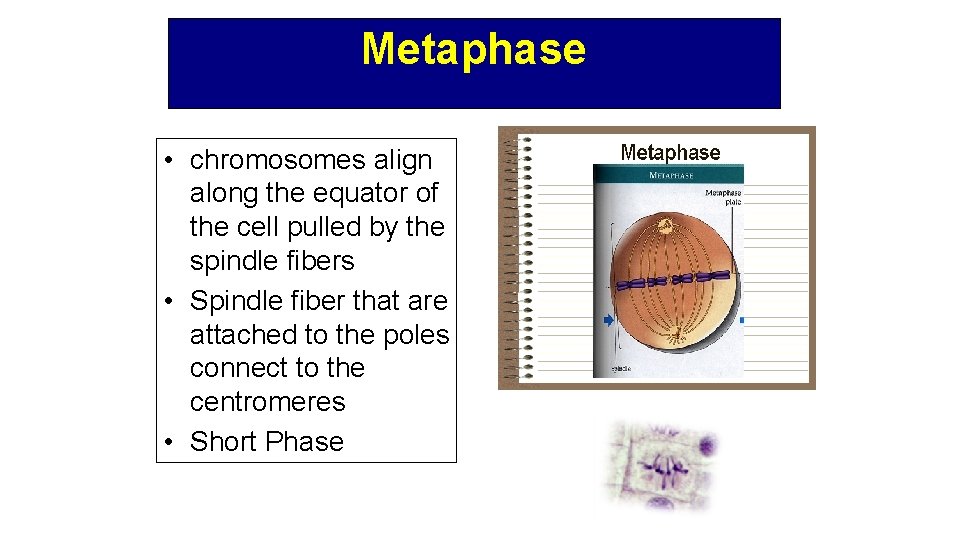
Metaphase • chromosomes align along the equator of the cell pulled by the spindle fibers • Spindle fiber that are attached to the poles connect to the centromeres • Short Phase
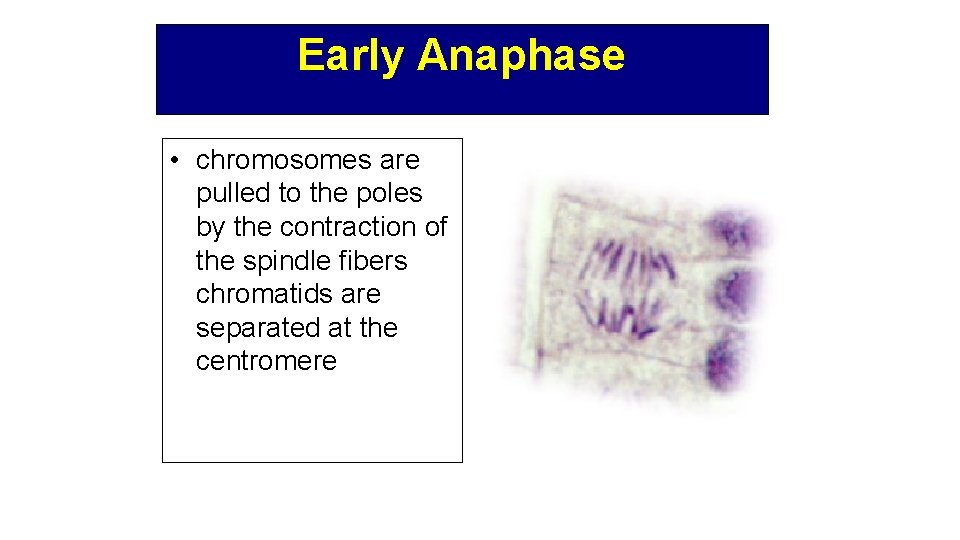
Early Anaphase • chromosomes are pulled to the poles by the contraction of the spindle fibers chromatids are separated at the centromere
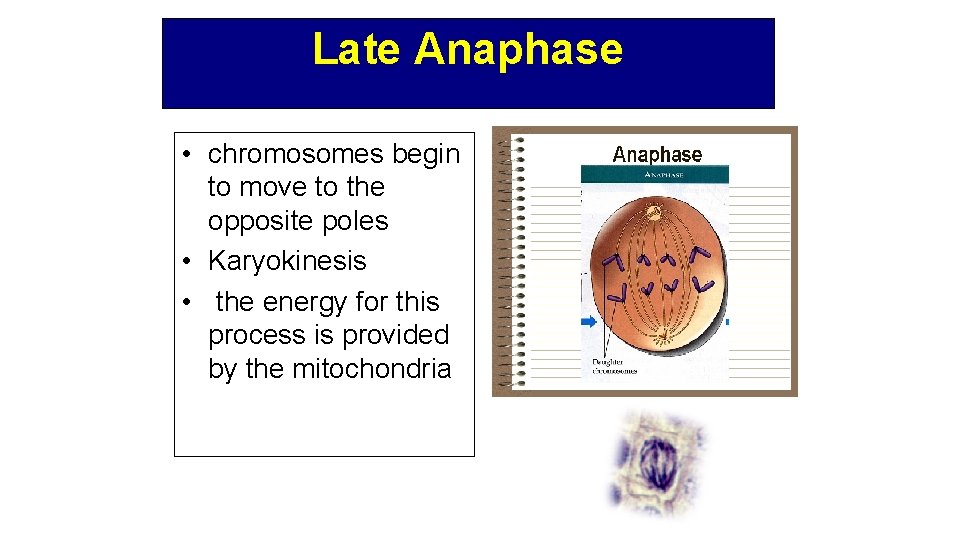
Late Anaphase • chromosomes begin to move to the opposite poles • Karyokinesis • the energy for this process is provided by the mitochondria
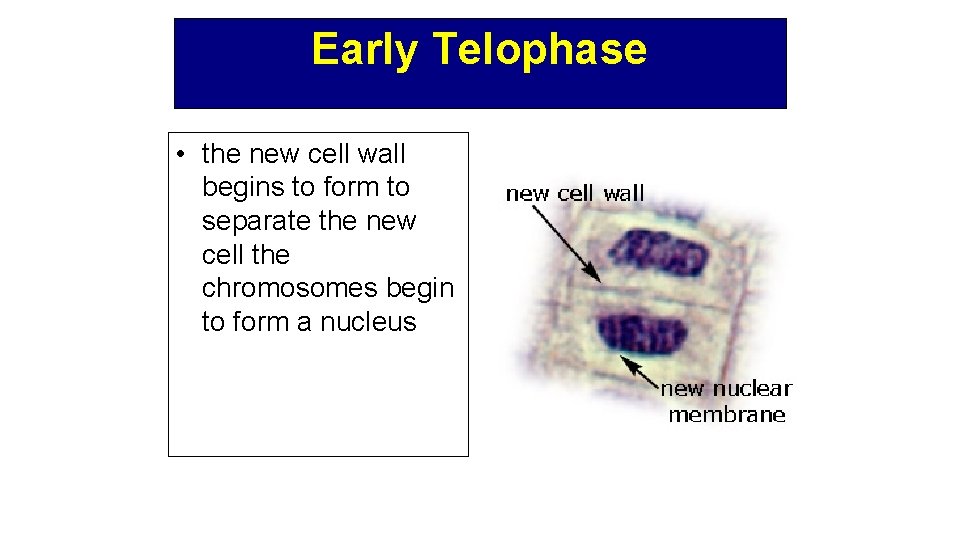
Early Telophase • the new cell wall begins to form to separate the new cell the chromosomes begin to form a nucleus
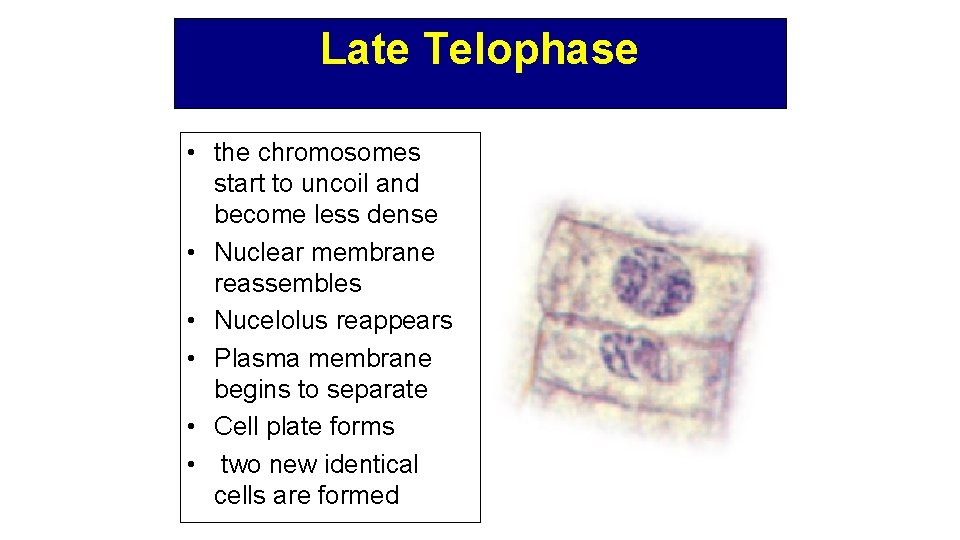
Late Telophase • the chromosomes start to uncoil and become less dense • Nuclear membrane reassembles • Nucelolus reappears • Plasma membrane begins to separate • Cell plate forms • two new identical cells are formed
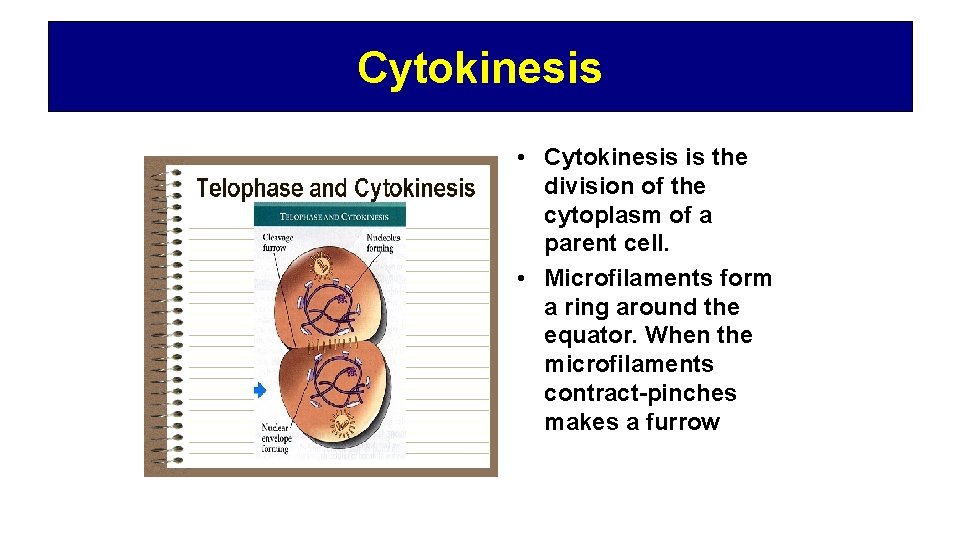
Cytokinesis • Cytokinesis is the division of the cytoplasm of a parent cell. • Microfilaments form a ring around the equator. When the microfilaments contract-pinches makes a furrow
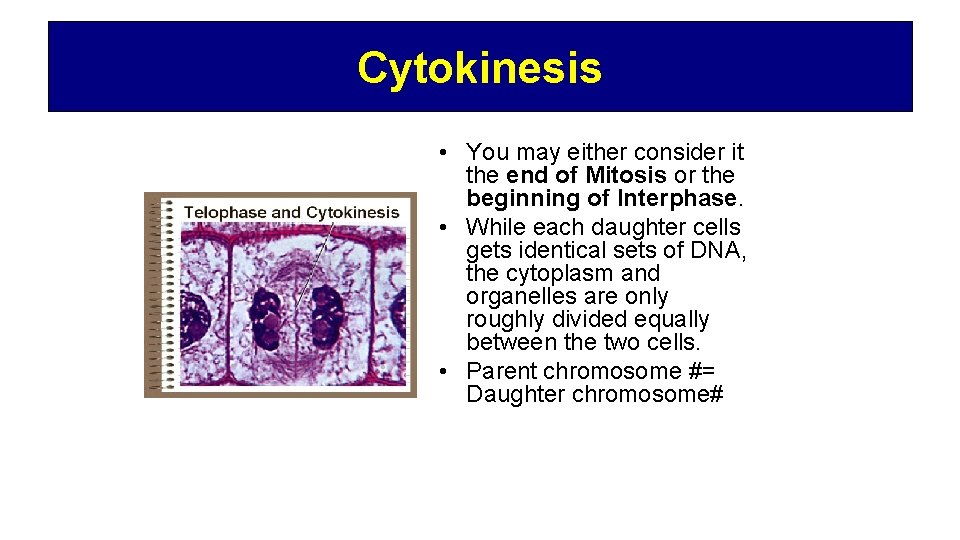
Cytokinesis • You may either consider it the end of Mitosis or the beginning of Interphase. • While each daughter cells gets identical sets of DNA, the cytoplasm and organelles are only roughly divided equally between the two cells. • Parent chromosome #= Daughter chromosome#
Mitosis • all four stages of mitosis can be seen in this picture. note the process by which the red and blue chromosome s separate.
MITOSIS
: //www. youtube. com/watch? v= Vl. N 7 K 1 -9 QB 0 http: //www. youtube. c om/watch? v=LEp. TTol ebqo
Regulating the Cell Cycle • If we grow by cell division, then why do we stop growing? • Multi-cellular organisms cell growth is controlled. • For example, in the human body, most muscle and nerve cells don’t divide at all once they have developed, whereas skin cells and blood cells divide rapidly.
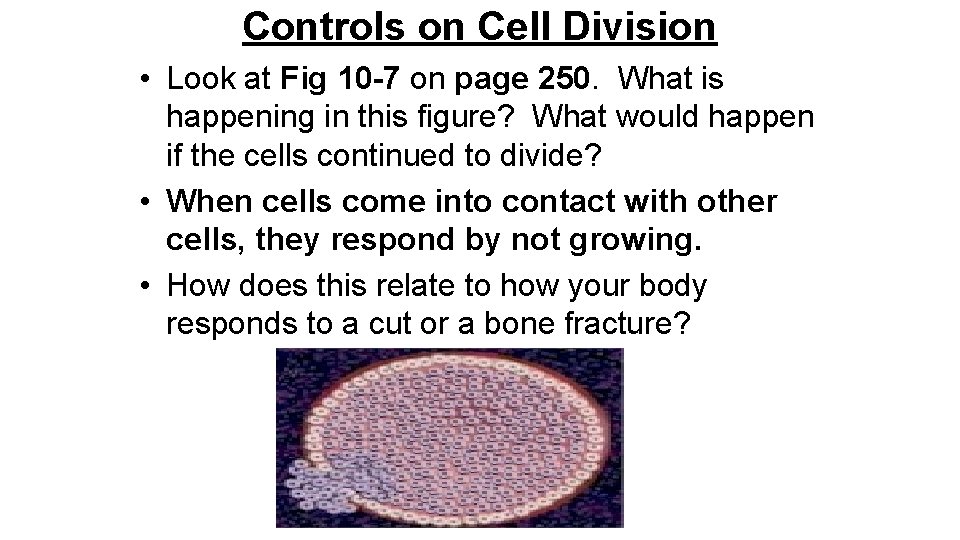
Controls on Cell Division • Look at Fig 10 -7 on page 250. What is happening in this figure? What would happen if the cells continued to divide? • When cells come into contact with other cells, they respond by not growing. • How does this relate to how your body responds to a cut or a bone fracture?
Cell Cycle Regulators • Scientists discovered that cells in mitosis contain a protein called cyclin when injected in a non-dividing cell, would cause a miotic spindle to form. • Cyclins regulate the timing of the cell cycle in eukaryotic cells.
Other Cell Cycle Regulators • Internal regulators- proteins that respond to events inside the cell. For example: several regulatory proteins make sure that a cell does not enter mitosis until all its chromosomes have been replicated. - External regulators- proteins that respond to events outside the cell. For example: external regulators direct cells to either speed up or slow down the cell cycle.
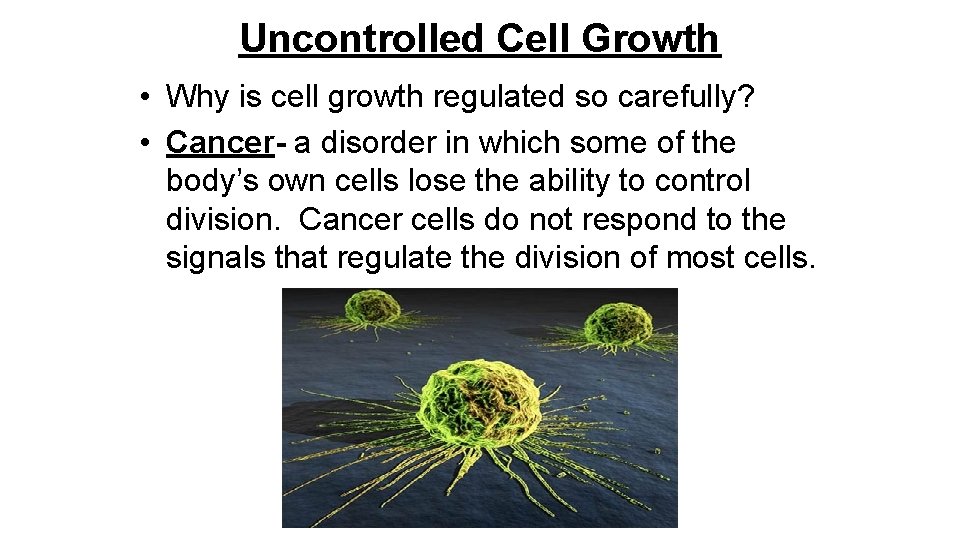
Uncontrolled Cell Growth • Why is cell growth regulated so carefully? • Cancer- a disorder in which some of the body’s own cells lose the ability to control division. Cancer cells do not respond to the signals that regulate the division of most cells.
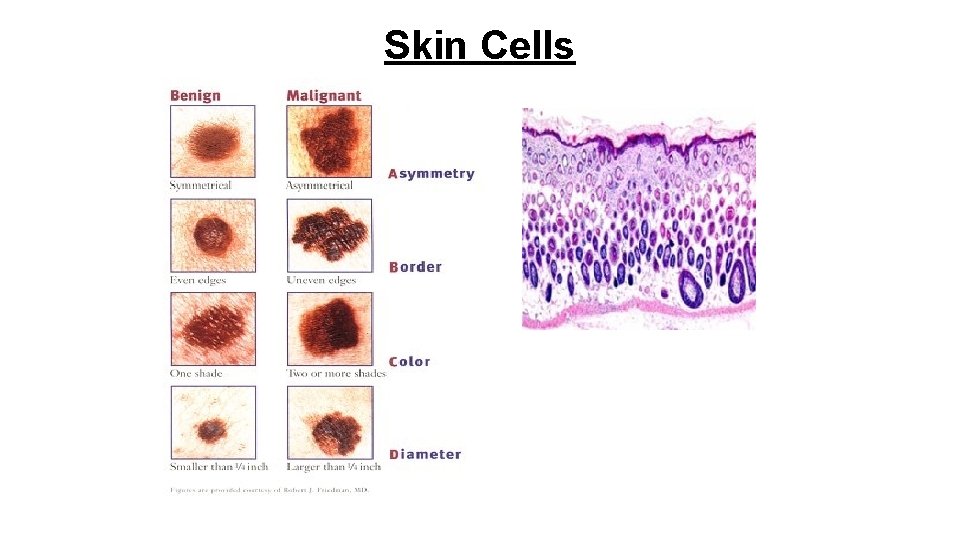
Skin Cells