
Cell Growth and Reproduction Cell Size Limitations Cell
- Slides: 21
Cell Growth and Reproduction Cell Size Limitations Cell Reproduction Cell Cycle Mitosis
Cell Size Limitations Just like us, cells come in a variety of sizes! What determines a cell’s size? n n n DNA Diffusion Surface Area – to – Volume Ratio
Cell Size Limitations DNA provides the blueprints or instructions for protein synthesis. Cells cannot survive unless there is enough DNA to support the protein needs of the cell.
Cell Size Limitations Diffusion Nutrients and wastes are moved around a cell using diffusion. Usually diffusion is fast and efficient over short distances, but when a cell gets too big it becomes slow and inefficient! Cells can’t be too big because they would die before nutrients reached the organelles that need them!
Cell Size Limitations Surface Area –to-Volume Ratio As a cell’s size increases, its volume increases faster than its surface area. If a cell size is doubled, the cell would require 8 times more nutrients and would have 8 times more waste! The surface area would only have increased by 4 and therefore the plasma membrane would not have enough surface area to let in the nutrients and let out the wastes. The cell would either starve to death or become poisoned by its own waste! Usually, cells divide before they get too big to control this factor.
Cell Reproduction The cell theory states that “all cells come from pre-existing cells. ” Cell division is the process by which this happens! Cell division results in two cells that are identical to the original parent cell. All organisms grow and change; worn out tissues are repaired or replaced by newly produced cells!
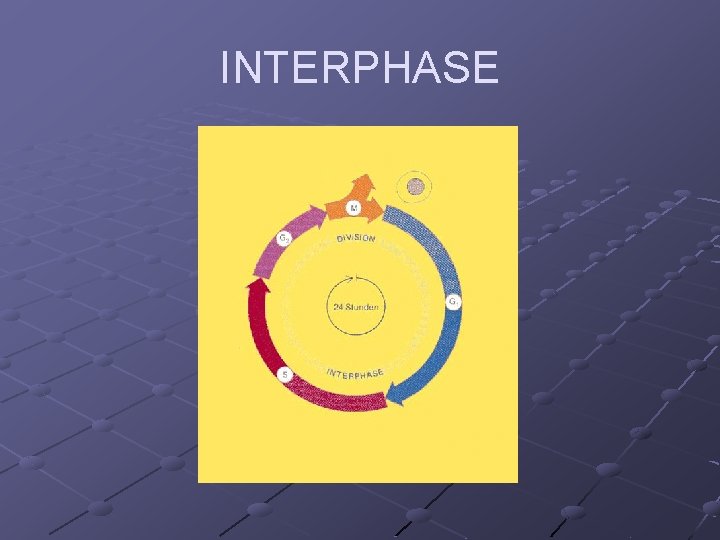
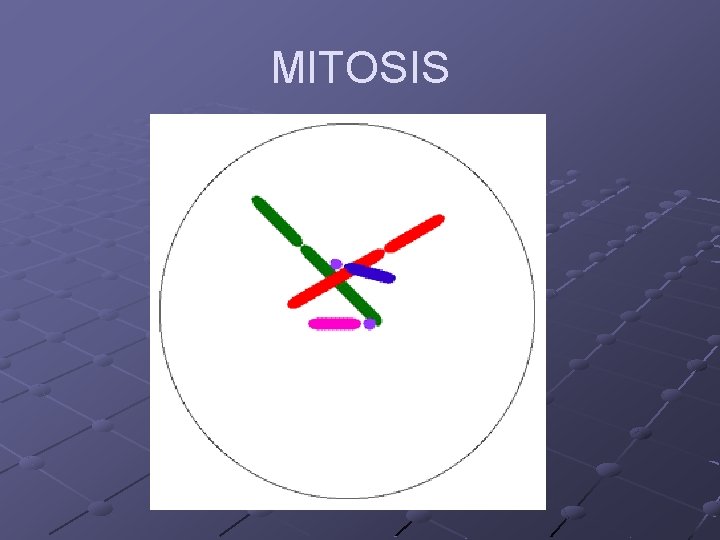
The Cell Cycle The cell cycle is the sequence of growth and division of a cell. It starts with 2 general periods: n Period of Growth The majority of a cell’s life is spent in growth! This phase is known as INTERPHASE! n n During INTERPHASE, a cell grows in size and carries on metabolism. Chromosomes are duplicated in preparation for division Interphase is like the training before a big race! n Period of Division This phase is known as MITOSIS! In MITOSIS, two daughter cells are formed each containing a complete set of chromosomes.
INTERPHASE 3 stages n n n G 1 – Cell grows rapidly and protein production is high S – Cell copies its chromosomes and DNA synthesis occurs G 2 – Short growth period in which mitochondria and other organelles are made and parts needed for cell division (centrioles) are manufactured
INTERPHASE
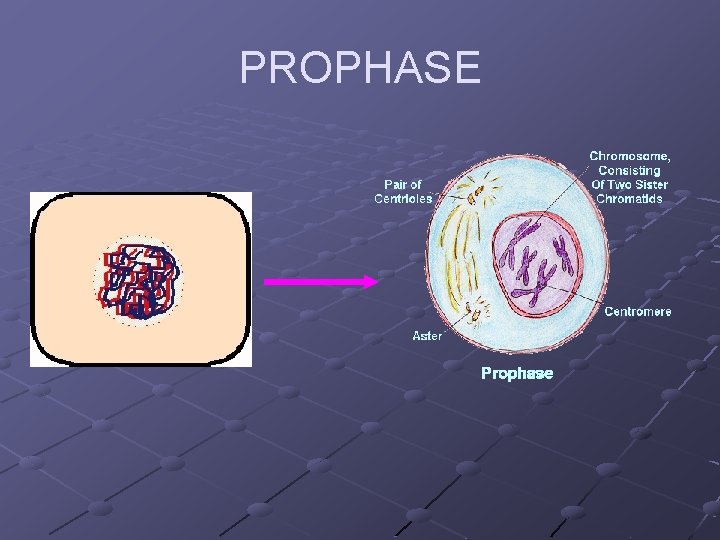
MITOSIS: Many phases of Division 1) PROPHASE – longest phase of mitosis n n Chromatin (DNA strands) coil up into visible chromosomes They look kind of hairy! Each chromosome is made of two identical halves called SISTER CHROMATIDS These halves are held together by a CENTROMERE
PROPHASE
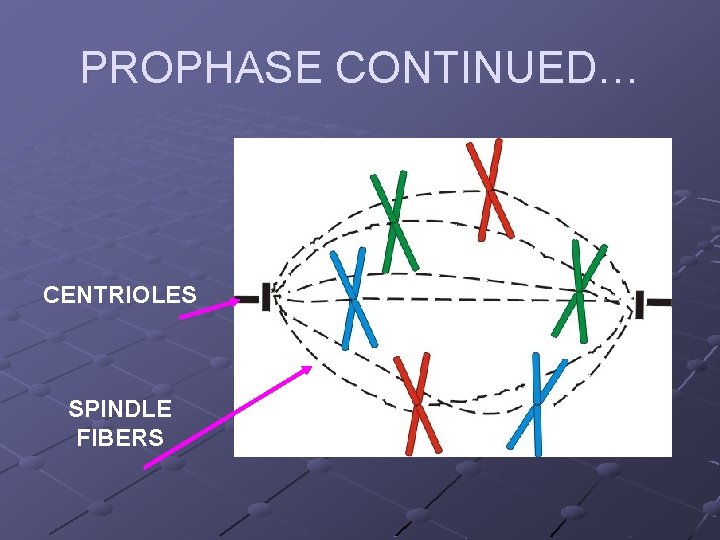
PROPHASE CONTINUED… As prophase continues, the nucleus begins to disappear as the nuclear envelope and the nucleolus disintegrate. At this time, the CENTRIOLES begin to migrate to opposite poles of the cell The SPINDLE begins to form between the centrioles.
PROPHASE CONTINUED… CENTRIOLES SPINDLE FIBERS
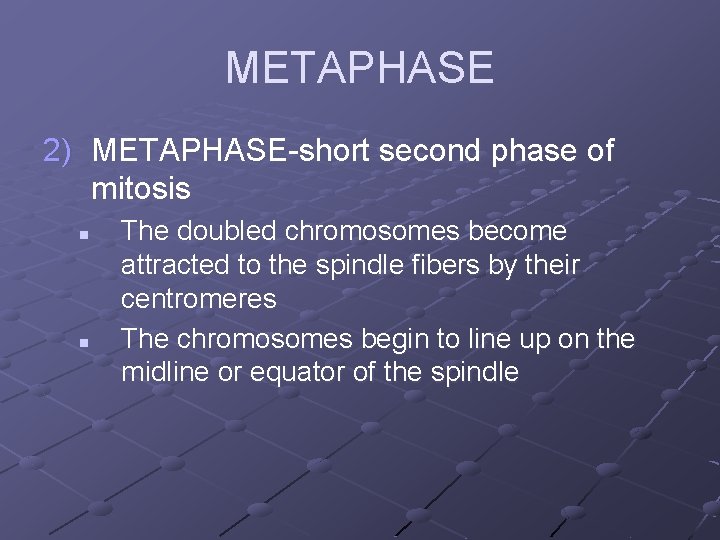
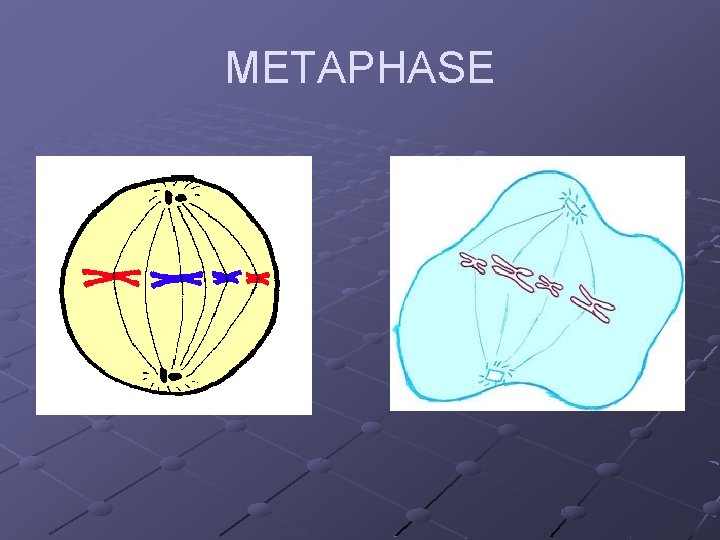
METAPHASE 2) METAPHASE-short second phase of mitosis n n The doubled chromosomes become attracted to the spindle fibers by their centromeres The chromosomes begin to line up on the midline or equator of the spindle
METAPHASE
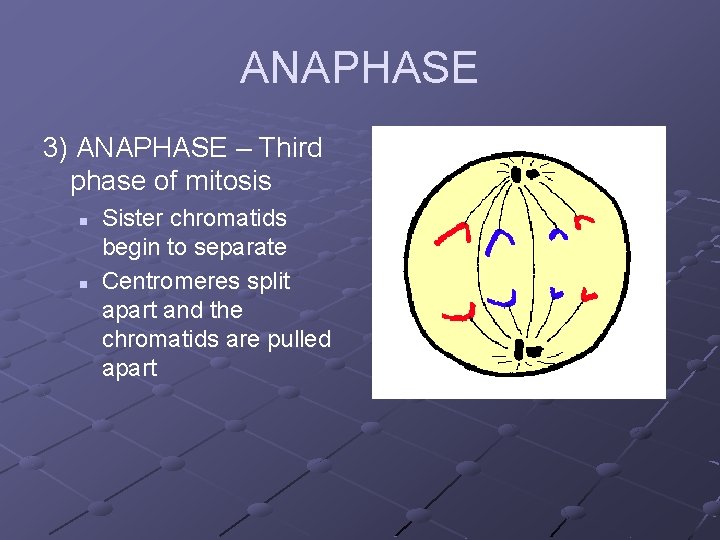
ANAPHASE 3) ANAPHASE – Third phase of mitosis n n Sister chromatids begin to separate Centromeres split apart and the chromatids are pulled apart
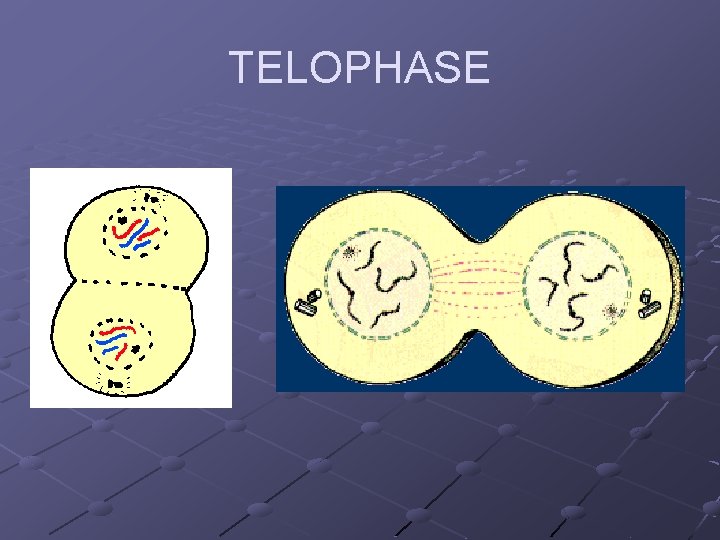
TELOPHASE 4) TELOPHASE – Fourth phase of mitosis n n n Chromatids are pulled to opposite poles of the cell Nucleolus reappears and new nuclear envelope forms around each new set of chromosomes New double membrane begins to form between two new nuclei
TELOPHASE
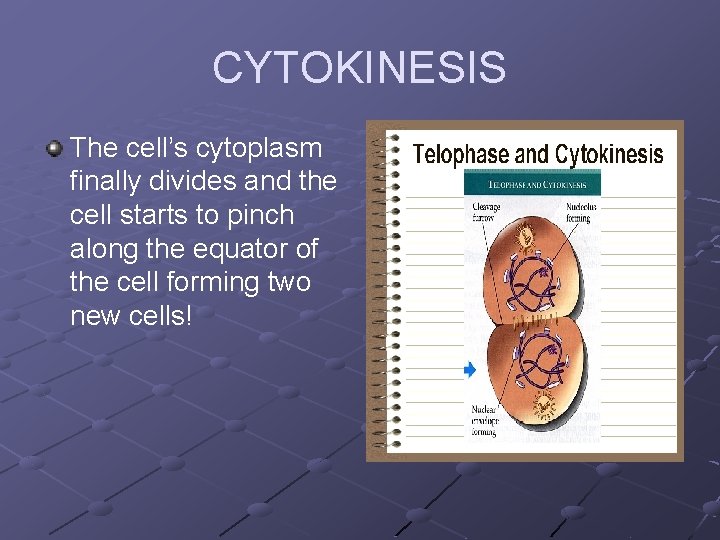
CYTOKINESIS The cell’s cytoplasm finally divides and the cell starts to pinch along the equator of the cell forming two new cells!
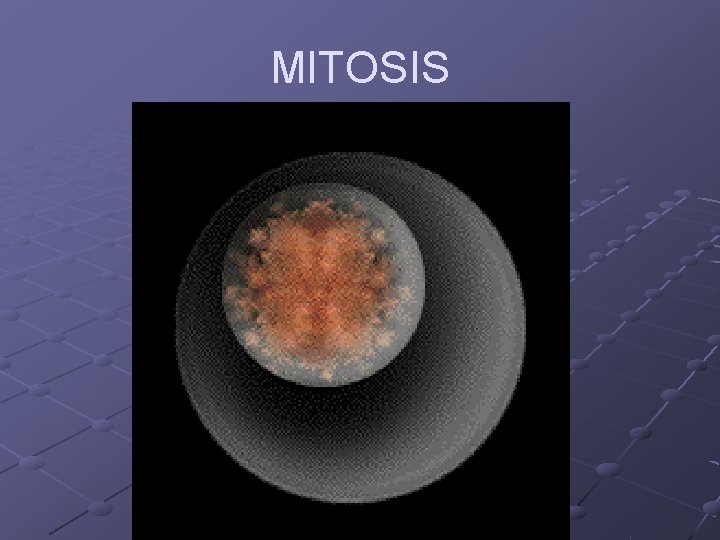
MITOSIS
MITOSIS