
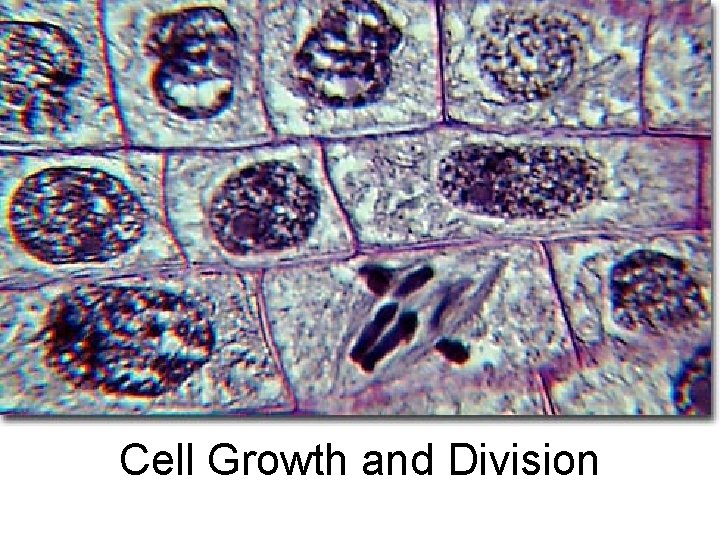
Cell Growth and Division Limits to growth Cell
- Slides: 19
Cell Growth and Division
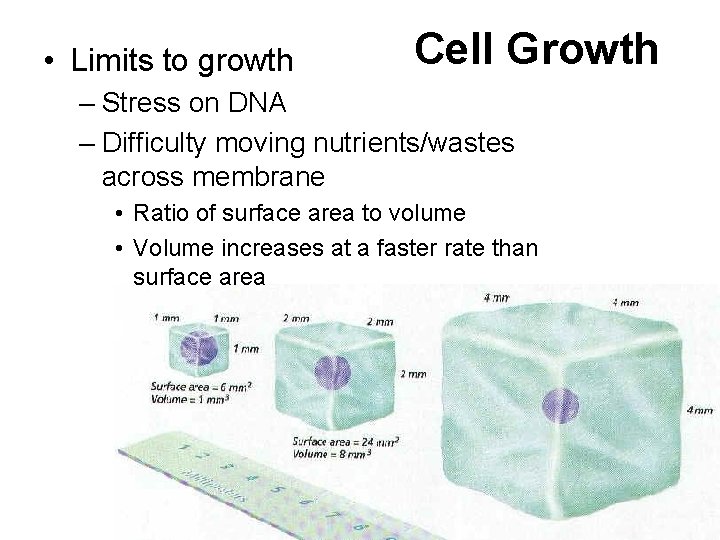
• Limits to growth Cell Growth – Stress on DNA – Difficulty moving nutrients/wastes across membrane • Ratio of surface area to volume • Volume increases at a faster rate than surface area
Cell Division • Before a cell becomes too large, it divides, producing 2 daughter cells – Each daughter cell is an exact replica of the parent cell • Before the cell divides, the DNA is replicated, so each new cell will have the same genetic information as the parent cell
Cell Division • 2 stages (eukaryotes) – Mitosis- division of the cell nucleus – Cytokinesis- division of the cytoplasm • Asexual reproduction (esp for unicellular organisms) • Also used for new cells as an organism grows and develops
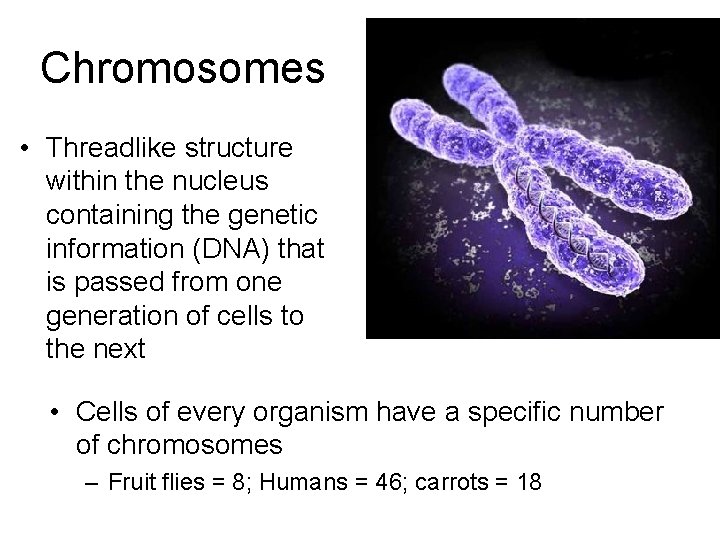
Chromosomes • Threadlike structure within the nucleus containing the genetic information (DNA) that is passed from one generation of cells to the next • Cells of every organism have a specific number of chromosomes – Fruit flies = 8; Humans = 46; carrots = 18
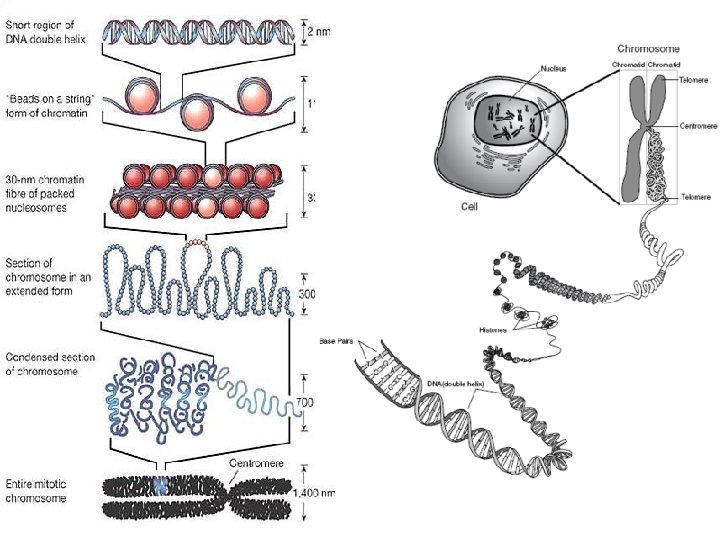
Chromosomes • Chromatin- granular material visible within the nucleus; consists of DNA tightly coiled around proteins • Chromatid- one of two identical “sister” parts of a duplicated chromosome • Centromere- an area where the chromatids are attached to one another
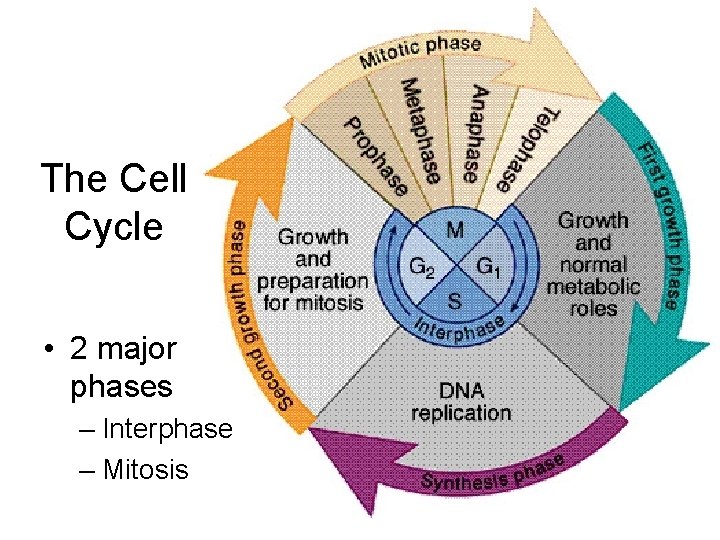
The Cell Cycle • 2 major phases – Interphase – Mitosis
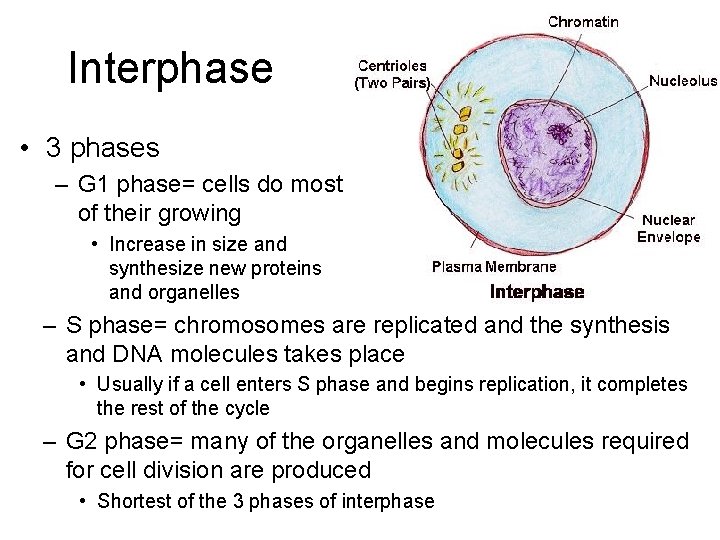
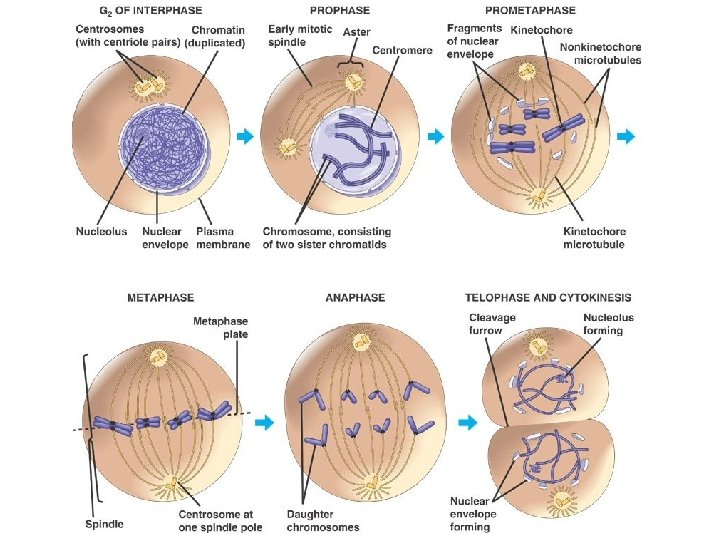
Interphase • 3 phases – G 1 phase= cells do most of their growing • Increase in size and synthesize new proteins and organelles – S phase= chromosomes are replicated and the synthesis and DNA molecules takes place • Usually if a cell enters S phase and begins replication, it completes the rest of the cycle – G 2 phase= many of the organelles and molecules required for cell division are produced • Shortest of the 3 phases of interphase
Mitosis • Divided into 4 phases – Prophase – Metaphase – Anaphase – Telophase • Followed with Cytokinesis • Depending on cell- may last a few minutes to several days
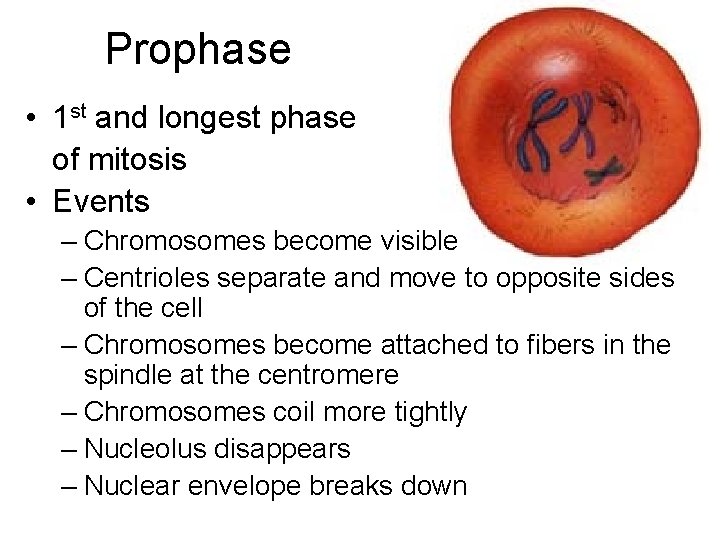
Prophase • 1 st and longest phase of mitosis • Events – Chromosomes become visible – Centrioles separate and move to opposite sides of the cell – Chromosomes become attached to fibers in the spindle at the centromere – Chromosomes coil more tightly – Nucleolus disappears – Nuclear envelope breaks down
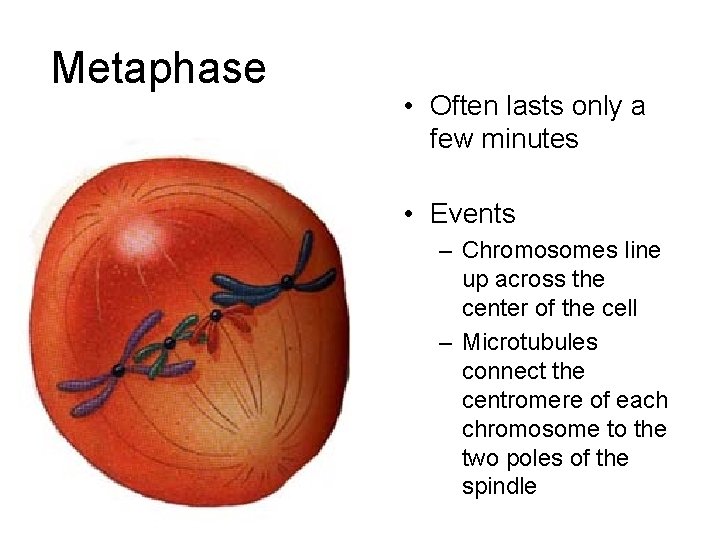
Metaphase • Often lasts only a few minutes • Events – Chromosomes line up across the center of the cell – Microtubules connect the centromere of each chromosome to the two poles of the spindle
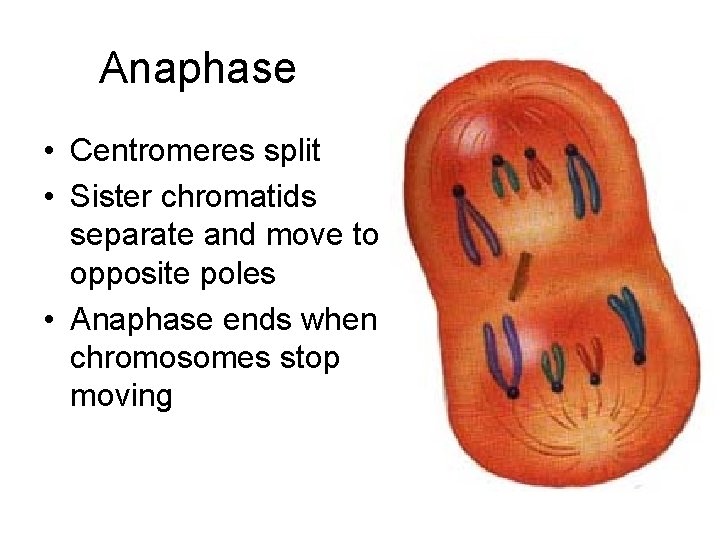
Anaphase • Centromeres split • Sister chromatids separate and move to opposite poles • Anaphase ends when chromosomes stop moving
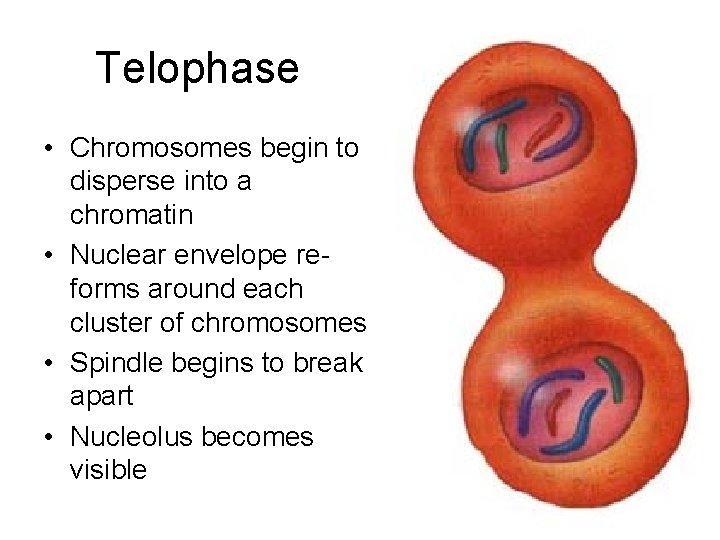
Telophase • Chromosomes begin to disperse into a chromatin • Nuclear envelope reforms around each cluster of chromosomes • Spindle begins to break apart • Nucleolus becomes visible
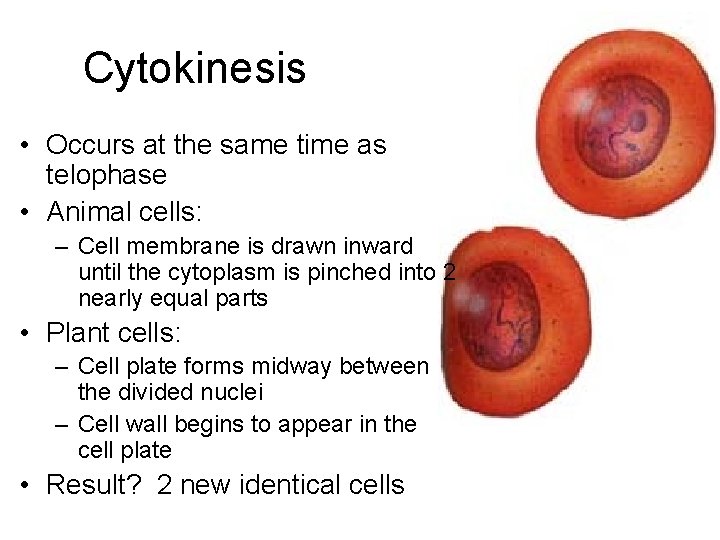
Cytokinesis • Occurs at the same time as telophase • Animal cells: – Cell membrane is drawn inward until the cytoplasm is pinched into 2 nearly equal parts • Plant cells: – Cell plate forms midway between the divided nuclei – Cell wall begins to appear in the cell plate • Result? 2 new identical cells
Controls on Cell Division • Effects of controlled cell growth can be seen by placing some cells in a petri dish containing nutrient broth • Cells grow until they form a thin layer covering the bottom of the dish • Cells stop growing when they come into contact with other cells • If cells are removed, the remaining cells will begin dividing again • Something can turn cell division on or off
Regulating Cell Growth • Cyclins- proteins that regulate the timing of the cell cycle in eukaryotic cells – Internal regulators: proteins that respond to events inside the cell • i. e. make sure all chromosomes have been replicated; make sure all chromosomes are attached to the spindle before entering anaphase – External regulators: proteins that respond to events outside the cell • i. e. embryonic development; wound healing
Uncontrolled Cell Growth • Cancer- disorder in which some of the body’s own cells lose the ability to control growth • Cancer cells do not respond to the signals that regulate the growth of most cells • P 53 gene halts the cell cycle until all chromosomes have been properly replicated – A damaged or defective p 53 gene causes the cells to lose the information needed to respond to signals that would normally control their growth