
Cell Growth and Division Chapter 5 Why do
- Slides: 31
Cell Growth and Division Chapter 5
Why do cells divide? (3 reasons) 1. DNA “Overload” – cells don’t have extra copies of DNA so large cells don’t have enough instructions 2. Inadequate Cell Surface Area • All materials must pass through membrane – Distance for diffusion • Large cells need more food; can’t absorb enough nutrients to maintain homeostasis – Surface area to volume ratio
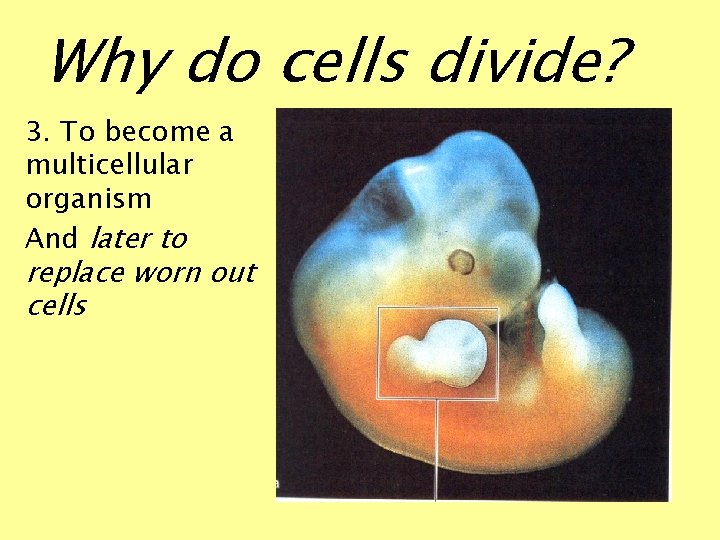
Why do cells divide? 3. To become a multicellular organism And later to replace worn out cells
How can the problem of “not enough surface area” be solved?
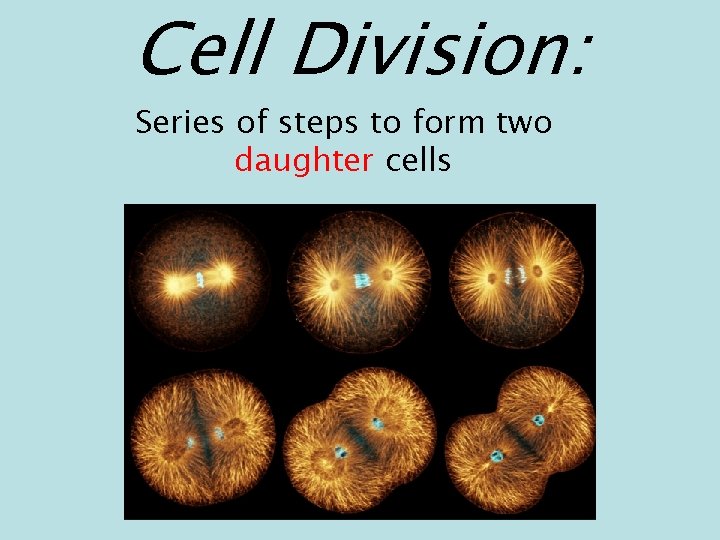
Cell Division: Series of steps to form two daughter cells
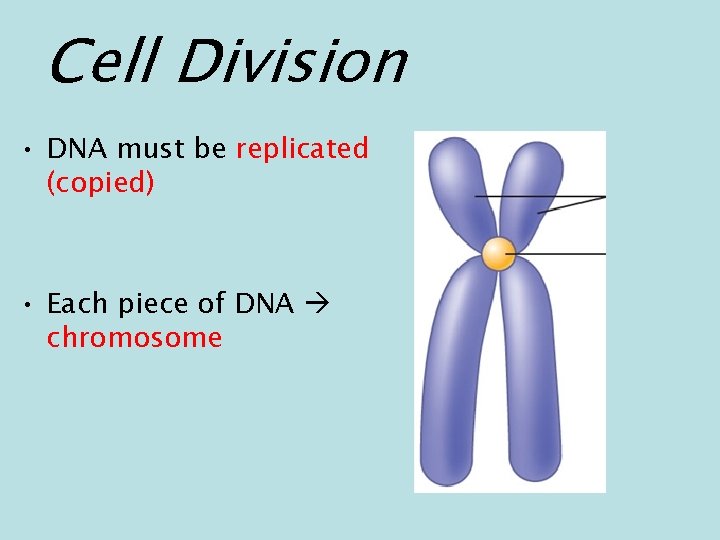
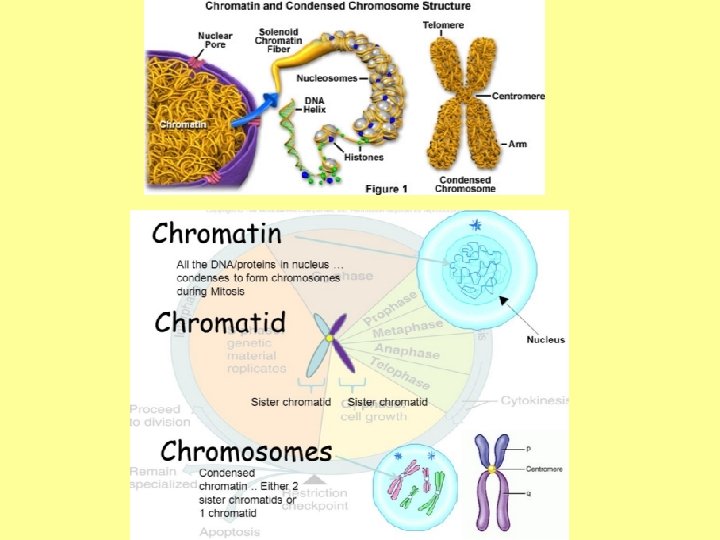
Cell Division • DNA must be replicated (copied) • Each piece of DNA chromosome
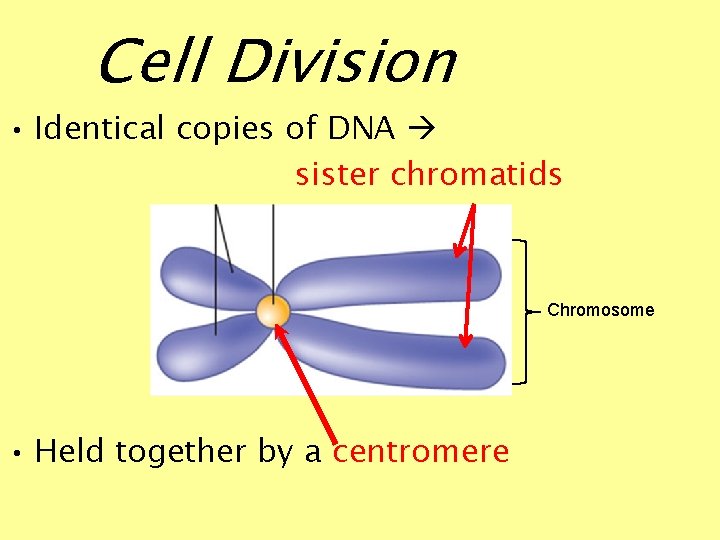
Cell Division • Identical copies of DNA sister chromatids Chromosome • Held together by a centromere
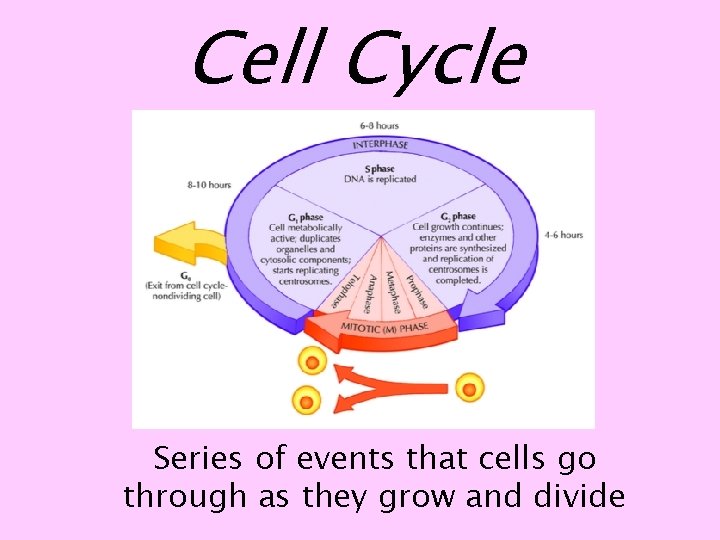
Cell Cycle Series of events that cells go through as they grow and divide
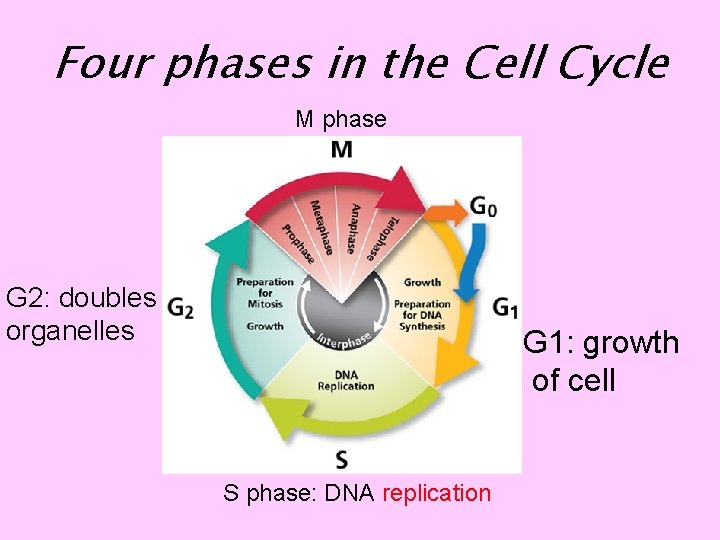
Four phases in the Cell Cycle M phase G 2: doubles organelles G 1: growth of cell S phase: DNA replication
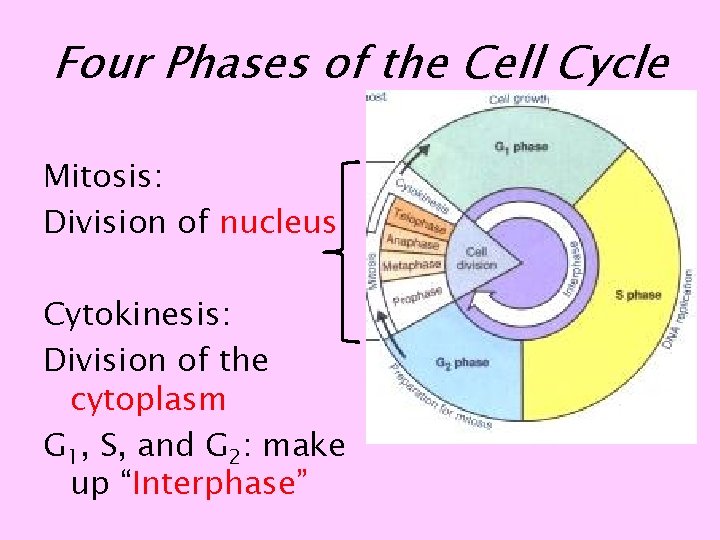
Four Phases of the Cell Cycle Mitosis: Division of nucleus Cytokinesis: Division of the cytoplasm G 1, S, and G 2: make up “Interphase”
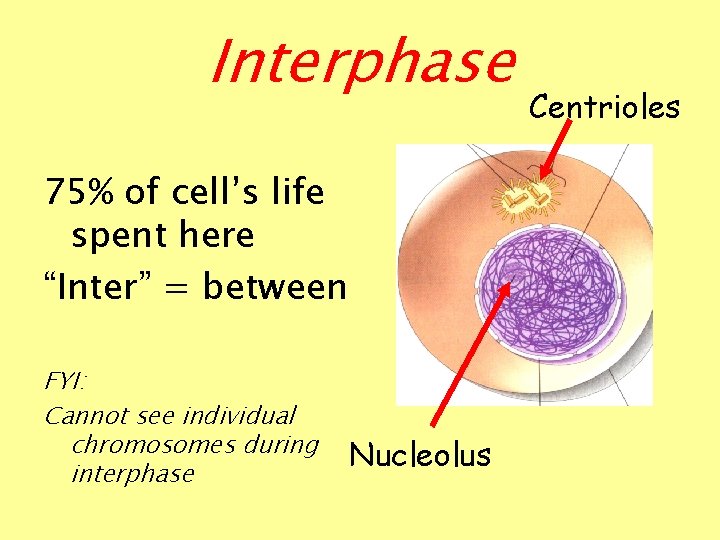
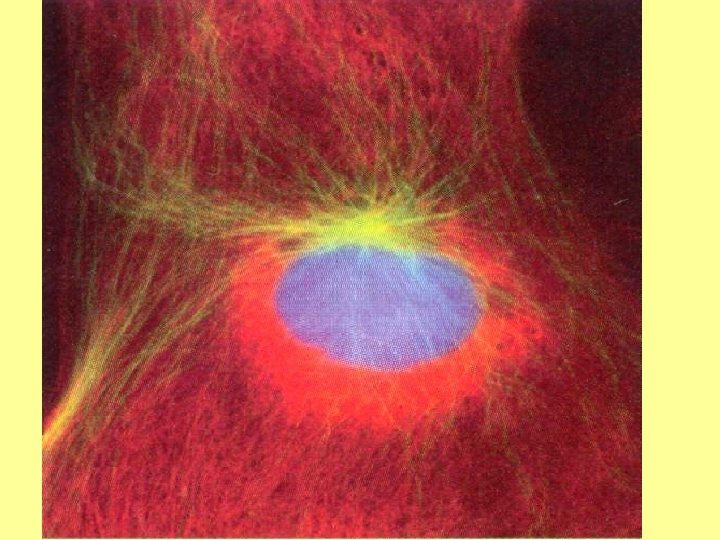
Interphase 75% of cell’s life spent here “Inter” = between FYI: Cannot see individual chromosomes during interphase Nucleolus Centrioles
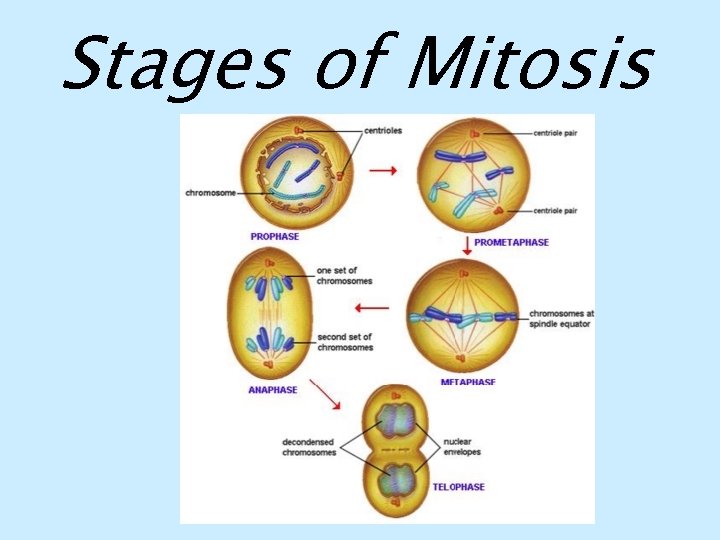
Stages of Mitosis
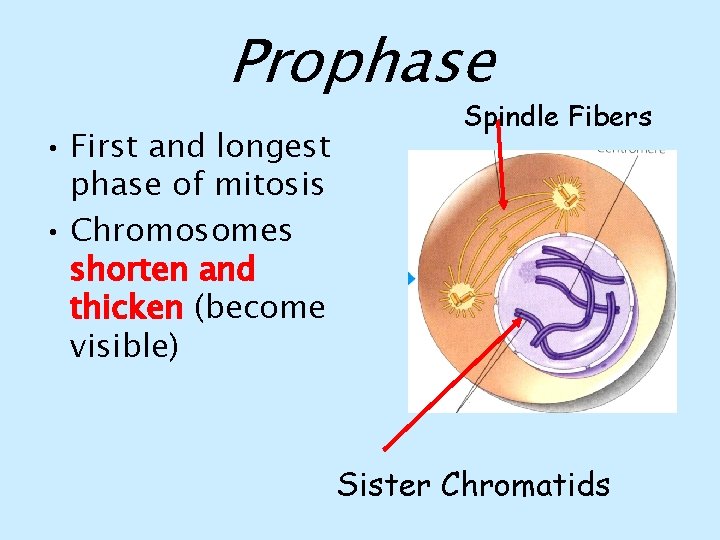
Prophase • First and longest phase of mitosis • Chromosomes shorten and thicken (become visible) Spindle Fibers Sister Chromatids
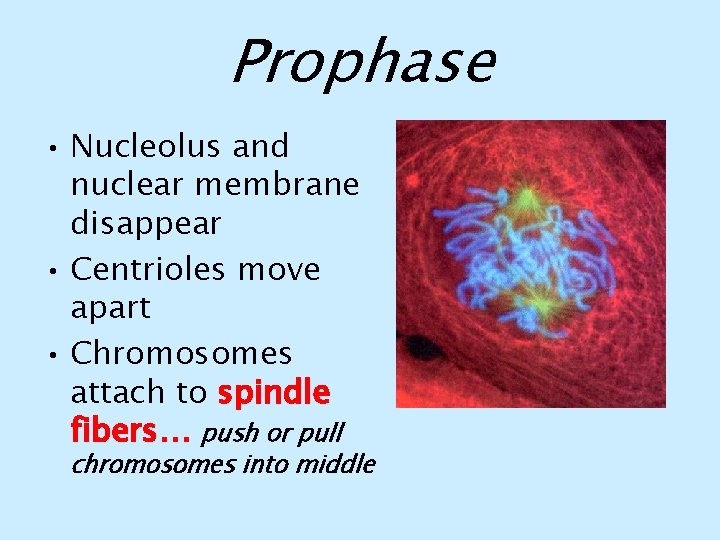
Prophase • Nucleolus and nuclear membrane disappear • Centrioles move apart • Chromosomes attach to spindle fibers… push or pull chromosomes into middle
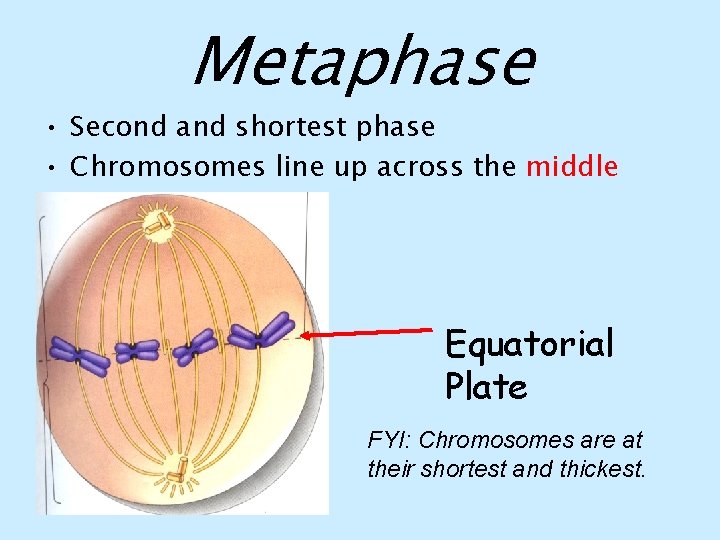
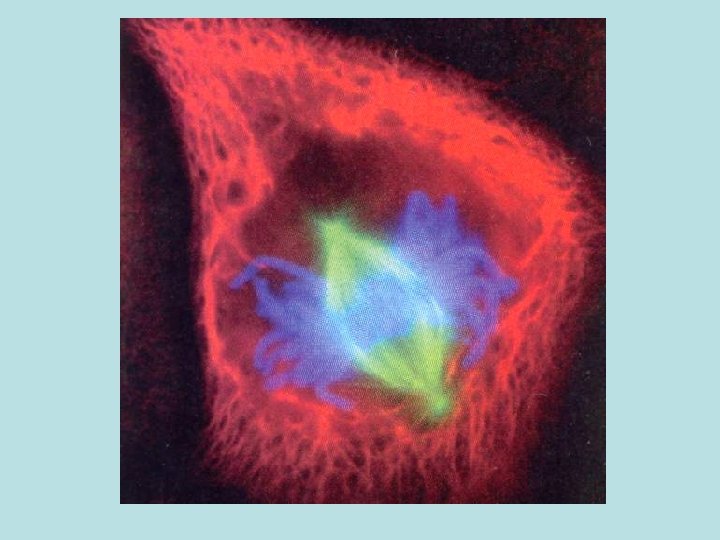
Metaphase • Second and shortest phase • Chromosomes line up across the middle Equatorial Plate FYI: Chromosomes are at their shortest and thickest.
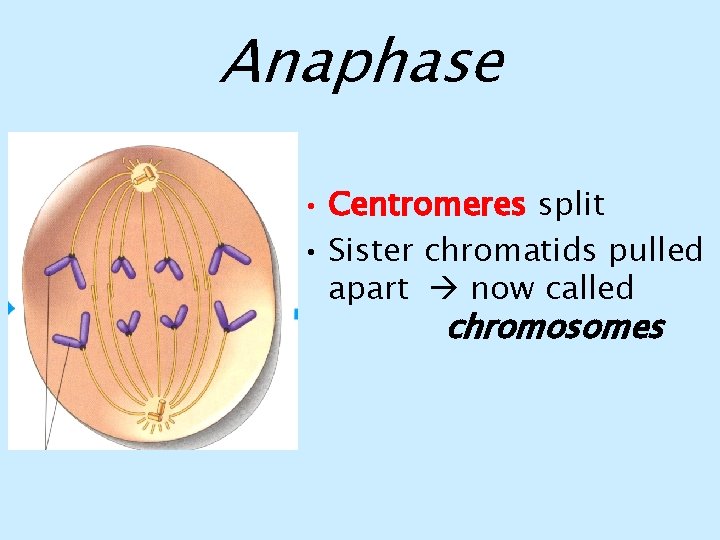
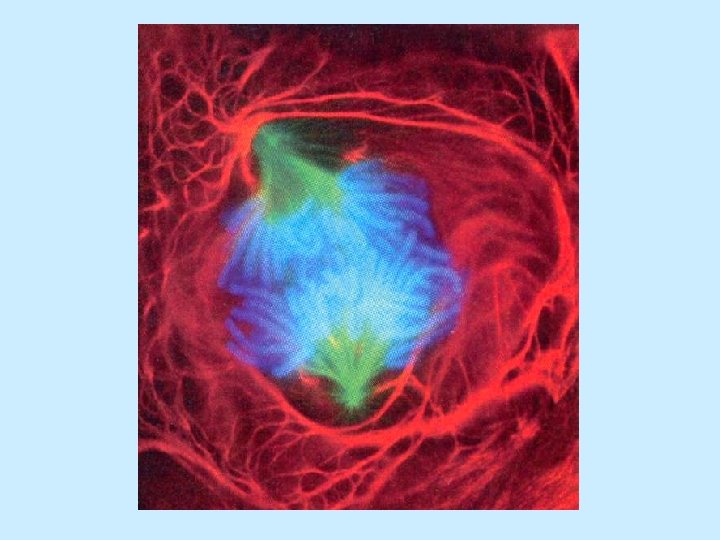
Anaphase • Centromeres split • Sister chromatids pulled apart now called chromosomes
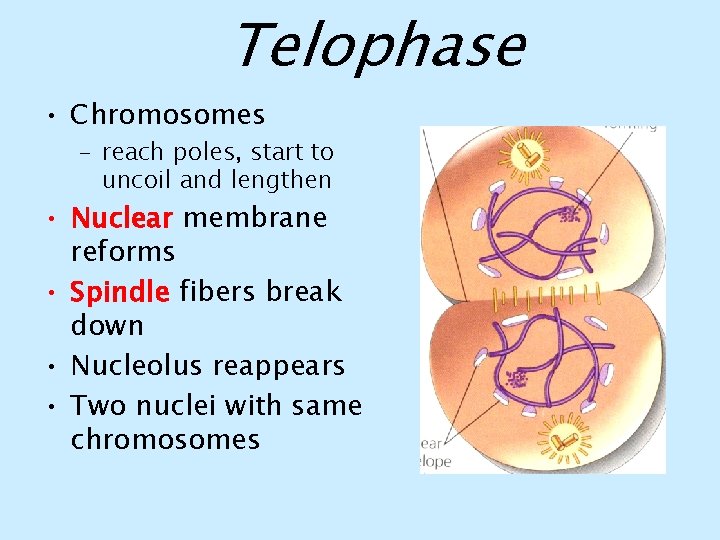
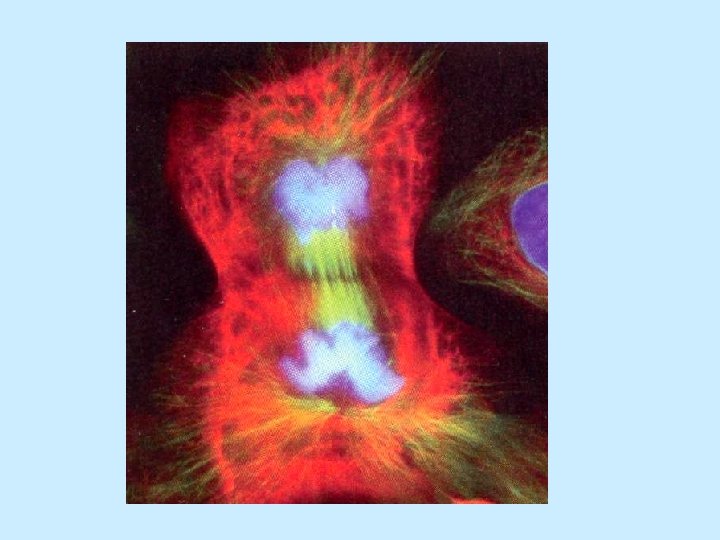
Telophase • Chromosomes – reach poles, start to uncoil and lengthen • Nuclear membrane reforms • Spindle fibers break down • Nucleolus reappears • Two nuclei with same chromosomes
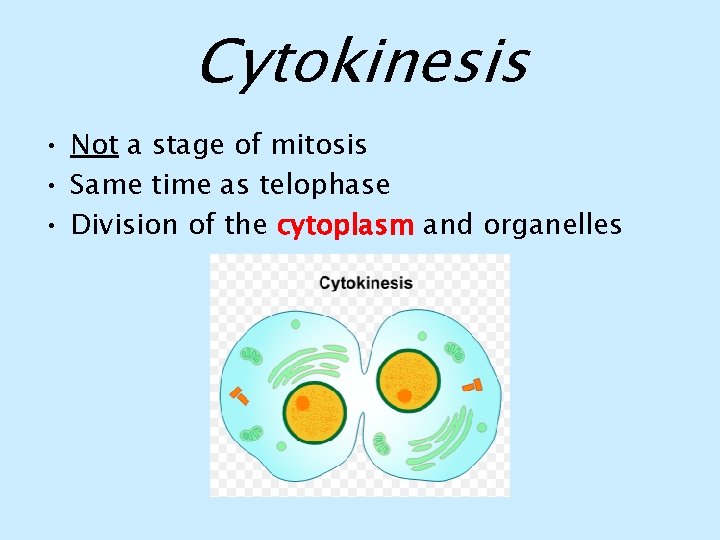
Cytokinesis • Not a stage of mitosis • Same time as telophase • Division of the cytoplasm and organelles
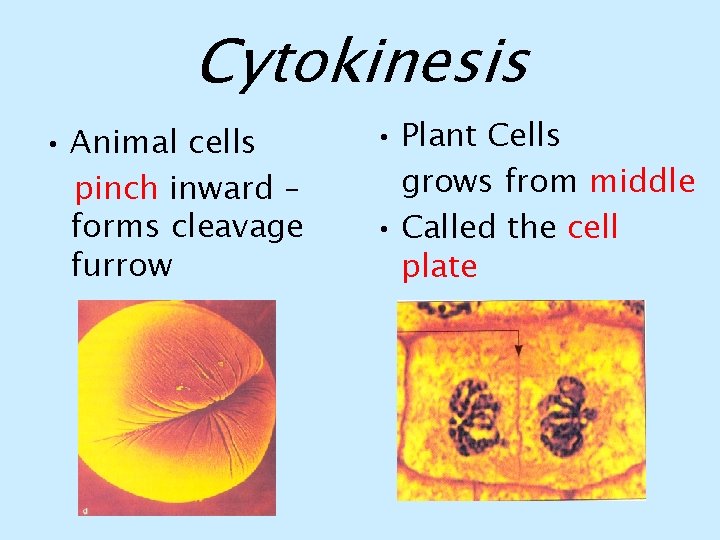
Cytokinesis • Animal cells pinch inward – forms cleavage furrow • Plant Cells grows from middle • Called the cell plate
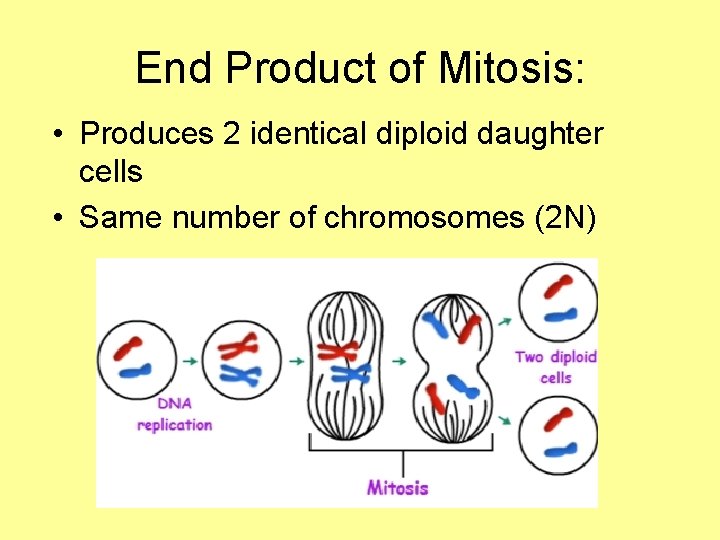
End Product of Mitosis: • Produces 2 identical diploid daughter cells • Same number of chromosomes (2 N)
Rates of Cell Division Rapid • Skin • Digestive tract • Bone marrow • Replace worn out or broken down cells Rarely • Muscle • Nerve (slowest) • Stay in G 0 phase – don’t grow or divide
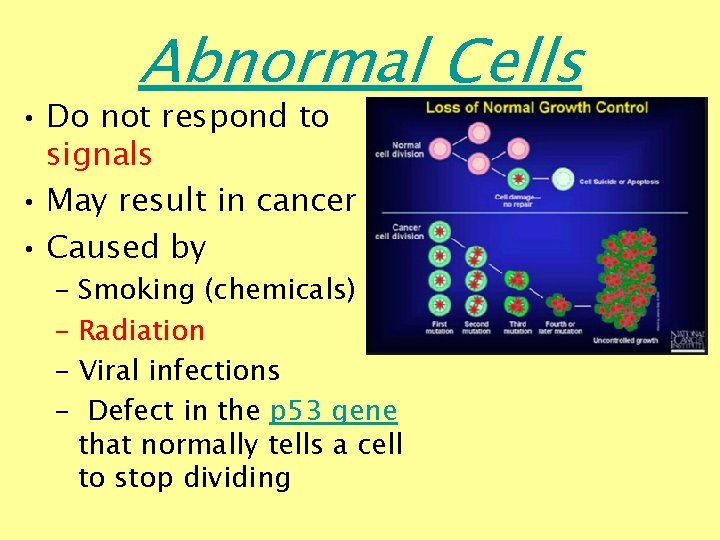
Controlling Cell Growth • Stops growing when touching another cell – Can resume when space is found – This is called contact inhibition • Stops when can’t absorb enough nutrients • Cells can ignore signals to stop growing – Grow uncontrollably – Typical of cancer cells
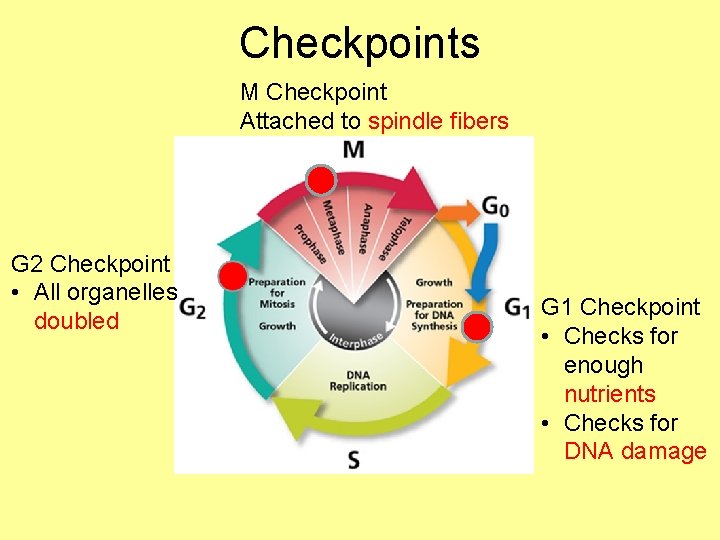
Checkpoints M Checkpoint Attached to spindle fibers G 2 Checkpoint • All organelles doubled G 1 Checkpoint • Checks for enough nutrients • Checks for DNA damage
What triggers the cell cycle? • Cyclin – protein that regulates cell division • Internal Regulators • External Regulators – From outside – Received by carbohydrate antennas – Transmitted to inside
Abnormal Cells • Do not respond to signals • May result in cancer • Caused by – Smoking (chemicals) – Radiation – Viral infections – Defect in the p 53 gene that normally tells a cell to stop dividing
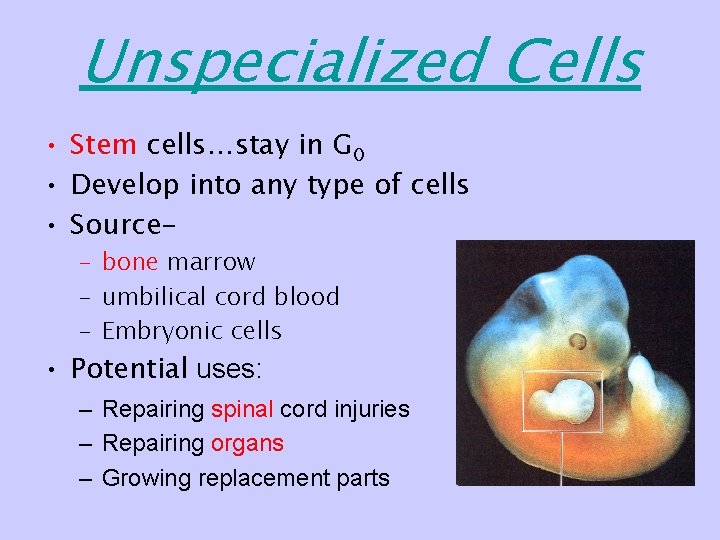
Unspecialized Cells • Stem cells…stay in G 0 • Develop into any type of cells • Source– bone marrow – umbilical cord blood – Embryonic cells • Potential uses: – Repairing spinal cord injuries – Repairing organs – Growing replacement parts