
Cell Function Cells and their Environment Molecules are
- Slides: 17
Cell Function – Cells and their Environment
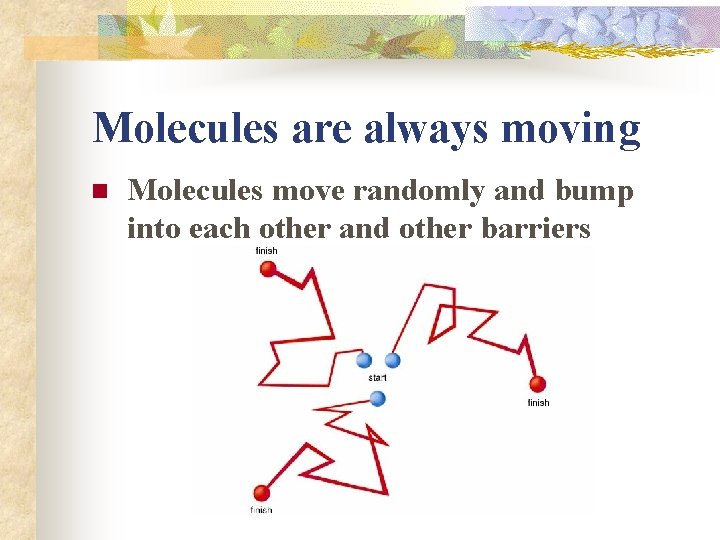
Molecules are always moving n Molecules move randomly and bump into each other and other barriers
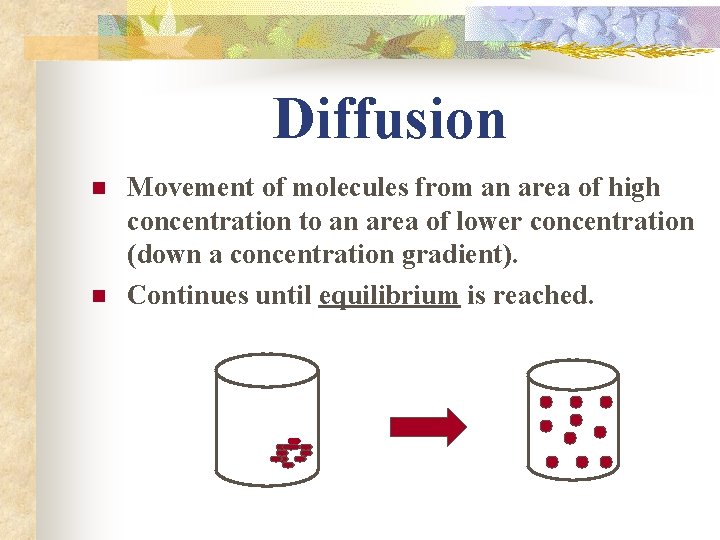
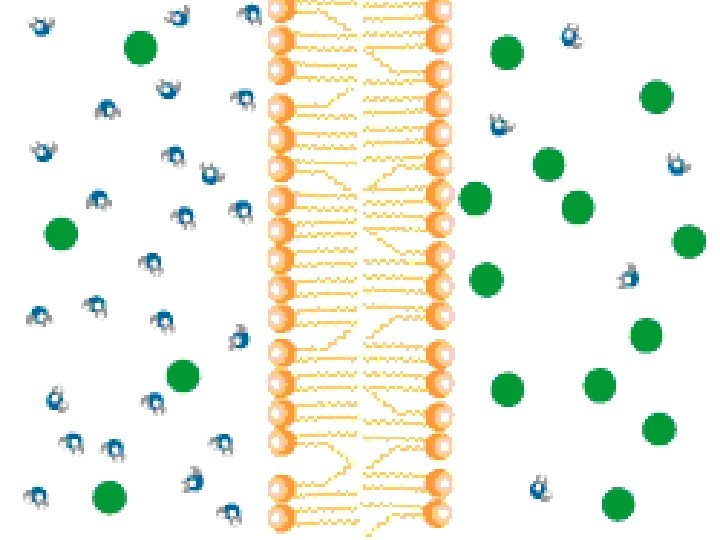
Diffusion n n Movement of molecules from an area of high concentration to an area of lower concentration (down a concentration gradient). Continues until equilibrium is reached.
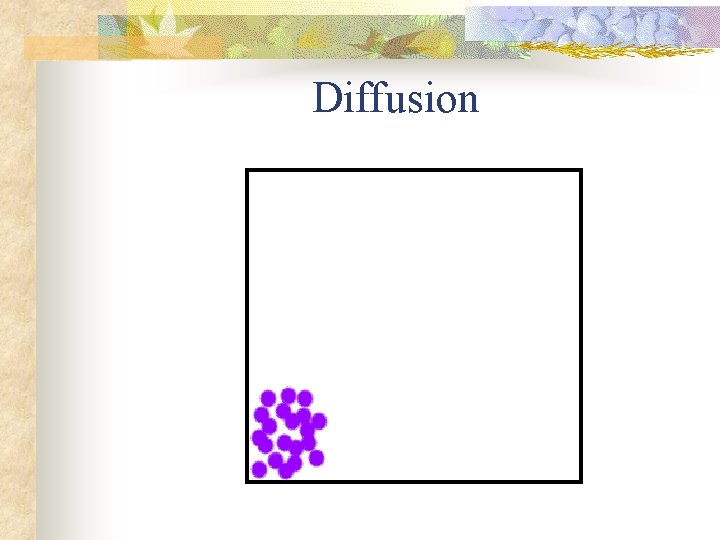
Diffusion
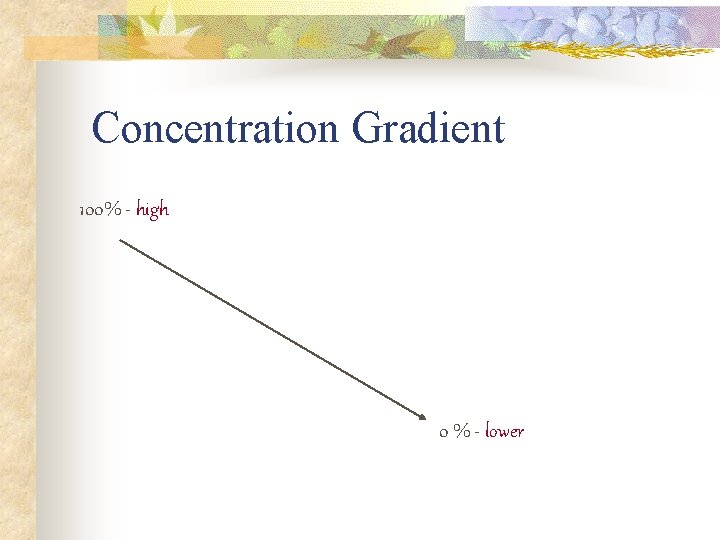
Concentration Gradient 100% - high 0 % - lower
Diffusion n n Occurs without control or energy use – it is called Passive Transport Affected by: n Size of molecules n Size of pores in a membrane n Temperature n Stirring
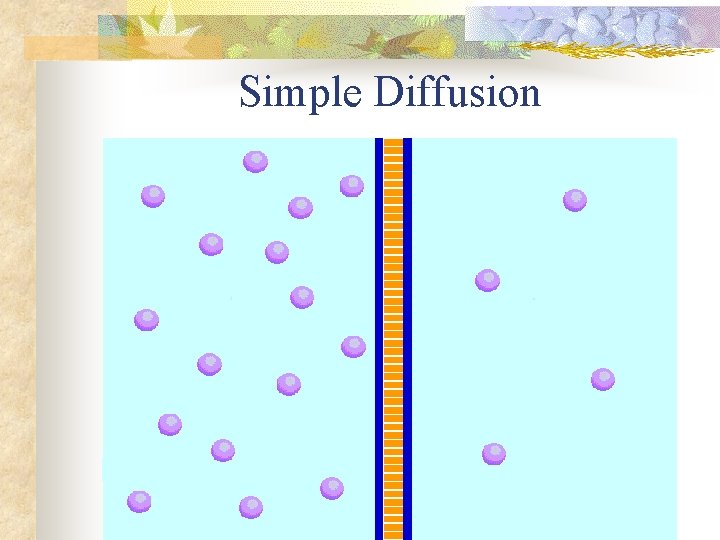
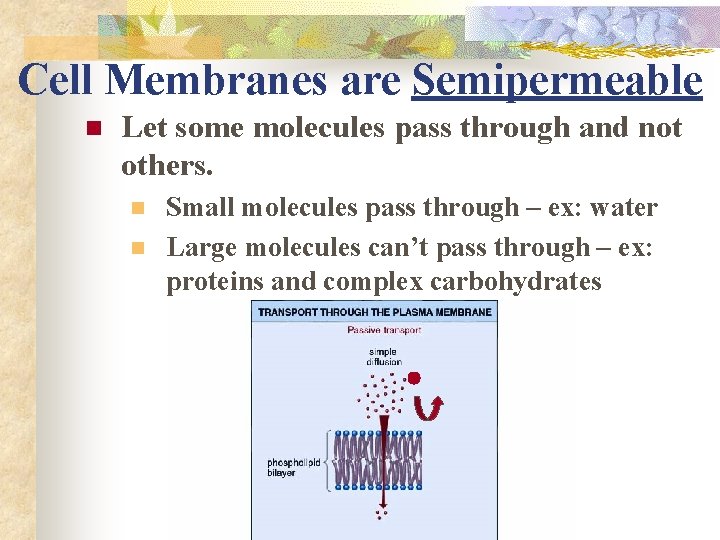
Simple Diffusion
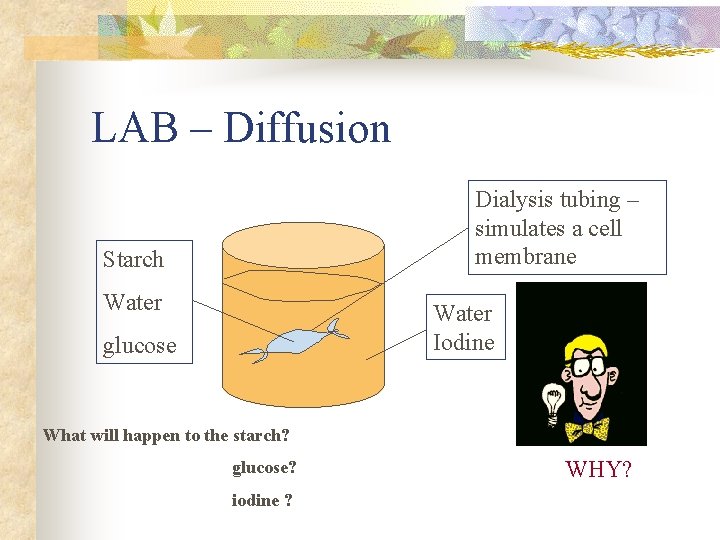
LAB – Diffusion Dialysis tubing – simulates a cell membrane Starch Water Iodine glucose What will happen to the starch? glucose? iodine ? WHY?
Cell Membranes are Semipermeable n Let some molecules pass through and not others. n n Small molecules pass through – ex: water Large molecules can’t pass through – ex: proteins and complex carbohydrates
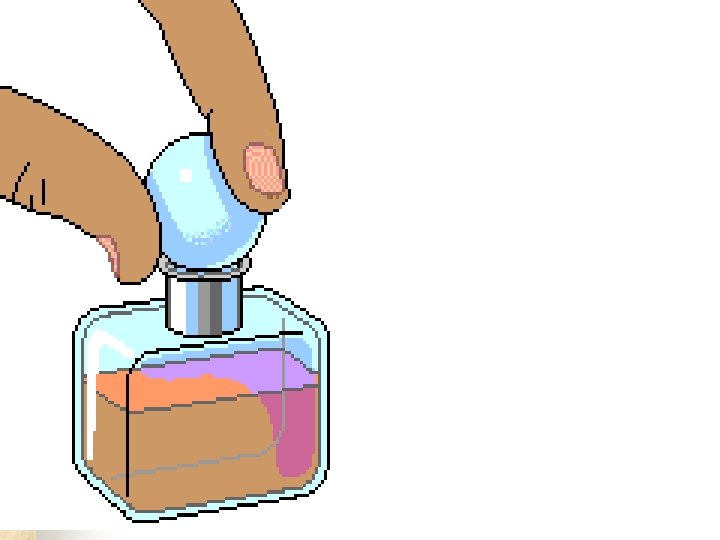
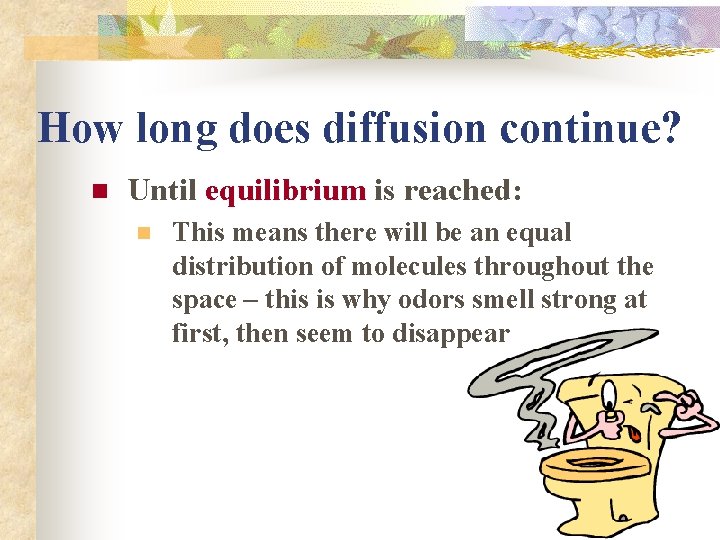
How long does diffusion continue? n Until equilibrium is reached: n This means there will be an equal distribution of molecules throughout the space – this is why odors smell strong at first, then seem to disappear
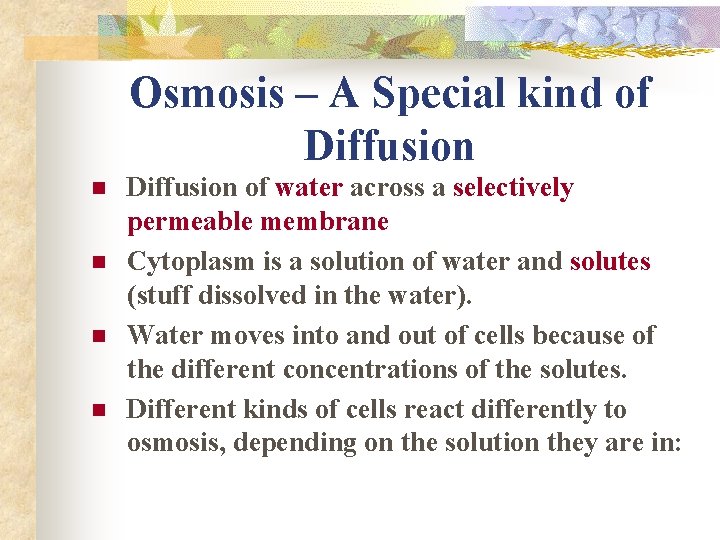
Osmosis – A Special kind of Diffusion n n Diffusion of water across a selectively permeable membrane Cytoplasm is a solution of water and solutes (stuff dissolved in the water). Water moves into and out of cells because of the different concentrations of the solutes. Different kinds of cells react differently to osmosis, depending on the solution they are in:
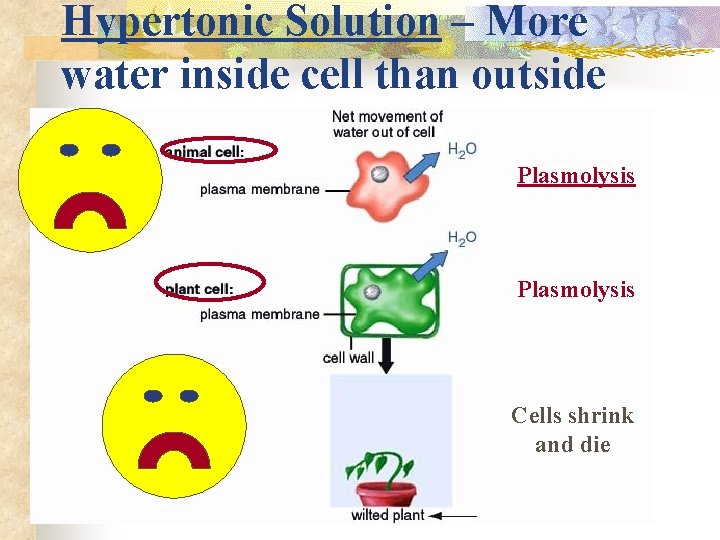
Hypertonic Solution – More water inside cell than outside Plasmolysis Cells shrink and die
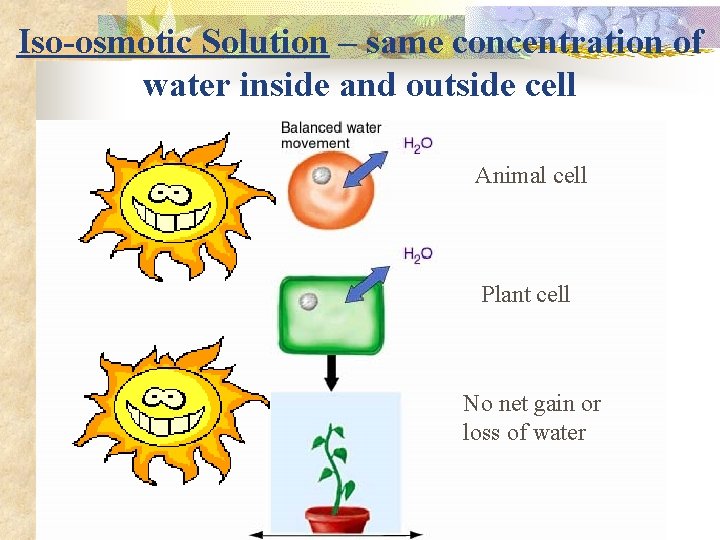
Iso-osmotic Solution – same concentration of water inside and outside cell Animal cell Plant cell No net gain or loss of water
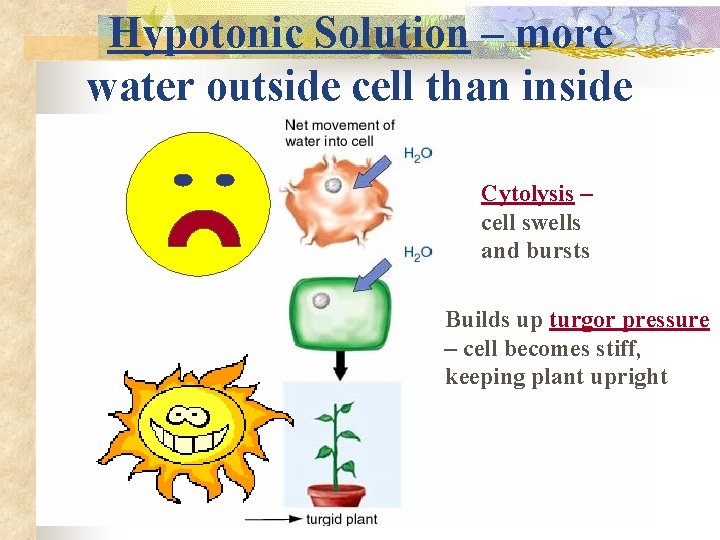
Hypotonic Solution – more water outside cell than inside Cytolysis – cell swells and bursts Builds up turgor pressure – cell becomes stiff, keeping plant upright
http: //wn. com/Surface-area-tovolume_ratio