
Cell Form and Function Dr Anderson GCIT Cell
- Slides: 43
Cell Form and Function Dr. Anderson GCIT
Cell Diversity • Connect tissues and transportation – blood, epithelia • Body movement – muscles (smooth, striated, cardiac) • Storage – adipose (fat cells), hepatocytes • Immune Function – WBC’s • Communication and information processing – nerve cells • Reproduction – Egg and sperm cells
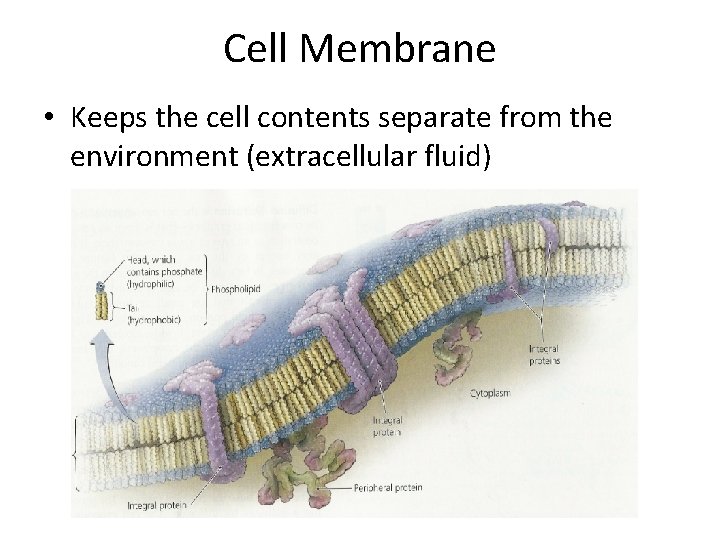
Cell Membrane • Keeps the cell contents separate from the environment (extracellular fluid)
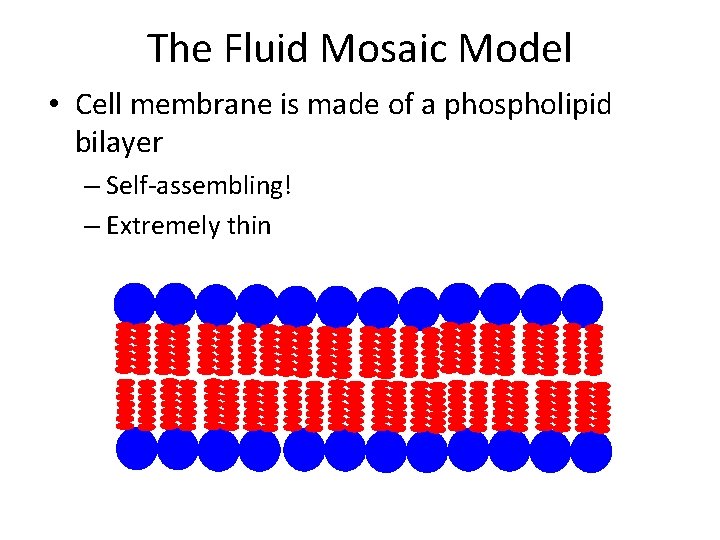
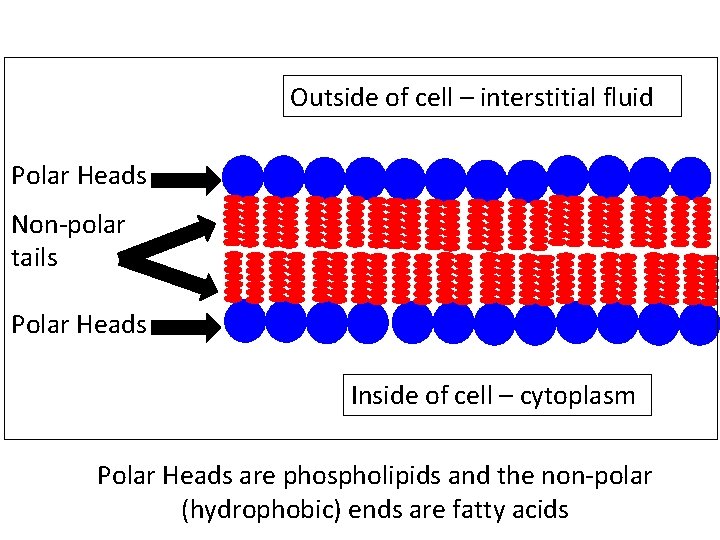
The Fluid Mosaic Model • Cell membrane is made of a phospholipid bilayer – Self-assembling! – Extremely thin
Outside of cell – interstitial fluid Polar Heads Non-polar tails Polar Heads Inside of cell – cytoplasm Polar Heads are phospholipids and the non-polar (hydrophobic) ends are fatty acids
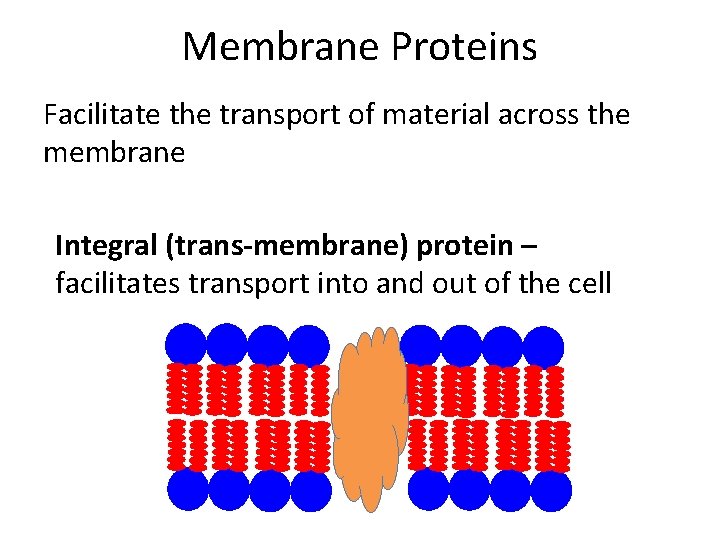
Membrane Proteins Facilitate the transport of material across the membrane Integral (trans-membrane) protein – facilitates transport into and out of the cell
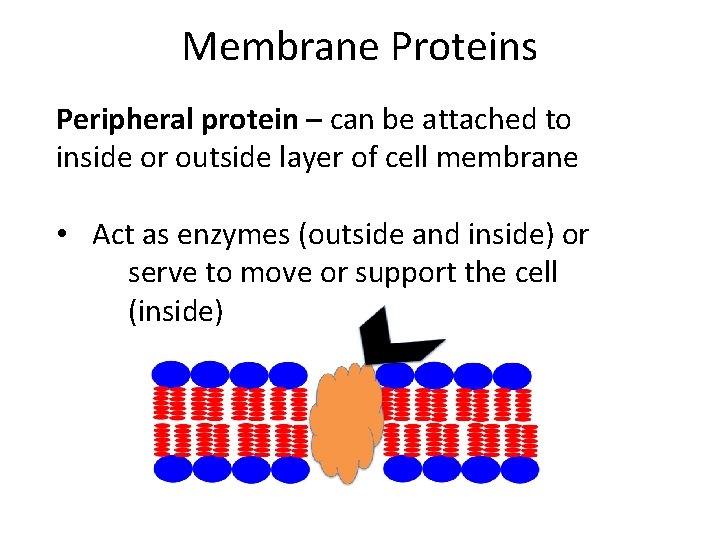
Membrane Proteins Peripheral protein – can be attached to inside or outside layer of cell membrane • Act as enzymes (outside and inside) or serve to move or support the cell (inside)
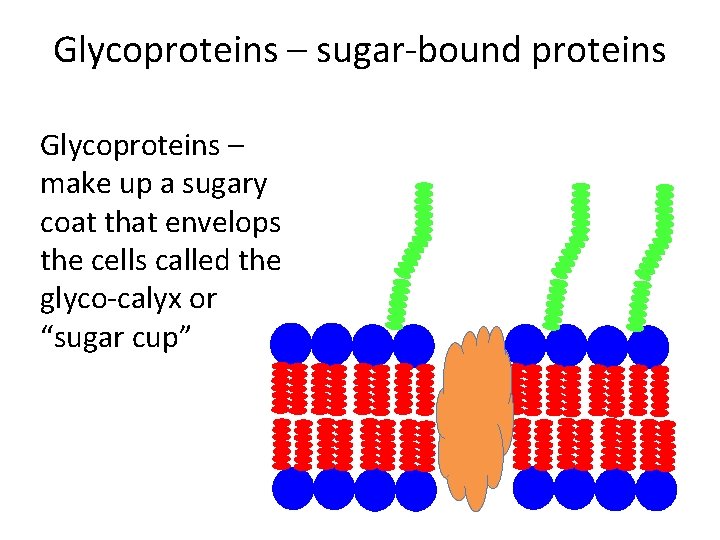
Glycoproteins – sugar-bound proteins Glycoproteins – make up a sugary coat that envelops the cells called the glyco-calyx or “sugar cup”
The Glycocalyx • The carbohydrates on the cell surface provide a way for some cells to recognize each other – Sperm and egg – WBC and bacteria or other pathogens
Membrane Junctions • Bind cells together – glycoproteins act as adhesive • Cell membrane structure – tongue-and-groove • Specialized Junctions – – Tight junction – Desmosomes – Gap Junctions
Special Membrane Junctions • Tight Junctions – proteins in the cell membranes that bind cells together – Makes sure nothing passes between cells • Desmosomes - small points of connective proteins that anchor cells together – Found in cells subject to heavy pulling forces • Gap Junctions – an open junction between adjacent cells – Permits chemical communication (transport) between cells
Membrane Transport • Interstitial Fluid – extracellular fluid largely derived from blood, but acellular – Amino acids, wastes, electrolytes, sugars, etc. • Cells need to hold a balance of these solutes between their inside and outside environments • How is this done?
Membrane Permeability • Membranes only allow passage to certain molecules, or only permit movement in one direction • Selectively Permeable – only certain molecules can pass
Active Transport • ATP is used to drive the concentration gradient across the cell membrane 1. Primary – ATP changes the shape of membrane proteins to shuttle specific materials across 2. Secondary - uses stored potential energy from primary transport to move substances 3. Vesicular – vesicles “gulp” materials from outside the cell by pinching off a bubble from the cell membrane
ELMO • Review Pages 74 -75 in textbook to explain prior slide in more detail
Vesicular Transport • Endocytosis – cell ingests materials via vesicles – Receptor mediated • Exocytosis – cell expels material into the environment via vesicles • Phagocytosis?
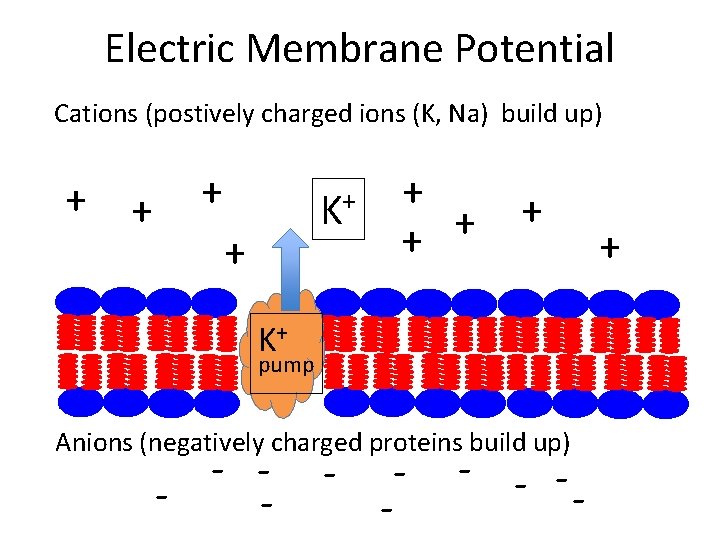
Plasma Membrane – Resting Potential • Many cells work using electrical energy which is derived from ion separation – Muscle cells, nerve cells, etc. • How is this accomplished?
Electric Membrane Potential Cations (postively charged ions (K, Na) build up) + + + K+ pump Anions (negatively charged proteins build up) - - - - +
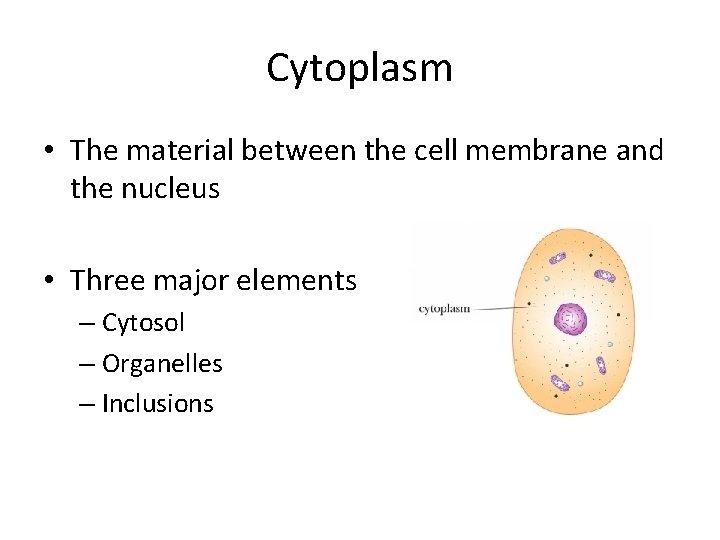
Cytoplasm • The material between the cell membrane and the nucleus • Three major elements – Cytosol – Organelles – Inclusions
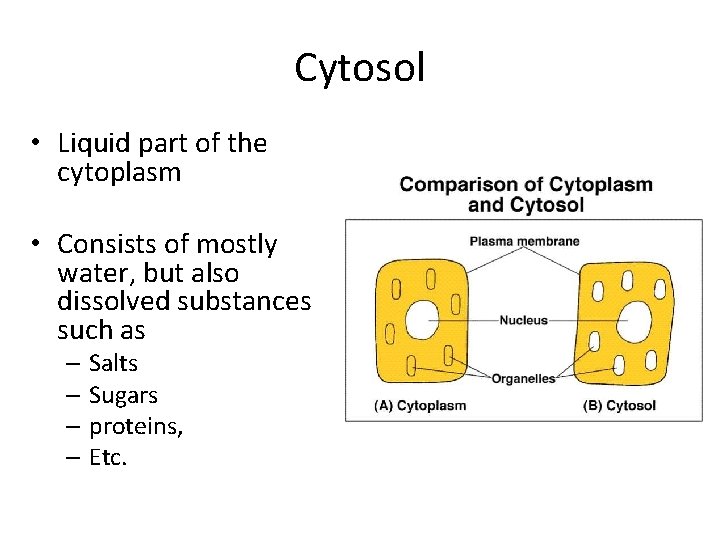
Cytosol • Liquid part of the cytoplasm • Consists of mostly water, but also dissolved substances such as – Salts – Sugars – proteins, – Etc.
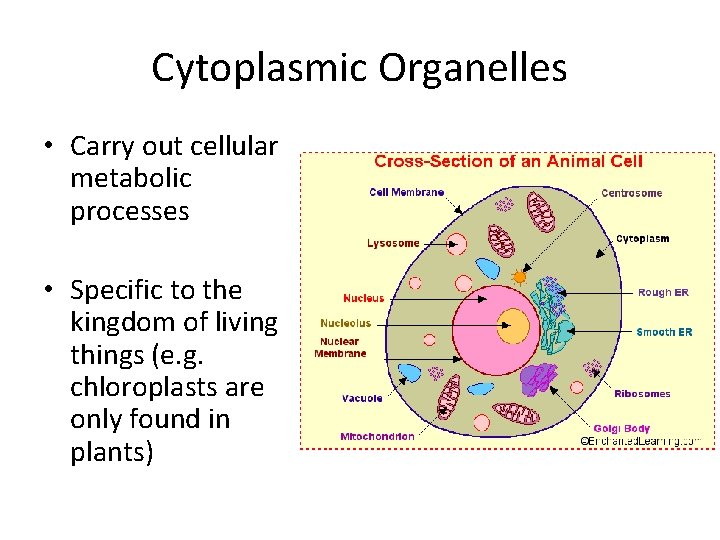
Cytoplasmic Organelles • Carry out cellular metabolic processes • Specific to the kingdom of living things (e. g. chloroplasts are only found in plants)
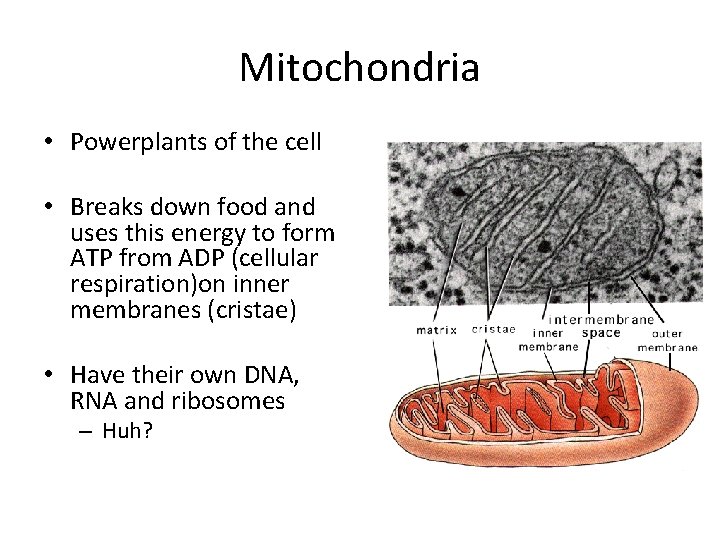
Mitochondria • Powerplants of the cell • Breaks down food and uses this energy to form ATP from ADP (cellular respiration)on inner membranes (cristae) • Have their own DNA, RNA and ribosomes – Huh?
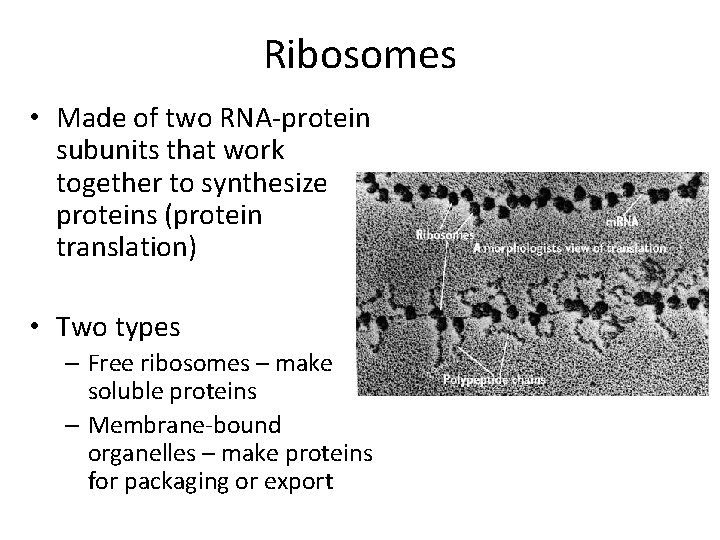
Ribosomes • Made of two RNA-protein subunits that work together to synthesize proteins (protein translation) • Two types – Free ribosomes – make soluble proteins – Membrane-bound organelles – make proteins for packaging or export
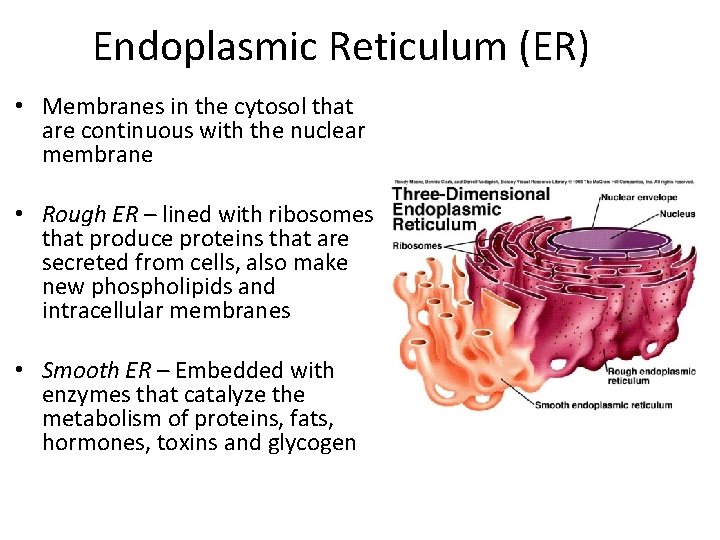
Endoplasmic Reticulum (ER) • Membranes in the cytosol that are continuous with the nuclear membrane • Rough ER – lined with ribosomes that produce proteins that are secreted from cells, also make new phospholipids and intracellular membranes • Smooth ER – Embedded with enzymes that catalyze the metabolism of proteins, fats, hormones, toxins and glycogen
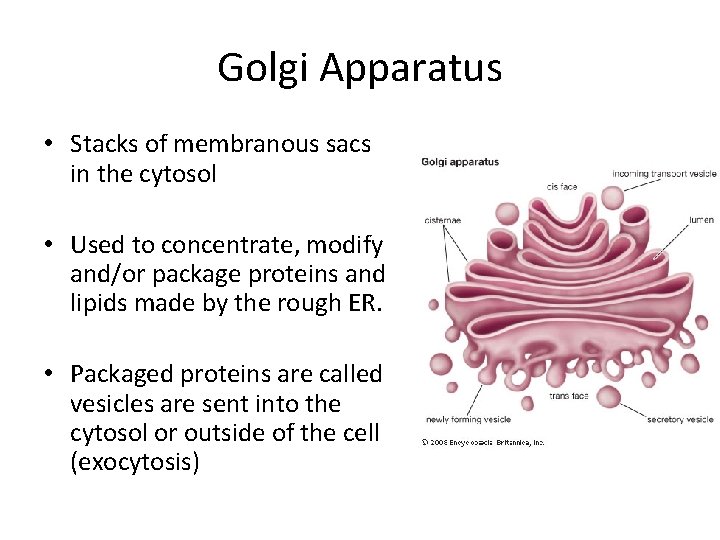
Golgi Apparatus • Stacks of membranous sacs in the cytosol • Used to concentrate, modify and/or package proteins and lipids made by the rough ER. • Packaged proteins are called vesicles are sent into the cytosol or outside of the cell (exocytosis)
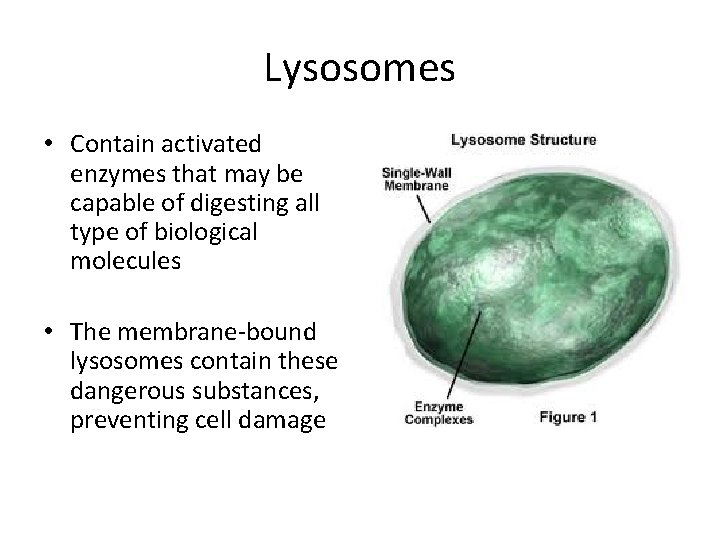
Lysosomes • Contain activated enzymes that may be capable of digesting all type of biological molecules • The membrane-bound lysosomes contain these dangerous substances, preventing cell damage
Peroxisomes • Contain extremely reactive oxygen species (ROS) that are used to detoxify certain poisons such as alcohol • Also destroy free radicals – highly reactive waste products of metabolism that can disrupt cell processes – In which cells might these be found?
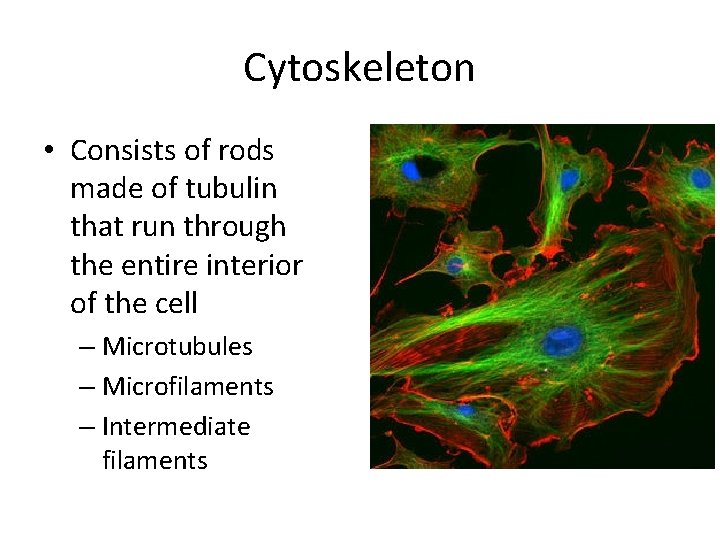
Cytoskeleton • Consists of rods made of tubulin that run through the entire interior of the cell – Microtubules – Microfilaments – Intermediate filaments
Cytoskeleton Components • Microtubules – Determine cell shape and influence organelle dstribution • Microfilaments – A “web” of these filaments attach to the inner surface of the cell membrane and give the cell strength. Also helps change cell shape during mitosis/meiosis • Intermediate Filaments – Give the cell tensile strength by attaching to desmosomes
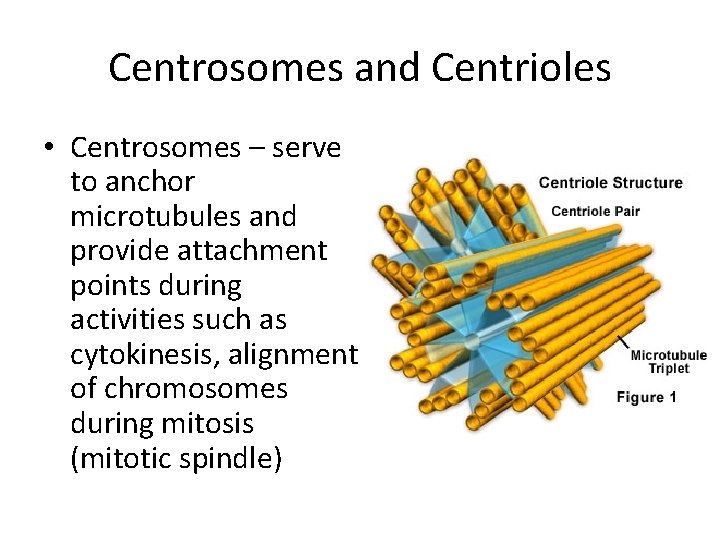
Centrosomes and Centrioles • Centrosomes – serve to anchor microtubules and provide attachment points during activities such as cytokinesis, alignment of chromosomes during mitosis (mitotic spindle)
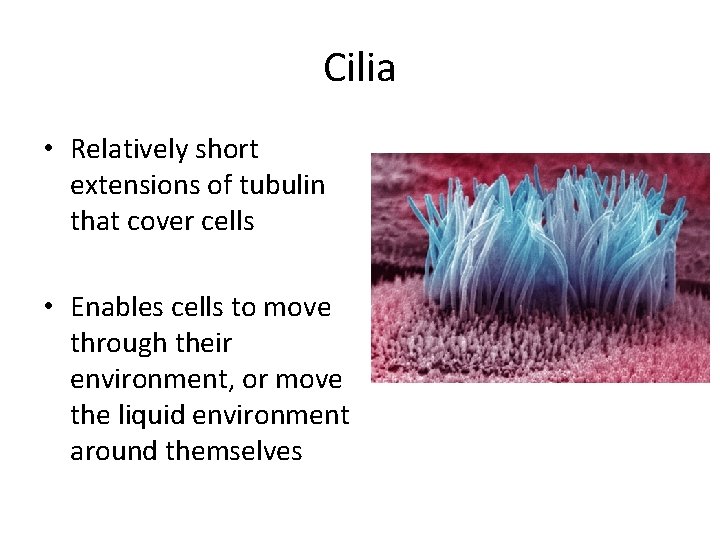
Cilia • Relatively short extensions of tubulin that cover cells • Enables cells to move through their environment, or move the liquid environment around themselves
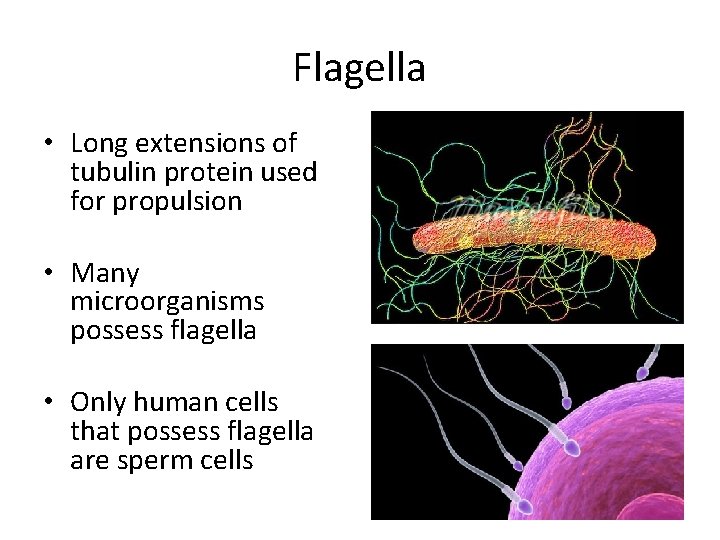
Flagella • Long extensions of tubulin protein used for propulsion • Many microorganisms possess flagella • Only human cells that possess flagella are sperm cells
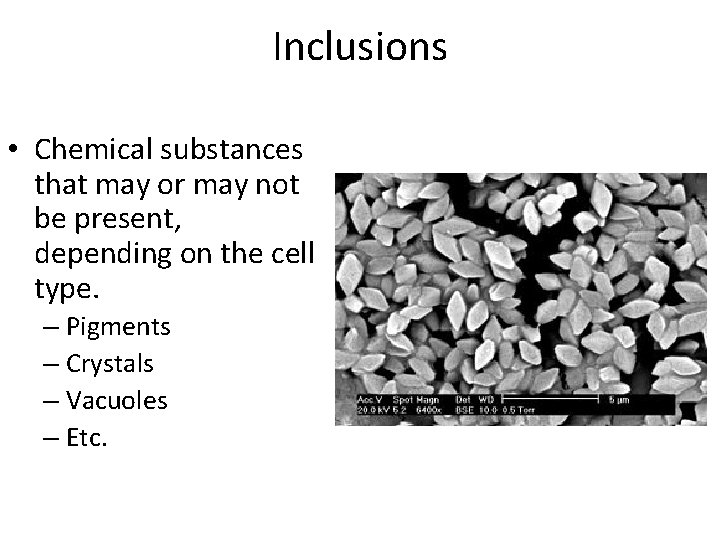
Inclusions • Chemical substances that may or may not be present, depending on the cell type. – Pigments – Crystals – Vacuoles – Etc.
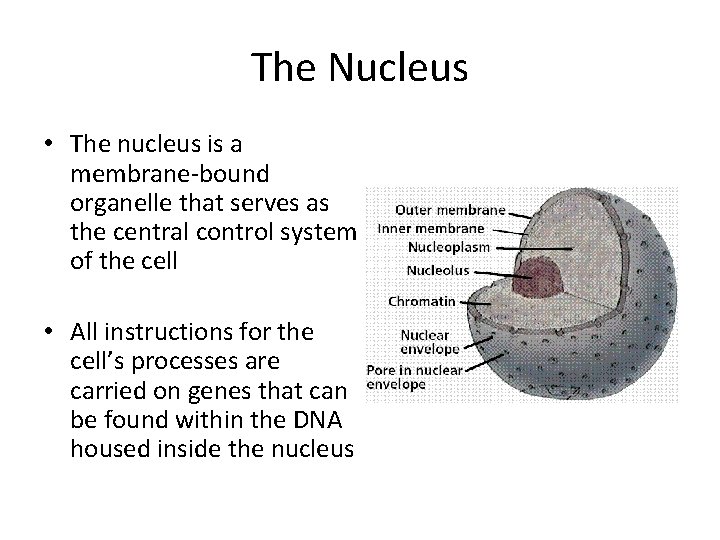
The Nucleus • The nucleus is a membrane-bound organelle that serves as the central control system of the cell • All instructions for the cell’s processes are carried on genes that can be found within the DNA housed inside the nucleus
Nucleus • Nuclear Envelope – double layered membrane that surrounds the nucleus – Outer Layer – continuous with ER – Inner Layer – lined with lamina, filaments that hold the nuclear shape – Nuclear pores penetrate both layers, allowing some molecules to flow into and out of the nucleus
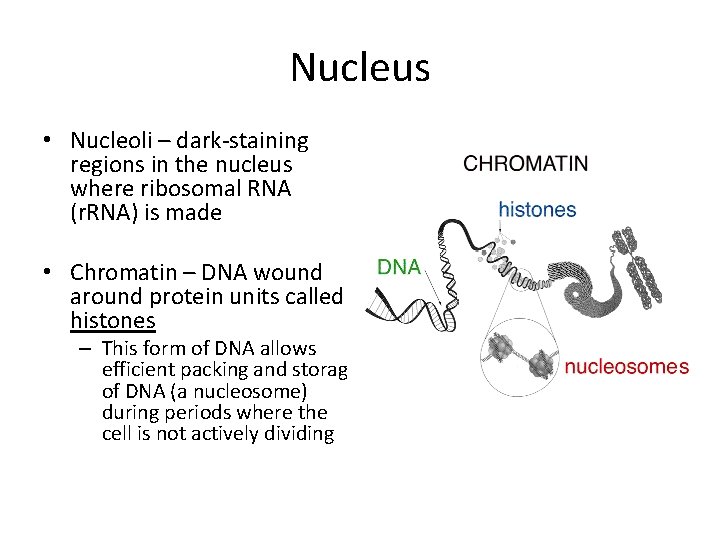
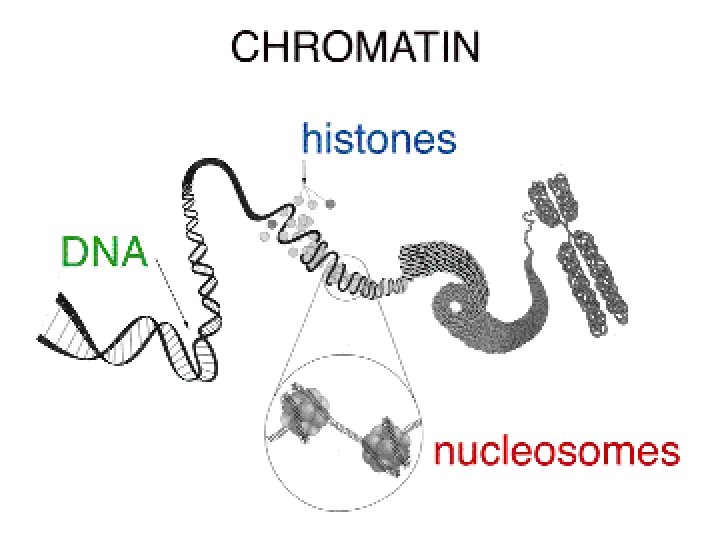
Nucleus • Nucleoli – dark-staining regions in the nucleus where ribosomal RNA (r. RNA) is made • Chromatin – DNA wound around protein units called histones – This form of DNA allows efficient packing and storage of DNA (a nucleosome) during periods where the cell is not actively dividing
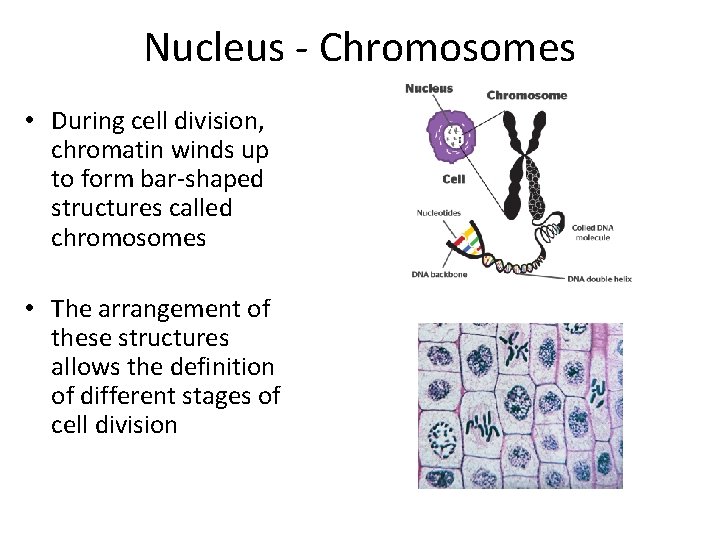
Nucleus - Chromosomes • During cell division, chromatin winds up to form bar-shaped structures called chromosomes • The arrangement of these structures allows the definition of different stages of cell division
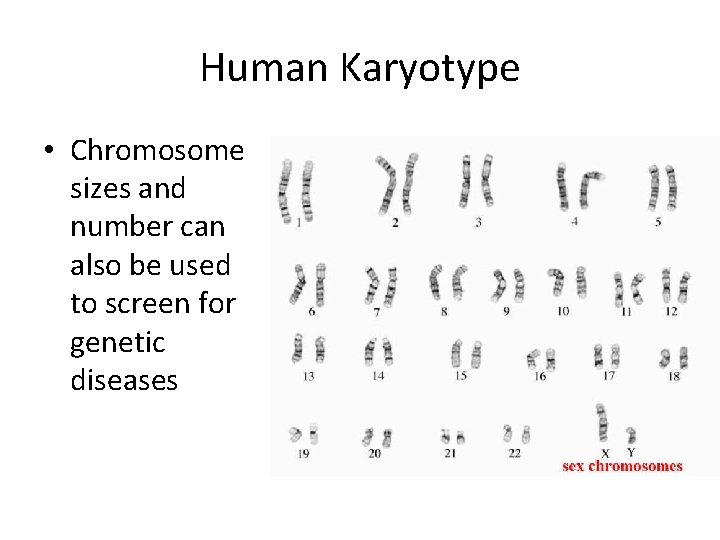
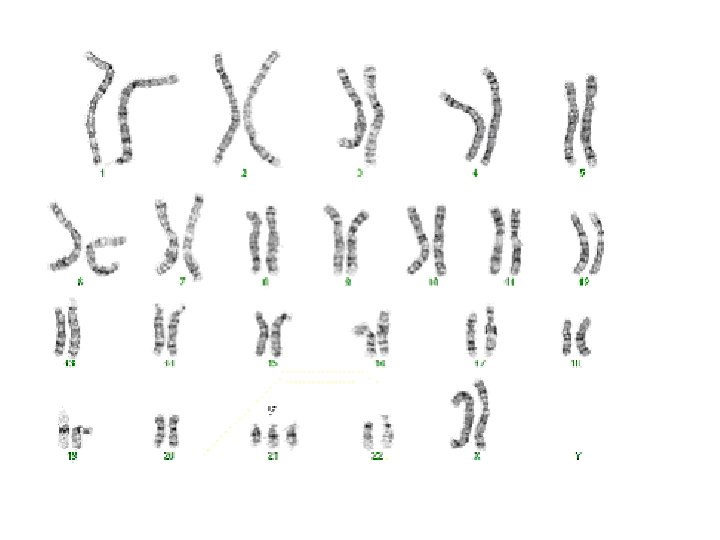
Human Karyotype • Chromosome sizes and number can also be used to screen for genetic diseases
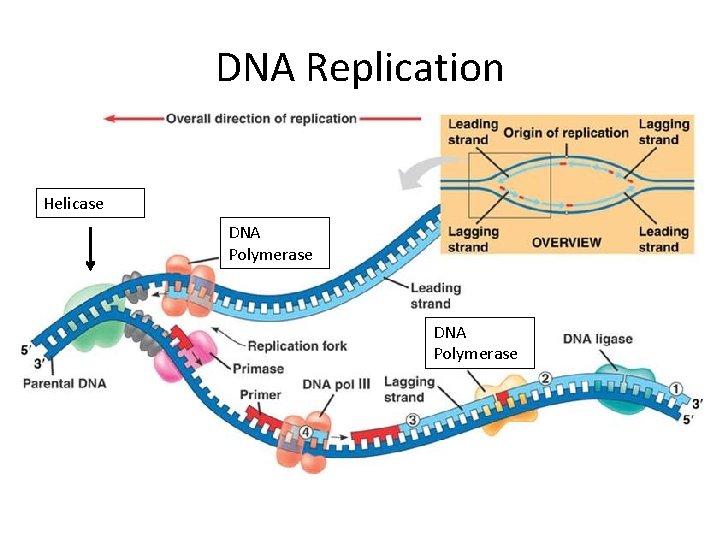
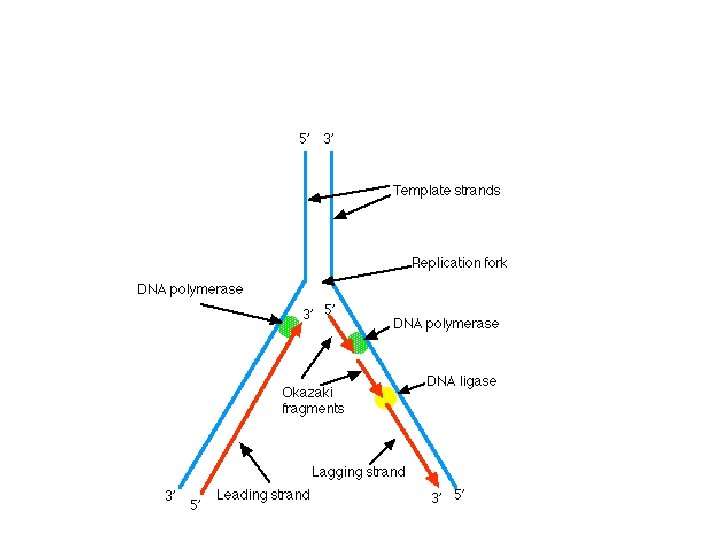
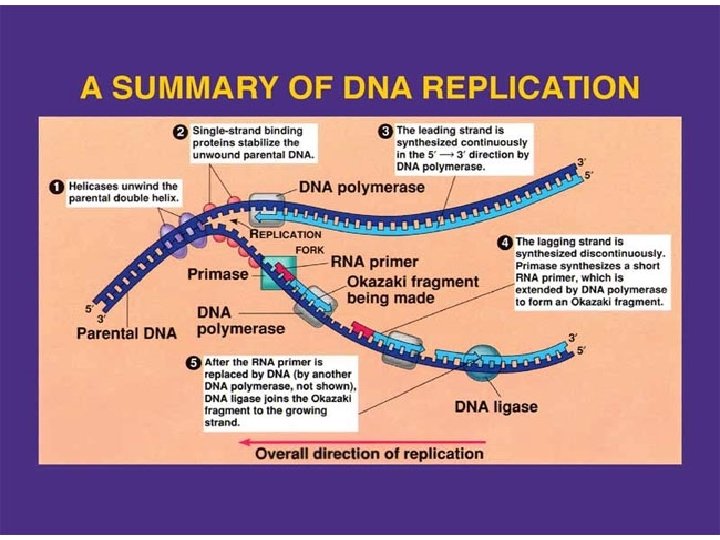
DNA Replication Helicase DNA Polymerase