
Cell Features Ch 3 2 Pg 55 61


- Slides: 32
Cell Features Ch. 3 -2 Pg 55 -61
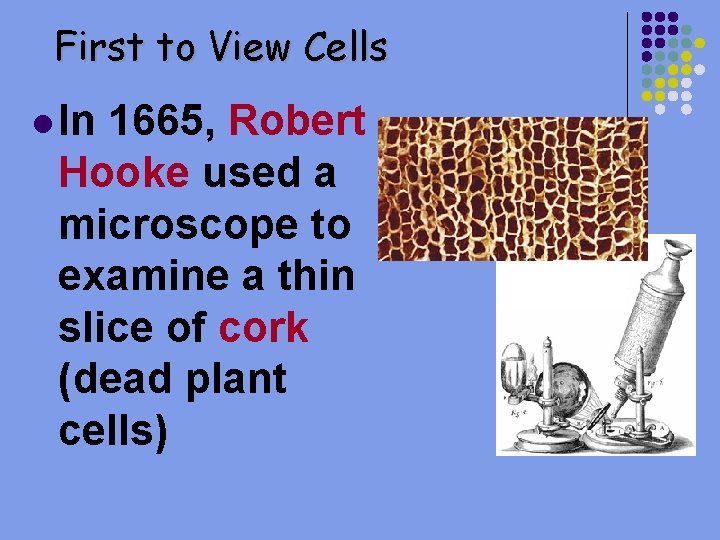
First to View Cells l In 1665, Robert Hooke used a microscope to examine a thin slice of cork (dead plant cells)
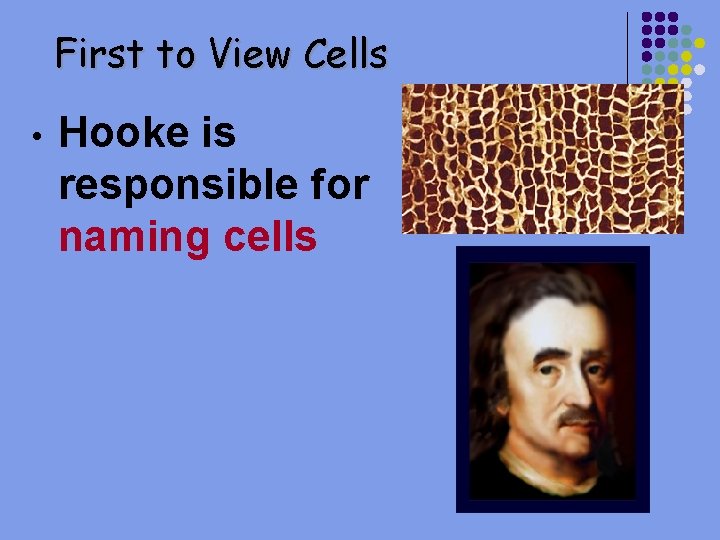
First to View Cells • Hooke is responsible for naming cells
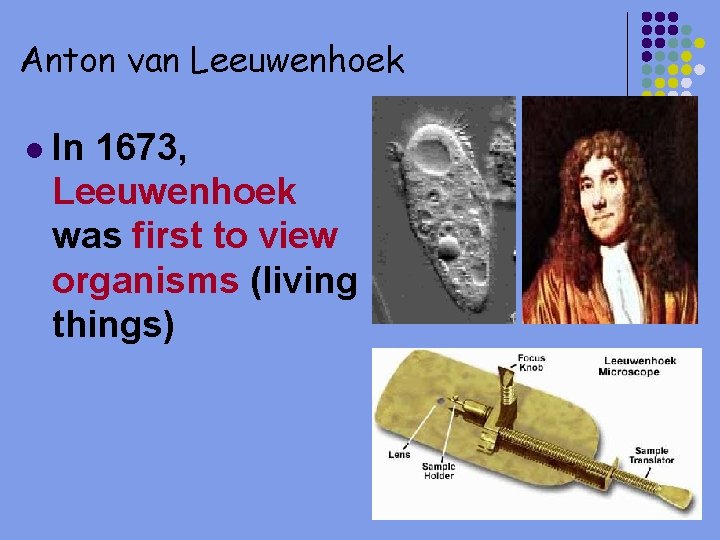
Anton van Leeuwenhoek l In 1673, Leeuwenhoek was first to view organisms (living things)
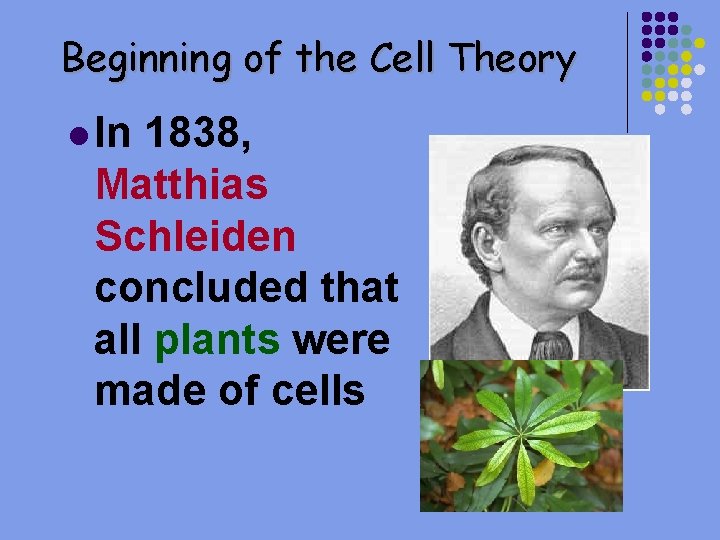
Beginning of the Cell Theory l In 1838, Matthias Schleiden concluded that all plants were made of cells
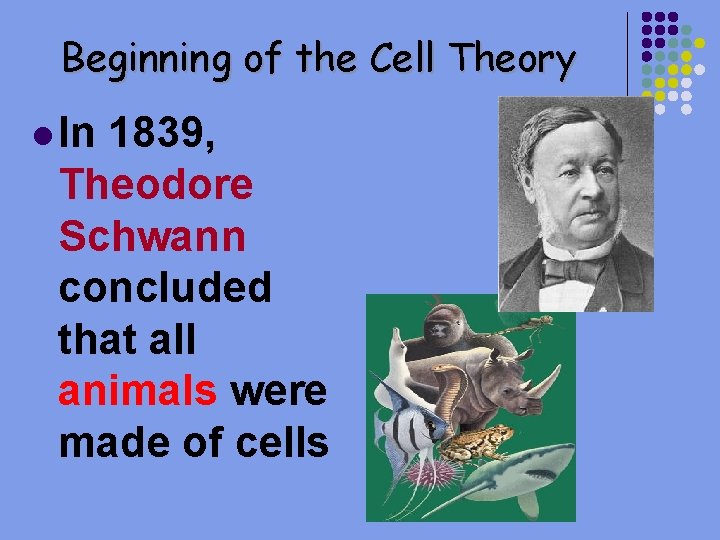
Beginning of the Cell Theory l In 1839, Theodore Schwann concluded that all animals were made of cells
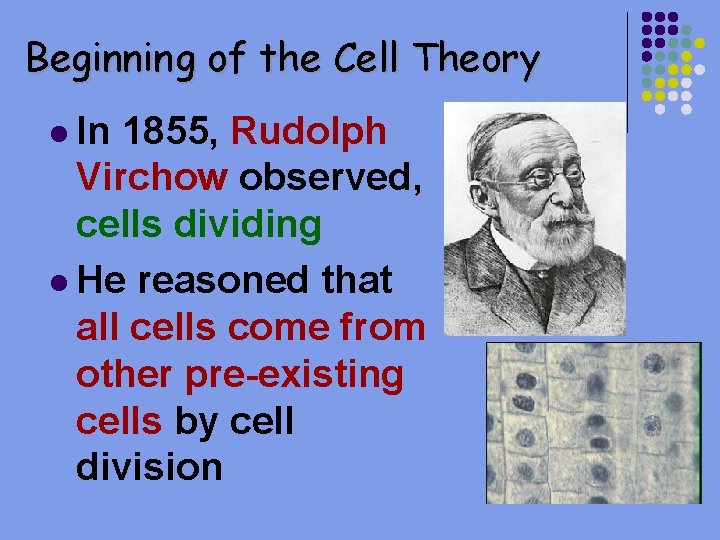
Beginning of the Cell Theory l In 1855, Rudolph Virchow observed, cells dividing l He reasoned that all cells come from other pre-existing cells by cell division
cell theory The cell theory states that: • Cells are the basic units of all life • All living things are made up of cells • New cells are produced from existing cells
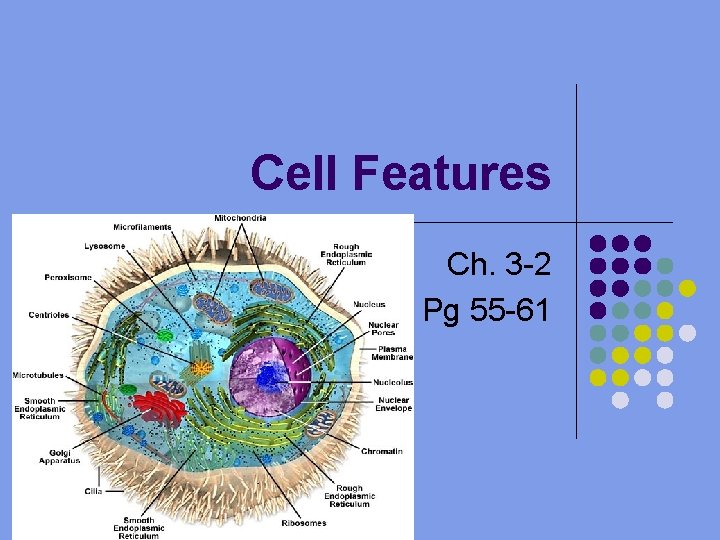
Common Features of Cells l Cell Membrane: encloses the cell and separates the cell interior from its surroundings l Regulates what enters and leaves a cell (gases nutrients, and wastes l Cytoplasm: cell interior, it’s clear and jellylike l Contains materials need by cell Ribosomes: cellular structures that make proteins DNA: hereditary information l l l Instructions for making proteins, regulates cellular activities, and cell reproduction
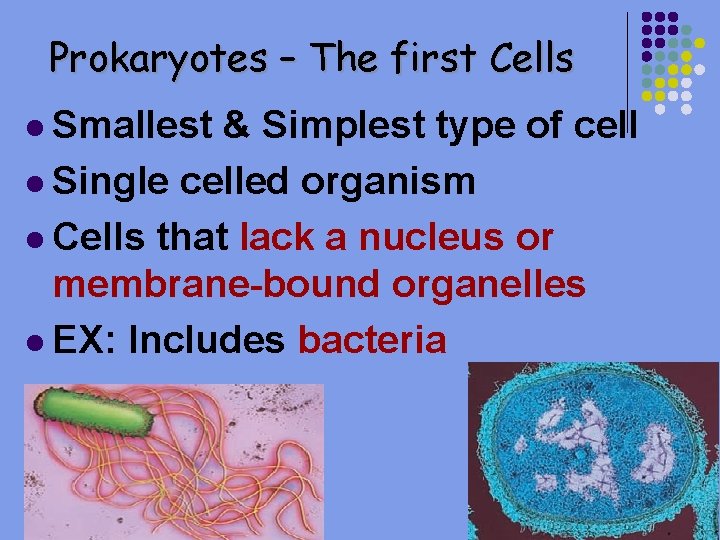
Prokaryotes – The first Cells l Smallest & Simplest type of cell l Single celled organism l Cells that lack a nucleus or membrane-bound organelles l EX: Includes bacteria
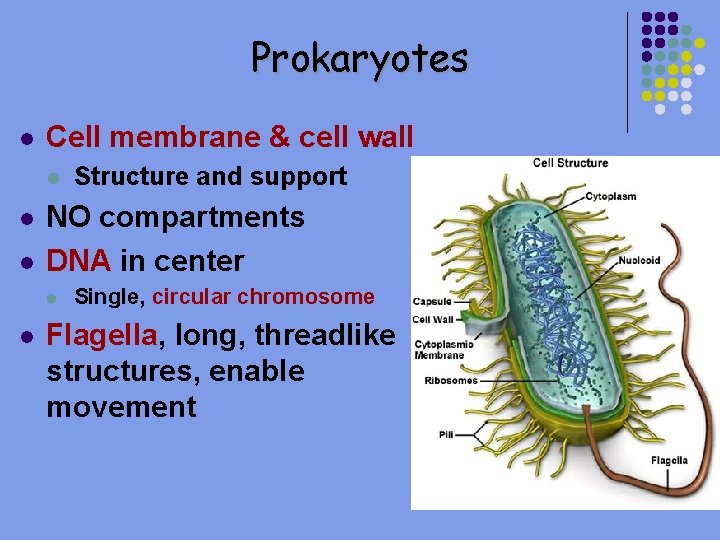
Prokaryotes l Cell membrane & cell wall l NO compartments DNA in center l l Structure and support Single, circular chromosome Flagella, long, threadlike structures, enable movement
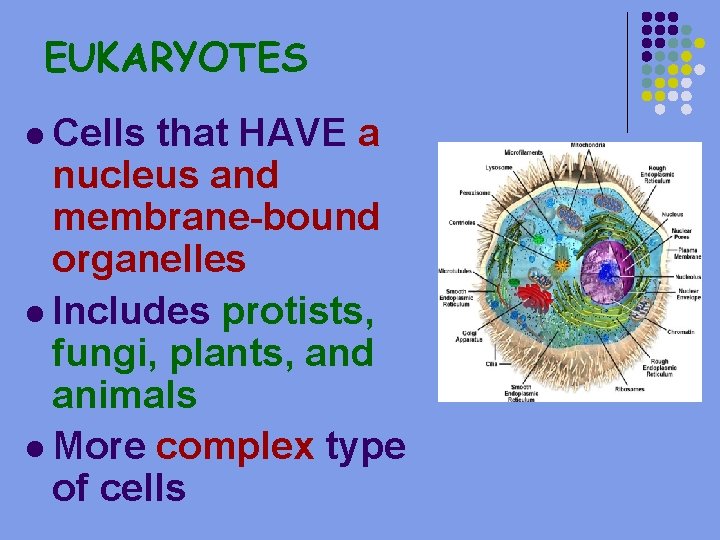
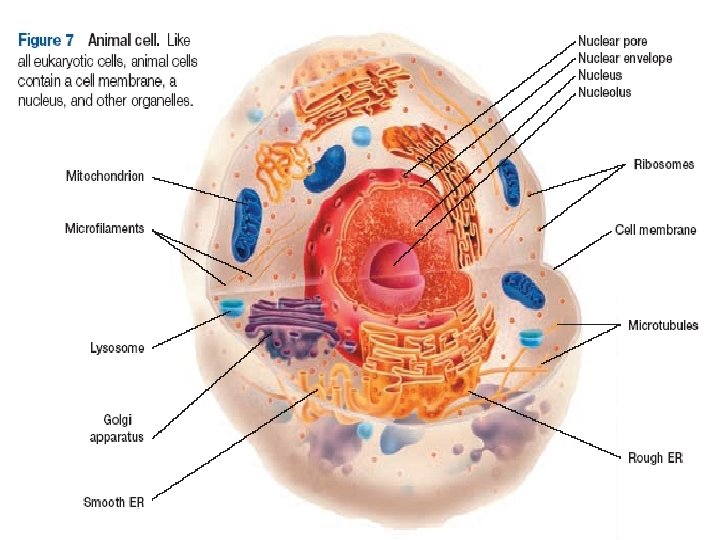
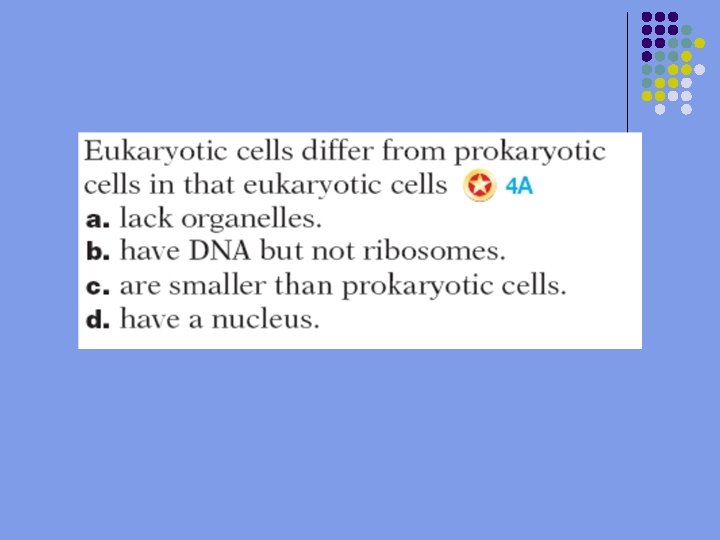
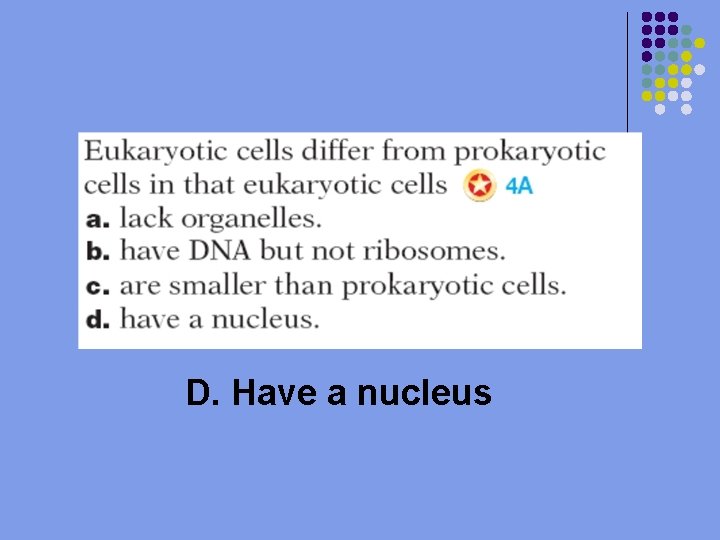
EUKARYOTES l Cells that HAVE a nucleus and membrane-bound organelles l Includes protists, fungi, plants, and animals l More complex type of cells
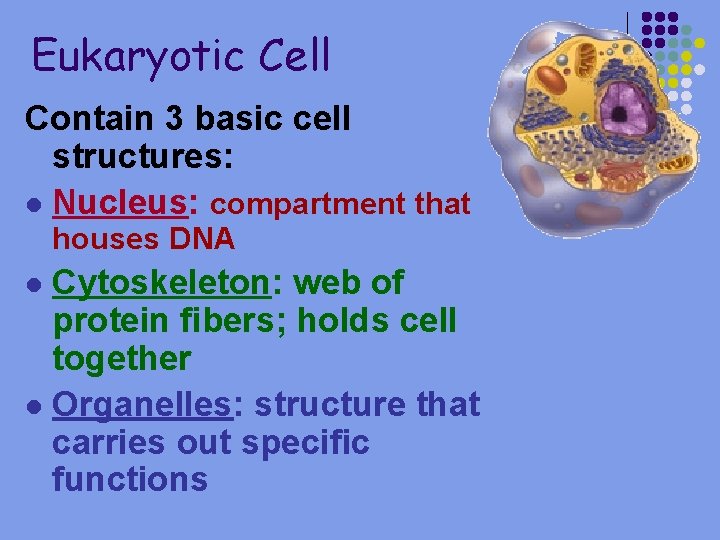
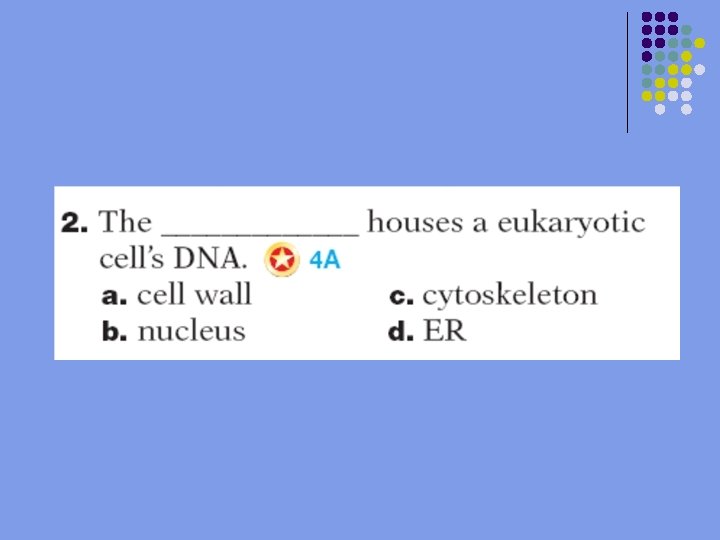
Eukaryotic Cell Contain 3 basic cell structures: l Nucleus: compartment that houses DNA Cytoskeleton: web of protein fibers; holds cell together l Organelles: structure that carries out specific functions l
B. NUCLEUS
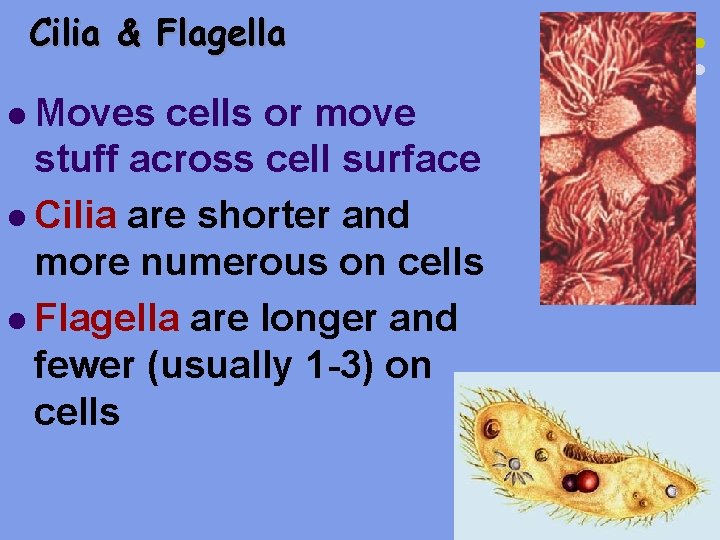
Cilia & Flagella l Moves cells or move stuff across cell surface l Cilia are shorter and more numerous on cells l Flagella are longer and fewer (usually 1 -3) on cells
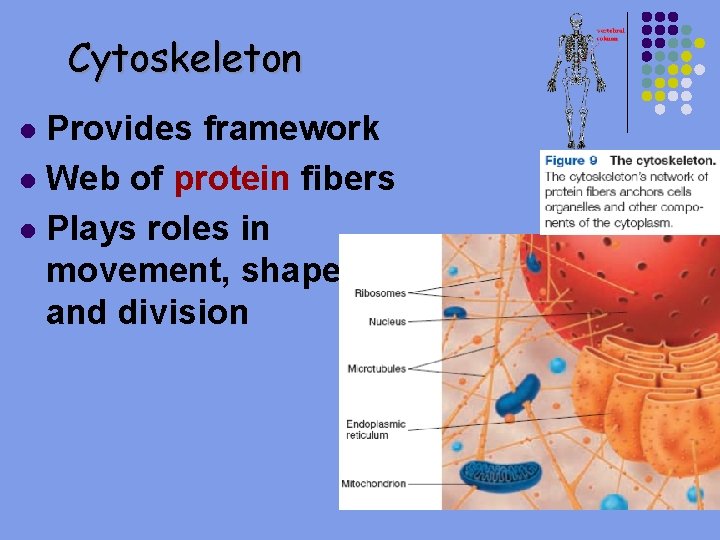
Cytoskeleton Provides framework l Web of protein fibers l Plays roles in movement, shape, and division l
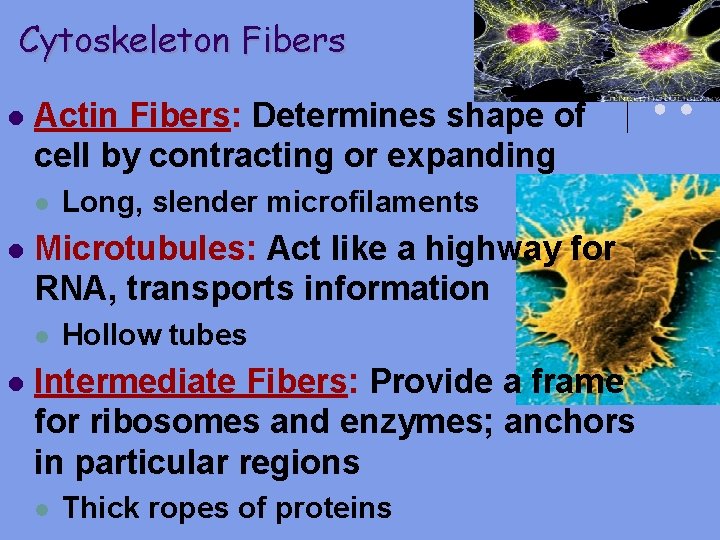
Cytoskeleton Fibers l Actin Fibers: Determines shape of cell by contracting or expanding l l Microtubules: Act like a highway for RNA, transports information l l Long, slender microfilaments Hollow tubes Intermediate Fibers: Provide a frame for ribosomes and enzymes; anchors in particular regions l Thick ropes of proteins
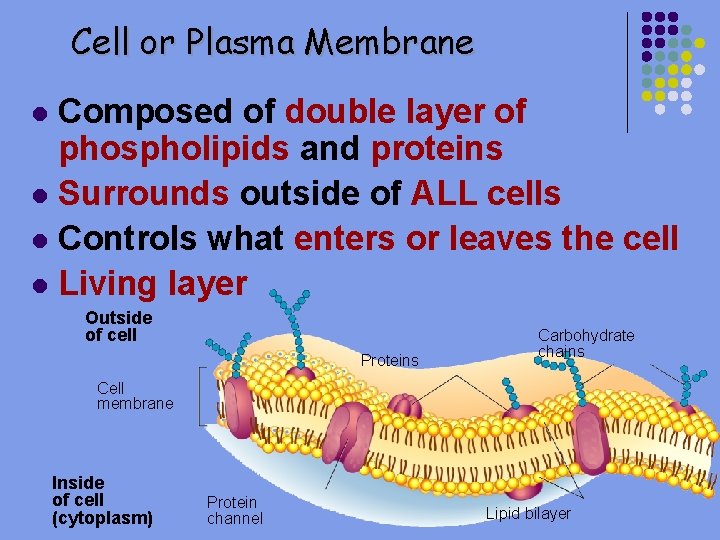
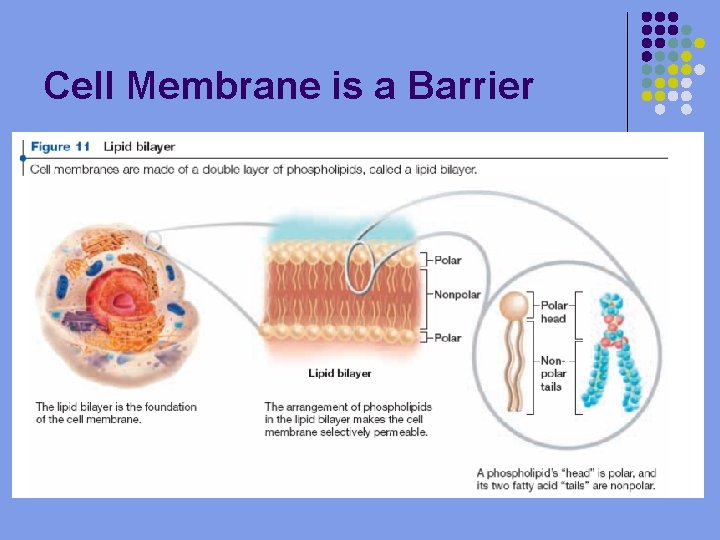
Cell or Plasma Membrane Composed of double layer of phospholipids and proteins l Surrounds outside of ALL cells l Controls what enters or leaves the cell l Living layer l Outside of cell Proteins Carbohydrate chains Cell membrane Inside of cell (cytoplasm) Protein channel Lipid bilayer
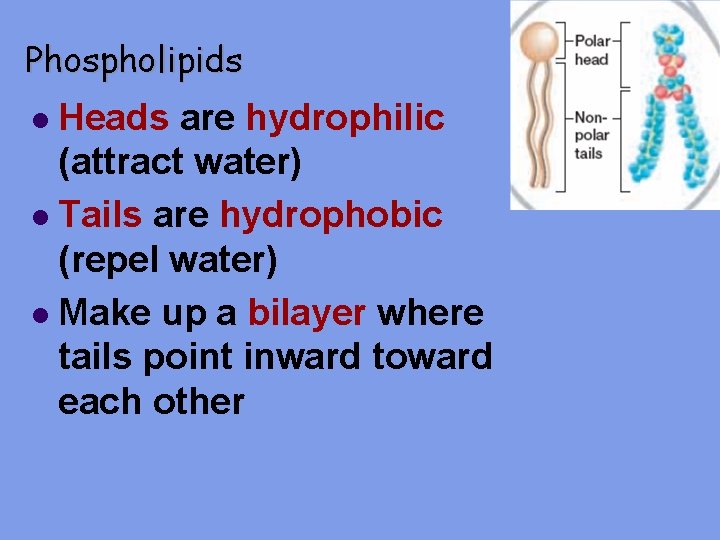
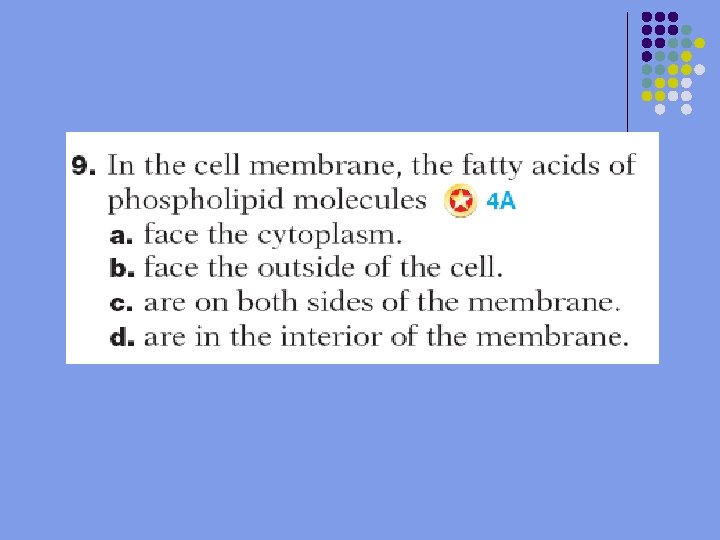
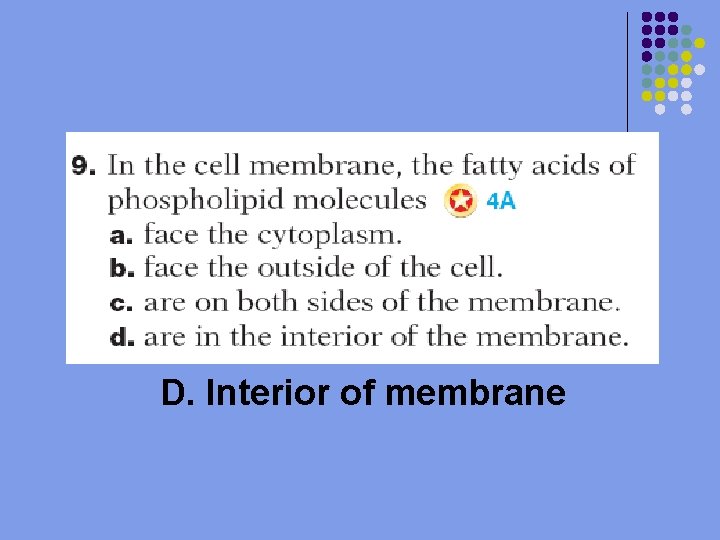
Phospholipids l Heads are hydrophilic (attract water) l Tails are hydrophobic (repel water) l Make up a bilayer where tails point inward toward each other
Cell Membrane is a Barrier
D. Interior of membrane
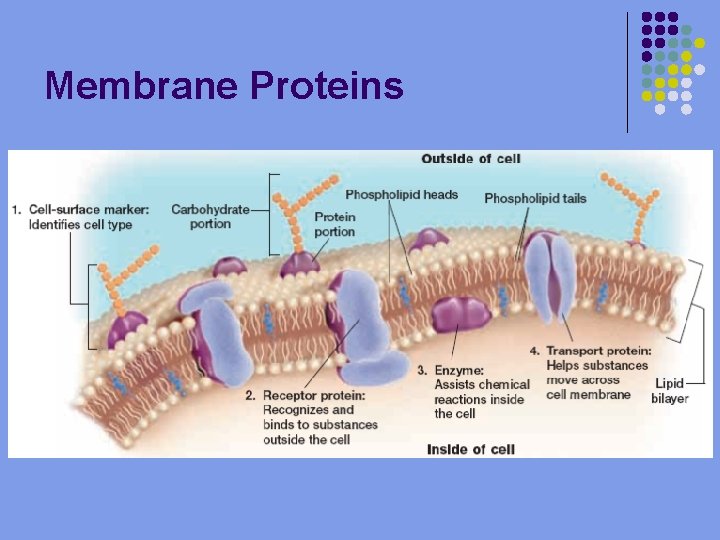
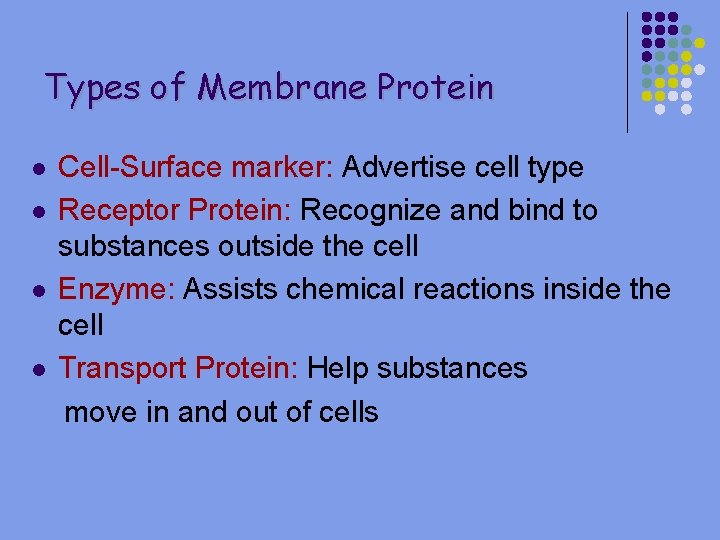
Membrane Proteins
Types of Membrane Protein l l Cell-Surface marker: Advertise cell type Receptor Protein: Recognize and bind to substances outside the cell Enzyme: Assists chemical reactions inside the cell Transport Protein: Help substances move in and out of cells
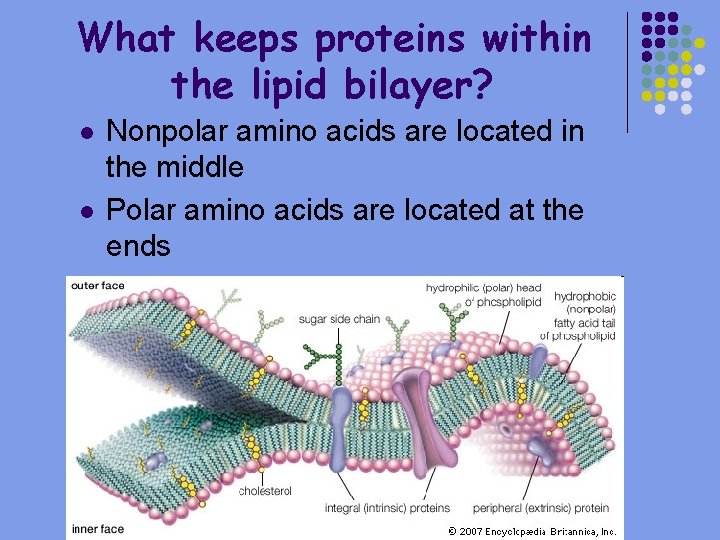
What keeps proteins within the lipid bilayer? l l Nonpolar amino acids are located in the middle Polar amino acids are located at the ends
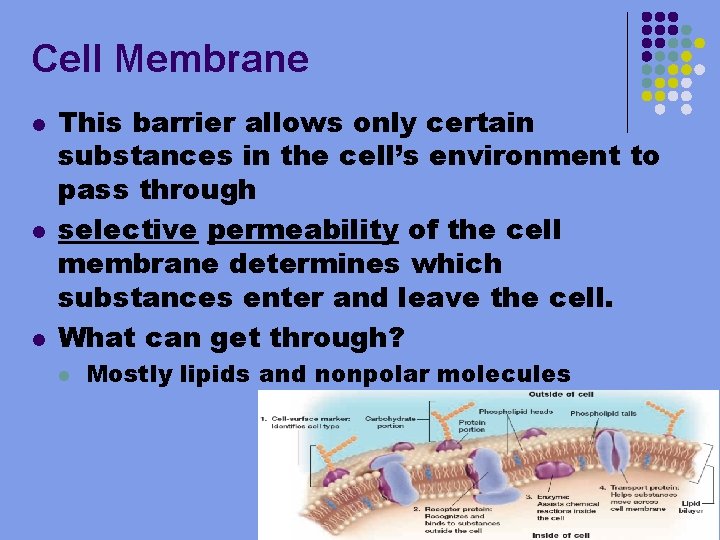
Cell Membrane l l l This barrier allows only certain substances in the cell’s environment to pass through selective permeability of the cell membrane determines which substances enter and leave the cell. What can get through? l Mostly lipids and nonpolar molecules
D. Have a nucleus
Summary
l http: //www. brainpop. com/science/cellularlifea ndgenetics/cells/ l http: //www. cellsalive. com/howbig. htm