
Cell Energy Why do cells need energy ALL
- Slides: 20
Cell Energy
• • Why do cells need energy? *ALL ORGANISMS NEED ENERGY To undergo mitosis To maintain homeostasis To make more energy Active Transport Nerve transmission Muscle Contraction Bioluminescence (glowing)
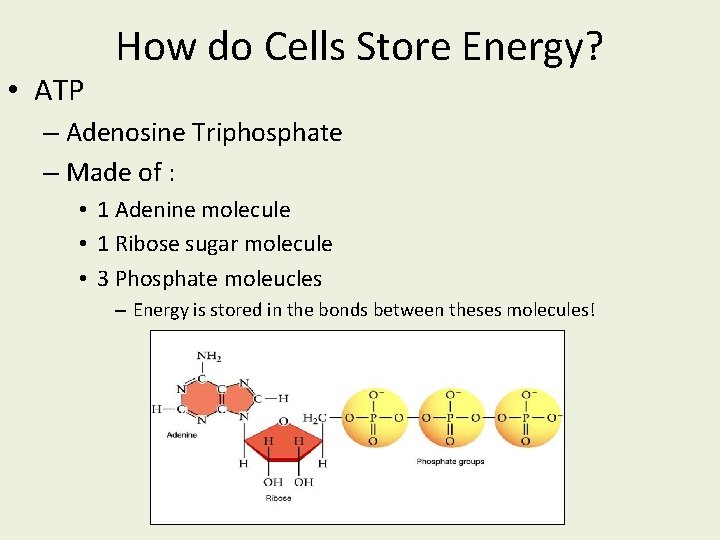
• ATP How do Cells Store Energy? – Adenosine Triphosphate – Made of : • 1 Adenine molecule • 1 Ribose sugar molecule • 3 Phosphate moleucles – Energy is stored in the bonds between theses molecules!
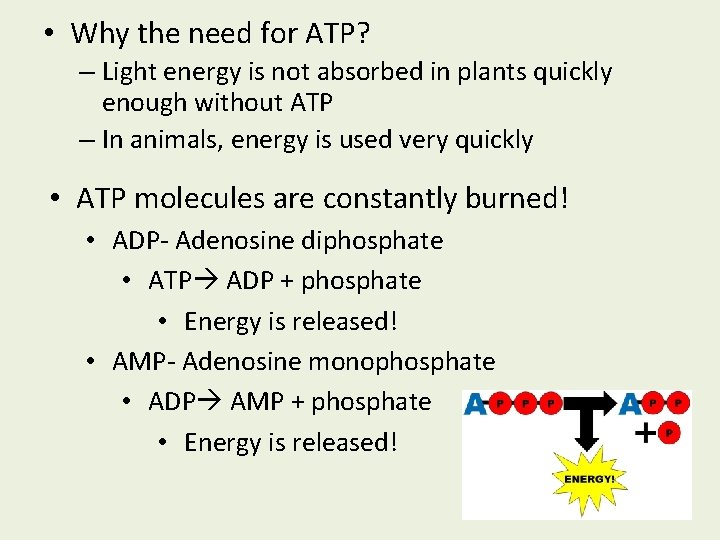
• Why the need for ATP? – Light energy is not absorbed in plants quickly enough without ATP – In animals, energy is used very quickly • ATP molecules are constantly burned! • ADP- Adenosine diphosphate • ATP ADP + phosphate • Energy is released! • AMP- Adenosine monophosphate • ADP AMP + phosphate • Energy is released!
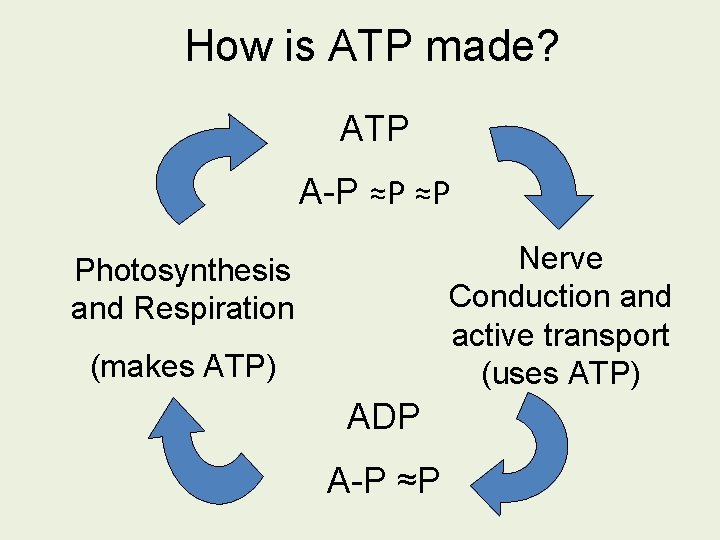
How is ATP made? ATP A-P ≈P ≈P Nerve Conduction and active transport (uses ATP) Photosynthesis and Respiration (makes ATP) ADP A-P ≈P
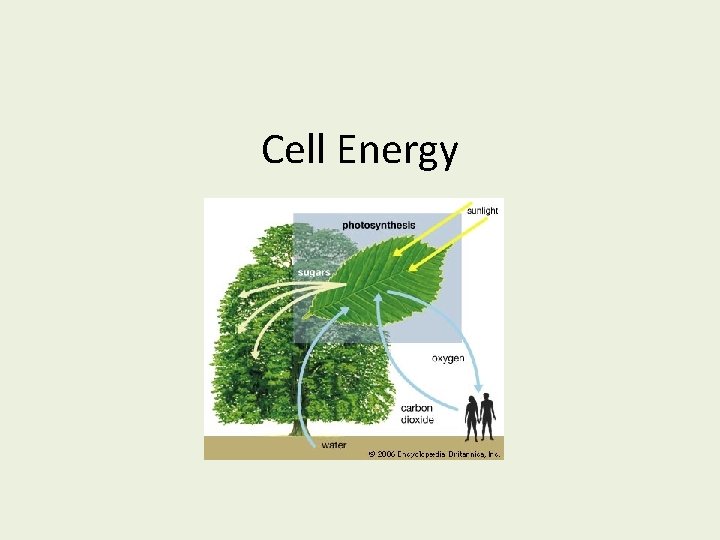
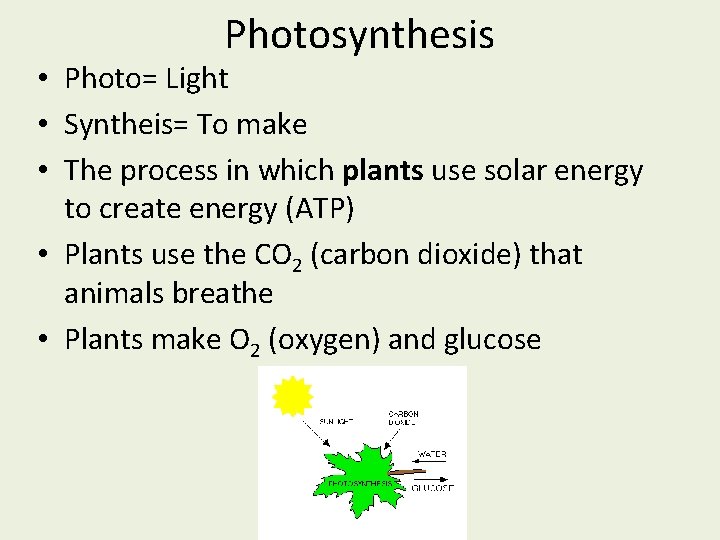
Photosynthesis • Photo= Light • Syntheis= To make • The process in which plants use solar energy to create energy (ATP) • Plants use the CO 2 (carbon dioxide) that animals breathe • Plants make O 2 (oxygen) and glucose
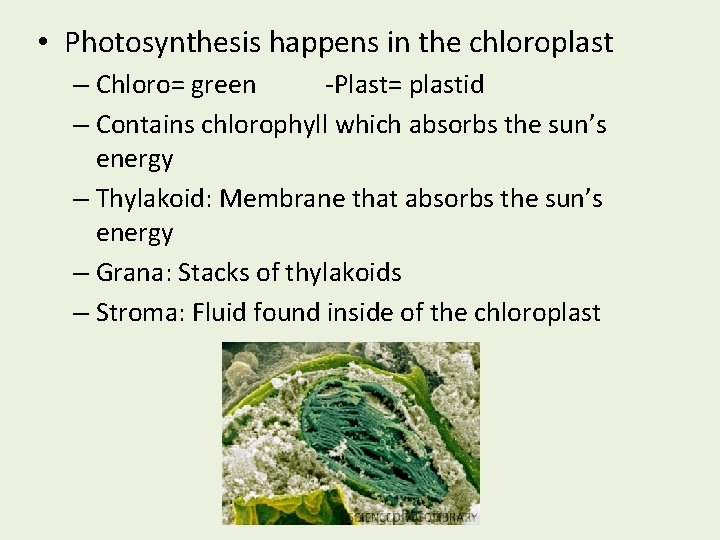
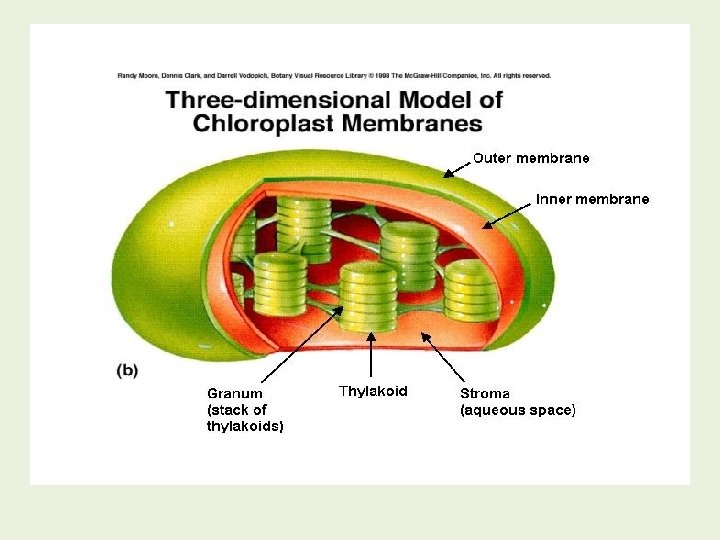
• Photosynthesis happens in the chloroplast – Chloro= green -Plast= plastid – Contains chlorophyll which absorbs the sun’s energy – Thylakoid: Membrane that absorbs the sun’s energy – Grana: Stacks of thylakoids – Stroma: Fluid found inside of the chloroplast
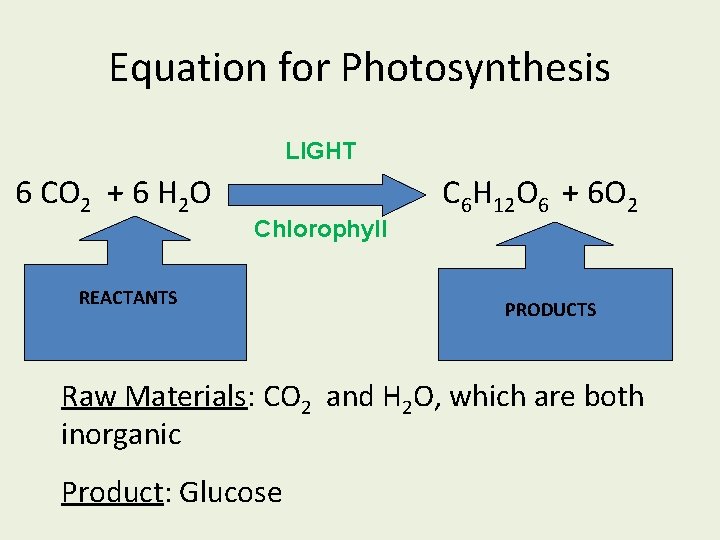
Equation for Photosynthesis LIGHT 6 CO 2 + 6 H 2 O Chlorophyll REACTANTS C 6 H 12 O 6 + 6 O 2 PRODUCTS Raw Materials: CO 2 and H 2 O, which are both inorganic Product: Glucose
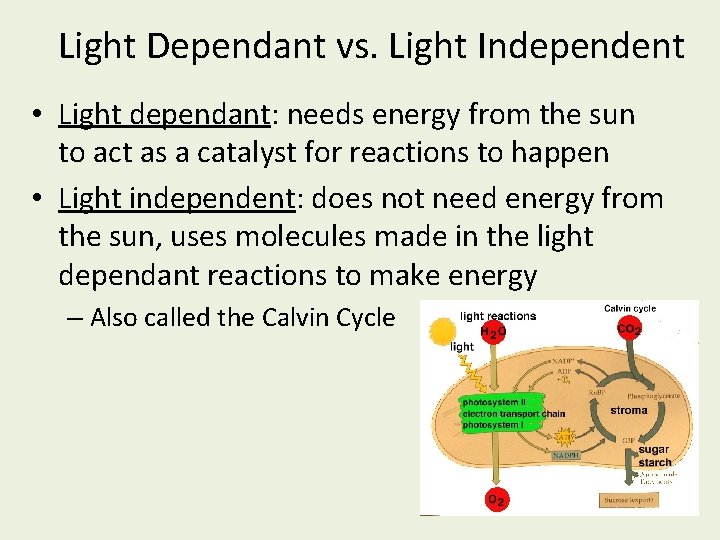
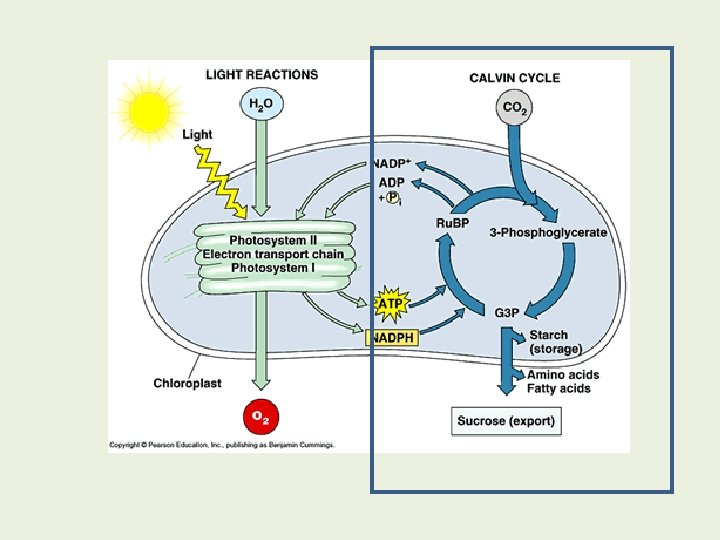
Light Dependant vs. Light Independent • Light dependant: needs energy from the sun to act as a catalyst for reactions to happen • Light independent: does not need energy from the sun, uses molecules made in the light dependant reactions to make energy – Also called the Calvin Cycle
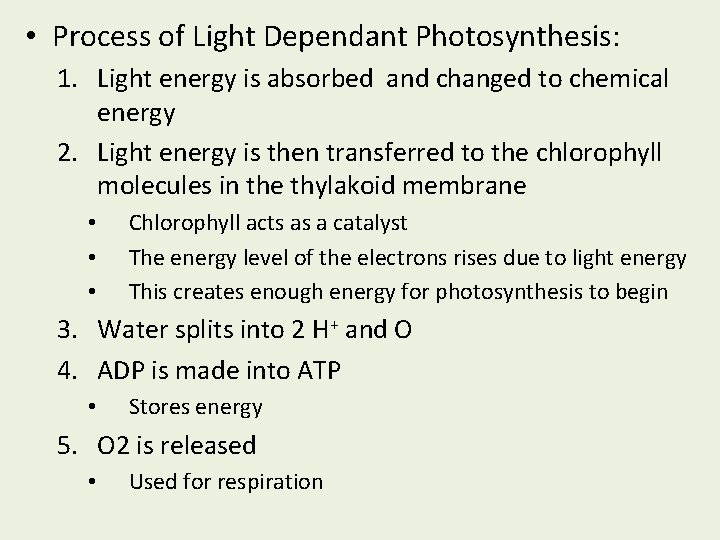
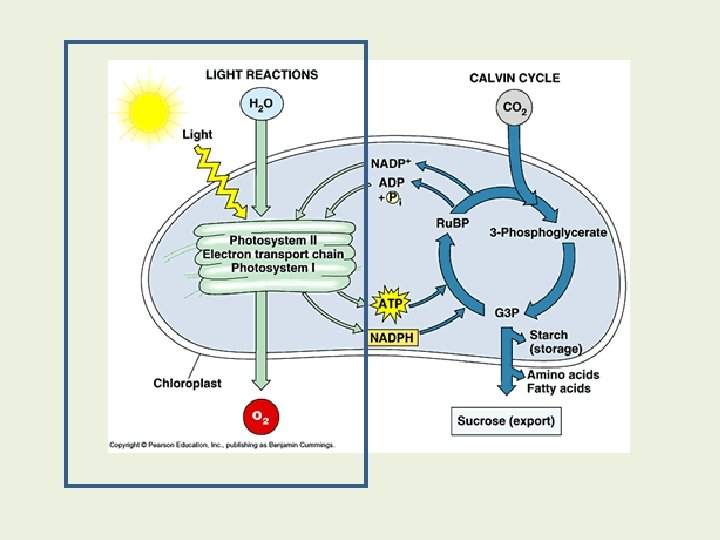
• Process of Light Dependant Photosynthesis: 1. Light energy is absorbed and changed to chemical energy 2. Light energy is then transferred to the chlorophyll molecules in the thylakoid membrane • • • Chlorophyll acts as a catalyst The energy level of the electrons rises due to light energy This creates enough energy for photosynthesis to begin 3. Water splits into 2 H+ and O 4. ADP is made into ATP • Stores energy 5. O 2 is released • Used for respiration
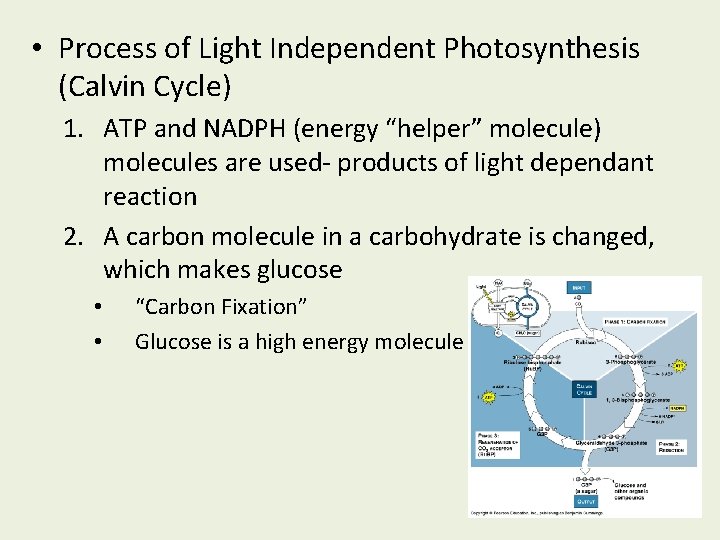
• Process of Light Independent Photosynthesis (Calvin Cycle) 1. ATP and NADPH (energy “helper” molecule) molecules are used- products of light dependant reaction 2. A carbon molecule in a carbohydrate is changed, which makes glucose • • “Carbon Fixation” Glucose is a high energy molecule
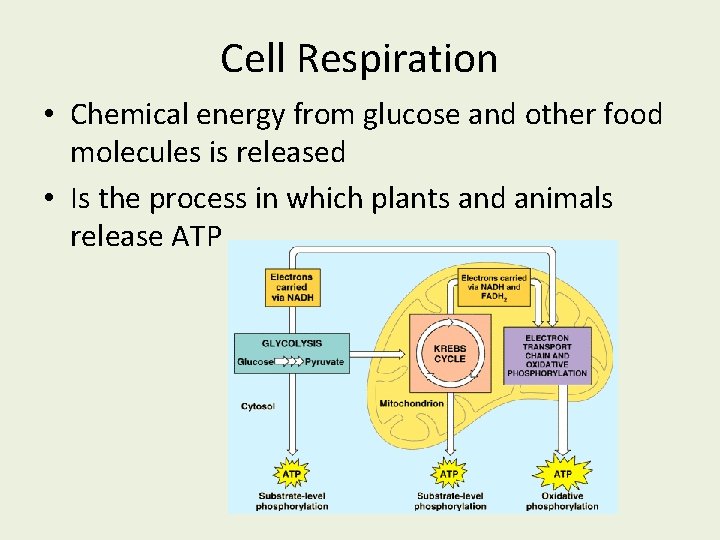
Cell Respiration • Chemical energy from glucose and other food molecules is released • Is the process in which plants and animals release ATP
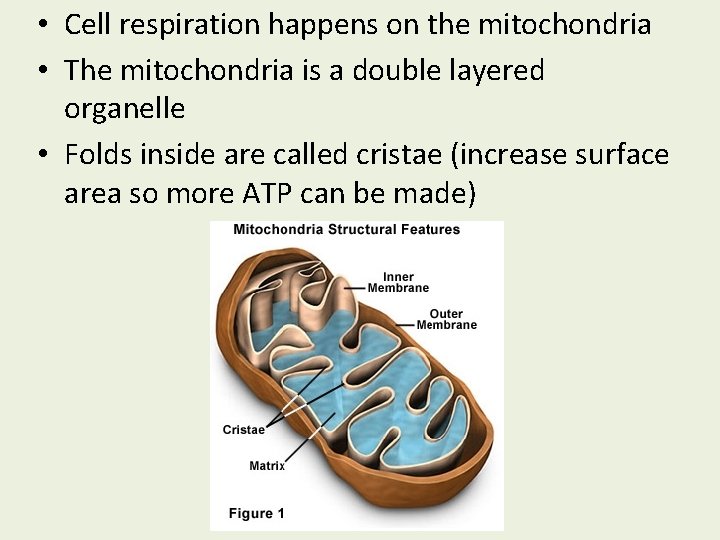
• Cell respiration happens on the mitochondria • The mitochondria is a double layered organelle • Folds inside are called cristae (increase surface area so more ATP can be made)
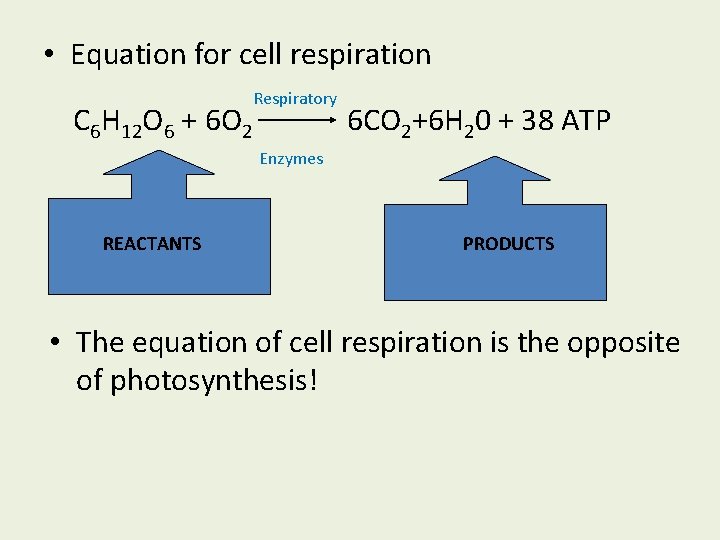
• Equation for cell respiration C 6 H 12 O 6 + 6 O 2 Respiratory 6 CO 2+6 H 20 + 38 ATP Enzymes REACTANTS PRODUCTS • The equation of cell respiration is the opposite of photosynthesis!
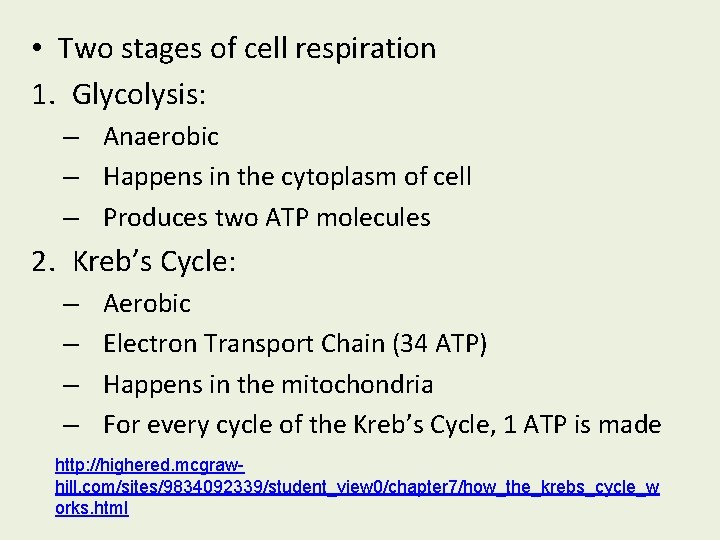
• Two stages of cell respiration 1. Glycolysis: – Anaerobic – Happens in the cytoplasm of cell – Produces two ATP molecules 2. Kreb’s Cycle: – – Aerobic Electron Transport Chain (34 ATP) Happens in the mitochondria For every cycle of the Kreb’s Cycle, 1 ATP is made http: //highered. mcgrawhill. com/sites/9834092339/student_view 0/chapter 7/how_the_krebs_cycle_w orks. html
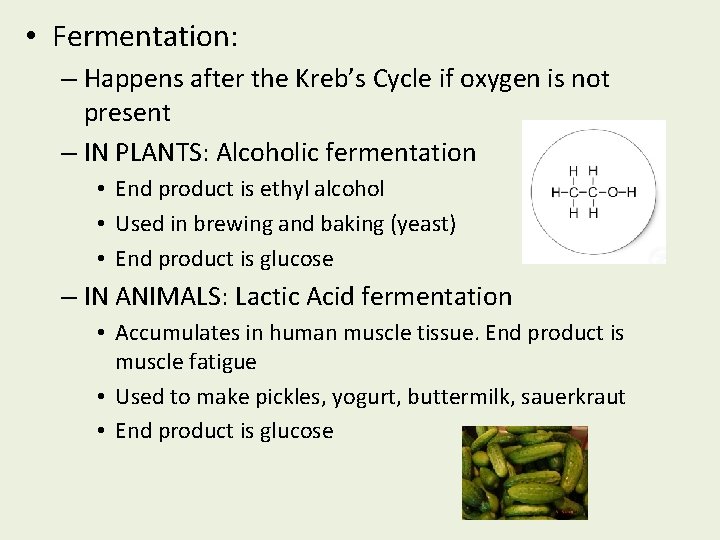
• Fermentation: – Happens after the Kreb’s Cycle if oxygen is not present – IN PLANTS: Alcoholic fermentation • End product is ethyl alcohol • Used in brewing and baking (yeast) • End product is glucose – IN ANIMALS: Lactic Acid fermentation • Accumulates in human muscle tissue. End product is muscle fatigue • Used to make pickles, yogurt, buttermilk, sauerkraut • End product is glucose
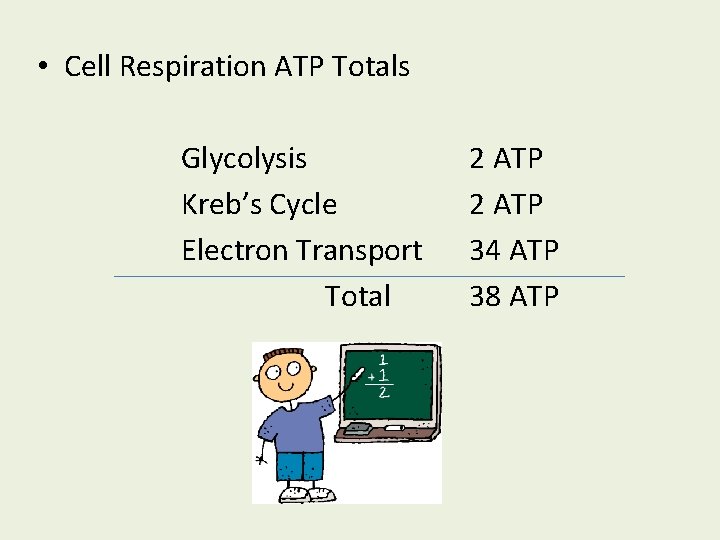
• Cell Respiration ATP Totals Glycolysis Kreb’s Cycle Electron Transport Total 2 ATP 34 ATP 38 ATP