
Cell Energy Photosynthesis Overview Process of making glucose
- Slides: 63
Cell Energy
Photosynthesis
Overview Process of making glucose from inorganic compounds Uses the sun's energy, inorganic CO 2 to produce organic compounds Carried out by plants and cyanobacteria. Cyanobacteria do not have chloroplasts but do have thylakoid stacks. ds
Overview Requires: Carbon dioxide & water for elements necessary to make glucose Sunlight 2 is the energy source. steps Light dependent reaction (light reaction) Light independent reaction (dark reaction) (Calvin Cycle)
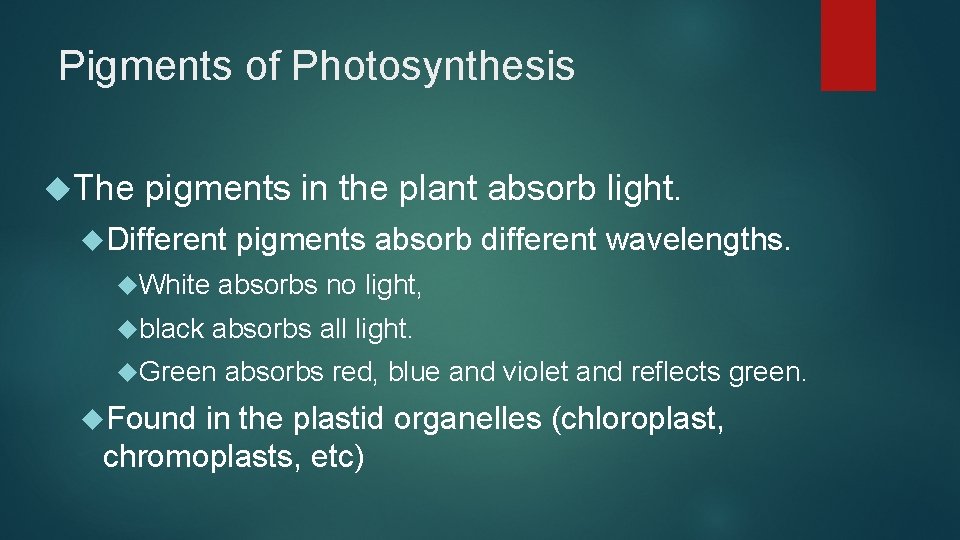
Pigments of Photosynthesis The pigments in the plant absorb light. Different pigments absorb different wavelengths. White absorbs no light, black absorbs all light. Green Found absorbs red, blue and violet and reflects green. in the plastid organelles (chloroplast, chromoplasts, etc)
Pigments of Photosynthesis 3 pigment types Chlorophyll a-main pigment involved in converting light energy to chemical energy in photosynthesis. Chlorophyll b-similar to chlorophyll a
Pigments of Photosynthesis Carotenoids: accessory pigments; yellow, red and orange. ex. Beta-carotene. Generally hidden by chlorophyll. Can only be seen in the fall when plants stop producing chlorophyll. Allows the plants to absorb green light but not as well as chlorophyll does
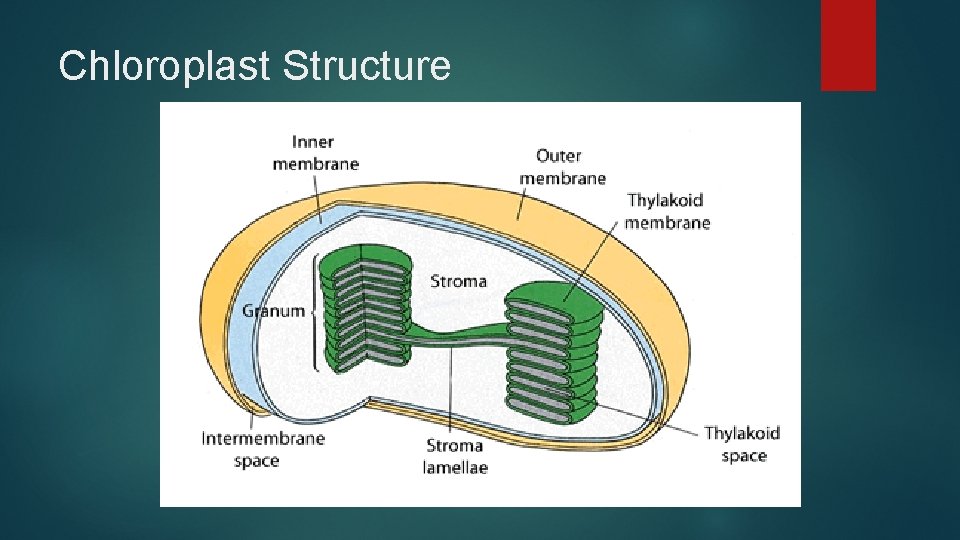
Chloroplast Structure
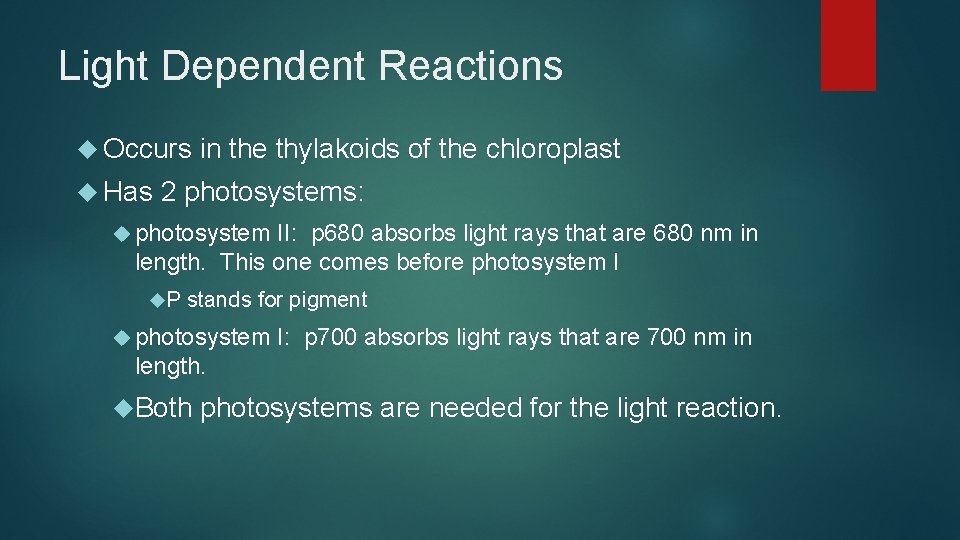
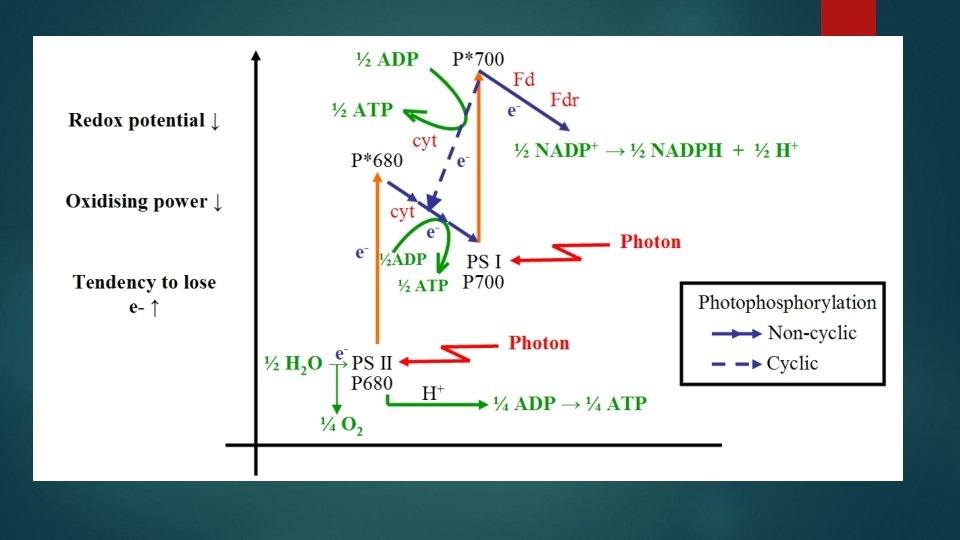
Light Dependent Reactions Occurs Has in the thylakoids of the chloroplast 2 photosystems: photosystem II: p 680 absorbs light rays that are 680 nm in length. This one comes before photosystem I P stands for pigment photosystem I: p 700 absorbs light rays that are 700 nm in length. Both photosystems are needed for the light reaction.
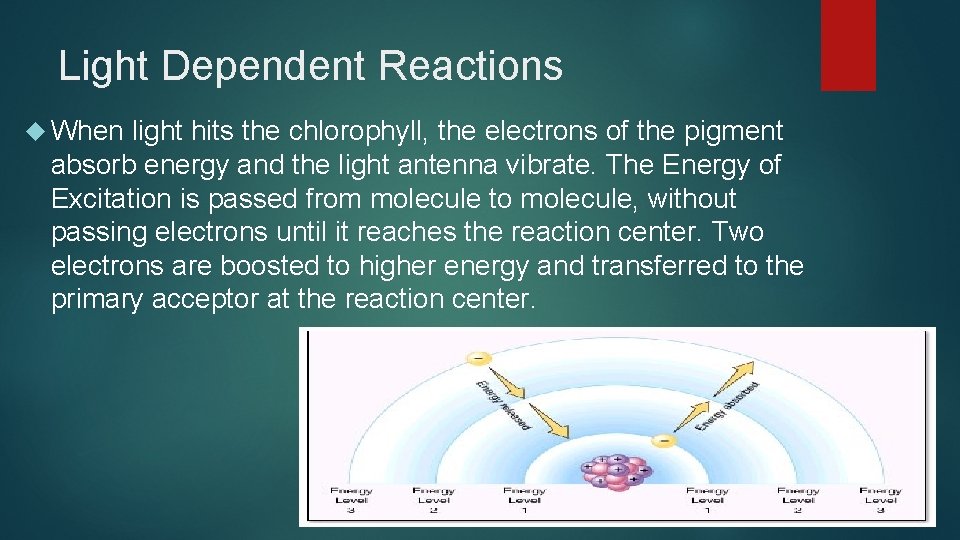
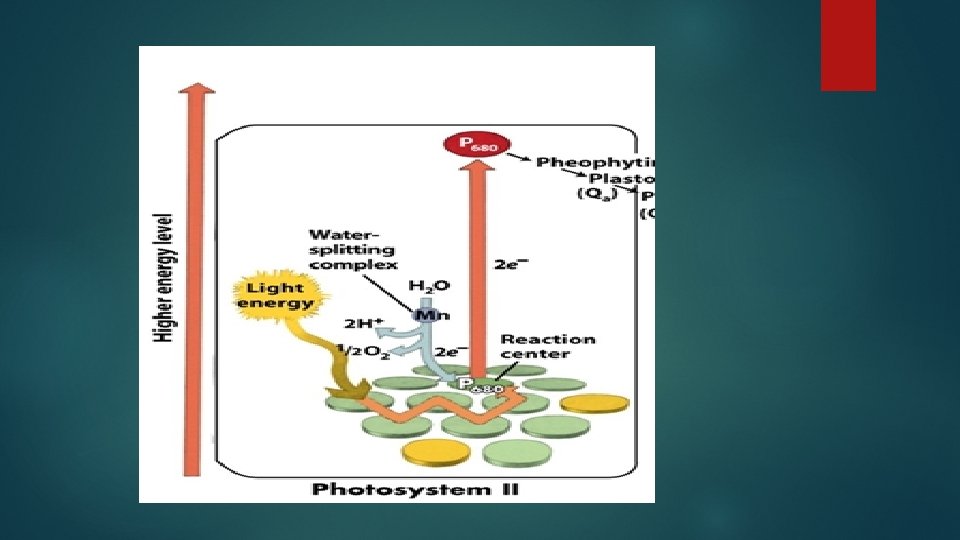
Light Dependent Reactions When light hits the chlorophyll, the electrons of the pigment absorb energy and the light antenna vibrate. The Energy of Excitation is passed from molecule to molecule, without passing electrons until it reaches the reaction center. Two electrons are boosted to higher energy and transferred to the primary acceptor at the reaction center.
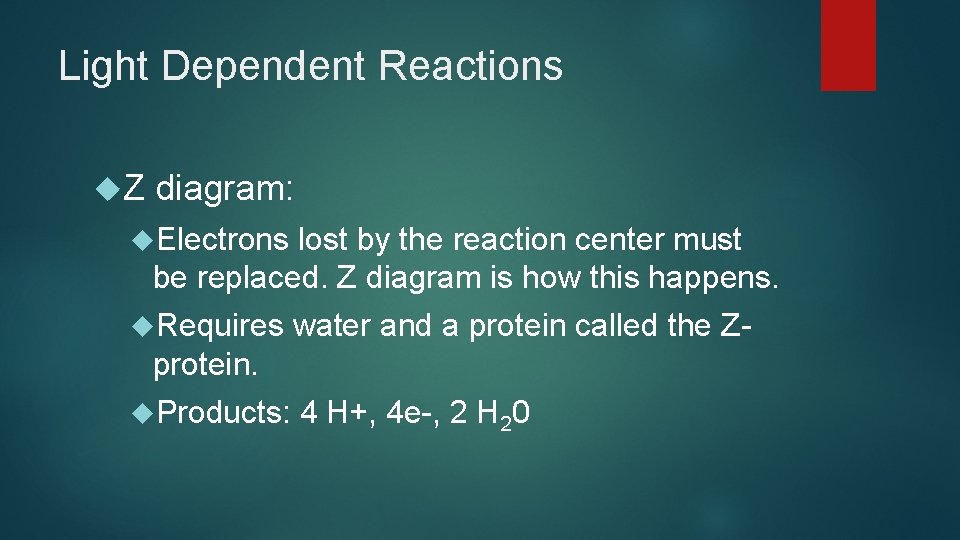
Light Dependent Reactions Z diagram: Electrons lost by the reaction center must be replaced. Z diagram is how this happens. Requires water and a protein called the Z- protein. Products: 4 H+, 4 e-, 2 H 20
Light Dependent Reactions Boosted electrons move through the p 700 electron transport chain producing 2 electrons that are bonded to NADP+ making it NADPH. These electrons are carried to the light independent (AKA dark reaction).
Light Dependent Reactions Photosystem I can work independently. While it doesn't produce NADPH it does produce ATP as electrons are passed. It is believed that Photosystem I evolved first because it is able to operate independently. This system is used in many photosynthetic bacteria but is an alternative system for eukaryotes.
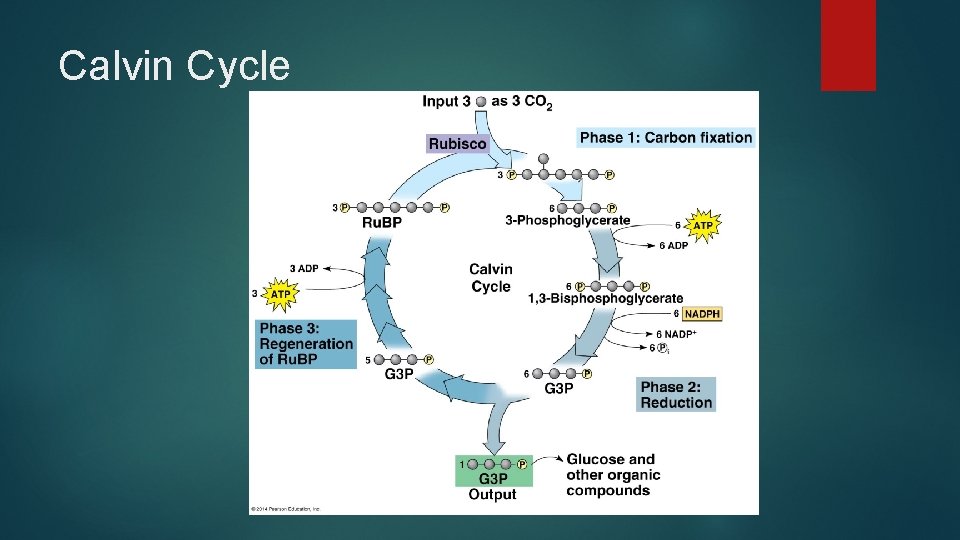
Light Independent Reactions (Dark Reactions) This reaction occurs in the Stroma and makes carbohydrates. This can occur two ways: 1. C 3 cycle or Calvin Cycle: makes a 3 carbon compound called phosphoglycerate. 2. C 4 pathway: makes a 4 carbon compound phosphenolpyruvate (PEP)
Calvin Cycle
C 3 Pathway or Calvin Cycle Multi-step pathway that can produce glucose, cellulose, maltose, starch, fatty acids, amino acids or other molecules. Uses an enzyme called Ru. BP carboxylase (Rubisco). This is the most abundant protein in plants and on Earth. This pathway only converts 1% of light energy to carbohydrates.
C 4 pathway Utilizes the carbon dioxide that enters through the stomata and collects in the mesophyll cells. When stomata are open, carbon dioxide enters a C 4 leaf more efficiently than a C 3 leaf. These plants evolved in the tropics and are adapted to high intensity light, high temperatures and dry conditions.
Cellular Respiration
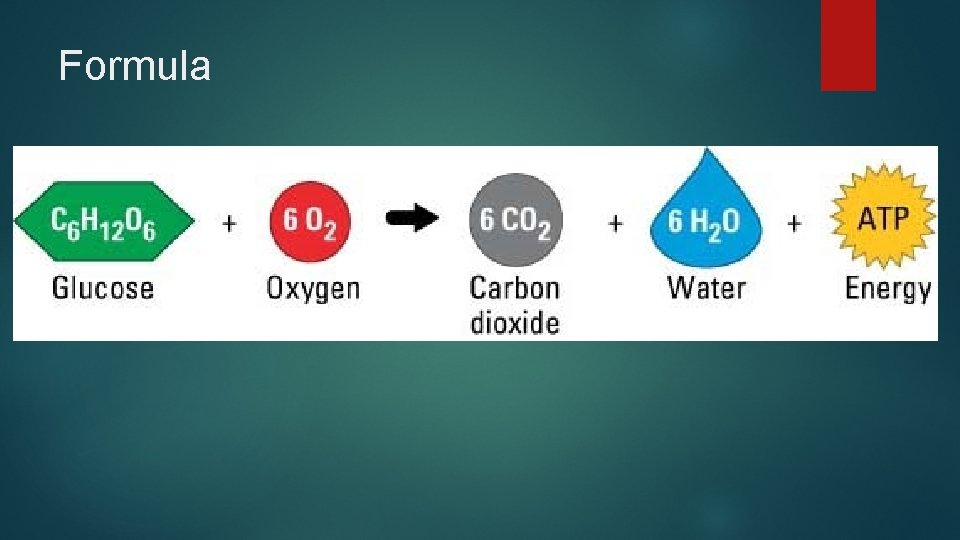
Formula
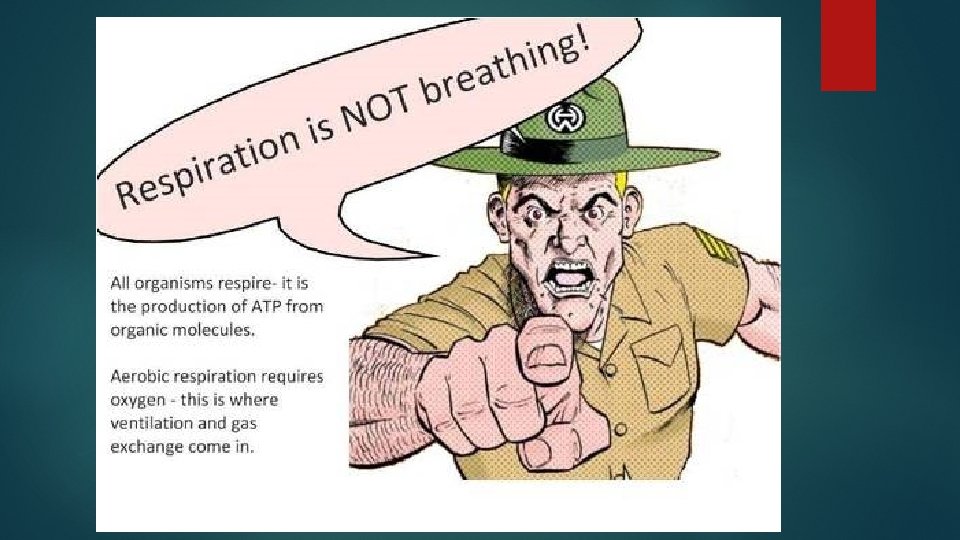
Overview Aerobic respiration is the production of energy in the presence of oxygen. This process occurs in the mitochondria. Produces 21 -36 ATP per molecule of glucose. Anaerobic respiration is the production of energy with no oxygen present. Can only produce 2 ATP.
Overview Why Glucose? Although carbohydrates, fats and proteins can all be processed and consumes as fuel, glucose is tracked in the production of energy. The breakdown of glucose is exergonic with a free energy value of -686 kcal/mol. The energy currency for cells is ATP.
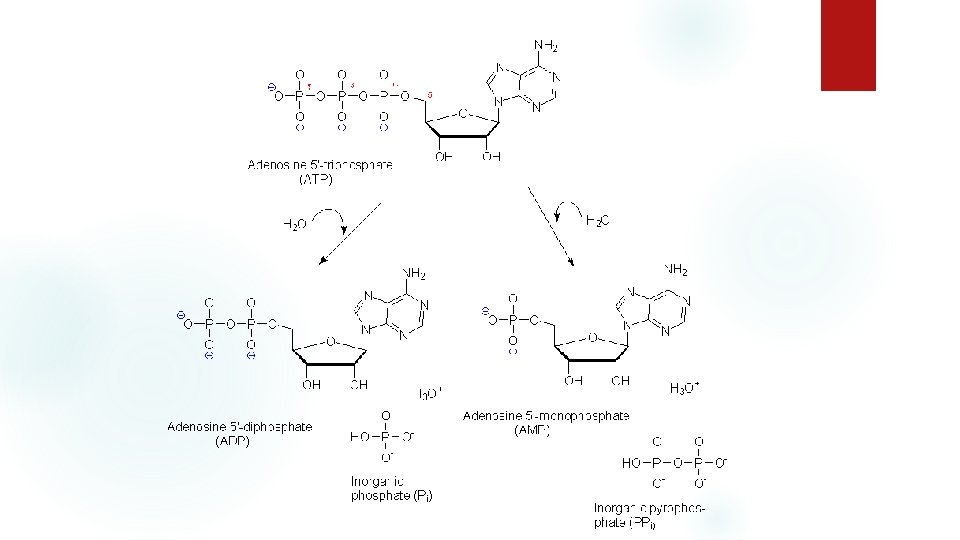
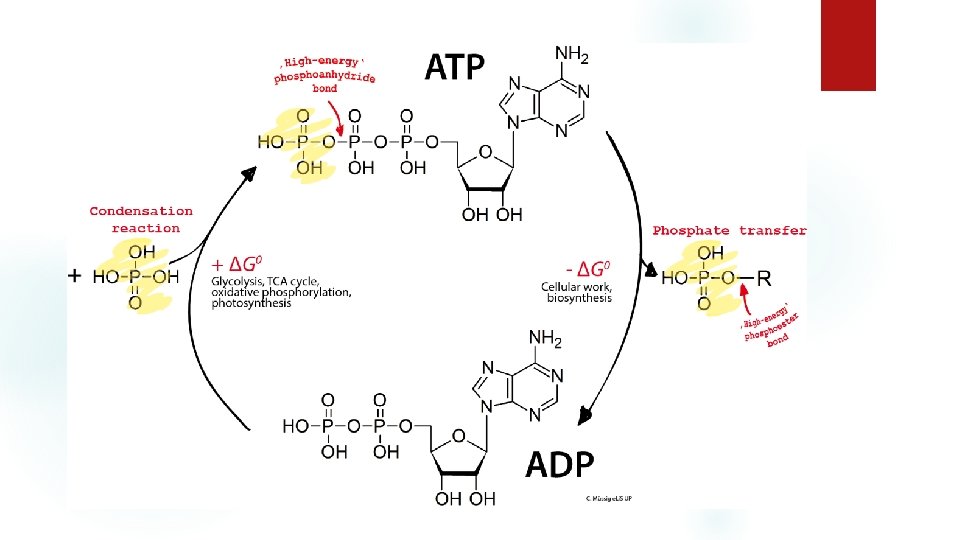
What is ATP? It is an adenine nucleotide with 2 extra phosphates added. The more phosphates you bind together the more potential energy you store in the molecule. When there are 3 phosphates it is called adenosine triphosphate (ATP), when there are 2 phosphates it is adenosine diphosphate (ADP), and when there is only 1 phosphate it is adenosine monophosphate (AMP)
Uses of ATP is the primary energy molecule of living organisms. Can be recharged from AMP to ADP and then from ADP to ATP Uses Reproduction Movement Production of proteins Active transport (exocytosis, endocytosis, pinocytosis, phagocytosis, etc. ) DNA replication Nerve transmission Metabolism of food
Making ATP In order to understand the process of making energy you must understand oxidation/reduction reactions. Oxidation-losing electrons, hydrogen or the gaining of an oxygen. Reduction-gaining losing oxygen. electrons, hydrogen or
Making ATP When an electron moves from a less electronegative atom to a more electronegative atom, chemical energy is released as potential energy is lost. In the combustion of glucose, sugar is oxidized and oxygen is reduced. Meanwhile electrons lose potential energy releasing chemical energy.
Making ATP Changing Usually covalent status to produce energy: organic molecules have an abundance of hydrogen which is an excellent fuel because their bonds have high potential energy. In aerobic respiration the change in covalent status from hydrogen to an oxygen atom is what liberates energy.
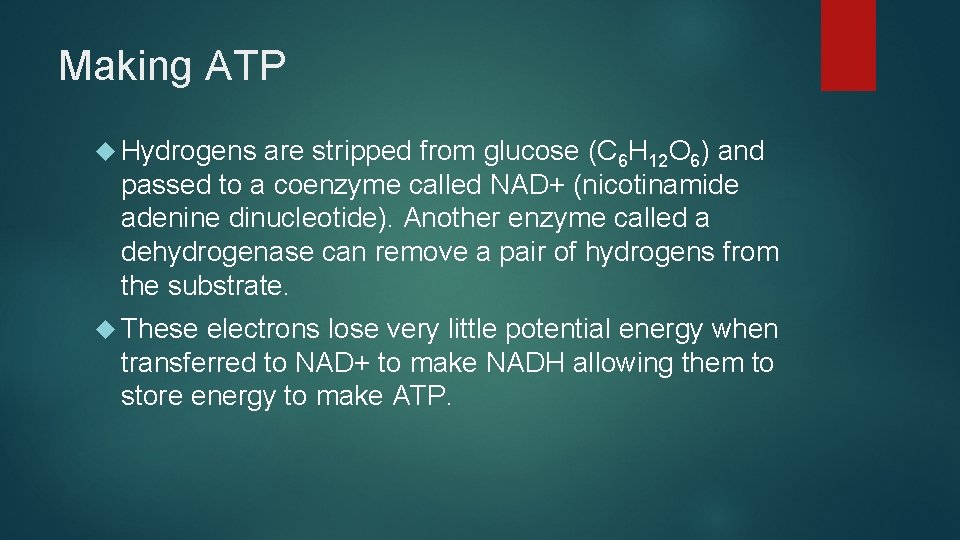
Making ATP Hydrogens are stripped from glucose (C 6 H 12 O 6) and passed to a coenzyme called NAD+ (nicotinamide adenine dinucleotide). Another enzyme called a dehydrogenase can remove a pair of hydrogens from the substrate. These electrons lose very little potential energy when transferred to NAD+ to make NADH allowing them to store energy to make ATP.
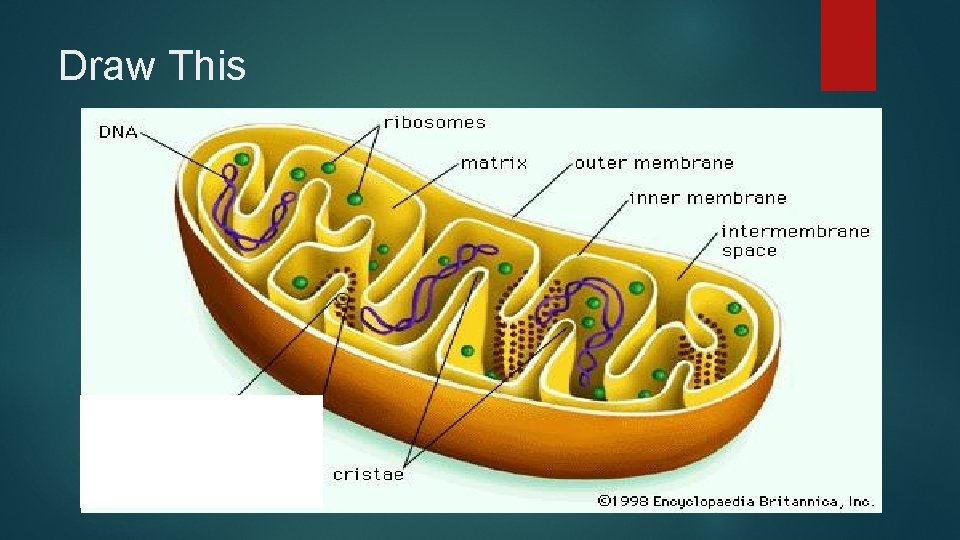
Draw This
Mitochondria Structure 2 membranes: Outer smooth membrane Outer membrane is permeable to small molecules but inner membrane only permits the passage of certain molecules like pyruvic acid and ATP.
Mitochondria Structure 2 Membranes Inner folds called cristae Within the inner compartment surrounding the cristae there is a dense solution known as the matrix that contains: enzymes coenzymes water phosphates other molecules needed in respiration
Mitochondria Structure Proteins are built into the cristae. The proteins are involved in the electron transport chain. The inner membrane is 80% protein, 20% lipids. 95% of ATP generated in a heterotrophic cell is produced by the mitochondria.
Respiration Steps 4 stages to aerobic respiration: Glycolysis Pyruvate Oxidation The Krebs Cycle The Electron transport chain
Respiration Steps 2 Stages of Anaerobic respiration Glycolysis Either Alcoholic Fermentation or Lactic Acid Fermentation
Stages of Respiration
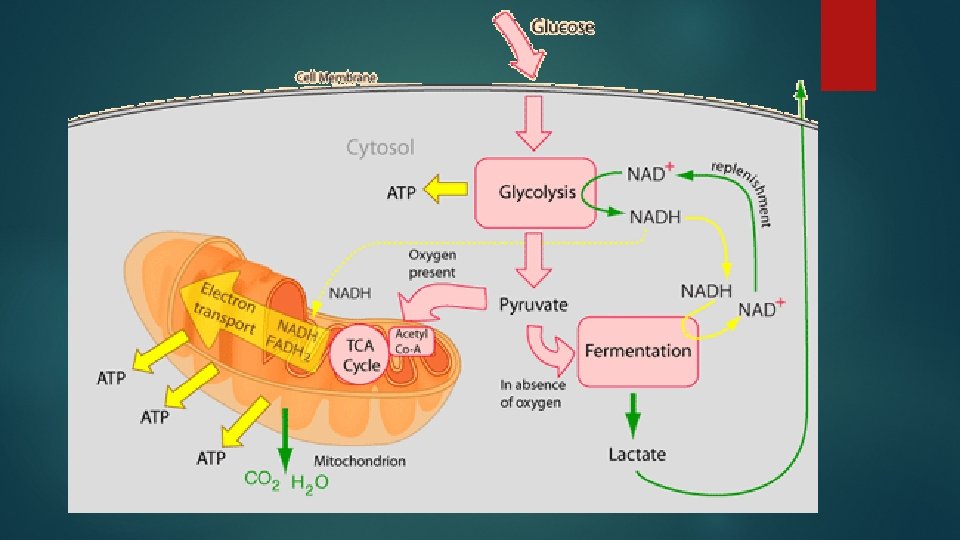
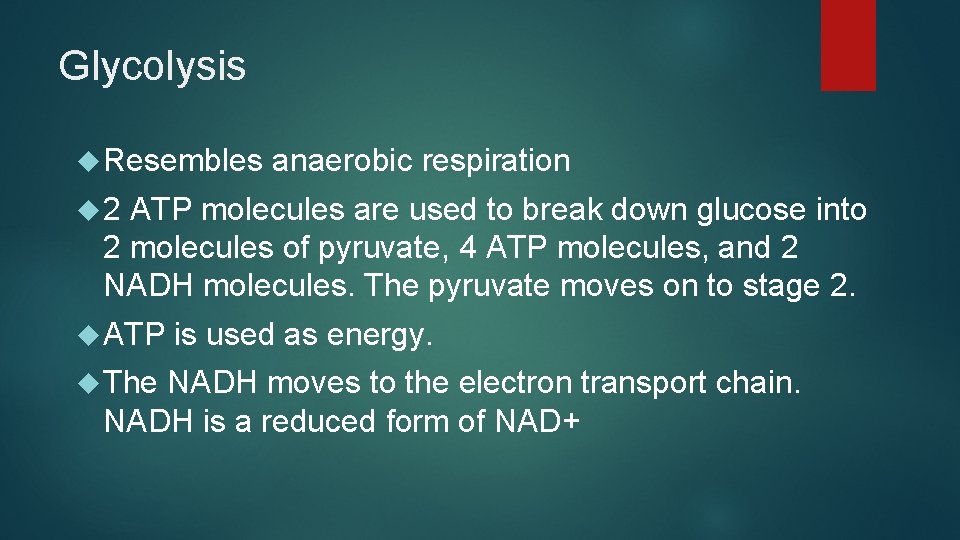
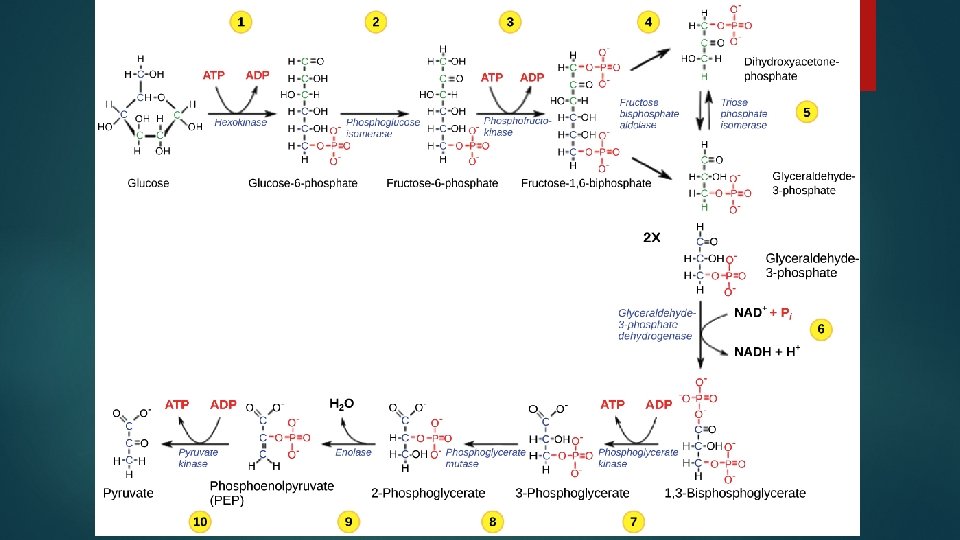
Glycolysis Resembles anaerobic respiration 2 ATP molecules are used to break down glucose into 2 molecules of pyruvate, 4 ATP molecules, and 2 NADH molecules. The pyruvate moves on to stage 2. ATP The is used as energy. NADH moves to the electron transport chain. NADH is a reduced form of NAD+
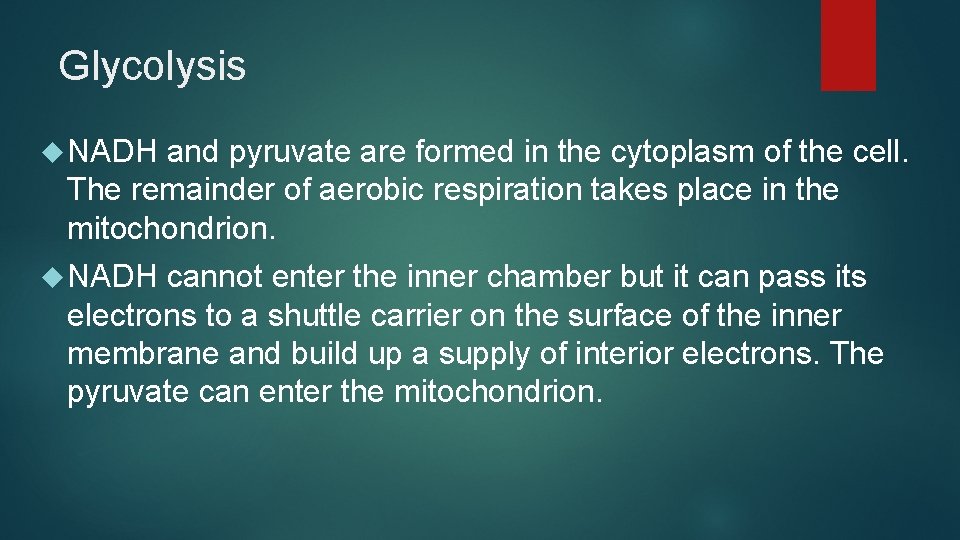
Glycolysis NADH and pyruvate are formed in the cytoplasm of the cell. The remainder of aerobic respiration takes place in the mitochondrion. NADH cannot enter the inner chamber but it can pass its electrons to a shuttle carrier on the surface of the inner membrane and build up a supply of interior electrons. The pyruvate can enter the mitochondrion.
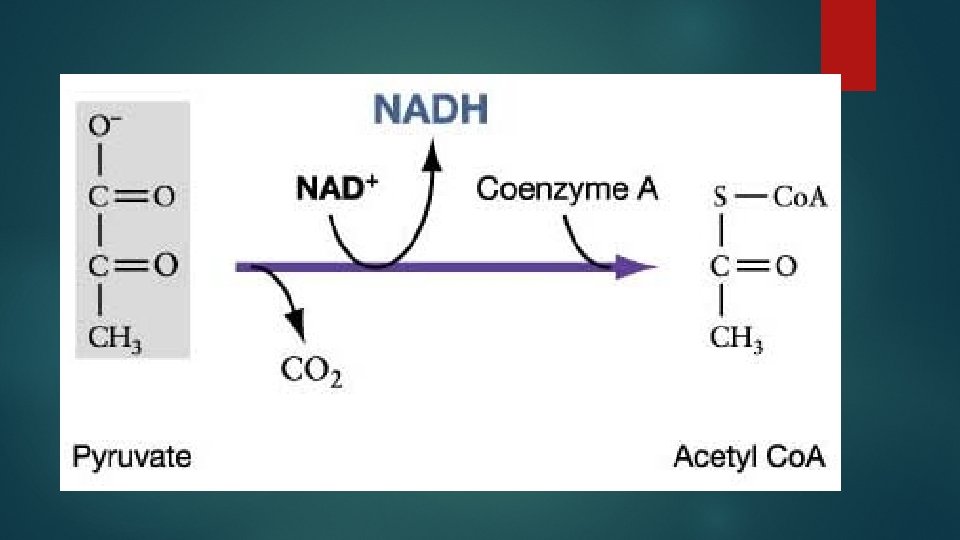
Production of Acetyl Co. A Both Pyruvate are further oxidized, removing the carbon and oxygen atoms of a carboxyl group leaving two acetyl groups. The two acetyl groups give 2 electrons to NAD+ to form 2 molecules of NADH and Co-enzyme A attaches to the acetyl groups to form Acetyl Co. A is a large unstable molecule. Which means it has a lot of potential energy.
Production of Acetyl Co. A can enter the Krebs cycle (Citric Acid Cycle). Acetyl Co. A moves into the mitochondrial matrix using facilitated transport and is completely dismantled by enzymes in the mitochondria.
Krebs Cycle During the Krebs cycle pyruvate is dismantled producing carbon dioxide and 2 more ATP. At this point you have only made 4 net ATP, 6 ATP total. The other 32 are made in the electron transport chain.
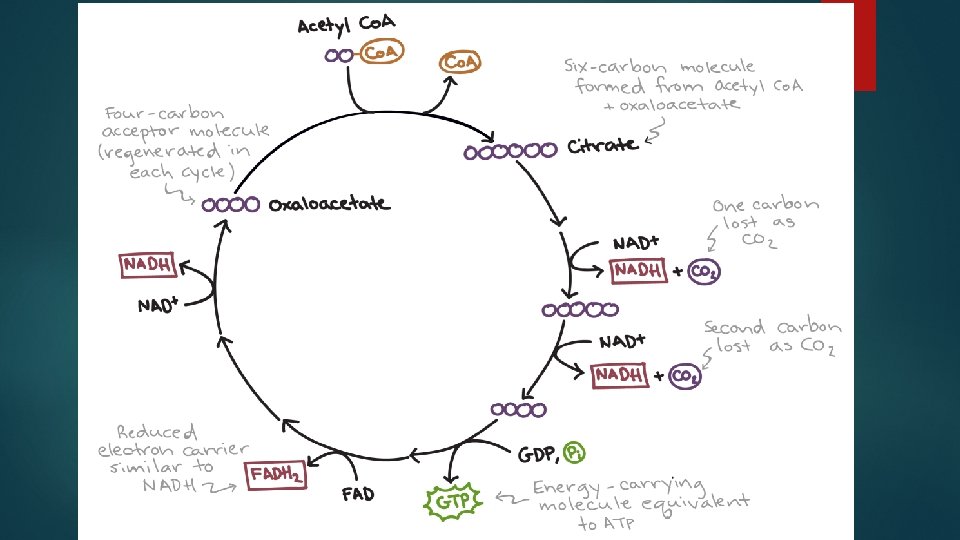
Krebs Cycle The Krebs cycle converts GDP to GTP (guanine triphosphate) where the terminal phosphate is eventually transferred to ADP to form ATP. It is unknown why the Krebs cycle uses GDP instead of ADP. At this point glucose has been taken apart with only 4 net ATP produced-2 from glycolysis and 2 from GTPs.
Krebs Cycle The remainder of the ATP will be created from the hydrogens linked on the electron carriers NADH and FADH 2. Glycolysis-2 Pyruvate NADH to Acetyl Co. A-2 NADH
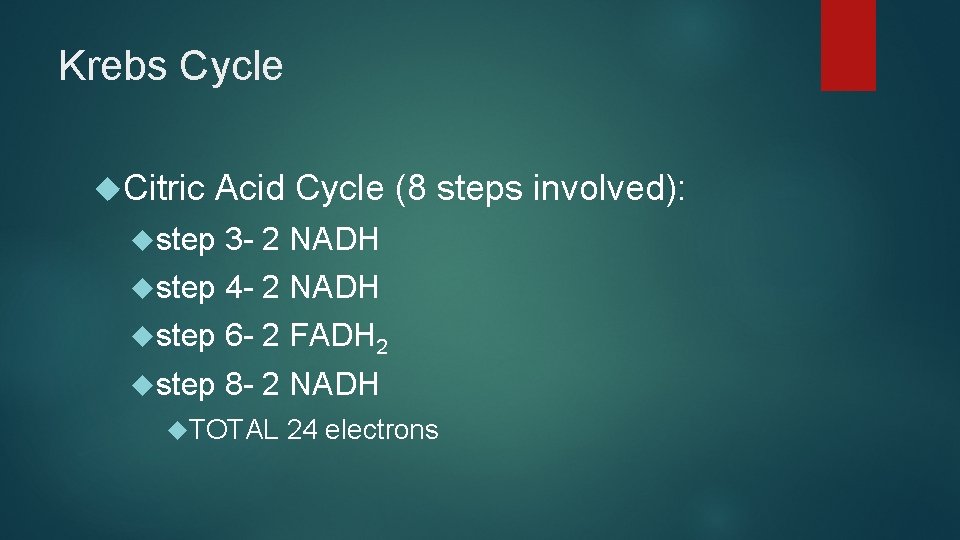
Krebs Cycle Citric Acid Cycle (8 steps involved): step 3 - 2 NADH step 4 - 2 NADH step 6 - 2 FADH 2 step 8 - 2 NADH TOTAL 24 electrons
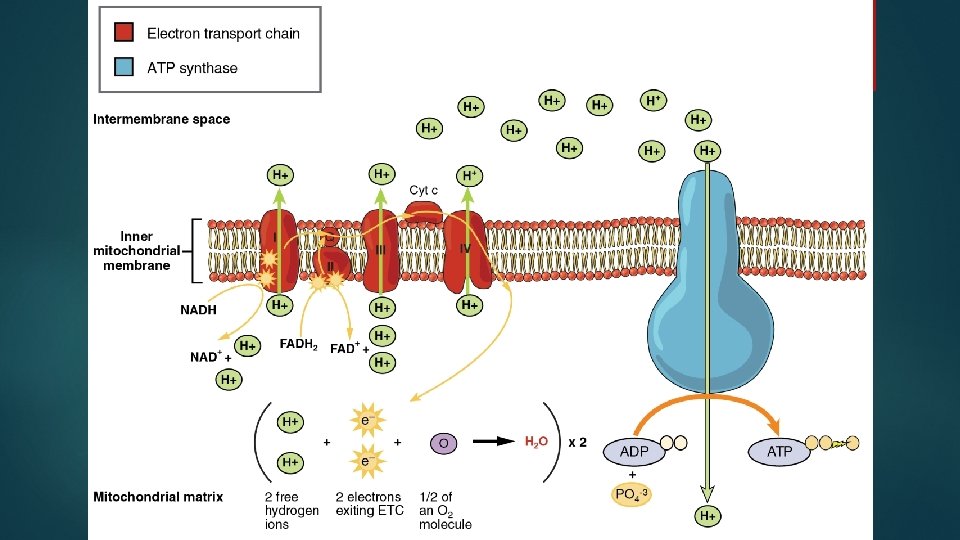
Electron Transport Chain (ETC) The electron carriers in the chain are positioned so that the electrons travel in a zig zag manner from the inner to the outer surface of the membrane. Each time the electrons travel to the inside surface, the electrons pick up 2 H+. On the outside they release 2 H+. Actual number of protons moved is not known but at least 6 are moved.
ETC There is a proton gradient formed between the outer and inner membrane because of a p. H and electric charge difference. This difference allows the H+ to flow through channels called ATP synthase using diffusion. As H+ flows through the channels ATP is formed from ADP and a phosphate. 3 ATPs are made from 1 NADH 2 ATPs are made from FADH 2.
ETC At max efficiency the electron transport chain will produce 32 ATP. Adding that to the six from glycolysis and Krebs cycle you make 38 ATP which equals 277. 4 Kcal of energy. This approximately a 32% efficiency rate. The remainder of the energy is lost as heat.
Fermentation/Anaerobic Respiration
Overview Used by obligate anaerobic organisms as their primary method of ATP production Used by facultative anaerobic organisms as a backup method when oxygen is scarce but they can fully sustain themselves with it Used by obligate aerobic organisms as a backup when oxygen is scarce but it cannot be sustained for long
Fermentation Starts with the process of Glycolysis to reduce 1 molecule of glucose into 2 molecules of pyruvate Depending on the type of organism they can either do alcoholic or lactic acid fermentation to finish breaking down the pyruvate and oxidize NADH Still only nets 2 molecules of ATP
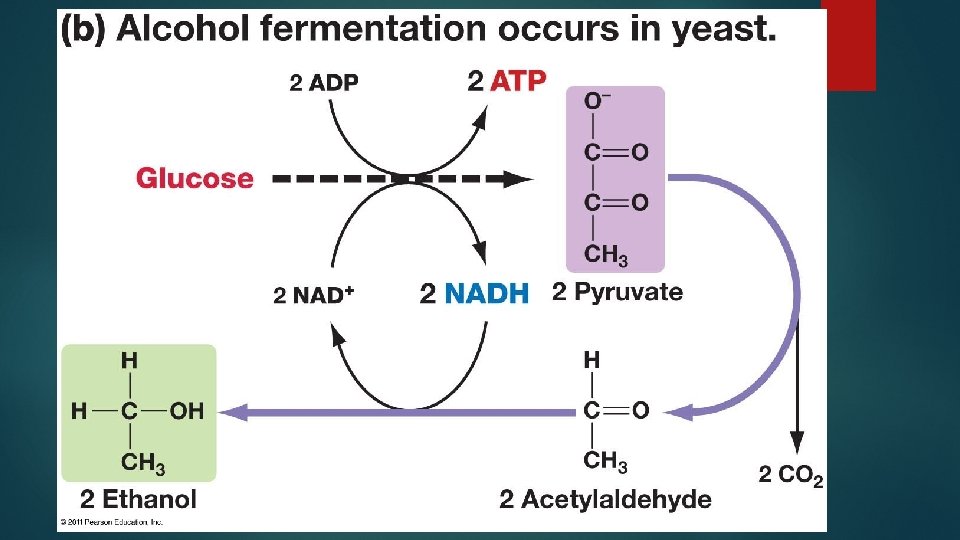
Alcoholic Fermentation oxidizes pyruvate into ethyl alcohol (C 2 H 5 OH) and oxidizes NADH into NAD+ so that glycolysis can start again Ethyl Also Alcohol is a byproduct produces CO 2 gas Used Can by various types of bacteria and yeast be used to make various alcoholic beverages and bread (CO 2 bubbles trapped in the dough cause bread to rise)
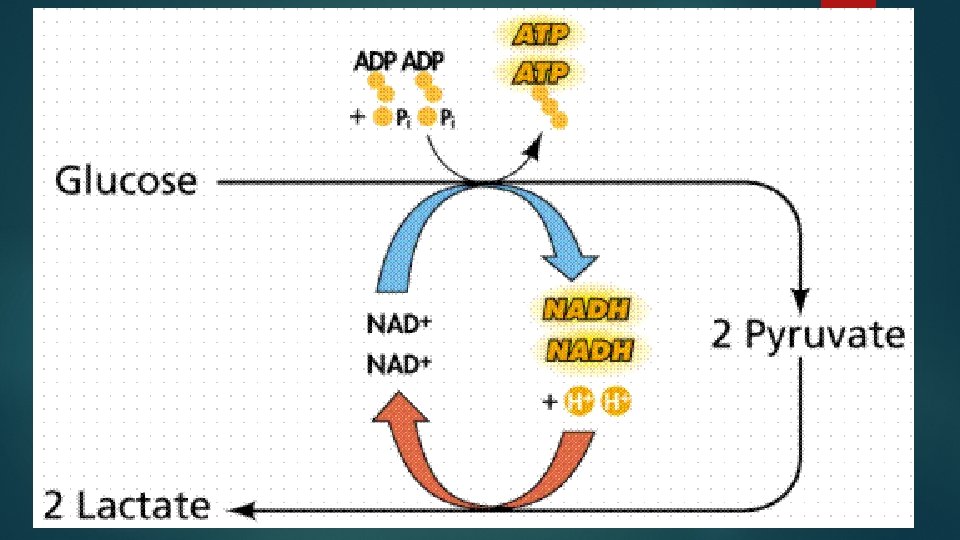
Lactic Acid Fermentation oxidizes pyruvate into lactic acid which further breaks down into lactate and oxidizes NADH into NAD+ so that glycolysis can start again Lactic Acid is a byproduct The reduction of lactic acid into lactate means that there is no carbon dioxide production Used by various types of bacteria and fungi Can Also be used to make various dairy products such as cheeses and yogurts used by humans when oxygen is scarce during exercise