
Cell Energy Part 1 Photosynthesis Page 52 1
- Slides: 17
Cell Energy Part 1: Photosynthesis Page 52
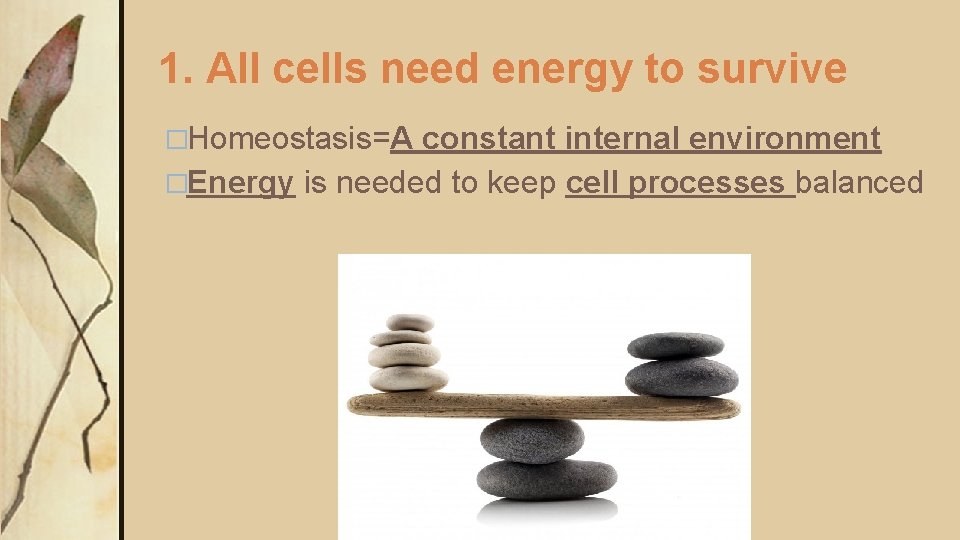
1. All cells need energy to survive �Homeostasis=A constant internal environment �Energy is needed to keep cell processes balanced
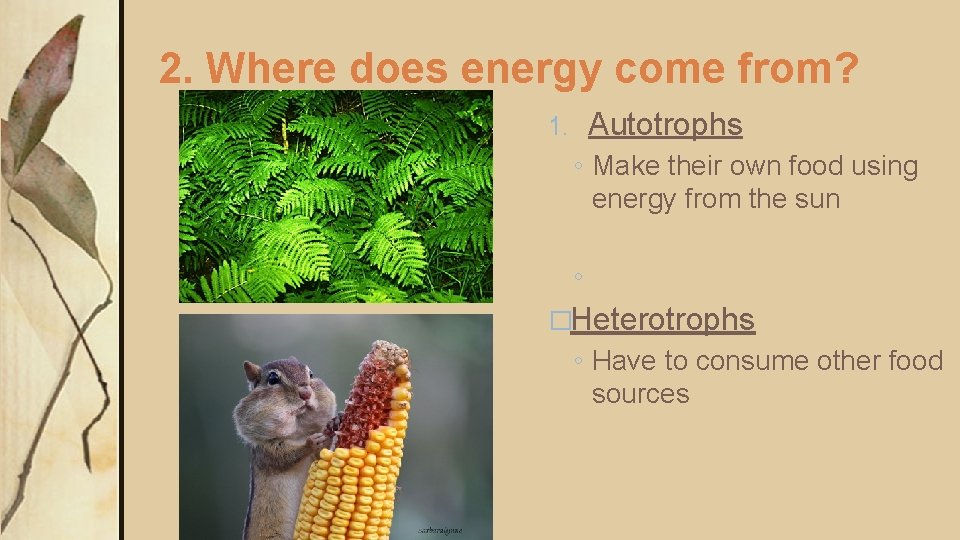
2. Where does energy come from? Autotrophs 1. ◦ Make their own food using energy from the sun ◦ �Heterotrophs ◦ Have to consume other food sources
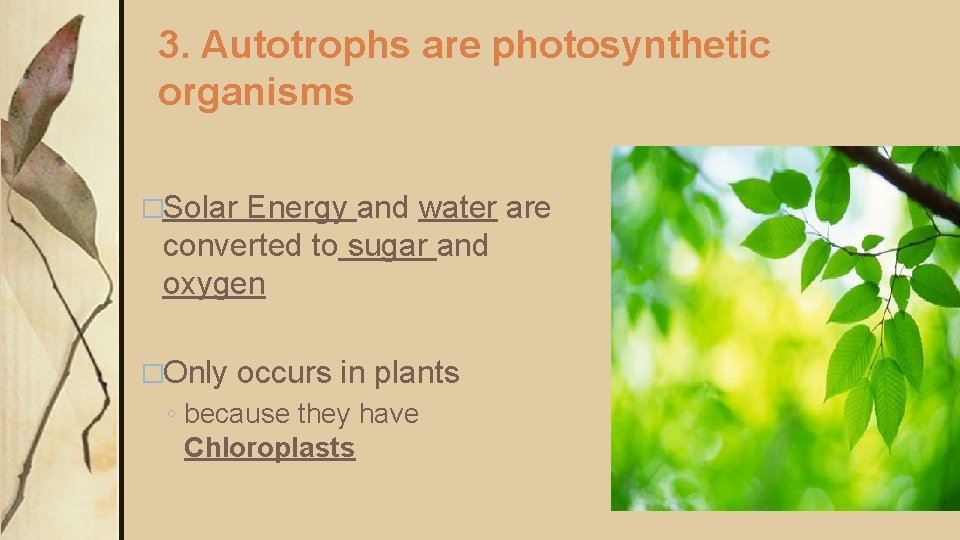
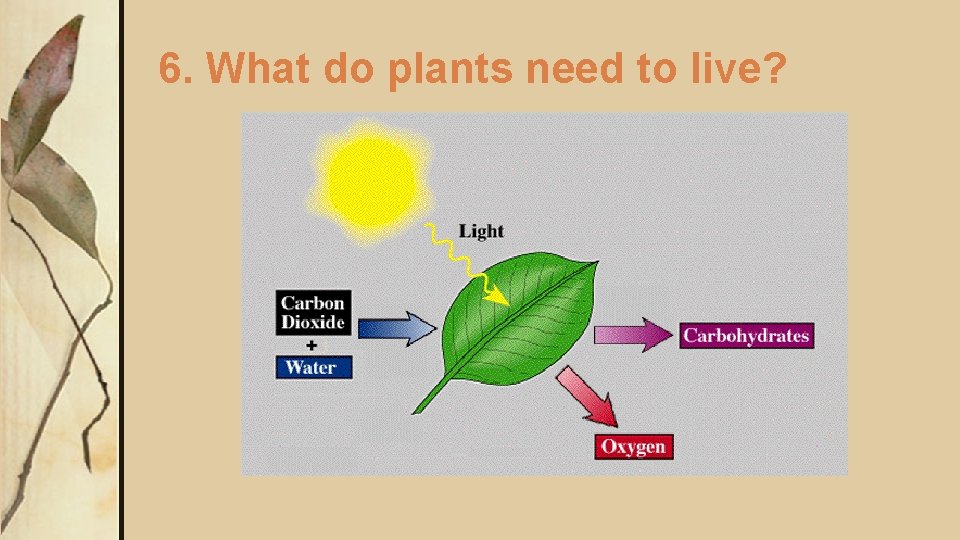
3. Autotrophs are photosynthetic organisms �Solar Energy and water are converted to sugar and oxygen �Only occurs in plants ◦ because they have Chloroplasts
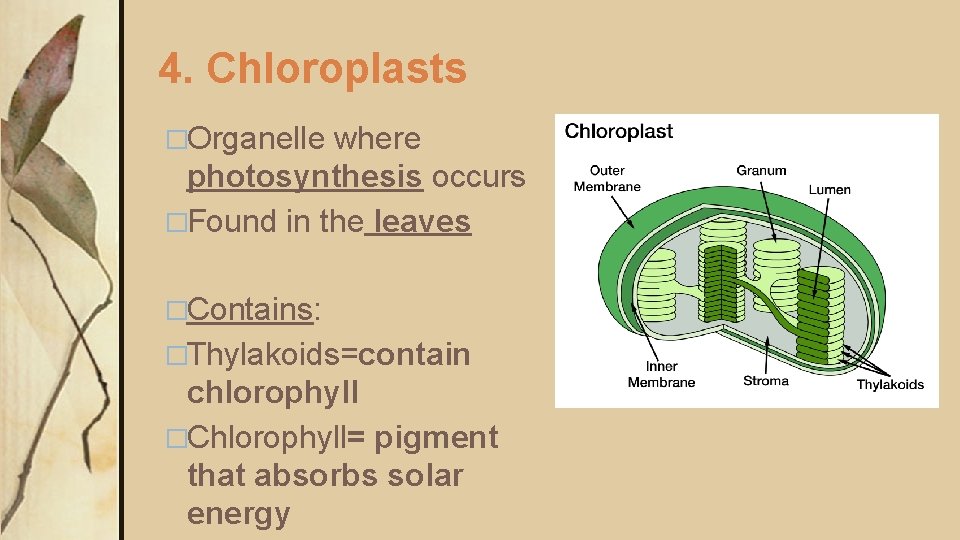
4. Chloroplasts �Organelle where photosynthesis occurs �Found in the leaves �Contains: �Thylakoids=contain chlorophyll �Chlorophyll= pigment that absorbs solar energy
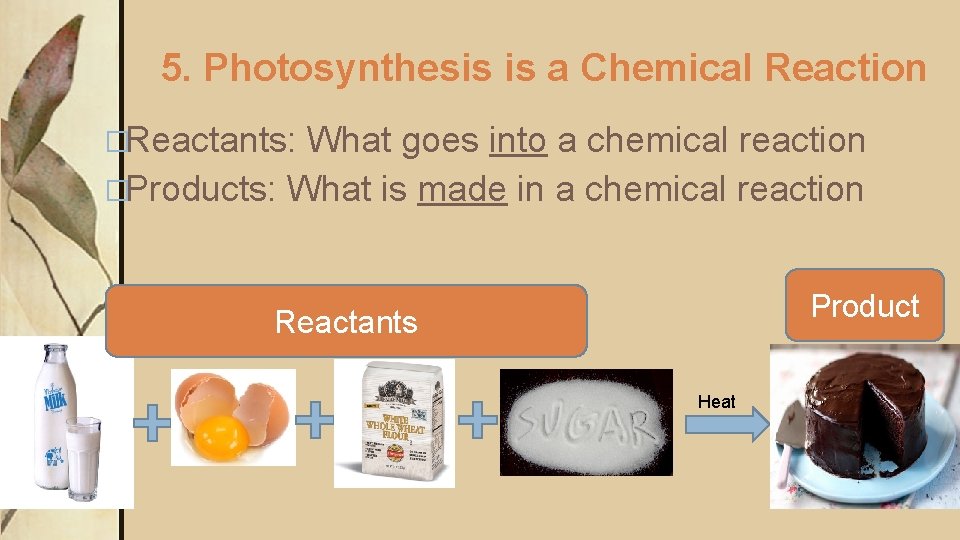
5. Photosynthesis is a Chemical Reaction �Reactants: What goes into a chemical reaction �Products: What is made in a chemical reaction Product Reactants Heat
6. What do plants need to live?
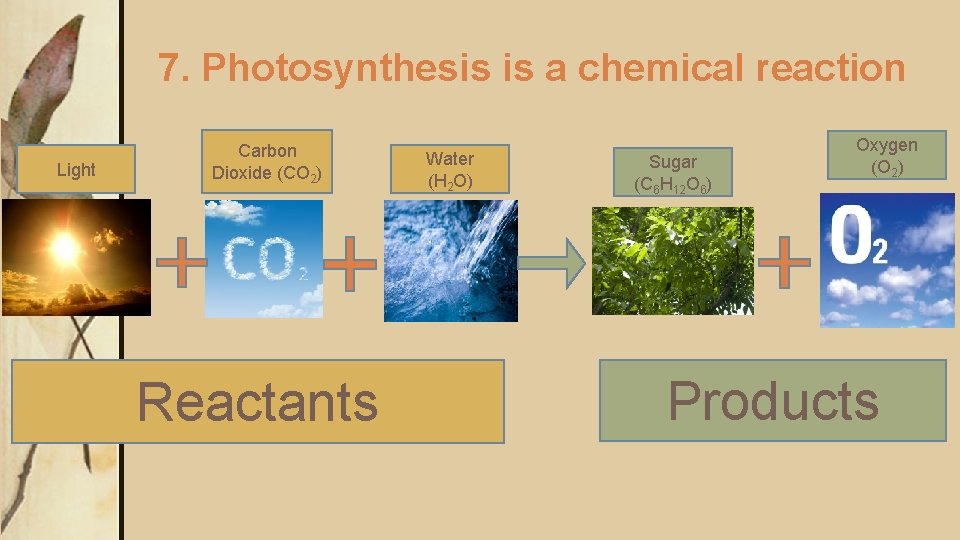
7. Photosynthesis is a chemical reaction Light Carbon Dioxide (CO 2) Reactants Water (H 2 O) Sugar (C 6 H 12 O 6) Oxygen (O 2) Products
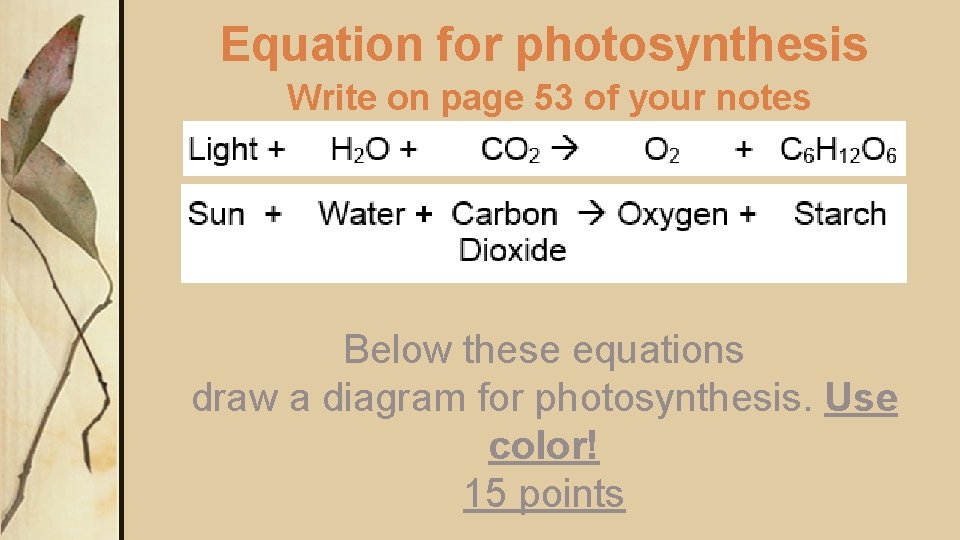
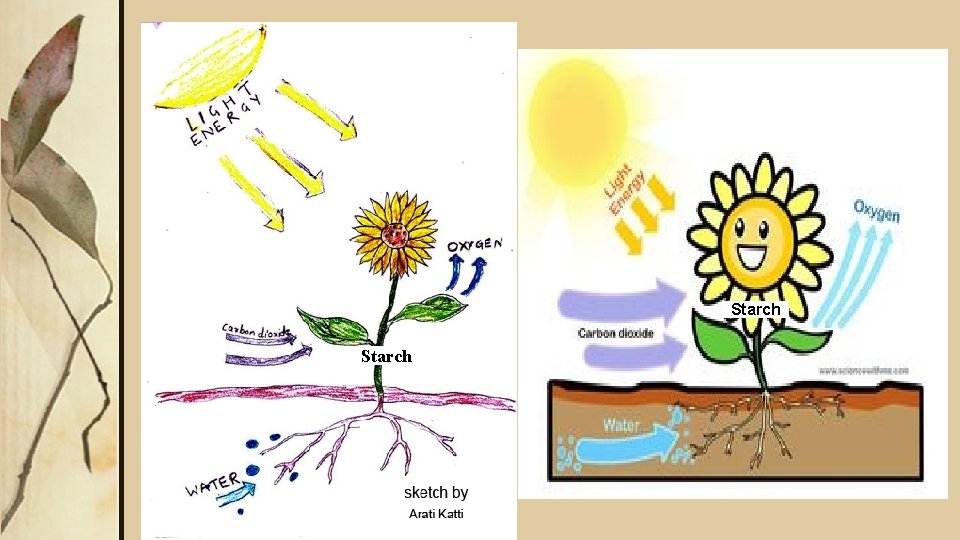
Equation for photosynthesis Write on page 53 of your notes Below these equations draw a diagram for photosynthesis. Use color! 15 points
Starch
Exit Slip Quiz �Write name, date, and period �Number 1 -5
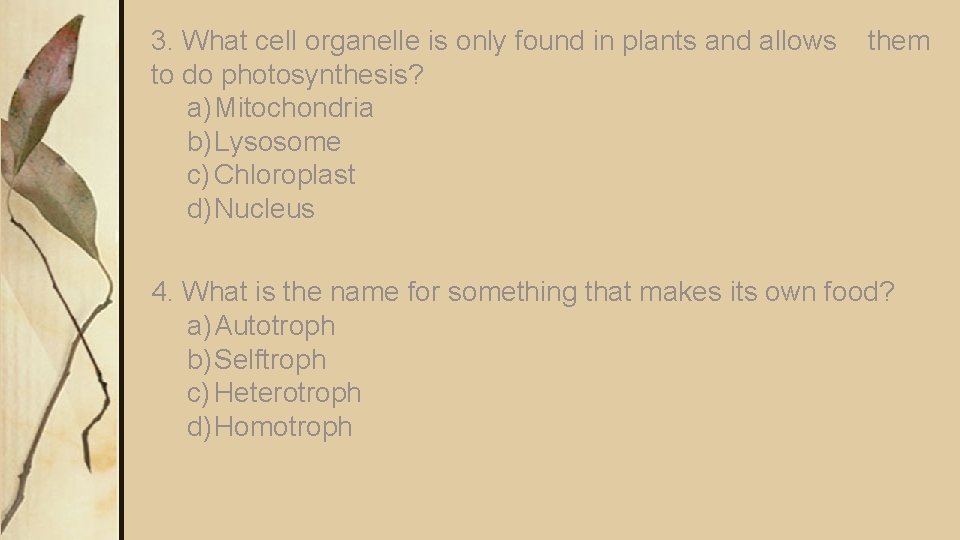
1. What is the name of the process that allows plants to get energy from sunlight? 2. What is the name for something that goes into a chemical reaction? a) Product b) Reactant c) Starting material d) Ingredient
3. What cell organelle is only found in plants and allows to do photosynthesis? a) Mitochondria b) Lysosome c) Chloroplast d) Nucleus them 4. What is the name for something that makes its own food? a) Autotroph b) Selftroph c) Heterotroph d) Homotroph
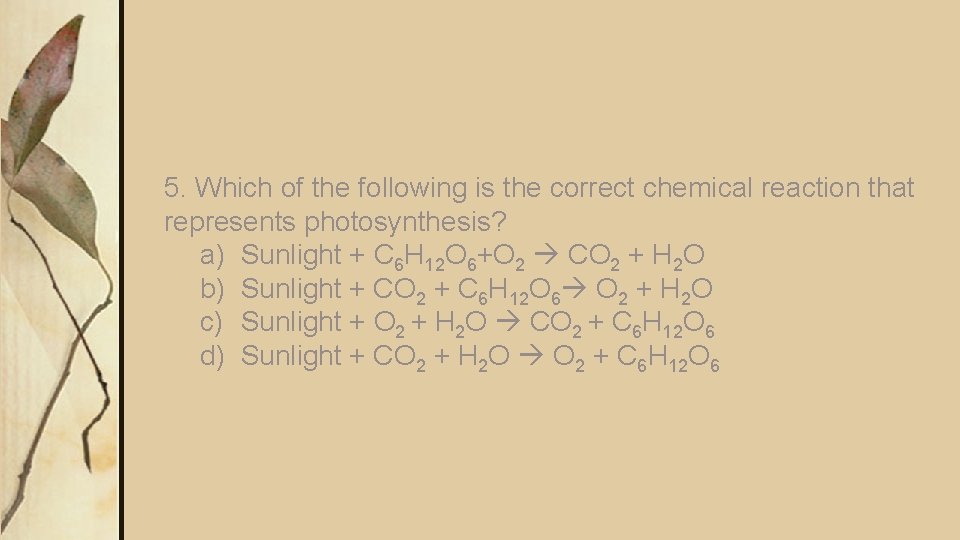
5. Which of the following is the correct chemical reaction that represents photosynthesis? a) Sunlight + C 6 H 12 O 6+O 2 CO 2 + H 2 O b) Sunlight + CO 2 + C 6 H 12 O 6 O 2 + H 2 O c) Sunlight + O 2 + H 2 O CO 2 + C 6 H 12 O 6 d) Sunlight + CO 2 + H 2 O O 2 + C 6 H 12 O 6
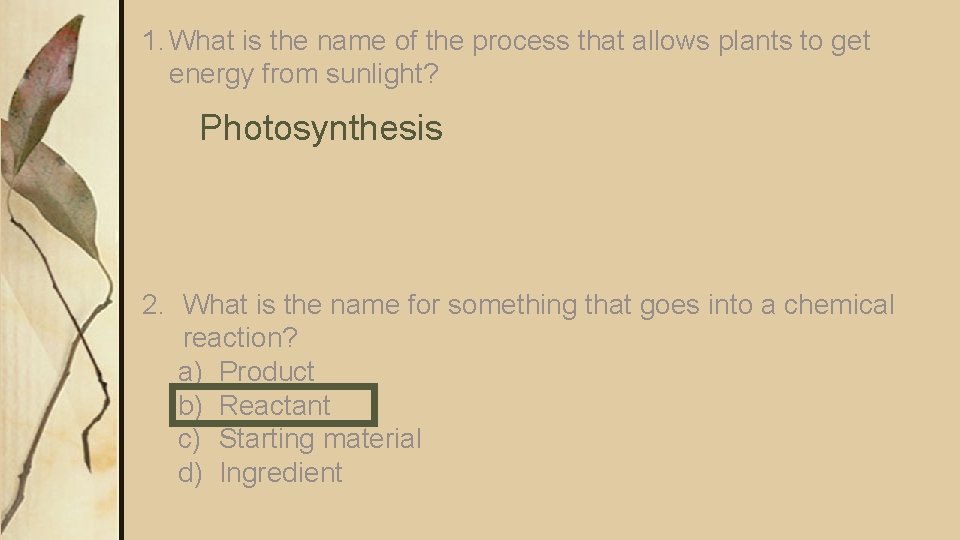
1. What is the name of the process that allows plants to get energy from sunlight? Photosynthesis 2. What is the name for something that goes into a chemical reaction? a) Product b) Reactant c) Starting material d) Ingredient
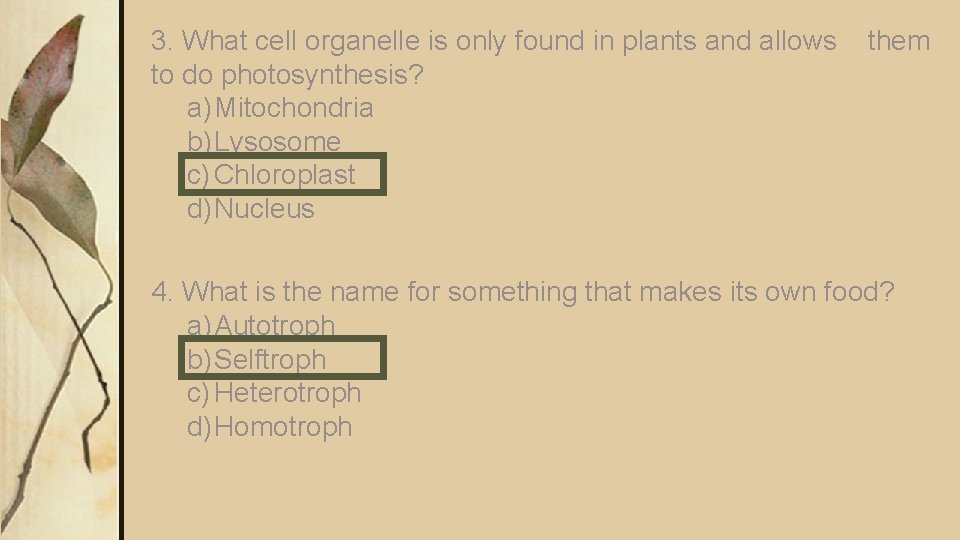
3. What cell organelle is only found in plants and allows to do photosynthesis? a) Mitochondria b) Lysosome c) Chloroplast d) Nucleus them 4. What is the name for something that makes its own food? a) Autotroph b) Selftroph c) Heterotroph d) Homotroph
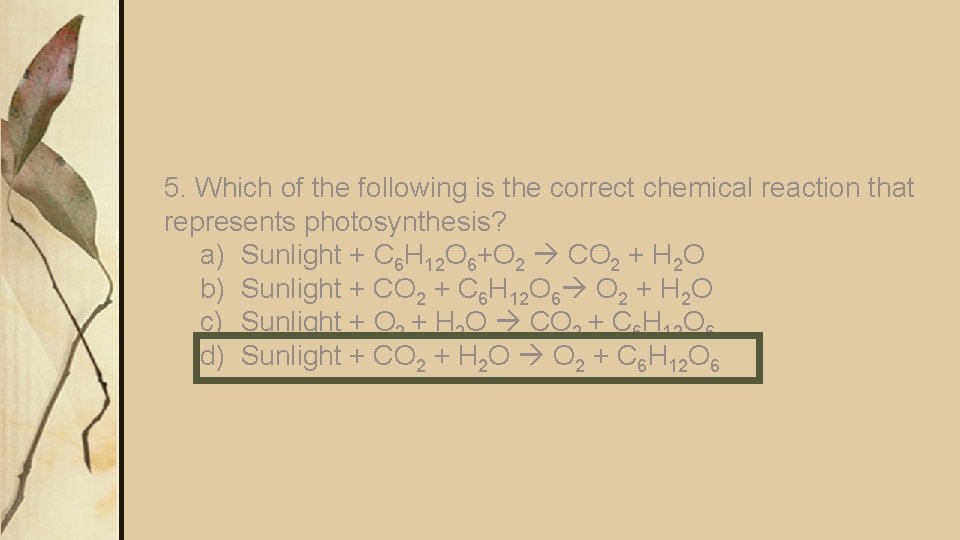
5. Which of the following is the correct chemical reaction that represents photosynthesis? a) Sunlight + C 6 H 12 O 6+O 2 CO 2 + H 2 O b) Sunlight + CO 2 + C 6 H 12 O 6 O 2 + H 2 O c) Sunlight + O 2 + H 2 O CO 2 + C 6 H 12 O 6 d) Sunlight + CO 2 + H 2 O O 2 + C 6 H 12 O 6