
Cell Energy Chapter 2 Section 2 Why do

- Slides: 13
Cell Energy Chapter 2 Section 2
Why do cells need energy? • Live • Grow • Reproduce
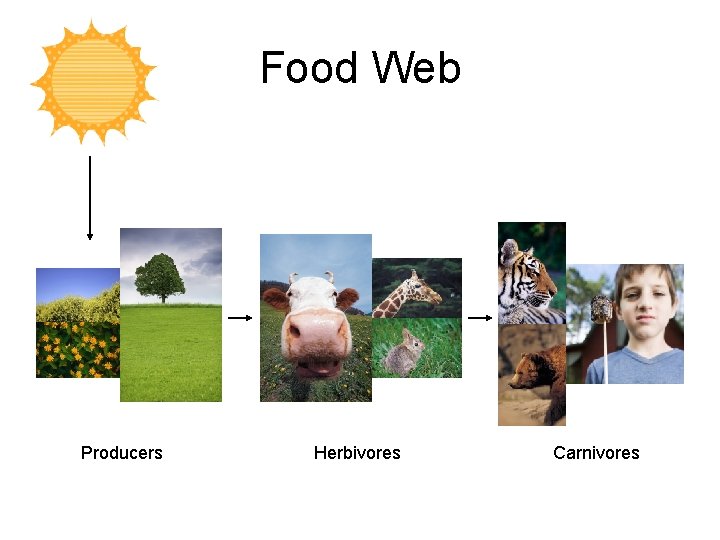
From Sun to Cell • The sun provides energy for almost all living things. • Plants capture light energy from the sun and change it into food through photosynthesis. • Once this food is converted into energy it is passed on to the organisms that eat it.
Food Web Producers Herbivores Carnivores
Photosynthesis • In the chloroplasts of plant cells there is a green pigment called chlorophyll which absorbs the energy of light. • Plants use the energy captured by chlorophyll to change carbon dioxide (CO 2) and water (H 2 O) into food, the simple sugar glucose (C 6 H 12 O 6) and oxygen (O 2). • When plants make glucose, they are converting the sun’s energy into a form of energy that can be stored.
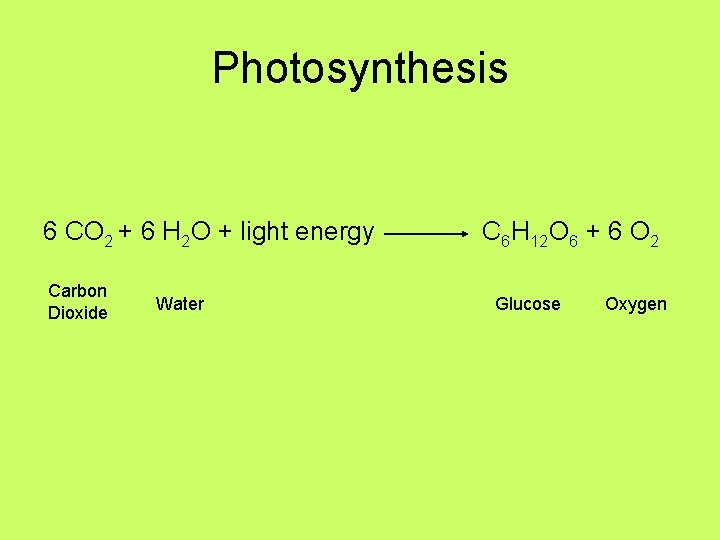
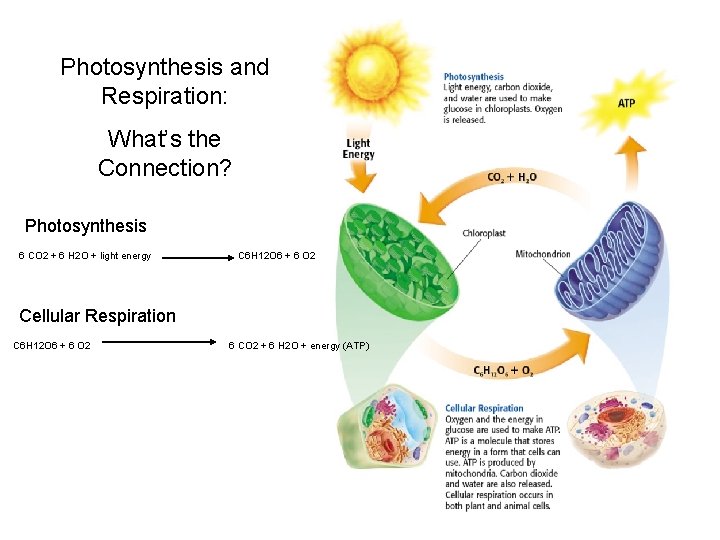
Photosynthesis 6 CO 2 + 6 H 2 O + light energy Carbon Dioxide Water C 6 H 12 O 6 + 6 O 2 Glucose Oxygen
Getting Energy from Food • After you eat, your body must break down the food into a form that your cells can use. • This can be done in 2 ways: – Cellular Respiration – Fermentation
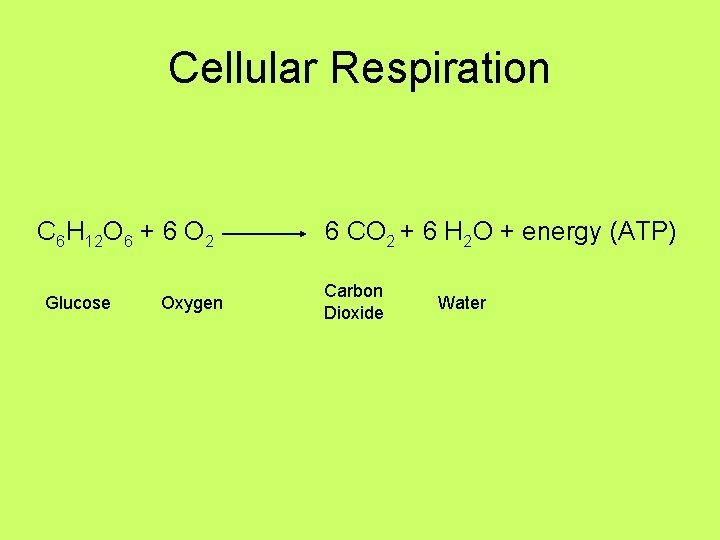
Cellular Respiration • Cellular respiration uses oxygen and is a process your body uses to obtain energy from food. • Cellular respiration occurs in the mitochondria. • During cellular respiration, food (glucose) is broken down into CO 2 and H 2 O, and energy is released.
Cellular Respiration • Most of this energy is stored as ATP and is used to supply energy to fuel the cell’s activities. • Most of the energy released is in the form of heat and helps maintain your body temperature.
Cellular Respiration C 6 H 12 O 6 + 6 O 2 Glucose Oxygen 6 CO 2 + 6 H 2 O + energy (ATP) Carbon Dioxide Water
Photosynthesis and Respiration: What’s the Connection? Photosynthesis 6 CO 2 + 6 H 2 O + light energy C 6 H 12 O 6 + 6 O 2 Cellular Respiration C 6 H 12 O 6 + 6 O 2 6 CO 2 + 6 H 2 O + energy (ATP)
Fermentation • Have you ever run so far or lifted weights so much that your muscles start to burn? • When your muscle cells can’t get the oxygen they need to produce ATP by cellular respiration, fermentation happens.
Fermentation • Fermentation does not use oxygen and leads to the production of a small amount of ATP and products from the partial breakdown of glucose. • There are 2 types of fermentation: – Occurs in muscle cells – Occurs in certain bacteria and yeast