
Cell Energy Cellular Respiration and Photosynthesis What Is
- Slides: 23
Cell Energy Cellular Respiration and Photosynthesis
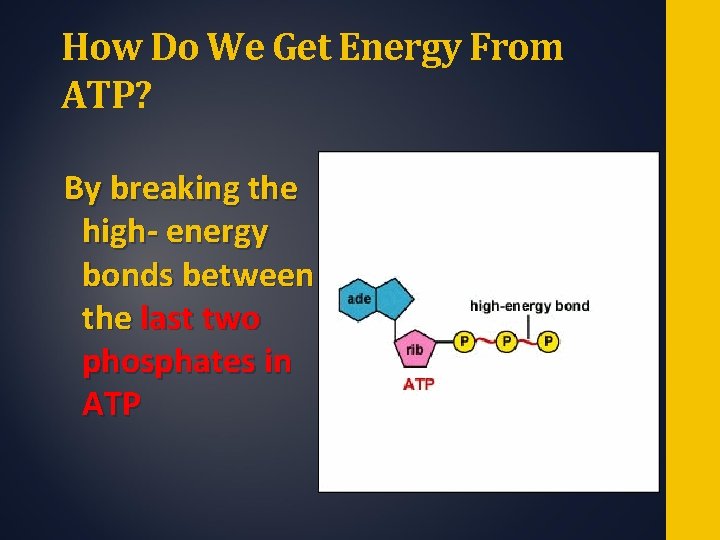
What Is ATP? Energy used by all Cells Adenosine Triphosphate Organic molecule containing high-energy Phosphate bonds
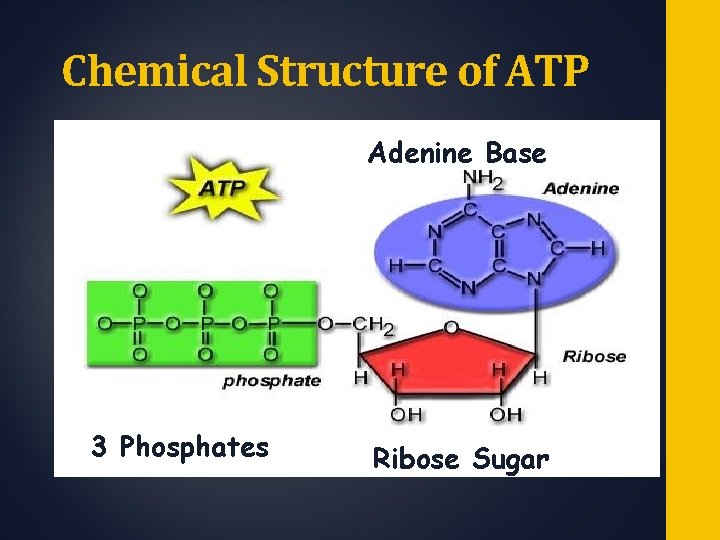
Chemical Structure of ATP Adenine Base 3 Phosphates Ribose Sugar
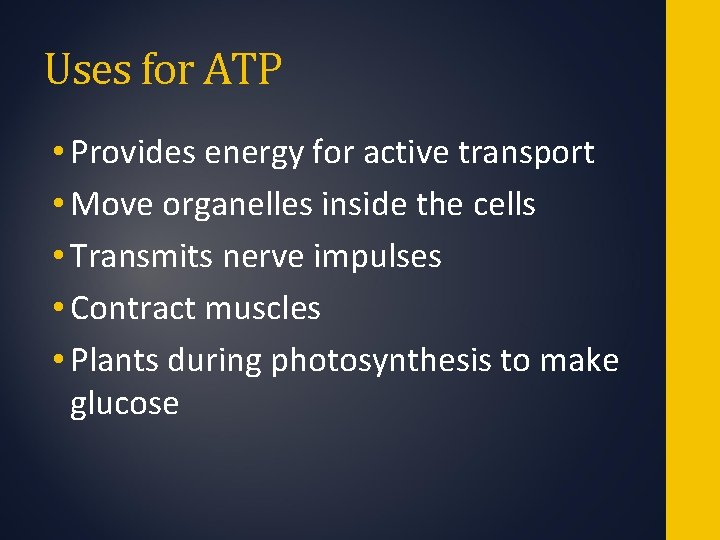
Uses for ATP • Provides energy for active transport • Move organelles inside the cells • Transmits nerve impulses • Contract muscles • Plants during photosynthesis to make glucose
How Do We Get Energy From ATP? By breaking the high- energy bonds between the last two phosphates in ATP
When is ATP Made in the Body? During a Process called Cellular Respiration that takes place in both Plants & Animals
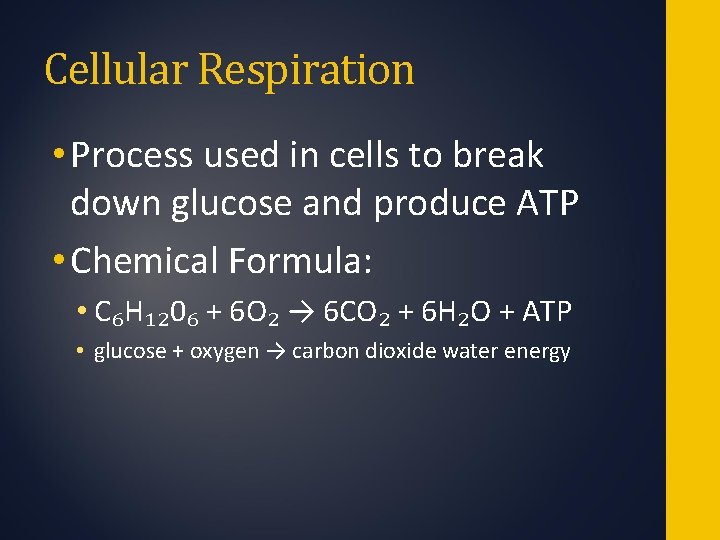
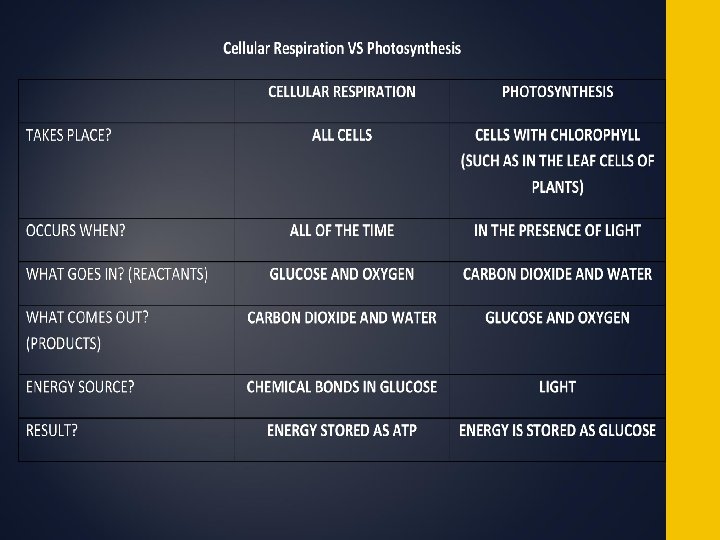
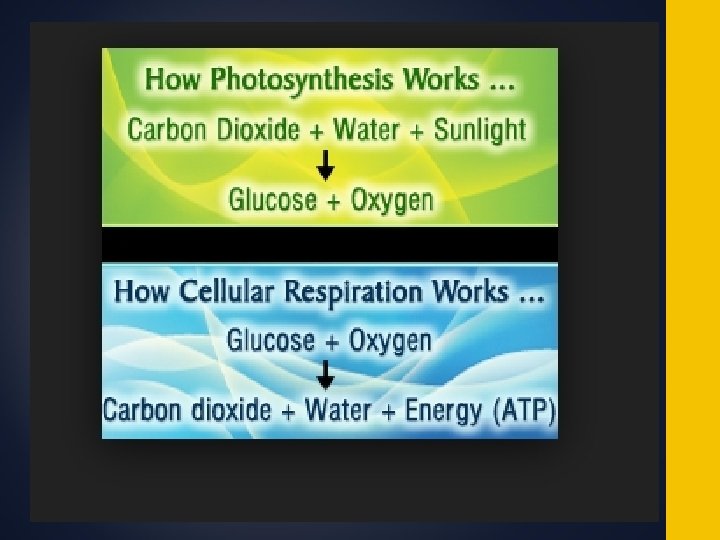
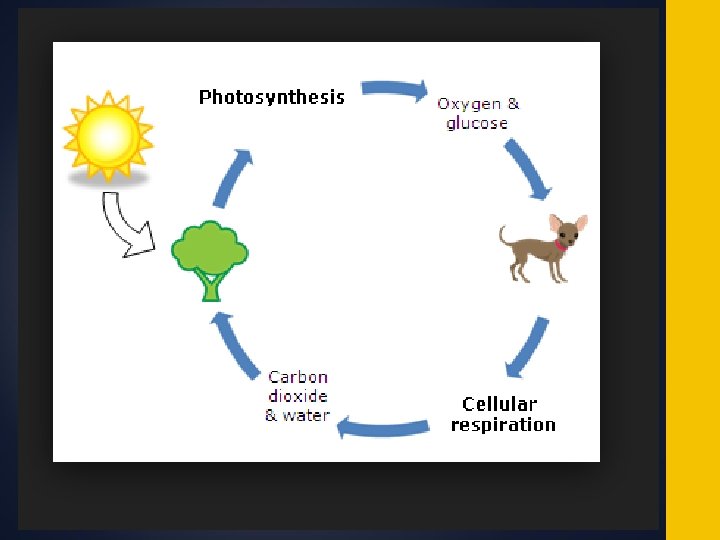
Cellular Respiration • Process used in cells to break down glucose and produce ATP • Chemical Formula: • C₆H₁₂0₆ + 6 O₂ → 6 CO₂ + 6 H₂O + ATP • glucose + oxygen → carbon dioxide water energy
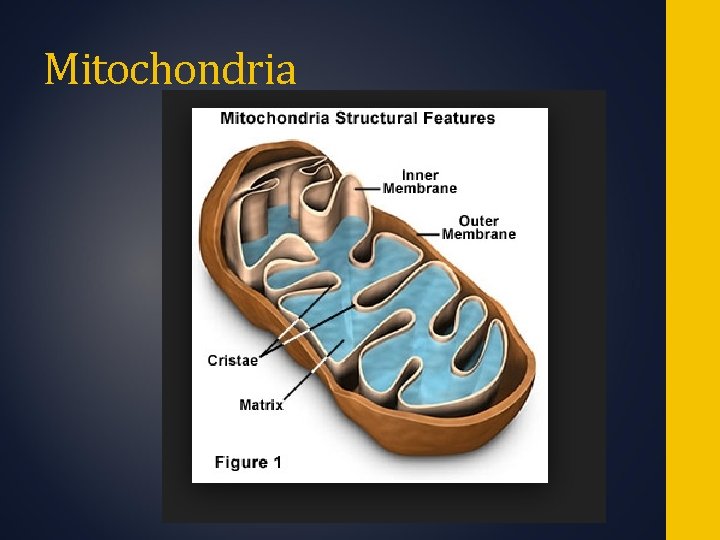
Mitochondria
3 Phases of Cellular Respiration • Glycolysis • Kreb’s Cycle • Electron Transport Chain
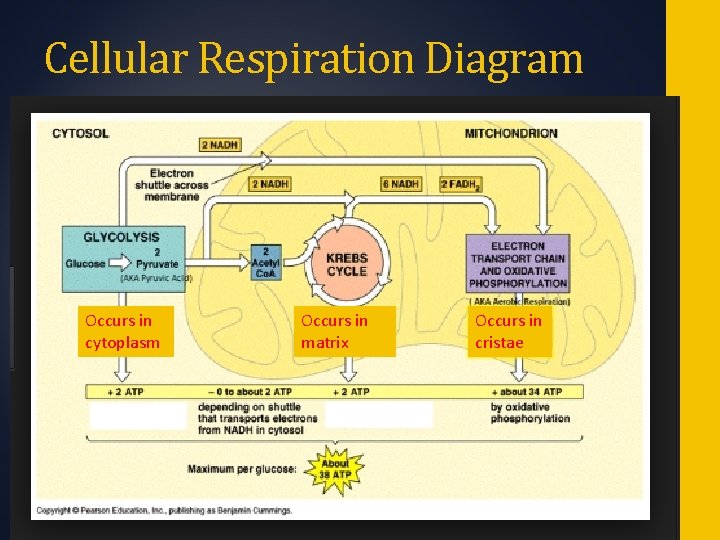
Cellular Respiration Diagram Occurs in cytoplasm Occurs in matrix Occurs in cristae
Glycolysis Summary • Takes place in the CYTOPLASM • ANAEROBIC (doesn’t use OXYGEN) • NETS 2 ATP
Aerobic vs Anaerobic Respiration Pathways Is Oxygen Present? YES • Aerobic Respiration • Needs oxygen • Takes place in mitochondria • KREB’S CYCLE – 2 ATP • ETC – 34 ATP NO • Anaerobic Respiration • • No oxygen needed Takes place in cytoplasm GLYCOLYSIS – 2 ATP FERMENTATION • Animals – LACTIC ACID • Plants - ALCOHOLIC
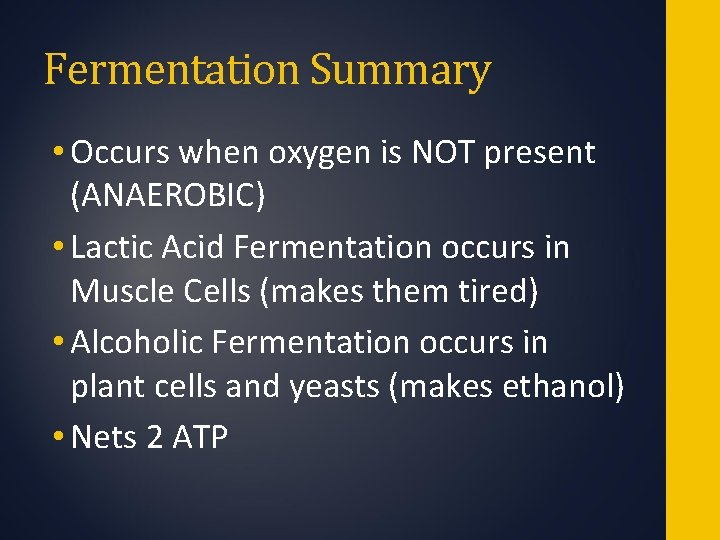
Fermentation Summary • Occurs when oxygen is NOT present (ANAEROBIC) • Lactic Acid Fermentation occurs in Muscle Cells (makes them tired) • Alcoholic Fermentation occurs in plant cells and yeasts (makes ethanol) • Nets 2 ATP
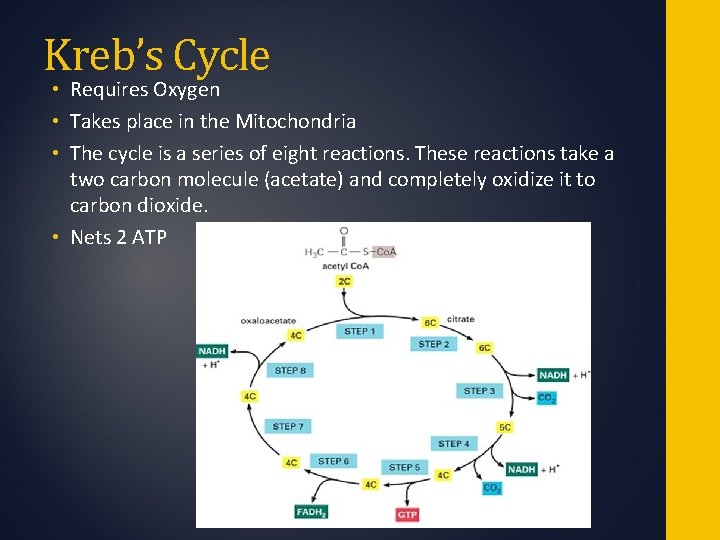
Kreb’s Cycle • Requires Oxygen • Takes place in the Mitochondria • The cycle is a series of eight reactions. These reactions take a two carbon molecule (acetate) and completely oxidize it to carbon dioxide. • Nets 2 ATP
Electron Transport Chain Summary • Occurs in the Mitochondria • Produces Water (H₂O) • Nets 34 ATP
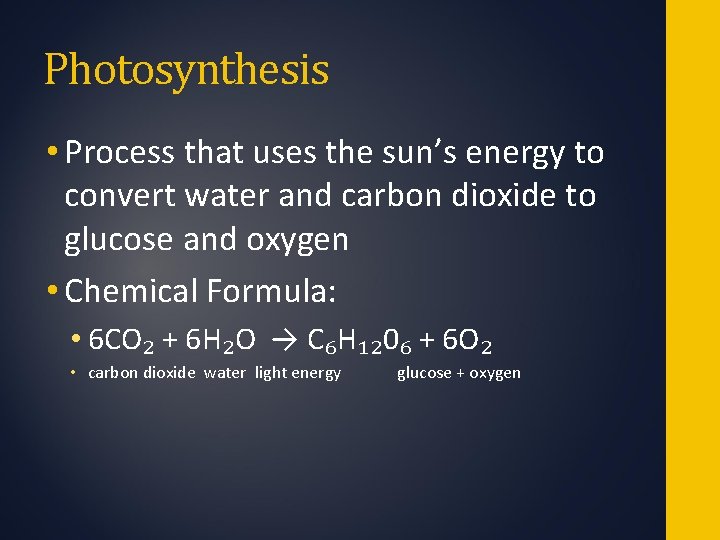
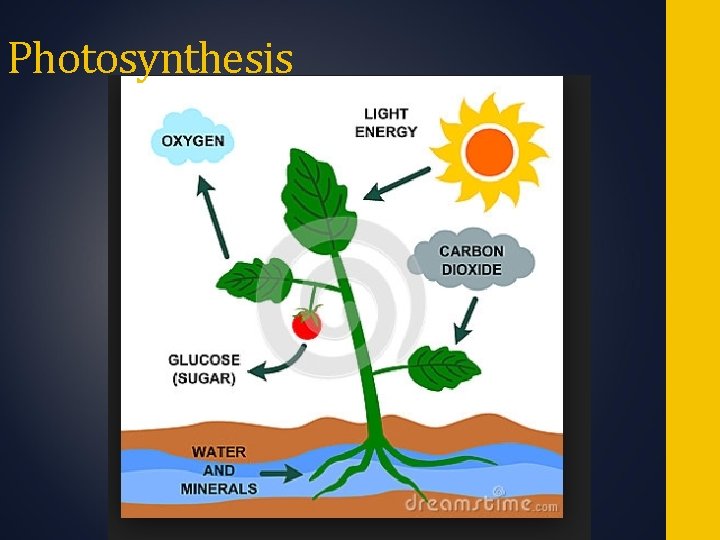
Photosynthesis • Process that uses the sun’s energy to convert water and carbon dioxide to glucose and oxygen • Chemical Formula: • 6 CO₂ + 6 H₂O → C₆H₁₂0₆ + 6 O₂ • carbon dioxide water light energy glucose + oxygen
Photosynthesis
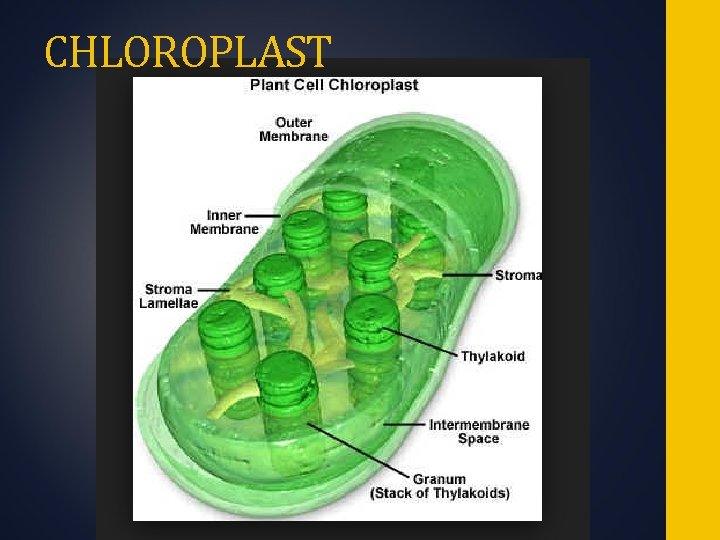
CHLOROPLAST
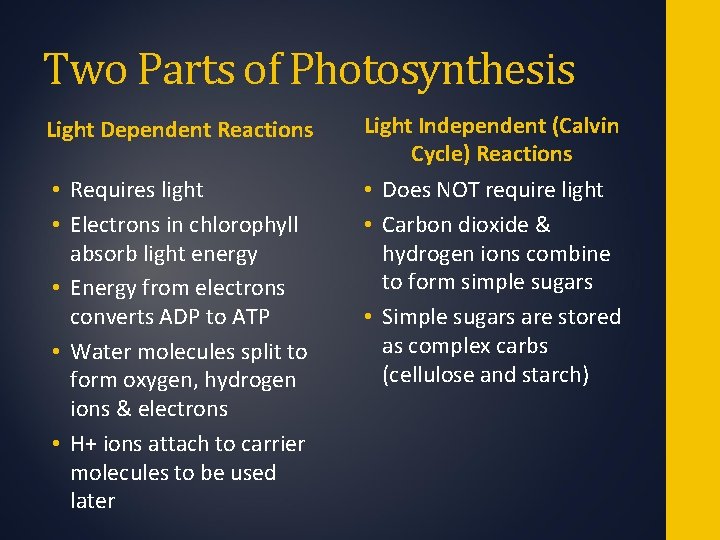
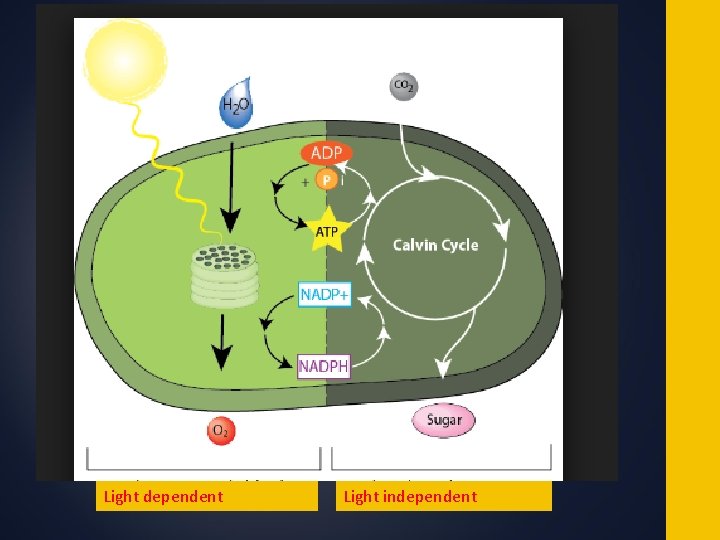
Two Parts of Photosynthesis Light Dependent Reactions Light Independent (Calvin Cycle) Reactions • Requires light • Electrons in chlorophyll absorb light energy • Energy from electrons converts ADP to ATP • Water molecules split to form oxygen, hydrogen ions & electrons • H+ ions attach to carrier molecules to be used later • Does NOT require light • Carbon dioxide & hydrogen ions combine to form simple sugars • Simple sugars are stored as complex carbs (cellulose and starch)
Light dependent Light independent