
Cell Endomembrane System Endoplasmic Reticulum Golgi Apparatus Lysosomes

Cell: Endomembrane System Endoplasmic Reticulum, Golgi Apparatus, Lysosomes, Peroxisomes, Vacuoles, Vesicles AP Biology 2005 -2006
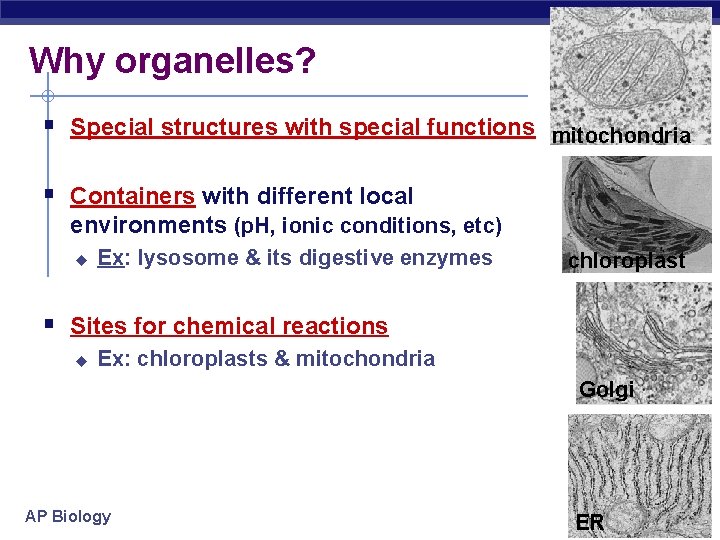
Why organelles? § Special structures with special functions mitochondria § Containers with different local environments (p. H, ionic conditions, etc) u Ex: lysosome & its digestive enzymes chloroplast § Sites for chemical reactions u Ex: chloroplasts & mitochondria Golgi AP Biology ER
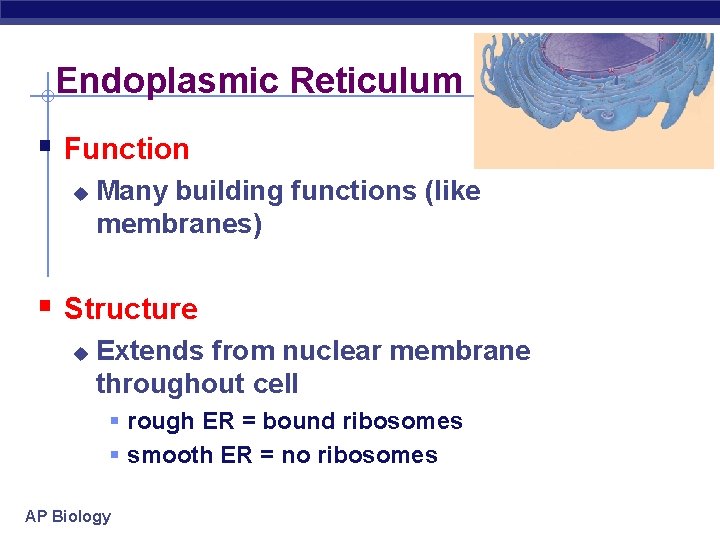
Endoplasmic Reticulum § Function u Many building functions (like membranes) § Structure u Extends from nuclear membrane throughout cell § rough ER = bound ribosomes § smooth ER = no ribosomes AP Biology
Smooth ER function § Metabolic processing factory u Synthesis (build) & hydrolysis (break) u enzymes … § build lipids, oils, phospholipids, steroids § In liver breakdown of glycogen into glucose § In liver detoxify drugs & poison AP Biology

Rough ER function § Build proteins for export out of cell u u AP Biology protein secreting cells packaged into transport vesicles for export 2005 -2006
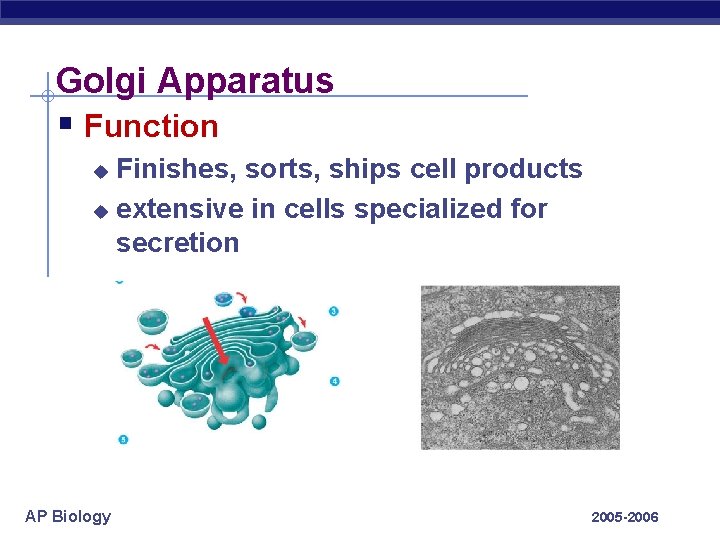
Golgi Apparatus § Function Finishes, sorts, ships cell products u extensive in cells specialized for secretion u AP Biology 2005 -2006
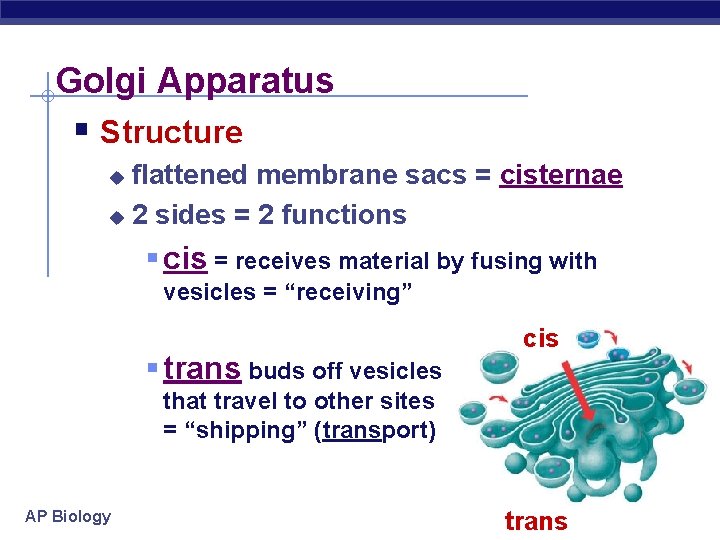
Golgi Apparatus § Structure flattened membrane sacs = cisternae u 2 sides = 2 functions u § cis = receives material by fusing with vesicles = “receiving” § trans buds off vesicles cis that travel to other sites = “shipping” (transport) AP Biology trans 2005 -2006
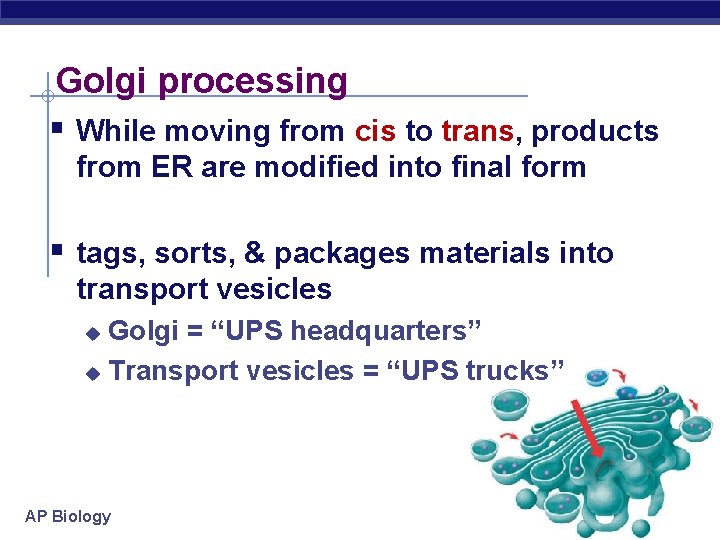
Golgi processing § While moving from cis to trans, products from ER are modified into final form § tags, sorts, & packages materials into transport vesicles Golgi = “UPS headquarters” u Transport vesicles = “UPS trucks” u AP Biology 2005 -2006
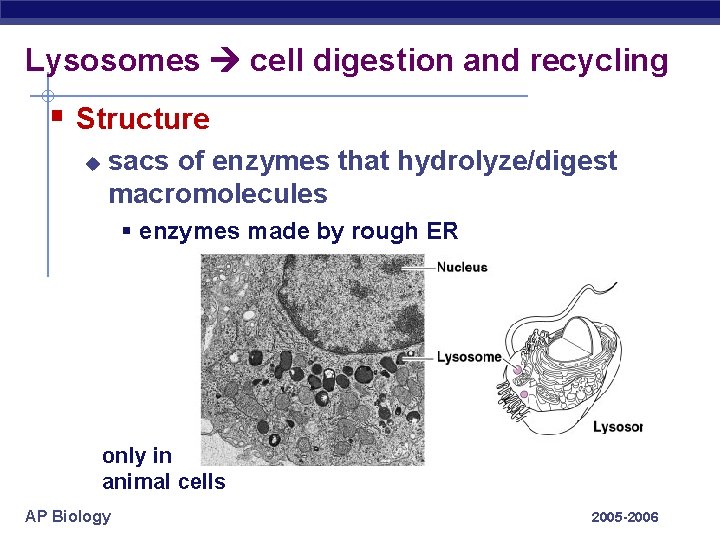
Lysosomes cell digestion and recycling § Structure u sacs of enzymes that hydrolyze/digest macromolecules § enzymes made by rough ER only in animal cells AP Biology 2005 -2006
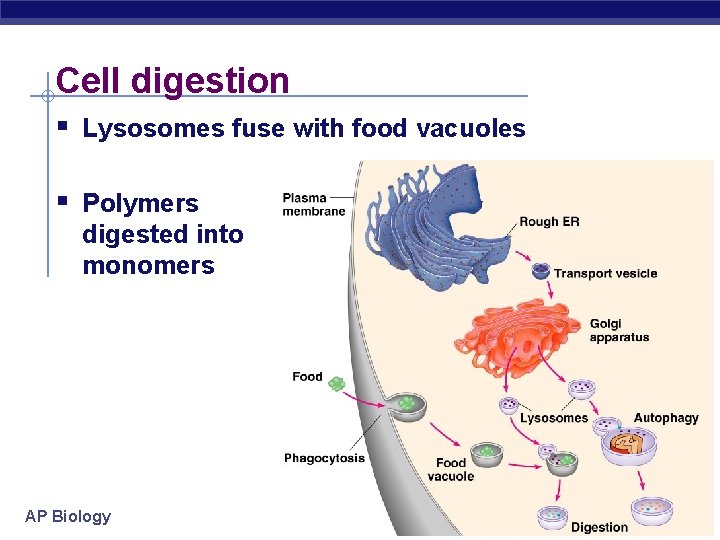
Cell digestion § Lysosomes fuse with food vacuoles § Polymers digested into monomers AP Biology 2005 -2006
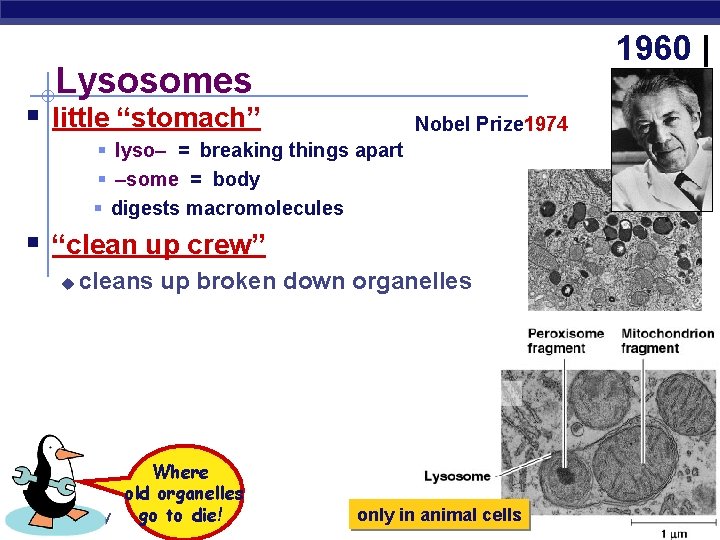
1960 | Lysosomes § little “stomach” Nobel Prize 1974 § lyso– = breaking things apart § –some = body § digests macromolecules § “clean up crew” u cleans up broken down organelles Where old organelles go to die! AP Biology only in animal cells
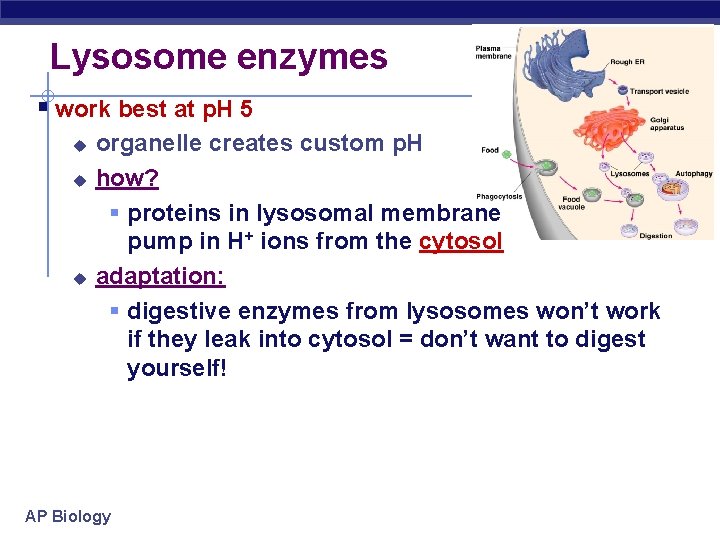
Lysosome enzymes § work best at p. H 5 u u u organelle creates custom p. H how? § proteins in lysosomal membrane pump in H+ ions from the cytosol adaptation: § digestive enzymes from lysosomes won’t work if they leak into cytosol = don’t want to digest yourself! AP Biology
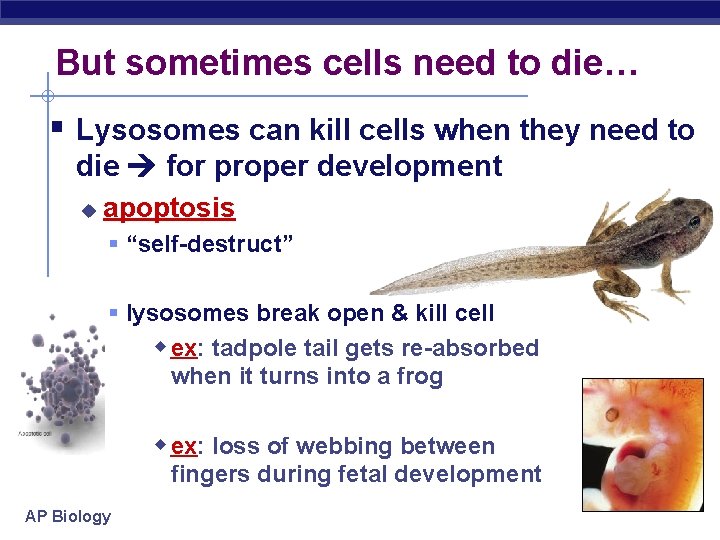
But sometimes cells need to die… § Lysosomes can kill cells when they need to die for proper development u apoptosis § “self-destruct” § lysosomes break open & kill cell w ex: tadpole tail gets re-absorbed when it turns into a frog w ex: loss of webbing between fingers during fetal development AP Biology
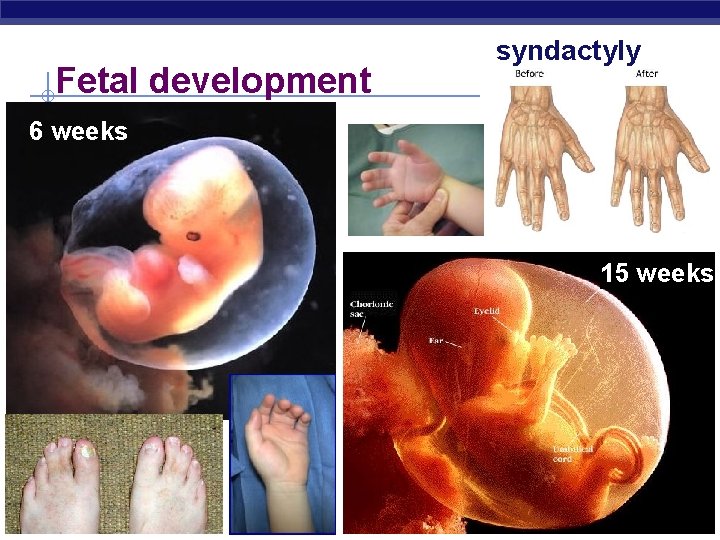
Fetal development syndactyly 6 weeks 15 weeks AP Biology
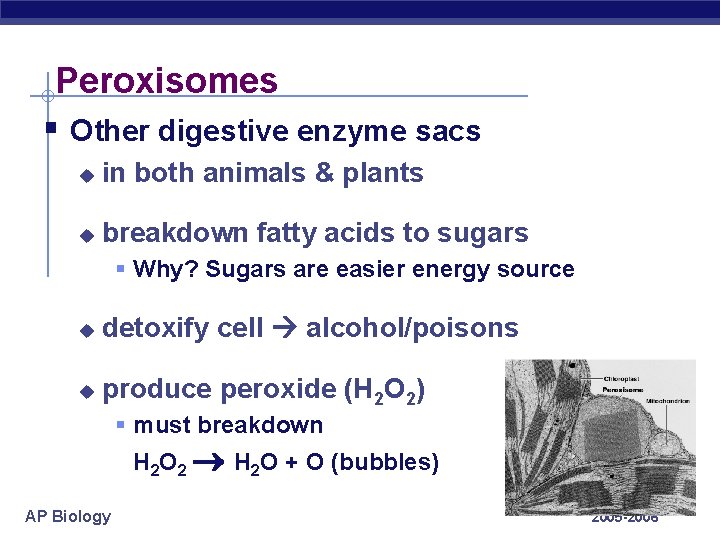
Peroxisomes § Other digestive enzyme sacs u in both animals & plants u breakdown fatty acids to sugars § Why? Sugars are easier energy source u detoxify cell alcohol/poisons u produce peroxide (H 2 O 2) § must breakdown H 2 O 2 H 2 O + O (bubbles) AP Biology 2005 -2006
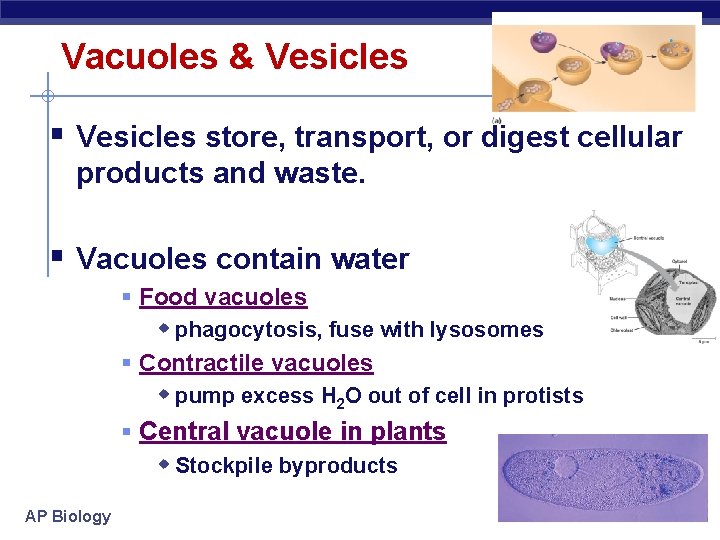
Vacuoles & Vesicles § Vesicles store, transport, or digest cellular products and waste. § Vacuoles contain water § Food vacuoles w phagocytosis, fuse with lysosomes § Contractile vacuoles w pump excess H 2 O out of cell in protists § Central vacuole in plants w Stockpile byproducts AP Biology 2005 -2006
- Slides: 16