
CELL DIVISION Why do cells Divide For Growth

- Slides: 21
CELL DIVISION
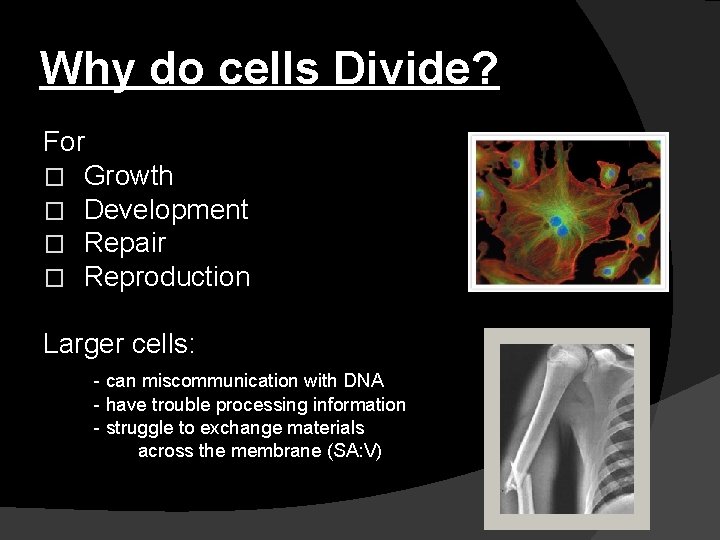
Why do cells Divide? For � Growth � Development � Repair � Reproduction Larger cells: - can miscommunication with DNA - have trouble processing information - struggle to exchange materials across the membrane (SA: V)
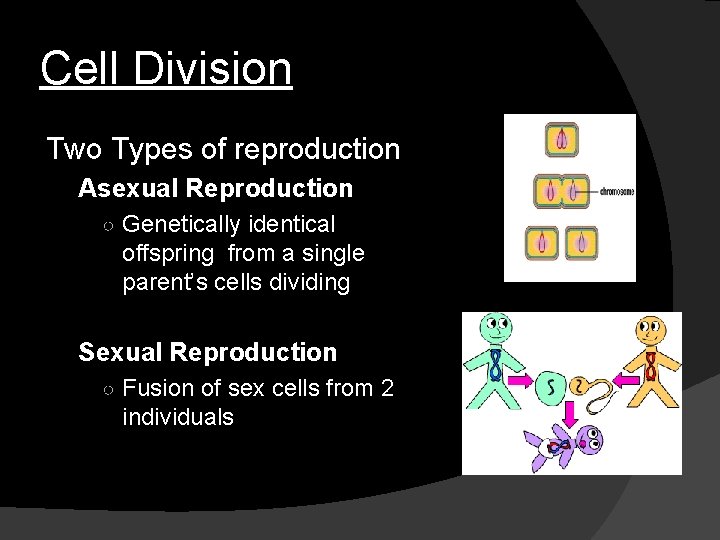
Cell Division Two Types of reproduction Asexual Reproduction ○ Genetically identical offspring from a single parent’s cells dividing Sexual Reproduction ○ Fusion of sex cells from 2 individuals
Advantages of Reproduction Types � Asexual: Survival Strategy for single celled organisms �Offspring are genetically identical to parent. �Occurs rapidly under favorable conditions. �Lower energy input � Sexual: Survival Strategy for multi-cellular organisms �Offspring are genetically varied from parent �An advantage in environments that change frequently �Higher energy input
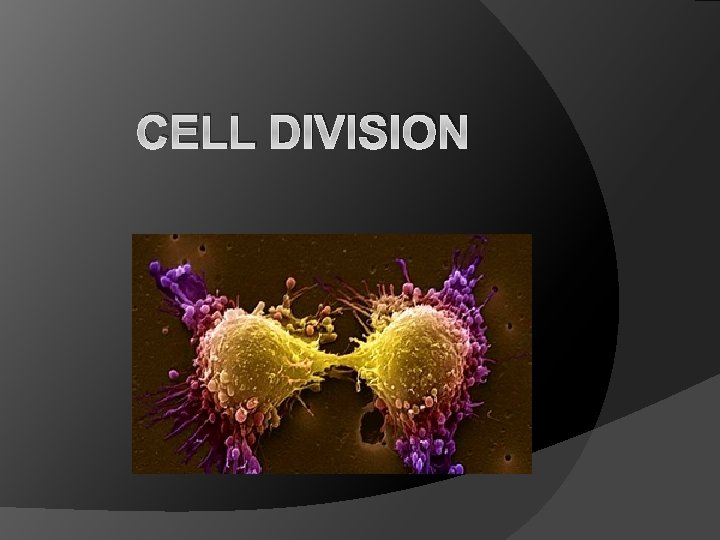
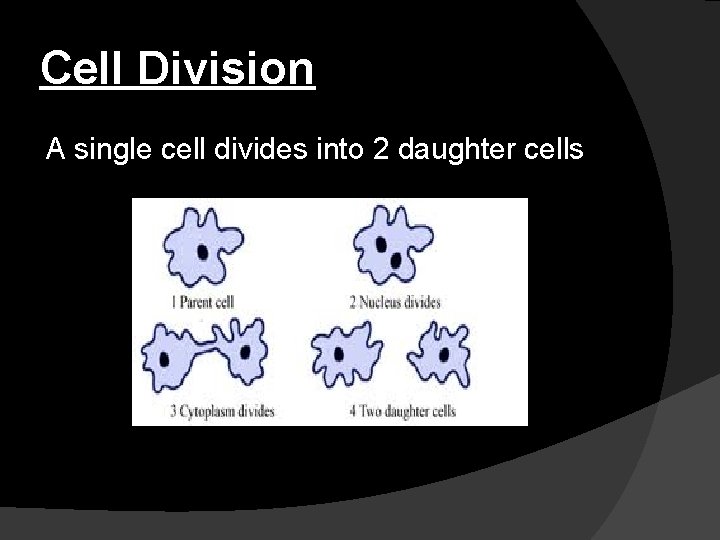
Cell Division A single cell divides into 2 daughter cells
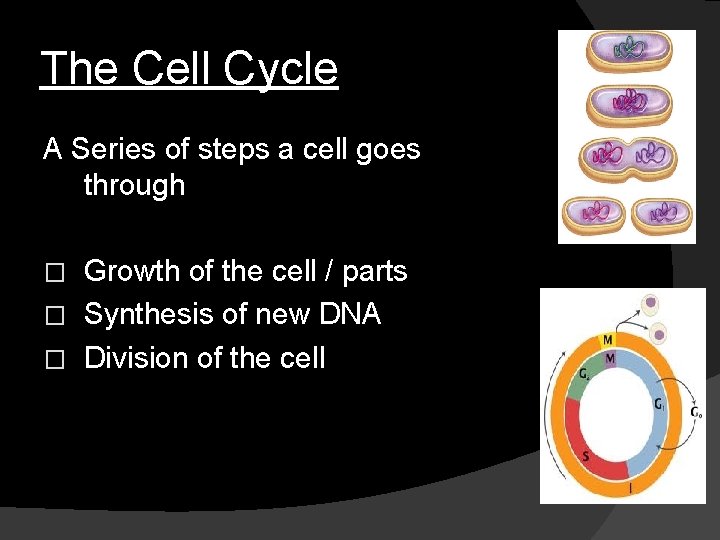
The Cell Cycle A Series of steps a cell goes through Growth of the cell / parts � Synthesis of new DNA � Division of the cell �
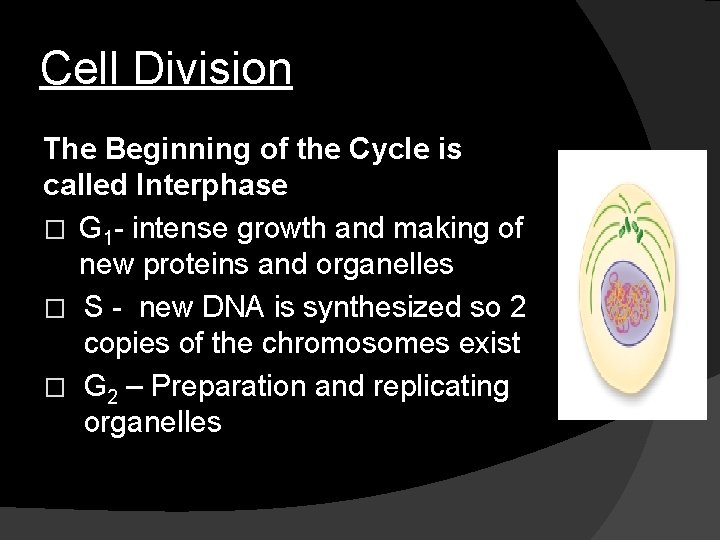
Cell Division The Beginning of the Cycle is called Interphase � G 1 - intense growth and making of new proteins and organelles � S - new DNA is synthesized so 2 copies of the chromosomes exist � G 2 – Preparation and replicating organelles
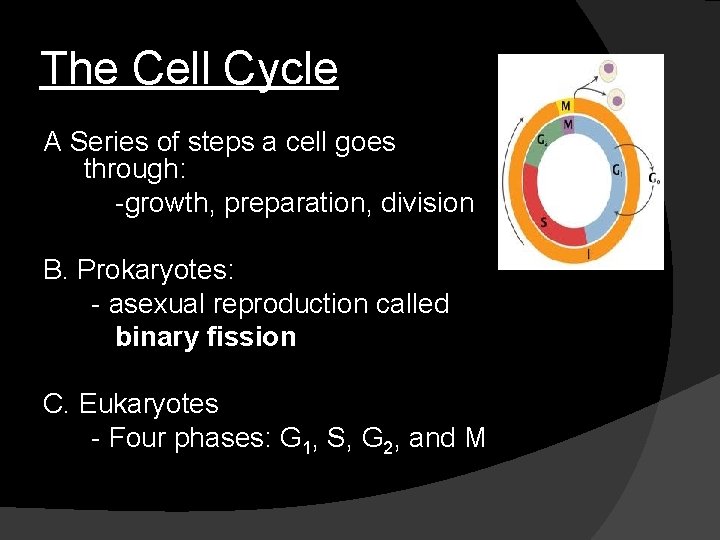
The Cell Cycle A Series of steps a cell goes through: -growth, preparation, division B. Prokaryotes: - asexual reproduction called binary fission C. Eukaryotes - Four phases: G 1, S, G 2, and M
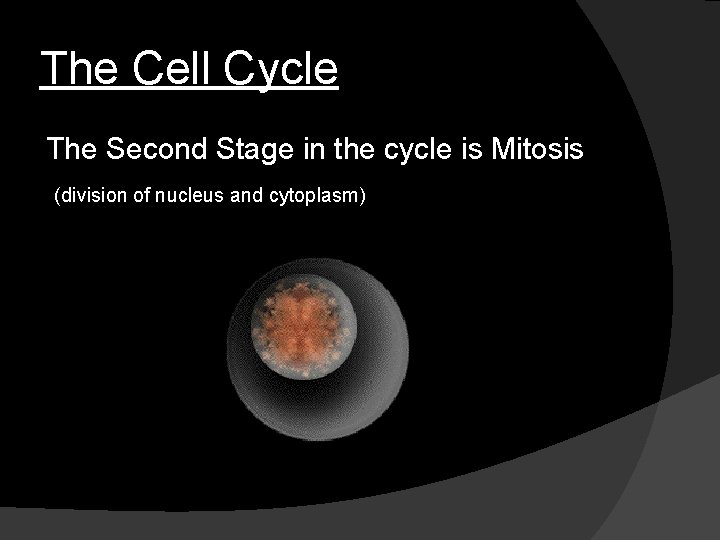
The Cell Cycle The Second Stage in the cycle is Mitosis (division of nucleus and cytoplasm)
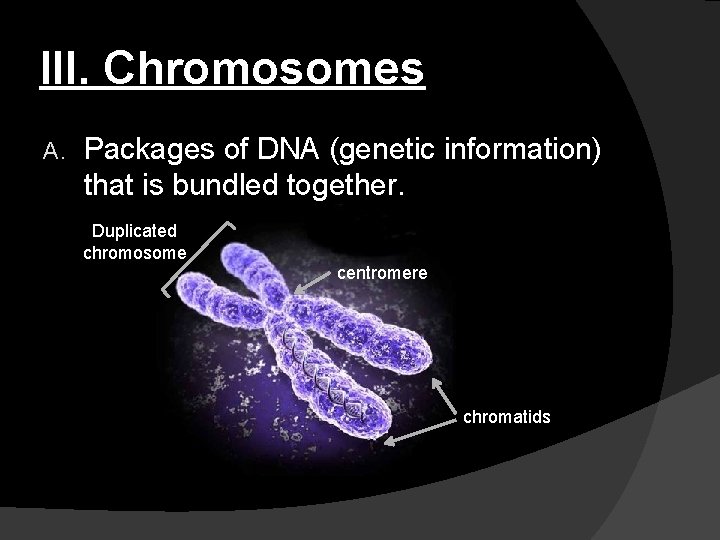
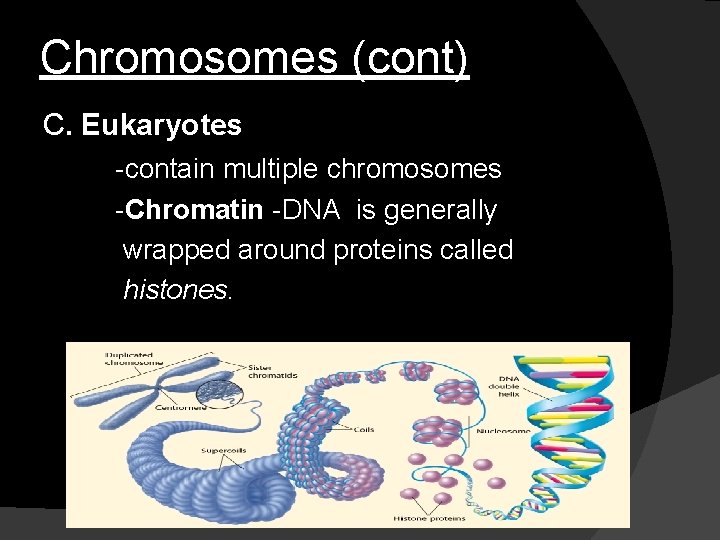
III. Chromosomes A. Packages of DNA (genetic information) that is bundled together. Duplicated chromosome centromere chromatids
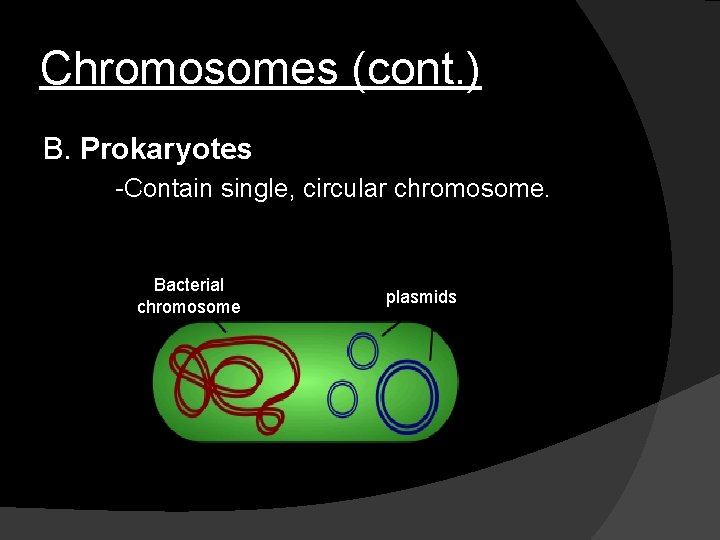
Chromosomes (cont. ) B. Prokaryotes -Contain single, circular chromosome. Bacterial chromosome plasmids
Chromosomes (cont) C. Eukaryotes -contain multiple chromosomes -Chromatin -DNA is generally wrapped around proteins called histones.
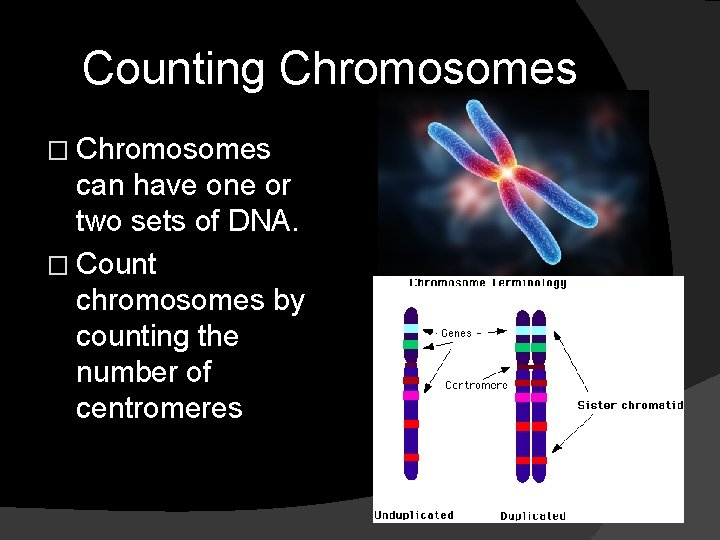
Counting Chromosomes � Chromosomes can have one or two sets of DNA. � Count chromosomes by counting the number of centromeres
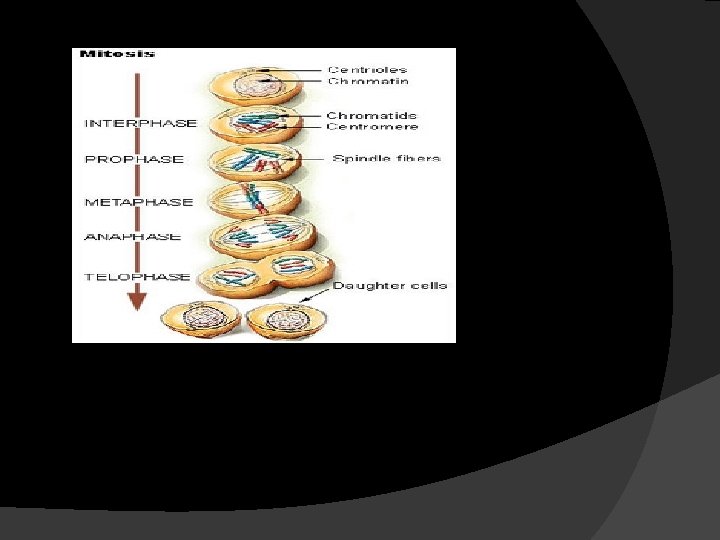
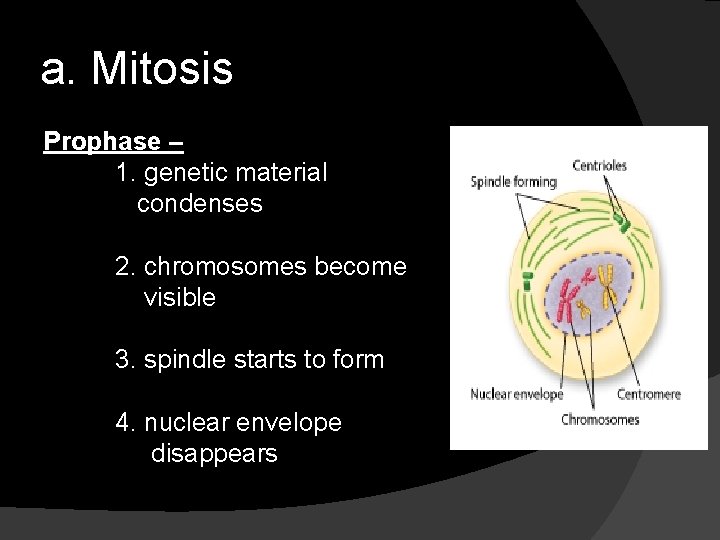
a. Mitosis Prophase – 1. genetic material condenses 2. chromosomes become visible 3. spindle starts to form 4. nuclear envelope disappears
Mitosis (cont. ) Metaphase – 1. Duplicated chromosomes line up in middle 2. Spindle fibers connect to centromeres
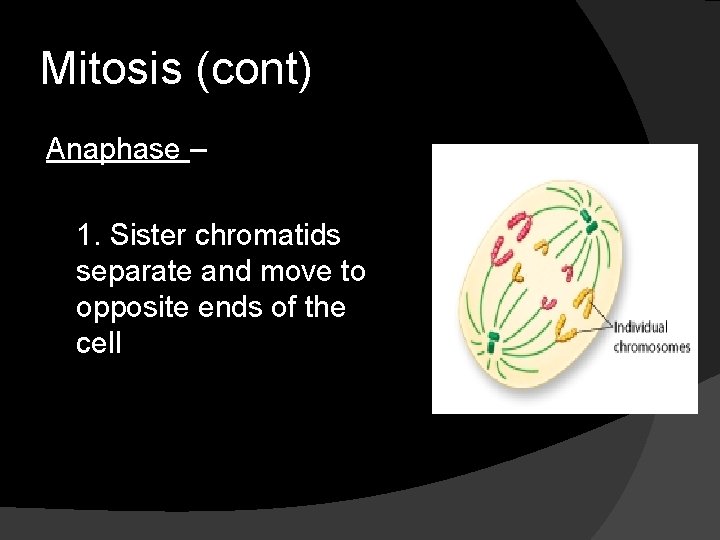
Mitosis (cont) Anaphase – 1. Sister chromatids separate and move to opposite ends of the cell
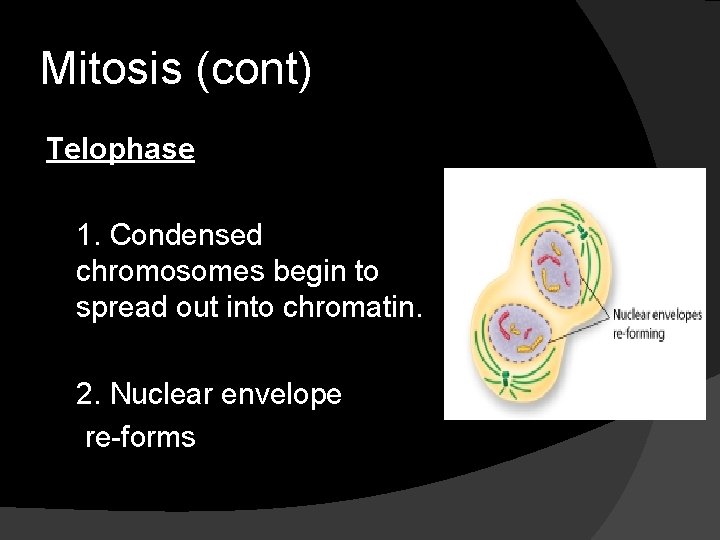
Mitosis (cont) Telophase 1. Condensed chromosomes begin to spread out into chromatin. 2. Nuclear envelope re-forms
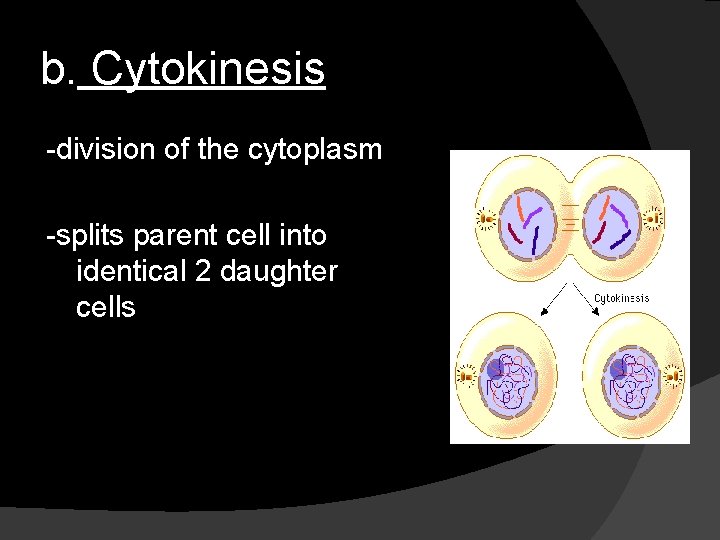
b. Cytokinesis -division of the cytoplasm -splits parent cell into identical 2 daughter cells
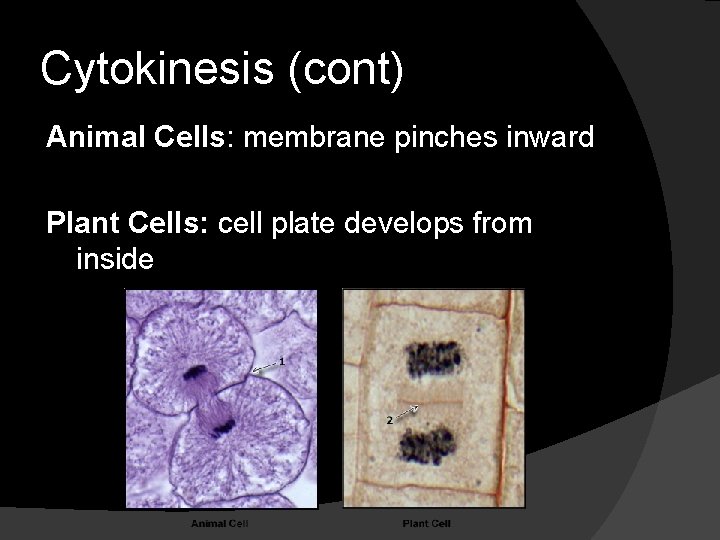
Cytokinesis (cont) Animal Cells: membrane pinches inward Plant Cells: cell plate develops from inside
Cell Division Animation � http: //highered. mcgraw- hill. com/sites/0072495855/student_view 0/chapter 2/animation__how_the_cell_cy cle_works. html