
Cell Division The way cells reproduce Cell replacement
- Slides: 16
Cell Division · The way cells reproduce. · Cell replacement and body growth are mitosis and cytokinesis. Sex cell production is meiosis.
Mitosis · Nuclear division · Cytoplasmic division · Division of cell nucleus into 2 genetically identical daughter cells Before mitosis, the cell undergoes cytoplasmic growth and doubles · DNA also has duplicated itself. Has double set of chromosomes (in humans, now has 92), this is called replication. This all occurs during the interphase stage between mitosis
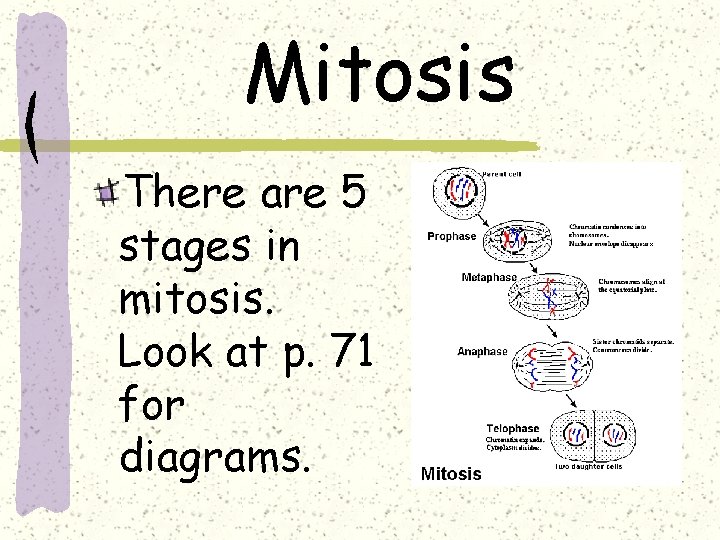
Mitosis There are 5 stages in mitosis. Look at p. 71 for diagrams.
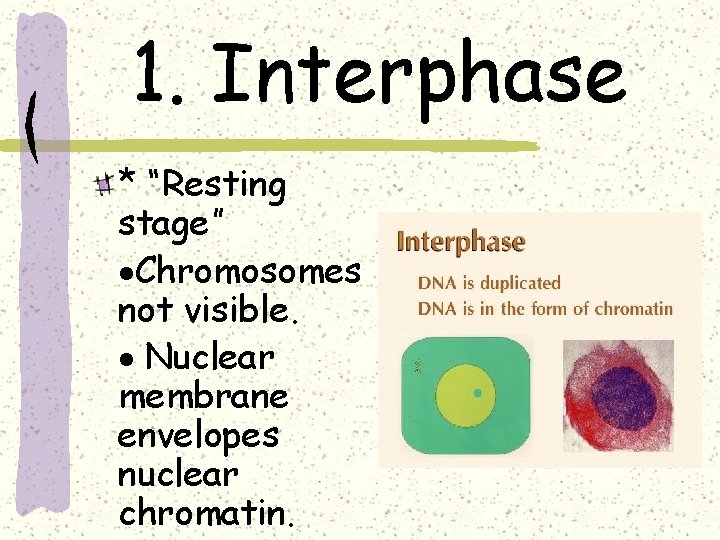
1. Interphase * “Resting stage” ·Chromosomes not visible. · Nuclear membrane envelopes nuclear chromatin.
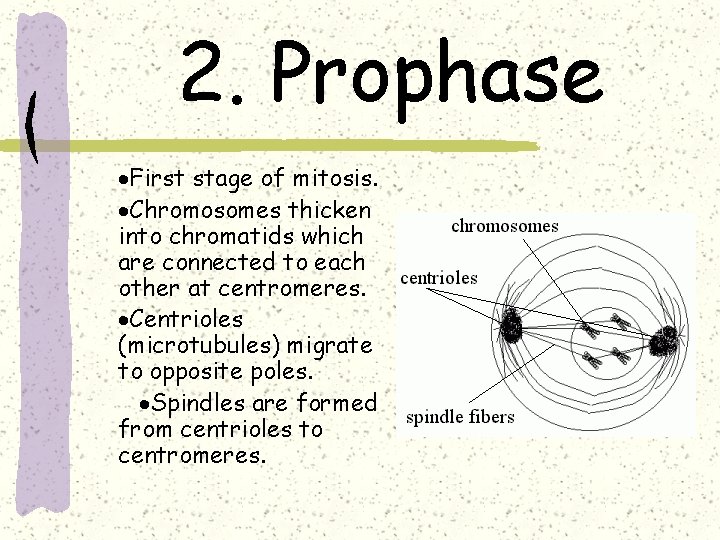
2. Prophase ·First stage of mitosis. ·Chromosomes thicken into chromatids which are connected to each other at centromeres. ·Centrioles (microtubules) migrate to opposite poles. ·Spindles are formed from centrioles to centromeres.
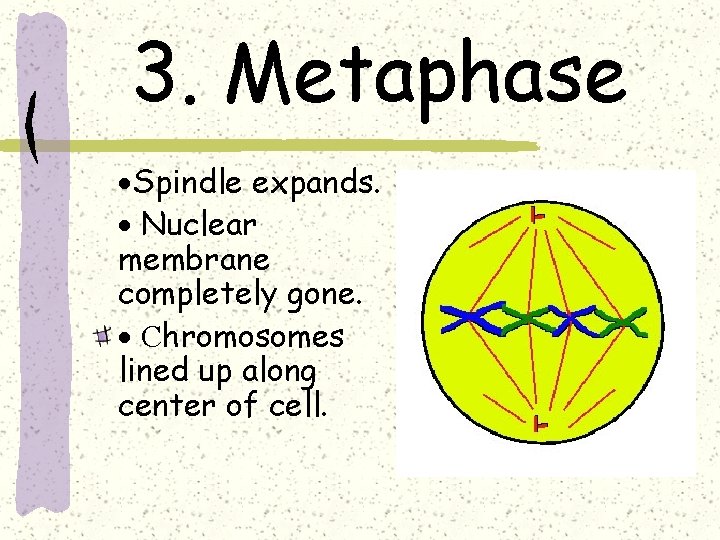
3. Metaphase ·Spindle expands. · Nuclear membrane completely gone. · Chromosomes lined up along center of cell.
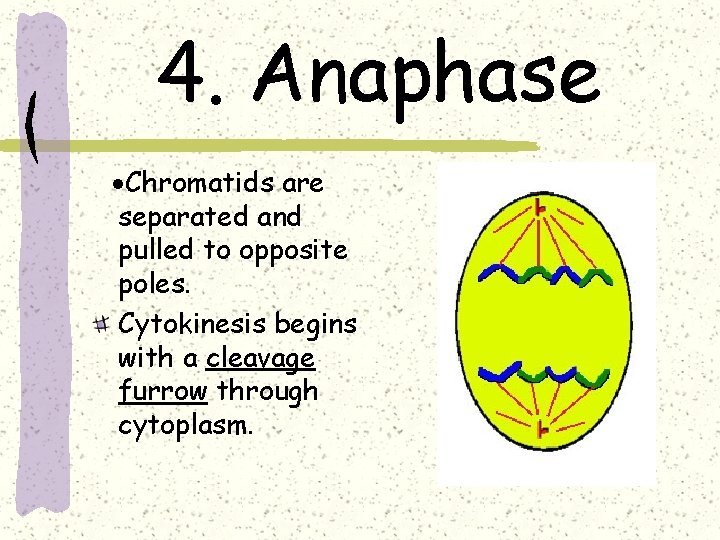
4. Anaphase ·Chromatids are separated and pulled to opposite poles. Cytokinesis begins with a cleavage furrow through cytoplasm.
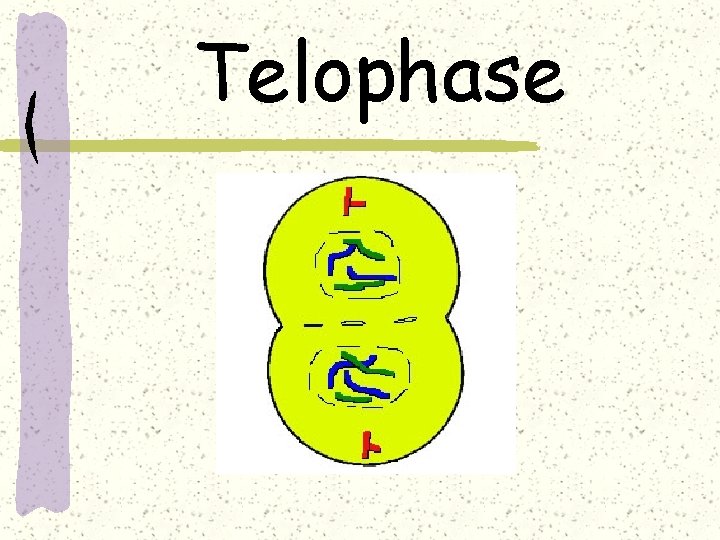
5. Telophase ·Chromatids reach opposite poles. ·Now referred to as chromosomes. ·Nuclear membrane forms around chromosomes. ·Spindle disappear. ·Nucleoli form. ·During cytokinesis, cleavage furrow divides cytoplasm. · 2 genetically, identical daughter cells are formed. ·Each new cell enters interphase stage.
Telophase
Mitosis Most body cells are replaced like this. This is done to replace dead cells which die by disease, wear and tear, and aging. Over 1 trillion cells die and need replaced each minute. Nerve cells, heart muscle cells, skeletal muscle cells are specialized cells not capable of dividing. Their functions are taken over by neighbor cells or are lost.
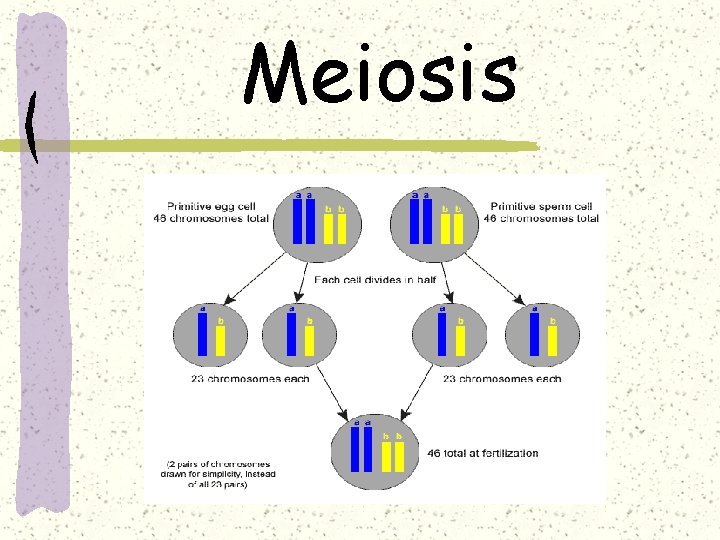
Meiosis Sex cell division is meiosis. ·Division of parent cell into genetically different daughter cells. ·Each contains 1/2 the number of chromosomes. ·These are the sex cells or gametes which are only produced in the sex organs known as gonads. Ovaries for females and testes for males. ·Female gamete is ovum and it has 23 chromosomes. · Male gamete is sperm and it has 23 chromosomes. · Fertilization occurs and you end up with 46 chromosomes (23 pairs) and this forms a zygote. · After this occurs, than each sex cell undergoes meiosis and the new daughter cells will each contain only 23 chromosomes once again.
Meiosis
Aging · Aging is the result of reduction of function in cells that lead to their death. There are 3 ways that aging occurs. 1. cellular senescence 2. free radicals 3. autoimmune response
1. Cellular Senescence ·Aging is turned on by genetic code.
2. Free Radicals ·Molecule of oxygen that contains free electrons. Capable of damaging proteins. As one increases in age, the number of free radicals in the cytoplasm increases. Free radicals produced by radiation and chemicals. Antioxidants inhibit the production of free radicals. These include vitamin C, vitamin E (vegetable oils, whole grains, leafy green vegetables), and selenium.
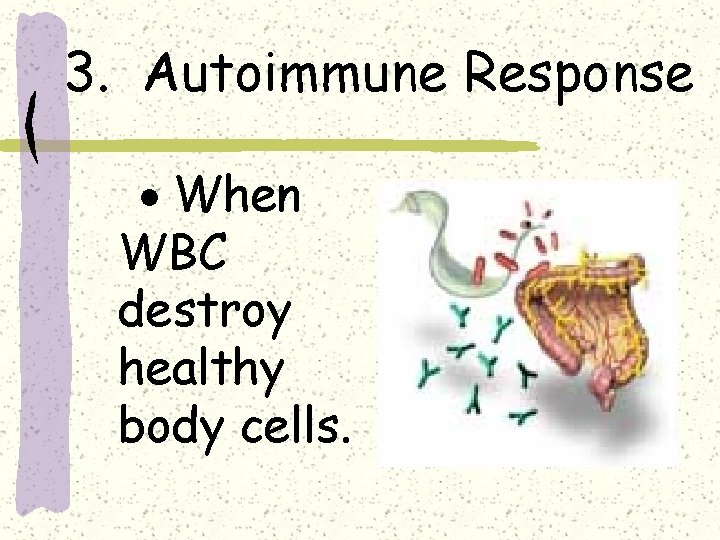
3. Autoimmune Response · When WBC destroy healthy body cells.