
CELL DIVISION The trillion cells in your body

CELL DIVISION
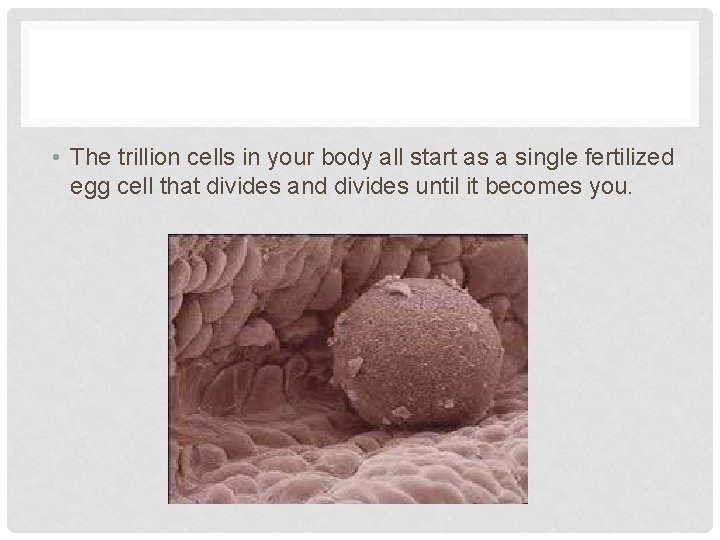
• The trillion cells in your body all start as a single fertilized egg cell that divides and divides until it becomes you.
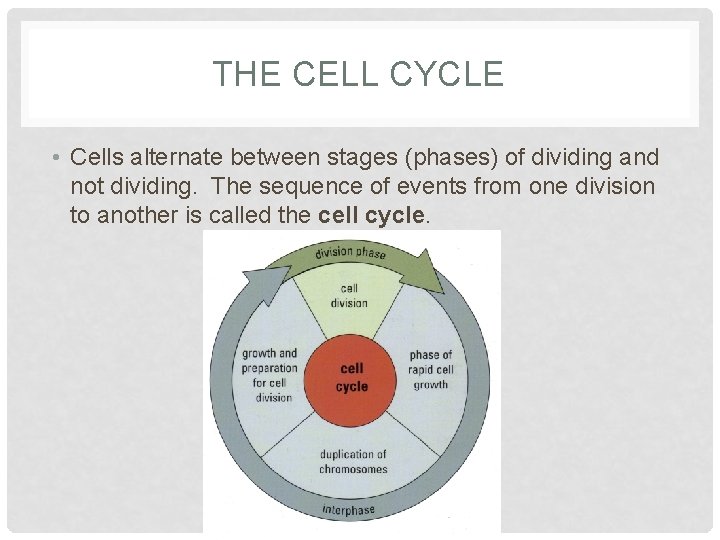
THE CELL CYCLE • Cells alternate between stages (phases) of dividing and not dividing. The sequence of events from one division to another is called the cell cycle.
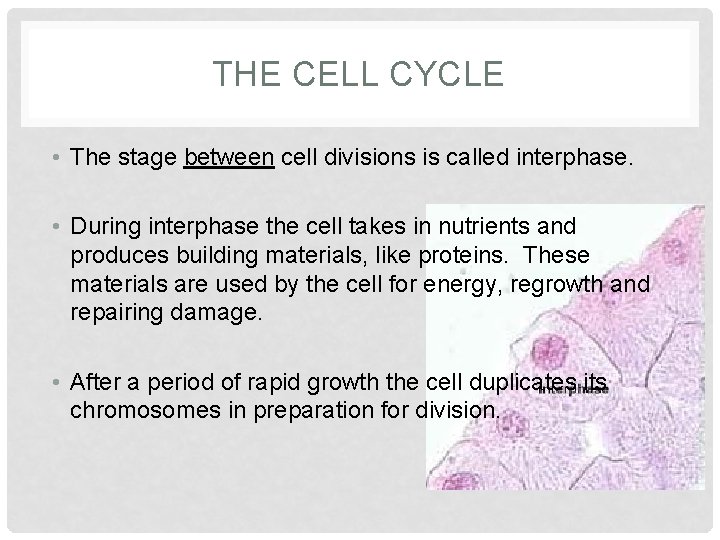
THE CELL CYCLE • The stage between cell divisions is called interphase. • During interphase the cell takes in nutrients and produces building materials, like proteins. These materials are used by the cell for energy, regrowth and repairing damage. • After a period of rapid growth the cell duplicates its chromosomes in preparation for division.
QUESTION TO PONDER • Why do you think the duplication of the nuclear material is important during the cell cycle? • A normal human cell contain 46 chromosomes (23 pairs). After cell division, how many chromosomes would you expect to find in each of the daughter cells?
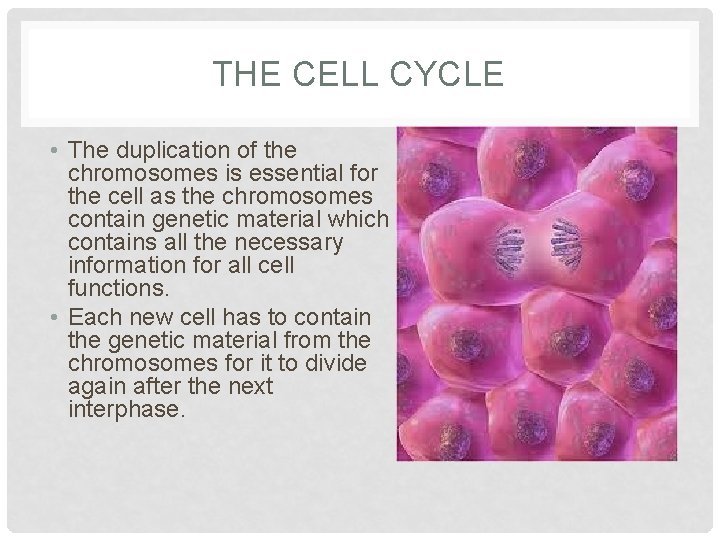
THE CELL CYCLE • The duplication of the chromosomes is essential for the cell as the chromosomes contain genetic material which contains all the necessary information for all cell functions. • Each new cell has to contain the genetic material from the chromosomes for it to divide again after the next interphase.
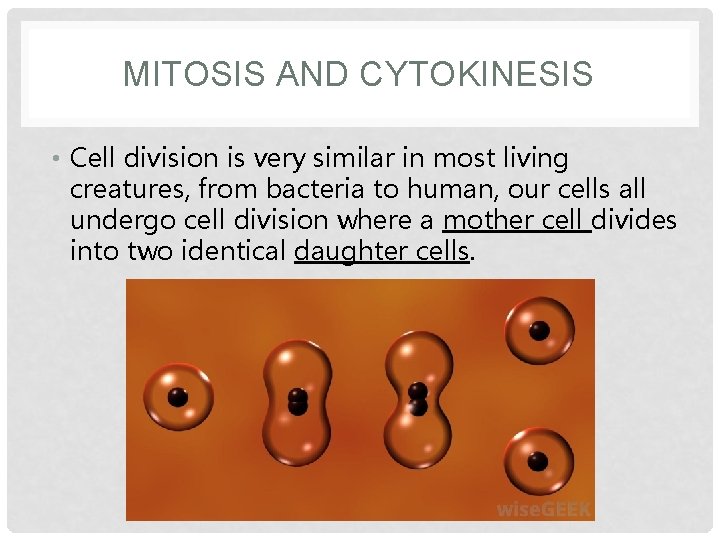
MITOSIS AND CYTOKINESIS • Cell division is very similar in most living creatures, from bacteria to human, our cells all undergo cell division where a mother cell divides into two identical daughter cells.
BASIC MITOSIS • Mitosis is the process of dividing nuclear (the nucleus) material. • During division the cells organelles and cytoplasm are shared by the newly created daughter cells. • The division of the cytoplasm and its contents happens in a process called cytokinesis. • Cytokinesis begins before mitosis is complete. In plant cells a new cell wall forms in the middle of the cell while animal cells tend to pinch in the middle to create the daughter cells.
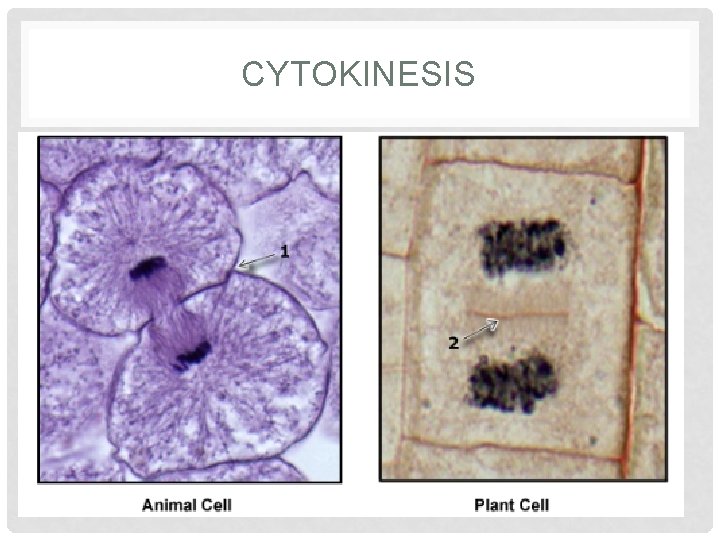
CYTOKINESIS
THE CYCLE CONTINUES • The processes of mitosis and cytokinesis result in the cell dividing and new cells find themselves smaller than the original mother cell. • The daughter cells enter the interphase where they gather nutrients and grow to become as large as their parent cells before them. • This process happens over and over again.
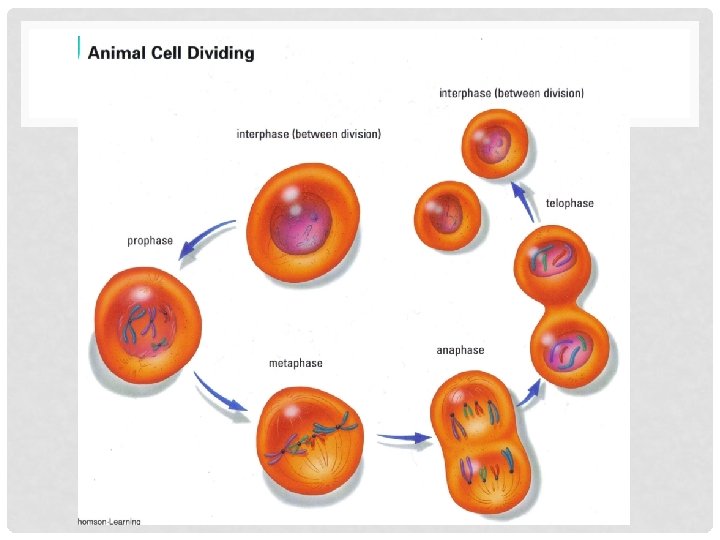
THE PHASES OF MITOSIS • These phases are just a snapshot of the continuous cycle of cell division. • 1. Interphase • 2. Prophase • 3. Metaphase • 4. Anaphase • 5. Telophase • 6. Interphase (again)
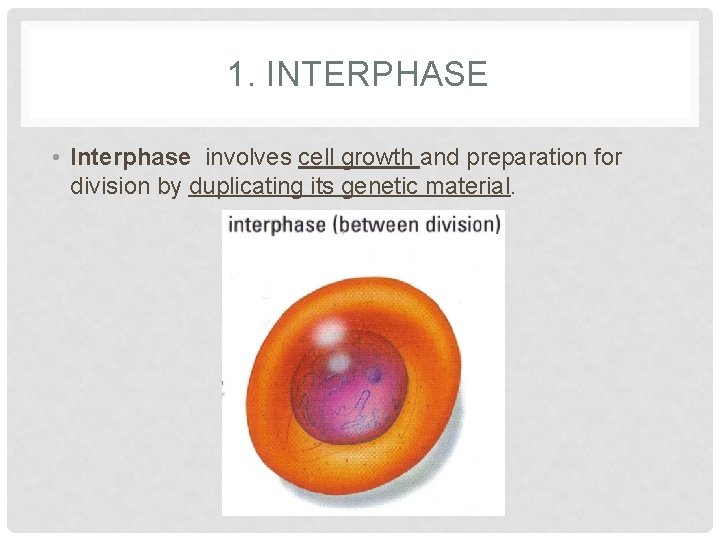
1. INTERPHASE • Interphase involves cell growth and preparation for division by duplicating its genetic material.
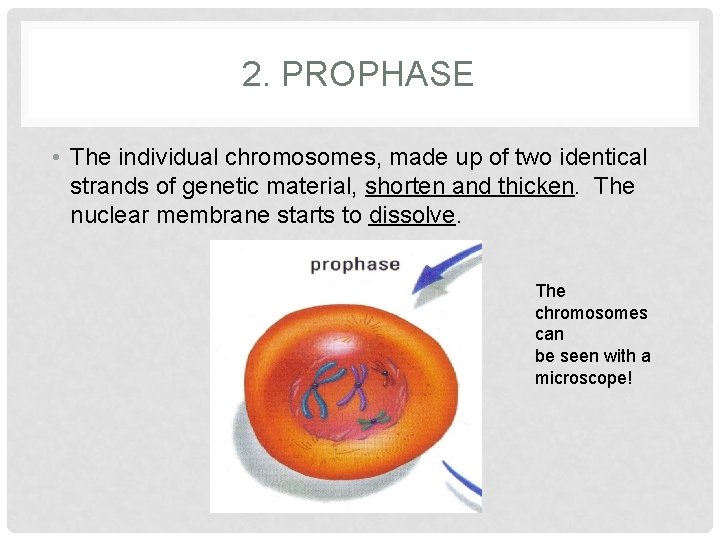
2. PROPHASE • The individual chromosomes, made up of two identical strands of genetic material, shorten and thicken. The nuclear membrane starts to dissolve. The chromosomes can be seen with a microscope!
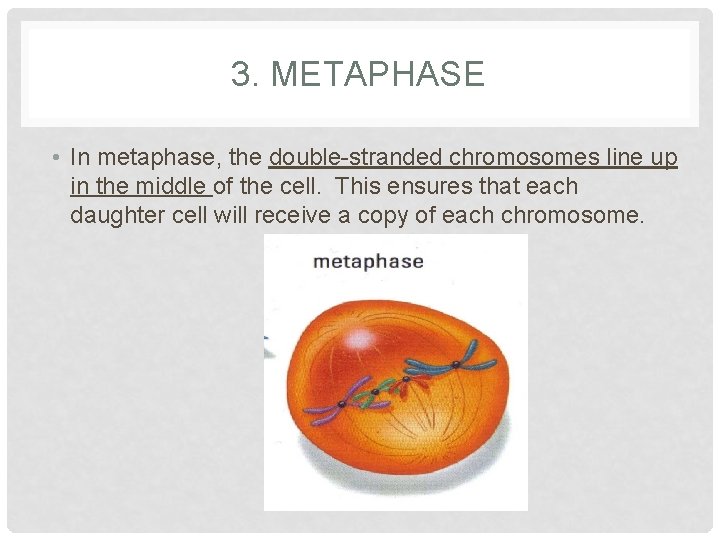
3. METAPHASE • In metaphase, the double-stranded chromosomes line up in the middle of the cell. This ensures that each daughter cell will receive a copy of each chromosome.
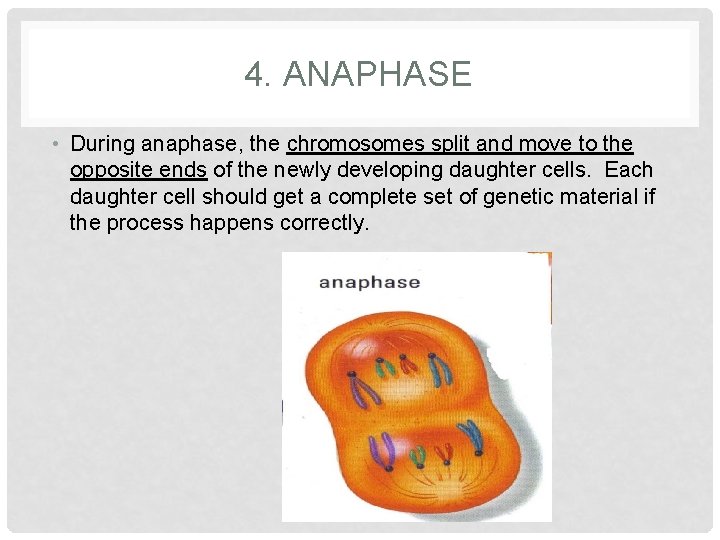
4. ANAPHASE • During anaphase, the chromosomes split and move to the opposite ends of the newly developing daughter cells. Each daughter cell should get a complete set of genetic material if the process happens correctly.
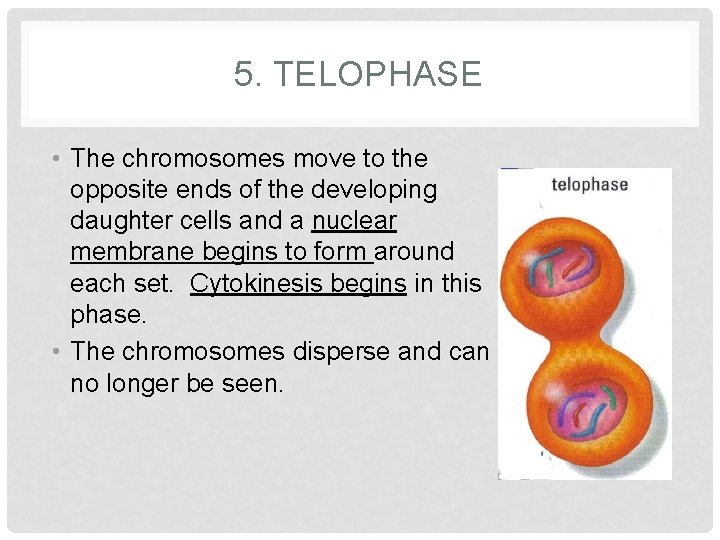
5. TELOPHASE • The chromosomes move to the opposite ends of the developing daughter cells and a nuclear membrane begins to form around each set. Cytokinesis begins in this phase. • The chromosomes disperse and can no longer be seen.
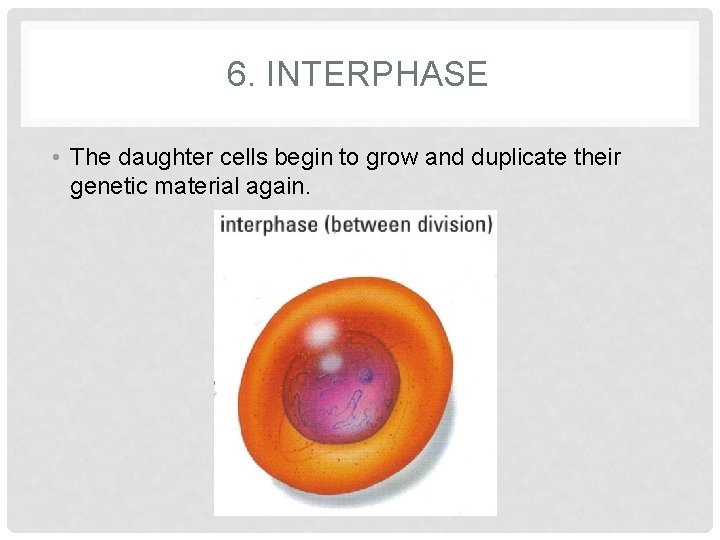
6. INTERPHASE • The daughter cells begin to grow and duplicate their genetic material again.
- Slides: 18