
Cell Division The Process of Mitosis Important terms
- Slides: 23
Cell Division: The Process of Mitosis
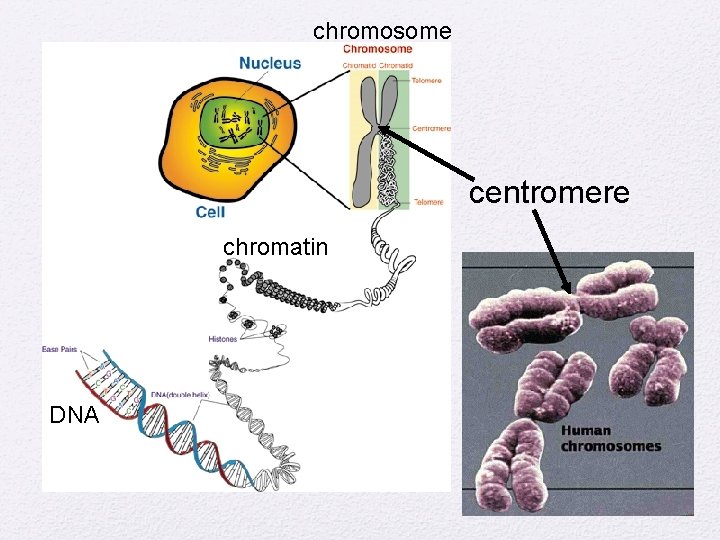
Important terms in eukaryotic cell division • Chromosome = threadlike structures that are composed of DNA + protein • replication = process whereby DNA is identically copied (before cell division) • mitosis = division of the nucleus • cytokinesis = division of the cytoplasm • chromatin = DNA + protein complex that is thin and fibrous; it will condense into distinct chromosomes during cell division
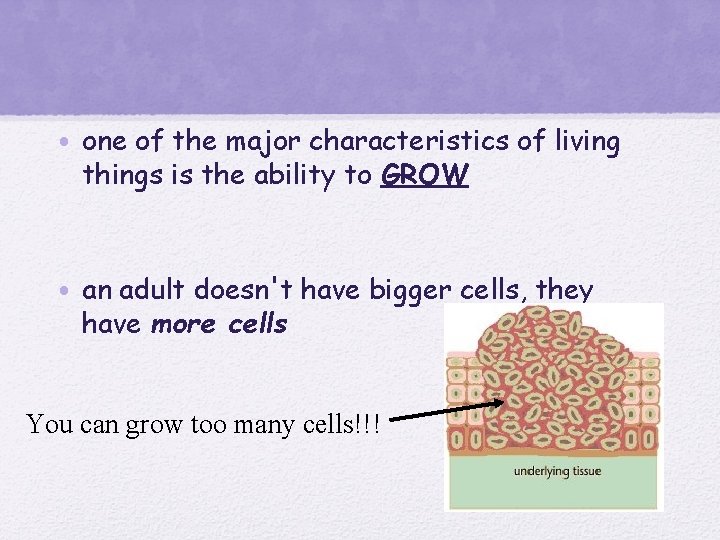
• one of the major characteristics of living things is the ability to GROW • an adult doesn't have bigger cells, they have more cells You can grow too many cells!!!
When do cells divide? • Reproduction • Replacement of damaged cells • Growth of new cells • In replacement and growth cell divisions how should daughter cells compare to parent cell? • The daughter cells should be identical copies of the parent cell.
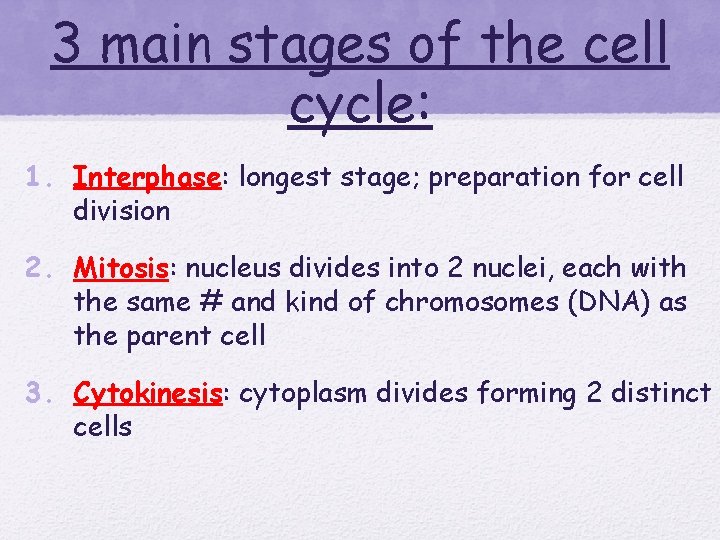
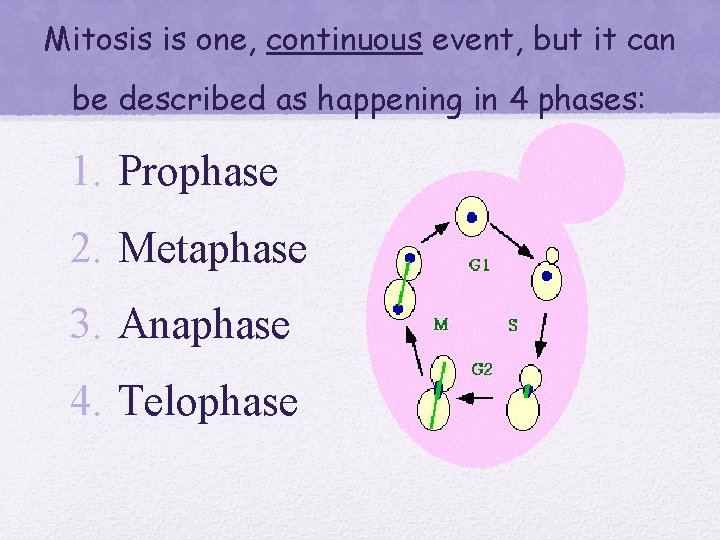
3 main stages of the cell cycle: 1. Interphase: longest stage; preparation for cell division 2. Mitosis: nucleus divides into 2 nuclei, each with the same # and kind of chromosomes (DNA) as the parent cell 3. Cytokinesis: cytoplasm divides forming 2 distinct cells
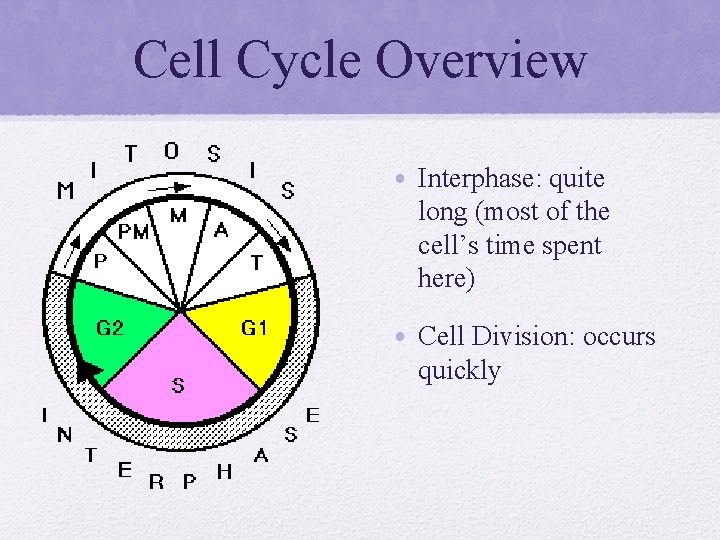
Cell Cycle Overview • Interphase: quite long (most of the cell’s time spent here) • Cell Division: occurs quickly
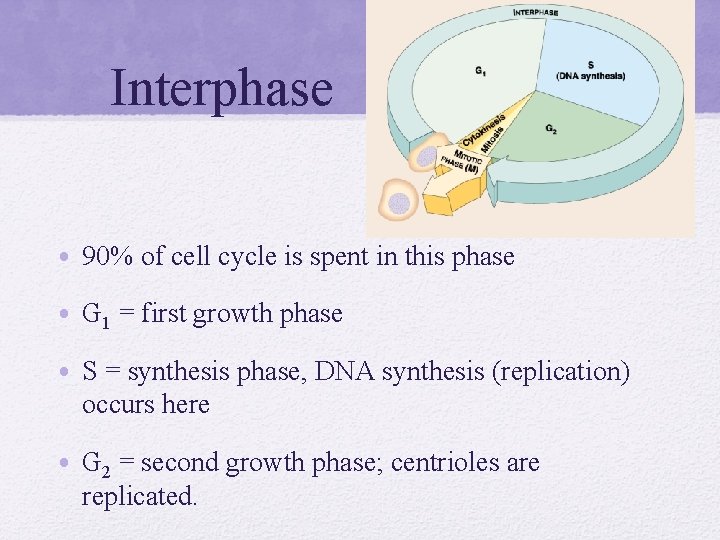
Interphase • 90% of cell cycle is spent in this phase • G 1 = first growth phase • S = synthesis phase, DNA synthesis (replication) occurs here • G 2 = second growth phase; centrioles are replicated.
Why is it important that the nucleus divides in mitosis? • it stores the DNA (information of life) • all new cells need this information
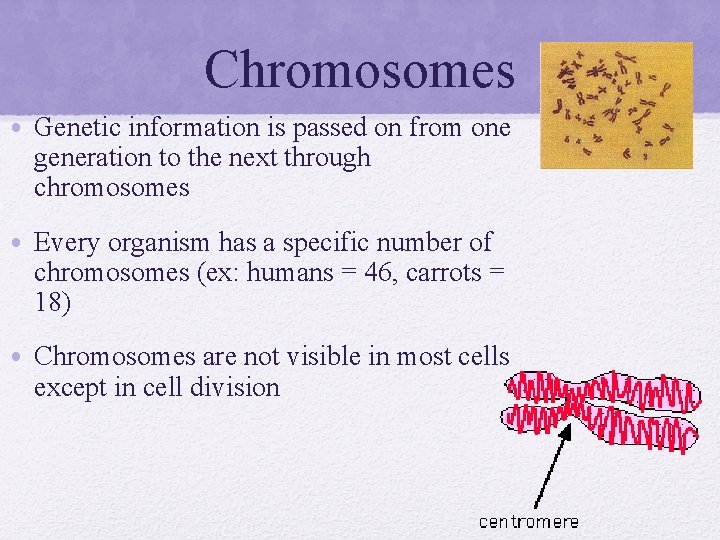
Chromosomes • Genetic information is passed on from one generation to the next through chromosomes • Every organism has a specific number of chromosomes (ex: humans = 46, carrots = 18) • Chromosomes are not visible in most cells except in cell division
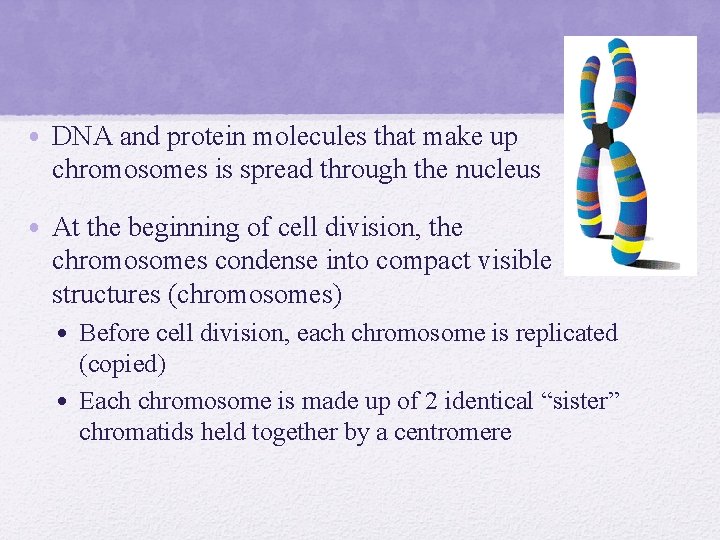
• DNA and protein molecules that make up chromosomes is spread through the nucleus • At the beginning of cell division, the chromosomes condense into compact visible structures (chromosomes) • Before cell division, each chromosome is replicated (copied) • Each chromosome is made up of 2 identical “sister” chromatids held together by a centromere
chromosome centromere chromatin DNA
Mitosis is one, continuous event, but it can be described as happening in 4 phases: 1. Prophase 2. Metaphase 3. Anaphase 4. Telophase
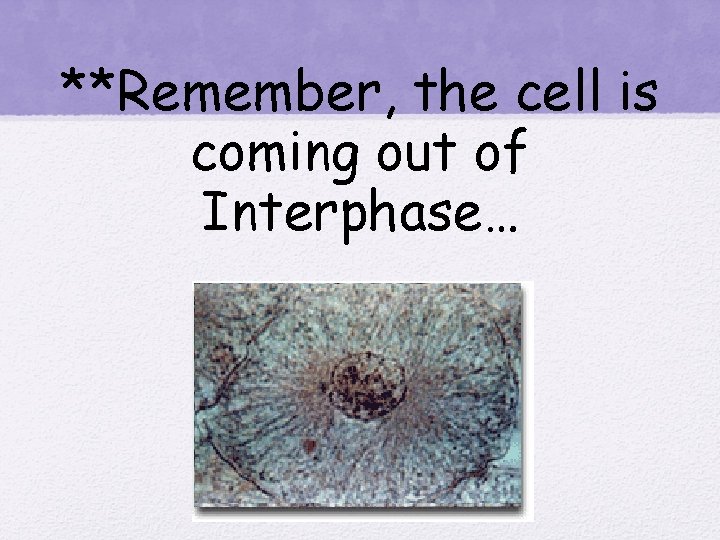
**Remember, the cell is coming out of Interphase…
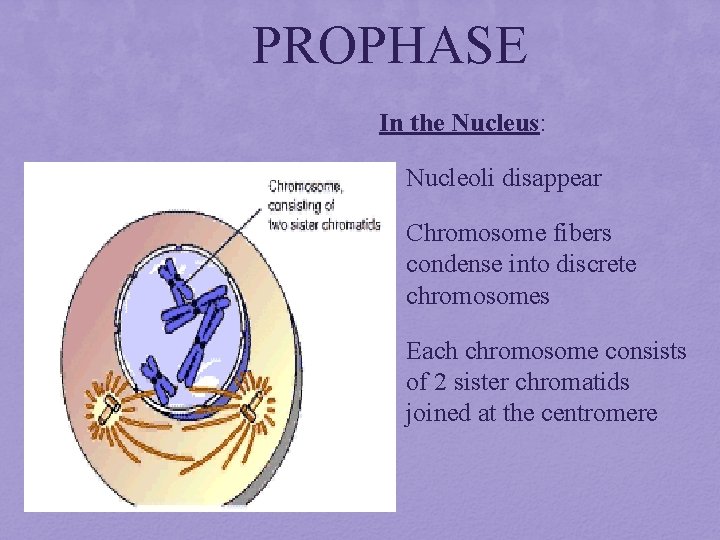
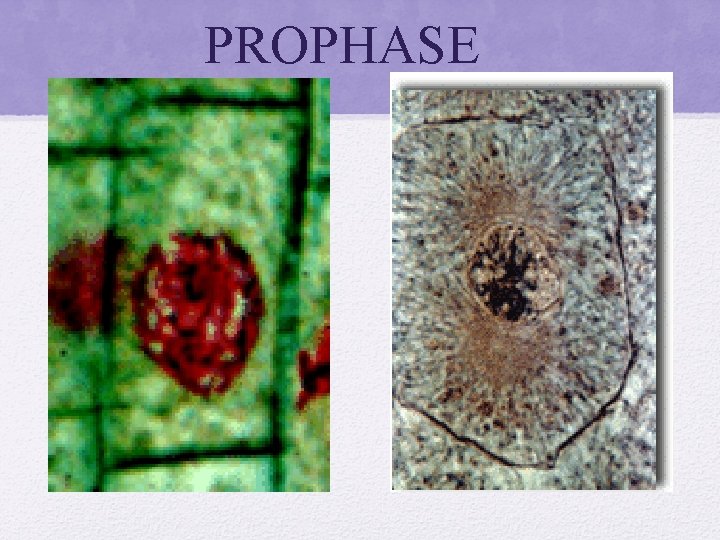
PROPHASE In the Nucleus: • Nucleoli disappear • Chromosome fibers condense into discrete chromosomes • Each chromosome consists of 2 sister chromatids joined at the centromere
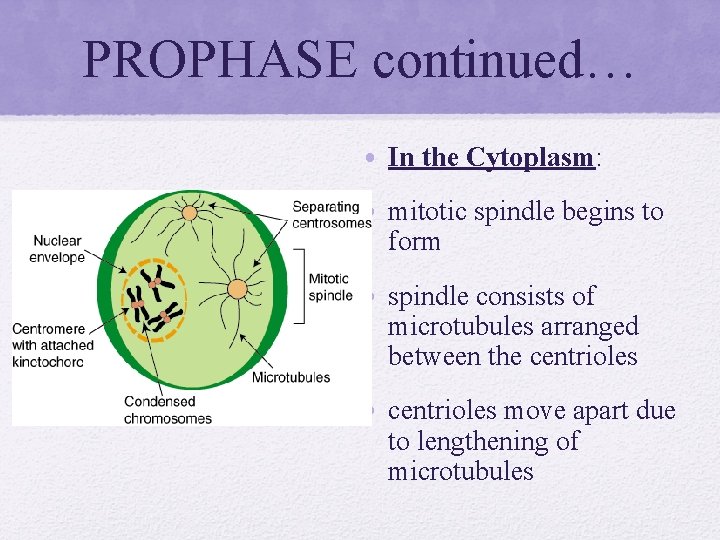
PROPHASE continued… • In the Cytoplasm: • mitotic spindle begins to form • spindle consists of microtubules arranged between the centrioles • centrioles move apart due to lengthening of microtubules
PROPHASE
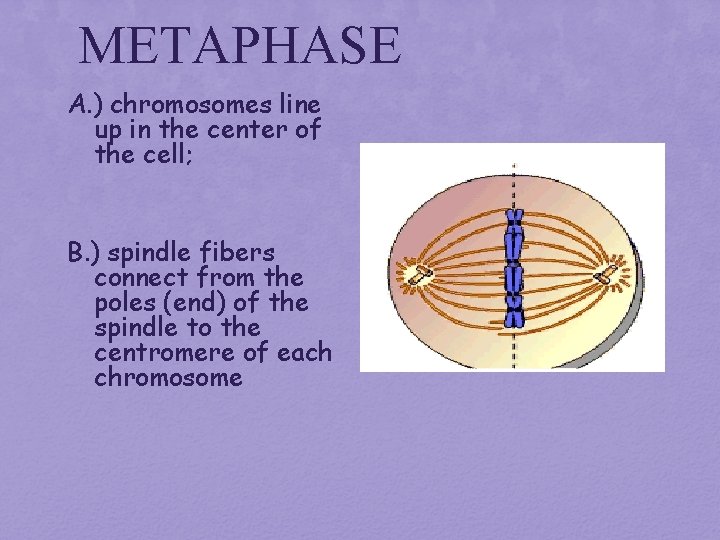
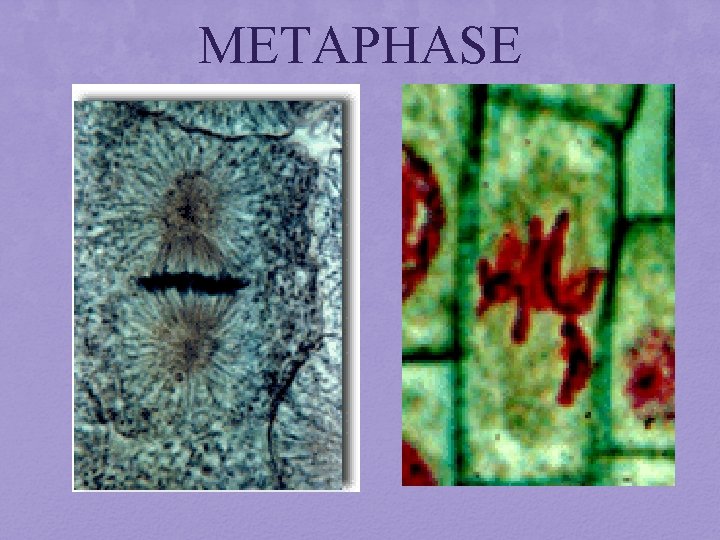
METAPHASE A. ) chromosomes line up in the center of the cell; B. ) spindle fibers connect from the poles (end) of the spindle to the centromere of each chromosome
METAPHASE
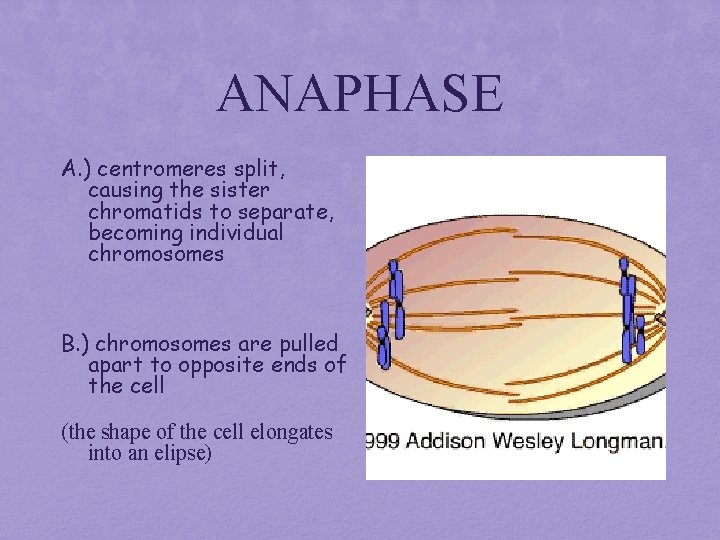
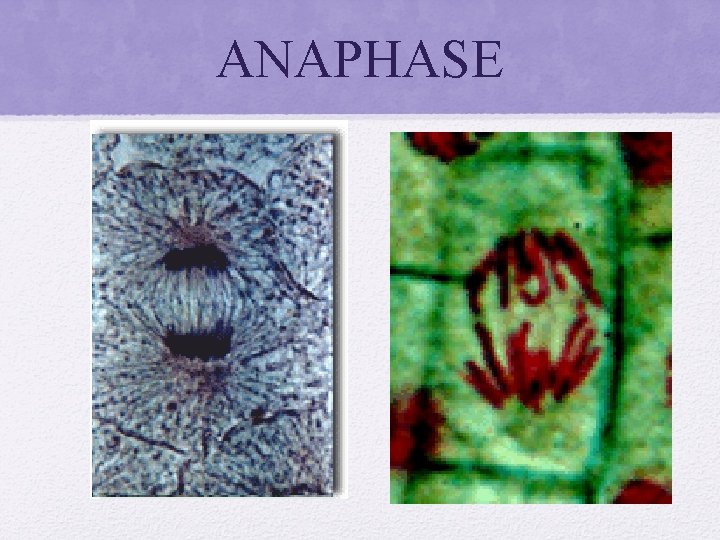
ANAPHASE A. ) centromeres split, causing the sister chromatids to separate, becoming individual chromosomes B. ) chromosomes are pulled apart to opposite ends of the cell (the shape of the cell elongates into an elipse)
ANAPHASE
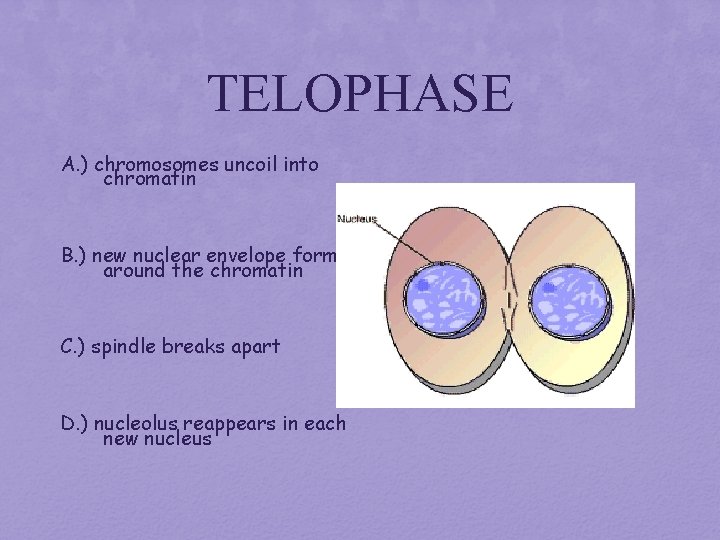
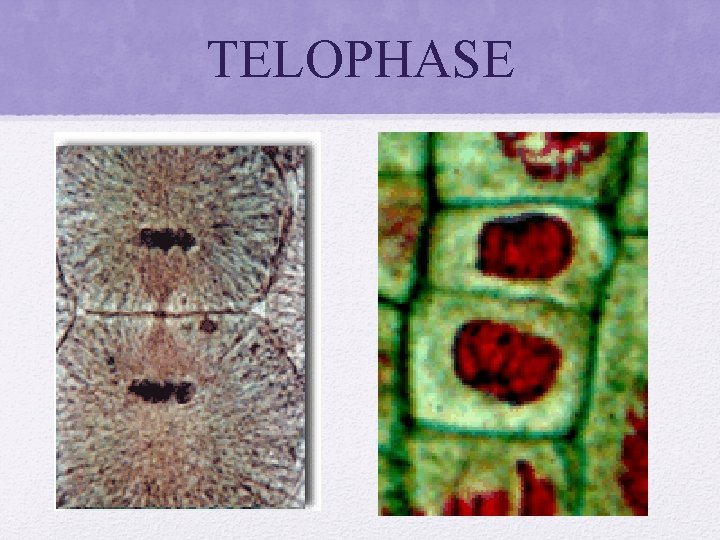
TELOPHASE A. ) chromosomes uncoil into chromatin B. ) new nuclear envelope forms around the chromatin C. ) spindle breaks apart D. ) nucleolus reappears in each new nucleus
TELOPHASE
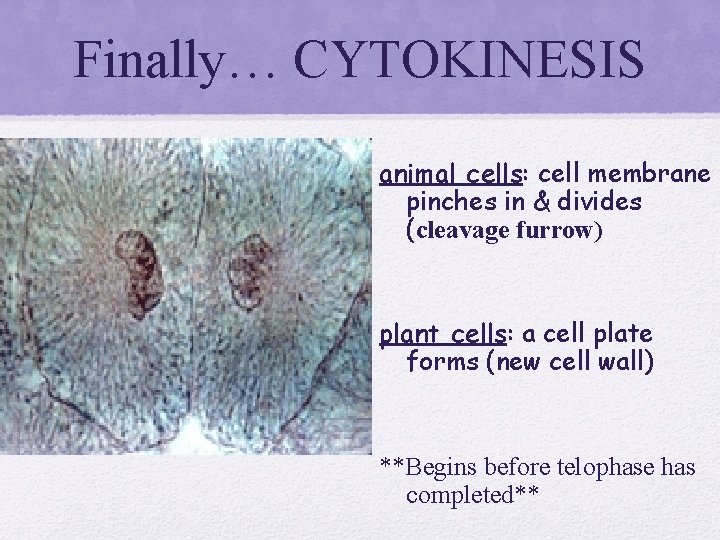
Finally… CYTOKINESIS animal cells: cell membrane pinches in & divides (cleavage furrow) plant cells: a cell plate forms (new cell wall) **Begins before telophase has completed**