
Cell Division The Cell Cycle The regular sequence





- Slides: 16
Cell Division
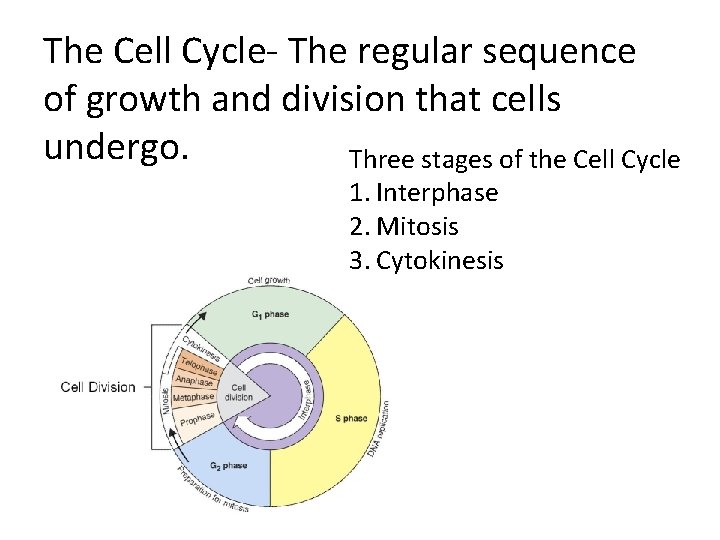
The Cell Cycle- The regular sequence of growth and division that cells undergo. Three stages of the Cell Cycle 1. Interphase 2. Mitosis 3. Cytokinesis
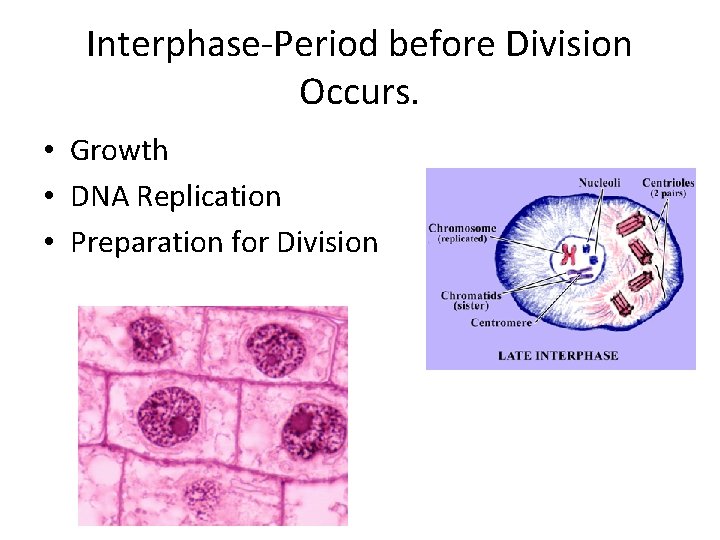
Interphase-Period before Division Occurs. • Growth • DNA Replication • Preparation for Division
Growth • Cell Doubles in size and produces structures necessary to carry out functions. • Organelles become more numerous.
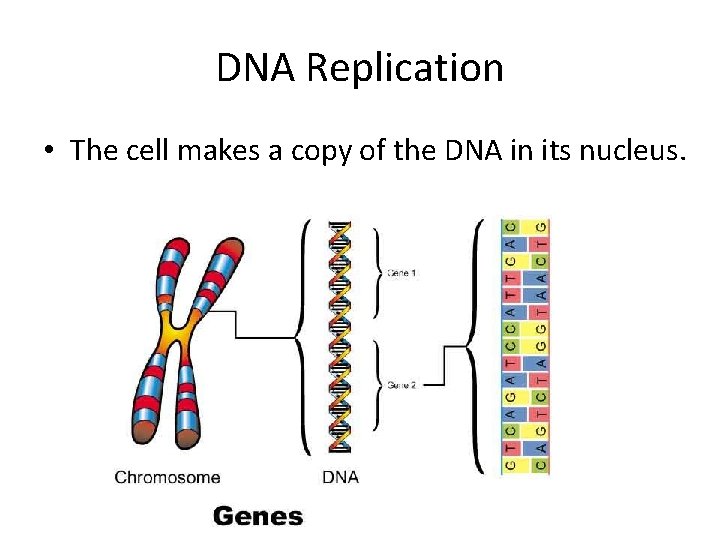
DNA Replication • The cell makes a copy of the DNA in its nucleus.
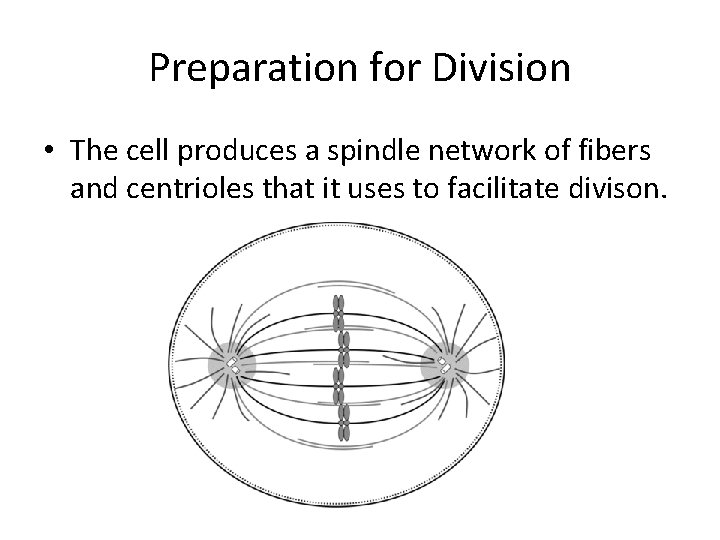
Preparation for Division • The cell produces a spindle network of fibers and centrioles that it uses to facilitate divison.
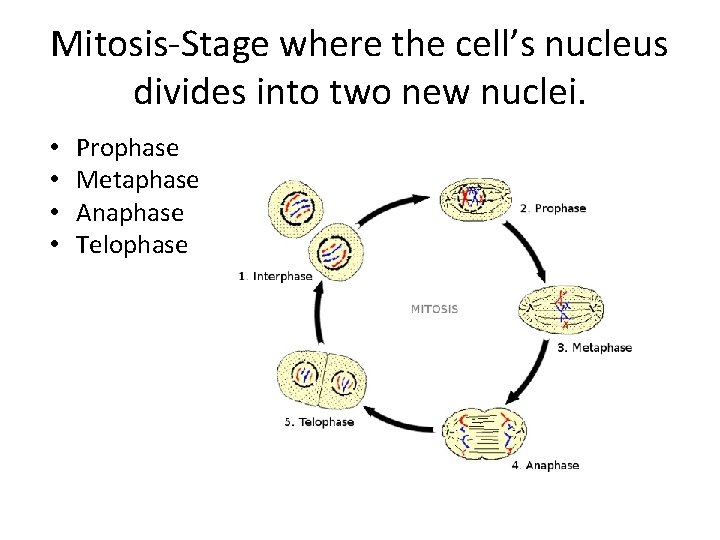
Mitosis-Stage where the cell’s nucleus divides into two new nuclei. • • Prophase Metaphase Anaphase Telophase
Prophase • The chromatin condenses to form Chromosomes. The nuclear membrane breaks down.
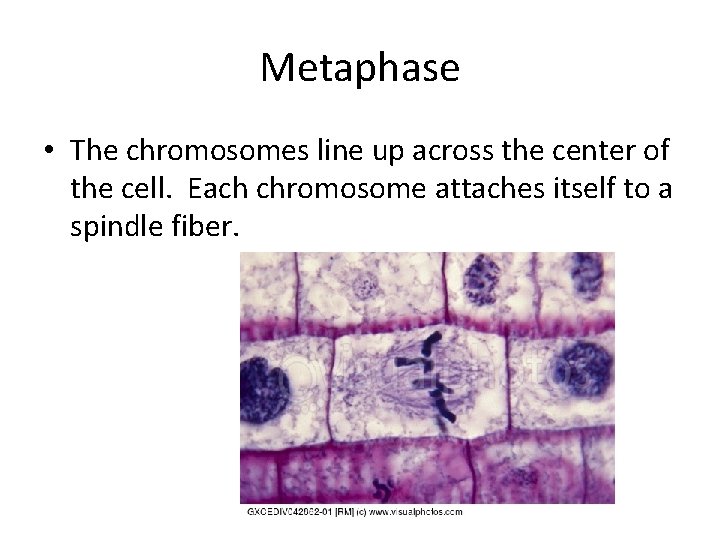
Metaphase • The chromosomes line up across the center of the cell. Each chromosome attaches itself to a spindle fiber.
Anaphase • The centromeres split and the two chromatids separate. The matching chromatids move to opposite ends of the cell.
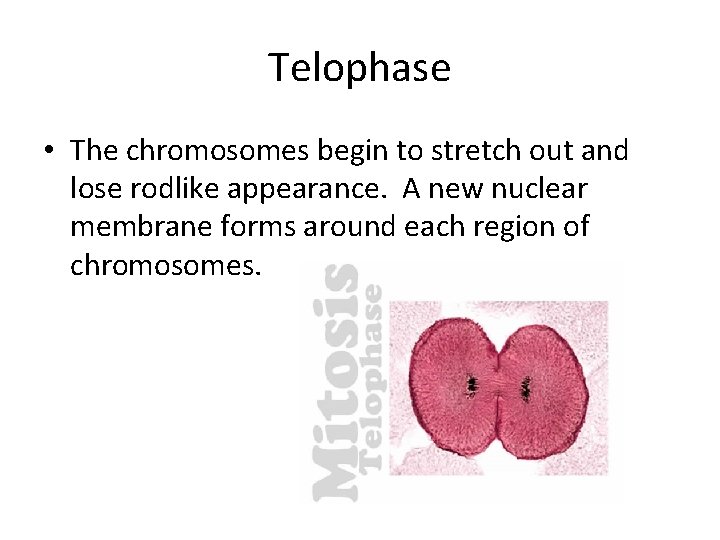
Telophase • The chromosomes begin to stretch out and lose rodlike appearance. A new nuclear membrane forms around each region of chromosomes.
Cytokinesis • The cytoplasm divides, distributing the organelles into each of the two new cells. • In animal cells the membrane pinches in at the middle of the cell until they become two. • In plant cells, a cell plate forms dividing the two. Then the membranes form and the cell walls form.
DNA Replication • DNA carries all of the cell’s instructions. • Each cell gets its own set.
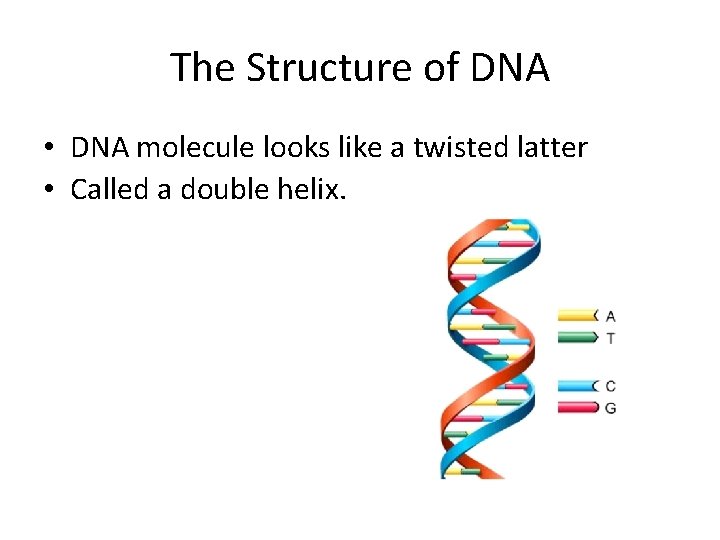
The Structure of DNA • DNA molecule looks like a twisted latter • Called a double helix.
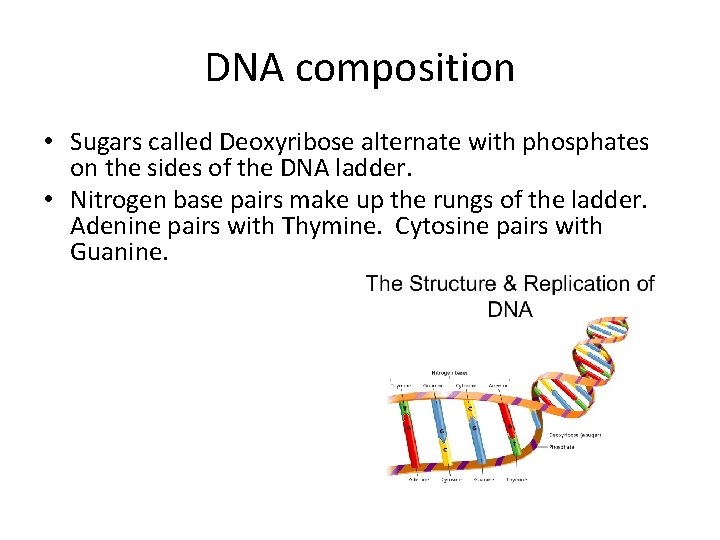
DNA composition • Sugars called Deoxyribose alternate with phosphates on the sides of the DNA ladder. • Nitrogen base pairs make up the rungs of the ladder. Adenine pairs with Thymine. Cytosine pairs with Guanine.
The Replication Process. • DNA unwinds and unzips. New nitrogen bases move in to pair with the bases that remained attached to the rungs. Because the bases pair with their match the one DNA becomes two.