
Cell Division Notes Cell Cycle Most cells in
- Slides: 13
Cell Division Notes
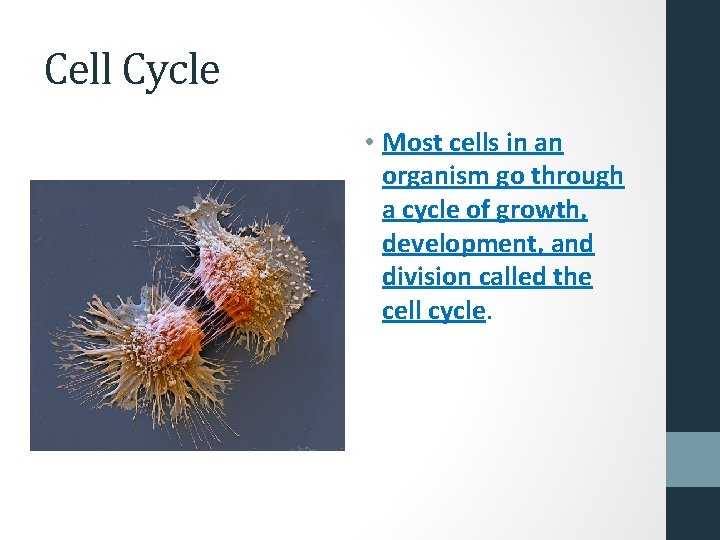
Cell Cycle • Most cells in an organism go through a cycle of growth, development, and division called the cell cycle.
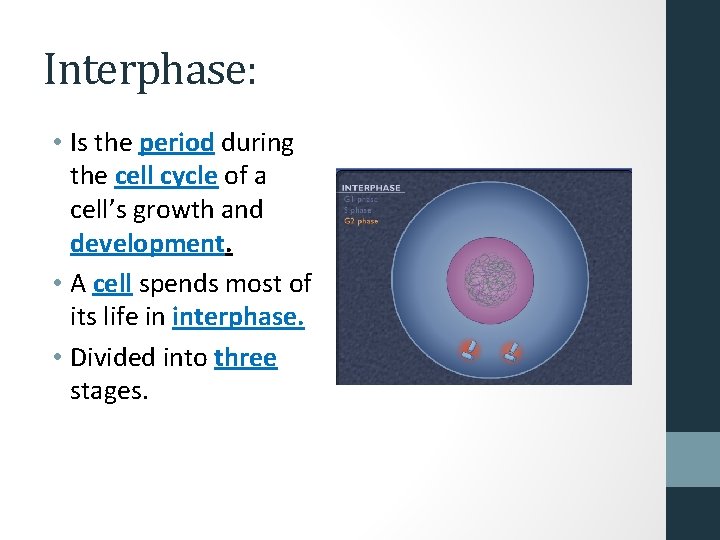
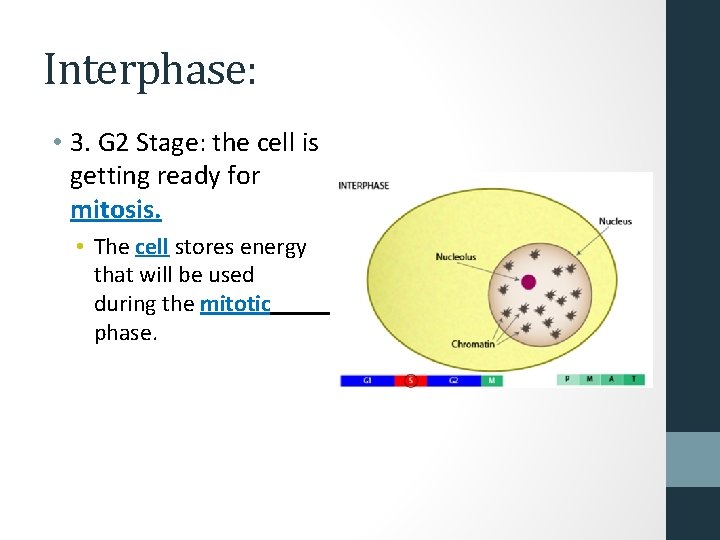
Interphase: • Is the period during the cell cycle of a cell’s growth and development. • A cell spends most of its life in interphase. • Divided into three stages.
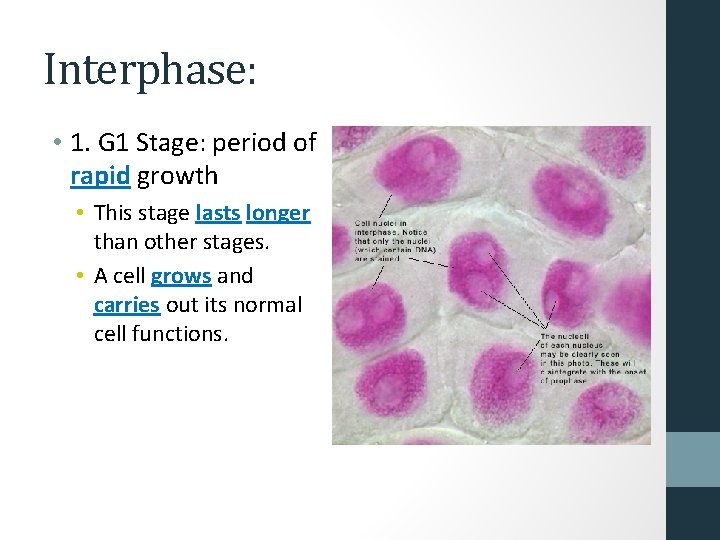
Interphase: • 1. G 1 Stage: period of rapid growth • This stage lasts longer than other stages. • A cell grows and carries out its normal cell functions.
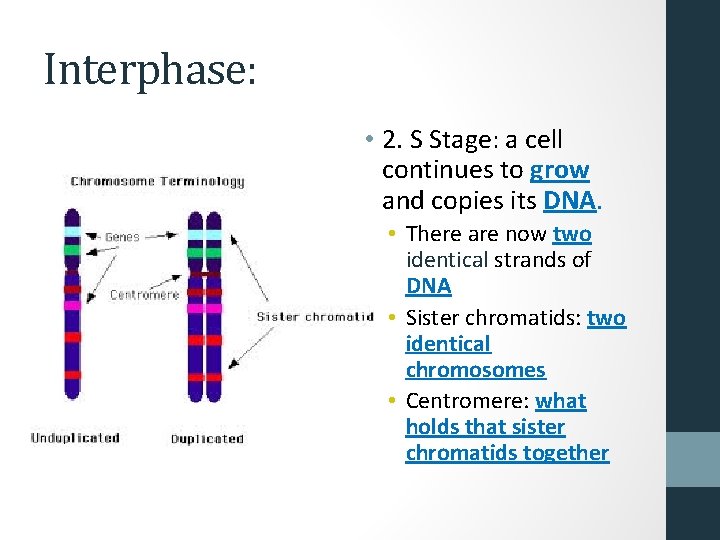
Interphase: • 2. S Stage: a cell continues to grow and copies its DNA. • There are now two identical strands of DNA • Sister chromatids: two identical chromosomes • Centromere: what holds that sister chromatids together
Interphase: • 3. G 2 Stage: the cell is getting ready for mitosis. • The cell stores energy that will be used during the mitotic phase.
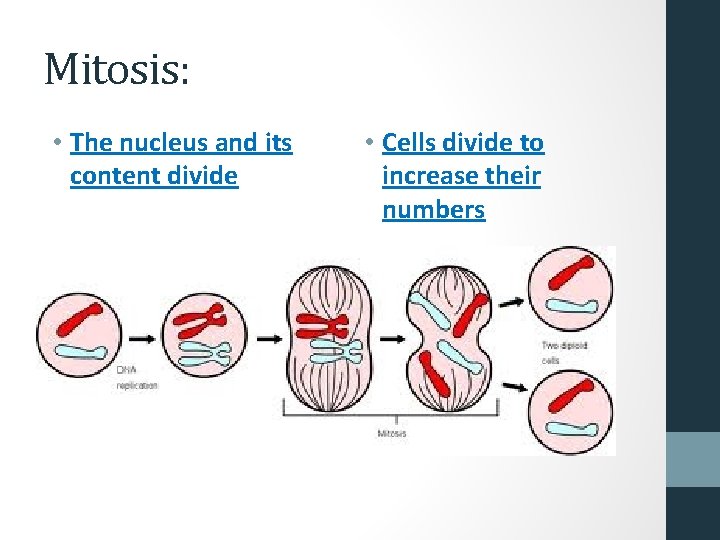
Mitosis: • The nucleus and its content divide • Cells divide to increase their numbers
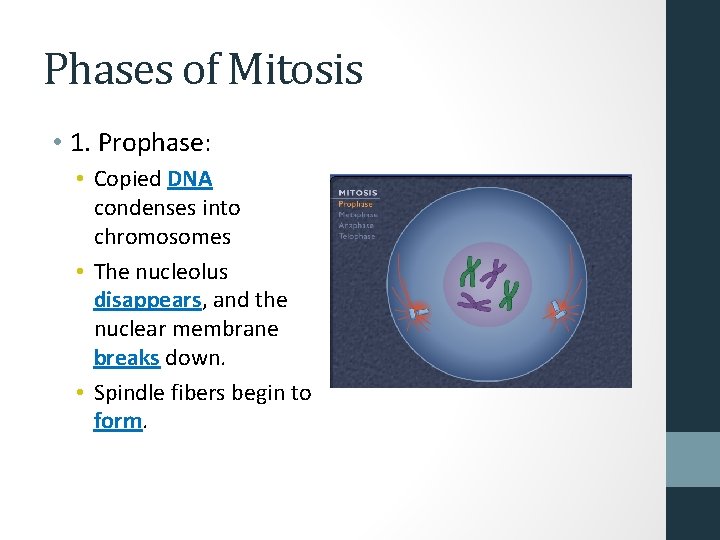
Phases of Mitosis • 1. Prophase: • Copied DNA condenses into chromosomes • The nucleolus disappears, and the nuclear membrane breaks down. • Spindle fibers begin to form.
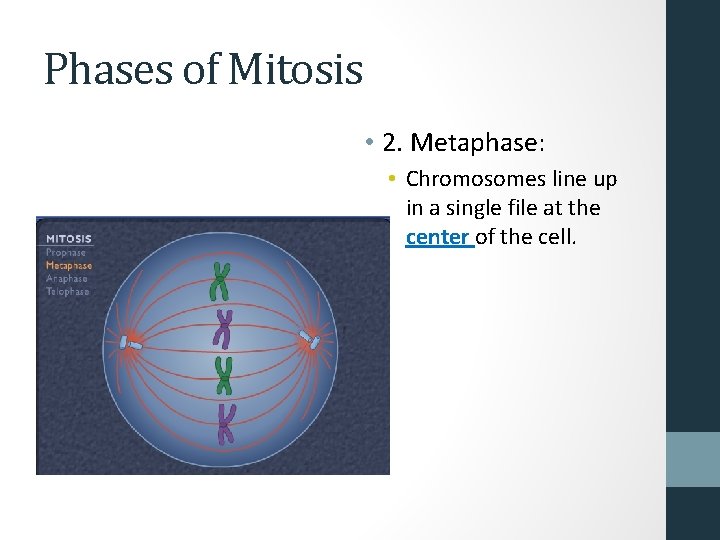
Phases of Mitosis • 2. Metaphase: • Chromosomes line up in a single file at the center of the cell.
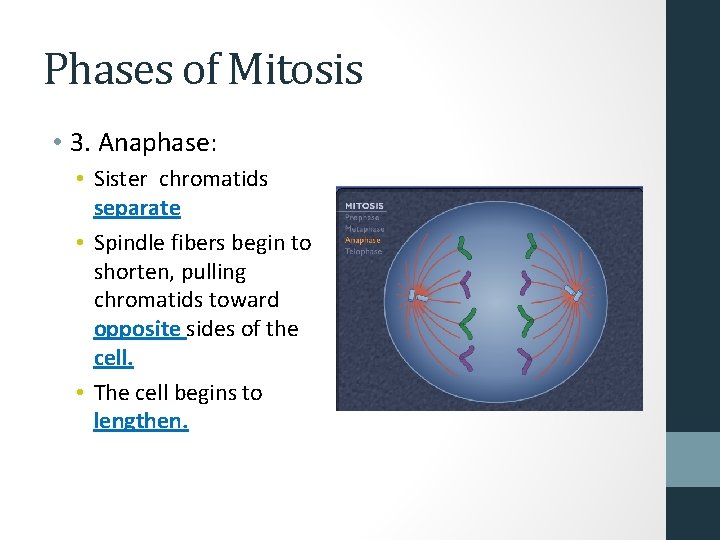
Phases of Mitosis • 3. Anaphase: • Sister chromatids separate • Spindle fibers begin to shorten, pulling chromatids toward opposite sides of the cell. • The cell begins to lengthen.
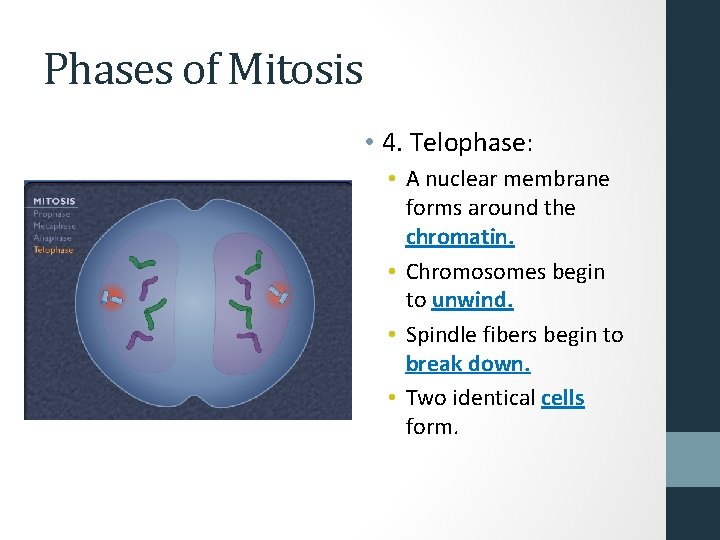
Phases of Mitosis • 4. Telophase: • A nuclear membrane forms around the chromatin. • Chromosomes begin to unwind. • Spindle fibers begin to break down. • Two identical cells form.
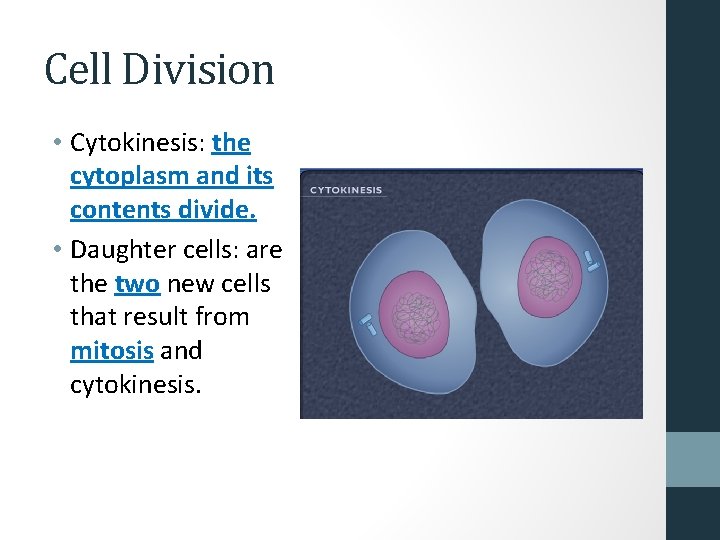
Cell Division • Cytokinesis: the cytoplasm and its contents divide. • Daughter cells: are the two new cells that result from mitosis and cytokinesis.
Results of Cell Division: • Results in two cells • Daughter cells are genetically identical to each other. • Allows multicellular organisms to grow and develop. • Replaces cells that worn out or are damaged. • It is also critical for repairing damages. • Example: bone breaks - cell division produces new bone cells that patch the broken pieces.