
Cell Division Mitosis and Meiosis Terminology n At
- Slides: 21
Cell Division Mitosis and Meiosis
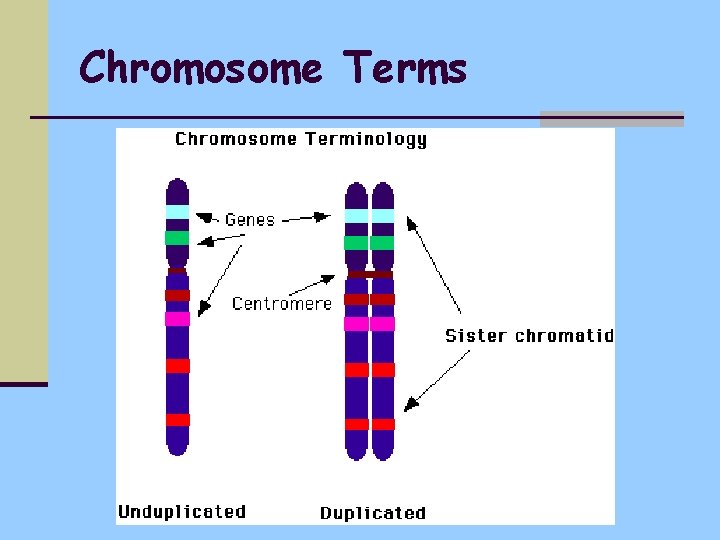
Terminology n At the beginning of G 1, there is a single strand of chromosome called Chromatin. n In the S stage it doubles when the DNA replicates. Each chromosome now consists of 2 strands of chromatin – now called Chromatids. n A chromatid is one sub-unit of a double chromosome.
Terminology n As it enters prophase it is still a chromosome consisting of 2 chromatids, held together by a Centromere.
Eukaryote Chromosomes n Chromosome means “coloured body” but chromosomes are no coloured. n They bind easily to certain dyes so when they were first observed they were coloured. n Chromosomes are strands of DNA bound to proteins.
Eukaryote Chromosomes n Usually exist in pairs. n Typically 2 of each kind in somatic cells. The members of the pair are called homologous chromosomes. n Each chromosome in a homologous pair is usually the same size, has a centromere in the same place, and has gene loci in the same sequence.
Chromosome Terms
Eukaryote Chromosomes n In humans, there are 23 pairs of chromosomes. One member of each pair is derived from the mother and one from the father. n A single set of chromosomes is called Haploid (n). n The 2 sets of chromosomes are called Diploid (2 n)
Eukaryote Chromosomes n The exception to the rule that the homologous pairs are the same are the sex chromosomes. n The females of most species have 2 identical X chromosomes. n Males have an X chromosome and a smaller Y chromosome.
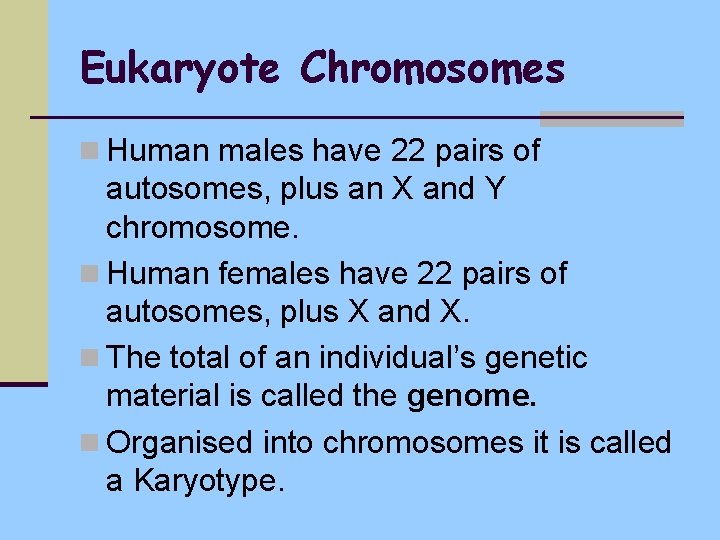
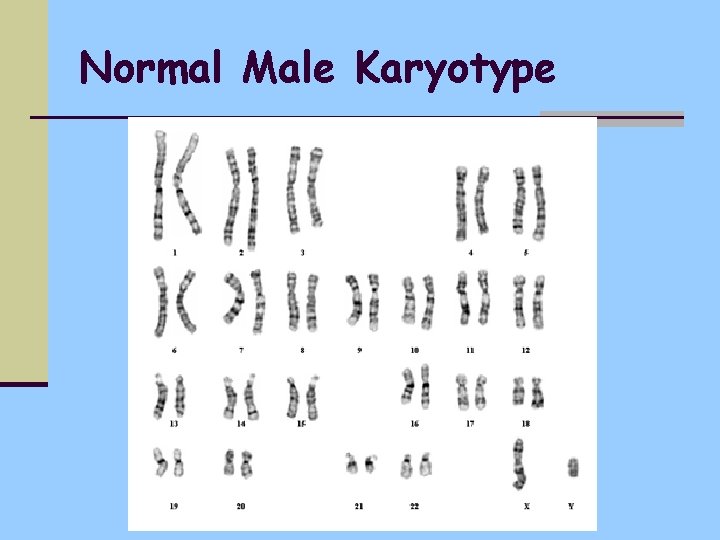
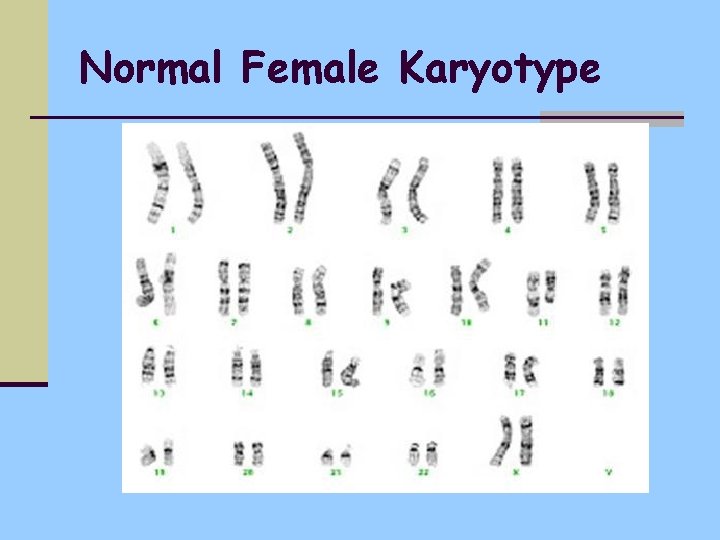
Eukaryote Chromosomes n Human males have 22 pairs of autosomes, plus an X and Y chromosome. n Human females have 22 pairs of autosomes, plus X and X. n The total of an individual’s genetic material is called the genome. n Organised into chromosomes it is called a Karyotype.
Normal Male Karyotype
Normal Female Karyotype
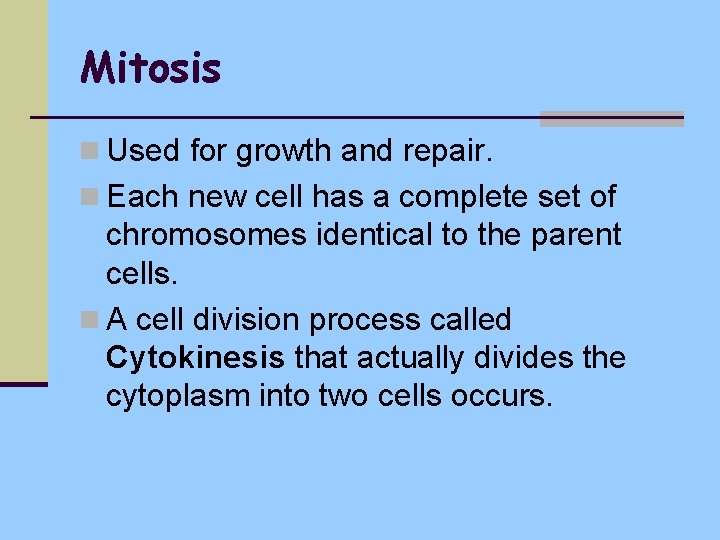
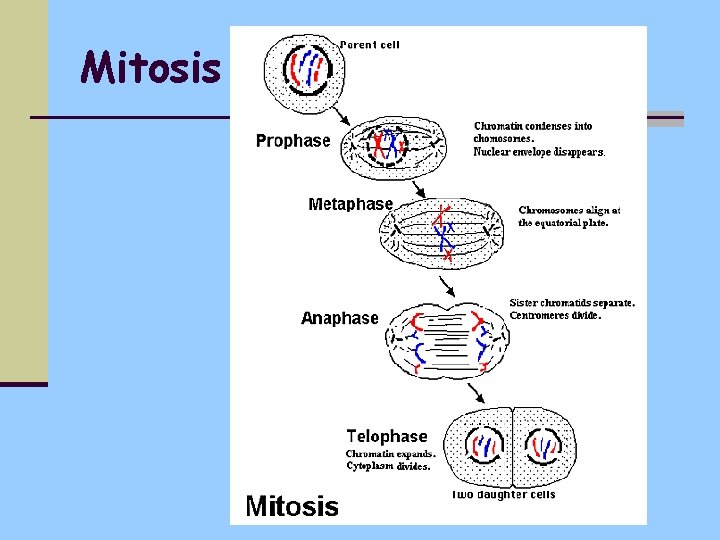
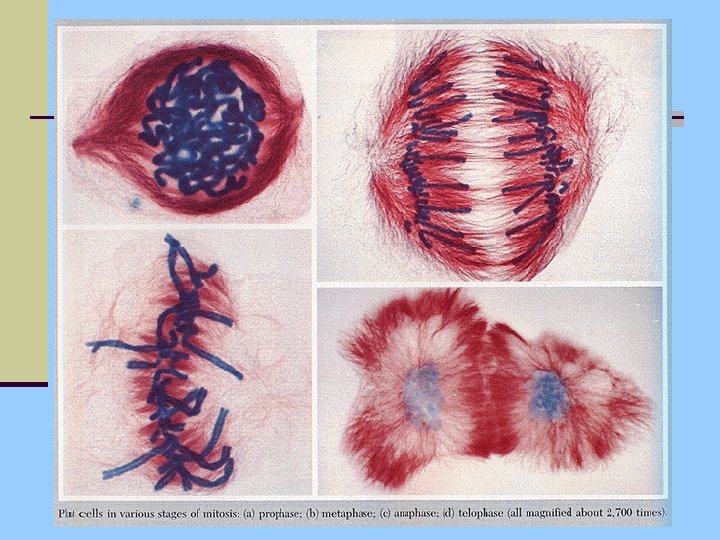
Mitosis n Used for growth and repair. n Each new cell has a complete set of chromosomes identical to the parent cells. n A cell division process called Cytokinesis that actually divides the cytoplasm into two cells occurs.
Mitosis
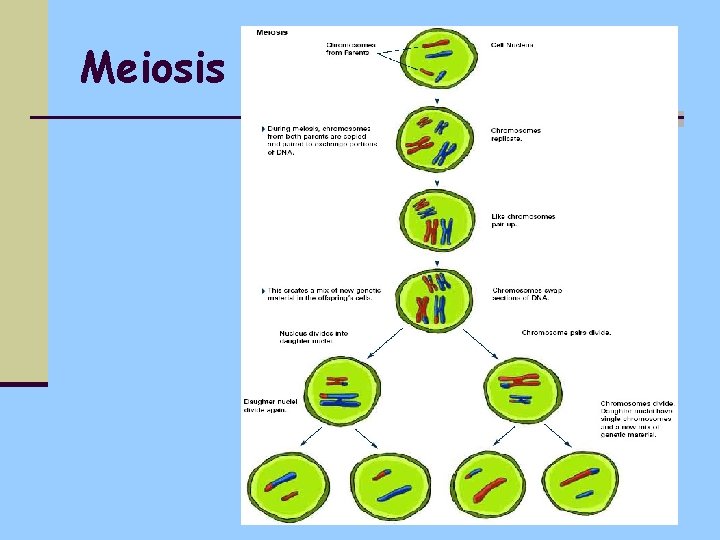
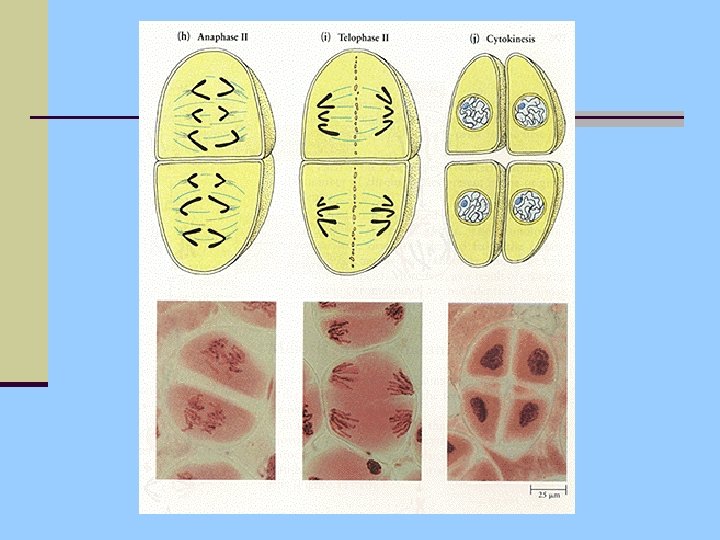
Meiosis n This is the formation of gametes in animals and the spores that form the gametophyte generation in plants. n Gametes are different from each other. n Meiosis halves the chromosome number so that each is haploid. n Takes place in 2 steps: Meiosis I and Meiosis II.
Meiosis n At the end of cell division there are 4 daughter cells. n Crossing over may occur during synapsis.
Meiosis
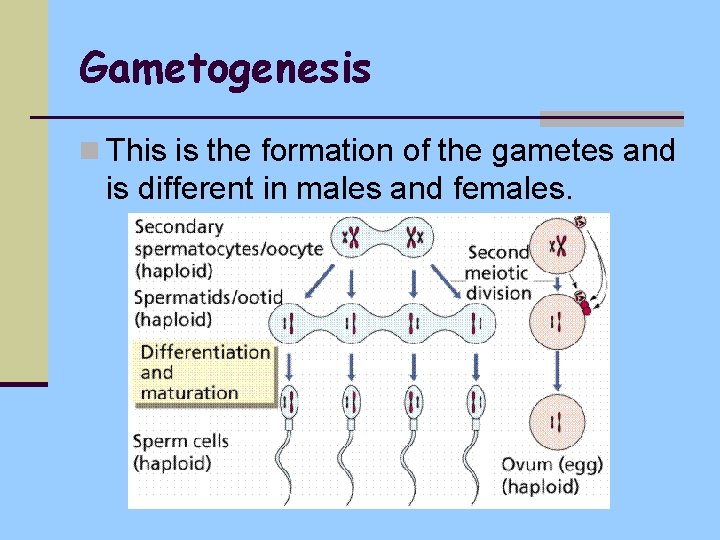
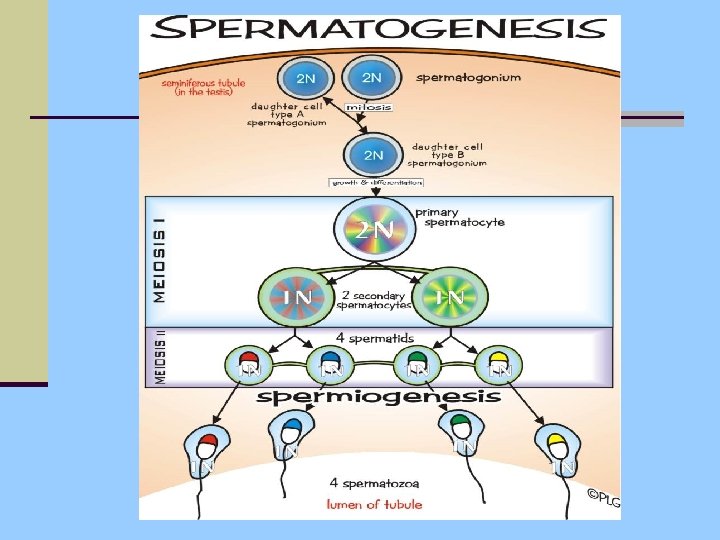
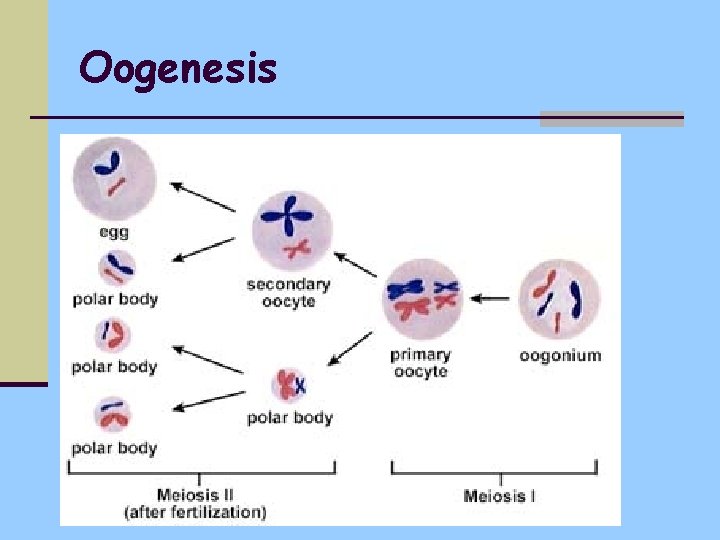
Gametogenesis n This is the formation of the gametes and is different in males and females.
Oogenesis