
Cell Division Lecture 30 Chapter 19 M phase
- Slides: 21
Cell Division Lecture 30 Chapter 19
M phase of Cell Cycle • The M phase encompasses two events – Nuclear division - mitosis – Cell division - cytokinesis • In mammalian cells this phase takes just an hour or so to complete. • The rest of the cell cycle excluding this phase (encompassing G 1, S phase, G 2) is simply known as interphase • The cell cycle control system regulates these events
Kinases are involved • M-phase Cdk (M-Cdk) is the most important factor regulating the M phase. • Many events take place during this period – The cell loosens its contact with its neighbours and the extracellular matrix – The chromosomes condense – The nuclear envelope disappears – The ER and Golgi apparatus reorganize – The cytoskeleton rearranges • M phase ends when M-Cdk is inactivated
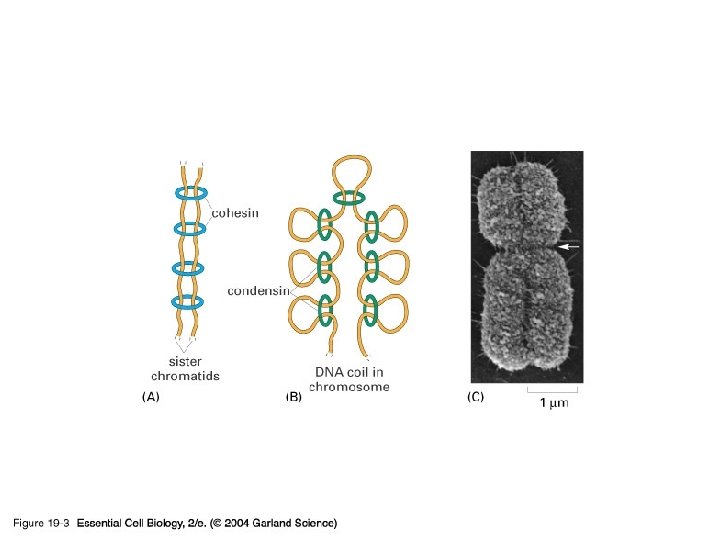
Prior to M phase • During S phase the entire DNA is duplicated • The sister chromatids are kept together by protein complexes called cohesins • The chromatids are then condensed by proteins called condensins. These proteins are phosphorylated by M-Cdk
19_03_Cohesins_conde. jpg
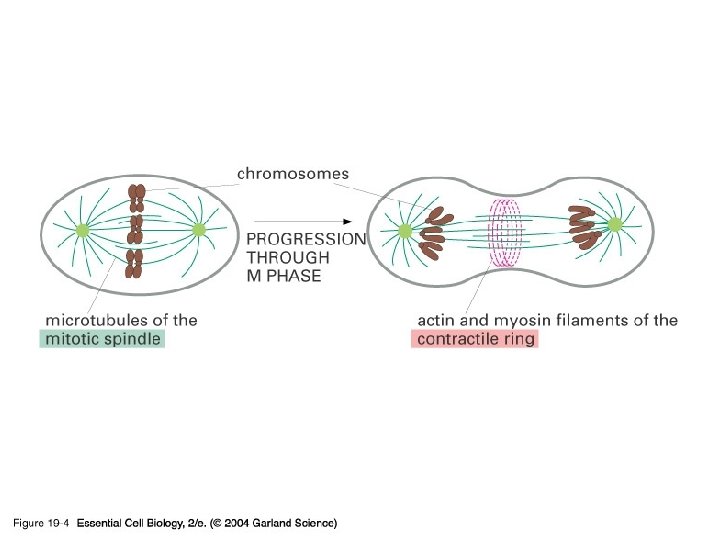
The involvement of the cytoskeleton • Microtubules rearrange to for the mitotic spindle for segregating the chromosomes • Actin and myosin filaments constrict the plasma membrane to divide the cell into two daughter cells.
19_04_mediate_M. jpg
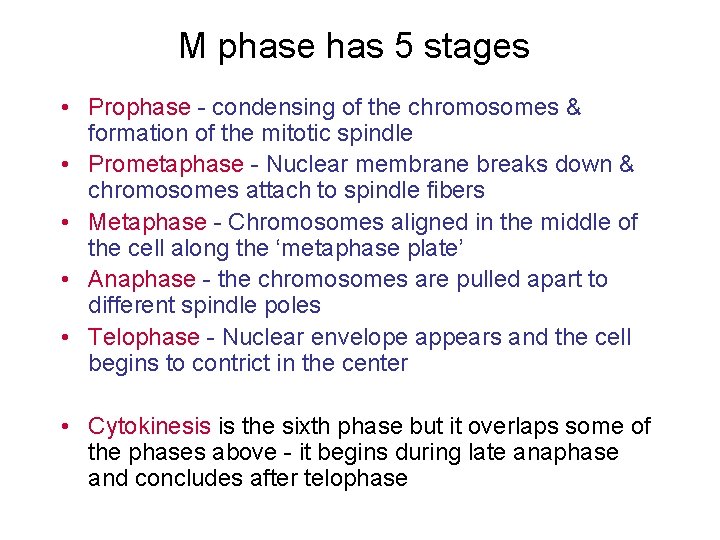
M phase has 5 stages • Prophase - condensing of the chromosomes & formation of the mitotic spindle • Prometaphase - Nuclear membrane breaks down & chromosomes attach to spindle fibers • Metaphase - Chromosomes aligned in the middle of the cell along the ‘metaphase plate’ • Anaphase - the chromosomes are pulled apart to different spindle poles • Telophase - Nuclear envelope appears and the cell begins to contrict in the center • Cytokinesis is the sixth phase but it overlaps some of the phases above - it begins during late anaphase and concludes after telophase
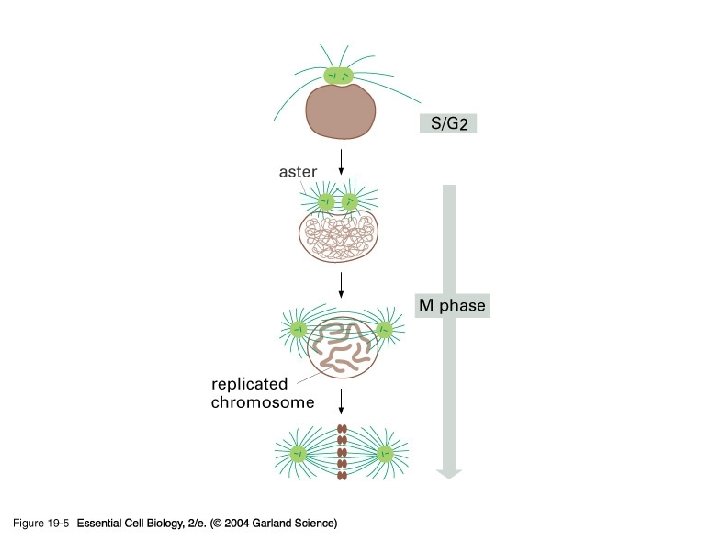
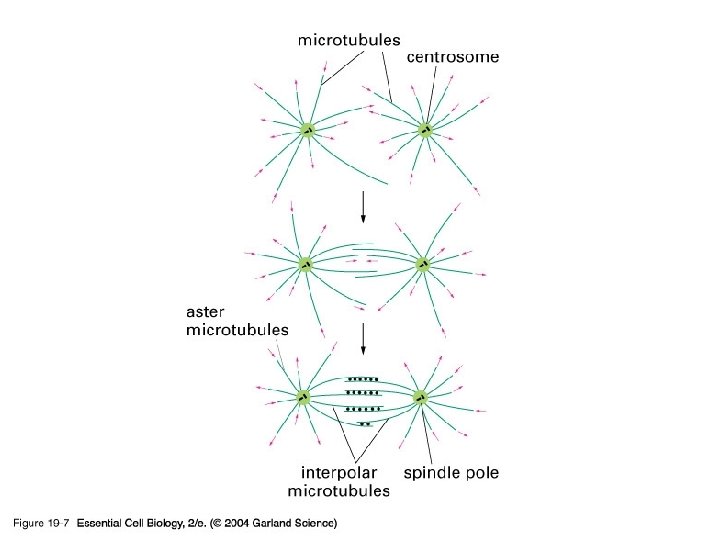
Microtubules & the centrosome • Prior to M phase the cells’ one centrosome duplicates into two • The two centrosomes move apart to different poles of the nuclear envelope • Between them form many stable microtubules • Other microtubules grow to other regions of the cell • When the nuclear envelope eventually breaks down the spindle fibers capture and bind the sister chromatids and prevent them from drifting away
19_05_centrosome. jpg
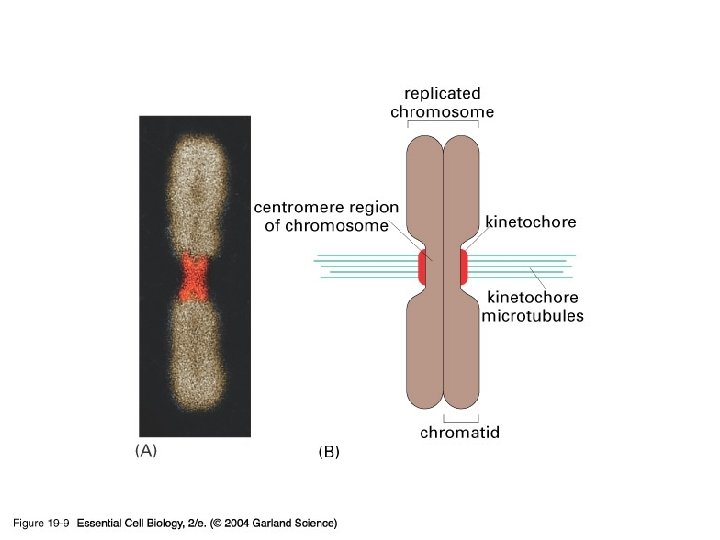
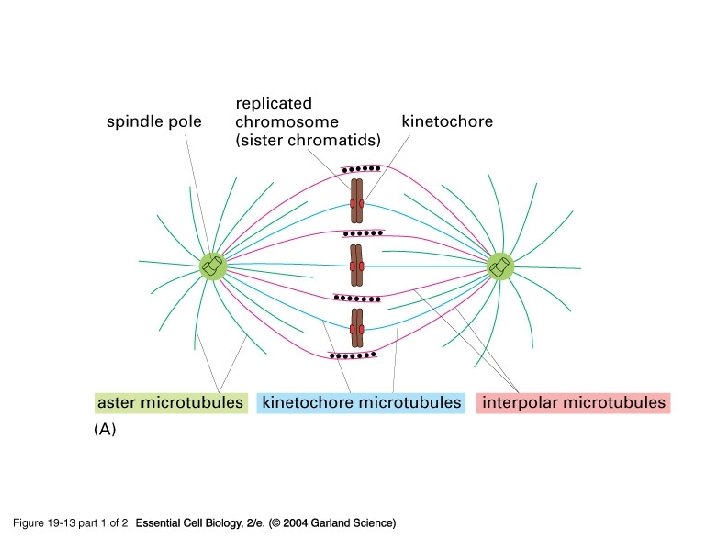
• The microtubules are relatively rigid • They originate from each centrosome and attach to one or the other sister chromatid of each chromosome and begin a ‘tug-of-war’ • The region around the centromere of each sister chromatid gets coated with special proteins that form a polar structure called the kinetochore • A number of spindle fibers from one pole attach to one side of the kinetochore of one sister chromatid • It then pulls on this by reducing the tubulins along its length • The other sister chromatid is pulled by the other spindle pole
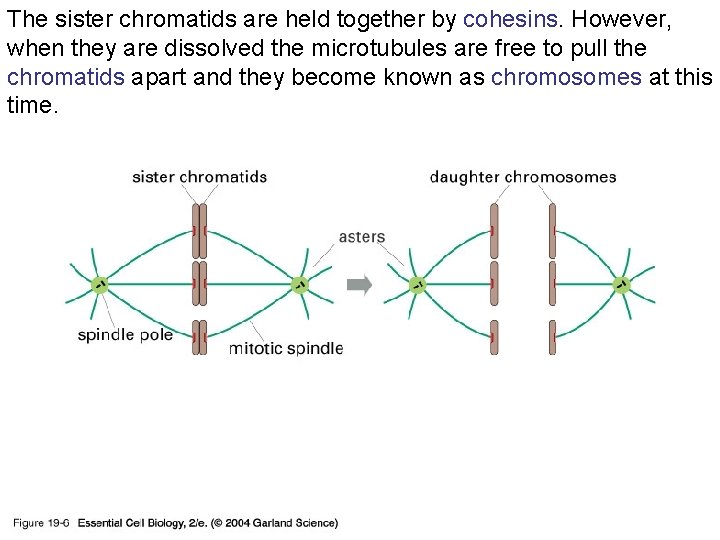
The sister chromatids are held together by cohesins. However, when they are dissolved the microtubules are free to pull the 19_06_sister_chromatid. jpg chromatids apart and they become known as chromosomes at this time.
19_07_mitotic_spindle. jpg
19_09_Kinetochores. jpg
19_13_01_mitotic_spindle. jpg
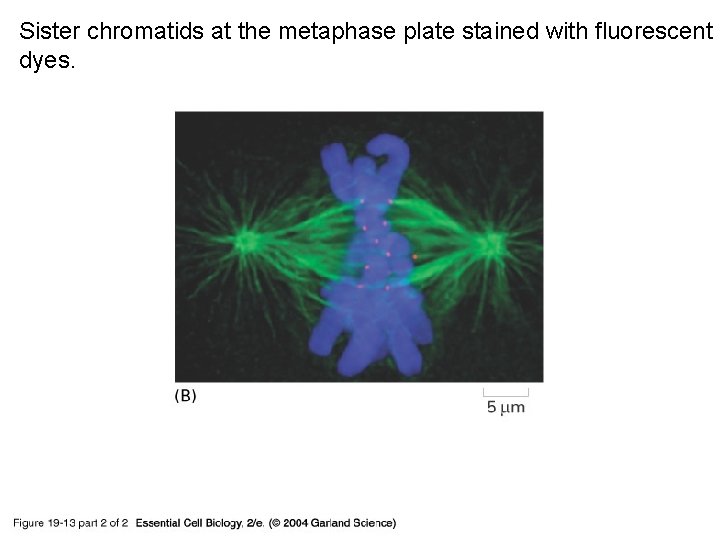
Sister chromatids at the metaphase plate stained with fluorescent 19_13_02_mitotic_spindle. jpg dyes.
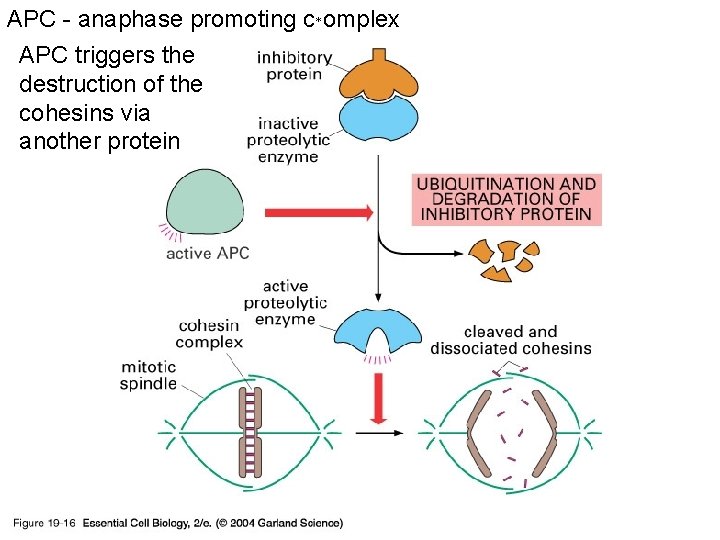
APC - anaphase promoting c*omplex APC triggers the destruction of the cohesins via another protein 19_16_APC_triggers. jpg
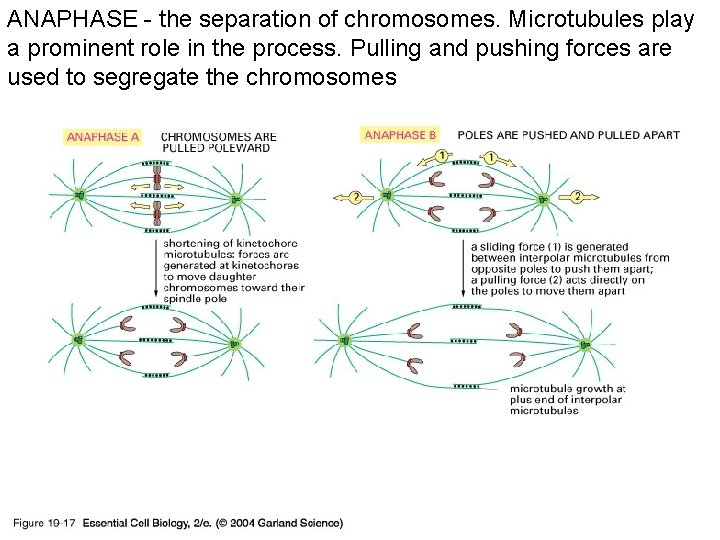
ANAPHASE - the separation of chromosomes. Microtubules play a prominent role in the process. Pulling and pushing forces are used to segregate the chromosomes 19_17_process. jpg
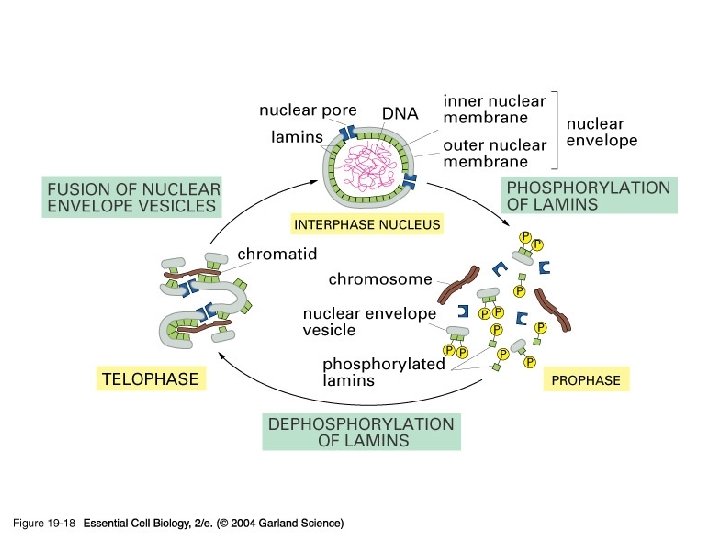
19_18_envelope breaks. jpg
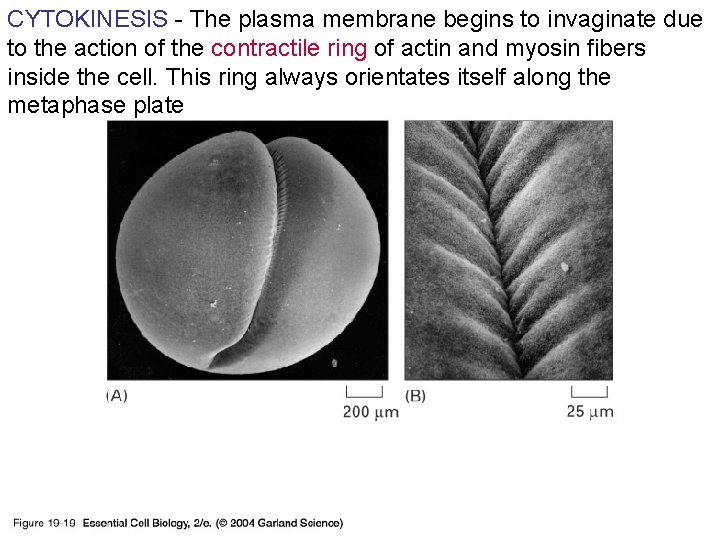
CYTOKINESIS - The plasma membrane begins to invaginate due to the action of the contractile ring of actin and myosin fibers inside the cell. This ring always orientates itself along the metaphase plate 19_19_cleavage_furrow. jpg
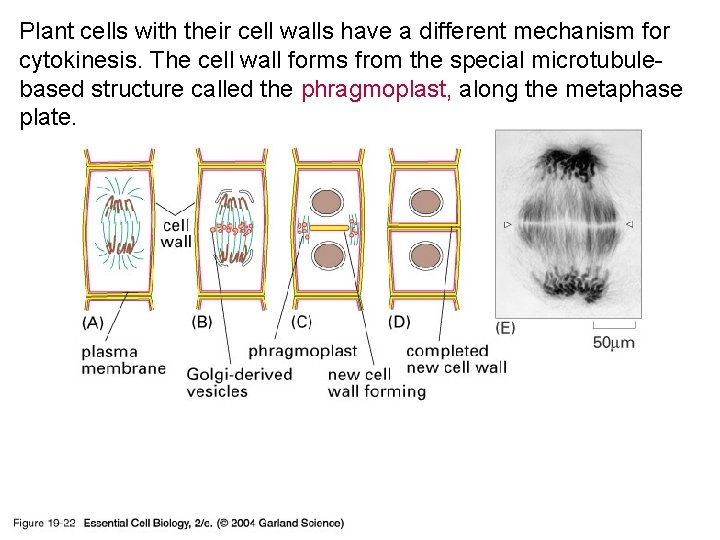
Plant cells with their cell walls have a different mechanism for cytokinesis. The cell wall forms from the special microtubulebased structure called the phragmoplast, along the metaphase plate. 19_22_phragmoplast. jpg