
Cell Division Intro Biology 12 Review Cell Theory

Cell Division Intro Biology 12
Review: Cell Theory 1. All living things are composed of one or more cells 2. The cell is the smallest entity that retains the properties of life 3. New cells arise from existing cells.

Extensions and Implications: �Living things come in a variety of sizes but all cells are roughly the same size, the difference is the number of cells. vs. �Different cells have different life spans �Human skin cells: 20 days �Human brain cells: 30 -50 years
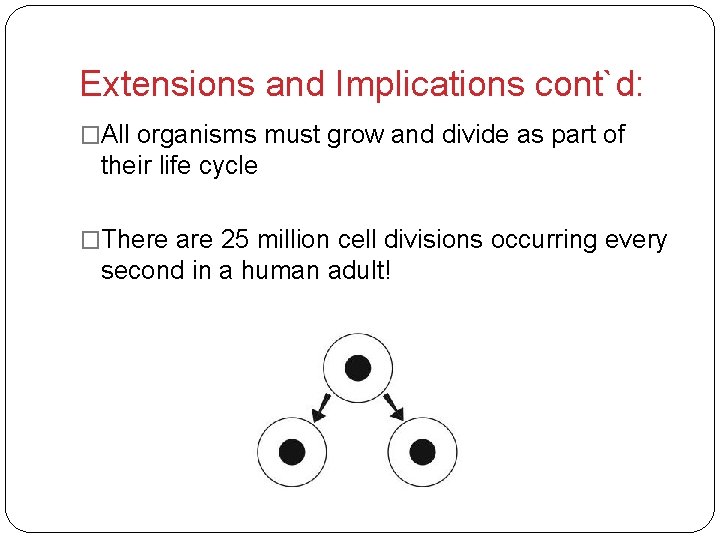
Extensions and Implications cont`d: �All organisms must grow and divide as part of their life cycle �There are 25 million cell divisions occurring every second in a human adult!
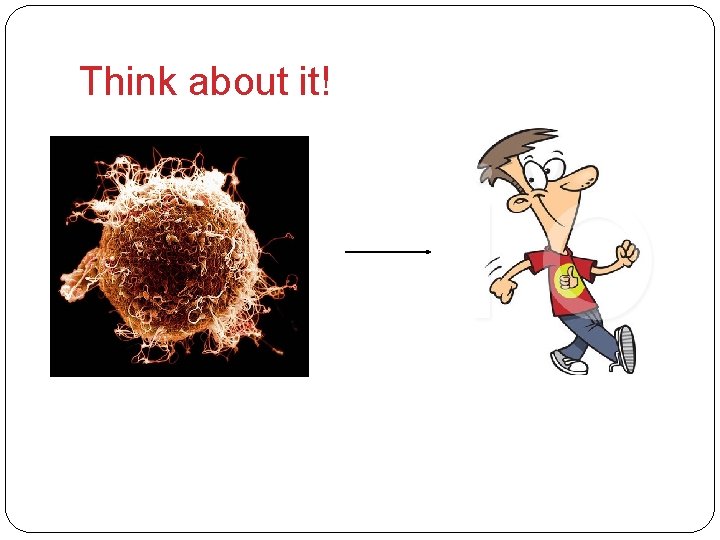
Think about it!
Review: Two type of cell reproduction: Asexual vs. sexual Asexual reproduction involves a single cell dividing to make 2 new, identical daughter cells Examples: Mitosis & binary fission Sexual reproduction involves two cells (egg & sperm) joining to make a new cell (zygote) that is NOT identical to the original cells Example: meiosis
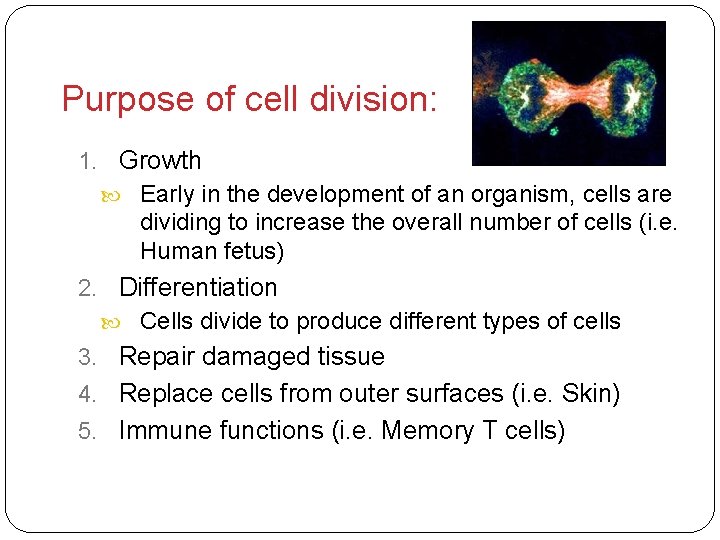
Purpose of cell division: 1. Growth Early in the development of an organism, cells are dividing to increase the overall number of cells (i. e. Human fetus) 2. Differentiation Cells divide to produce different types of cells 3. Repair damaged tissue 4. Replace cells from outer surfaces (i. e. Skin) 5. Immune functions (i. e. Memory T cells)
What cells divide often? Skin Stomach lining Red Blood cells Embryo Plant roots Hair Nails What cells rarely/never divide? �Nervous System �Liver
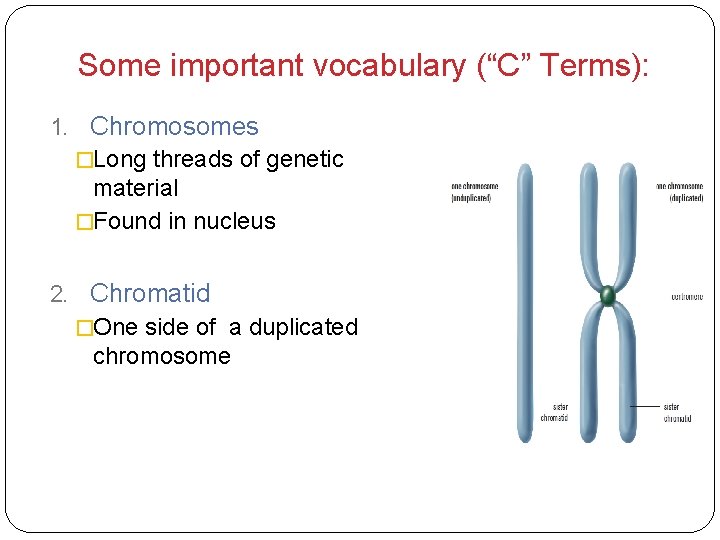
Some important vocabulary (“C” Terms): 1. Chromosomes �Long threads of genetic material �Found in nucleus 2. Chromatid �One side of a duplicated chromosome
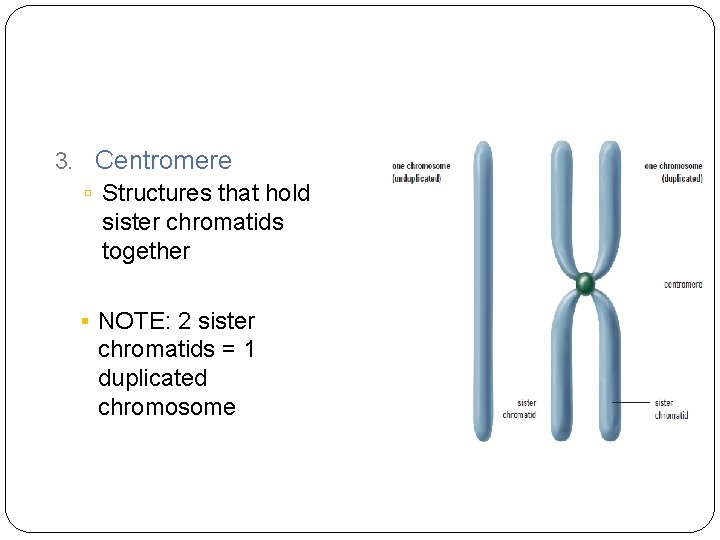
3. Centromere Structures that hold sister chromatids together NOTE: 2 sister chromatids = 1 duplicated chromosome
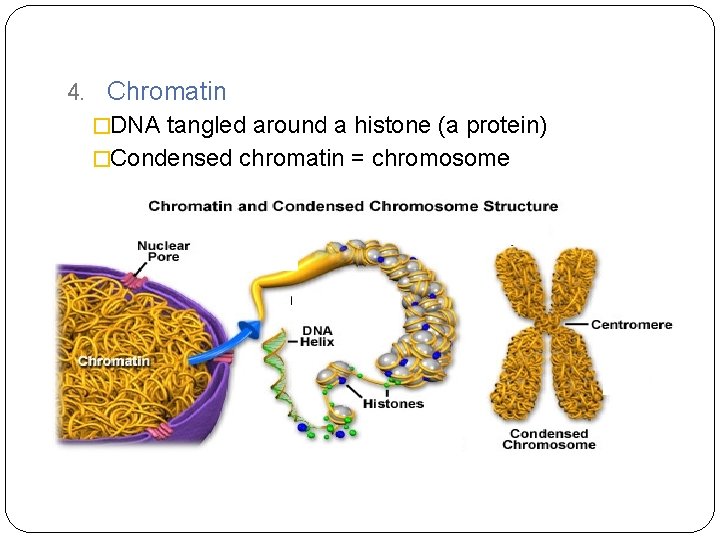
4. Chromatin �DNA tangled around a histone (a protein) �Condensed chromatin = chromosome
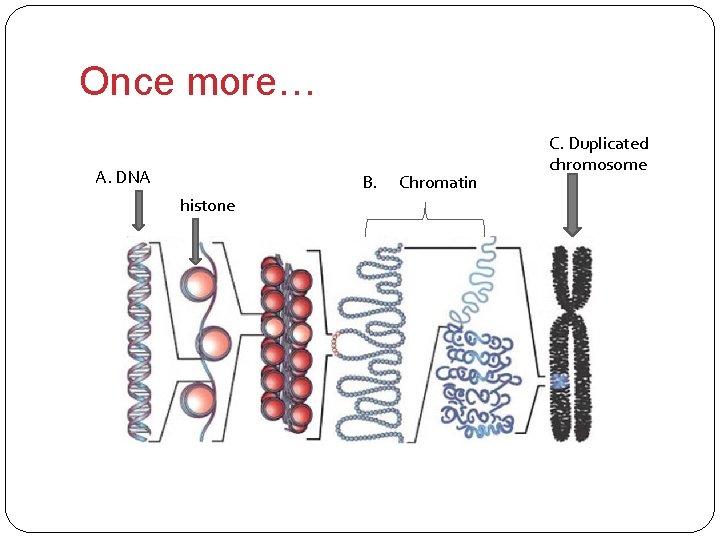
Once more… A. DNA B. histone Chromatin C. Duplicated chromosome
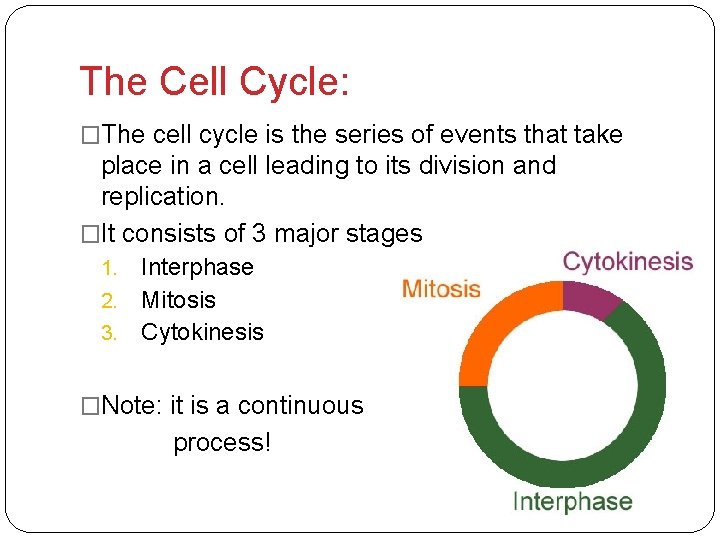
The Cell Cycle: �The cell cycle is the series of events that take place in a cell leading to its division and replication. �It consists of 3 major stages Interphase 2. Mitosis 3. Cytokinesis 1. �Note: it is a continuous process!
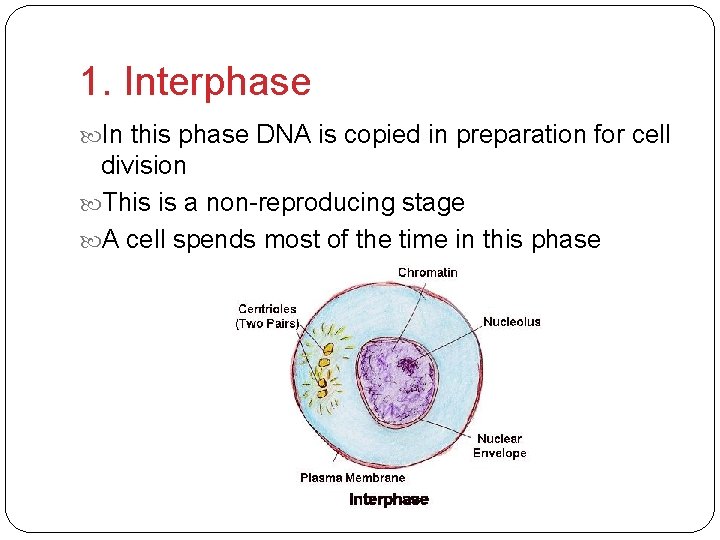
1. Interphase In this phase DNA is copied in preparation for cell division This is a non-reproducing stage A cell spends most of the time in this phase
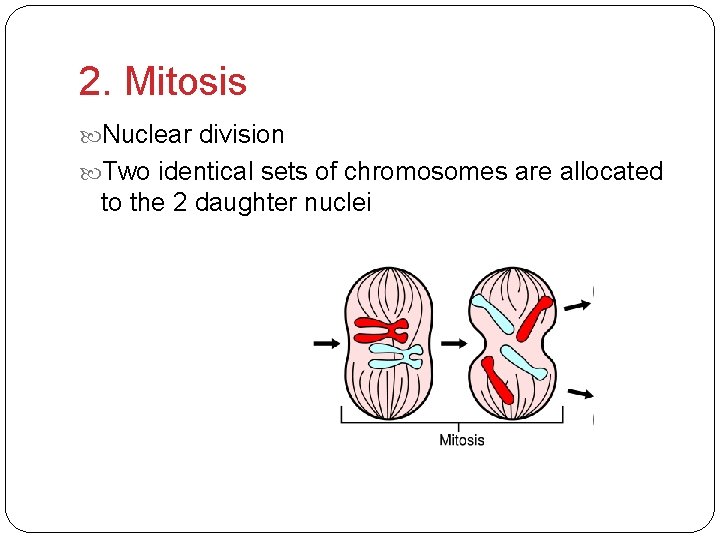
2. Mitosis Nuclear division Two identical sets of chromosomes are allocated to the 2 daughter nuclei
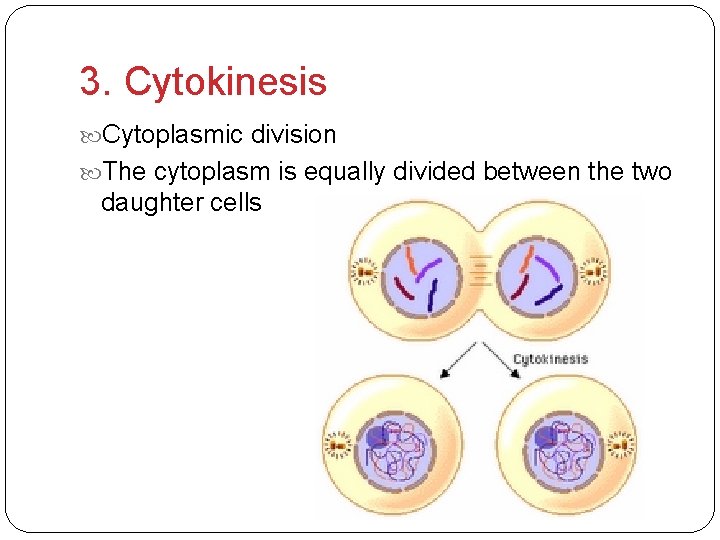
3. Cytokinesis Cytoplasmic division The cytoplasm is equally divided between the two daughter cells
Short clip: cell division http: //www. youtube. com/watch? feature=player_d etailpage&v=Q 6 uc. KWIIFmg
To do: Cell Cycle colouring sheet If time permits: read pg 82 -90 and start questions 1 -10 on page 90
- Slides: 19