
Cell Division I Reasons for asexual cell division
- Slides: 35
Cell Division
I. Reasons for asexual cell division p A. Growth p B. Repair p C. Reproduction
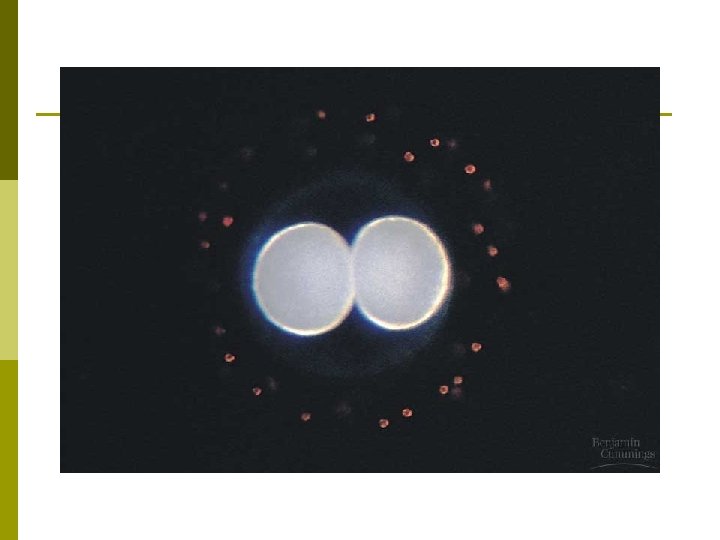
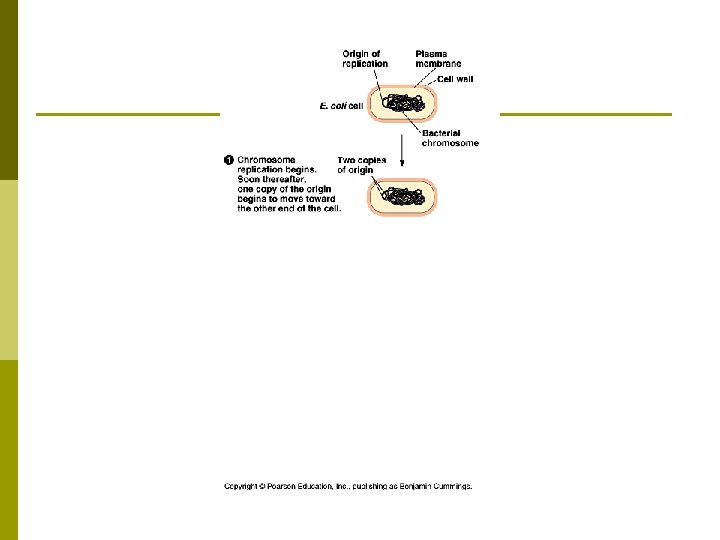
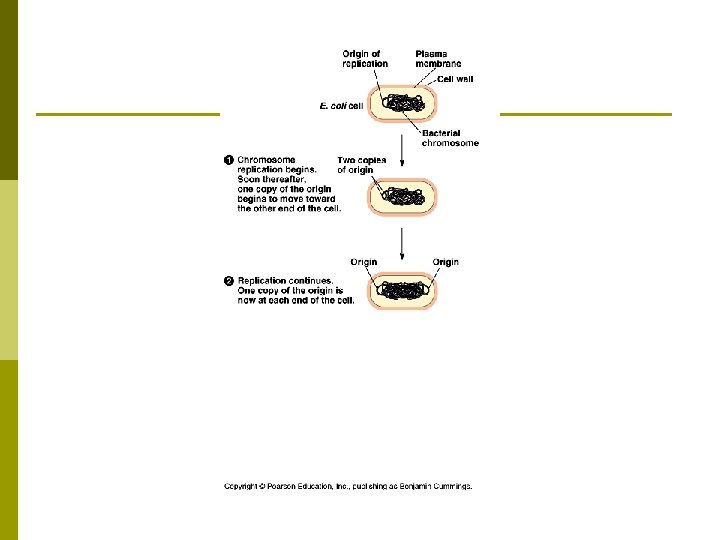
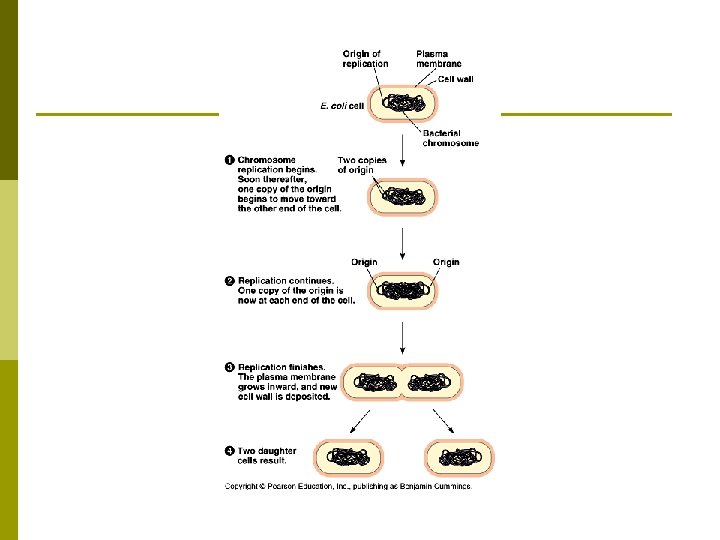
II. Prokaryotes p A. Binary Fission: division of prok. cells into 2 offspring cells 1. 2. 3. DNA Copied Cell begins to divide 2 identical haploid cells formed
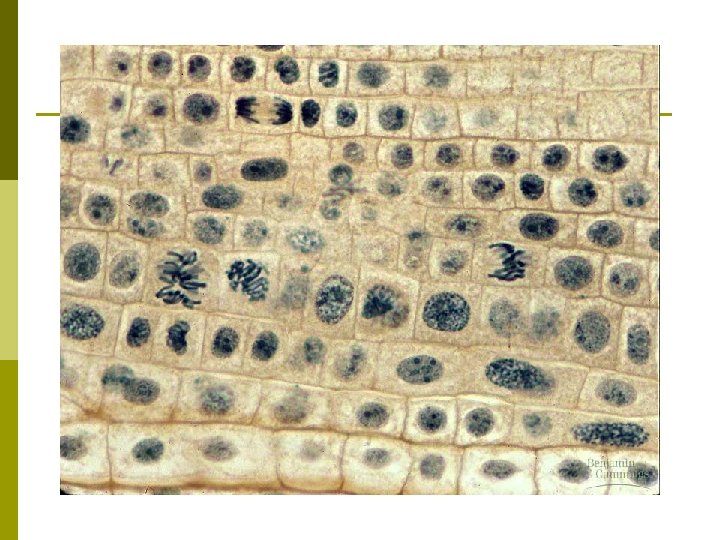
III. Eukaryotes - Mitosis p A. Cytoplasm and nucleus divide p B. Cells go through Mitosis and then Cell division (Cytokinesis) p C. Mitosis: The division of the nucleus.
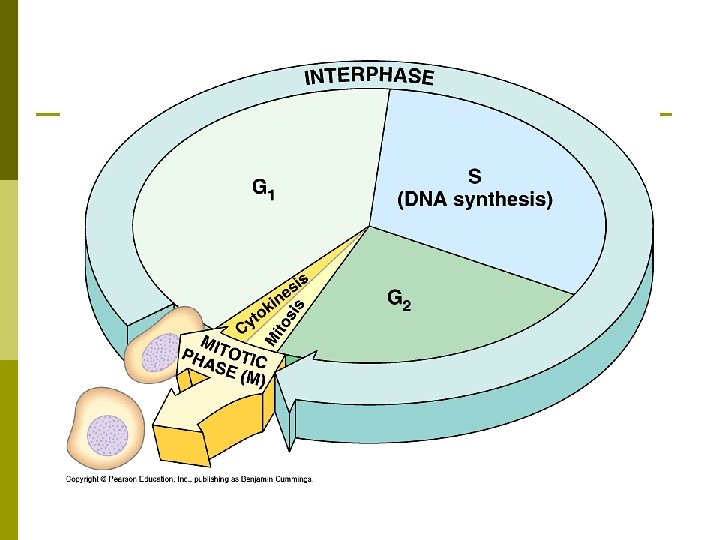
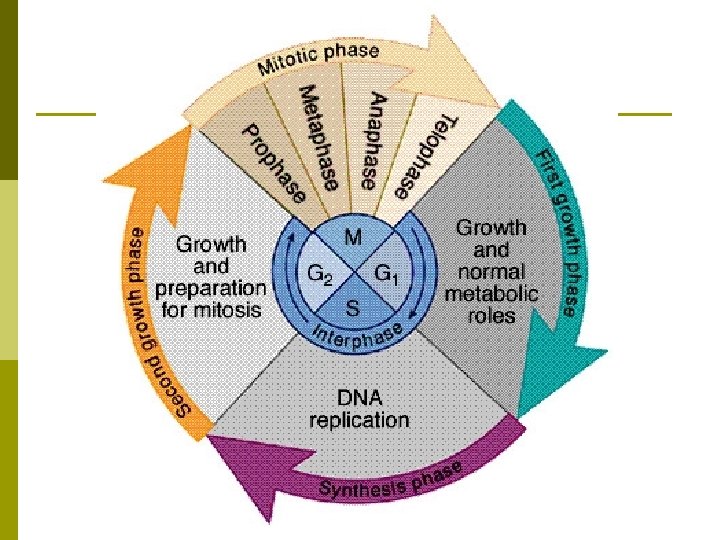
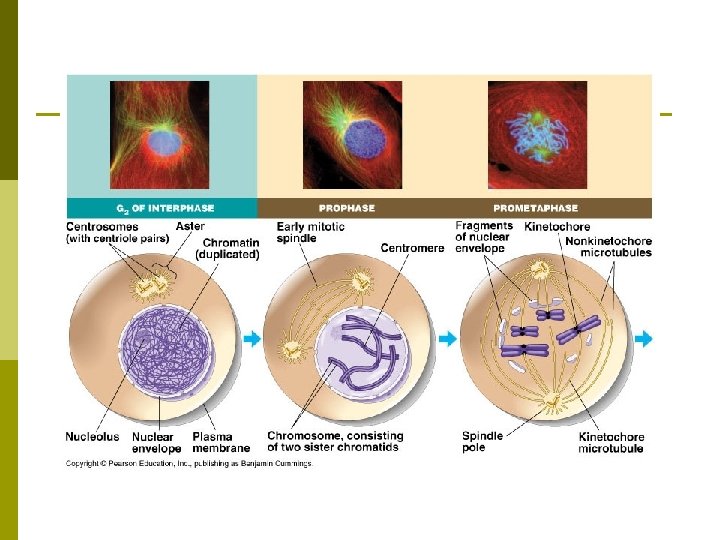
IV. Cell Cycle p A. n The “life cycle” of the cell 1. Interphase- new cell until mitosis p n Time between cell divisions 2. 3 parts: G 1, S, G 2 A. G 1=1 st growth, normal cellular activity p B. S= Synthesis- The DNA is copied p C. G 2=2 nd growth time, getting ready for division p
Cell Cycle p C. Some cells stay in G 1. This is called G 0. ( neurons, liver cells) 1. 2. No replication/division of cells All cells must go through G 1 checkpoints. a) The cells have proteins that check to make sure everything is ok before the S phase and moving toward division.
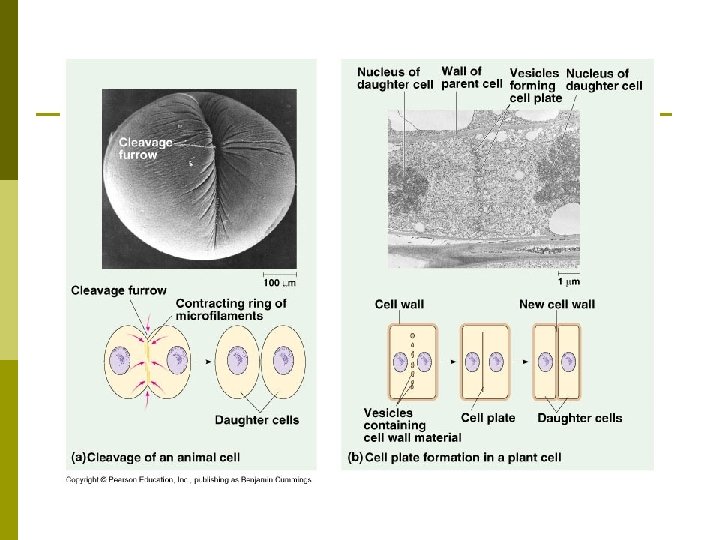
Cell Cycle p B. Mitosis- “M phase” – nucleus divides p C. Cytokinesis- Splitting of the cytoplasm
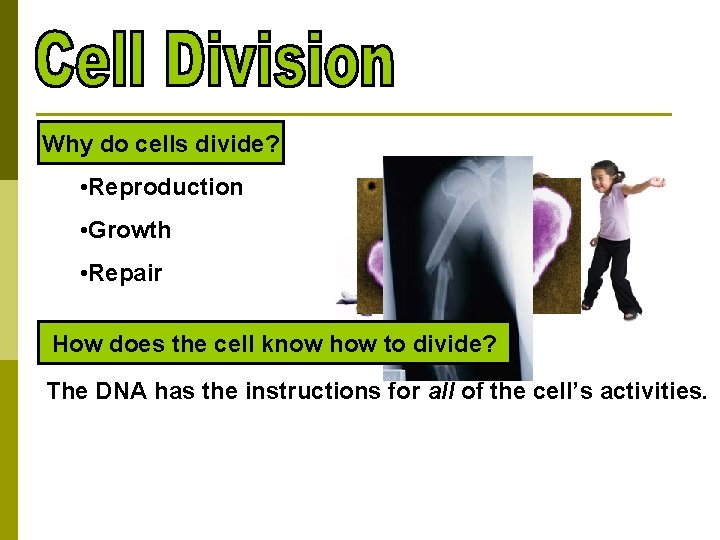
Why do cells divide? • Reproduction • Growth • Repair How does the cell know how to divide? The DNA has the instructions for all of the cell’s activities.
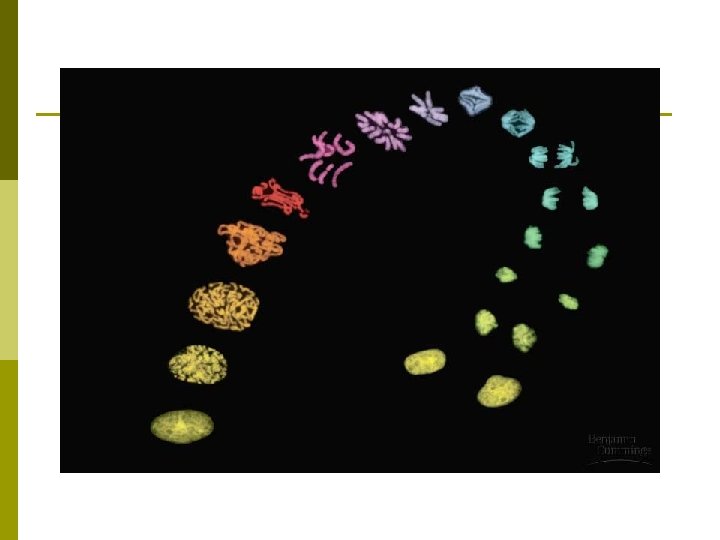
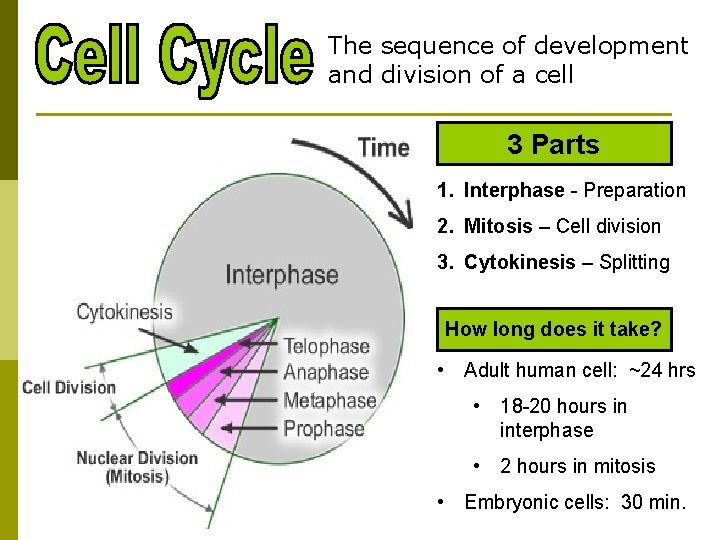
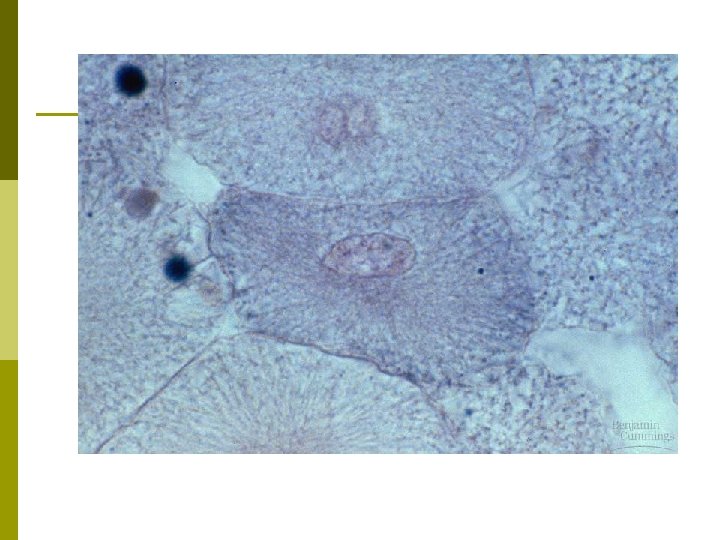
The sequence of development and division of a cell 3 Parts 1. Interphase - Preparation 2. Mitosis – Cell division 3. Cytokinesis – Splitting How long does it take? • Adult human cell: ~24 hrs • 18 -20 hours in interphase • 2 hours in mitosis • Embryonic cells: 30 min.
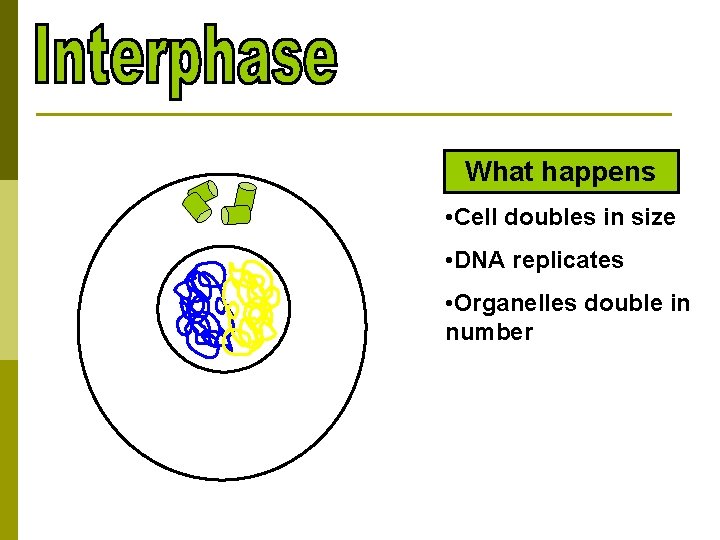
What happens • Cell doubles in size • DNA replicates • Organelles double in number
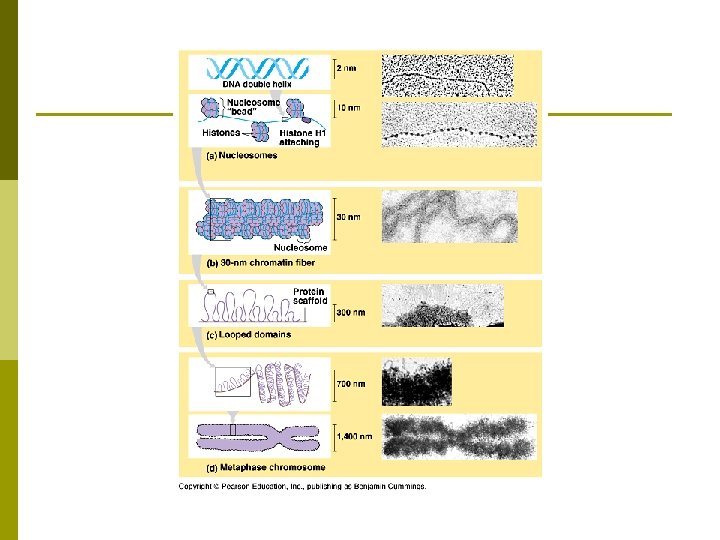
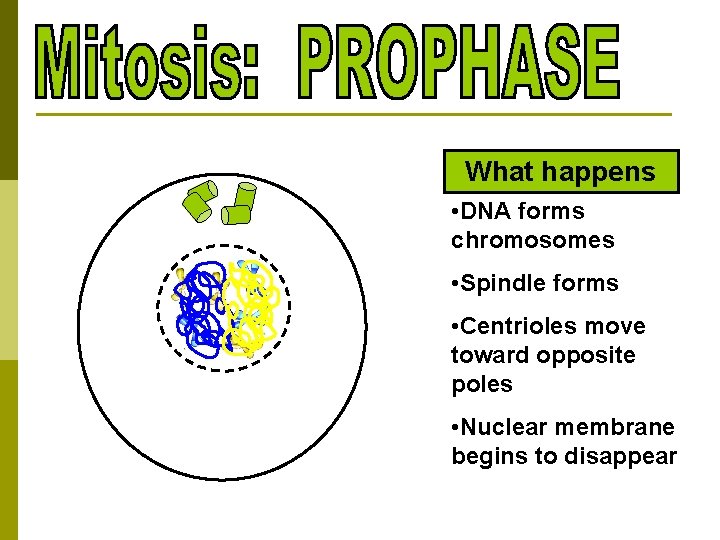
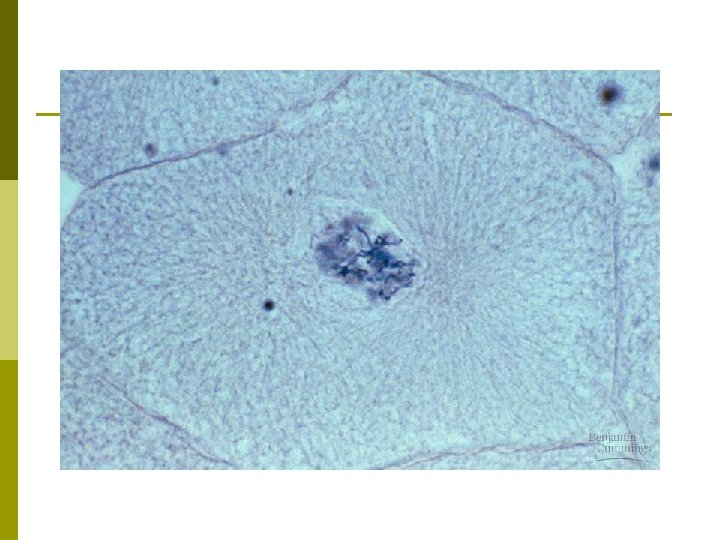
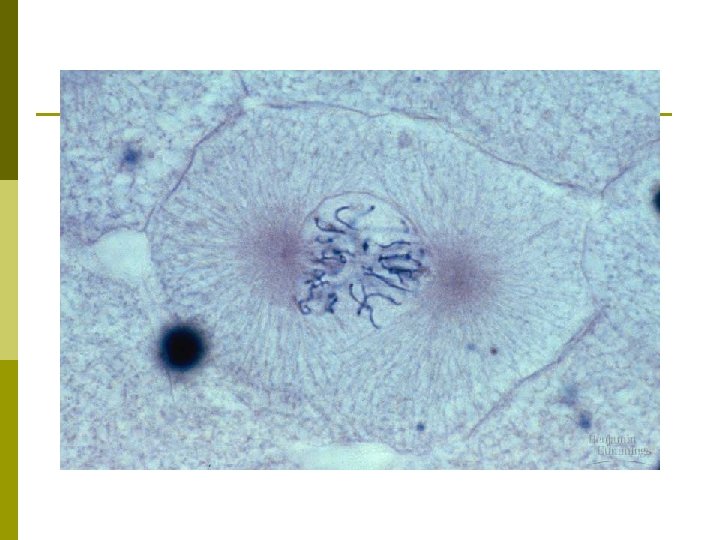
What happens • DNA forms chromosomes • Spindle forms • Centrioles move toward opposite poles • Nuclear membrane begins to disappear
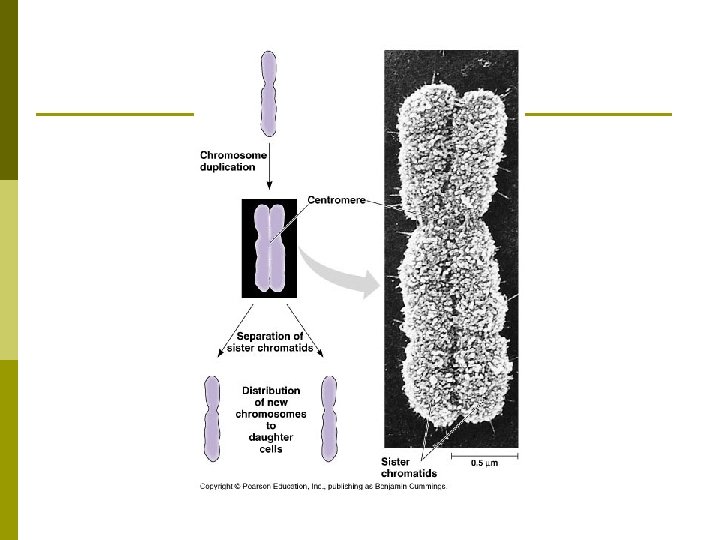
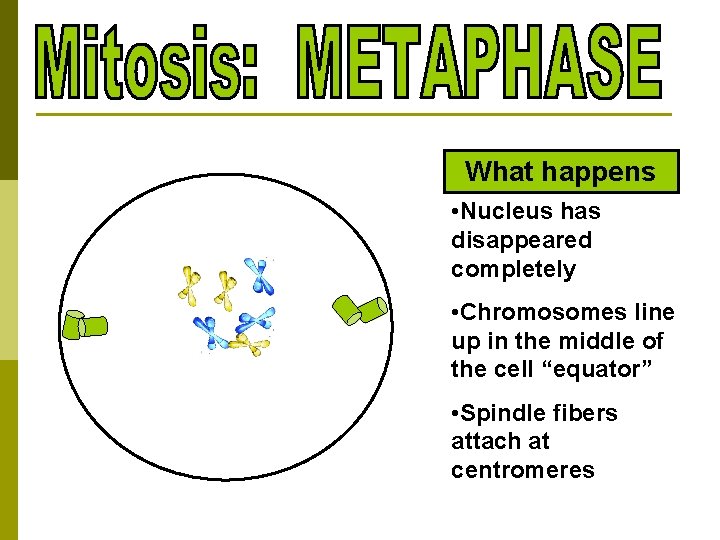
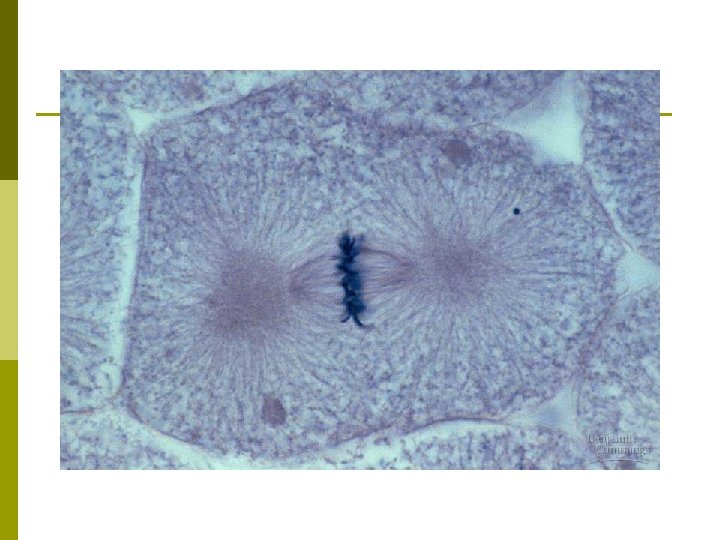
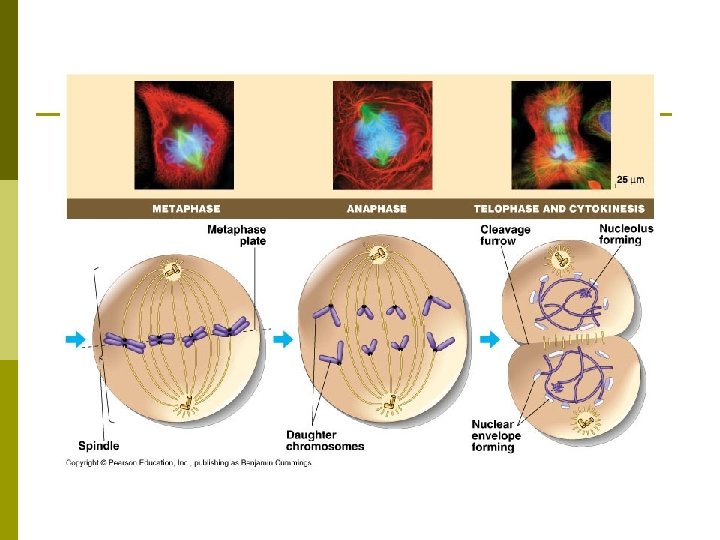
What happens • Nucleus has disappeared completely • Chromosomes line up in the middle of the cell “equator” • Spindle fibers attach at centromeres
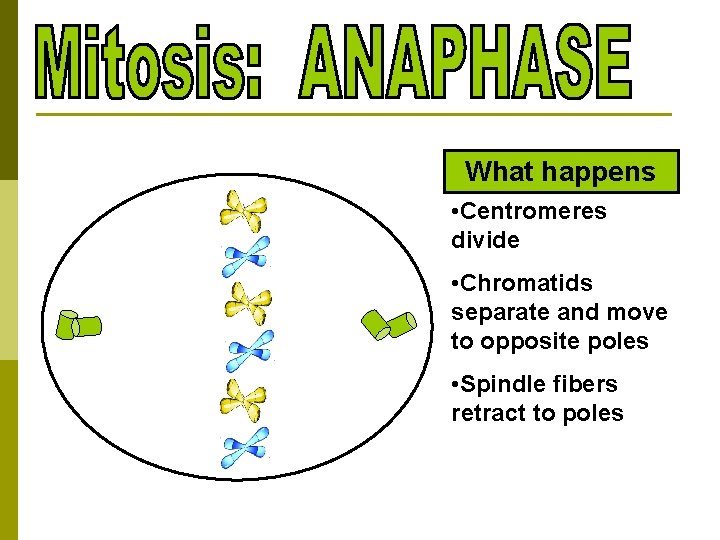
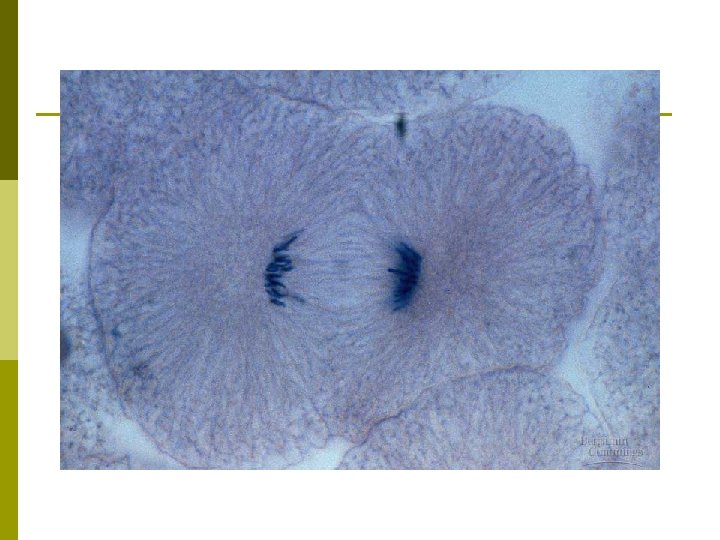
What happens • Centromeres divide • Chromatids separate and move to opposite poles • Spindle fibers retract to poles
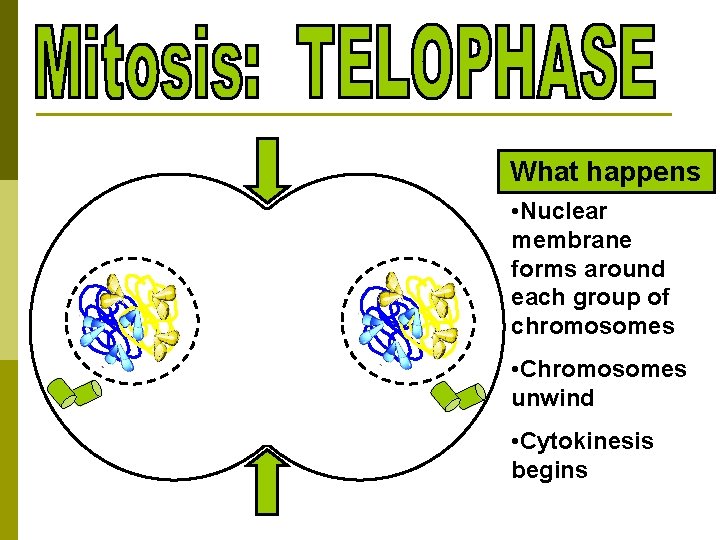
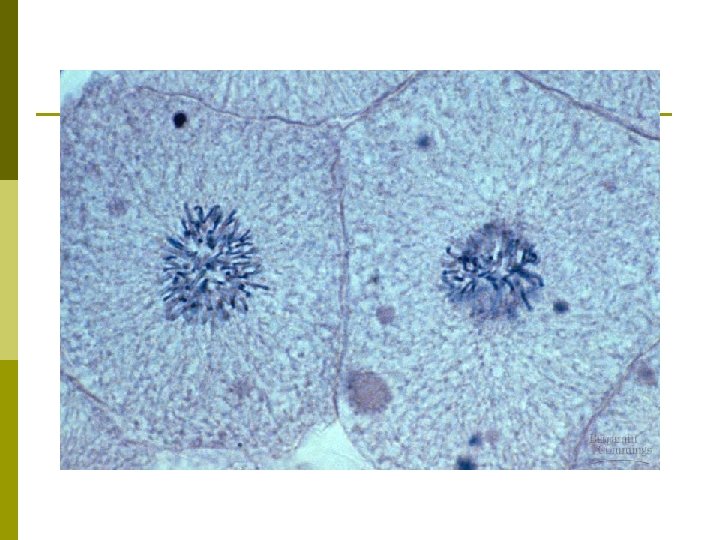
What happens • Nuclear membrane forms around each group of chromosomes • Chromosomes unwind • Cytokinesis begins
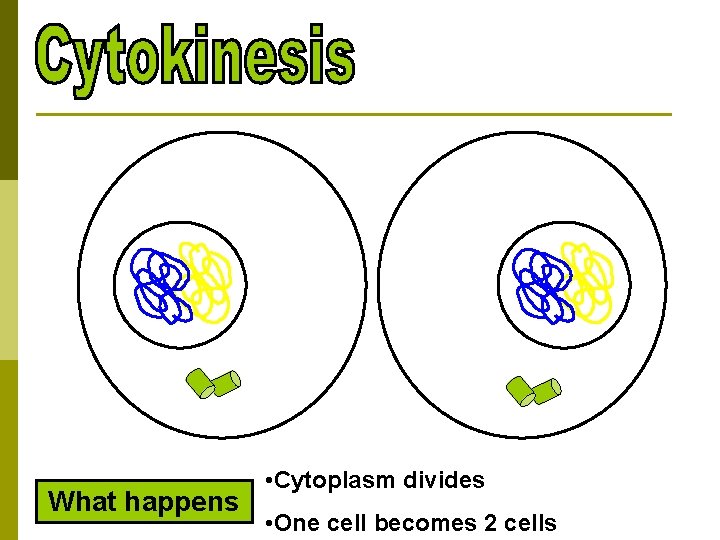
What happens • Cytoplasm divides • One cell becomes 2 cells