
Cell Division Ch 8 Why Do Cells Divide
- Slides: 16
Cell Division Ch. 8
Why Do Cells Divide?
Prokaryotes • How do prokaryotes divide?
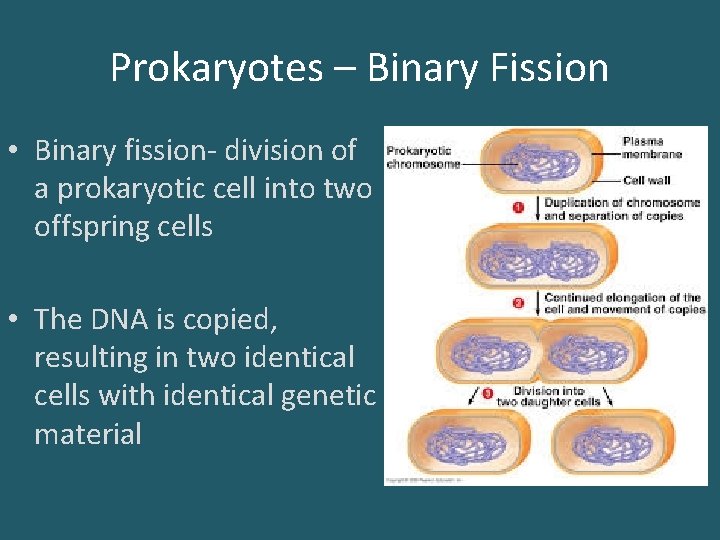
Prokaryotes – Binary Fission • Binary fission- division of a prokaryotic cell into two offspring cells • The DNA is copied, resulting in two identical cells with identical genetic material
Eukaryotes • How do Somatic Eukaryotic Cells Divide?
Cell Division in Eukaryotes • In eukaryotic cell division, both the cytoplasm and the nucleus divide
2 types • There are 2 types of cell division in Eukaryotes: – Mitosis (somatic cells) – Meiosis (sex cells)
Mitosis • Mitosis results in new cells with genetic material that is identical to the genetic material of the original cell • It occurs in organisms undergoing growth, development, repair, or asexual reproduction • Asexual reproduction- production of offspring from one parent
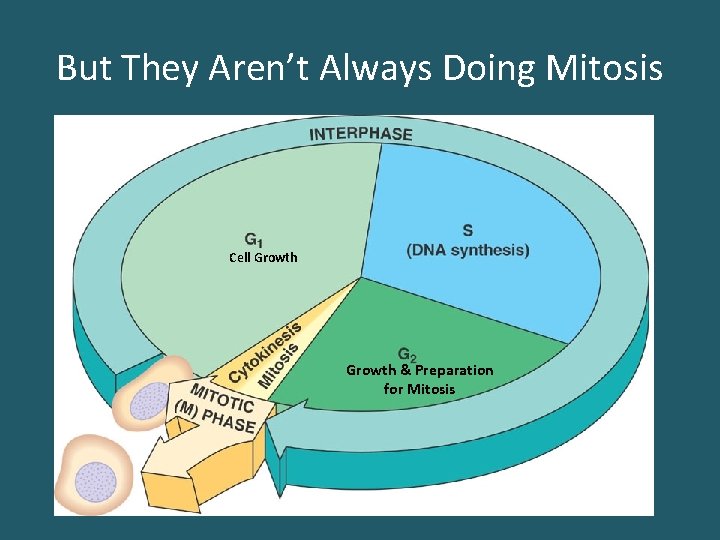
But They Aren’t Always Doing Mitosis Cell Growth & Preparation for Mitosis
The Cell Cycle • Repeating set of events in the life of a cell • Cell division is only one phase of the cycle
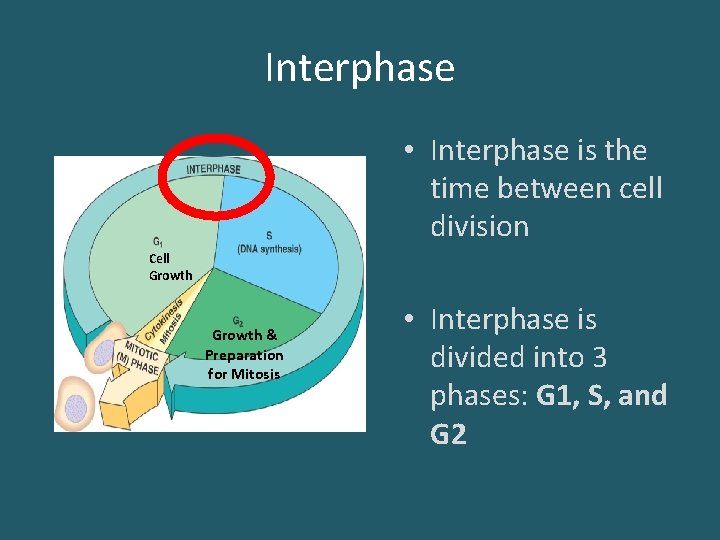
Interphase • Interphase is the time between cell division Cell Growth & Preparation for Mitosis • Interphase is divided into 3 phases: G 1, S, and G 2
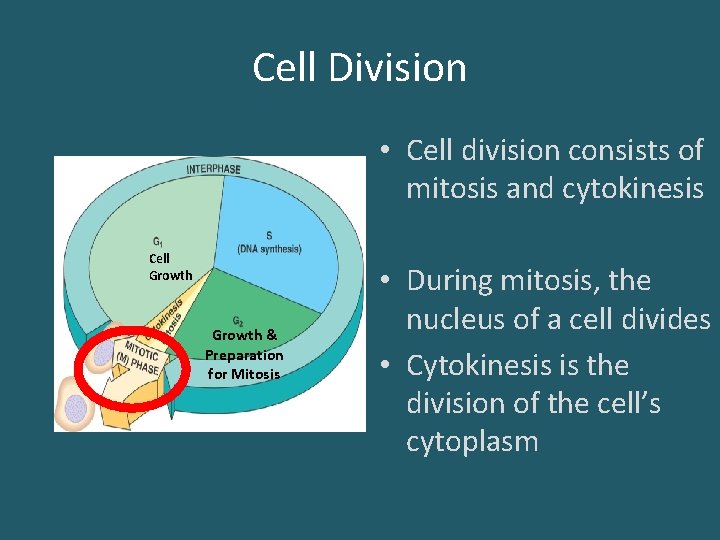
Cell Division • Cell division consists of mitosis and cytokinesis Cell Growth & Preparation for Mitosis • During mitosis, the nucleus of a cell divides • Cytokinesis is the division of the cell’s cytoplasm
Interphase • G 1 • S • G 2 phase Cells spend most of their life in interphase
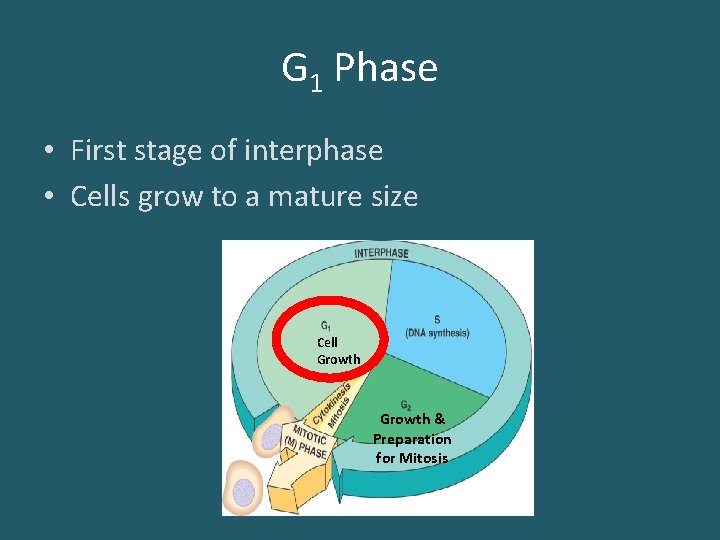
G 1 Phase • First stage of interphase • Cells grow to a mature size Cell Growth & Preparation for Mitosis
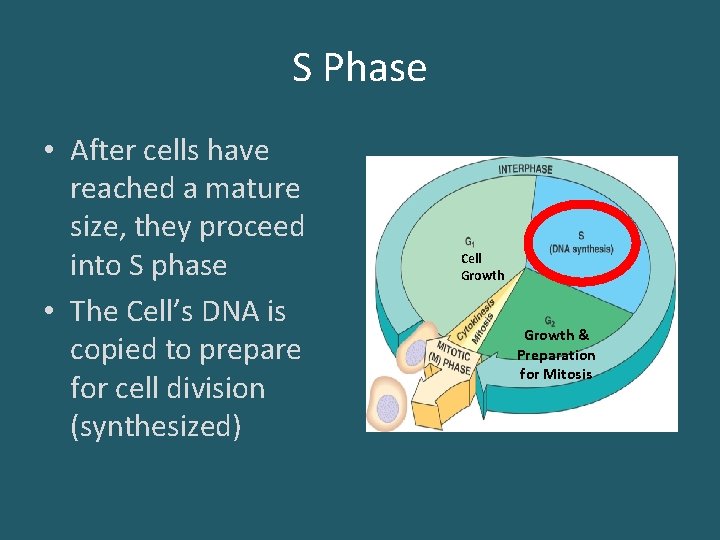
S Phase • After cells have reached a mature size, they proceed into S phase • The Cell’s DNA is copied to prepare for cell division (synthesized) Cell Growth & Preparation for Mitosis
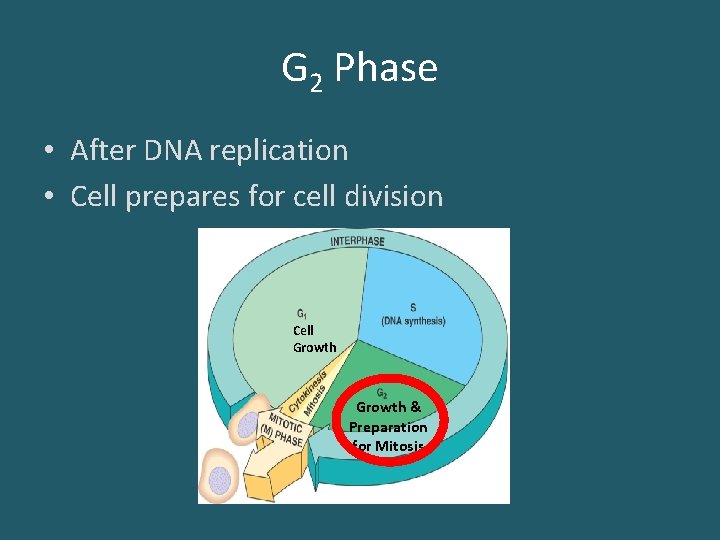
G 2 Phase • After DNA replication • Cell prepares for cell division Cell Growth & Preparation for Mitosis