
Cell division Cell size Cells must stay very
- Slides: 14
Cell division
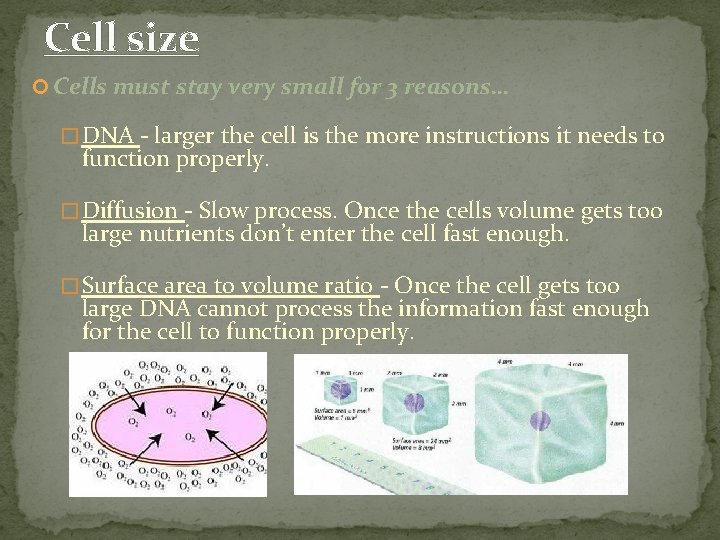
Cell size Cells must stay very small for 3 reasons… � DNA - larger the cell is the more instructions it needs to function properly. � Diffusion - Slow process. Once the cells volume gets too large nutrients don’t enter the cell fast enough. � Surface area to volume ratio - Once the cell gets too large DNA cannot process the information fast enough for the cell to function properly.
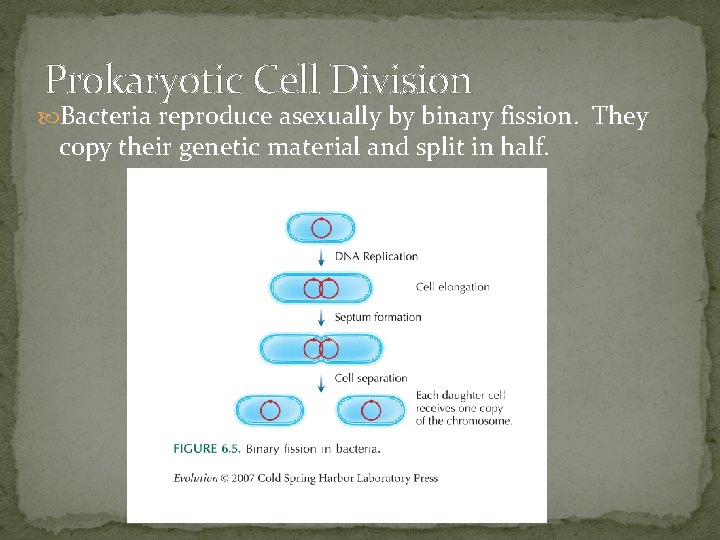
Prokaryotic Cell Division Bacteria reproduce asexually by binary fission. They copy their genetic material and split in half.
Eukaryotic Cell Division Chromosomes: condensed strands of DNA �Each species has a specific number � Ex. Homo sapien has 46 �Are only visible during mitosis � DNA is usually found as thin, uncoiled chromatin
Why do We Need Mitosis? Mitosis is asexual: Meaning daughter cells are identical to parent cells. Source of new cells when a multicellular organism grows and develops. Without mitosis no living organism would grow and develop!!
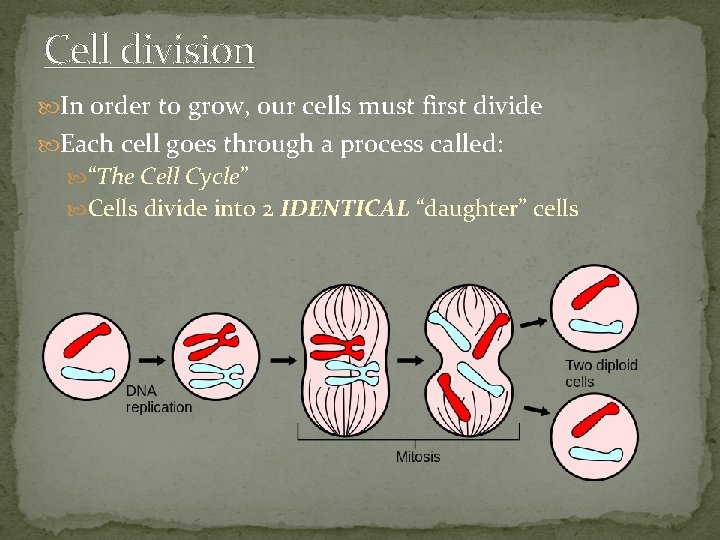
Cell division In order to grow, our cells must first divide Each cell goes through a process called: “The Cell Cycle” Cells divide into 2 IDENTICAL “daughter” cells
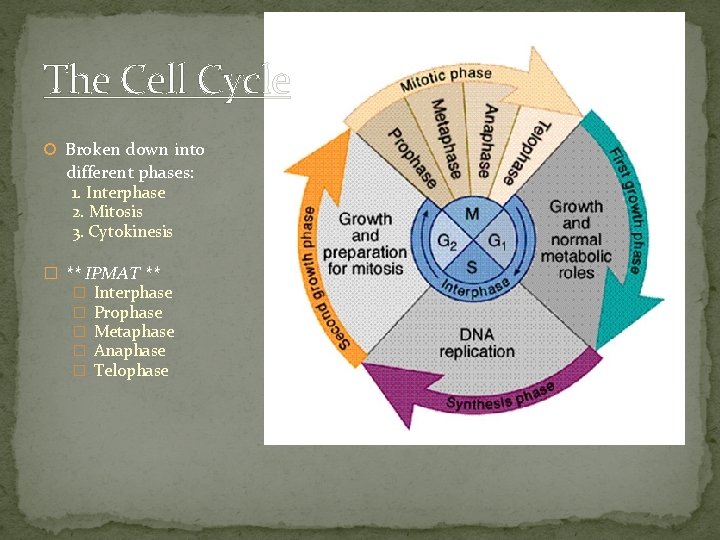
The Cell Cycle Broken down into different phases: 1. Interphase 2. Mitosis 3. Cytokinesis � ** IPMAT ** � � � Interphase Prophase Metaphase Anaphase Telophase
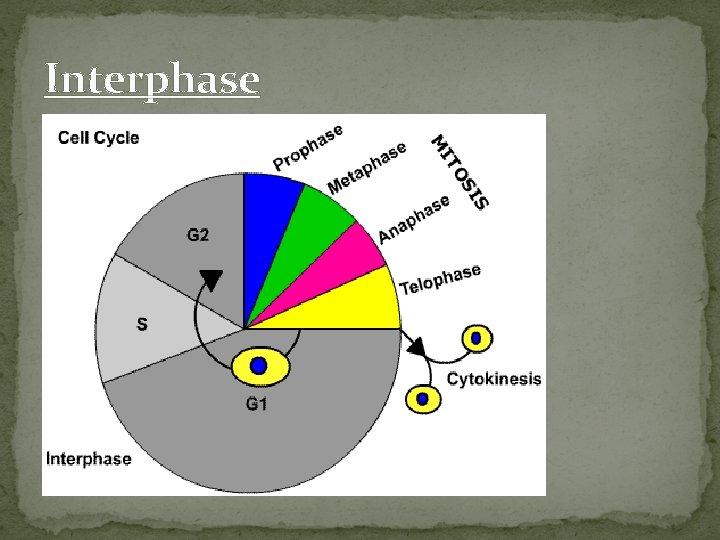
Interphase Cells grow and mature in this phase (Everyday function of a cell) -Broken down into 3 parts: -G 1 phase (Growth 1) -S phase (DNA Replication from 46 to 92 chromosomes in humans!) -G 2 phase (Growth 2)
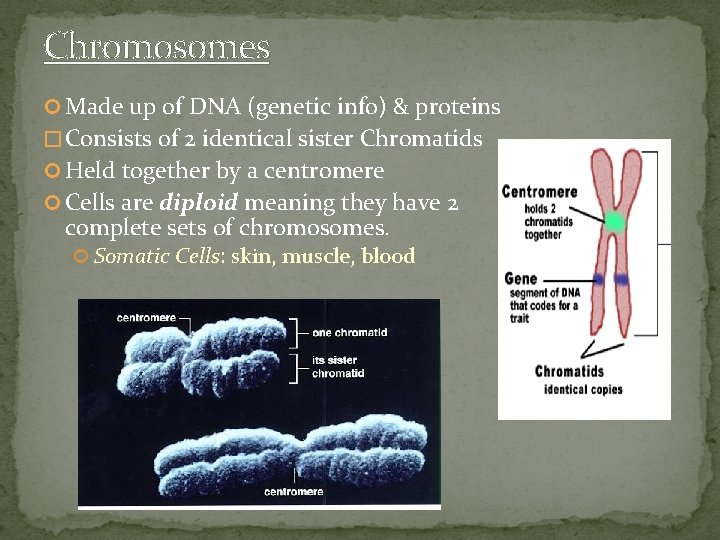
Chromosomes Made up of DNA (genetic info) & proteins � Consists of 2 identical sister Chromatids Held together by a centromere Cells are diploid meaning they have 2 complete sets of chromosomes. Somatic Cells: skin, muscle, blood
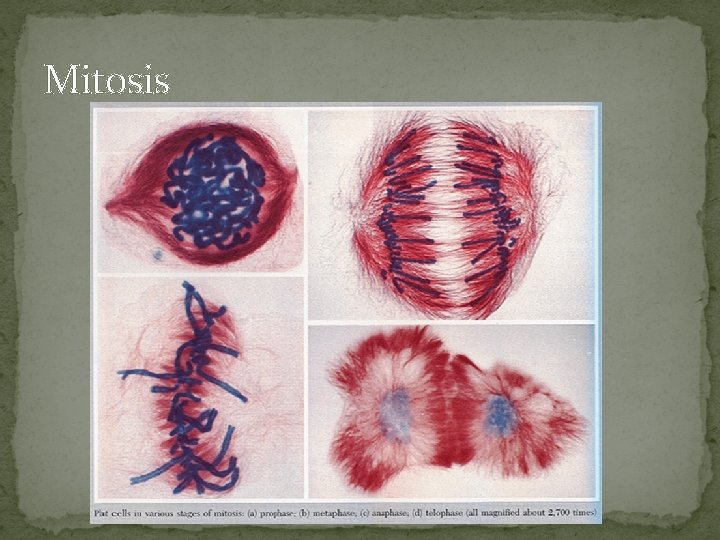
Mitosis
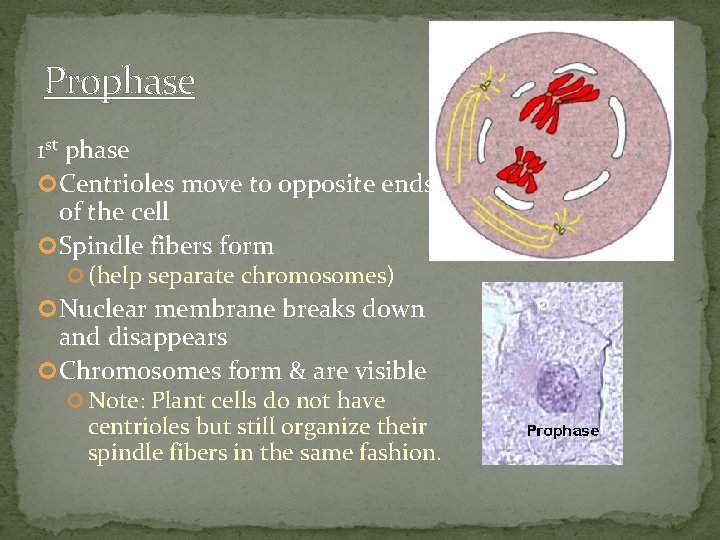
Prophase 1 st phase Centrioles move to opposite ends of the cell Spindle fibers form (help separate chromosomes) Nuclear membrane breaks down and disappears Chromosomes form & are visible Note: Plant cells do not have centrioles but still organize their spindle fibers in the same fashion.
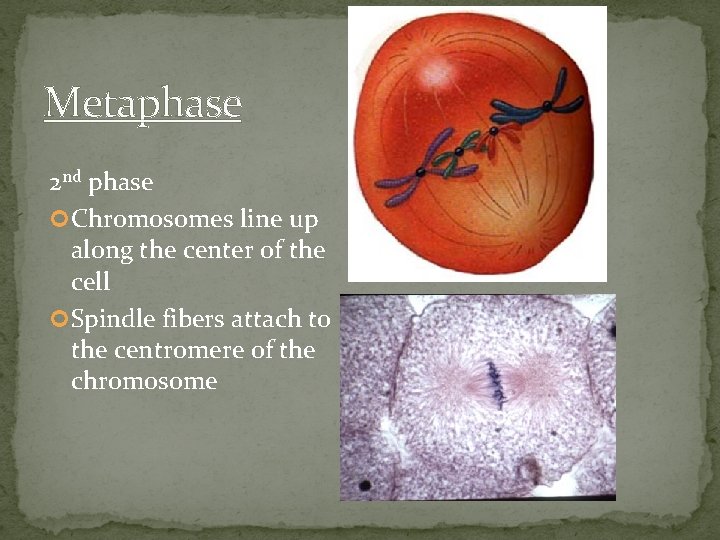
Metaphase 2 nd phase Chromosomes line up along the center of the cell Spindle fibers attach to the centromere of the chromosome
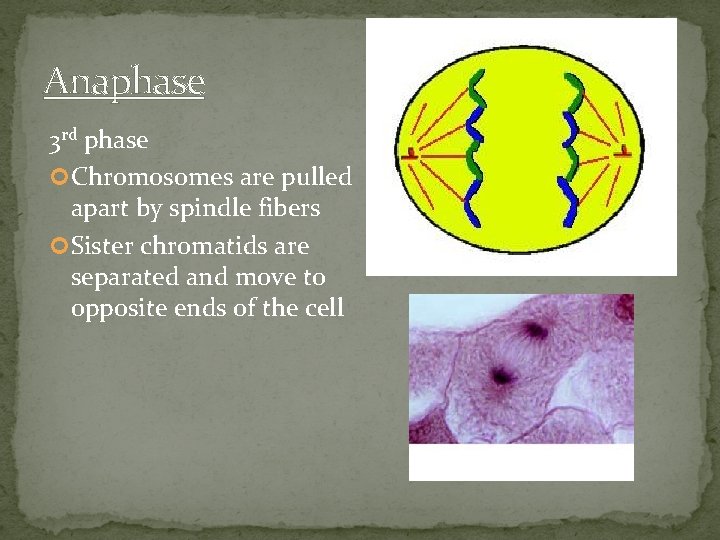
Anaphase 3 rd phase Chromosomes are pulled apart by spindle fibers Sister chromatids are separated and move to opposite ends of the cell
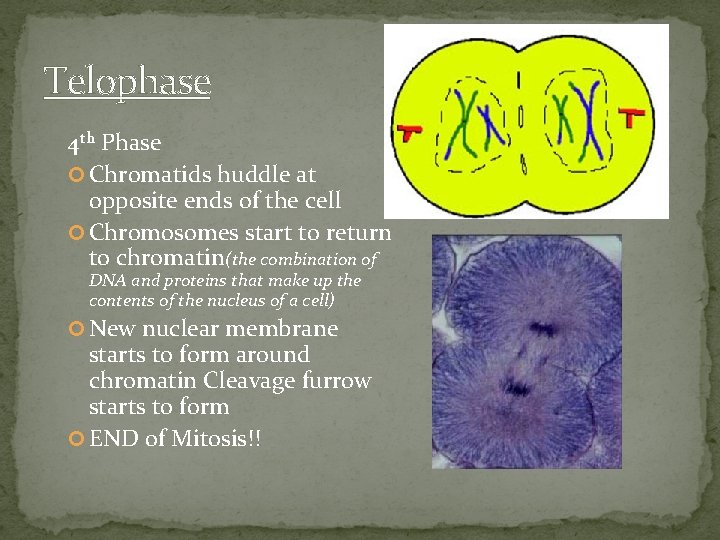
Telophase 4 th Phase Chromatids huddle at opposite ends of the cell Chromosomes start to return to chromatin(the combination of DNA and proteins that make up the contents of the nucleus of a cell) New nuclear membrane starts to form around chromatin Cleavage furrow starts to form END of Mitosis!!