
CELL DIVISION Cell Division What would happen if
- Slides: 25
CELL DIVISION
Cell Division What would happen if cells split in two with any preparation? Would the two new cells survive? NO! Every cell must first copy its genetic information before it can divide, so each new daughter cell will get one complete copy of genetic information
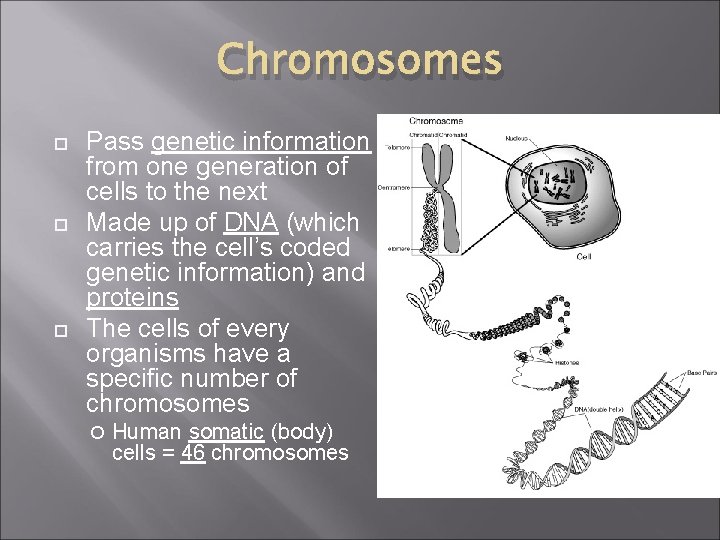
Chromosomes Pass genetic information from one generation of cells to the next Made up of DNA (which carries the cell’s coded genetic information) and proteins The cells of every organisms have a specific number of chromosomes Human somatic (body) cells = 46 chromosomes
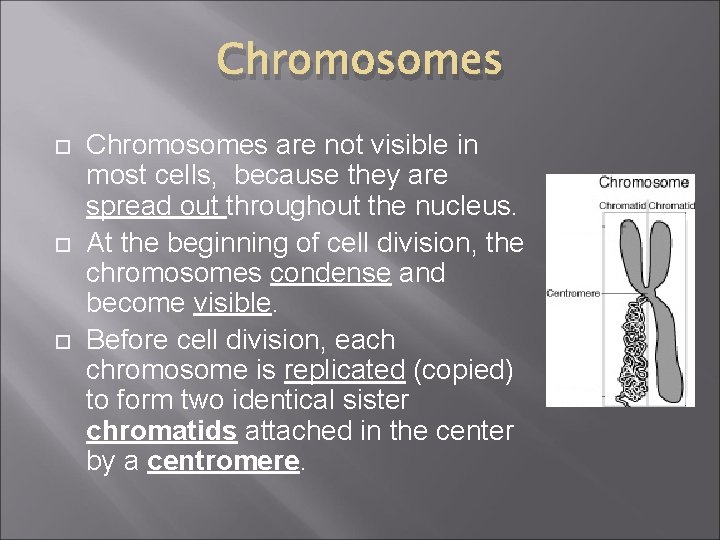
Chromosomes Chromosomes are not visible in most cells, because they are spread out throughout the nucleus. At the beginning of cell division, the chromosomes condense and become visible. Before cell division, each chromosome is replicated (copied) to form two identical sister chromatids attached in the center by a centromere.
Section 10 -2 Interest Grabber Cell Cycle The cell cycle represents recurring events that take place in the period of time from the beginning of one cell division to the beginning of the next. In addition to cell division, the cell cycle includes periods when the cell is growing and actively producing materials it needs for the next division. 1. Why is the cell cycle called a cycle? 2. Why do you think that it is important for a cell to grow in size during its cell cycle? 3. What might happen to a cell if all events leading up to cell division took place as they should, but the cell did not divide? Go to Section:
The Cell Cycle The cell must go through a series of events to grow and divide. During the cell cycle, a cell grows, prepares for division, and divides to form two daughter cells, which each then begin the cycle again.
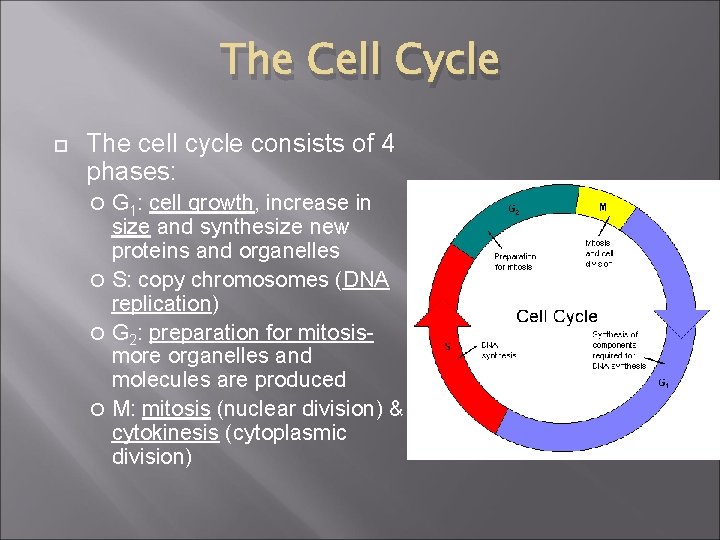
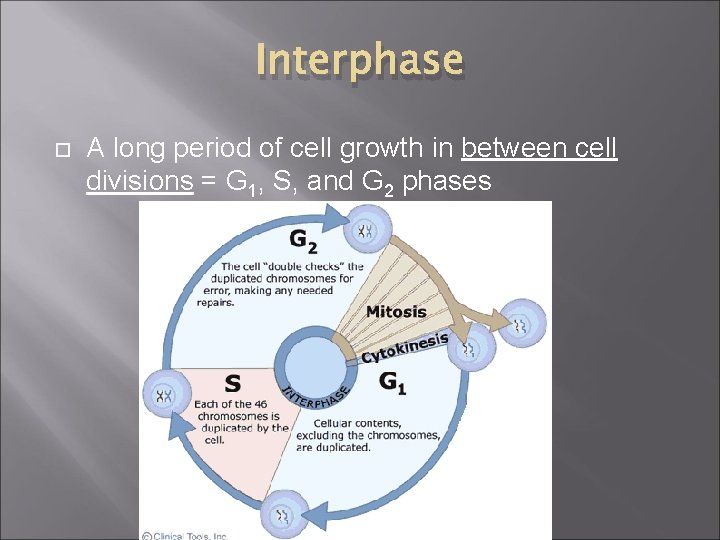
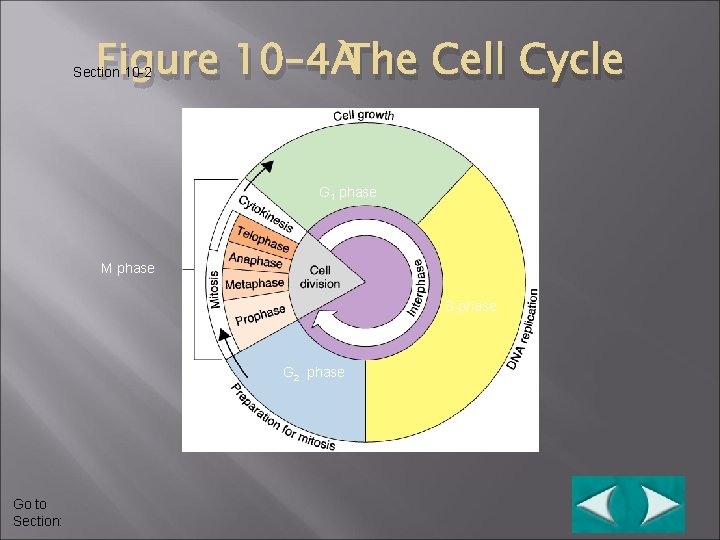
The Cell Cycle The cell cycle consists of 4 phases: G 1: cell growth, increase in size and synthesize new proteins and organelles S: copy chromosomes (DNA replication) G 2: preparation for mitosismore organelles and molecules are produced M: mitosis (nuclear division) & cytokinesis (cytoplasmic division)
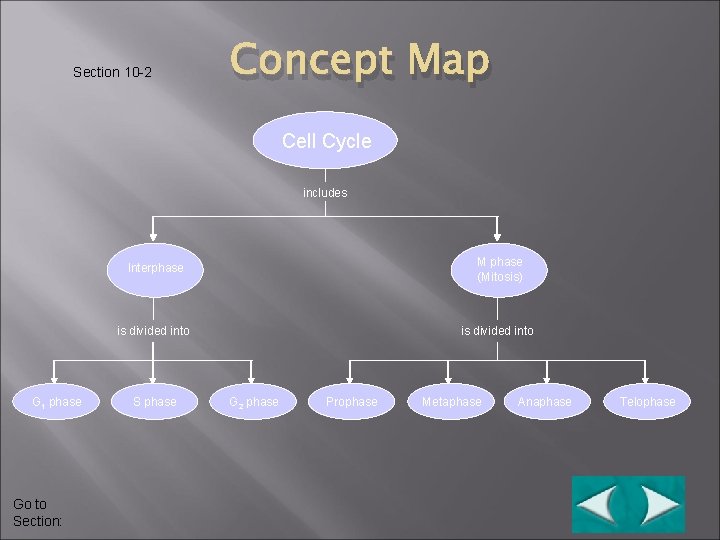
Section 10 -2 Concept Map Cell Cycle includes G 1 phase Go to Section: Interphase M phase (Mitosis) is divided into S phase G 2 phase Prophase Metaphase Anaphase Telophase
Interphase A long period of cell growth in between cell divisions = G 1, S, and G 2 phases
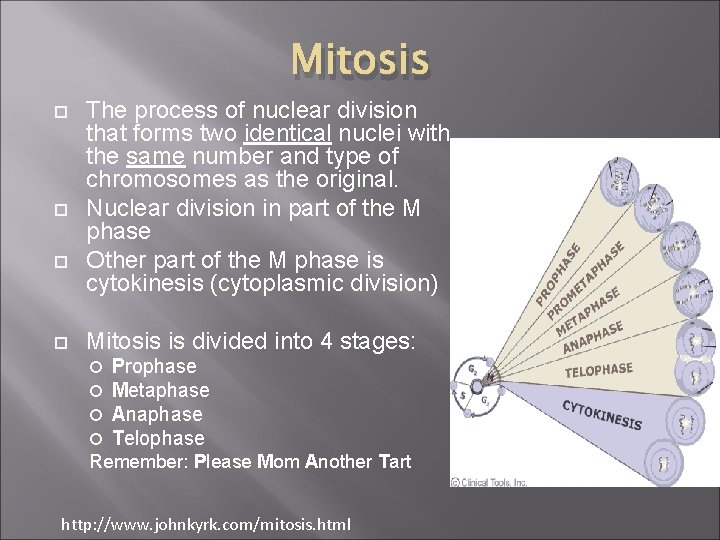
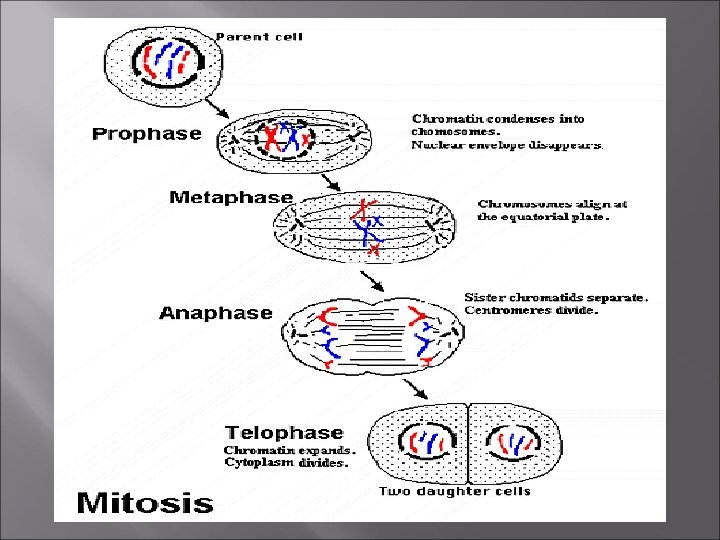
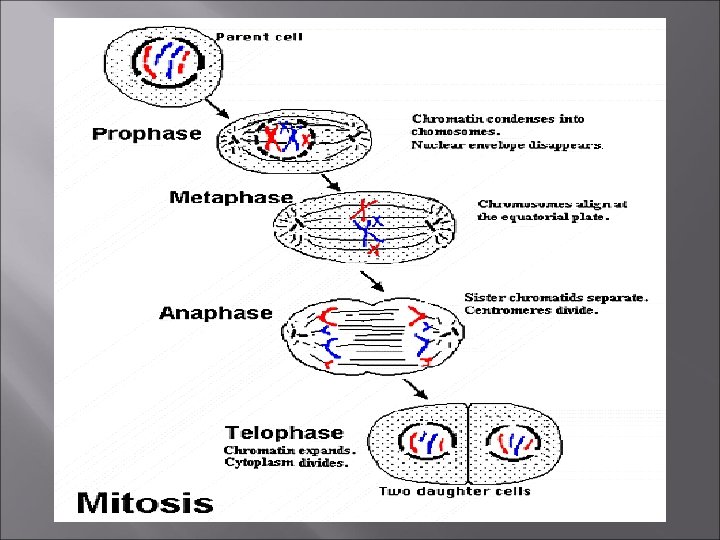
Mitosis The process of nuclear division that forms two identical nuclei with the same number and type of chromosomes as the original. Nuclear division in part of the M phase Other part of the M phase is cytokinesis (cytoplasmic division) Mitosis is divided into 4 stages: Prophase Metaphase Anaphase Telophase Remember: Please Mom Another Tart http: //www. johnkyrk. com/mitosis. html
Figure 10– 4 The Cell Cycle Section 10 -2 G 1 phase M phase S phase G 2 phase Go to Section:
MITOSIS
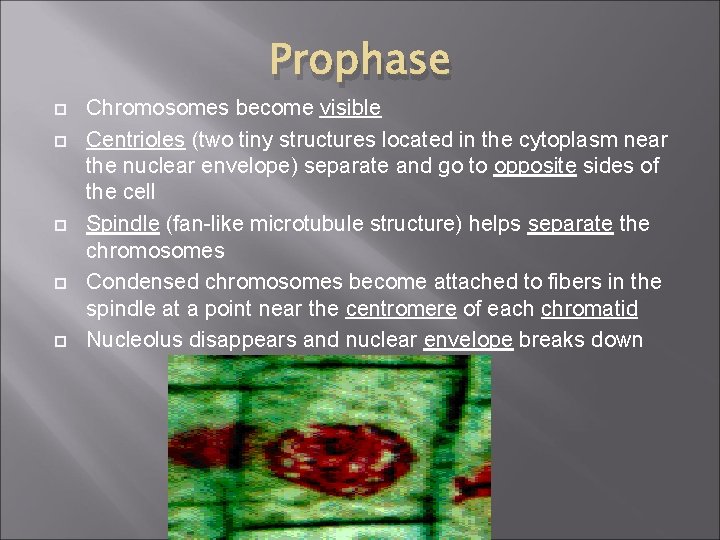
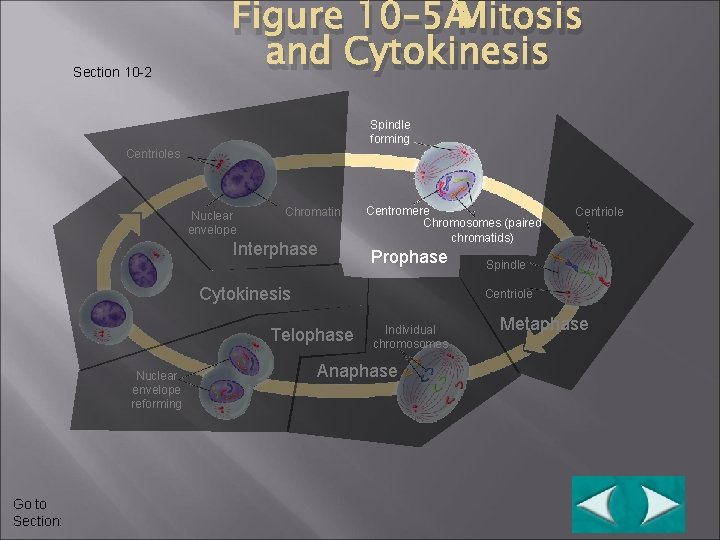
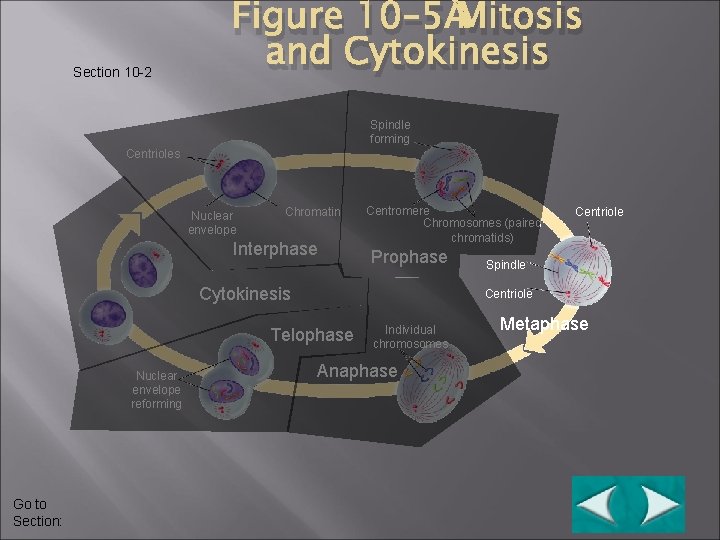
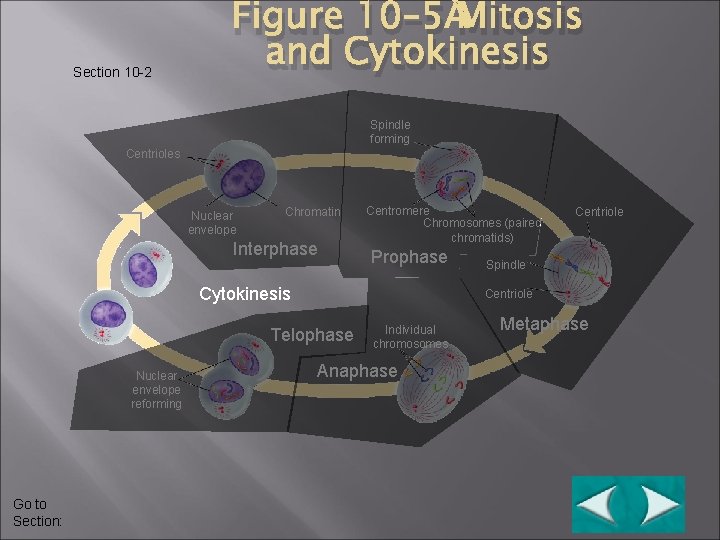
Prophase Chromosomes become visible Centrioles (two tiny structures located in the cytoplasm near the nuclear envelope) separate and go to opposite sides of the cell Spindle (fan-like microtubule structure) helps separate the chromosomes Condensed chromosomes become attached to fibers in the spindle at a point near the centromere of each chromatid Nucleolus disappears and nuclear envelope breaks down
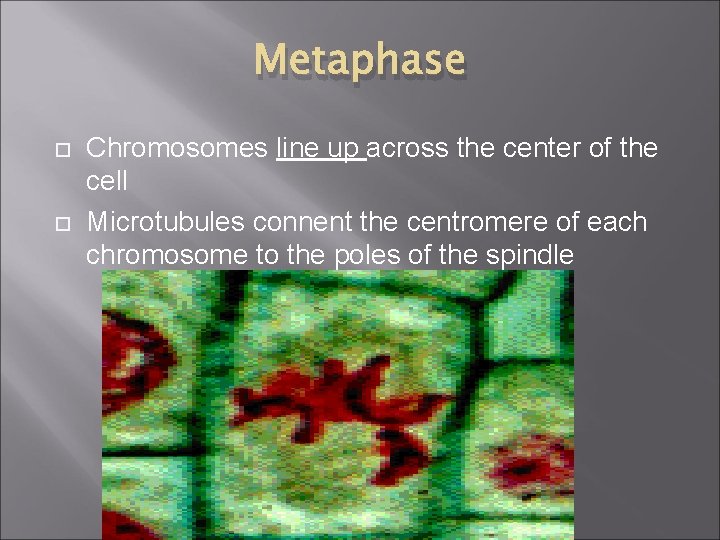
Metaphase Chromosomes line up across the center of the cell Microtubules connent the centromere of each chromosome to the poles of the spindle
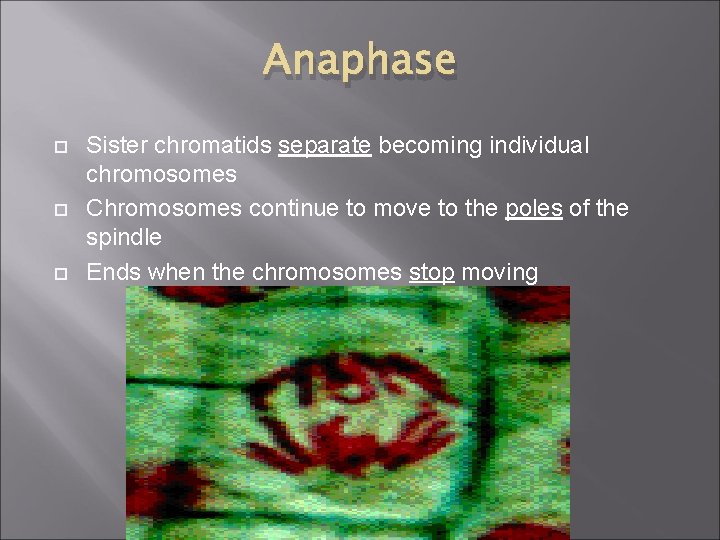
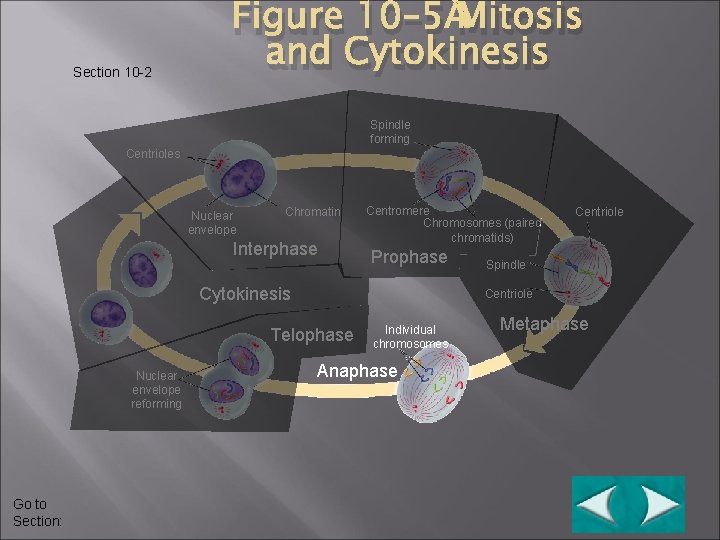
Anaphase Sister chromatids separate becoming individual chromosomes Chromosomes continue to move to the poles of the spindle Ends when the chromosomes stop moving
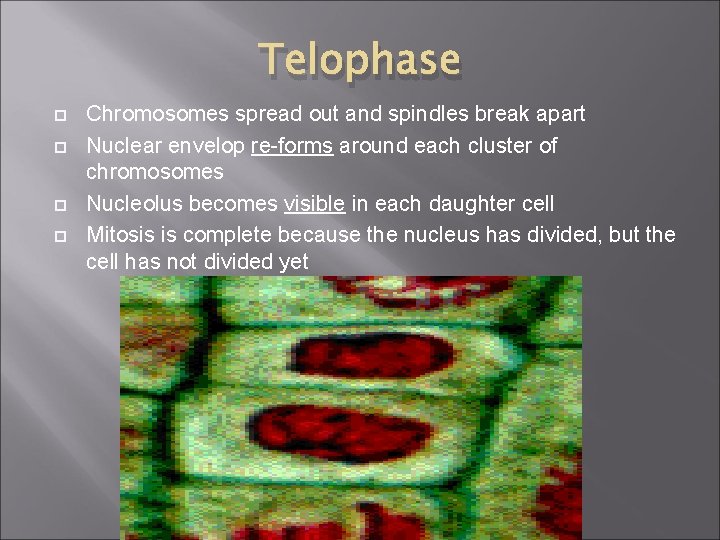
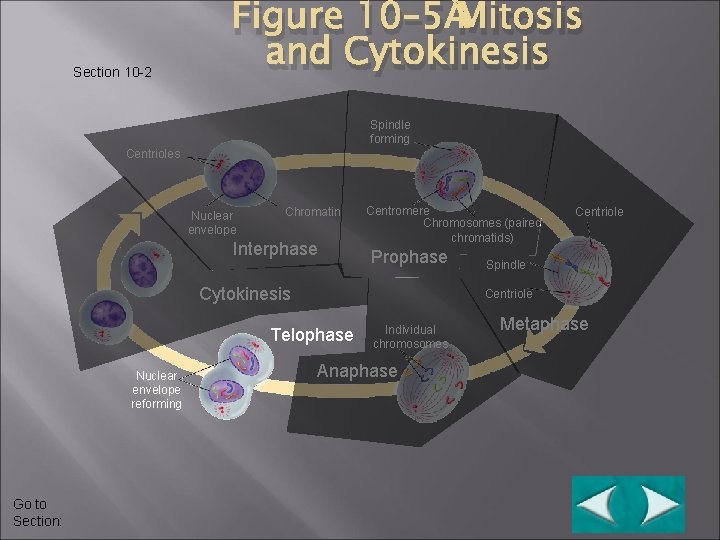
Telophase Chromosomes spread out and spindles break apart Nuclear envelop re-forms around each cluster of chromosomes Nucleolus becomes visible in each daughter cell Mitosis is complete because the nucleus has divided, but the cell has not divided yet
Cytokinesis The division of the cytoplasm In animal cells, the cell membrane pinches inward separating the cell into two equal parts In plant cells, a cell plate forms in between the two nuclei, separates the membrane and forms a cell wall
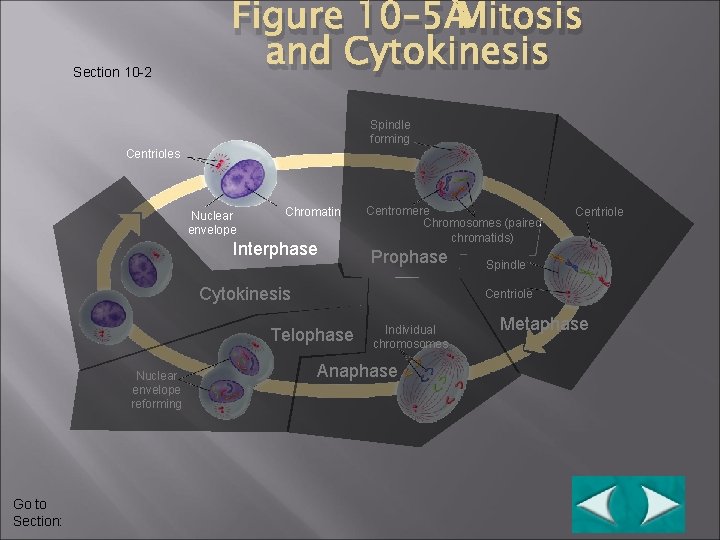
Section 10 -2 Figure 10– 5 Mitosis and Cytokinesis Spindle forming Centrioles Nuclear envelope Chromatin Interphase Centromere Chromosomes (paired chromatids) Prophase Cytokinesis Go to Section: Spindle Centriole Telophase Nuclear envelope reforming Centriole Individual chromosomes Anaphase Metaphase
Section 10 -2 Figure 10– 5 Mitosis and Cytokinesis Spindle forming Centrioles Nuclear envelope Chromatin Interphase Centromere Chromosomes (paired chromatids) Prophase Cytokinesis Go to Section: Spindle Centriole Telophase Nuclear envelope reforming Centriole Individual chromosomes Anaphase Metaphase
Section 10 -2 Figure 10– 5 Mitosis and Cytokinesis Spindle forming Centrioles Nuclear envelope Chromatin Interphase Centromere Chromosomes (paired chromatids) Prophase Cytokinesis Go to Section: Spindle Centriole Telophase Nuclear envelope reforming Centriole Individual chromosomes Anaphase Metaphase
Section 10 -2 Figure 10– 5 Mitosis and Cytokinesis Spindle forming Centrioles Nuclear envelope Chromatin Interphase Centromere Chromosomes (paired chromatids) Prophase Cytokinesis Go to Section: Spindle Centriole Telophase Nuclear envelope reforming Centriole Individual chromosomes Anaphase Metaphase
Section 10 -2 Figure 10– 5 Mitosis and Cytokinesis Spindle forming Centrioles Nuclear envelope Chromatin Interphase Centromere Chromosomes (paired chromatids) Prophase Cytokinesis Go to Section: Spindle Centriole Telophase Nuclear envelope reforming Centriole Individual chromosomes Anaphase Metaphase
Section 10 -2 Figure 10– 5 Mitosis and Cytokinesis Spindle forming Centrioles Nuclear envelope Chromatin Interphase Centromere Chromosomes (paired chromatids) Prophase Cytokinesis Go to Section: Spindle Centriole Telophase Nuclear envelope reforming Centriole Individual chromosomes Anaphase Metaphase