
Cell Division and Protein Synthesis Ch 3 Part
- Slides: 18
Cell Division and Protein Synthesis Ch. 3, Part 2
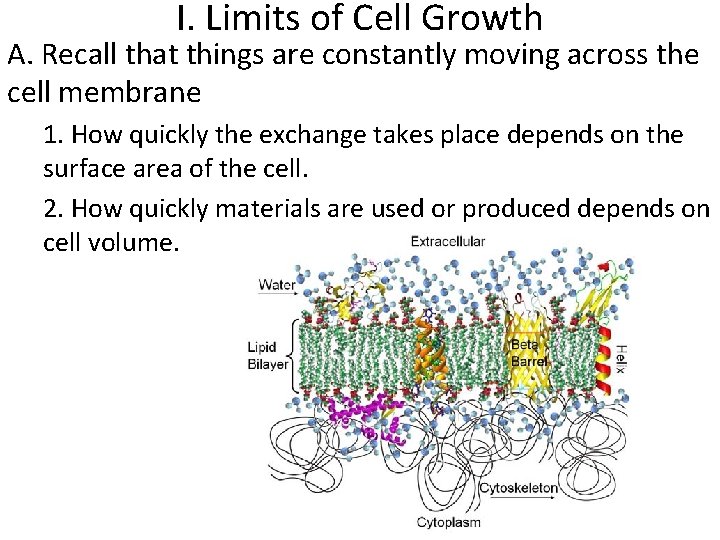
I. Limits of Cell Growth A. Recall that things are constantly moving across the cell membrane 1. How quickly the exchange takes place depends on the surface area of the cell. 2. How quickly materials are used or produced depends on cell volume.
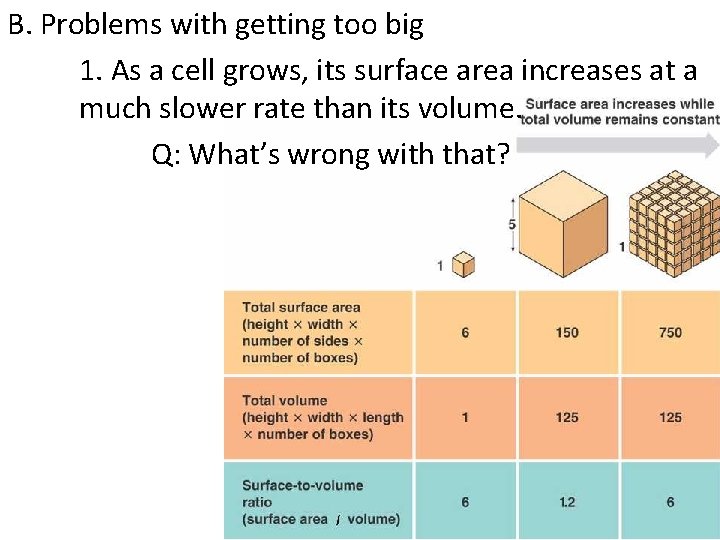
B. Problems with getting too big 1. As a cell grows, its surface area increases at a much slower rate than its volume. Q: What’s wrong with that?
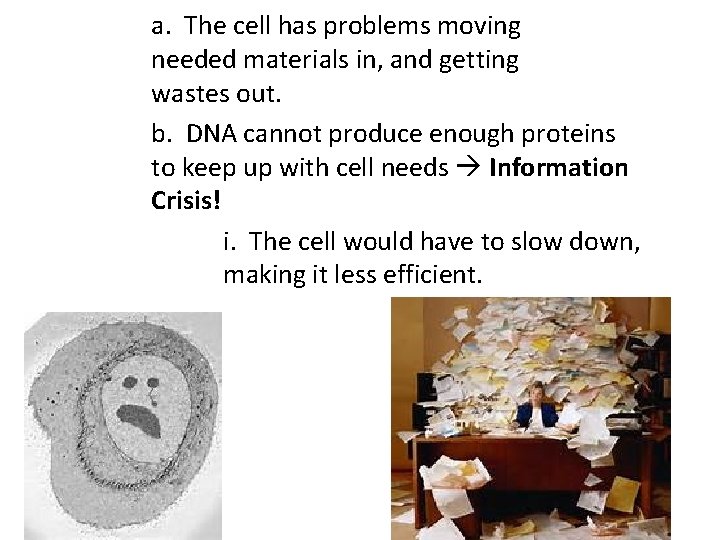
a. The cell has problems moving needed materials in, and getting wastes out. b. DNA cannot produce enough proteins to keep up with cell needs Information Crisis! i. The cell would have to slow down, making it less efficient.
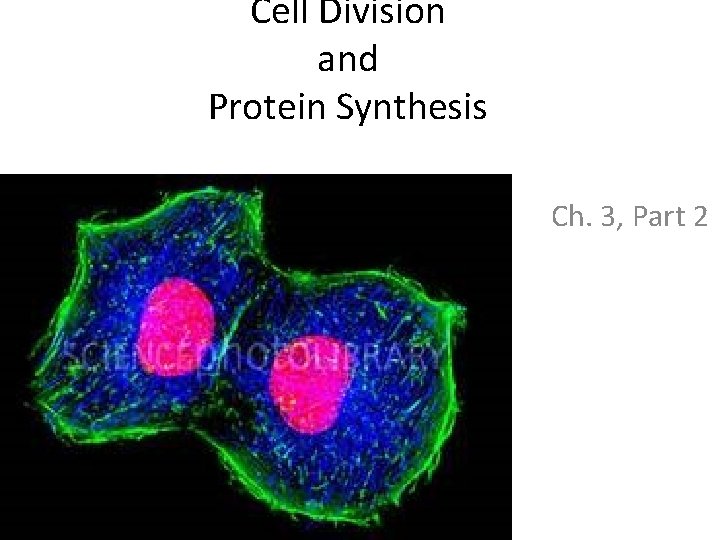
C. Solution to Cell Growth 1. Cell Division: The process by which the cell divides into 2 daughter cells. D. Controls on Cell Growth 1. Other cells 2. Limiting nutrients
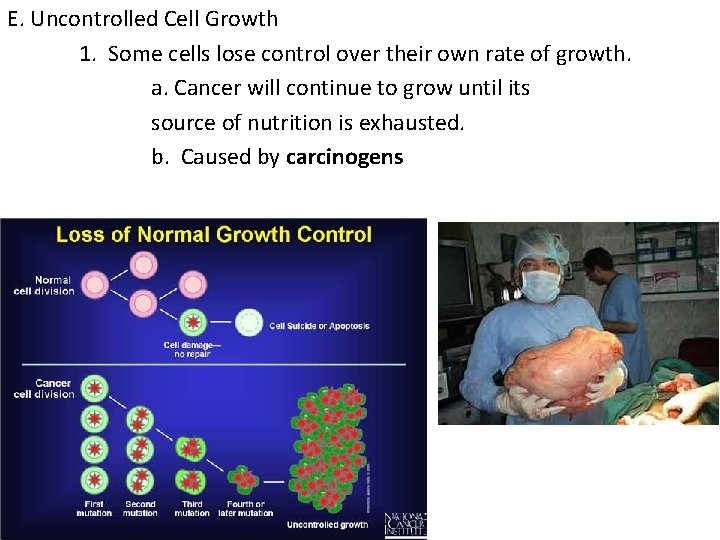
E. Uncontrolled Cell Growth 1. Some cells lose control over their own rate of growth. a. Cancer will continue to grow until its source of nutrition is exhausted. b. Caused by carcinogens
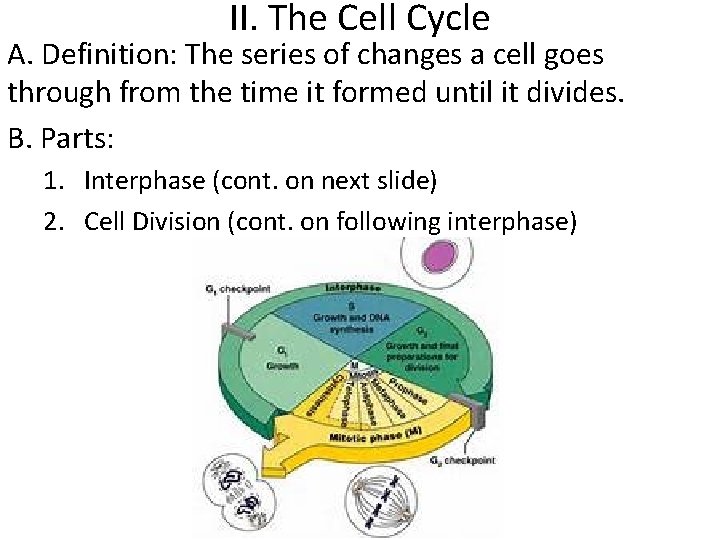
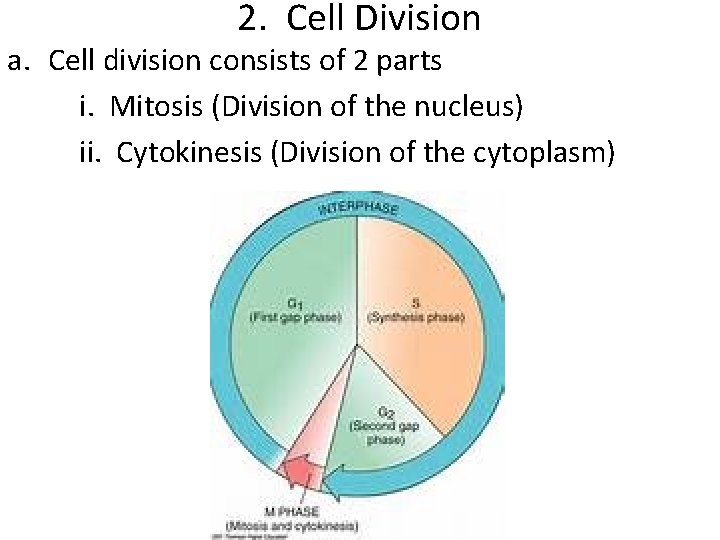
II. The Cell Cycle A. Definition: The series of changes a cell goes through from the time it formed until it divides. B. Parts: 1. Interphase (cont. on next slide) 2. Cell Division (cont. on following interphase)
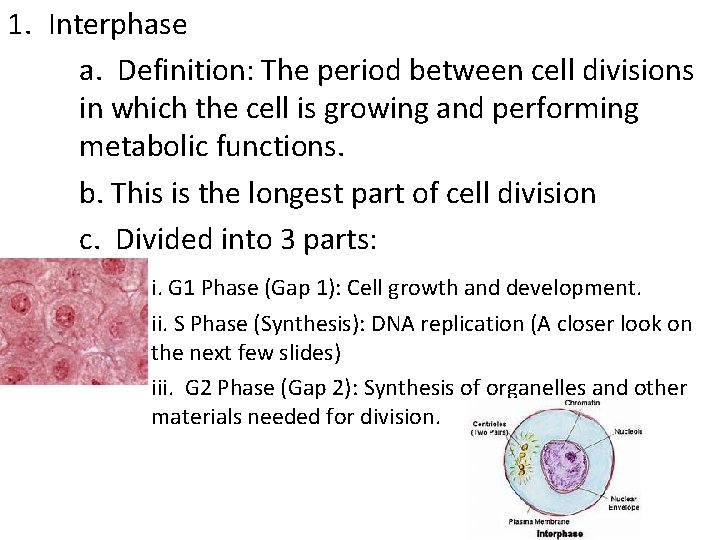
1. Interphase a. Definition: The period between cell divisions in which the cell is growing and performing metabolic functions. b. This is the longest part of cell division c. Divided into 3 parts: i. G 1 Phase (Gap 1): Cell growth and development. ii. S Phase (Synthesis): DNA replication (A closer look on the next few slides) iii. G 2 Phase (Gap 2): Synthesis of organelles and other materials needed for division.
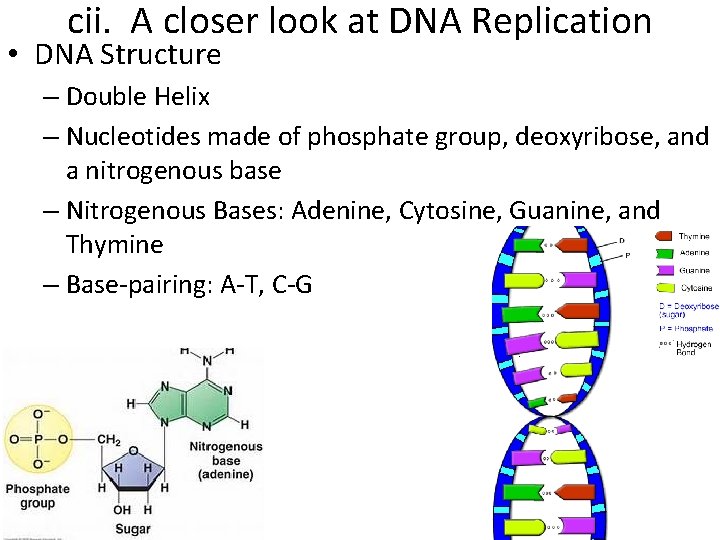
cii. A closer look at DNA Replication • DNA Structure – Double Helix – Nucleotides made of phosphate group, deoxyribose, and a nitrogenous base – Nitrogenous Bases: Adenine, Cytosine, Guanine, and Thymine – Base-pairing: A-T, C-G
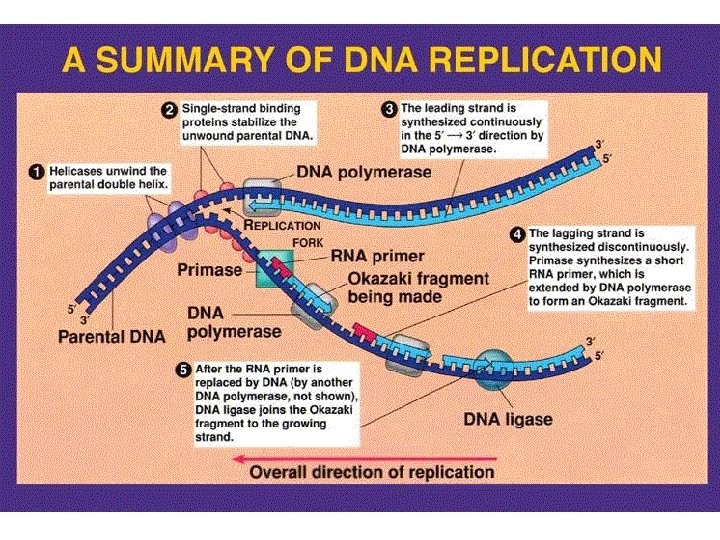
• DNA Replication – DNA helicase uncoils a DNA molecule and unzips it by pulling apart the nitrogenous bases. – DNA polymerase matches nucleotides to the parent “template. ” • DNA polymerase then proofreads its work to make sure it didn’t make any mistakes – Mistakes = Mutation – DNA ligase fuses everything back together. – In the end, there are 2 DNA molecules produced from one original. • Each has ½ of the original molecule.
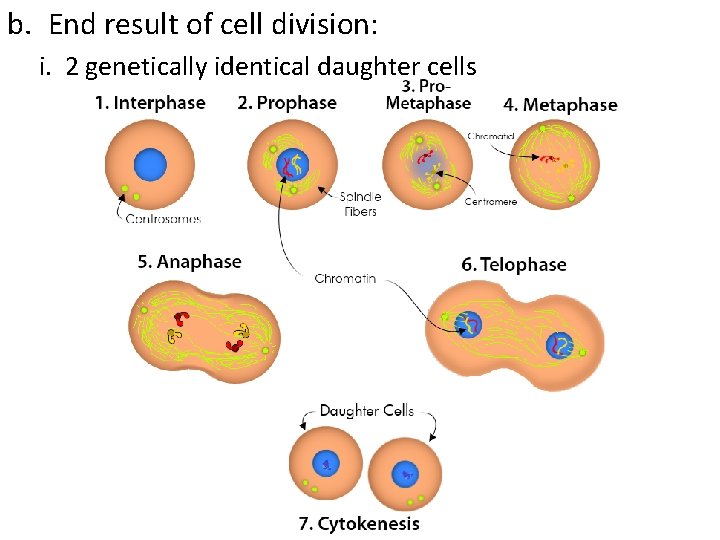
2. Cell Division a. Cell division consists of 2 parts i. Mitosis (Division of the nucleus) ii. Cytokinesis (Division of the cytoplasm)
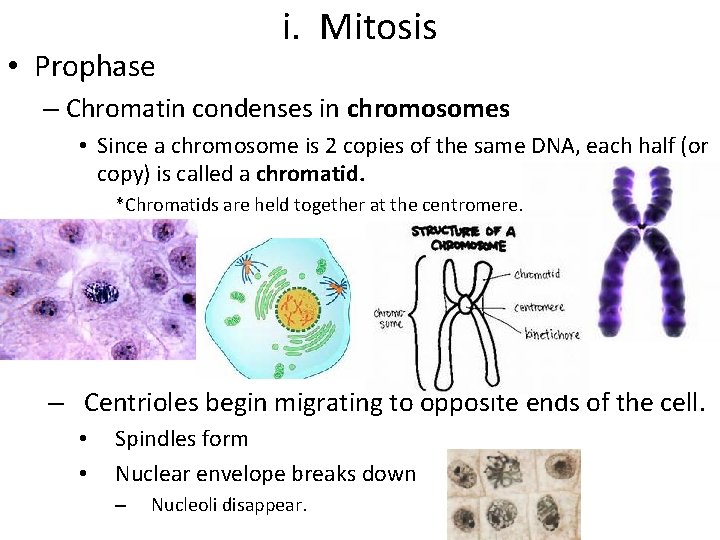
• Prophase i. Mitosis – Chromatin condenses in chromosomes • Since a chromosome is 2 copies of the same DNA, each half (or copy) is called a chromatid. *Chromatids are held together at the centromere. – Centrioles begin migrating to opposite ends of the cell. • • Spindles form Nuclear envelope breaks down – Nucleoli disappear.
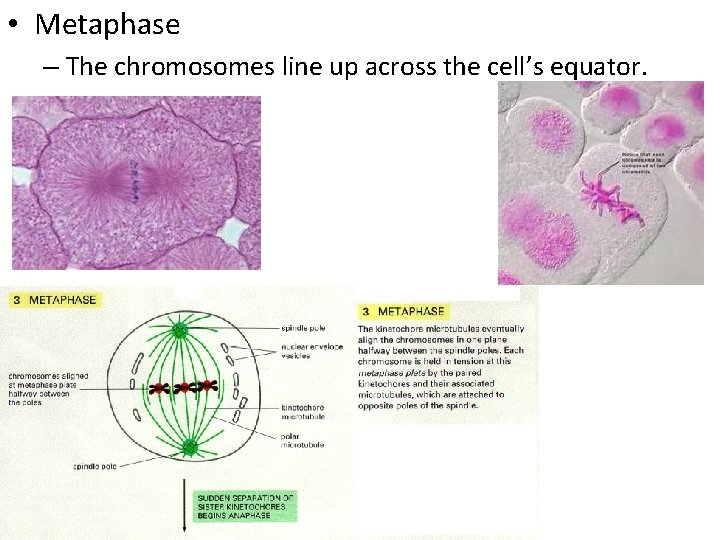
• Metaphase – The chromosomes line up across the cell’s equator.
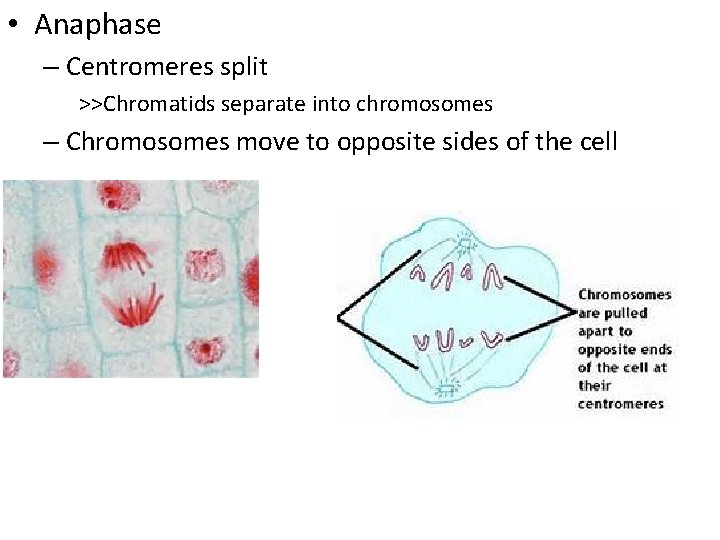
• Anaphase – Centromeres split >>Chromatids separate into chromosomes – Chromosomes move to opposite sides of the cell
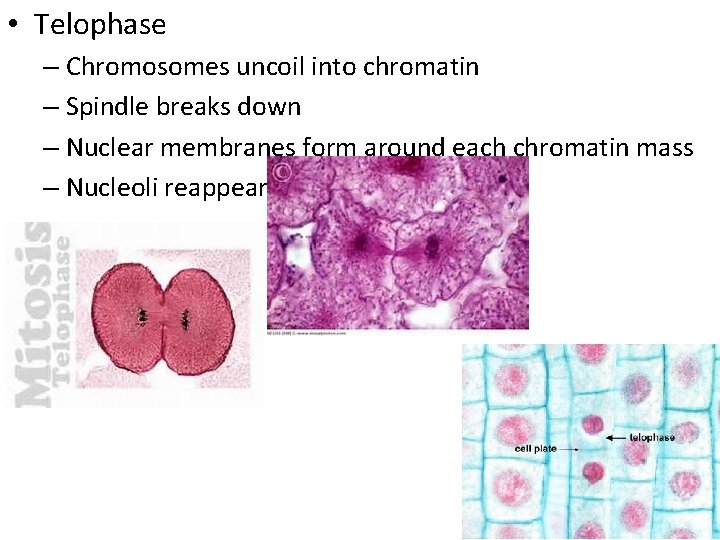
• Telophase – Chromosomes uncoil into chromatin – Spindle breaks down – Nuclear membranes form around each chromatin mass – Nucleoli reappear
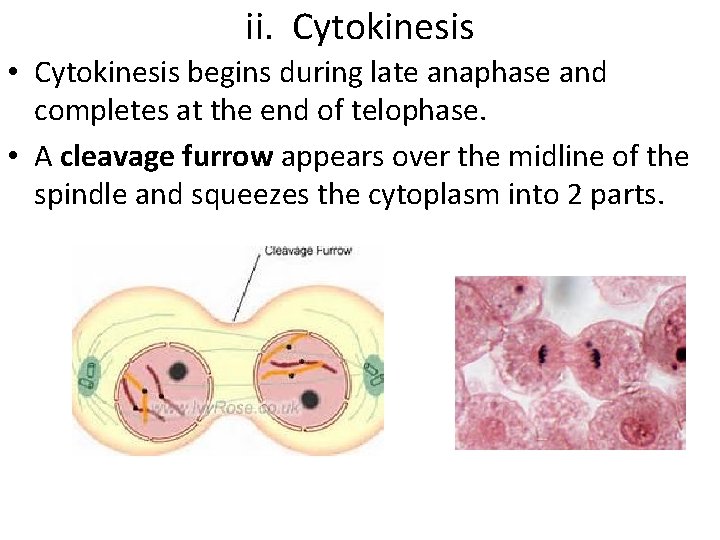
ii. Cytokinesis • Cytokinesis begins during late anaphase and completes at the end of telophase. • A cleavage furrow appears over the midline of the spindle and squeezes the cytoplasm into 2 parts.
b. End result of cell division: i. 2 genetically identical daughter cells