
Cell Division and Mitosis Chapter 9 Understanding Cell
- Slides: 29
Cell Division and Mitosis Chapter 9
Understanding Cell Division n What instructions are necessary for inheritance? How are those instructions duplicated for distribution into daughter cells? By what mechanisms are instructions parceled out to daughter cells?
Reproduction n n Parents produce a new generation of cells or multicelled individuals like themselves Parents must provide daughter cells with hereditary instructions, encoded in DNA, and enough metabolic machinery to start up their own operation
Division Mechanisms Eukaryotic organisms n Mitosis n Meiosis Prokaryotic organisms n Prokaryotic fission
Roles of Mitosis n n Multicelled organisms n Growth n Cell replacement Some protistans, fungi, plants, animals n Asexual reproduction
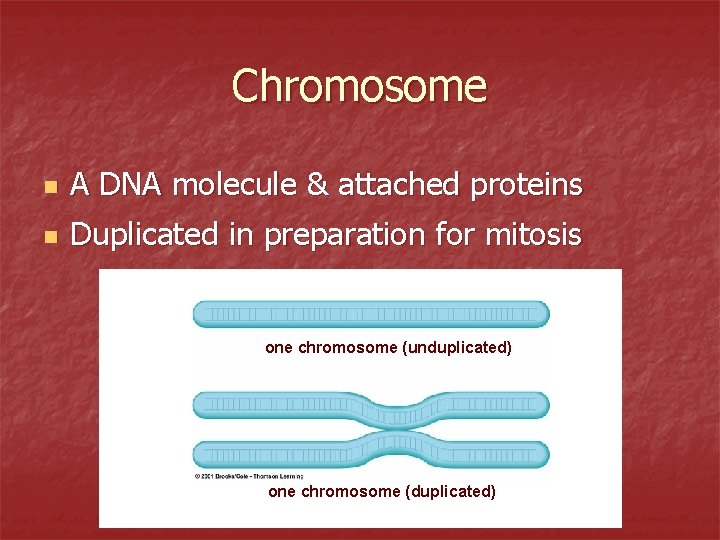
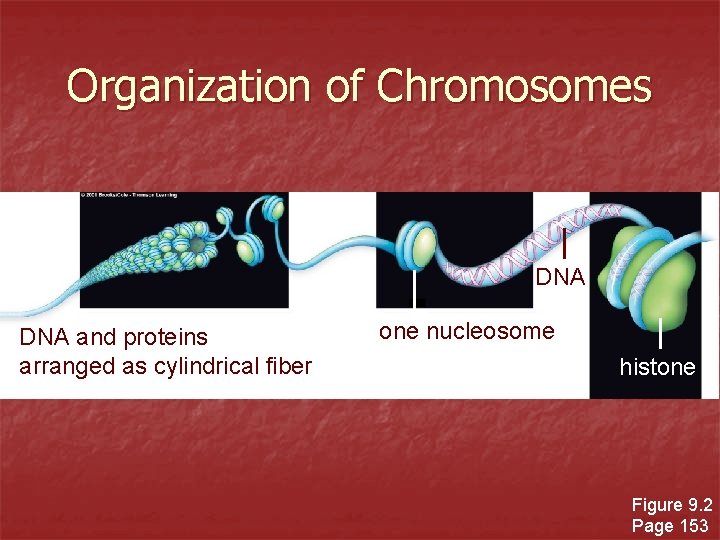
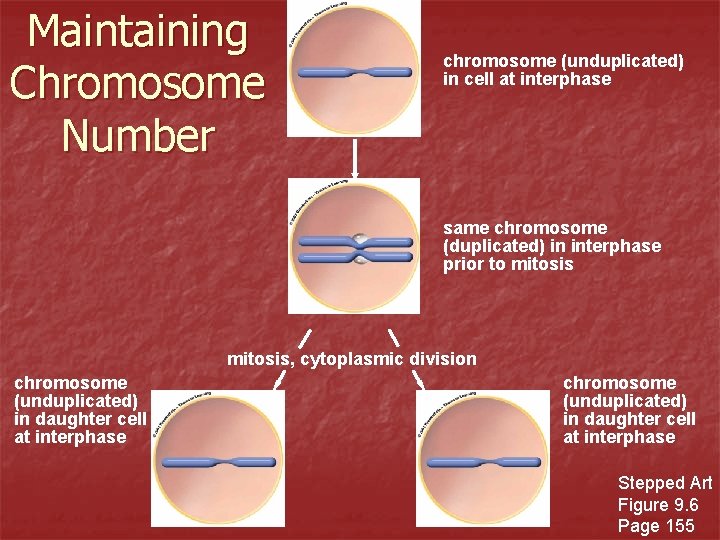
Chromosome n A DNA molecule & attached proteins n Duplicated in preparation for mitosis one chromosome (unduplicated) one chromosome (duplicated)
Chromosome Number n Sum total of chromosomes in a cell n Somatic cells n n Chromosome number is diploid (2 n) n Two of each type of chromosome Gametes n Chromosome number is haploid (n) n One of each chromosome type
Human Chromosome Number n Diploid chromosome number (n) = 46 n Two sets of 23 chromosomes each One set from father n One set from mother n n Mitosis produces cells with 46 chromosomes--two of each type
Organization of Chromosomes DNA and proteins arranged as cylindrical fiber one nucleosome histone Figure 9. 2 Page 153
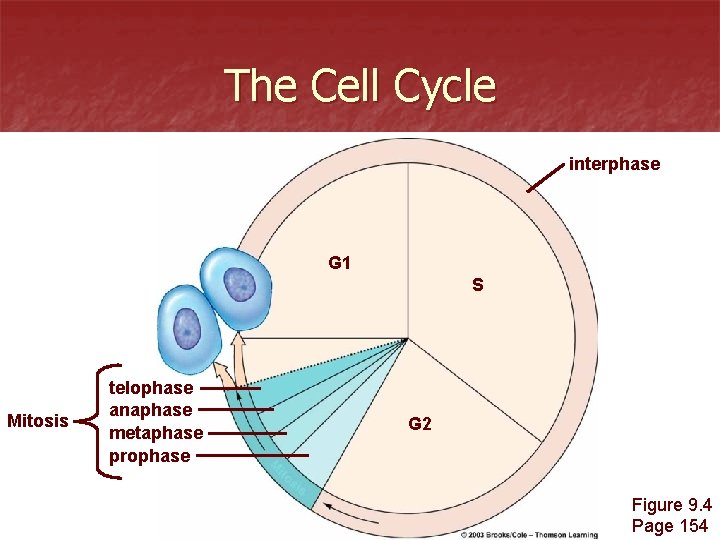
The Cell Cycle interphase G 1 S Mitosis telophase anaphase metaphase prophase G 2 Figure 9. 4 Page 154
Interphase n Usually longest part of the cycle n Cell increases in mass n Number of cytoplasmic components doubles n DNA is duplicated
Mitosis n Period of nuclear division n Usually followed by cytoplasmic division n Four stages: Prophase Metaphase Anaphase Telophase
Control of the Cycle n Once S begins, the cycle automatically runs through G 2 and mitosis n The cycle has a built-in molecular brake in G 1 n Cancer involves a loss of control over the cycle, malfunction of the “brakes”
Stopping the Cycle n n Some cells normally stop in interphase n Neurons in human brain n Arrested cells do not divide Adverse conditions can stop cycle n Nutrient-deprived amoebas get stuck in interphase
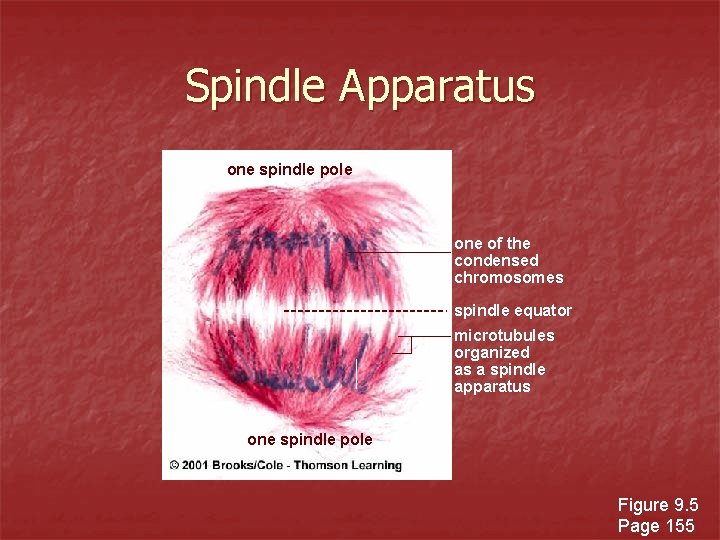
The Spindle Apparatus n Consists of two distinct sets of microtubules n n Each set extends from one of the cell poles n Two sets overlap at spindle equator Moves chromosomes during mitosis
Spindle Apparatus one spindle pole one of the condensed chromosomes spindle equator microtubules organized as a spindle apparatus one spindle pole Figure 9. 5 Page 155
Maintaining Chromosome Number chromosome (unduplicated) in cell at interphase same chromosome (duplicated) in interphase prior to mitosis, cytoplasmic division chromosome (unduplicated) in daughter cell at interphase Stepped Art Figure 9. 6 Page 155
Stages of Mitosis Prophase Metaphase Anaphase Telophase
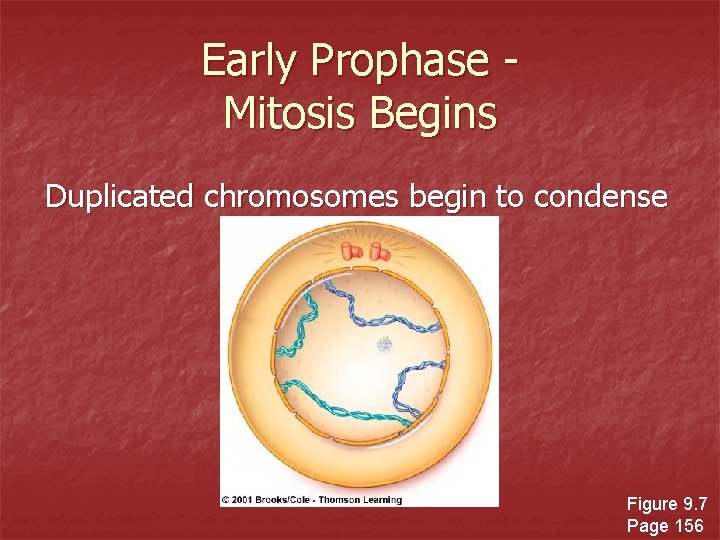
Early Prophase Mitosis Begins Duplicated chromosomes begin to condense Figure 9. 7 Page 156
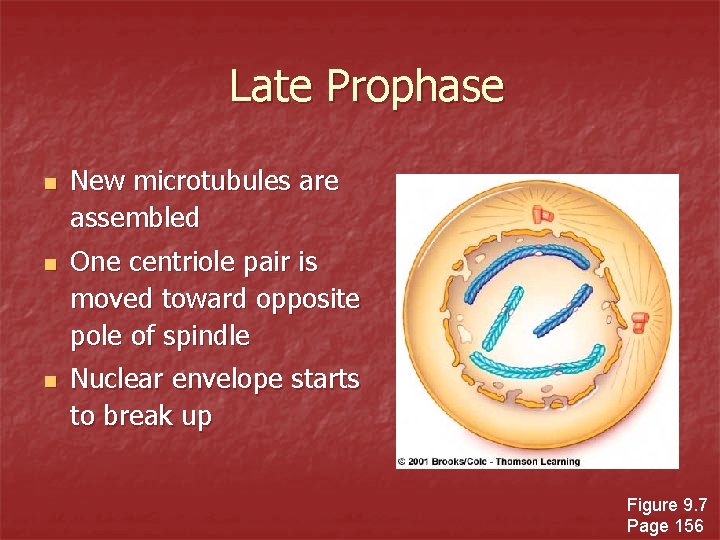
Late Prophase n n n New microtubules are assembled One centriole pair is moved toward opposite pole of spindle Nuclear envelope starts to break up Figure 9. 7 Page 156
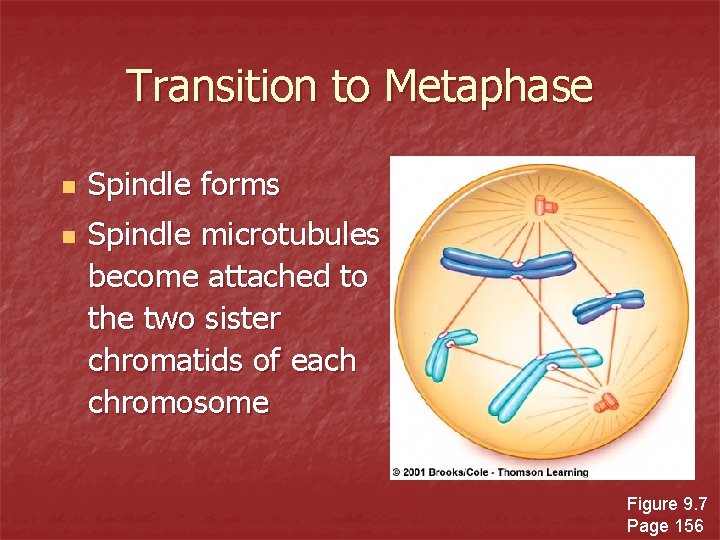
Transition to Metaphase n n Spindle forms Spindle microtubules become attached to the two sister chromatids of each chromosome Figure 9. 7 Page 156
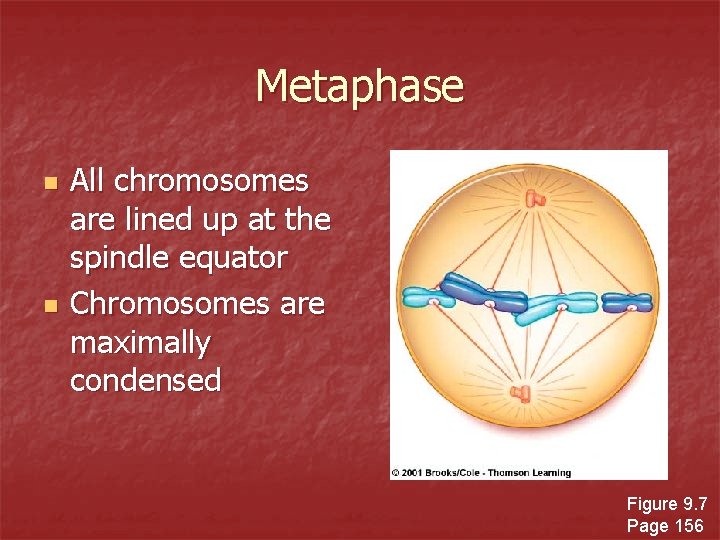
Metaphase n n All chromosomes are lined up at the spindle equator Chromosomes are maximally condensed Figure 9. 7 Page 156
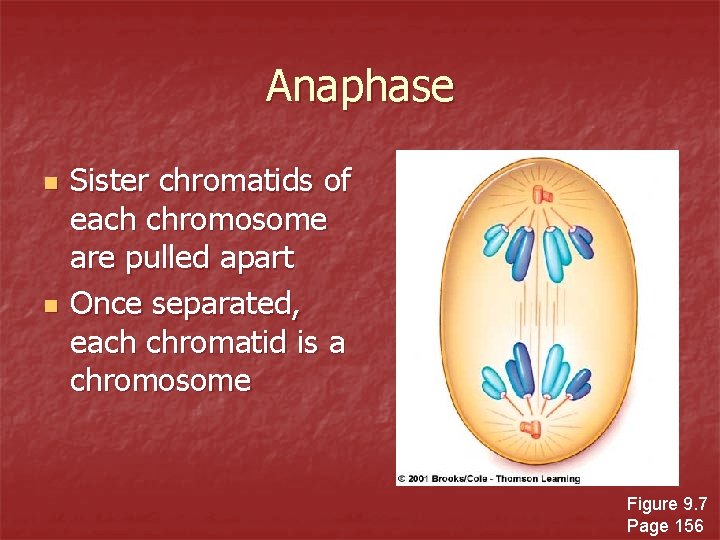
Anaphase n n Sister chromatids of each chromosome are pulled apart Once separated, each chromatid is a chromosome Figure 9. 7 Page 156
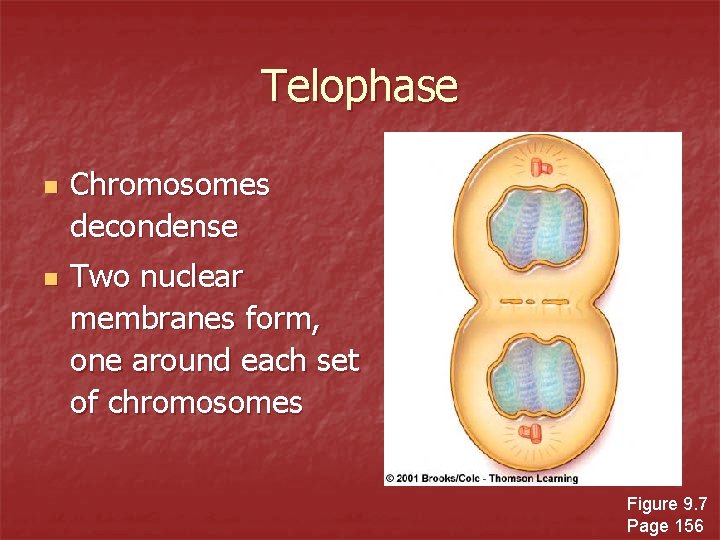
Telophase n n Chromosomes decondense Two nuclear membranes form, one around each set of chromosomes Figure 9. 7 Page 156
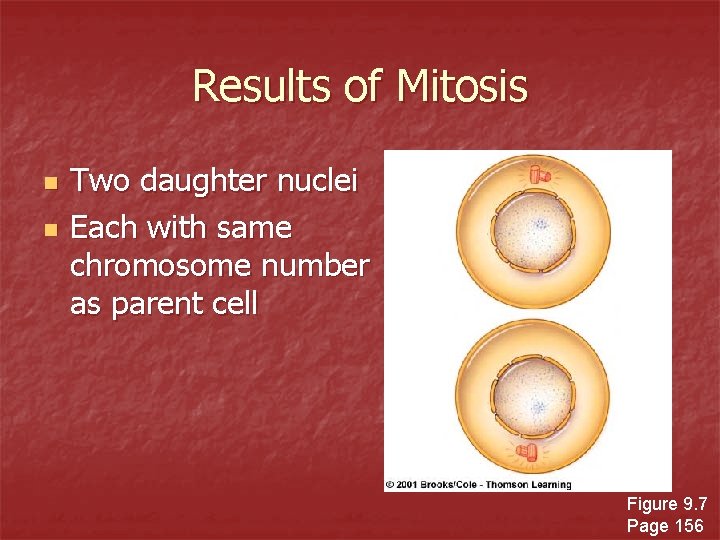
Results of Mitosis n n Two daughter nuclei Each with same chromosome number as parent cell Figure 9. 7 Page 156
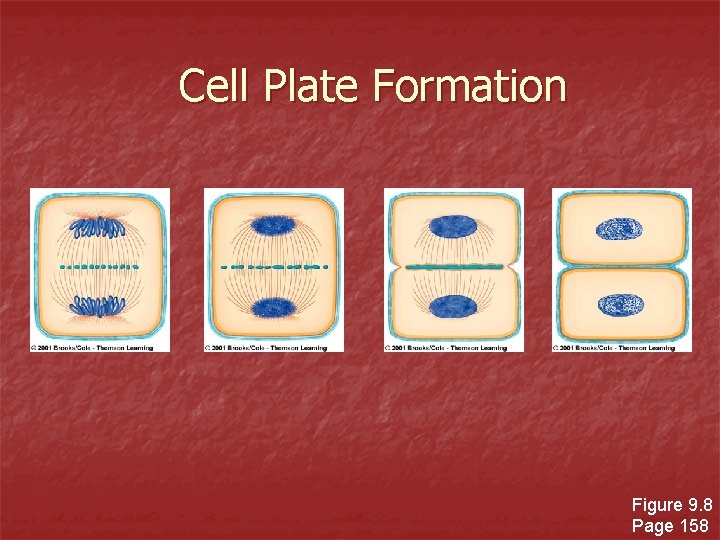
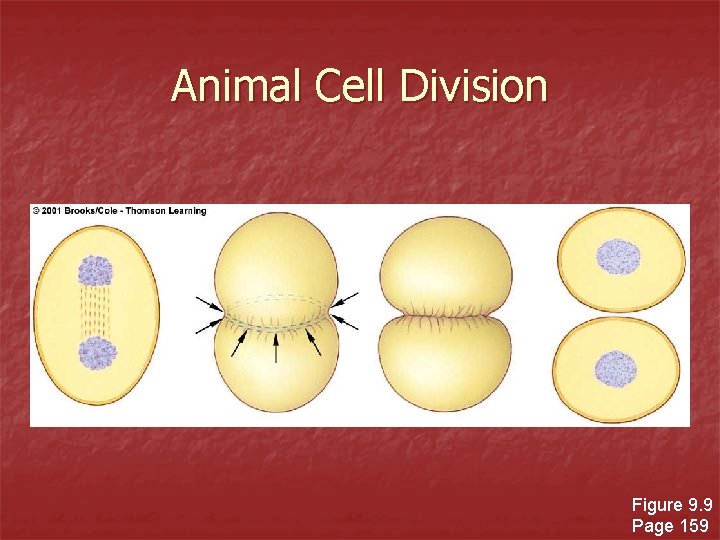
Cytoplasmic Division n Usually occurs between late anaphase and end of telophase n Two mechanisms n Cell plate formation (plants) n Cleavage (animals)
Cell Plate Formation Figure 9. 8 Page 158
Animal Cell Division Figure 9. 9 Page 159
He. La Cells n n n Line of human cancer cells that can be grown in culture Descendents of tumor cells from a woman named Henrietta Lacks died at 31, but her cells continue to live and divide in labs around the world