
Cell Diversity Types of Organisms Unicellular composed of


- Slides: 9
Cell Diversity
Types of Organisms Unicellular – composed of a single cell Multicellular – composed of many cells
Prokaryotic Cells Simple cells ◦ Single celled organisms ◦ Examples: bacteria and blue green algae No Nucleus No membrane bound organelles DNA Circular segment of DNA in cytoplasm
Eukaryotic Cells More complex ◦ Single celled (protist) ◦ Multicellular (protist, fungi, plant, aniaml) Well defined nucleus Membrane bound organelles DNA as chromosomes in the nucleus
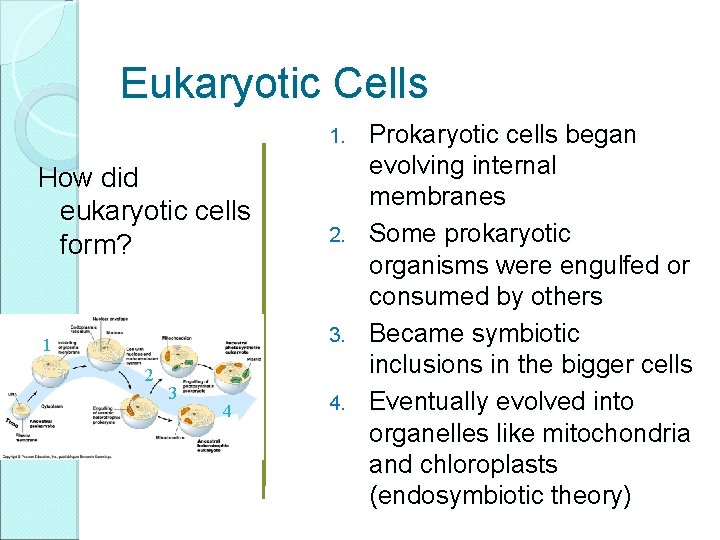
Eukaryotic Cells Prokaryotic cells began evolving internal membranes 2. Some prokaryotic organisms were engulfed or consumed by others 3. Became symbiotic inclusions in the bigger cells 4. Eventually evolved into organelles like mitochondria and chloroplasts (endosymbiotic theory) 1. How did eukaryotic cells form? 1 2 3 4
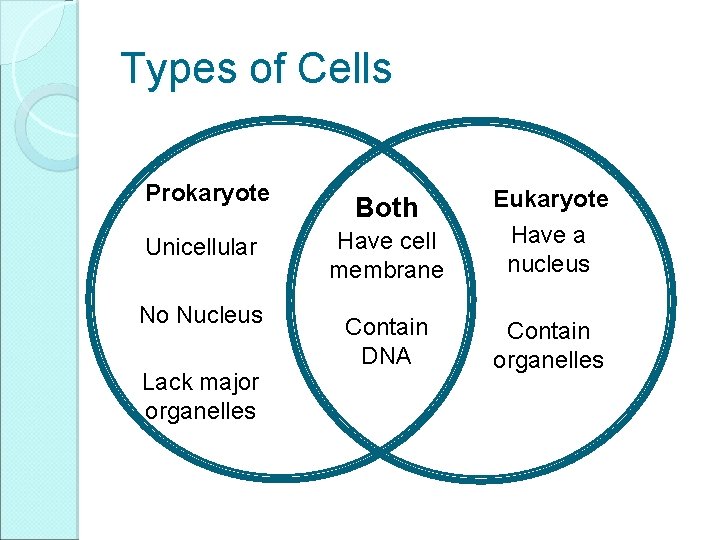
Types of Cells Prokaryote Unicellular No Nucleus Lack major organelles Have cell membrane Eukaryote Have a nucleus Contain DNA Contain organelles Both
http: //www. youtube. com/watch? v=gfz VWG 2 Dn. Q 4&feature=related
Cell Specialization Cell specialization – cells do different tasks
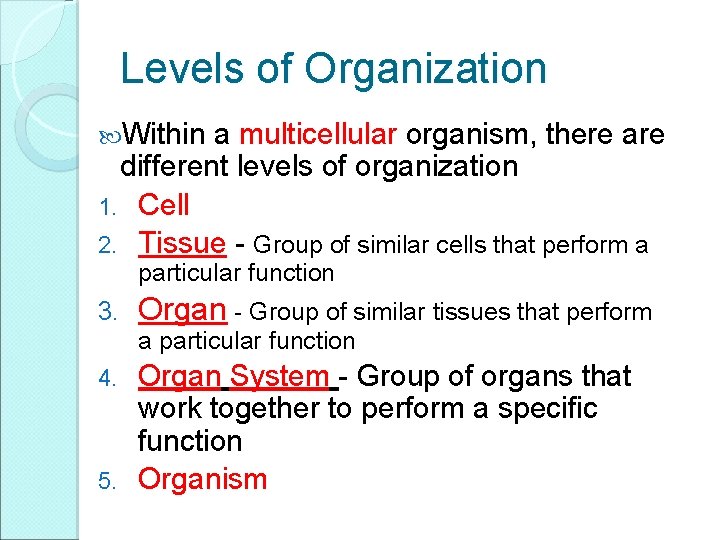
Levels of Organization Within a multicellular organism, there are different levels of organization 1. Cell 2. Tissue - Group of similar cells that perform a particular function 3. Organ - Group of similar tissues that perform a particular function Organ System - Group of organs that work together to perform a specific function 5. Organism 4.