
CELL DISCOVERY AND THEORY 7 1 History of
- Slides: 20
CELL DISCOVERY AND THEORY 7. 1
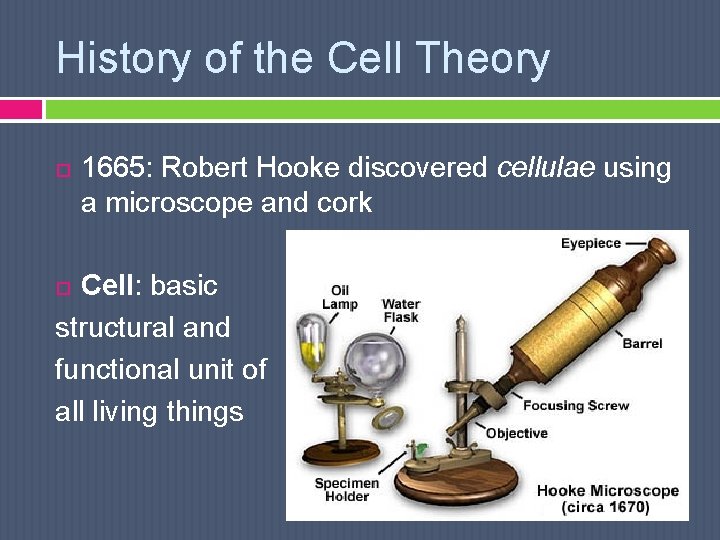
History of the Cell Theory 1665: Robert Hooke discovered cellulae using a microscope and cork Cell: basic structural and functional unit of all living things
The Cell Theory fundamental idea of modern biology Consists of 3 principles: � All living organisms composed of 1+ cells � Cells are basic unit of structure/organization of all living organisms � Cells arise only from previously existing cells, with cells passing copies of their genetic material on to their daughter cells
Microscope Technology As magnification and resolution increases, so do the details we can see!
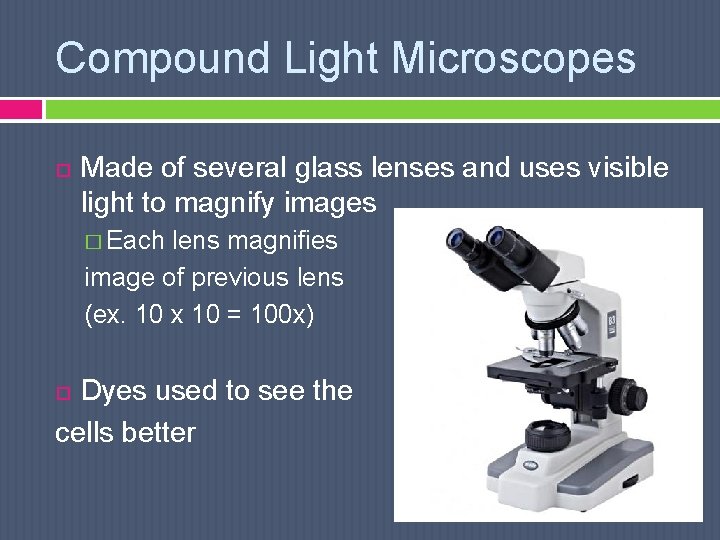
Compound Light Microscopes Made of several glass lenses and uses visible light to magnify images � Each lens magnifies image of previous lens (ex. 10 x 10 = 100 x) Dyes used to see the cells better
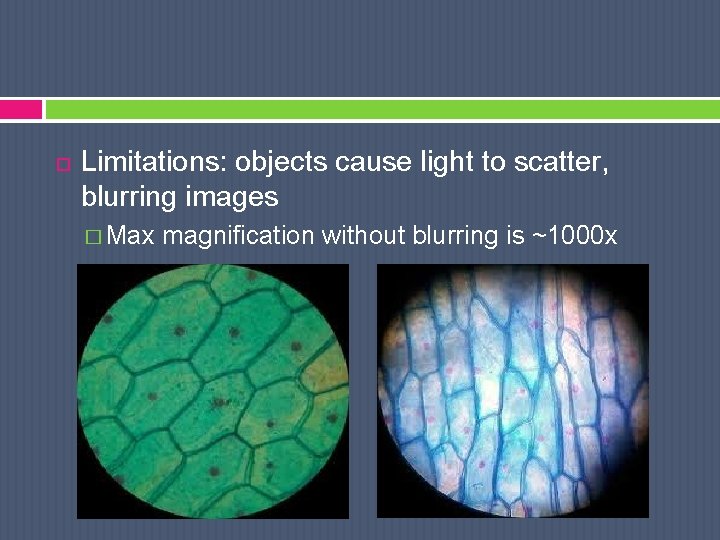
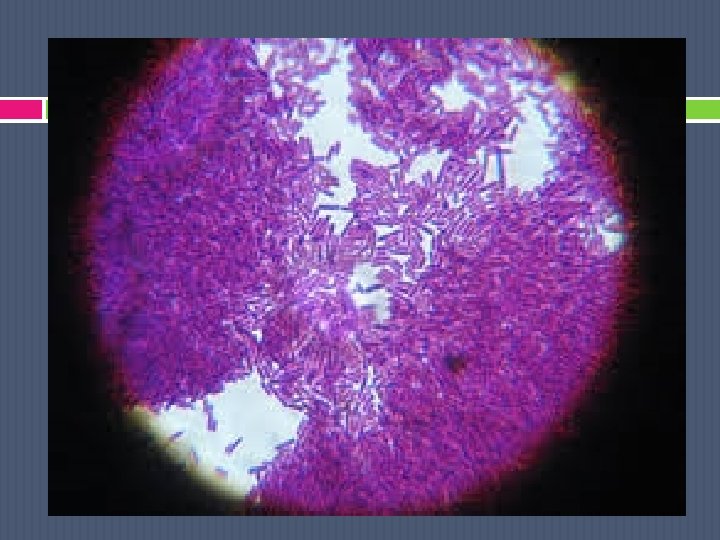
Limitations: objects cause light to scatter, blurring images � Max magnification without blurring is ~1000 x
Electron Microscopes Developed during 1940 s Uses magnets to aim a beam of electrons at thin slices of cells SEM, TEM, STM
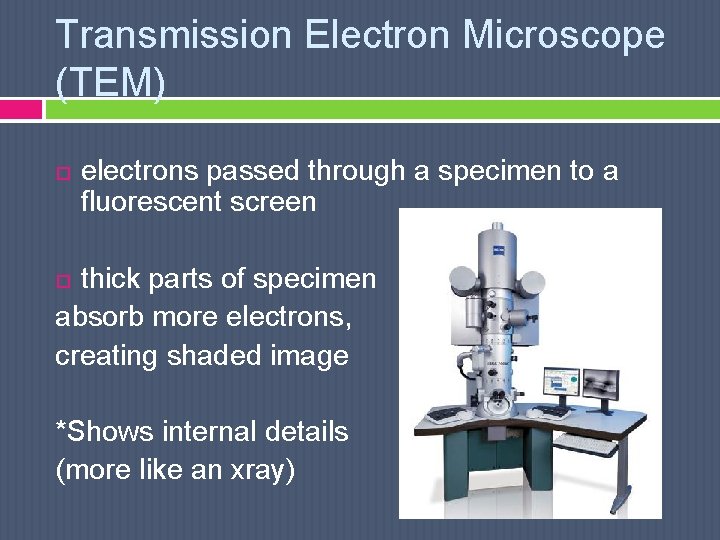
Transmission Electron Microscope (TEM) electrons passed through a specimen to a fluorescent screen thick parts of specimen absorb more electrons, creating shaded image *Shows internal details (more like an xray)
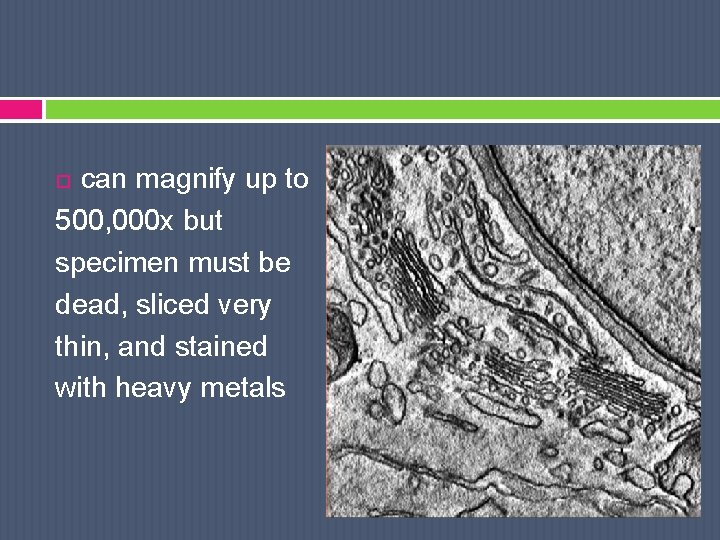
can magnify up to 500, 000 x but specimen must be dead, sliced very thin, and stained with heavy metals
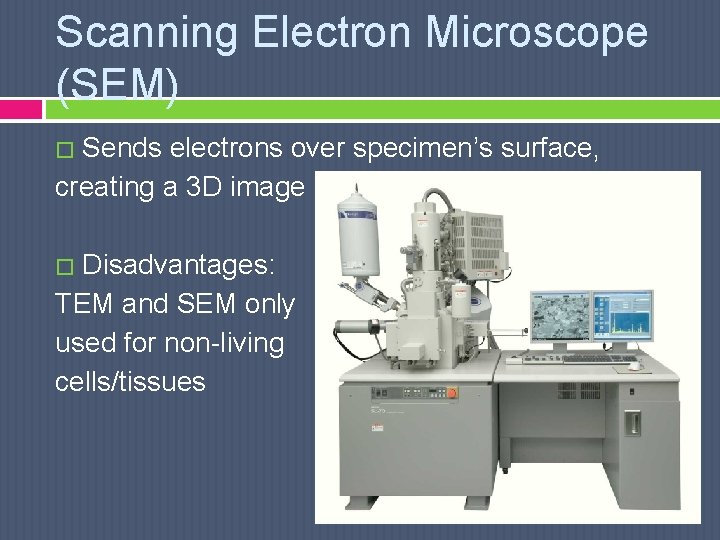
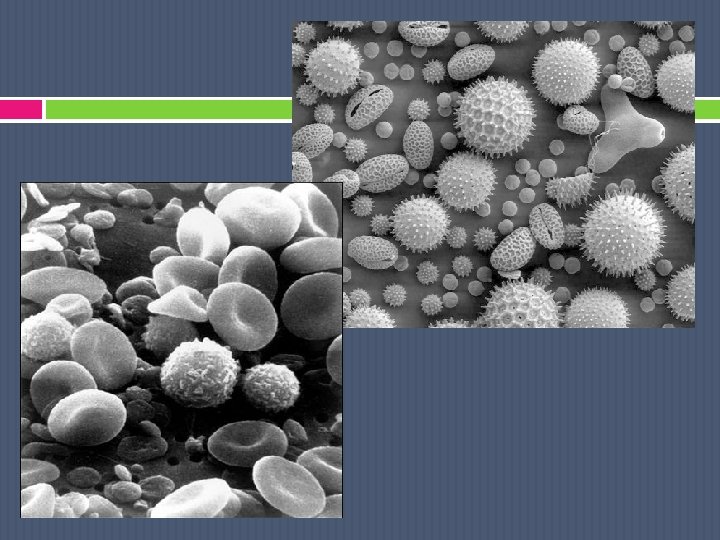
Scanning Electron Microscope (SEM) Sends electrons over specimen’s surface, creating a 3 D image � Disadvantages: TEM and SEM only used for non-living cells/tissues �
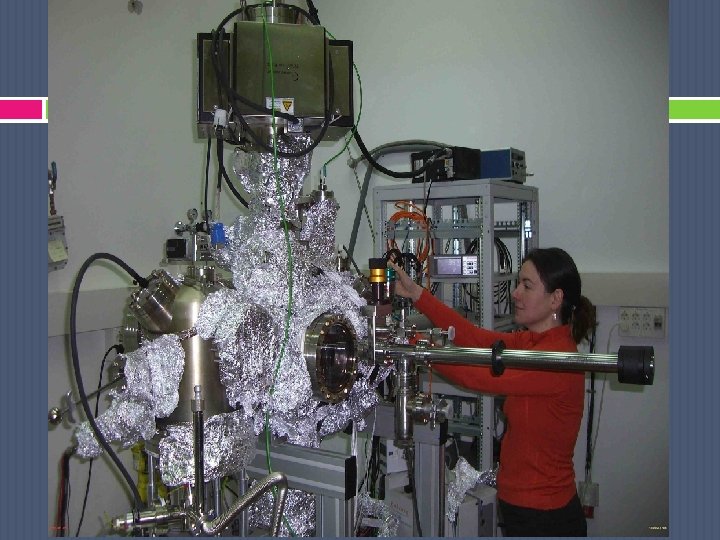
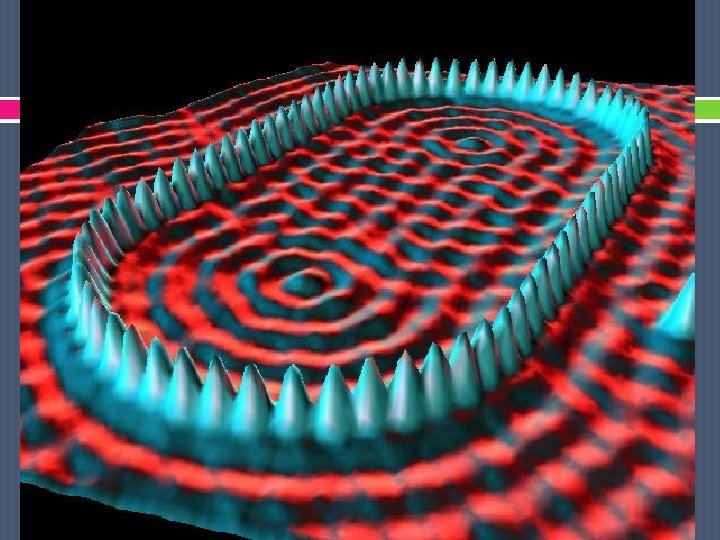
Scanning Tunneling Electron Microscope (STM) Charged tip of probe brought to specimen so that electron “tunnel” through small gap between them Allows scientists to create 3 D models of objects as small as atoms Advantage: Can be used with live specimens
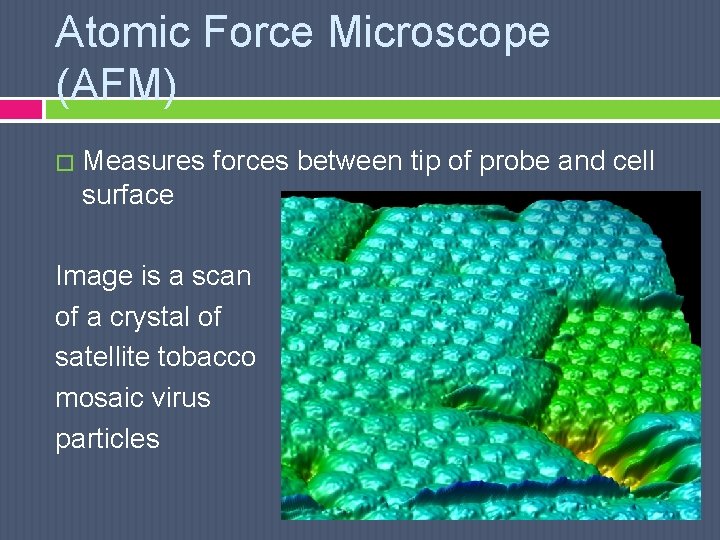
Atomic Force Microscope (AFM) � Measures forces between tip of probe and cell surface Image is a scan of a crystal of satellite tobacco mosaic virus particles
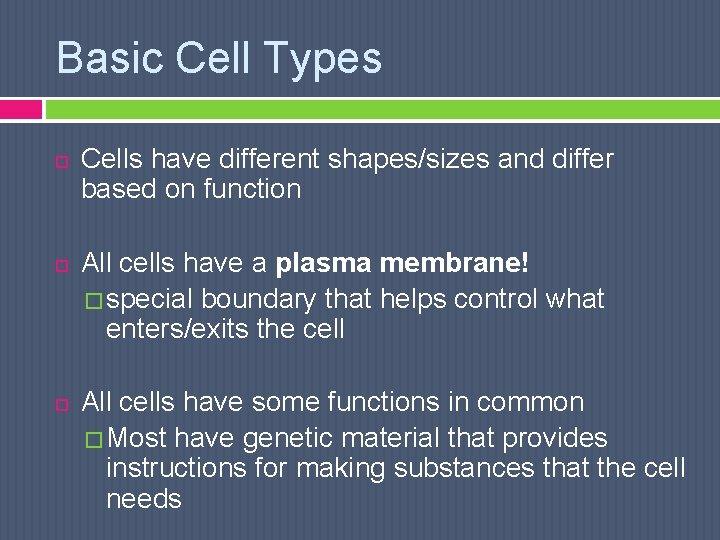
Basic Cell Types Cells have different shapes/sizes and differ based on function All cells have a plasma membrane! � special boundary that helps control what enters/exits the cell All cells have some functions in common � Most have genetic material that provides instructions for making substances that the cell needs
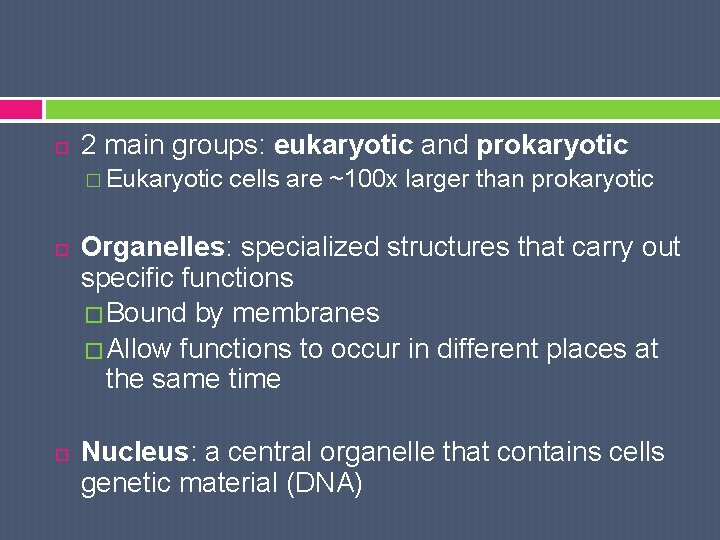
2 main groups: eukaryotic and prokaryotic � Eukaryotic cells are ~100 x larger than prokaryotic Organelles: specialized structures that carry out specific functions � Bound by membranes � Allow functions to occur in different places at the same time Nucleus: a central organelle that contains cells genetic material (DNA)
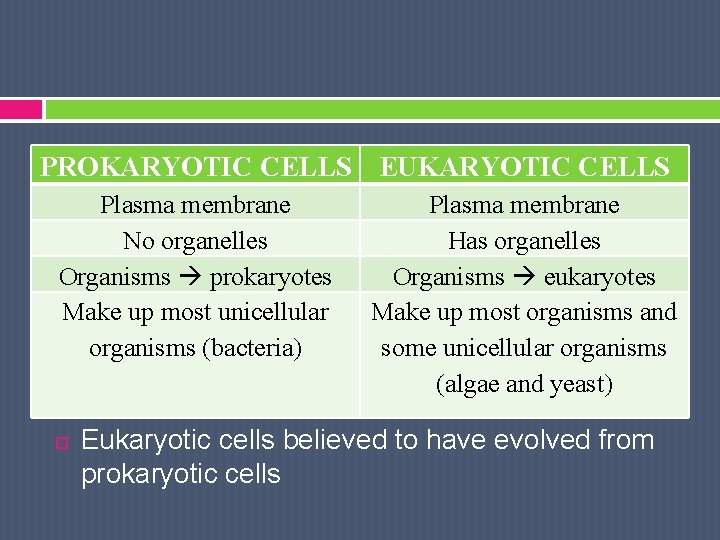
PROKARYOTIC CELLS EUKARYOTIC CELLS Plasma membrane No organelles Organisms prokaryotes Make up most unicellular organisms (bacteria) Plasma membrane Has organelles Organisms eukaryotes Make up most organisms and some unicellular organisms (algae and yeast) Eukaryotic cells believed to have evolved from prokaryotic cells
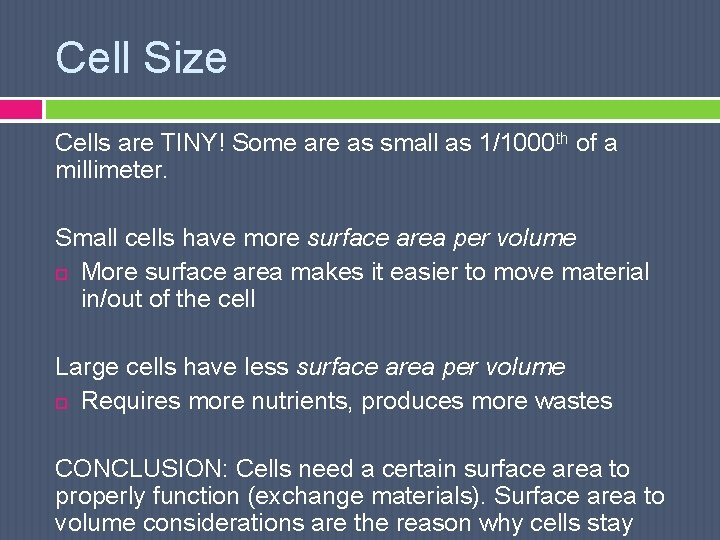
Cell Size Cells are TINY! Some are as small as 1/1000 th of a millimeter. Small cells have more surface area per volume More surface area makes it easier to move material in/out of the cell Large cells have less surface area per volume Requires more nutrients, produces more wastes CONCLUSION: Cells need a certain surface area to properly function (exchange materials). Surface area to volume considerations are the reason why cells stay