
Cell Discovery and Theory 7 1 Essential Questions
- Slides: 21
Cell Discovery and Theory 7 -1
Essential Questions • How are the advances in microscope technology related to discoveries about cells? • What are the similarities and differences between compound light microscopes and electron microscopes? • What are the principles of the cell theory? • What are the differences between a prokaryotic cell and a eukaryotic cell?
Vocabulary New • • cell theory plasma membrane organelle eukaryotic cell nucleus prokaryotic cell
History of the Cell Theory • A cell is the basic structural and functional unit of all living organisms. • Cells are so small that their existence was unknown before the invention of microscopes.
The cell theory • Cell theory is one of the fundamental ideas of modern biology, and includes the following three principles: • All living organisms are composed of one or more cells. • Cells are the basic unit of structure and organization of all living organisms. • Cells arise only from previously existing cells, with cells passing copies of their genetic material on to their daughter cells.
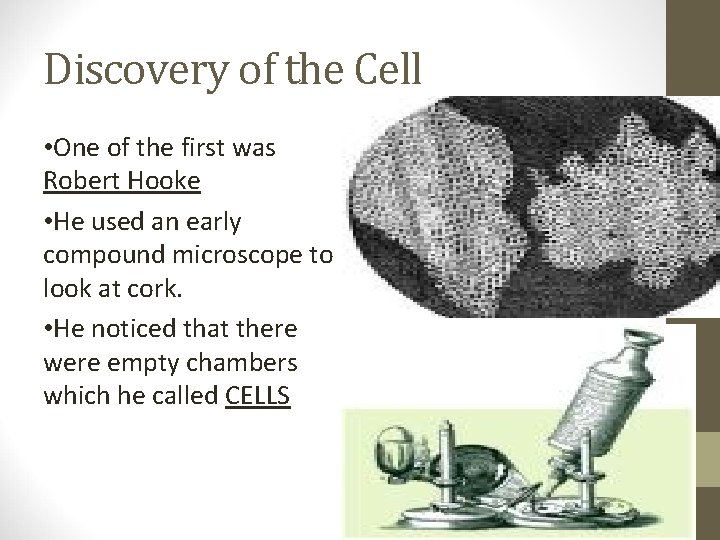
Discovery of the Cell • One of the first was Robert Hooke • He used an early compound microscope to look at cork. • He noticed that there were empty chambers which he called CELLS
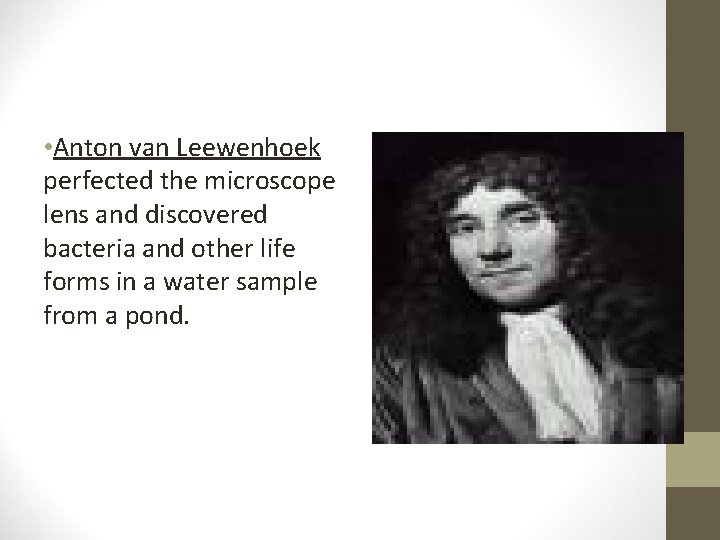
• Anton van Leewenhoek perfected the microscope lens and discovered bacteria and other life forms in a water sample from a pond.
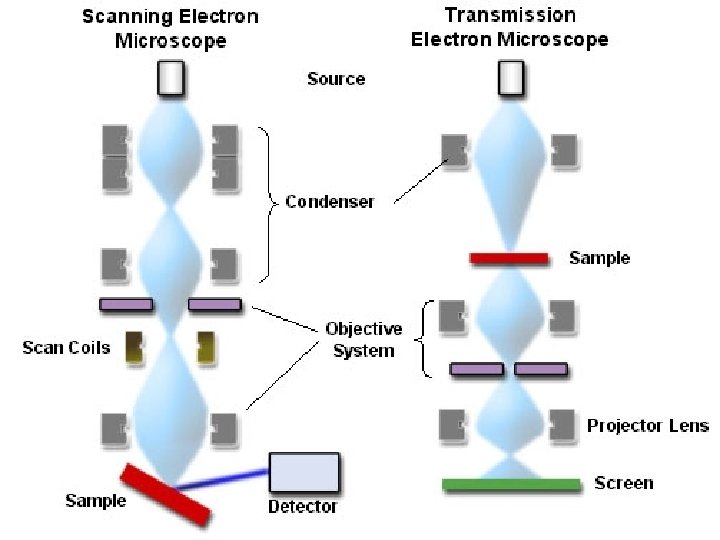
Microscope Technology Compound light microscopes • Use a series of glass lenses and visible light to magnify images • Magnify images to ~1000 x actual size Electron microscopes • Create an image by illuminating a sample with a beam of electrons and collecting the electrons that are reflected back from the sample • Magnify images up to 500, 000 x actual size • Transmission Electron Microscope (TEM) • Scanning Electron Microscope (SEM)
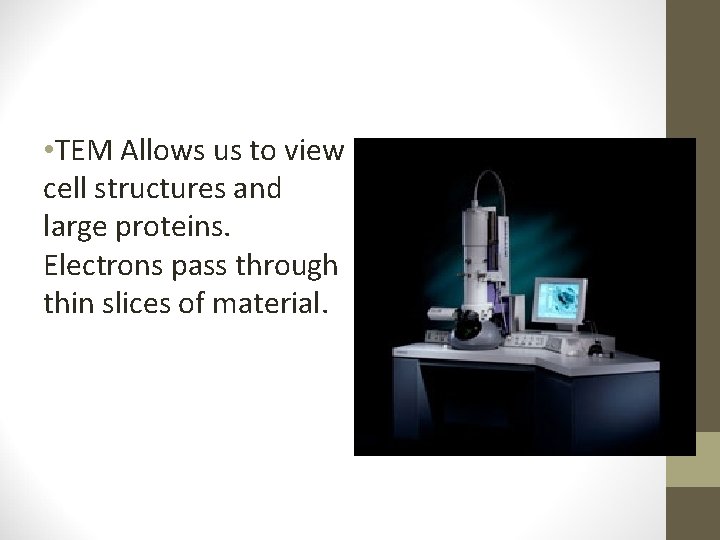
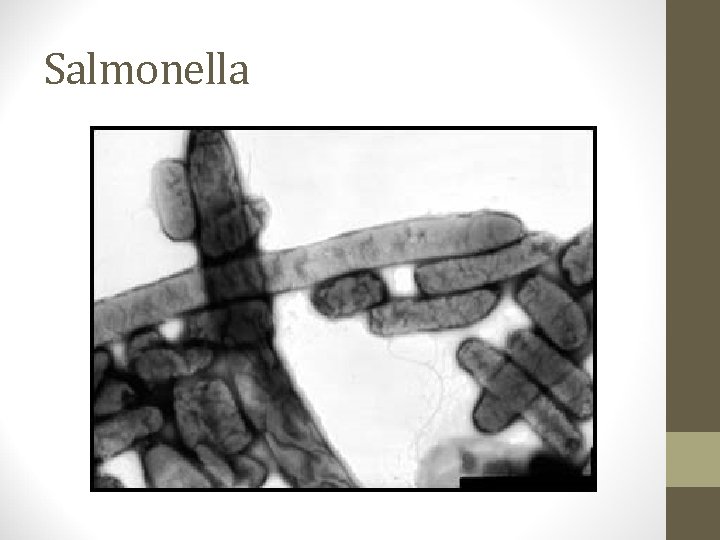
• TEM Allows us to view cell structures and large proteins. Electrons pass through thin slices of material.
Salmonella
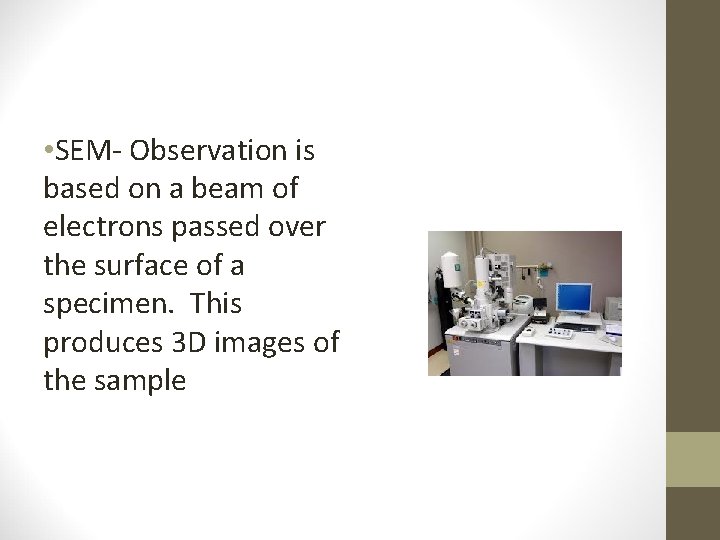
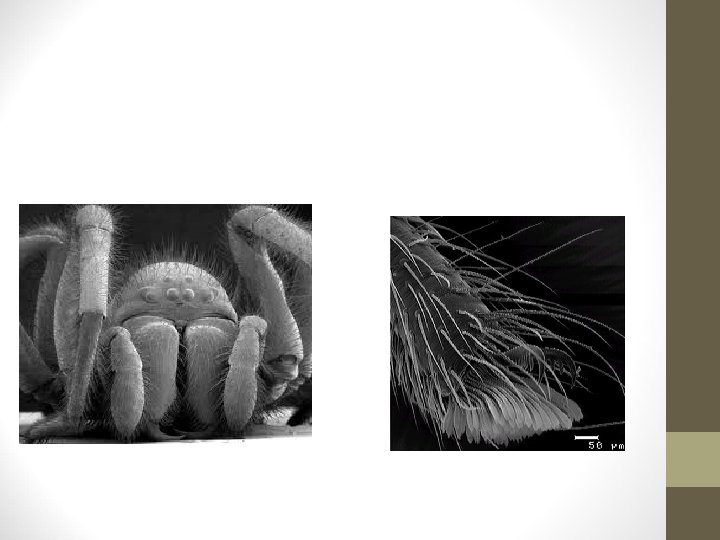
• SEM- Observation is based on a beam of electrons passed over the surface of a specimen. This produces 3 D images of the sample
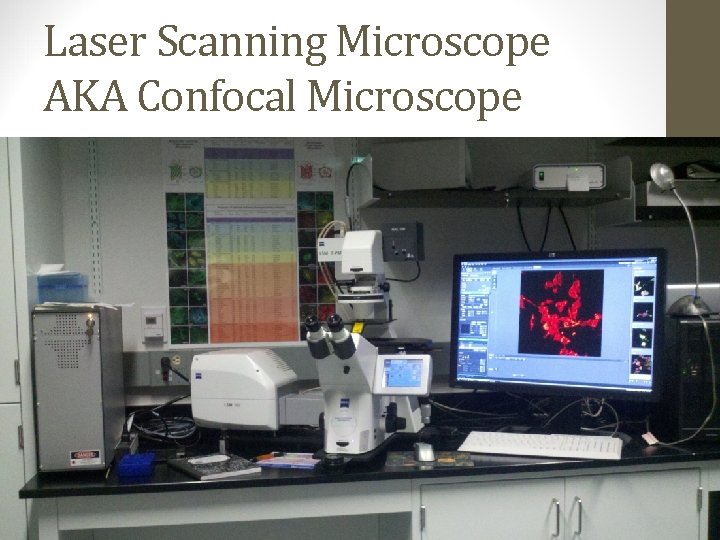
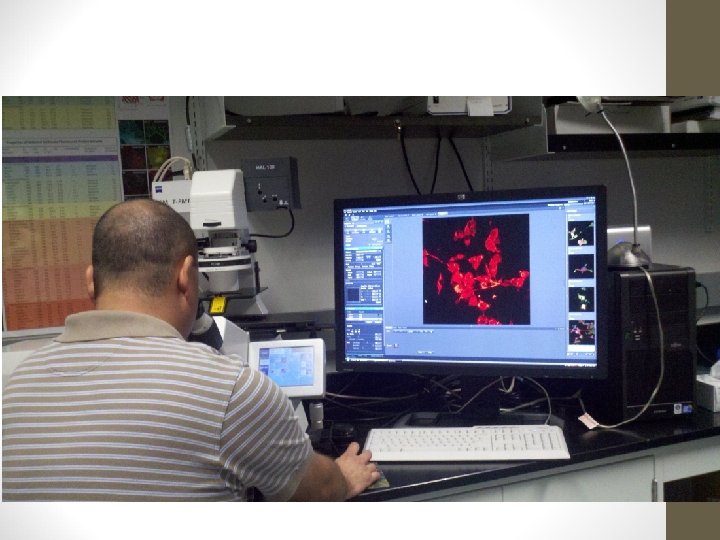
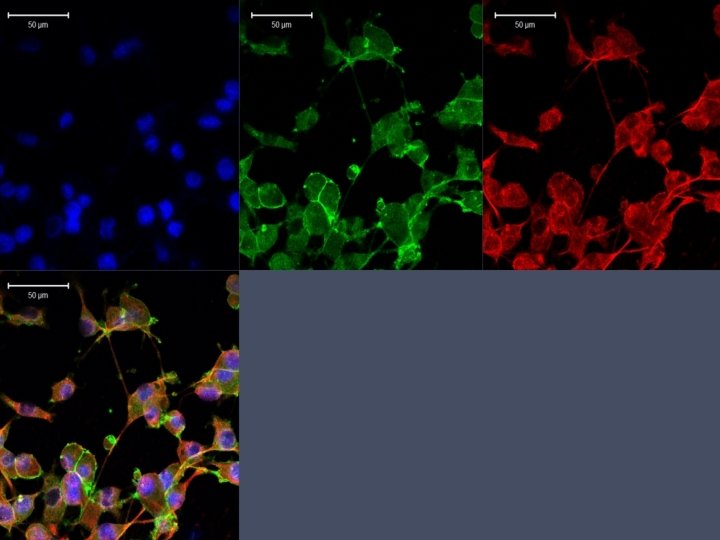
Laser Scanning Microscope AKA Confocal Microscope
Basic Cell Types • All cells have at least one physical trait in common: a plasma membrane. • A plasma membrane is a special boundary that helps control what enters and leaves the cell. • Most cells contain genetic material in some form. • Most cells break down molecules to generate energy. • There are two basic kinds of cells: eukaryotic and prokaryotic.
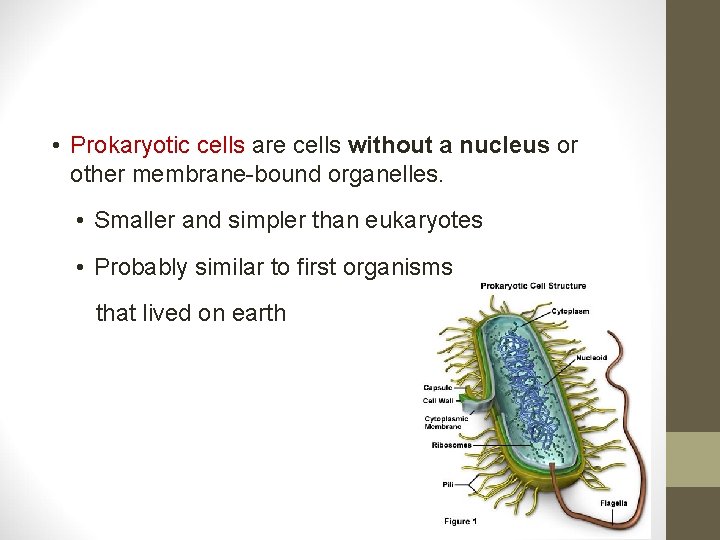
• Prokaryotic cells are cells without a nucleus or other membrane-bound organelles. • Smaller and simpler than eukaryotes • Probably similar to first organisms that lived on earth
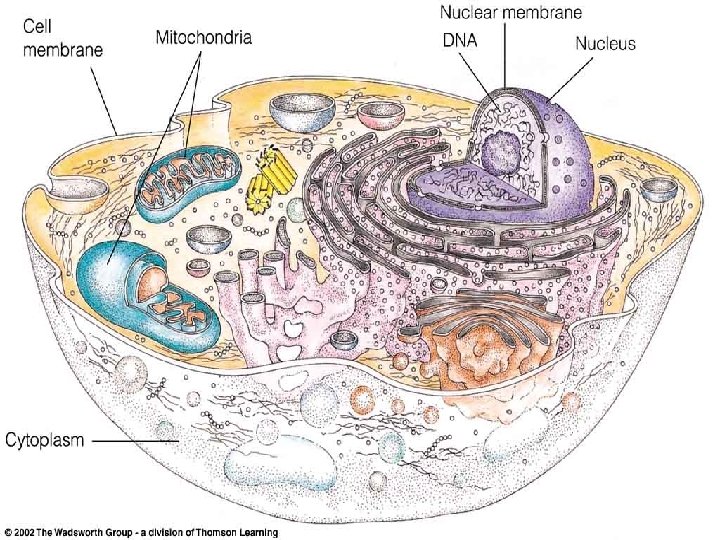
• Eukaryotic cells contain a nucleus and other organelles. • Organelles are specialized structures that perform specific cell functions. • The nucleus is the distinct central organelle that contains the cell’s genetic material. • Eukaryotic cells are generally much larger than prokaryotic cells.
Origin of cell diversity • Eukaryotic cells may have evolved from prokaryotic cells. • The endosymbiont theory proposes that a symbiotic relationship formed between two prokaryotic cells, one of which lived inside the other. • Eventually the symbiotic relationship led to the two cells becoming one. • Because eukaryotic cells are larger and more complex, they developed specific functions. • These specific functions led to cell diversity, and thus organismal diversity.