
Cell CycleMitosis Sexual ReproductionMeiosis InheritanceGenetics CHROMwords Chromatin uncoiled








- Slides: 60
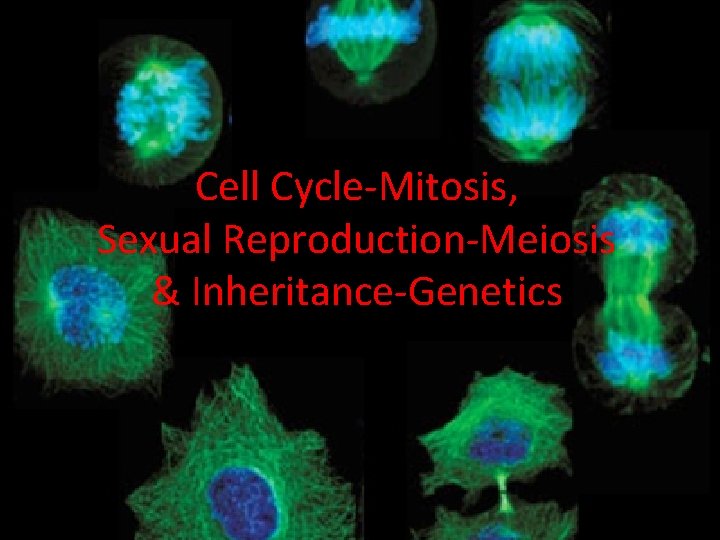
Cell Cycle-Mitosis, Sexual Reproduction-Meiosis & Inheritance-Genetics
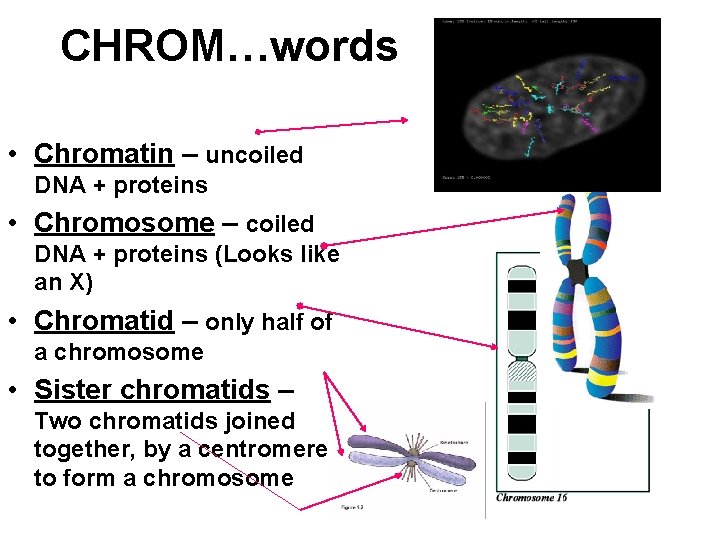
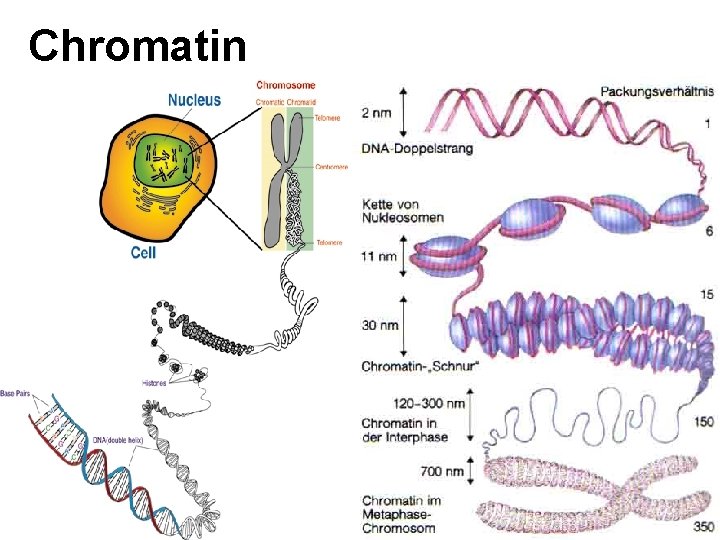
CHROM…words • Chromatin – uncoiled DNA + proteins • Chromosome – coiled DNA + proteins (Looks like an X) • Chromatid – only half of a chromosome • Sister chromatids – Two chromatids joined together, by a centromere, to form a chromosome
Chromatin
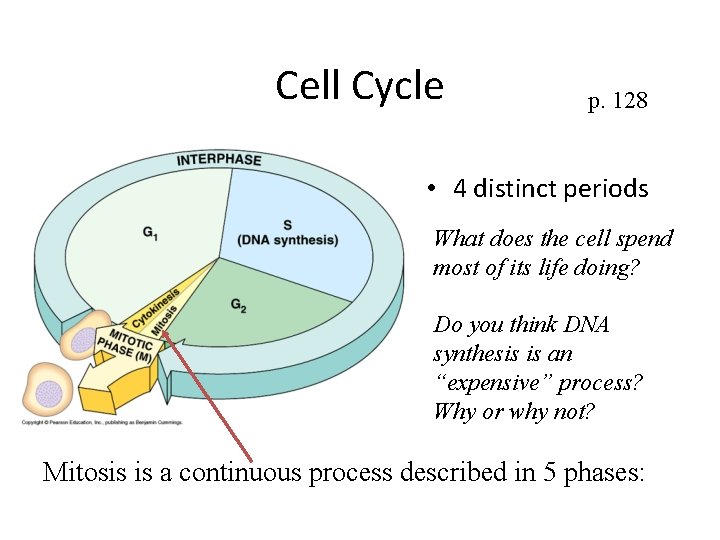
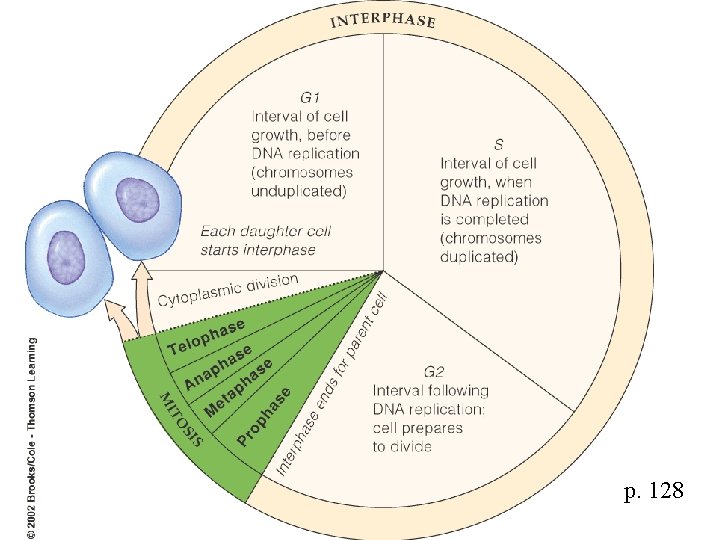
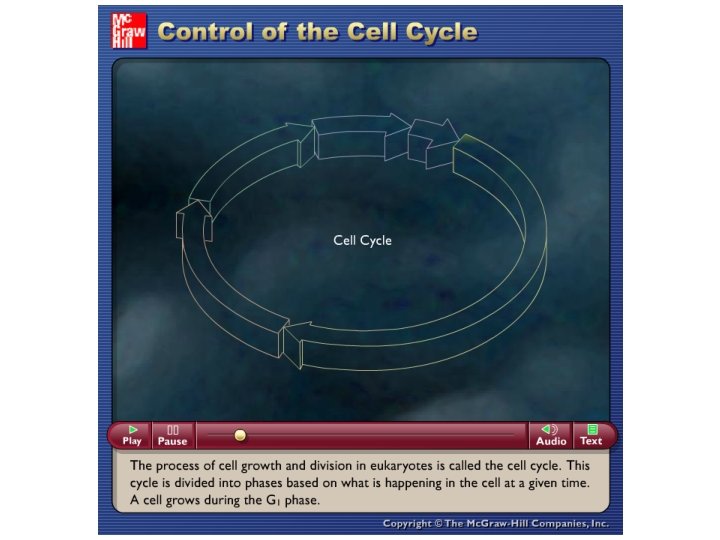
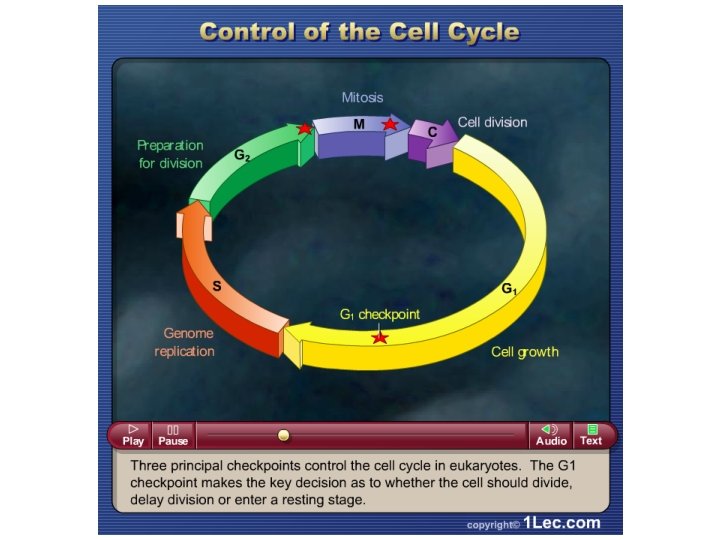
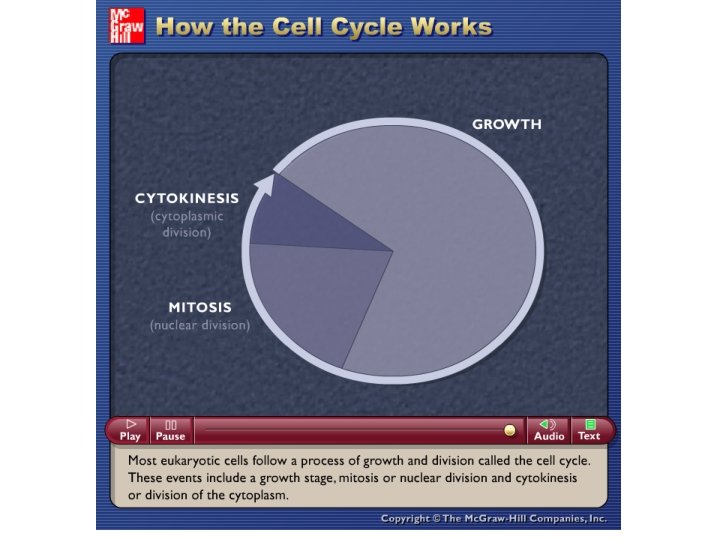
Cell Cycle p. 128 • 4 distinct periods What does the cell spend most of its life doing? Do you think DNA synthesis is an “expensive” process? Why or why not? Mitosis is a continuous process described in 5 phases:
p. 128
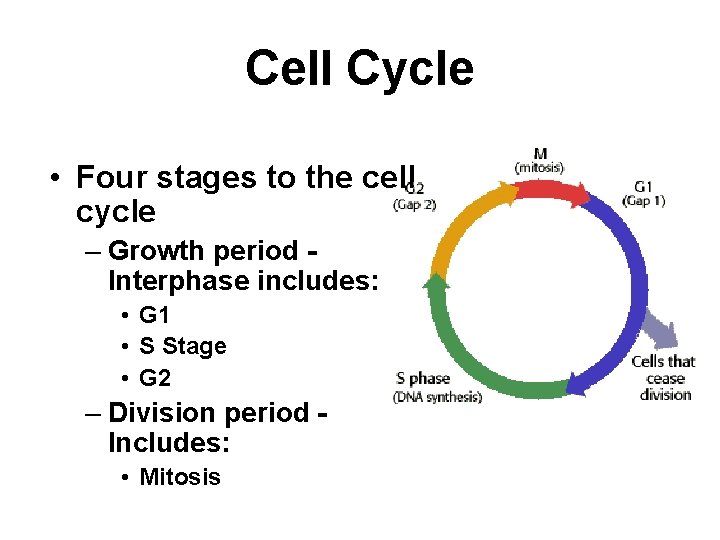
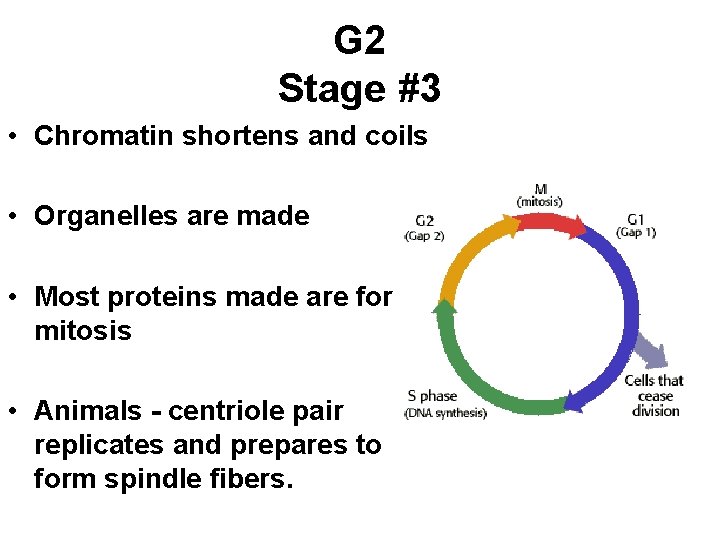
Cell Cycle • Four stages to the cell cycle – Growth period Interphase includes: • G 1 • S Stage • G 2 – Division period Includes: • Mitosis
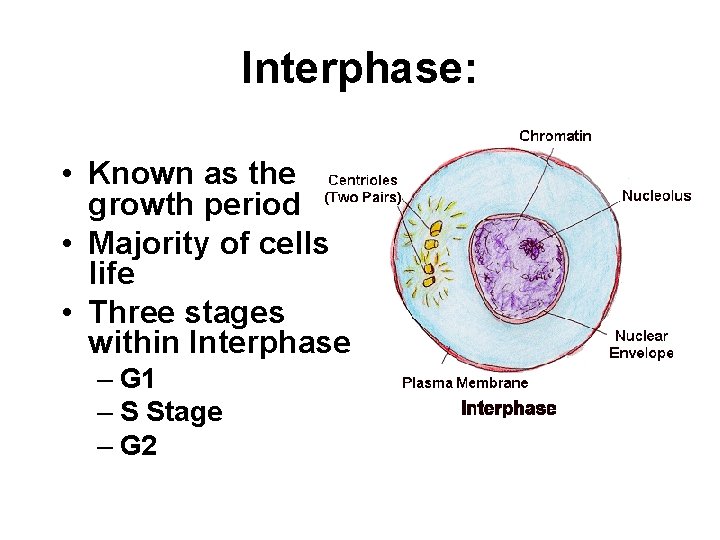
Interphase: • Known as the growth period • Majority of cells life • Three stages within Interphase – G 1 – S Stage – G 2
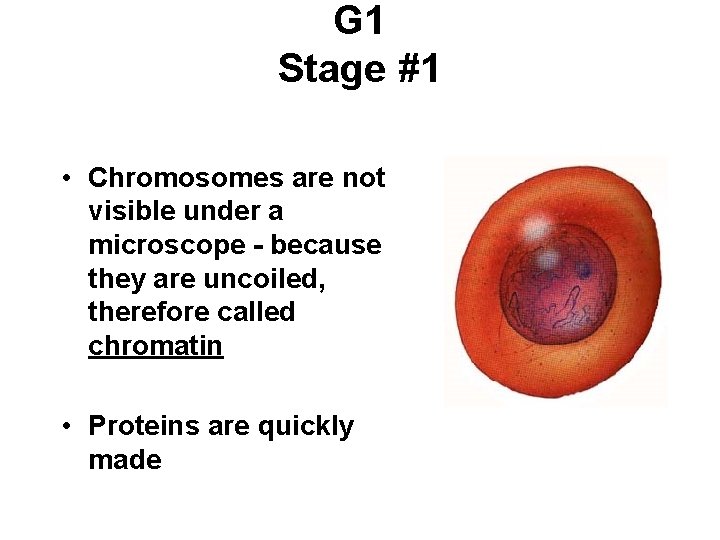
G 1 Stage #1 • Chromosomes are not visible under a microscope - because they are uncoiled, therefore called chromatin • Proteins are quickly made
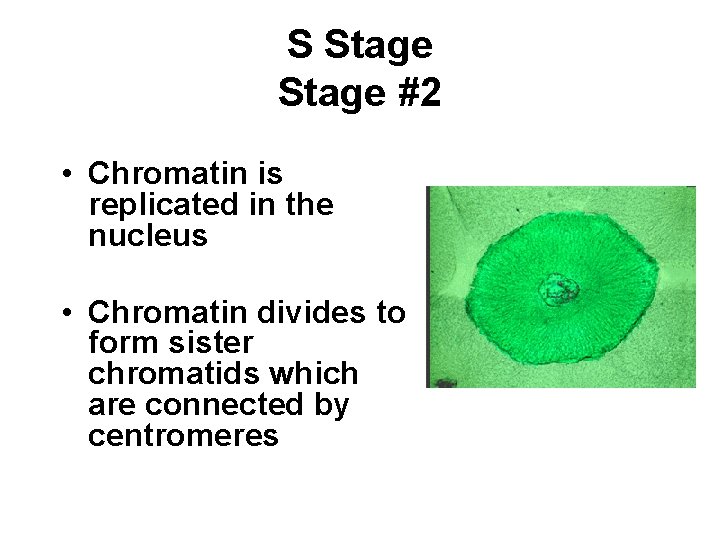
S Stage #2 • Chromatin is replicated in the nucleus • Chromatin divides to form sister chromatids which are connected by centromeres
G 2 Stage #3 • Chromatin shortens and coils • Organelles are made • Most proteins made are for mitosis • Animals - centriole pair replicates and prepares to form spindle fibers.
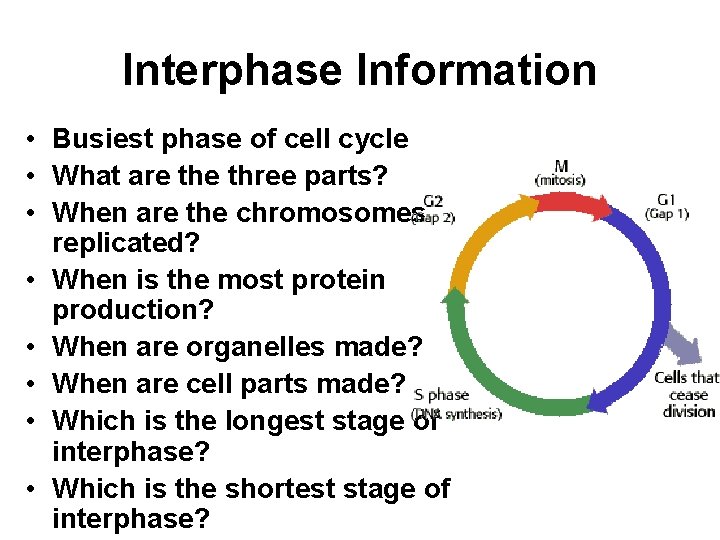
Interphase Information • Busiest phase of cell cycle • What are three parts? • When are the chromosomes replicated? • When is the most protein production? • When are organelles made? • When are cell parts made? • Which is the longest stage of interphase? • Which is the shortest stage of interphase?
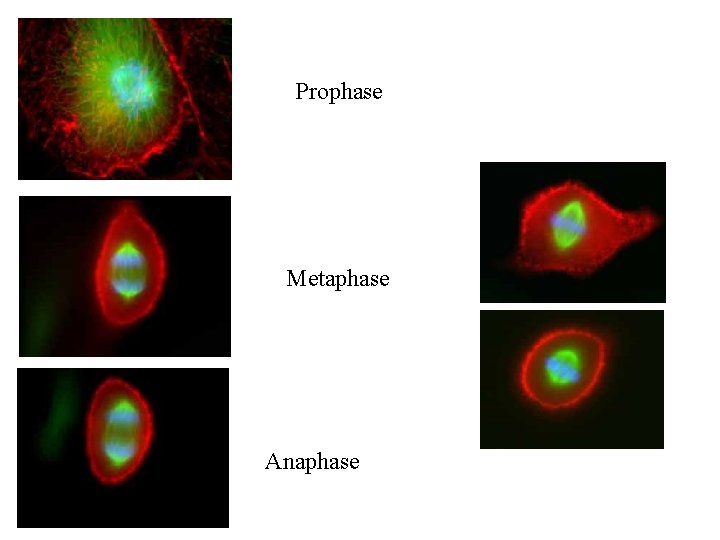
Prophase Metaphase Anaphase
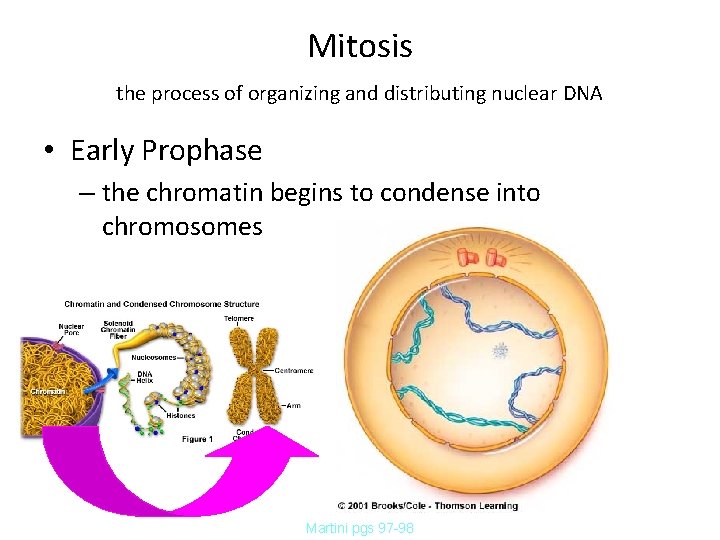
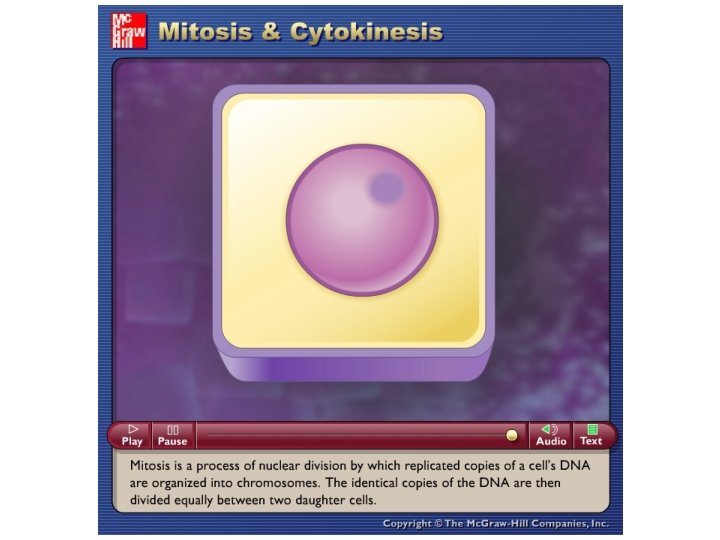
Mitosis the process of organizing and distributing nuclear DNA • Early Prophase – the chromatin begins to condense into chromosomes Martini pgs 97 -98
Mitosis • Late Prophase Aster • one of the centriole pairs moves to the opposite side of the cell. • microtubules begin to grow from the centrioles building the spindle apparatus. • the nuclear envelope begins to dissolve. Martini pgs 97 -98
Mitosis • Transition to Metaphase – the spindle apparatus forms completely and the chromosomes attach Martini pgs 97 -98
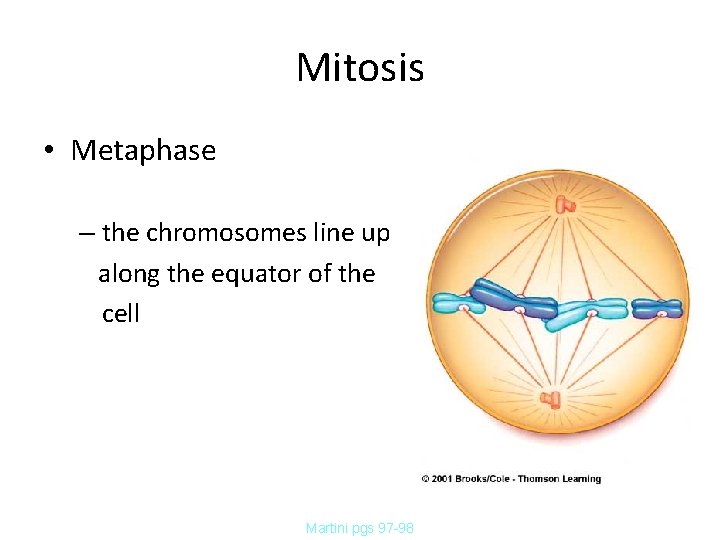
Mitosis • Metaphase – the chromosomes line up along the equator of the cell Martini pgs 97 -98
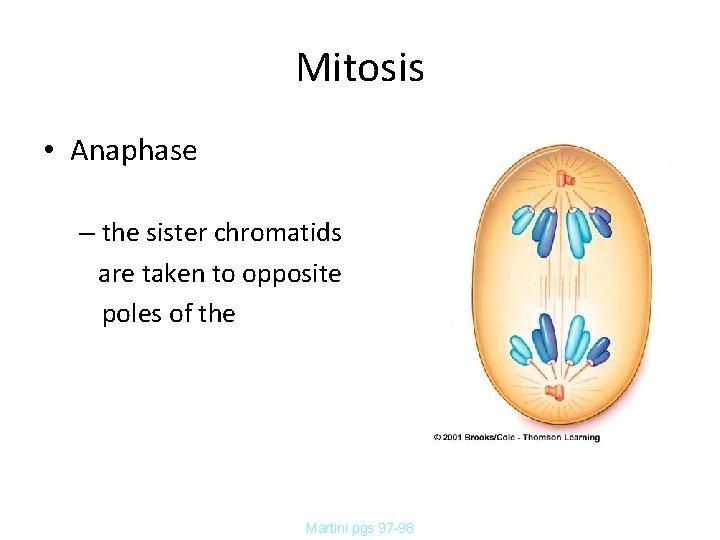
Mitosis • Anaphase – the sister chromatids are taken to opposite poles of the Martini pgs 97 -98
Mitosis • Telephase • The chromosomes decondense back into chromatin • Nuclear membranes form around each set of unduplicated chromosomes Martini pgs 97 -98
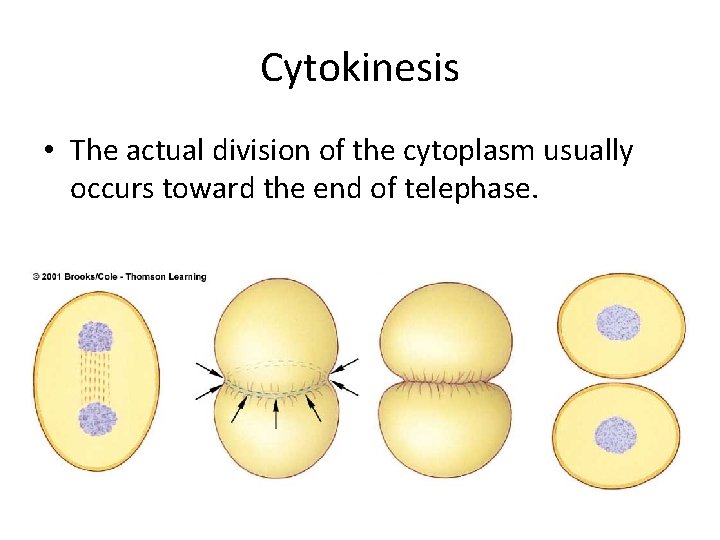
Cytokinesis • The actual division of the cytoplasm usually occurs toward the end of telephase.
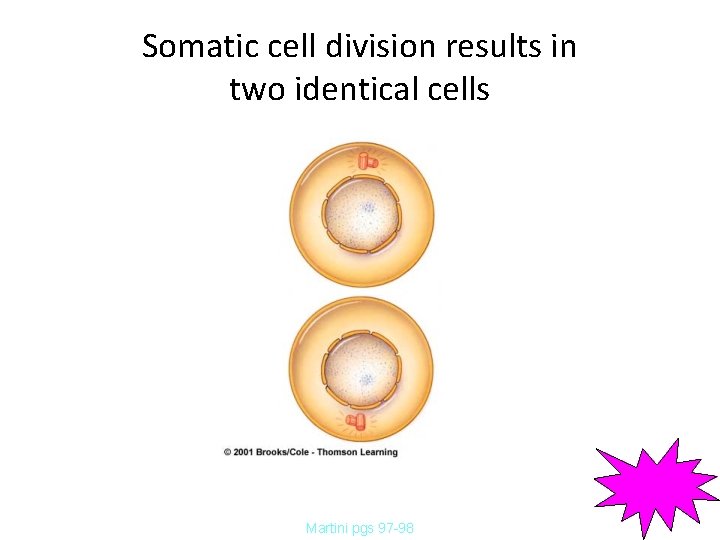
Somatic cell division results in two identical cells Martini pgs 97 -98
Mitosis is regulated by growth factors
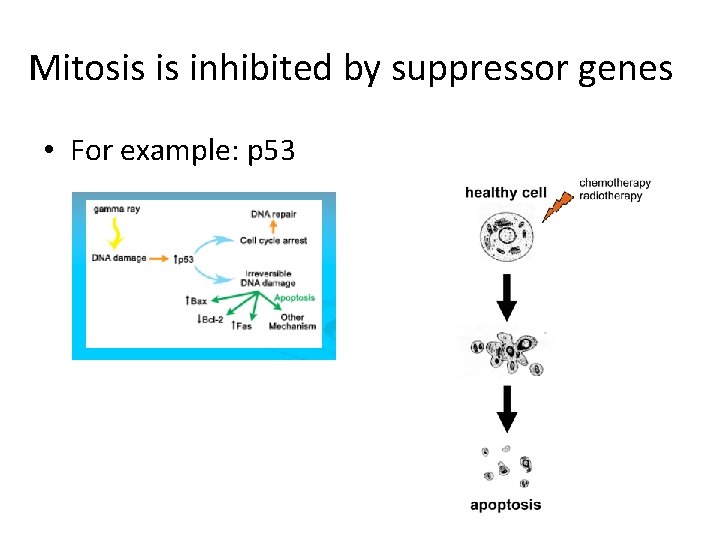
Mitosis is inhibited by suppressor genes • For example: p 53
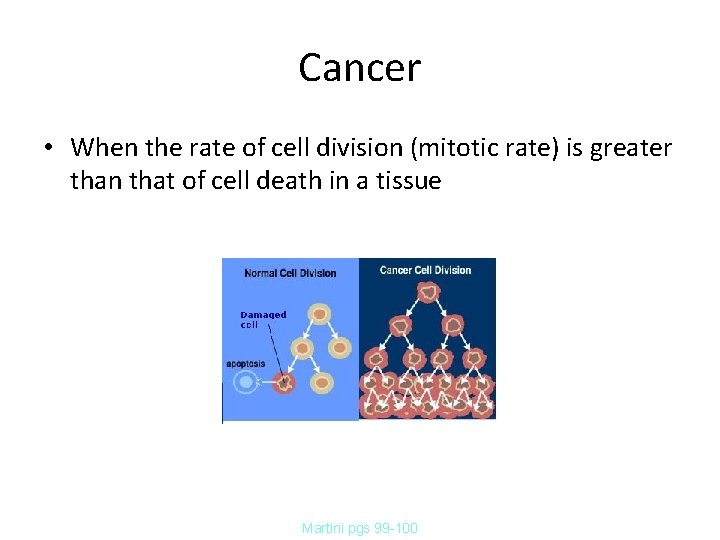
Cancer • When the rate of cell division (mitotic rate) is greater than that of cell death in a tissue Martini pgs 99 -100
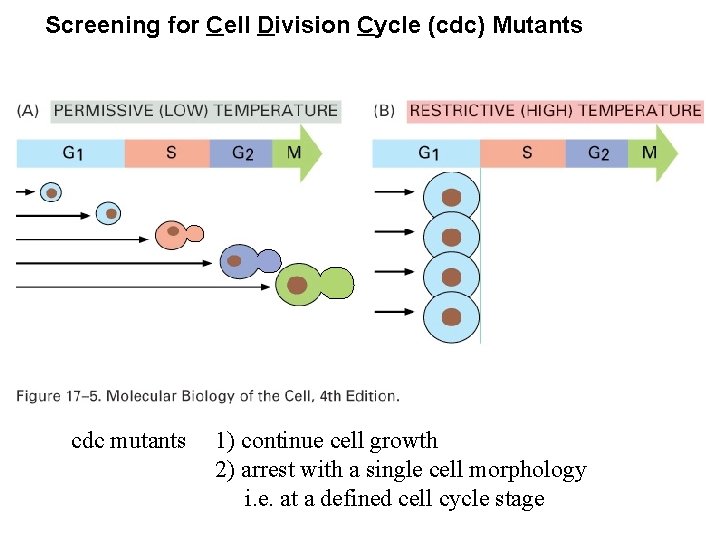
Screening for Cell Division Cycle (cdc) Mutants cdc mutants 1) continue cell growth 2) arrest with a single cell morphology i. e. at a defined cell cycle stage
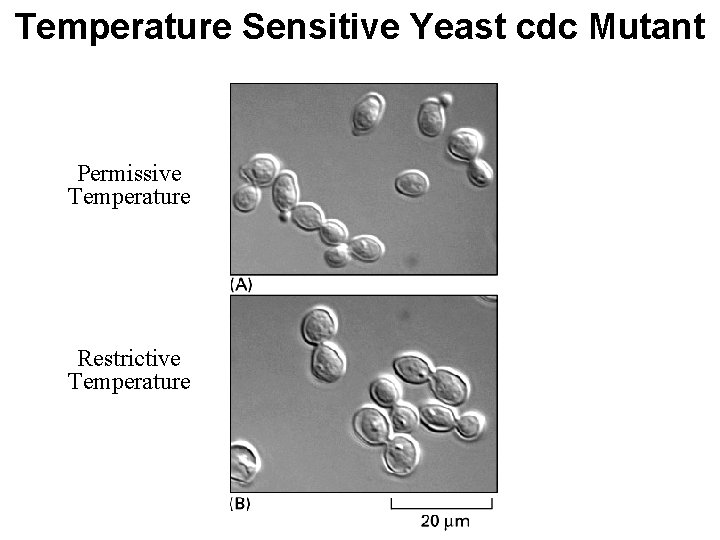
Temperature Sensitive Yeast cdc Mutant Permissive Temperature Restrictive Temperature
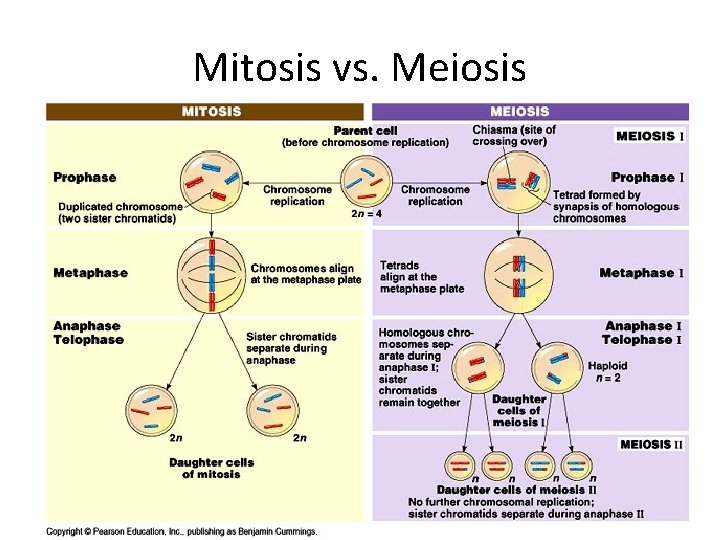
Cell Division • Mitosis (used during somatic cell division) – Diploid to Diploid – creates 1 new somatic daughter cell – parent and daughter cell are genetically identical • Meiosis (used during production of sex cells) – Diploid to Haploid (1 copy of chromosomes) – creates 4 reproductive cells (eggs or sperm) – new combination of chromosomes (mix of mom and dad)
Sexual Reproduction: creating genetic diversity
Sexual Reproduction: creating genetic diversity As opposed to asexual reproduction which makes genetic clones.
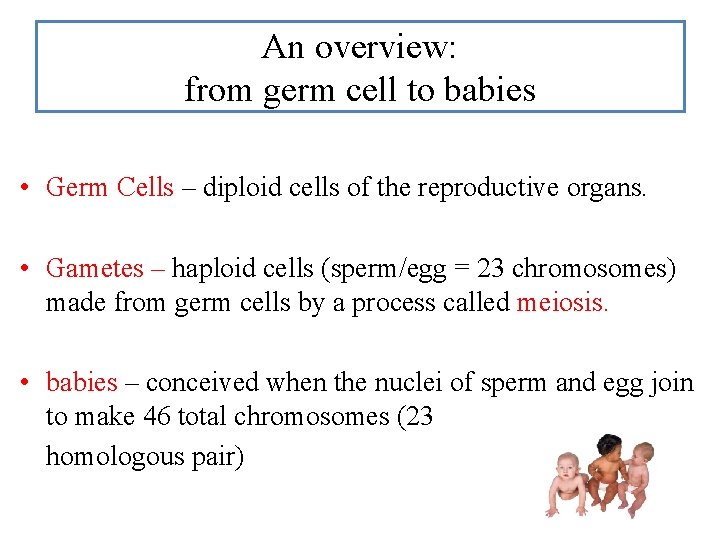
An overview: from germ cell to babies • Germ Cells – diploid cells of the reproductive organs. • Gametes – haploid cells (sperm/egg = 23 chromosomes) made from germ cells by a process called meiosis. • babies – conceived when the nuclei of sperm and egg join to make 46 total chromosomes (23 homologous pair)
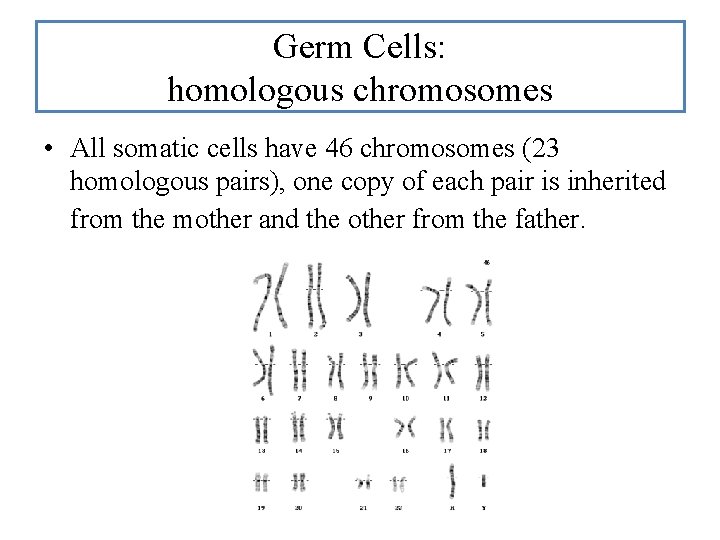
Germ Cells: homologous chromosomes • All somatic cells have 46 chromosomes (23 homologous pairs), one copy of each pair is inherited from the mother and the other from the father.
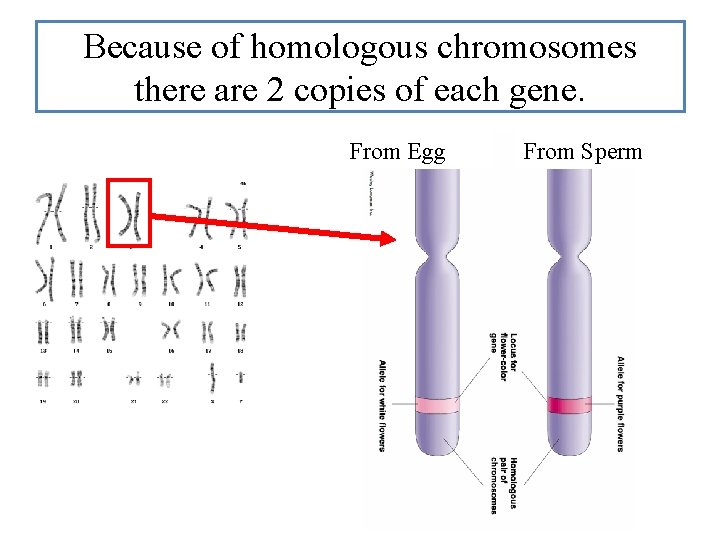
Because of homologous chromosomes there are 2 copies of each gene. From Egg From Sperm
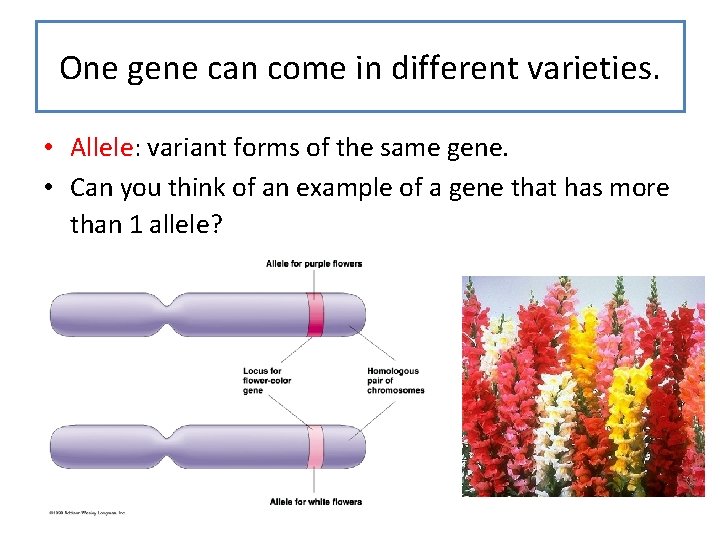
One gene can come in different varieties. • Allele: variant forms of the same gene. • Can you think of an example of a gene that has more than 1 allele?
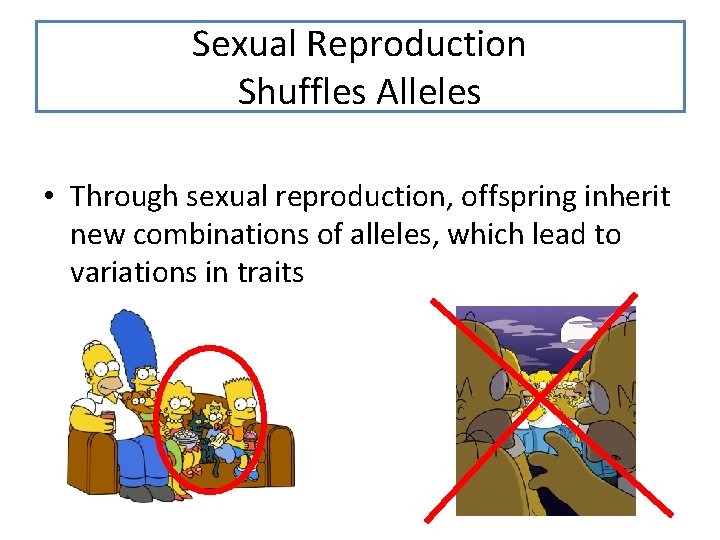
Sexual Reproduction Shuffles Alleles • Through sexual reproduction, offspring inherit new combinations of alleles, which lead to variations in traits
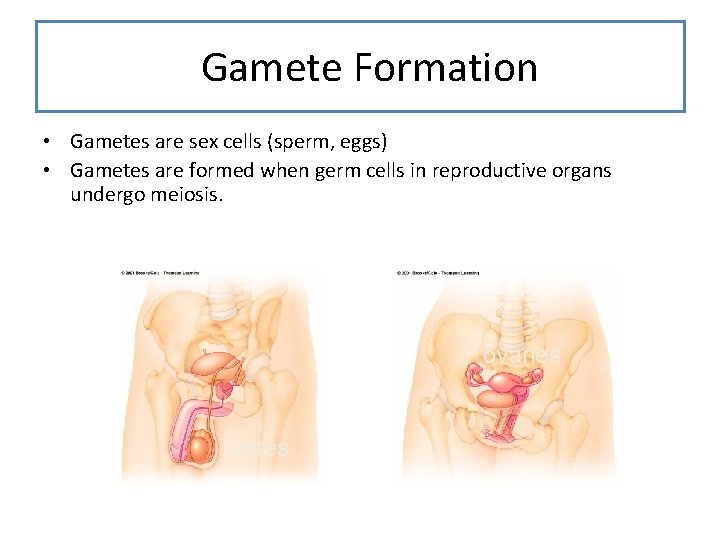
Gamete Formation • Gametes are sex cells (sperm, eggs) • Gametes are formed when germ cells in reproductive organs undergo meiosis. ovaries testes
Two important things happen during meiosis 1. The number of chromosomes is cut in half (46 to 23) 2. The alleles are rearranged so that any offspring produced are genetically different from the parents.
chromosome number in gametes • n is equal to the total number of chromosomes in a cell • Germ cells (like somatic cells) are diploid (2 n) • Gametes are haploid (1 n)
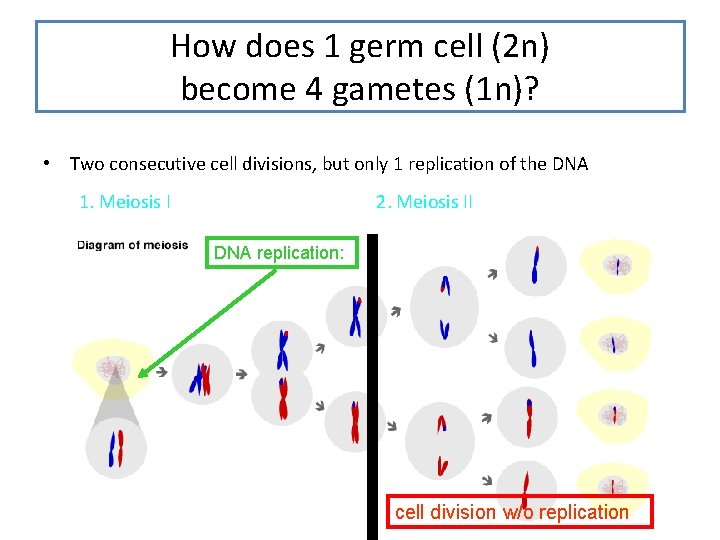
How does 1 germ cell (2 n) become 4 gametes (1 n)? • Two consecutive cell divisions, but only 1 replication of the DNA 1. Meiosis I 2. Meiosis II DNA replication: cell division w/o replication
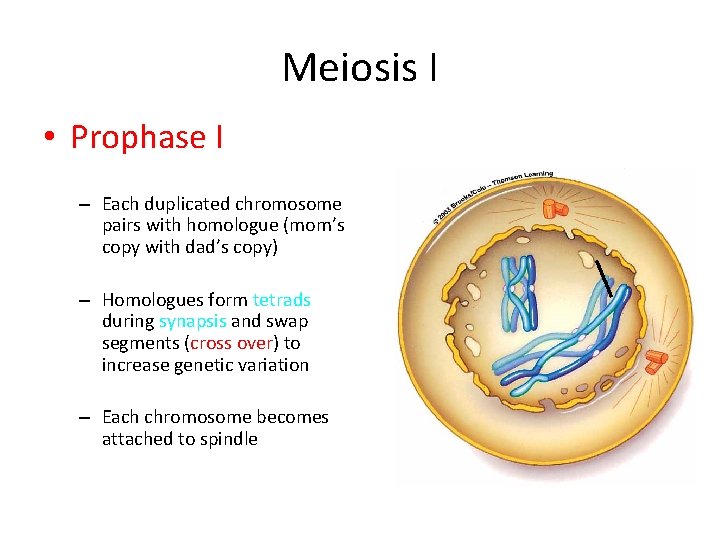
Meiosis I • Prophase I – Each duplicated chromosome pairs with homologue (mom’s copy with dad’s copy) – Homologues form tetrads during synapsis and swap segments (cross over) to increase genetic variation – Each chromosome becomes attached to spindle
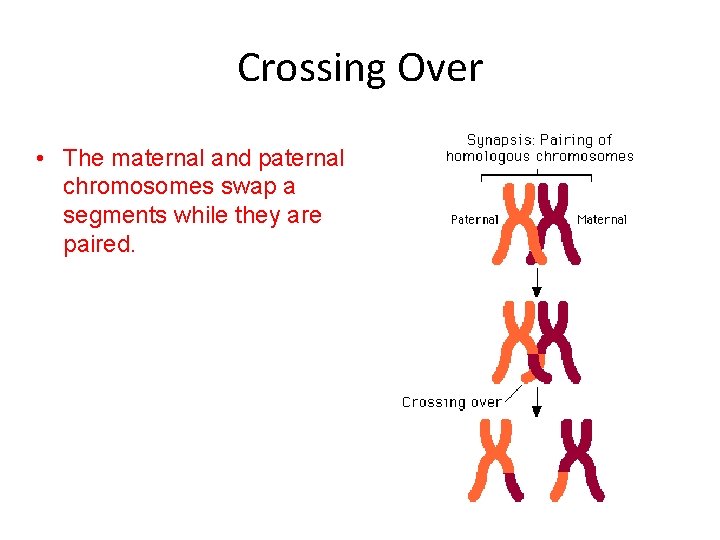
Crossing Over • The maternal and paternal chromosomes swap a segments while they are paired.
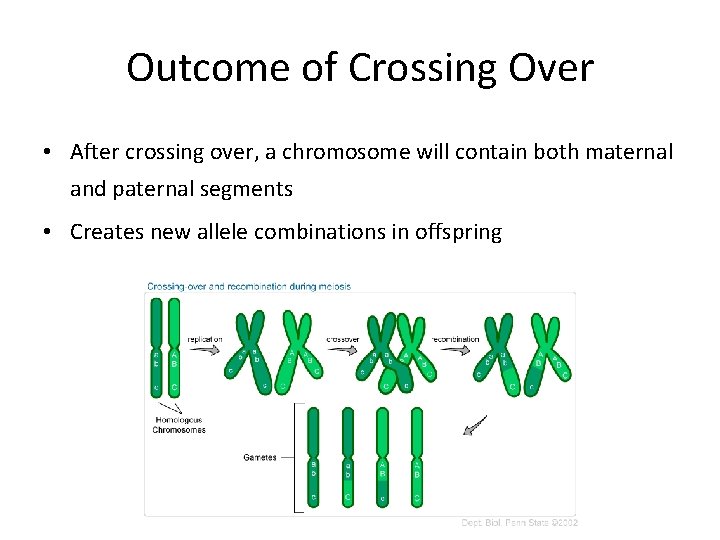
Outcome of Crossing Over • After crossing over, a chromosome will contain both maternal and paternal segments • Creates new allele combinations in offspring
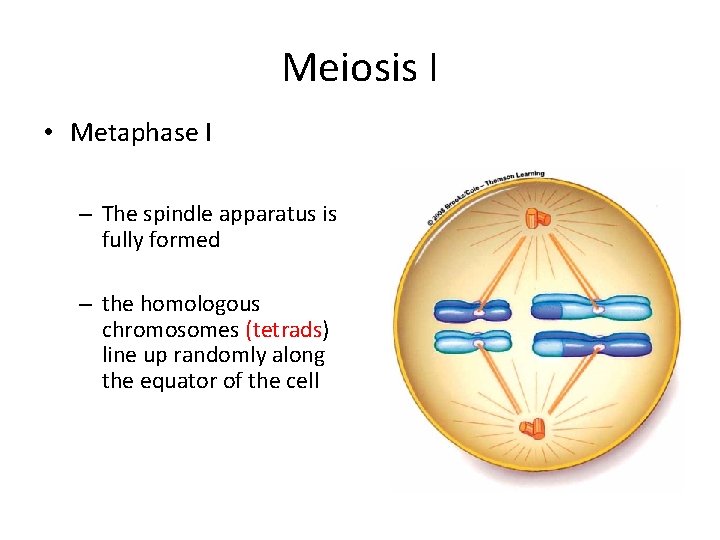
Meiosis I • Metaphase I – The spindle apparatus is fully formed – the homologous chromosomes (tetrads) line up randomly along the equator of the cell
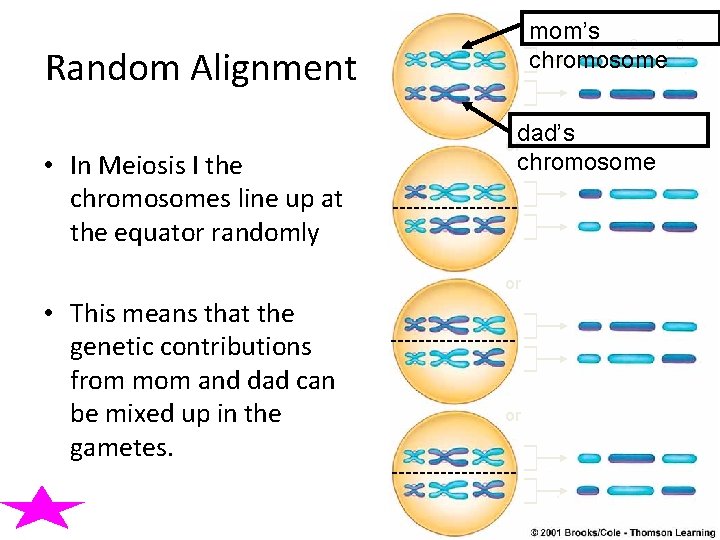
mom’s 1 2 chromosome Random Alignment • In Meiosis I the chromosomes line up at the equator randomly dad’s chromosome or or • This means that the genetic contributions from mom and dad can be mixed up in the gametes. or 3
Meiosis I • Anaphase I – homologous chromosomes segregate – the sister chromatids remain attached
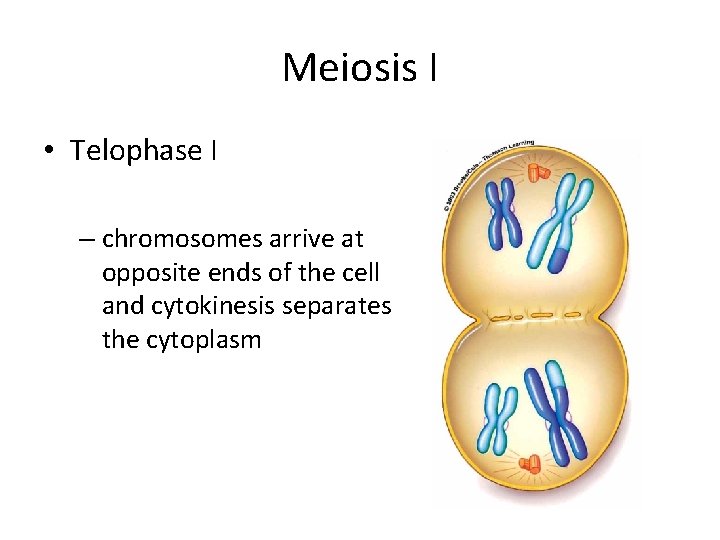
Meiosis I • Telophase I – chromosomes arrive at opposite ends of the cell and cytokinesis separates the cytoplasm
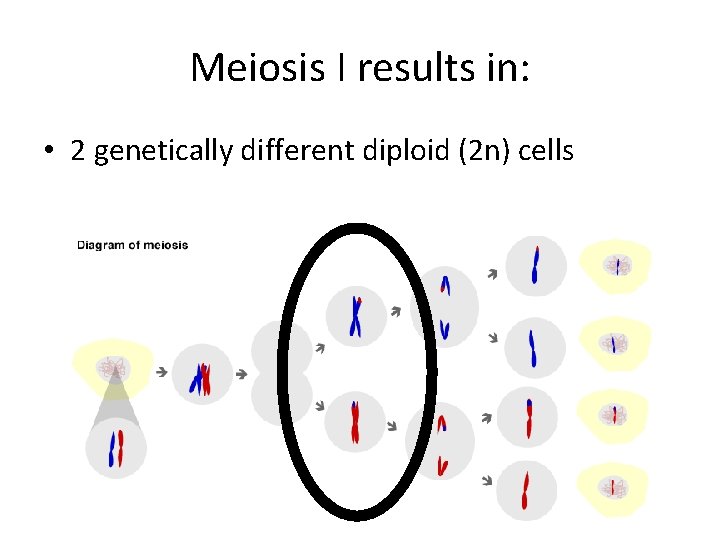
Meiosis I results in: • 2 genetically different diploid (2 n) cells
Prophase II • Microtubules attach to the kinetochores of the duplicated chromosomes
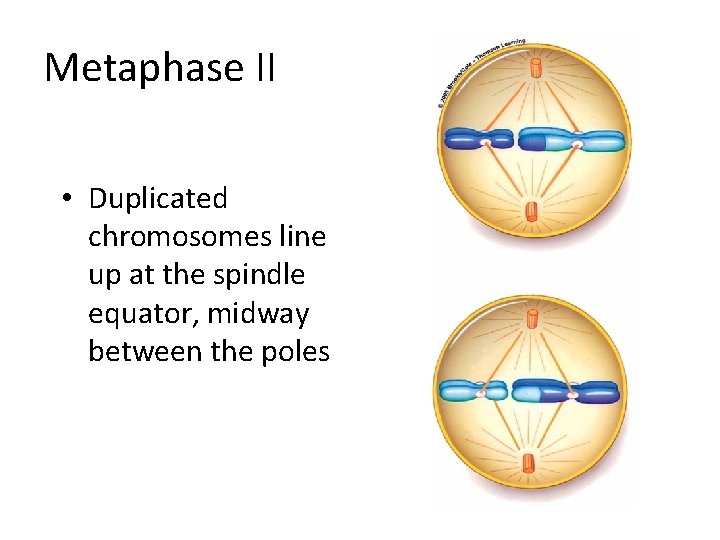
Metaphase II • Duplicated chromosomes line up at the spindle equator, midway between the poles
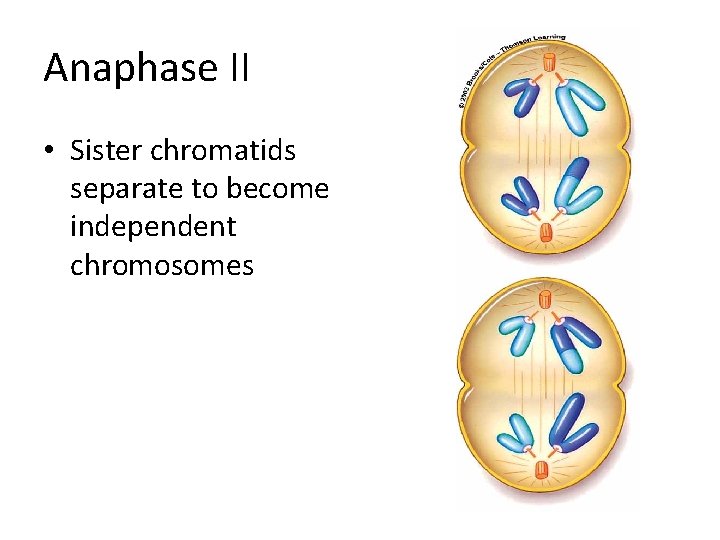
Anaphase II • Sister chromatids separate to become independent chromosomes
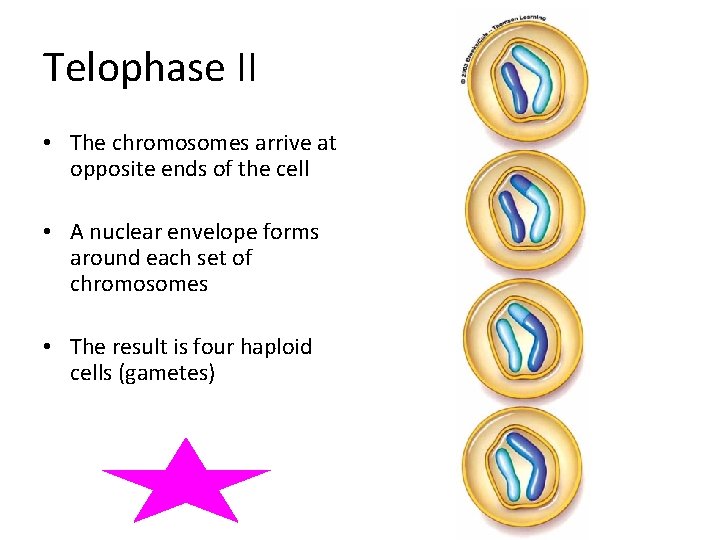
Telophase II • The chromosomes arrive at opposite ends of the cell • A nuclear envelope forms around each set of chromosomes • The result is four haploid cells (gametes)
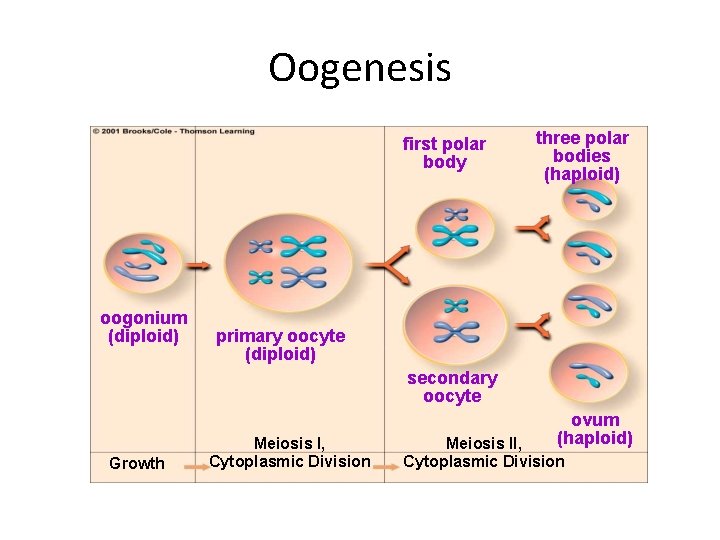
Oogenesis first polar body oogonium (diploid) three polar bodies (haploid) primary oocyte (diploid) secondary oocyte Growth Meiosis I, Cytoplasmic Division ovum (haploid) Meiosis II, Cytoplasmic Division
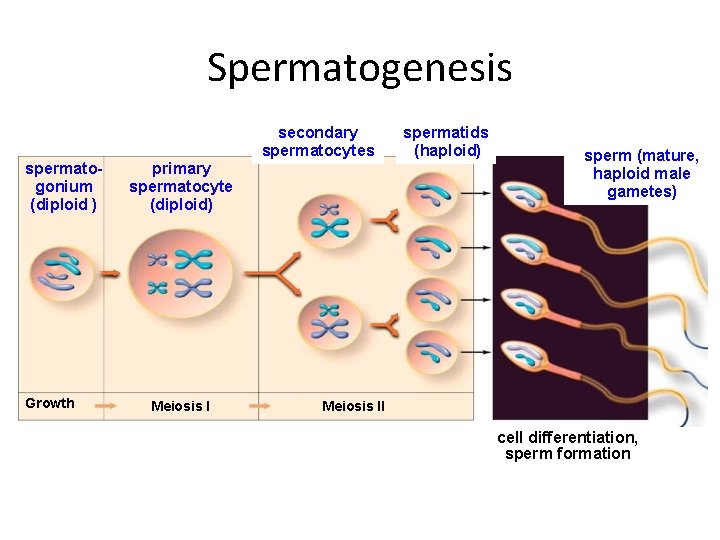
Spermatogenesis secondary spermatocytes spermatogonium (diploid ) Growth primary spermatocyte (diploid) Meiosis I spermatids (haploid) sperm (mature, haploid male gametes) Meiosis II cell differentiation, sperm formation
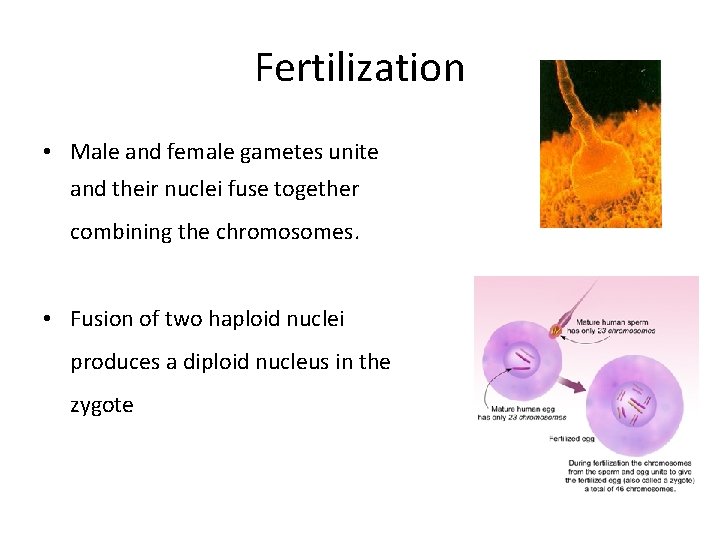
Fertilization • Male and female gametes unite and their nuclei fuse together combining the chromosomes. • Fusion of two haploid nuclei produces a diploid nucleus in the zygote
Factors that contribute to variation among Offspring 1. Crossing over during prophase I 2. Random alignment of chromosomes at metaphase I 3. Random combination of gametes at fertilization Genetic variation in offspring is important. It protects the species from environmental changes (like a new disease).
Mitosis vs. Meiosis