
Cell Cycle To understand the molecular mechanism of

- Slides: 28
Cell Cycle To understand the molecular mechanism of cell division, we need to know the life cycle of a cell. It consists of four phases: G 1, S, G 2 and M, where "G" stands for "Gap", "S" represents "Synthesis" and "M" means "Mitosis". A newly divided cell may either enter into another round of cell division or remain in the resting state for a long period. In the latter case, the cell is said to be in the G 0 phase. Upon specific stimulation, cells in the G 0 phase may re-enter the G 1 phase. Most mammalian cells complete this cycle in 12 -24 hours while bacteria complete the cell cycle in 20 -30 minutes. Apply: Why do you get sick quick?
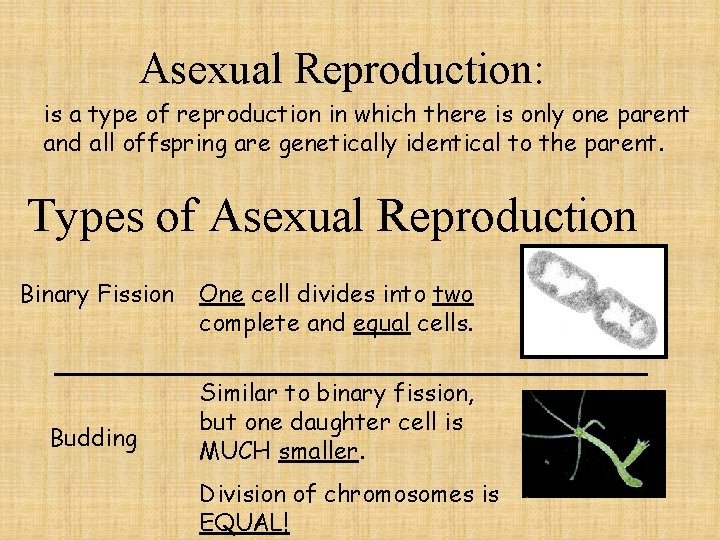
Asexual Reproduction: is a type of reproduction in which there is only one parent and all offspring are genetically identical to the parent. Types of Asexual Reproduction Binary Fission Budding One cell divides into two complete and equal cells. Similar to binary fission, but one daughter cell is MUCH smaller. Division of chromosomes is EQUAL!
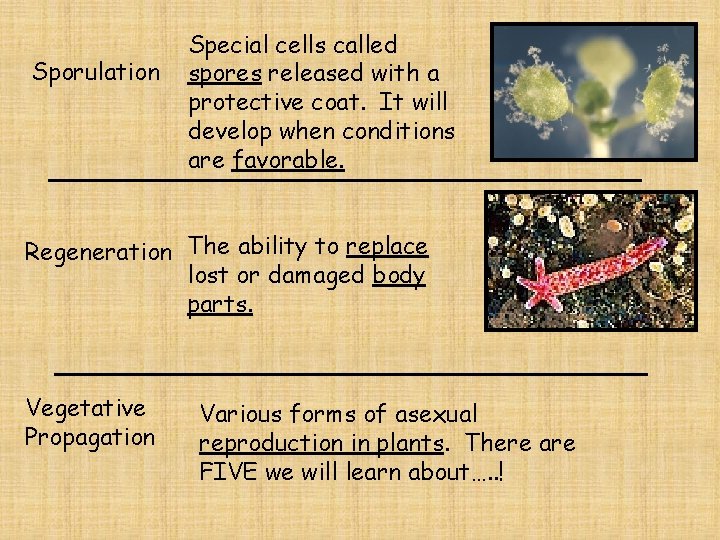
Sporulation Special cells called spores released with a protective coat. It will develop when conditions are favorable. Regeneration The ability to replace lost or damaged body parts. Vegetative Propagation Various forms of asexual reproduction in plants. There are FIVE we will learn about…. . !
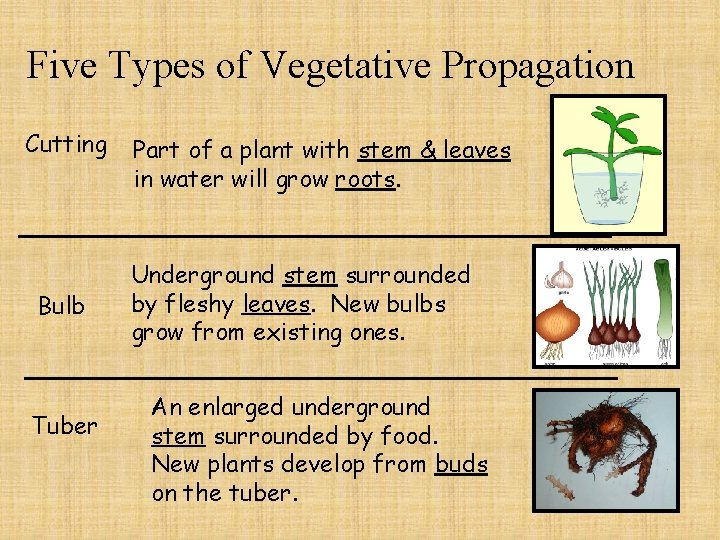
Five Types of Vegetative Propagation Cutting Bulb Tuber Part of a plant with stem & leaves in water will grow roots. Underground stem surrounded by fleshy leaves. New bulbs grow from existing ones. An enlarged underground stem surrounded by food. New plants develop from buds on the tuber.
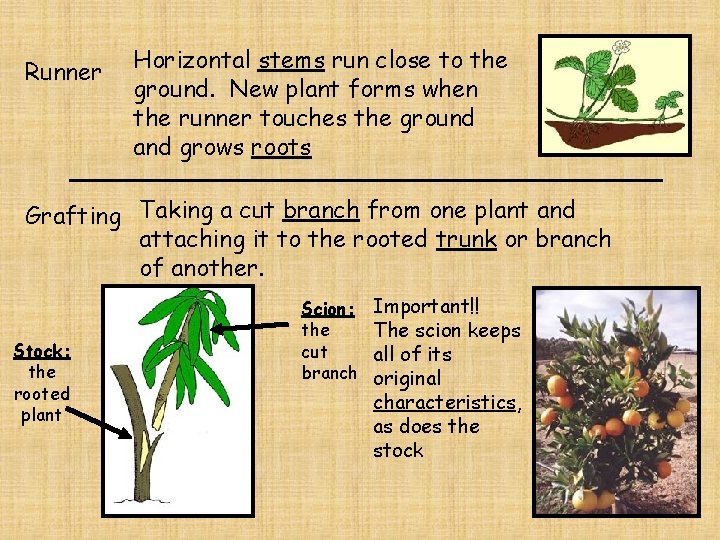
Runner Horizontal stems run close to the ground. New plant forms when the runner touches the ground and grows roots Grafting Taking a cut branch from one plant and attaching it to the rooted trunk or branch of another. Stock: the rooted plant Scion: the cut branch Important!! The scion keeps all of its original characteristics, as does the stock
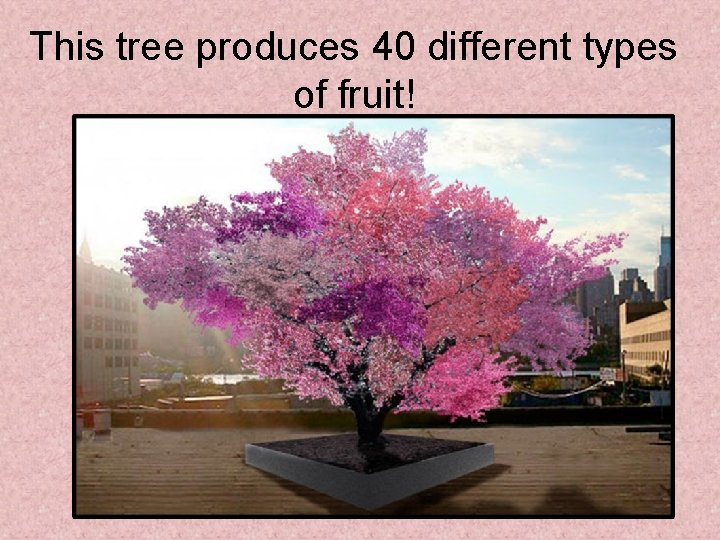
This tree produces 40 different types of fruit!
Aging and Mitosis As we get older, mitosis slows down. Eventually we reach a critical point where more cells are lost than are being replaced.
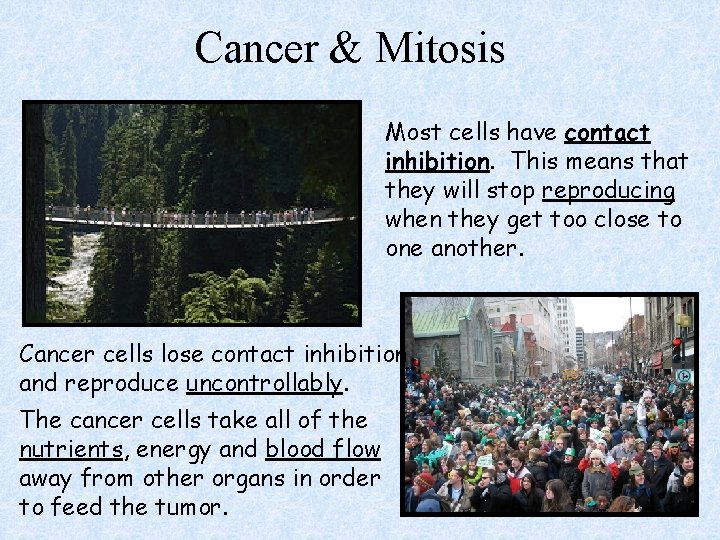
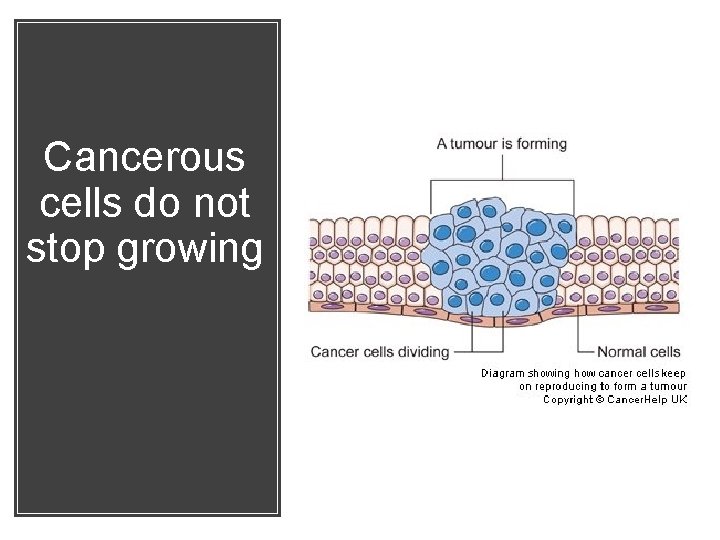
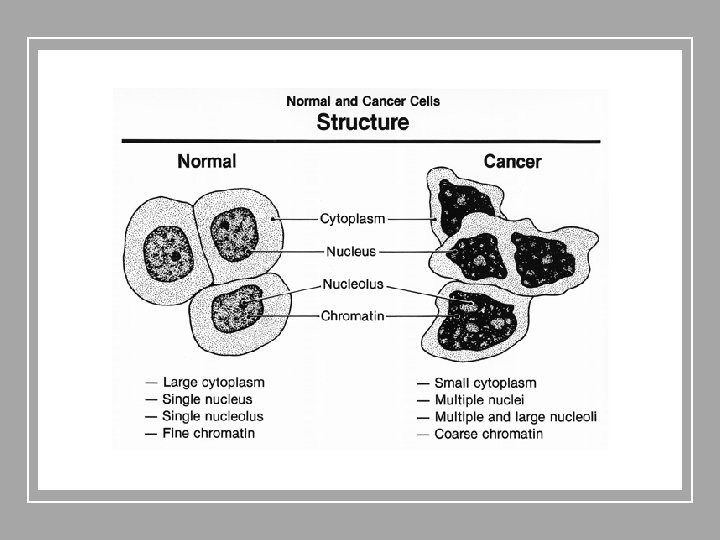
Cancer & Mitosis Most cells have contact inhibition. This means that they will stop reproducing when they get too close to one another. Cancer cells lose contact inhibition and reproduce uncontrollably. The cancer cells take all of the nutrients, energy and blood flow away from other organs in order to feed the tumor.
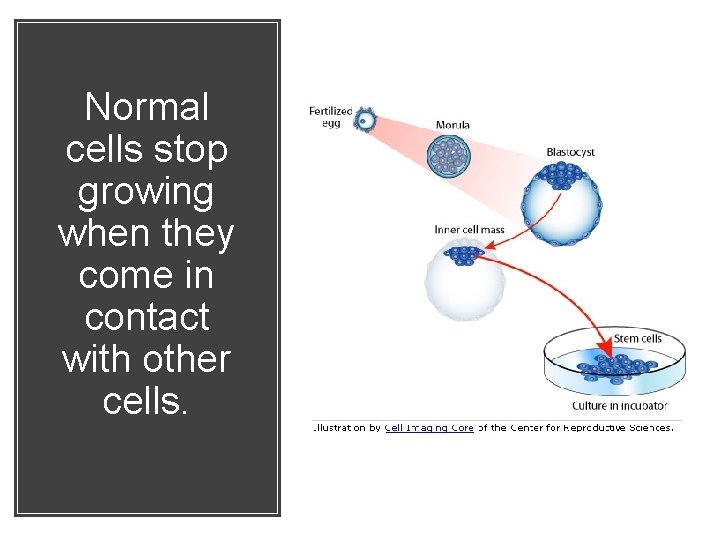
Normal cells stop growing when they come in contact with other cells.
Cancerous cells do not stop growing
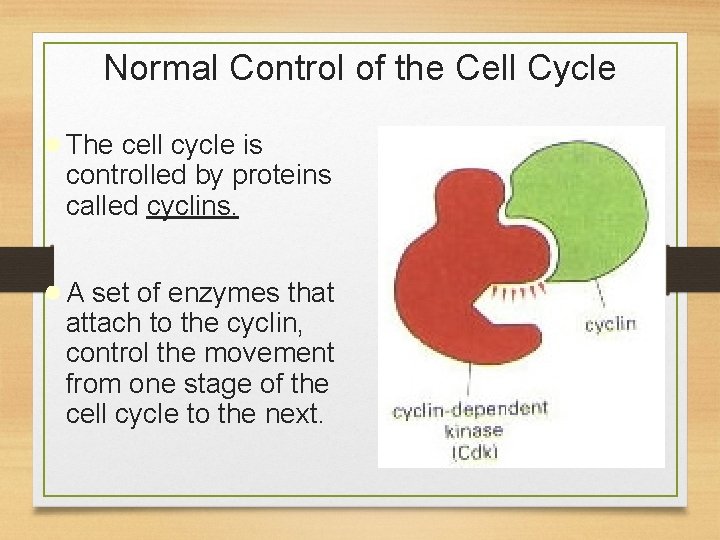
Normal Control of the Cell Cycle ● The cell cycle is controlled by proteins called cyclins. ● A set of enzymes that attach to the cyclin, control the movement from one stage of the cell cycle to the next.
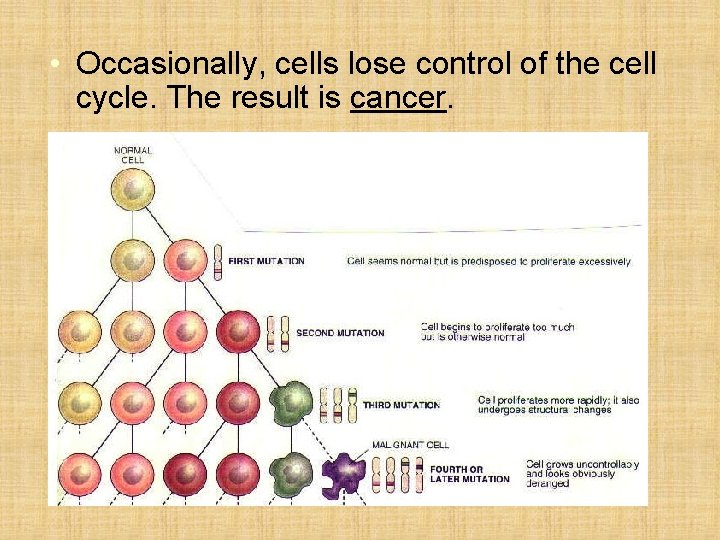
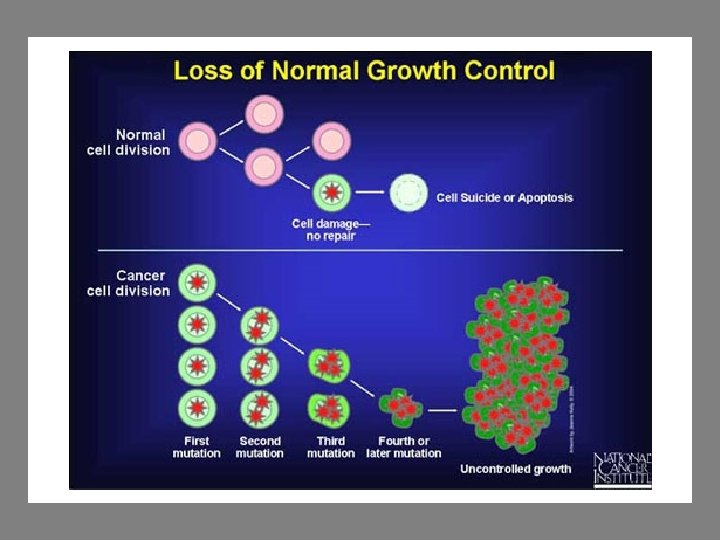
• Occasionally, cells lose control of the cell cycle. The result is cancer.
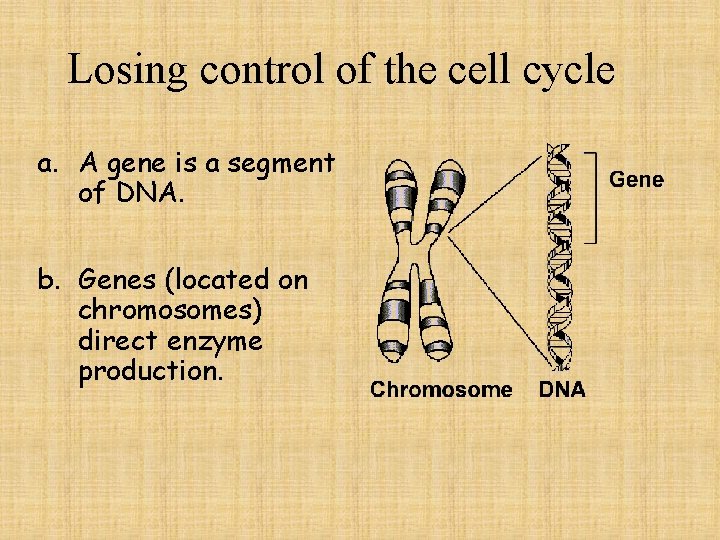
Losing control of the cell cycle a. A gene is a segment of DNA. b. Genes (located on chromosomes) direct enzyme production.
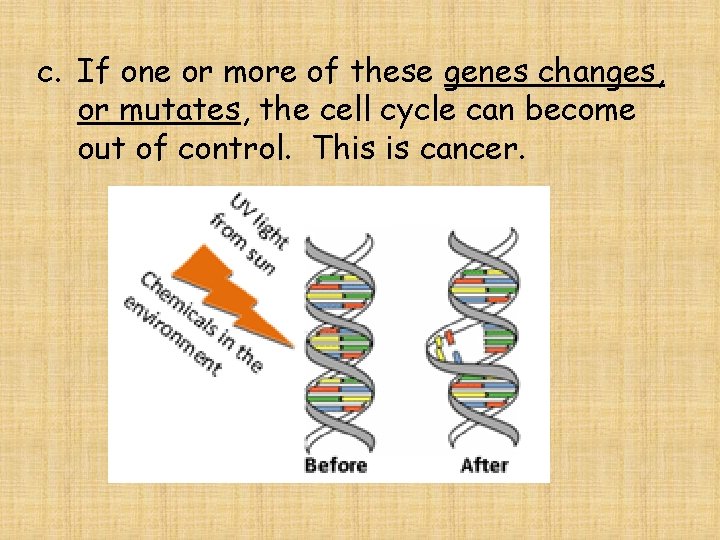
c. If one or more of these genes changes, or mutates, the cell cycle can become out of control. This is cancer.
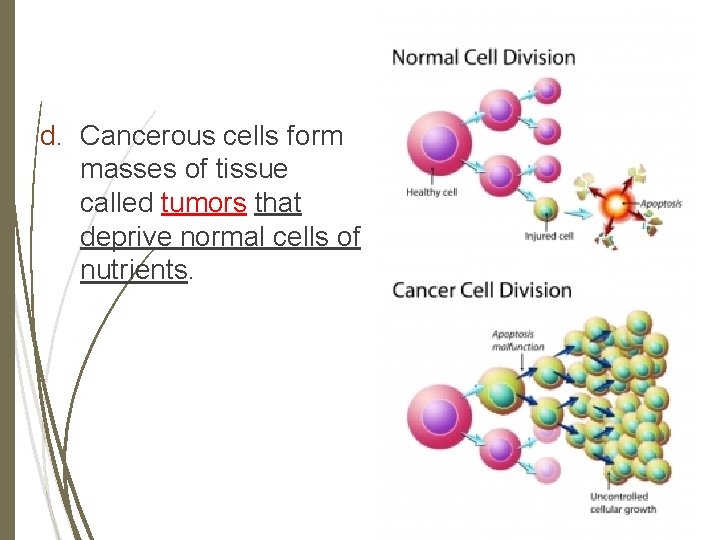
d. Cancerous cells form masses of tissue called tumors that deprive normal cells of nutrients.
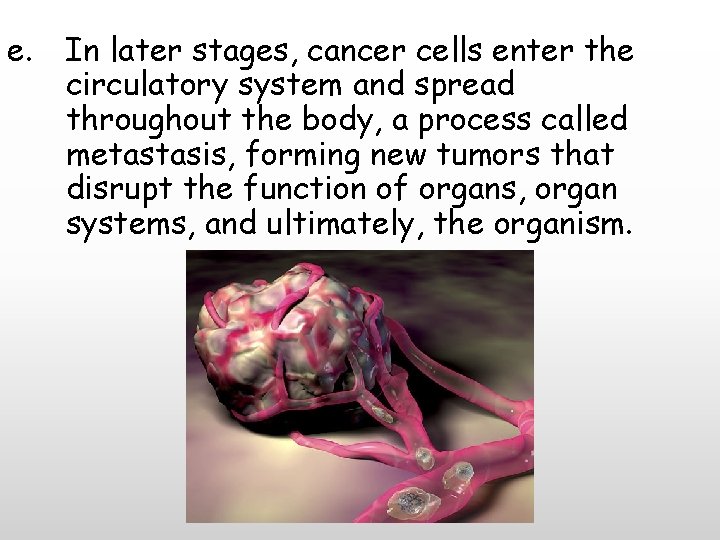
e. In later stages, cancer cells enter the circulatory system and spread throughout the body, a process called metastasis, forming new tumors that disrupt the function of organs, organ systems, and ultimately, the organism.
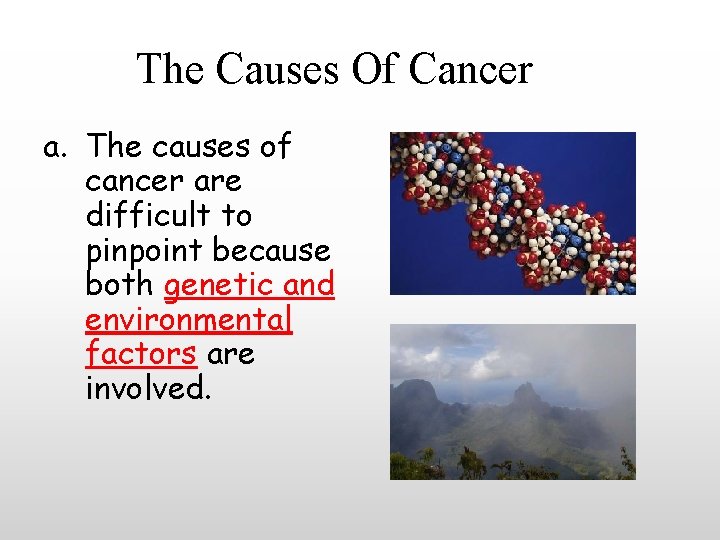
The Causes Of Cancer a. The causes of cancer are difficult to pinpoint because both genetic and environmental factors are involved.
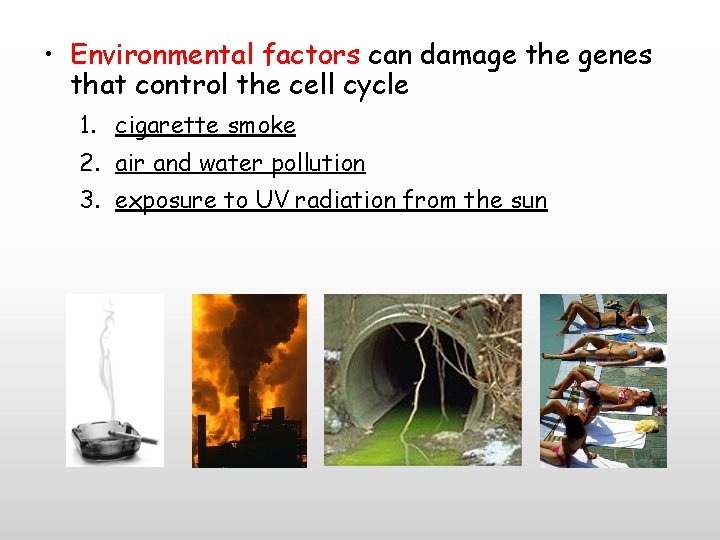
• Environmental factors can damage the genes that control the cell cycle 1. cigarette smoke 2. air and water pollution 3. exposure to UV radiation from the sun
Genetic factors • If you inherit the mutation in the BRCA 1 gene or the BRCA 2 gene you have an increased risk of developing breast and/or ovarian cancer. • http: //www. nbcnews. com/watch/nightly-news/study-ovary -removal-may-reduce-risks-for-women-with-cancer-gene 168744515878
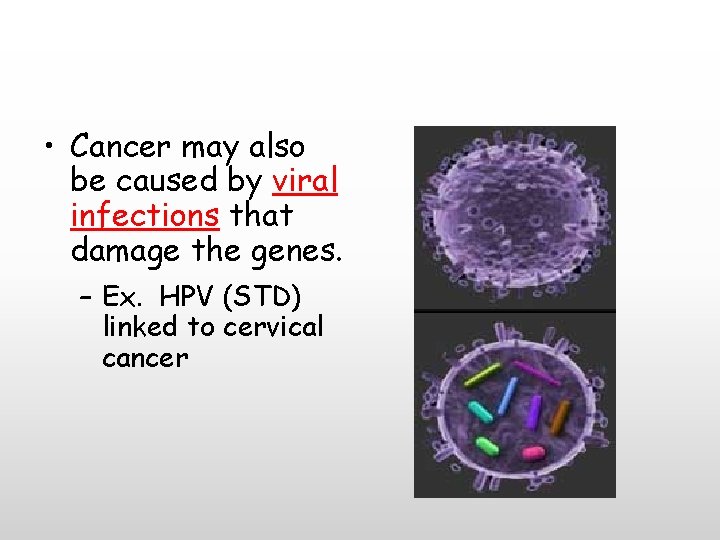
• Cancer may also be caused by viral infections that damage the genes. – Ex. HPV (STD) linked to cervical cancer
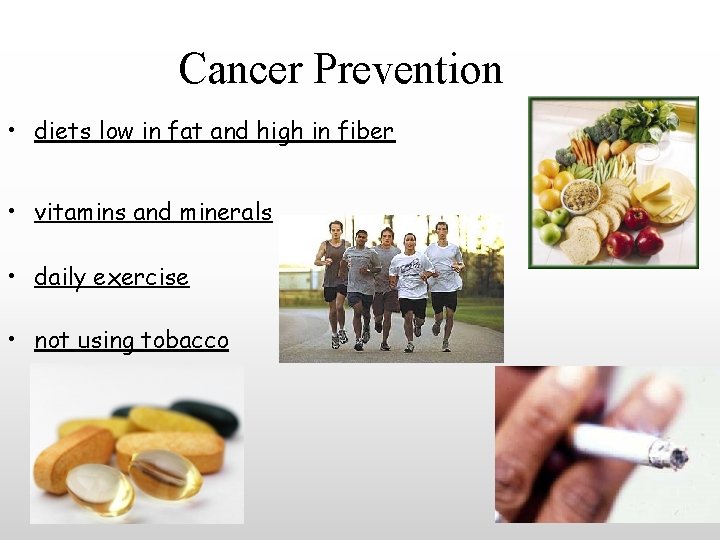
Cancer Prevention • diets low in fat and high in fiber • vitamins and minerals • daily exercise • not using tobacco
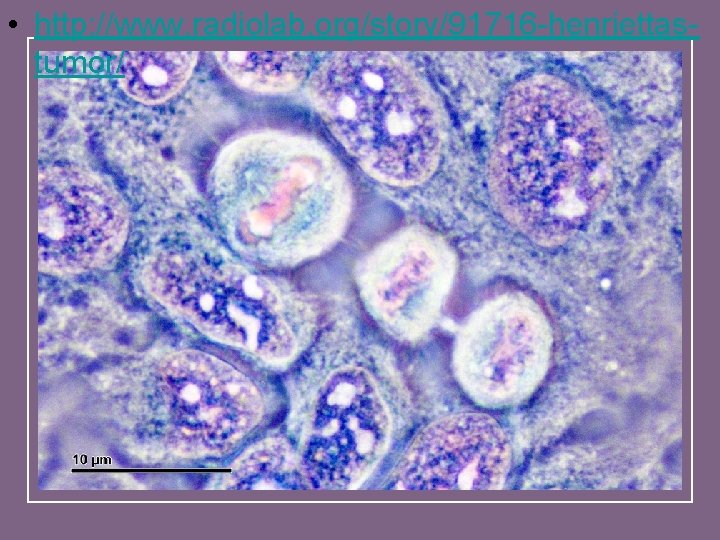
• http: //www. radiolab. org/story/91716 -henriettastumor/
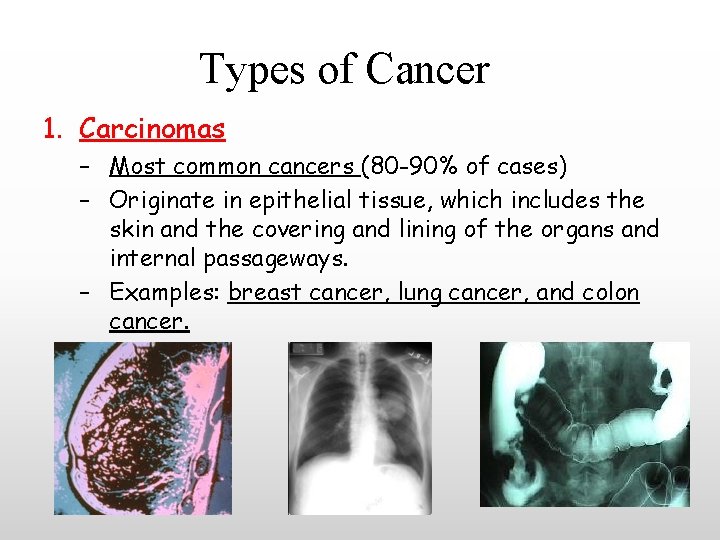
Types of Cancer 1. Carcinomas – Most common cancers (80 -90% of cases) – Originate in epithelial tissue, which includes the skin and the covering and lining of the organs and internal passageways. – Examples: breast cancer, lung cancer, and colon cancer.
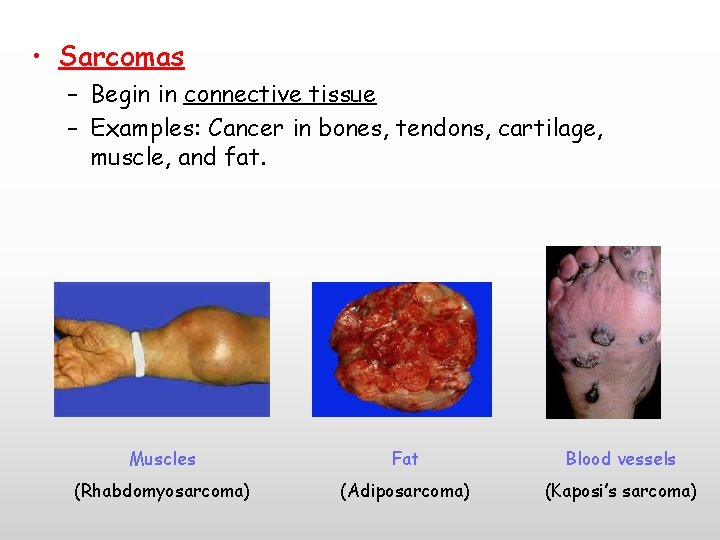
• Sarcomas – Begin in connective tissue – Examples: Cancer in bones, tendons, cartilage, muscle, and fat. Muscles Fat Blood vessels (Rhabdomyosarcoma) (Adiposarcoma) (Kaposi’s sarcoma)
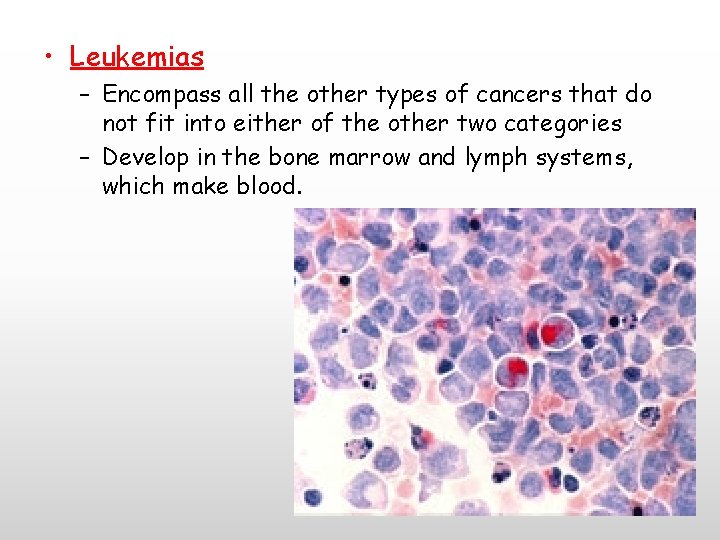
• Leukemias – Encompass all the other types of cancers that do not fit into either of the other two categories – Develop in the bone marrow and lymph systems, which make blood.
Video Link