
Cell Cycle Sequence of stages through which a
- Slides: 16
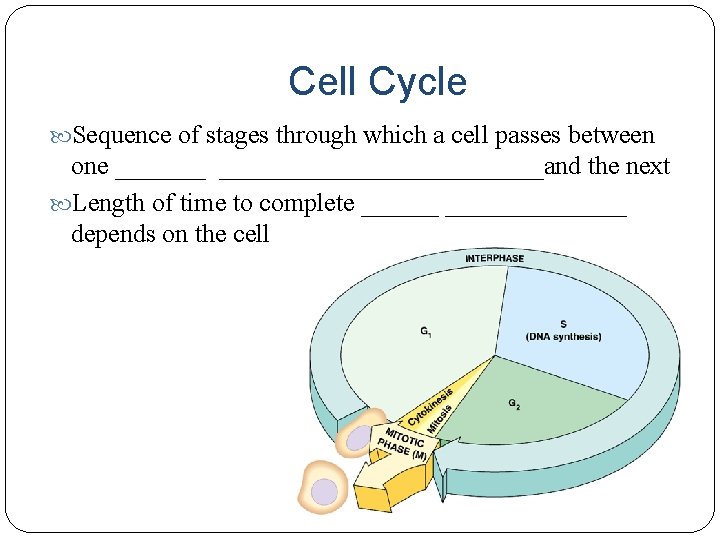
Cell Cycle Sequence of stages through which a cell passes between one ________________and the next Length of time to complete __________ depends on the cell
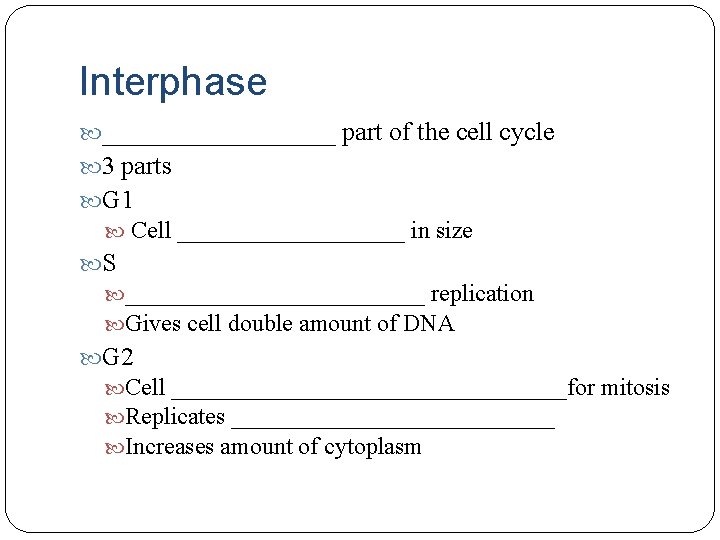
Interphase _________ part of the cell cycle 3 parts G 1 Cell __________ in size S _____________ replication Gives cell double amount of DNA G 2 Cell _________________for mitosis Replicates ______________ Increases amount of cytoplasm
Mitosis Type of cell division that generates ________with identical components of the mother cell Same _____ number of chromosomes as parent cell Occurs in somatic cells Mechanism for __________ reproduction Requires only one parent Allows multicellular organisms to grow and replace cells
Stages of Mitosis Prophase __________ Anaphase __________
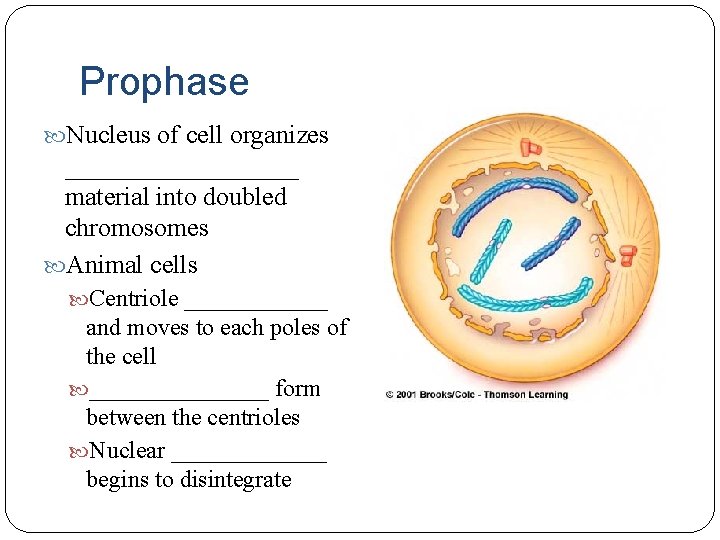
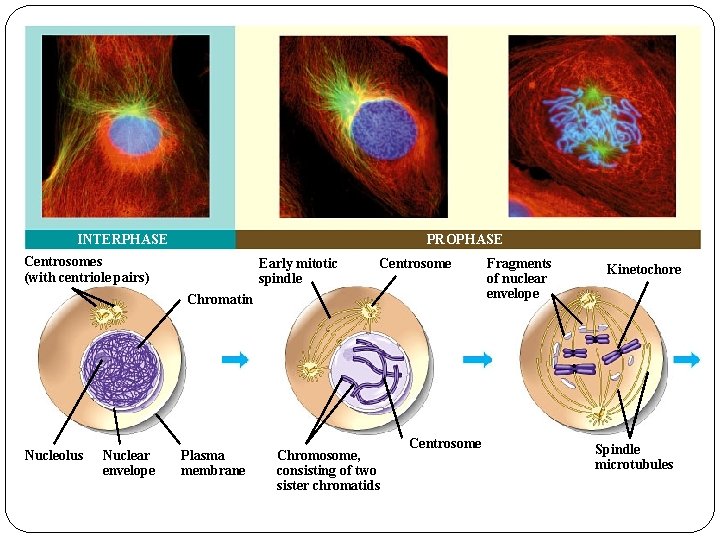
Prophase Nucleus of cell organizes _________ material into doubled chromosomes Animal cells Centriole ______ and moves to each poles of the cell ________ form between the centrioles Nuclear _______ begins to disintegrate
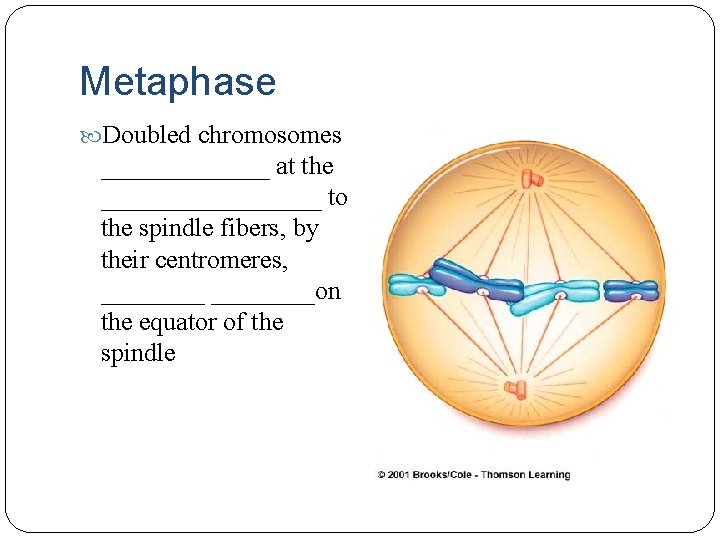
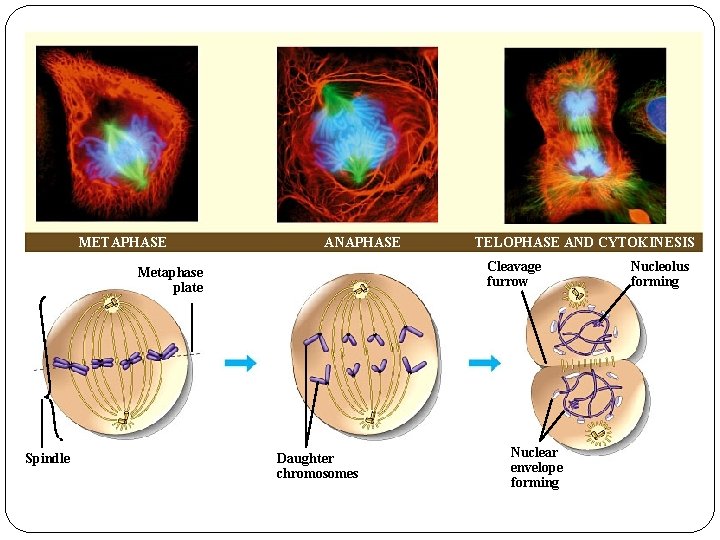
Metaphase Doubled chromosomes _______ at the _________ to the spindle fibers, by their centromeres, ________on the equator of the spindle
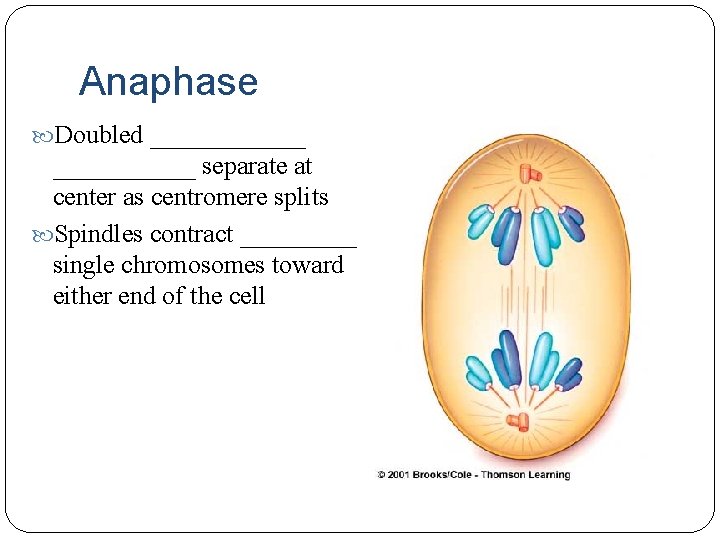
Anaphase Doubled ______ separate at center as centromere splits Spindles contract _____ single chromosomes toward either end of the cell
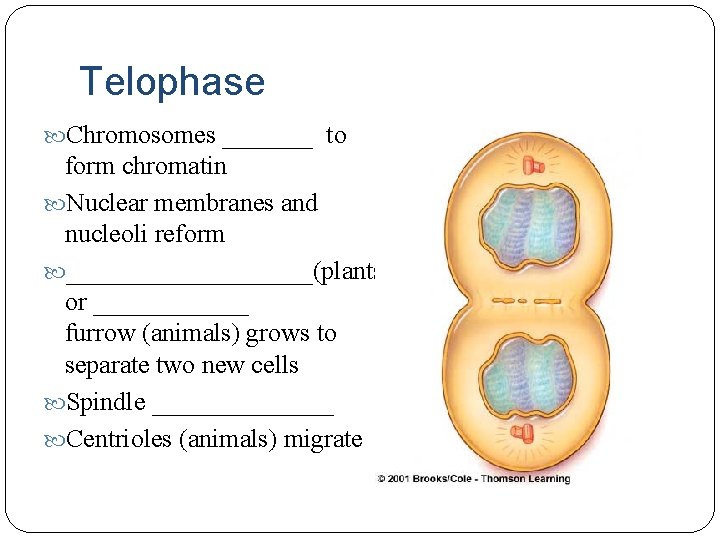
Telophase Chromosomes _______ to form chromatin Nuclear membranes and nucleoli reform __________(plants) or ______ furrow (animals) grows to separate two new cells Spindle _______ Centrioles (animals) migrate
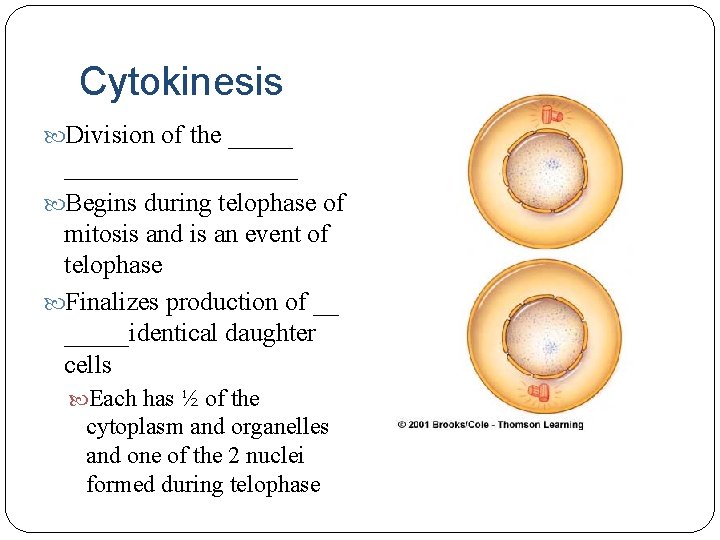
Cytokinesis Division of the ____________ Begins during telophase of mitosis and is an event of telophase Finalizes production of __ _____identical daughter cells Each has ½ of the cytoplasm and organelles and one of the 2 nuclei formed during telophase
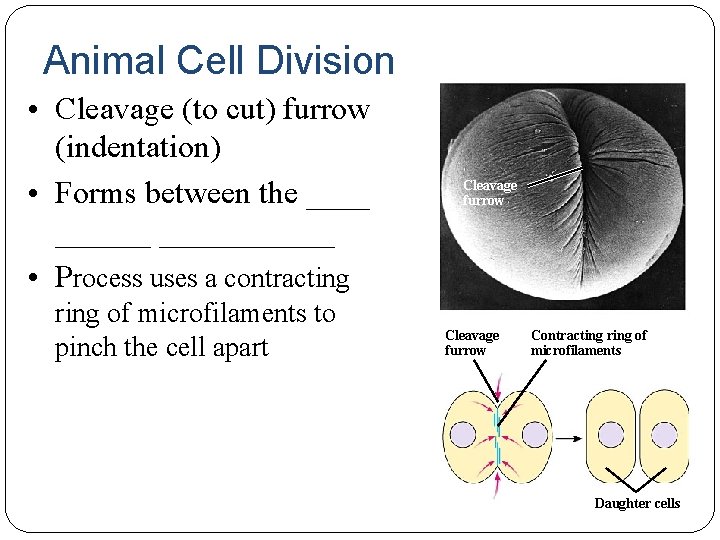
Animal Cell Division • Cleavage (to cut) furrow (indentation) • Forms between the ______ • Process uses a contracting ring of microfilaments to pinch the cell apart Cleavage furrow Contracting ring of microfilaments Daughter cells
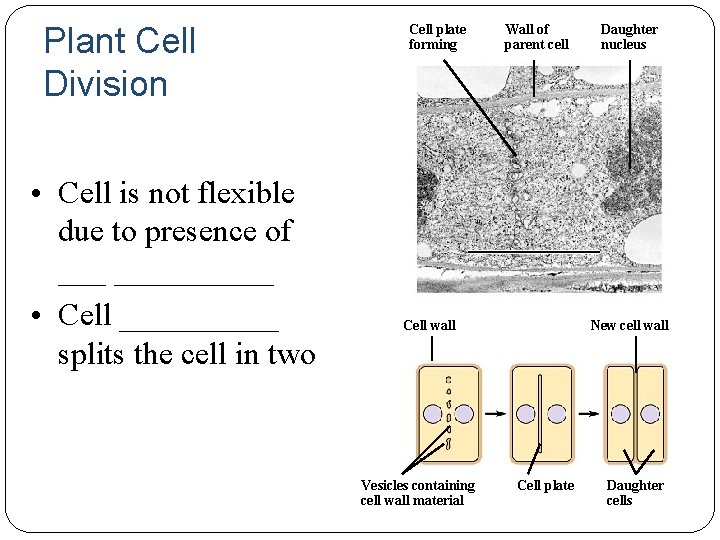
Plant Cell Division • Cell is not flexible due to presence of __________ • Cell _____ splits the cell in two Cell plate forming Wall of parent cell Cell wall Vesicles containing cell wall material Daughter nucleus New cell wall Cell plate Daughter cells
INTERPHASE PROPHASE Centrosomes (with centriole pairs) Early mitotic spindle Centrosome Chromatin Nucleolus Nuclear envelope Plasma membrane Chromosome, consisting of two sister chromatids Centrosome Fragments of nuclear envelope Kinetochore Spindle microtubules
METAPHASE ANAPHASE Cleavage furrow Metaphase plate Spindle TELOPHASE AND CYTOKINESIS Daughter chromosomes Nuclear envelope forming Nucleolus forming
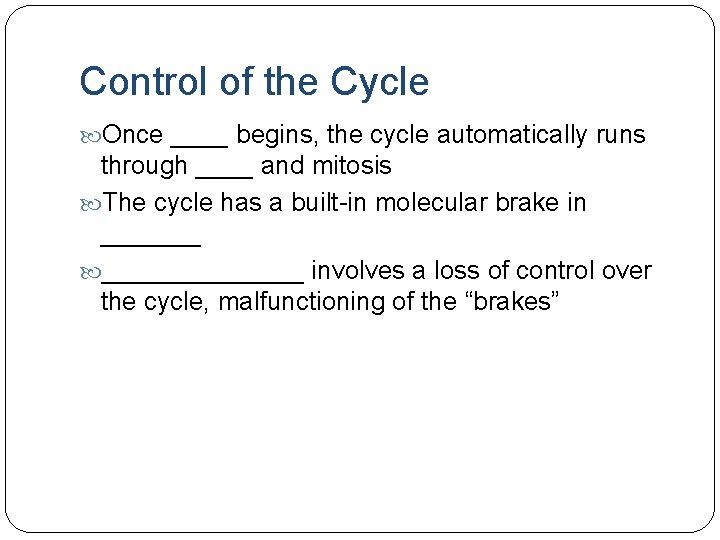
Control of the Cycle Once ____ begins, the cycle automatically runs through ____ and mitosis The cycle has a built-in molecular brake in ______________ involves a loss of control over the cycle, malfunctioning of the “brakes”
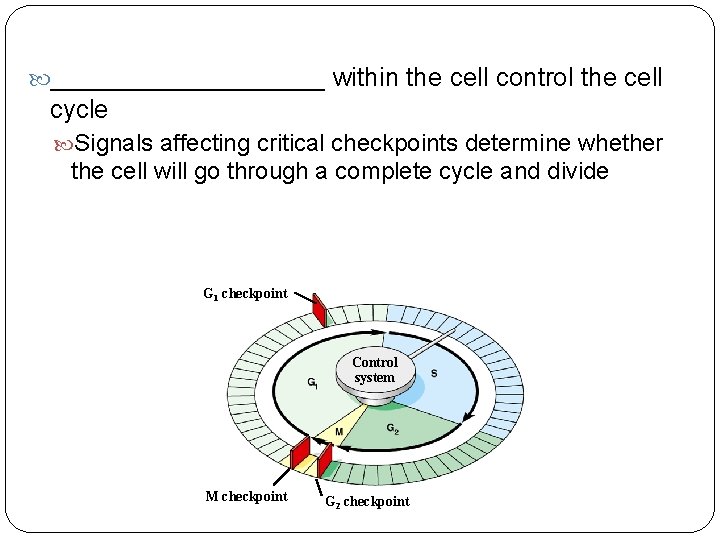
__________ within the cell control the cell cycle Signals affecting critical checkpoints determine whether the cell will go through a complete cycle and divide G 1 checkpoint Control system M checkpoint G 2 checkpoint
__________Cell Cycles Cancer cells have abnormal cell cycles They divide ___________ and can form abnormal masses called _________________________ and ______________are effective as cancer treatments because they interfere with cell division