
Cell Cycle Regulation Cell Cycle Regulation Regulating the
- Slides: 13
Cell Cycle Regulation
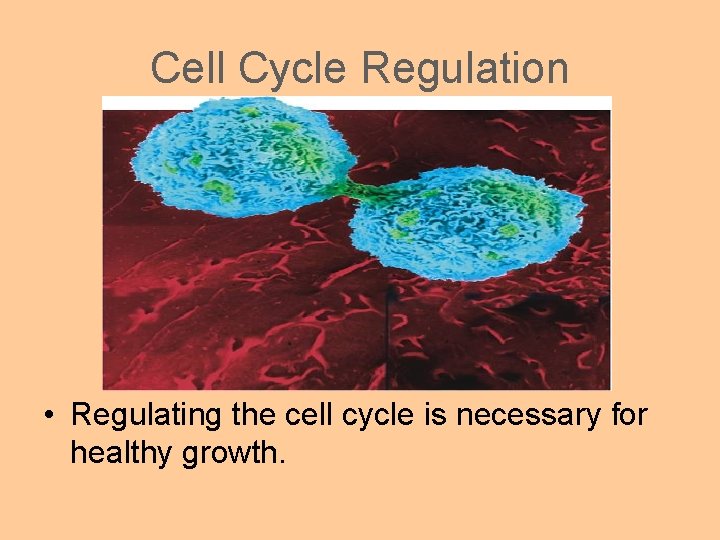
Cell Cycle Regulation • Regulating the cell cycle is necessary for healthy growth.
Mitotic Regulation • There are both internal and external factors that regulate cell division. • External factors include physical and chemical signals. • Proteins that stimulate cell division are known as growth factors.
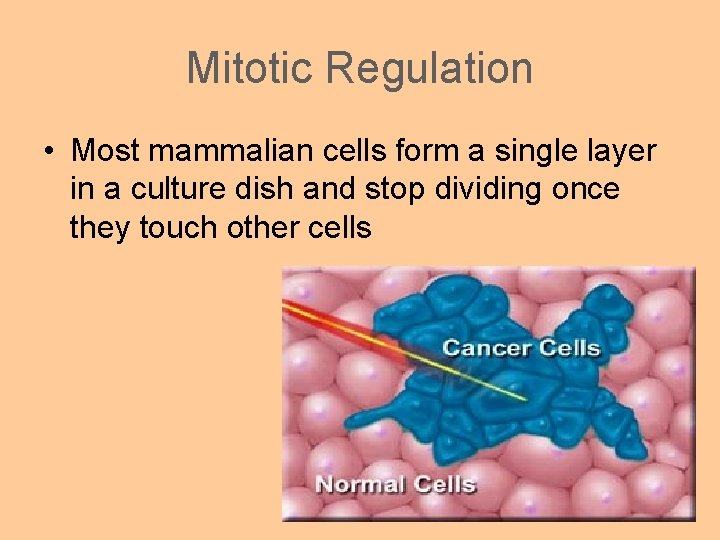
Mitotic Regulation • Most mammalian cells form a single layer in a culture dish and stop dividing once they touch other cells
Mitotic Regulation • Two of the most important internal factors are kinases and cyclins (both proteins). • External factors trigger the internal factors which affect the cell cycle.
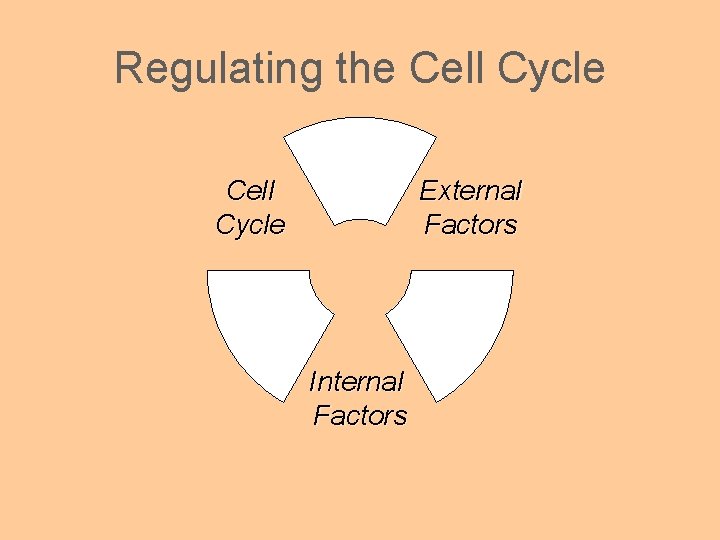
Regulating the Cell Cycle External Factors Internal Factors
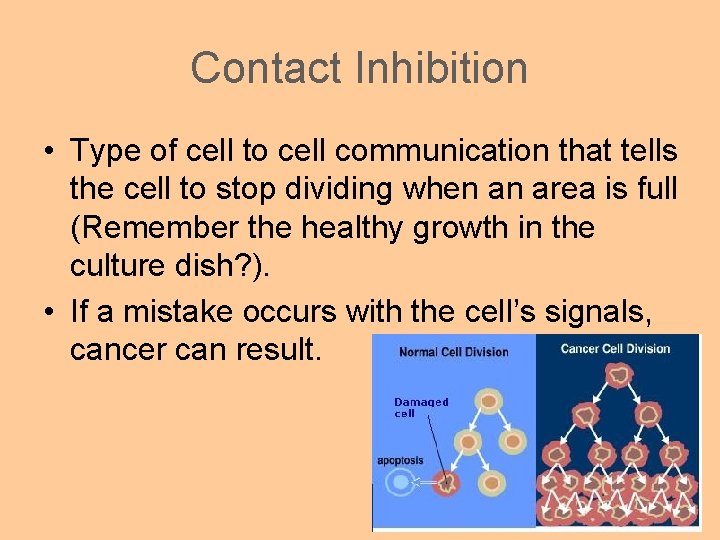
Contact Inhibition • Type of cell to cell communication that tells the cell to stop dividing when an area is full (Remember the healthy growth in the culture dish? ). • If a mistake occurs with the cell’s signals, cancer can result.
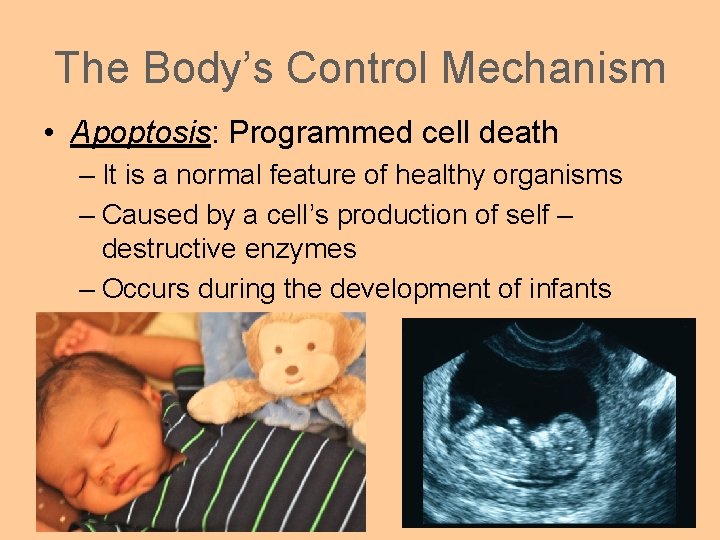
The Body’s Control Mechanism • Apoptosis: Programmed cell death – It is a normal feature of healthy organisms – Caused by a cell’s production of self – destructive enzymes – Occurs during the development of infants
Uncontrolled Mitotic Division • • Cancer: the uncontrolled dividing of cells Reasons cancer can occur: 1. Failure to produce certain enzymes 2. Overproduction of enzymes at the wrong time 3. Mutations that occur from copying DNA incorrectly 4. Environmental factor that changes your DNA
Cancer cells • Cancer cells form disorganized clumps called tumors • Benign tumors = not cancerous (will not spread and take over healthy cells) • Malignant tumors = cancerous (can metastasize, or break away to take over healthy cells)
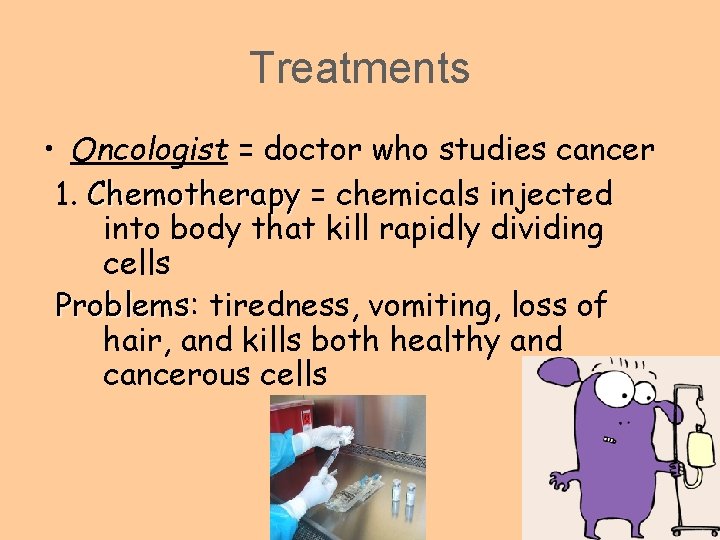
Treatments • Oncologist = doctor who studies cancer 1. Chemotherapy = chemicals injected into body that kill rapidly dividing cells Problems: Problems tiredness, vomiting, loss of hair, and kills both healthy and cancerous cells
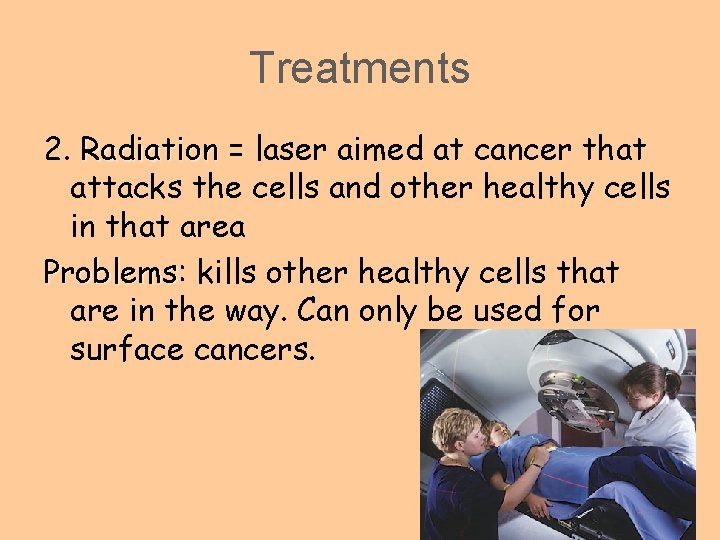
Treatments 2. Radiation = laser aimed at cancer that attacks the cells and other healthy cells in that area Problems: Problems kills other healthy cells that are in the way. Can only be used for surface cancers.
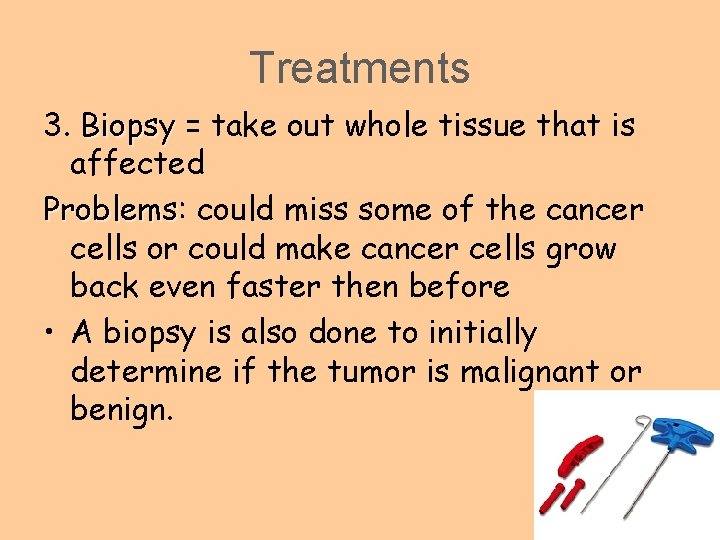
Treatments 3. Biopsy = take out whole tissue that is affected Problems: Problems could miss some of the cancer cells or could make cancer cells grow back even faster then before • A biopsy is also done to initially determine if the tumor is malignant or benign.