
CELL CYCLE NOTES Series of events cells go
- Slides: 25
CELL CYCLE NOTES: Series of events cells go through as they grow and divide. Interphase: period of growth that occurs between cell divisions.
During cell cycle: Ø Ø Ø cell prepares for division grows divides to form 2 daughter cells - each of which begins the cycle again
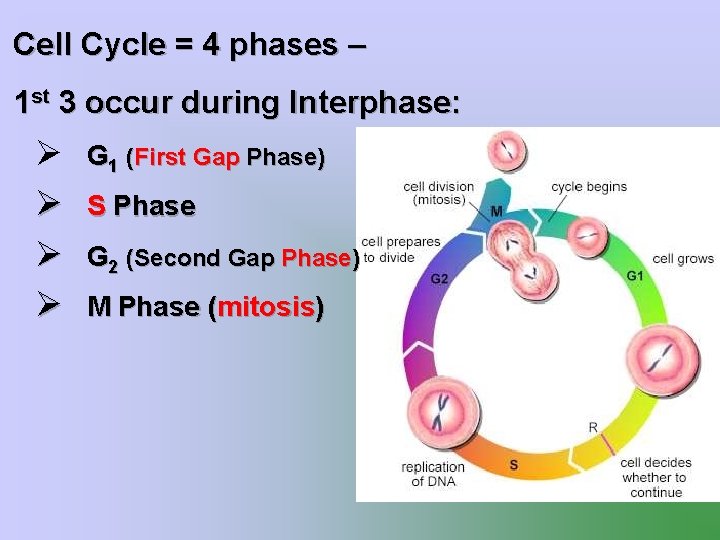
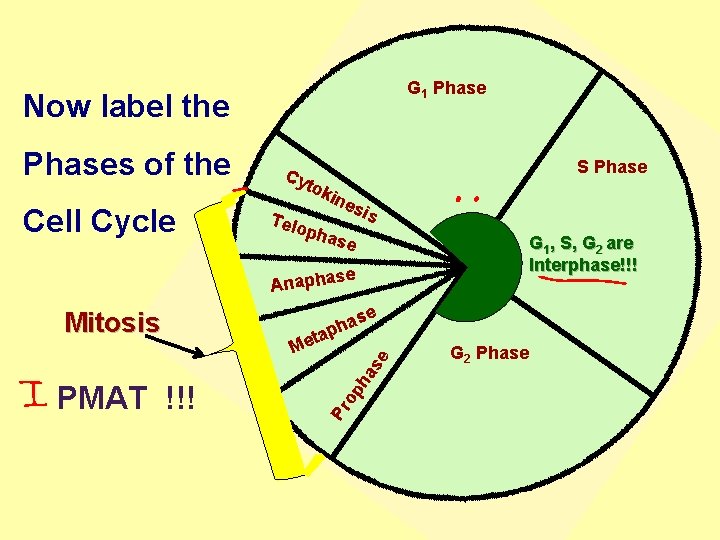
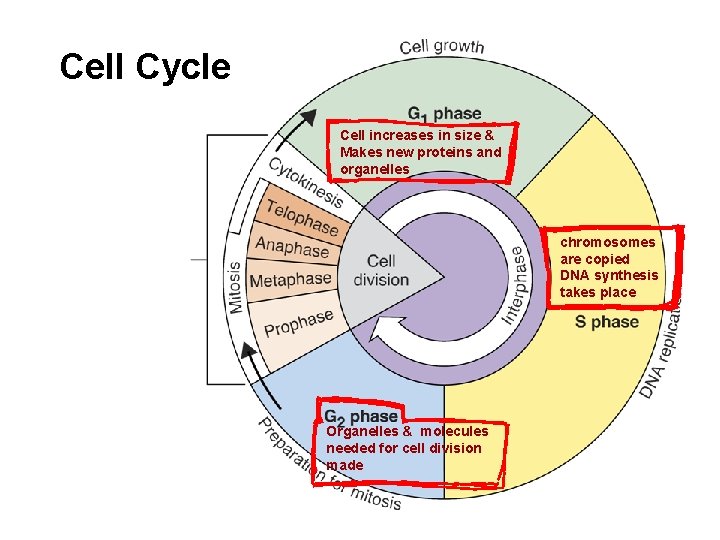
Cell Cycle = 4 phases – 1 st 3 occur during Interphase: Ø Ø G 1 (First Gap Phase) S Phase G 2 (Second Gap Phase) M Phase (mitosis)
use your ruler to divide one quarter into fifths
G 1 Phase Now label the Phases of the Cell Cycle Cy S Phase tok Telo ine sis pha se G 1, S, G 2 are Interphase!!! se Anapha se t Me op ha PMAT !!! se a h ap Pr Mitosis G 2 Phase
Cell Cycle Cell increases in size & Makes new proteins and organelles chromosomes are copied DNA synthesis takes place Organelles & molecules needed for cell division made
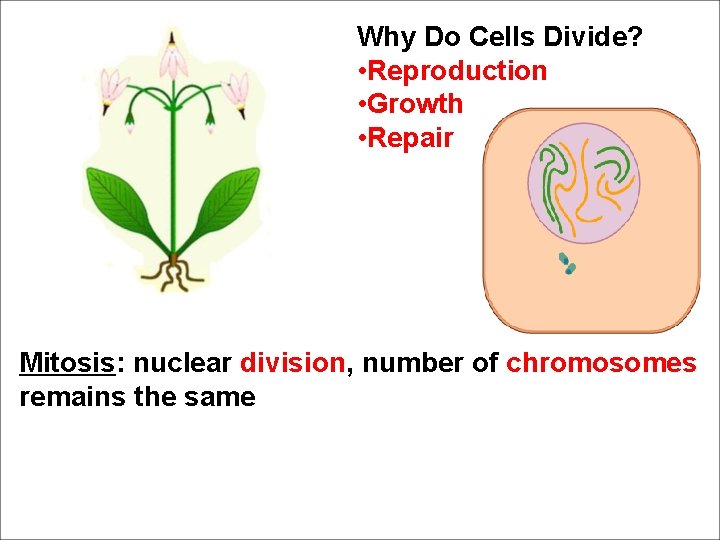
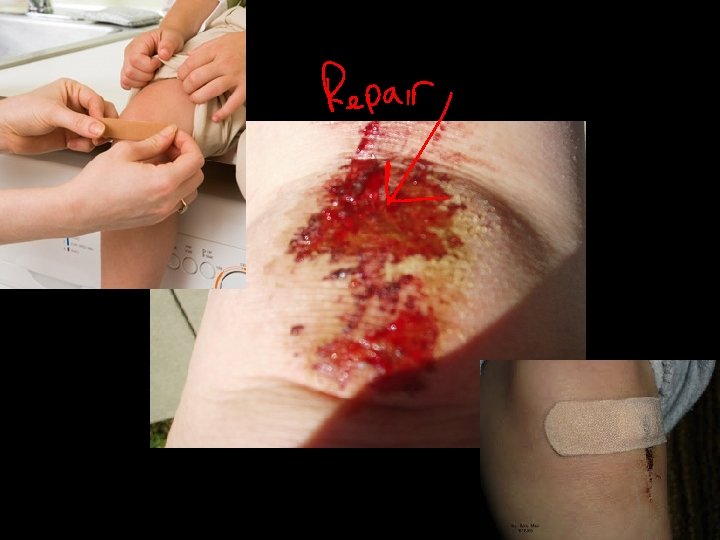
Why Do Cells Divide? • Reproduction • Growth • Repair Mitosis: nuclear division, number of chromosomes remains the same
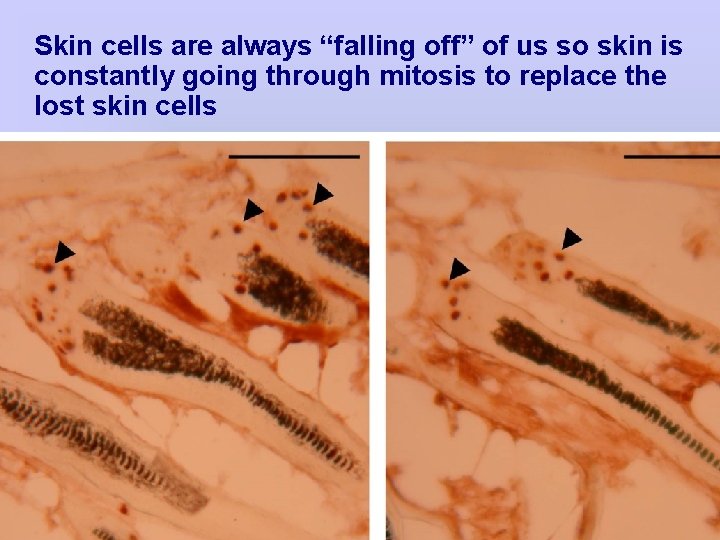
Skin cells are always “falling off” of us so skin is constantly going through mitosis to replace the lost skin cells
https: //www. youtube. com/watch? v=C 6 hn 3 s. A 0 ip 0 What's the difference between identical and fraternal twins? • http: //www. youtube. com/watch? v=LSJKXl K 3 Lx 8 • Res and Blk twins: https: //www. youtube. com/watch? v=JIUK 2 KSbvv. I
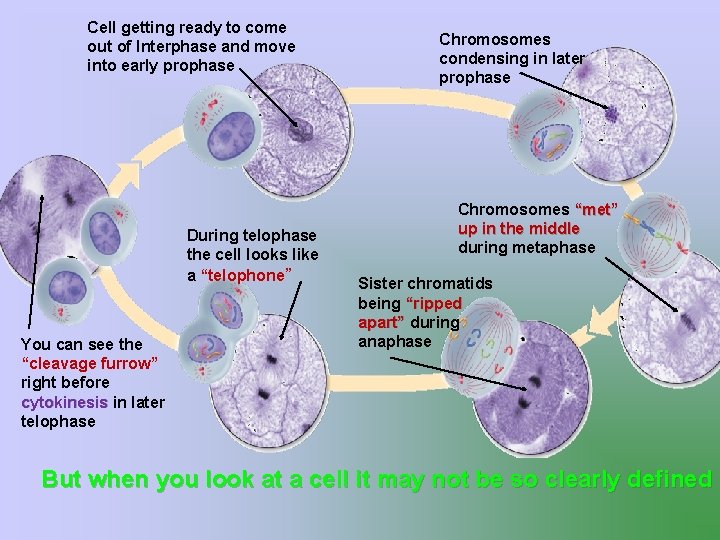
Cell getting ready to come out of Interphase and move into early prophase During telophase the cell looks like a “telophone” You can see the “cleavage furrow” right before cytokinesis in later telophase Chromosomes condensing in later prophase Chromosomes “met” up in the middle during metaphase Sister chromatids being “ripped apart” during anaphase But when you look at a cell it may not be so clearly defined
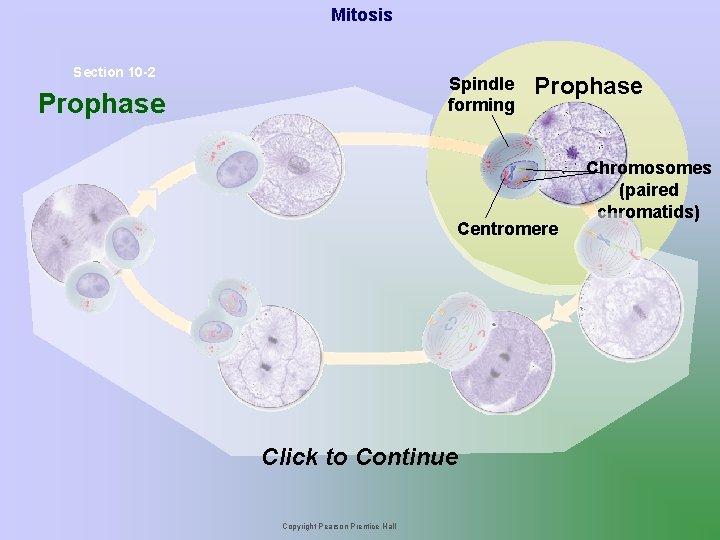
Mitosis Section 10 -2 Spindle forming Prophase Centromere Click to Continue Copyright Pearson Prentice Hall Chromosomes (paired chromatids)
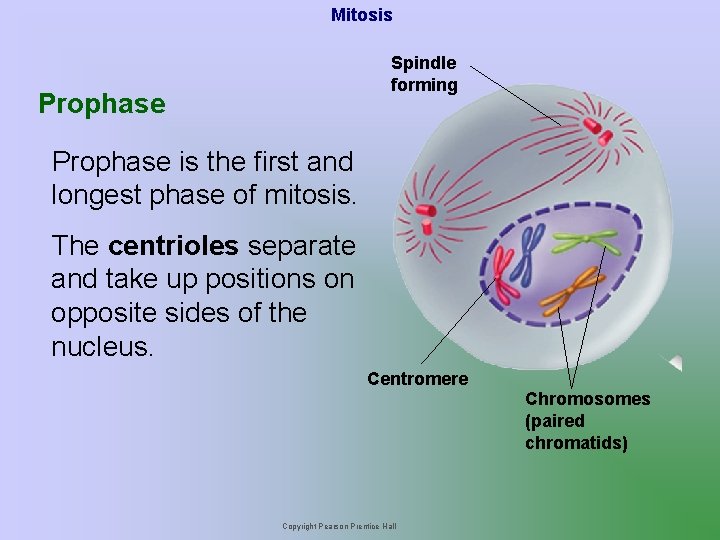
Mitosis Spindle forming Prophase is the first and longest phase of mitosis. The centrioles separate and take up positions on opposite sides of the nucleus. Centromere Chromosomes (paired chromatids) Copyright Pearson Prentice Hall
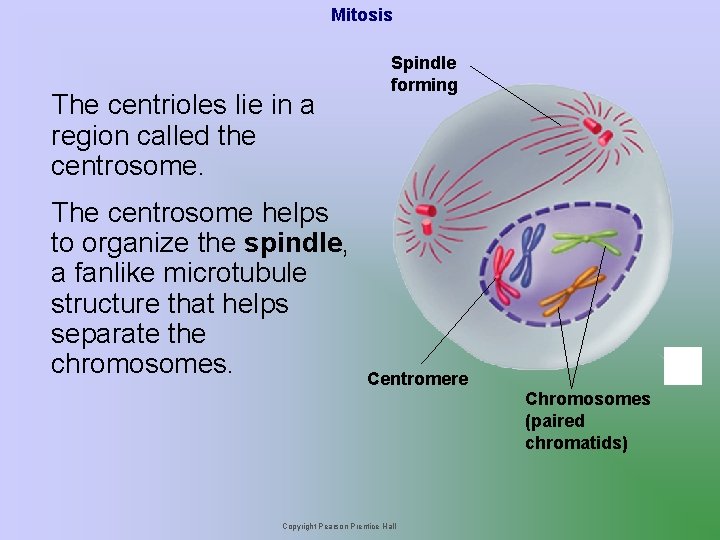
Mitosis The centrioles lie in a region called the centrosome. The centrosome helps to organize the spindle, a fanlike microtubule structure that helps separate the chromosomes. Spindle forming Centromere Chromosomes (paired chromatids) Copyright Pearson Prentice Hall
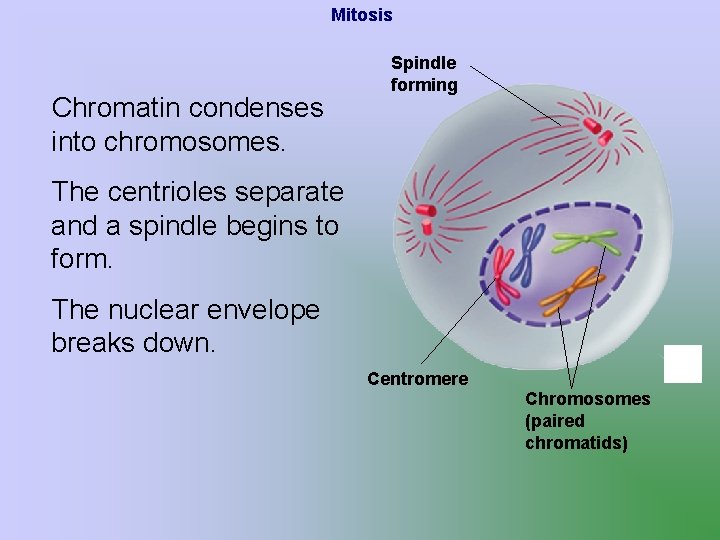
Mitosis Chromatin condenses into chromosomes. Spindle forming The centrioles separate and a spindle begins to form. The nuclear envelope breaks down. Centromere Chromosomes (paired chromatids)
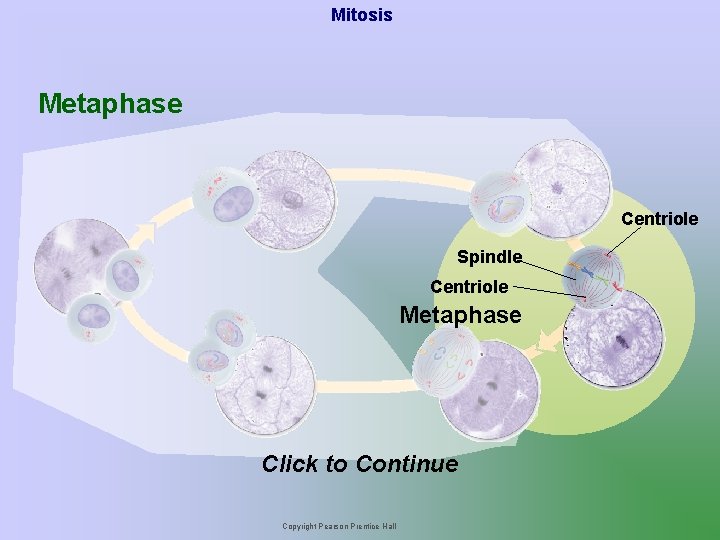
Mitosis Metaphase Centriole Spindle Centriole Metaphase Click to Continue Copyright Pearson Prentice Hall
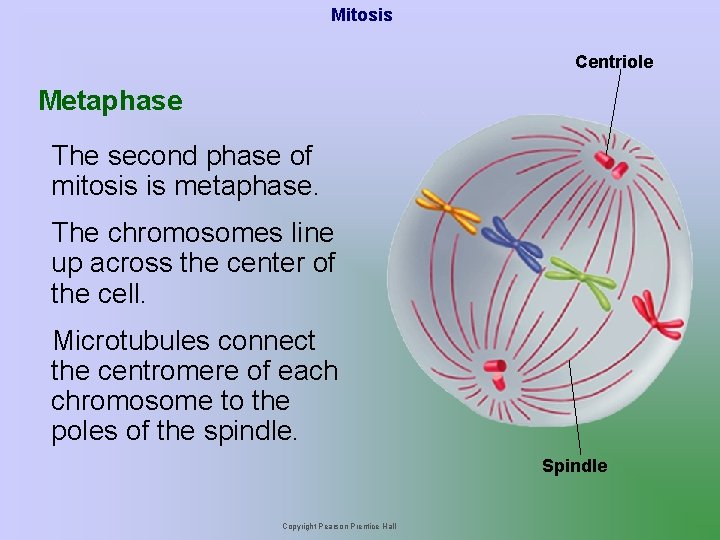
Mitosis Centriole Metaphase The second phase of mitosis is metaphase. The chromosomes line up across the center of the cell. Microtubules connect the centromere of each chromosome to the poles of the spindle. Spindle Copyright Pearson Prentice Hall
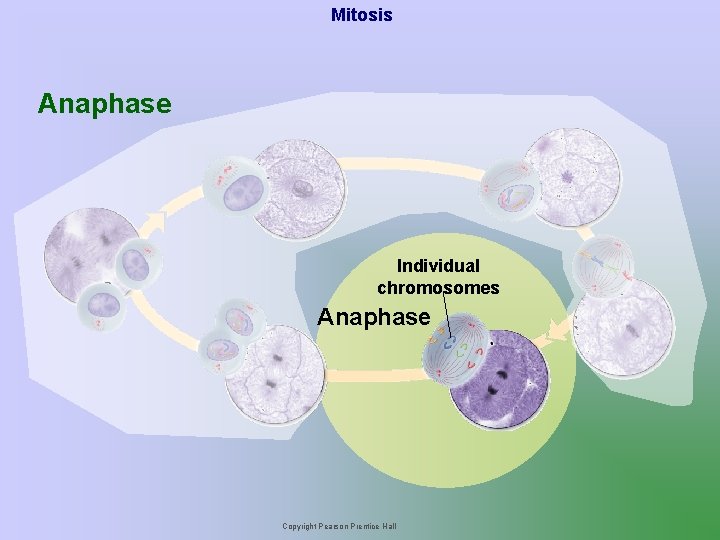
Mitosis Anaphase Individual chromosomes Anaphase Copyright Pearson Prentice Hall
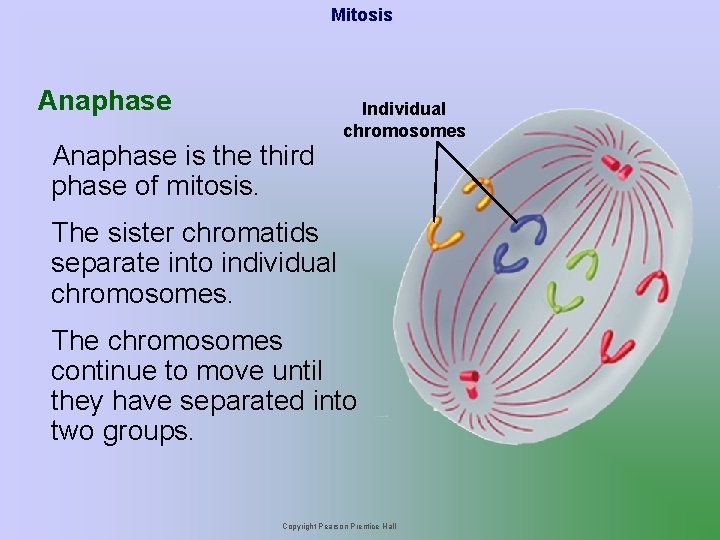
Mitosis Anaphase is the third phase of mitosis. Individual chromosomes The sister chromatids separate into individual chromosomes. The chromosomes continue to move until they have separated into two groups. Copyright Pearson Prentice Hall
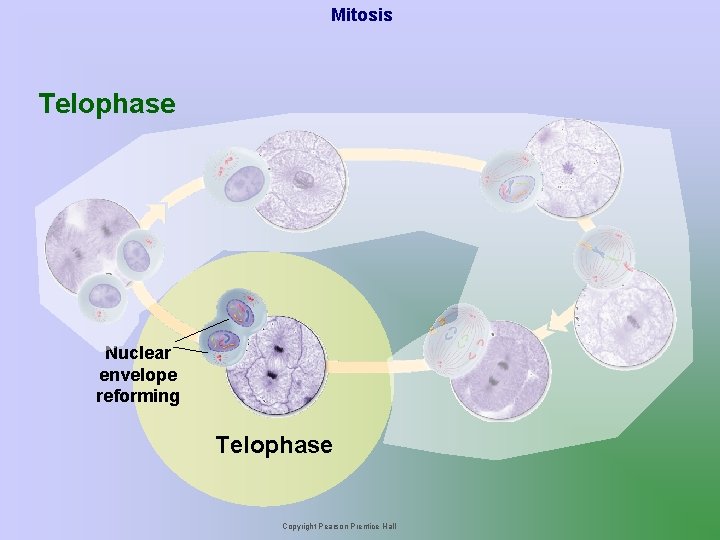
Mitosis Telophase Nuclear envelope reforming Telophase Copyright Pearson Prentice Hall
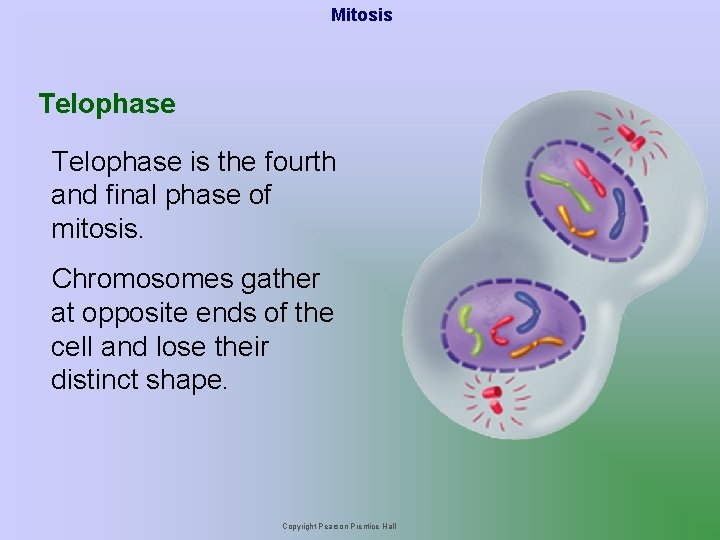
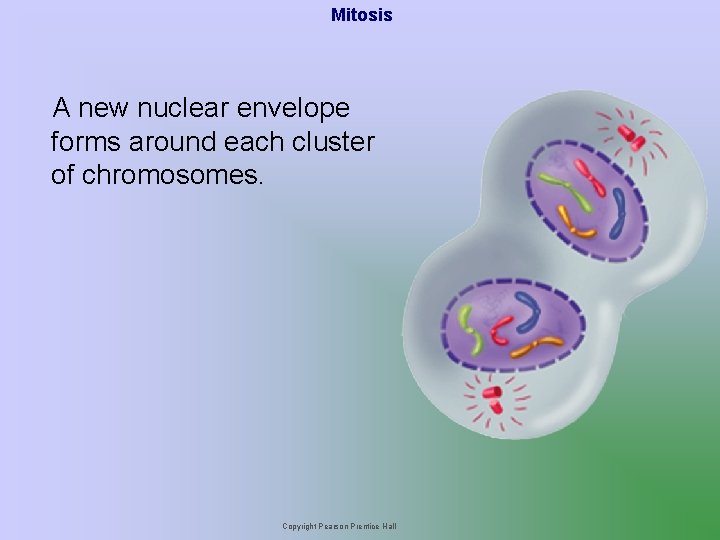
Mitosis Telophase is the fourth and final phase of mitosis. Chromosomes gather at opposite ends of the cell and lose their distinct shape. Copyright Pearson Prentice Hall
Mitosis A new nuclear envelope forms around each cluster of chromosomes. Copyright Pearson Prentice Hall
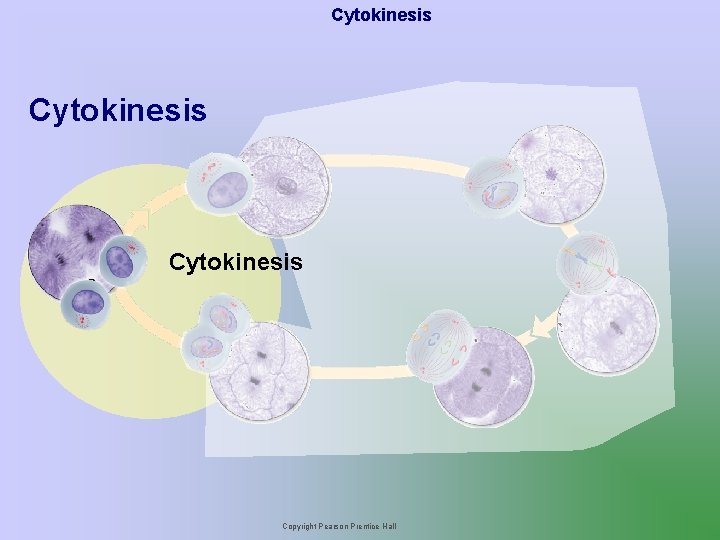
Cytokinesis Copyright Pearson Prentice Hall
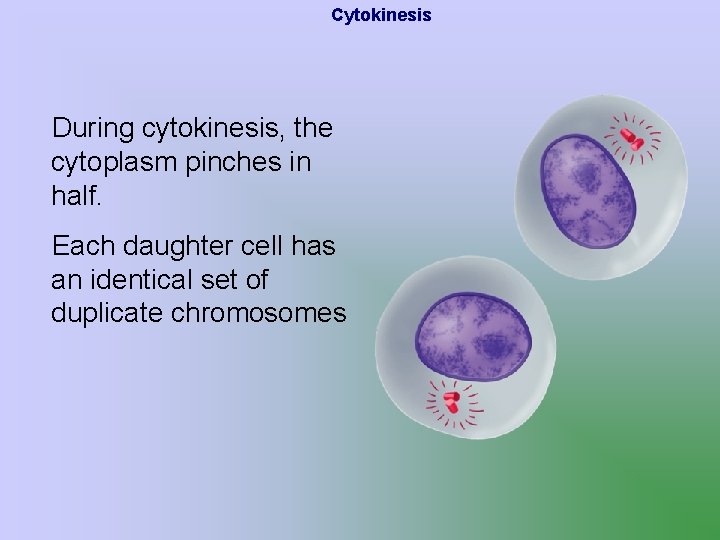
Cytokinesis During cytokinesis, the cytoplasm pinches in half. Each daughter cell has an identical set of duplicate chromosomes