
CELL CYCLE NOTES Biology Unit 4 Surface Area
CELL CYCLE NOTES Biology Unit 4
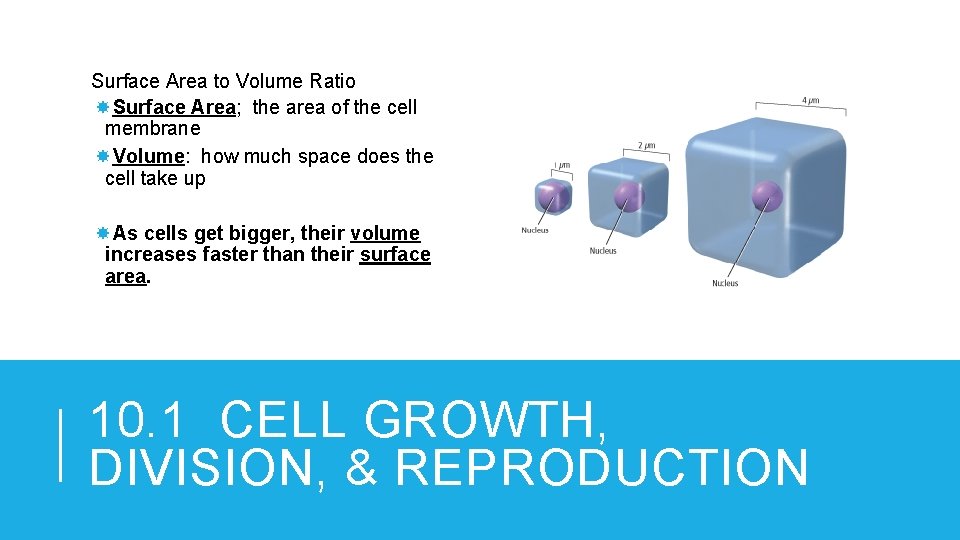
Surface Area to Volume Ratio Surface Area; the area of the cell membrane Volume: how much space does the cell take up As cells get bigger, their volume increases faster than their surface area. 10. 1 CELL GROWTH, DIVISION, & REPRODUCTION
LIMITS TO CELL SIZE The LARGER a cell becomes, the more demands the cell places on its DNA Large cells are not as efficient at moving materials across its membrane Large cells use OXYGEN and NUTRIENTS more quickly What is the solution? To avoid becoming too large, a cell divides into two new
DNA is replicated (copied) and divided CELL DIVISIONWHAT HAPPENS ? NO more information overload Cell volume DECREASES It is easier to transport materials across the membrane
THE CELL CYCLE What is it? A series of events during which a cell grows, prepares for division, and divides to form two new daughter cells. Many celled organisms have more DNA -During growth, DNA is uncoiled as chromatin -During division, DNA condenses to chromosome form
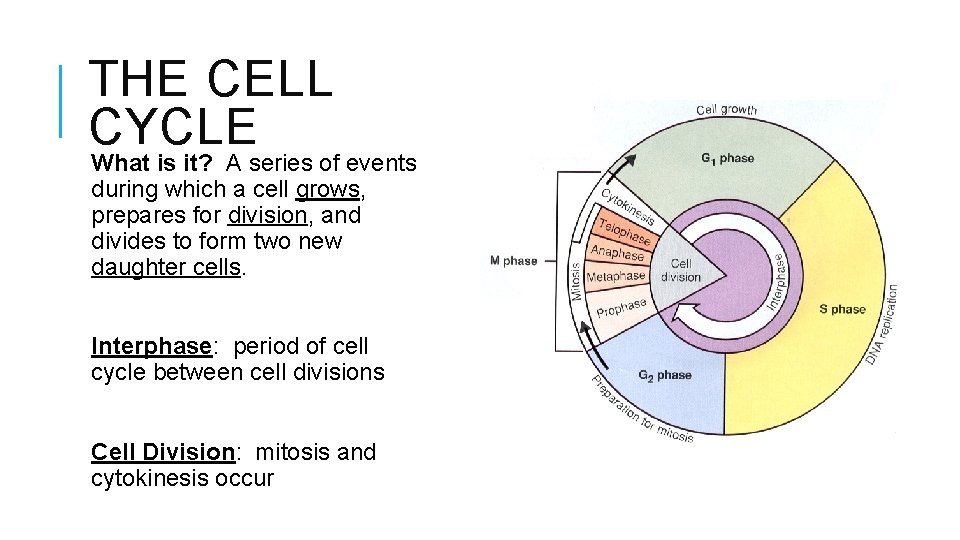
THE CELL CYCLE What is it? A series of events during which a cell grows, prepares for division, and divides to form two new daughter cells. Interphase: period of cell cycle between cell divisions Cell Division: mitosis and cytokinesis occur
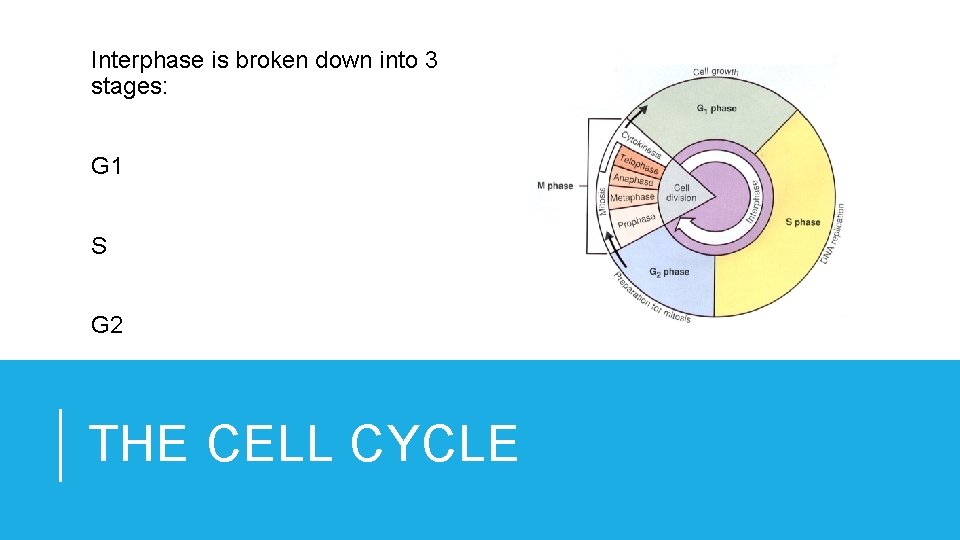
Interphase is broken down into 3 stages: G 1 S G 2 THE CELL CYCLE
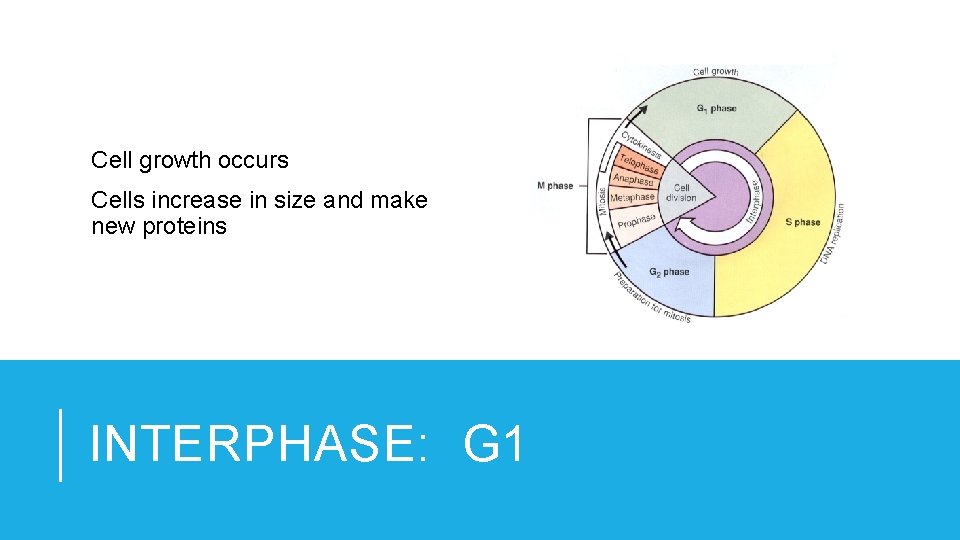
Cell growth occurs Cells increase in size and make new proteins INTERPHASE: G 1
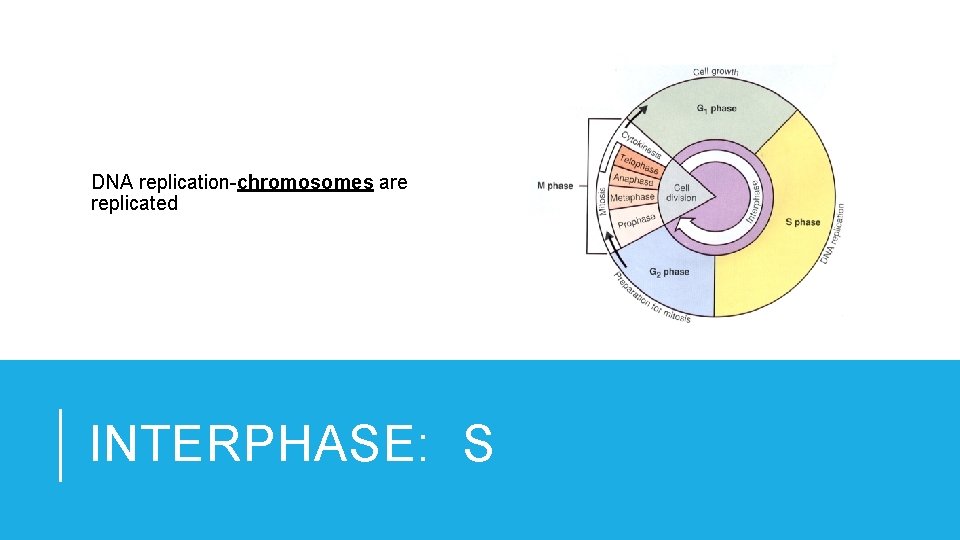
DNA replication-chromosomes are replicated INTERPHASE: S
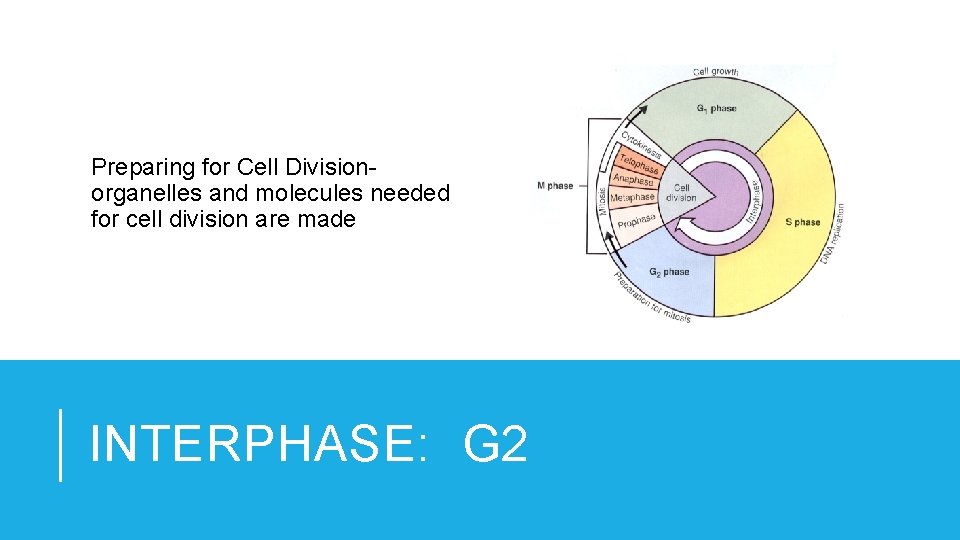
Preparing for Cell Divisionorganelles and molecules needed for cell division are made INTERPHASE: G 2
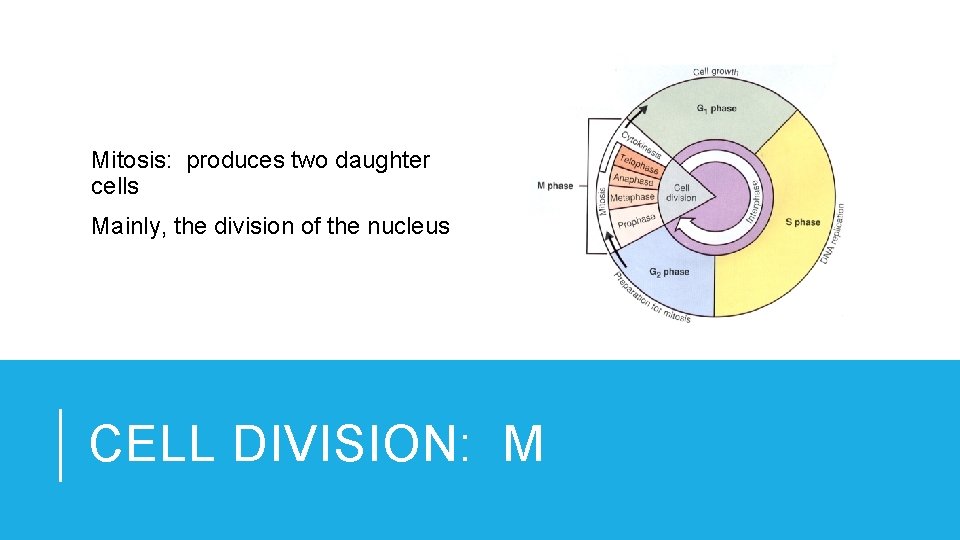
Mitosis: produces two daughter cells Mainly, the division of the nucleus CELL DIVISION: M
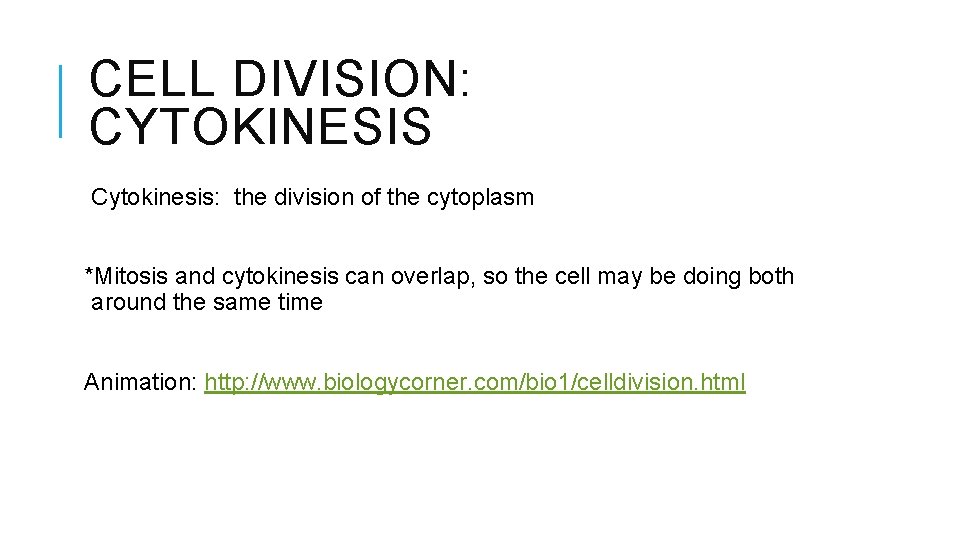
CELL DIVISION: CYTOKINESIS Cytokinesis: the division of the cytoplasm *Mitosis and cytokinesis can overlap, so the cell may be doing both around the same time Animation: http: //www. biologycorner. com/bio 1/celldivision. html
- Slides: 12