
Cell Cycle Mitosis Making connections Product of DNA





- Slides: 37
Cell Cycle & Mitosis
Making connections… Product of DNA Replication = A new copy of DNA Product of Cell Division = A new cell (daughter cell) ** DNA Replication must occur so the new daughter cell will have an identical copy of the DNA.
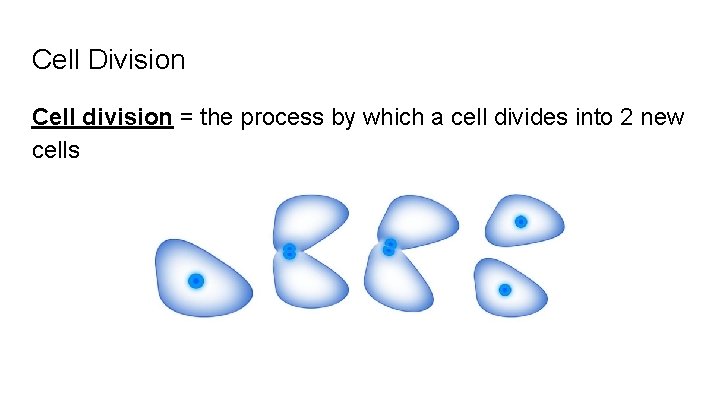
Cell Division Cell division = the process by which a cell divides into 2 new cells
Why do cells need to divide? 1. Living things grow by producing more cells, NOT because each cell increases in size 2. Repair/Replacement of damaged tissue
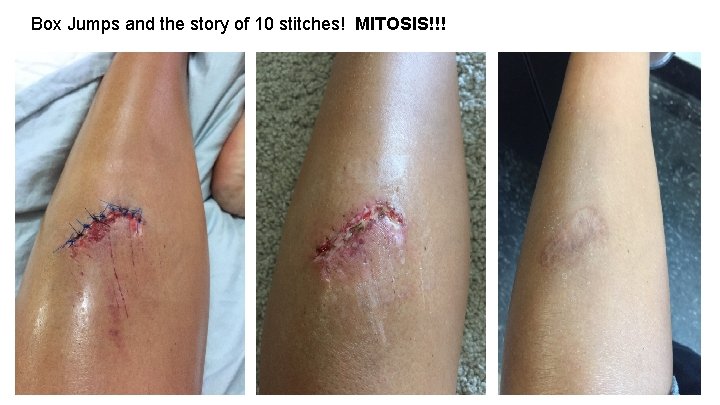
Box Jumps and the story of 10 stitches! MITOSIS!!!
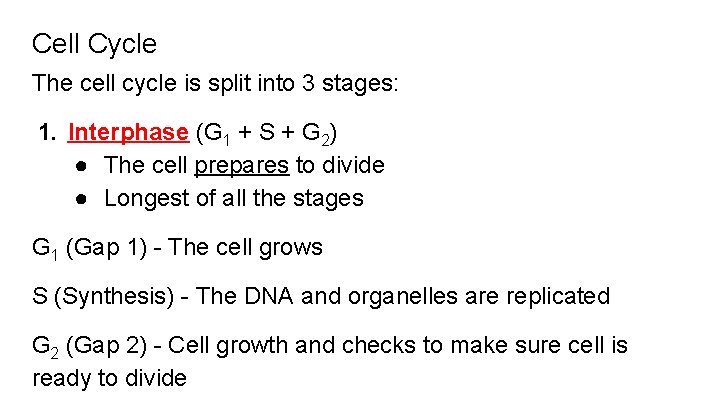
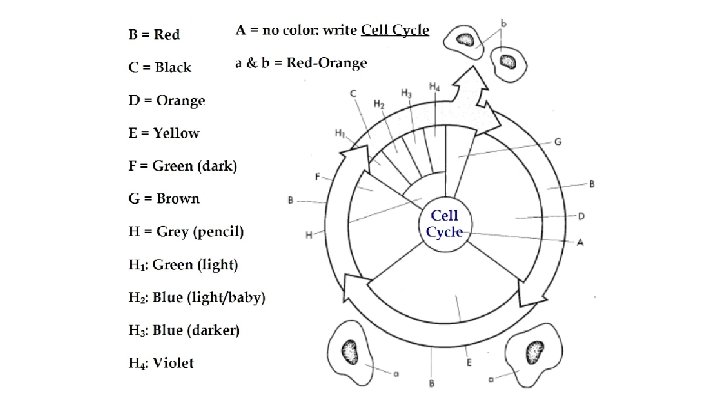
Cell Cycle The cell cycle is split into 3 stages: 1. Interphase (G 1 + S + G 2) ● The cell prepares to divide ● Longest of all the stages G 1 (Gap 1) - The cell grows S (Synthesis) - The DNA and organelles are replicated G 2 (Gap 2) - Cell growth and checks to make sure cell is ready to divide
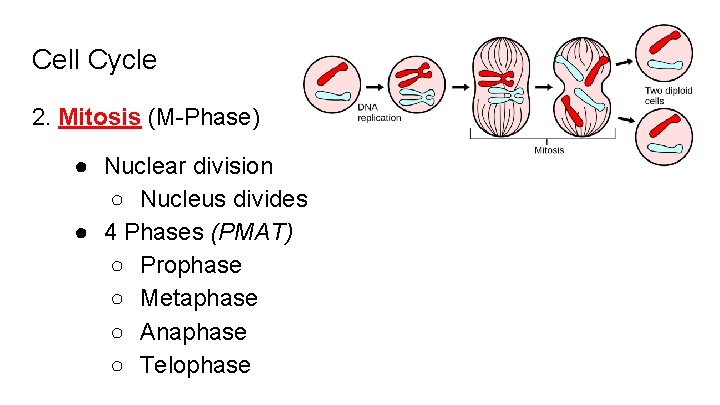
Cell Cycle 2. Mitosis (M-Phase) ● Nuclear division ○ Nucleus divides ● 4 Phases (PMAT) ○ Prophase ○ Metaphase ○ Anaphase ○ Telophase
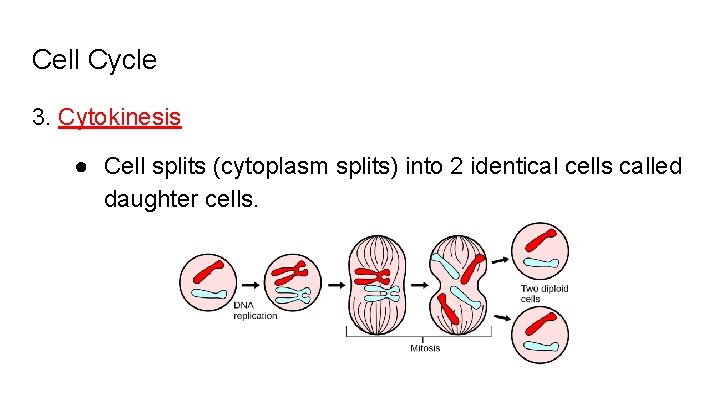
Cell Cycle 3. Cytokinesis ● Cell splits (cytoplasm splits) into 2 identical cells called daughter cells.
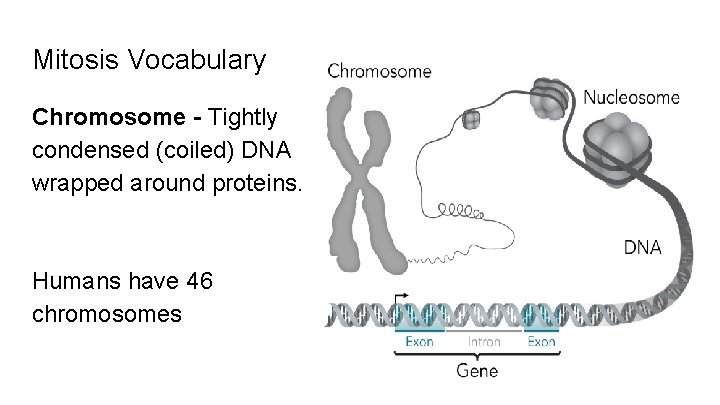
Mitosis Vocabulary Chromosome - Tightly condensed (coiled) DNA wrapped around proteins. Humans have 46 chromosomes
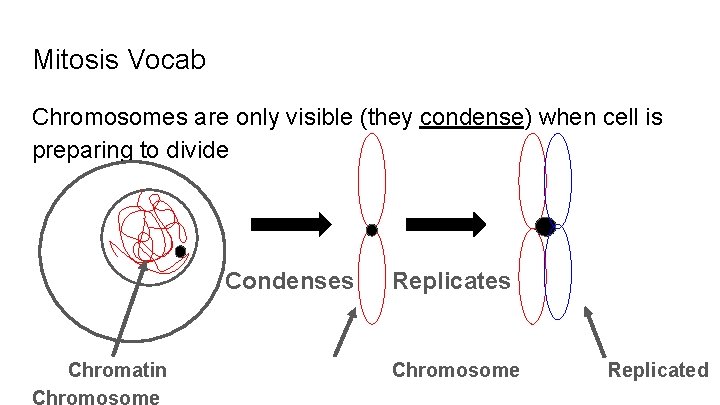
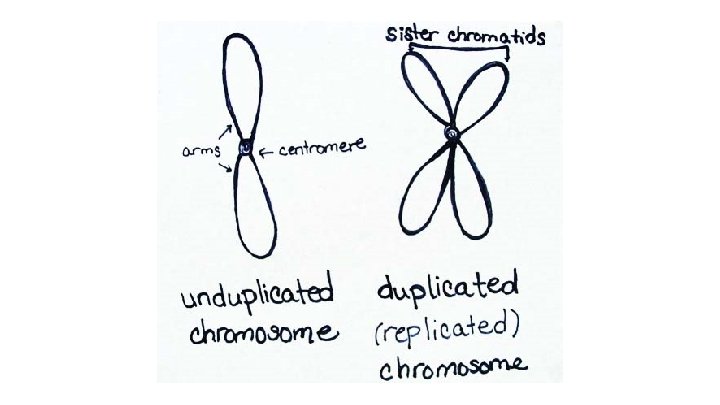
Mitosis Vocab Chromosomes are only visible (they condense) when cell is preparing to divide Condenses Chromatin Chromosome Replicates Chromosome Replicated
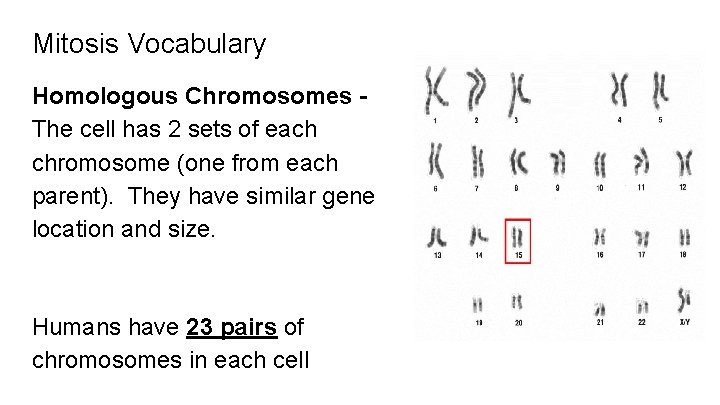
Mitosis Vocabulary Homologous Chromosomes The cell has 2 sets of each chromosome (one from each parent). They have similar gene location and size. Humans have 23 pairs of chromosomes in each cell
Chromosome Video (watch til 1: 40)
Okay, back to the Cell Cycle. . . The cell will first undergo Interphase **The cell grows ** DNA replicates and organelles replicate ★ Need to have 2 of everything so another identical cell can be formed! ** The cell is now ready to undergo Mitosis
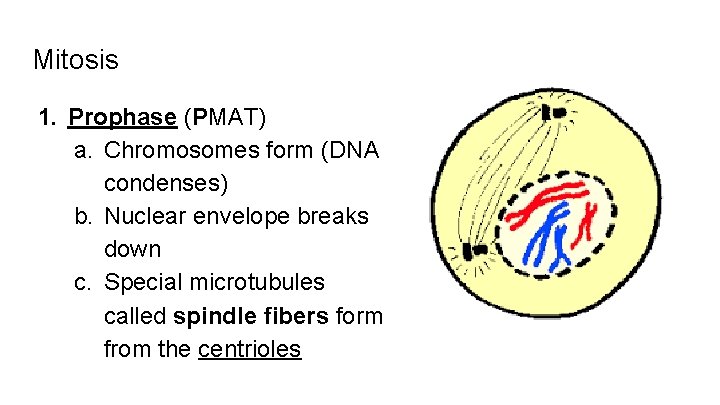
Mitosis 1. Prophase (PMAT) a. Chromosomes form (DNA condenses) b. Nuclear envelope breaks down c. Special microtubules called spindle fibers form from the centrioles
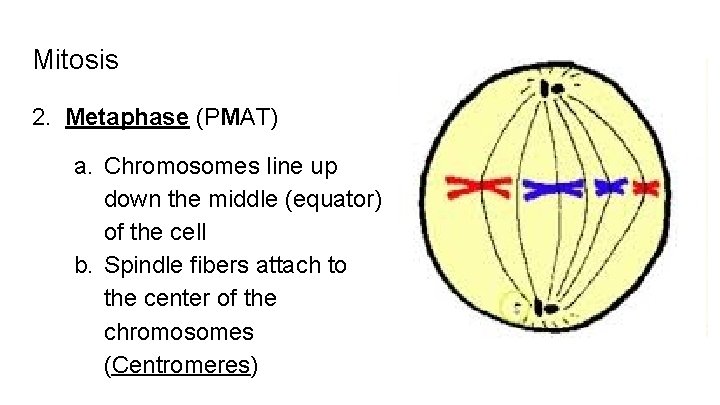
Mitosis 2. Metaphase (PMAT) a. Chromosomes line up down the middle (equator) of the cell b. Spindle fibers attach to the center of the chromosomes (Centromeres)
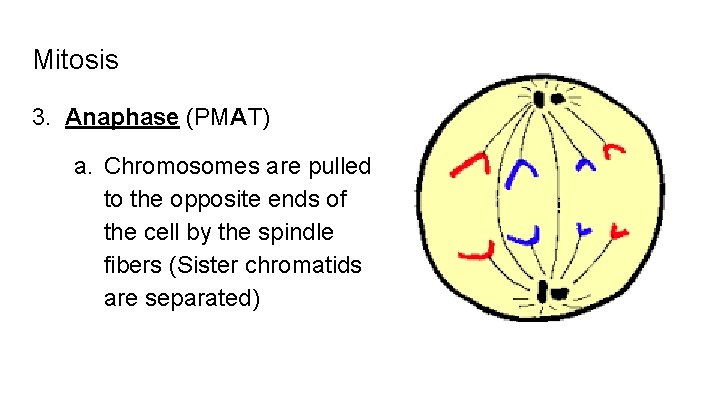
Mitosis 3. Anaphase (PMAT) a. Chromosomes are pulled to the opposite ends of the cell by the spindle fibers (Sister chromatids are separated)
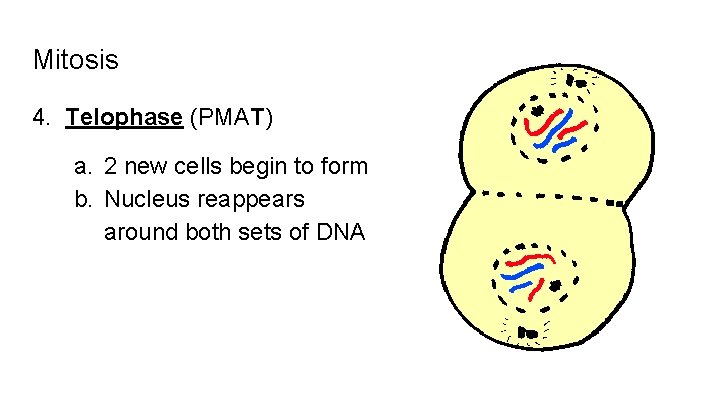
Mitosis 4. Telophase (PMAT) a. 2 new cells begin to form b. Nucleus reappears around both sets of DNA
Mitosis Video (8: 26)
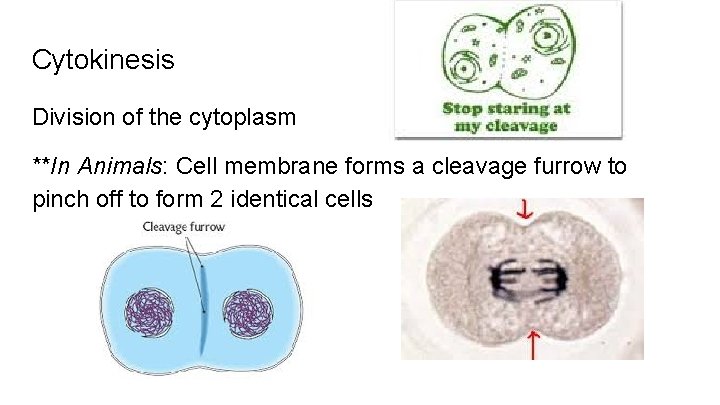
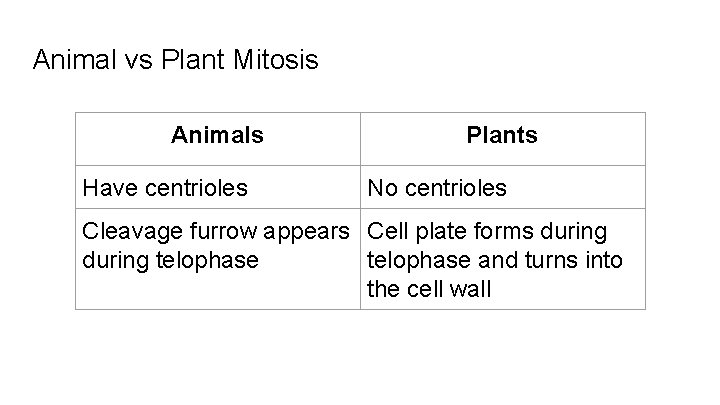
Cytokinesis Division of the cytoplasm **In Animals: Cell membrane forms a cleavage furrow to pinch off to form 2 identical cells
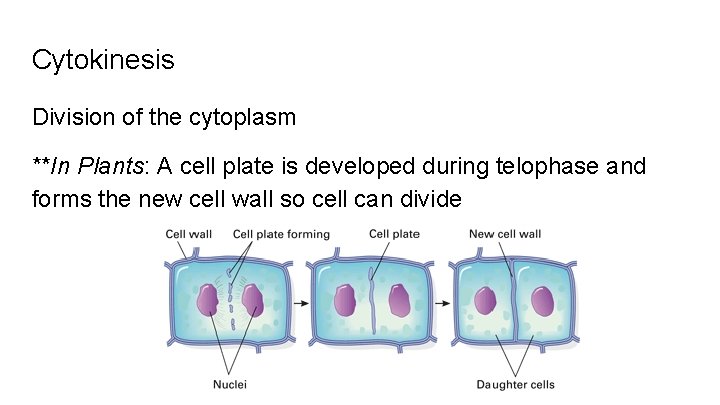
Cytokinesis Division of the cytoplasm **In Plants: A cell plate is developed during telophase and forms the new cell wall so cell can divide
Mitosis Video Mitosis under the microscope (1: 36)
Mitosis Worksheet 1. Complete “Ch. 11 Cell Reproduction” worksheet a. Do only the front side b. Save the back for later 2. When finished, bring to me to check. 3. When your worksheet is correct, I will give you the next one - “Mitosis” - this one is due tomorrow - finish for homework.
Animal vs Plant Mitosis Animals Have centrioles Plants No centrioles Cleavage furrow appears Cell plate forms during telophase and turns into the cell wall
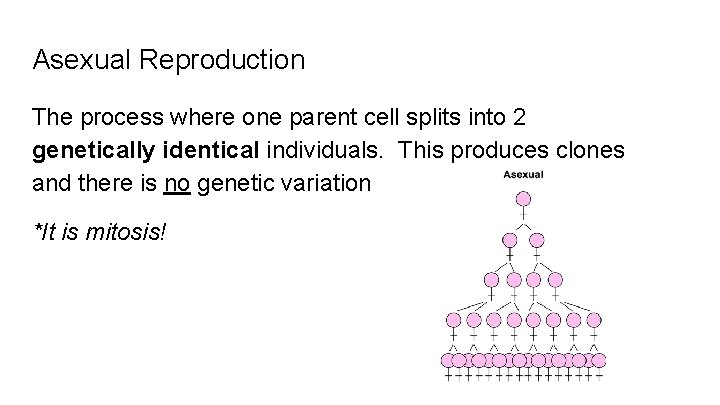
Asexual Reproduction The process where one parent cell splits into 2 genetically identical individuals. This produces clones and there is no genetic variation *It is mitosis!
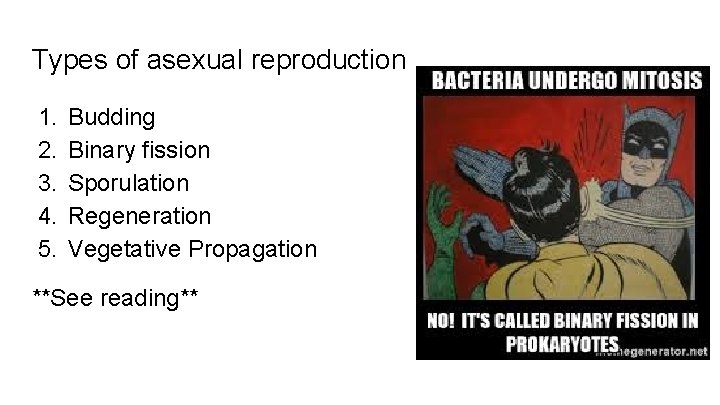
Types of asexual reproduction 1. 2. 3. 4. 5. Budding Binary fission Sporulation Regeneration Vegetative Propagation **See reading**
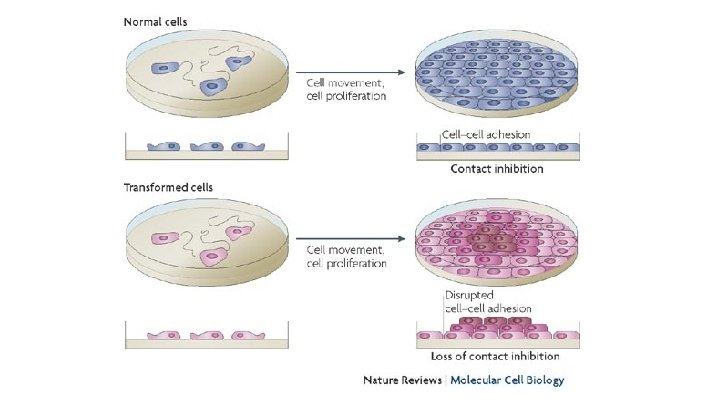
Cancer Cell division is controlled by the body Cells are triggered to divide when new cells are needed When the cell cycle is messed up, the cells can divide uncontrollably This results in tumors (balls of cells) that can lead to cancer
Tumor deposits on a liver
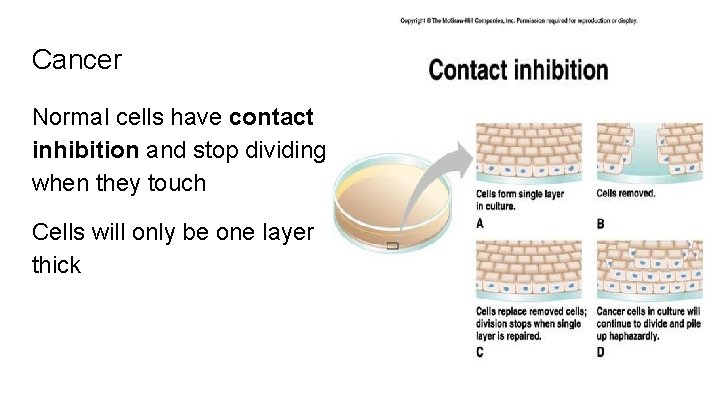
Cancer Normal cells have contact inhibition and stop dividing when they touch Cells will only be one layer thick
Chromosome Number Every organism has its own specific number of chromosomes Examples: Humans = 46 chromosomes or 23 pairs Dogs = 78 chromosomes or 39 pairs Goldfish = 94 chromosomes or 47 pairs Lettuce = 18 chromosomes or 9 pairs
Chromosome Number The total number of chromosomes is called the diploid (2 n) number (2 sets of each chromosome; humans = 46) **Found in somatic (body) cells The number of pairs or half the number of chromosomes is called the haploid (n) number (1 set; humans = 23) ** Found in gametes (egg/sperm) cells
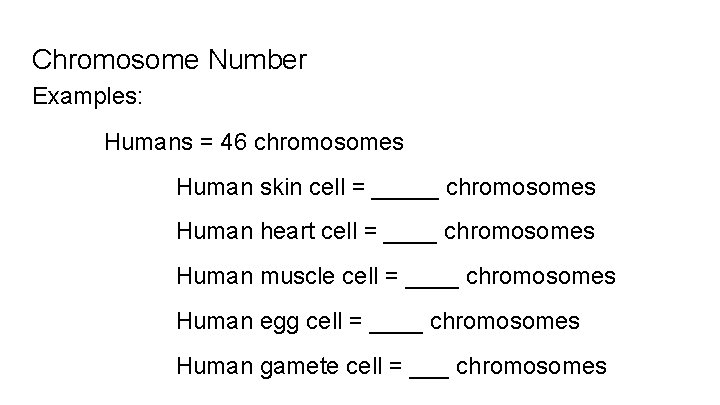
Chromosome Number Examples: Humans = 46 chromosomes Human skin cell = _____ chromosomes Human heart cell = ____ chromosomes Human muscle cell = ____ chromosomes Human egg cell = ____ chromosomes Human gamete cell = ___ chromosomes
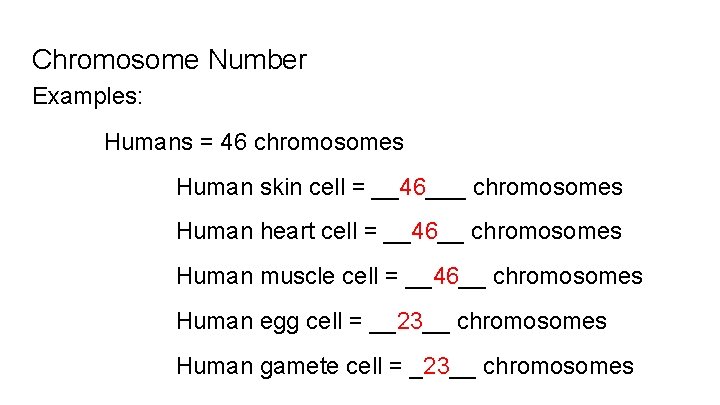
Chromosome Number Examples: Humans = 46 chromosomes Human skin cell = __46___ chromosomes Human heart cell = __46__ chromosomes Human muscle cell = __46__ chromosomes Human egg cell = __23__ chromosomes Human gamete cell = _23__ chromosomes
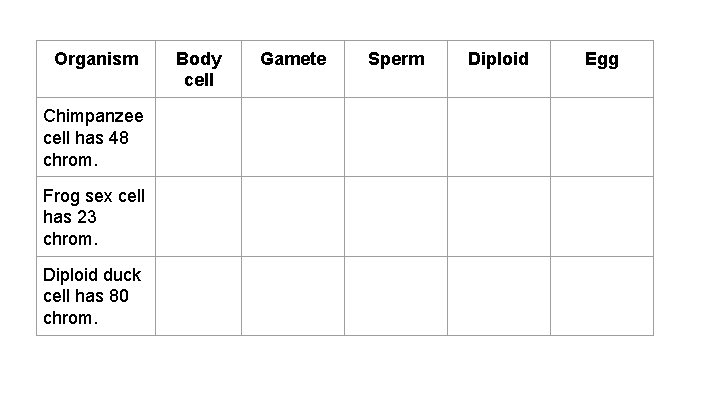
Organism Chimpanzee cell has 48 chrom. Frog sex cell has 23 chrom. Diploid duck cell has 80 chrom. Body cell Gamete Sperm Diploid Egg
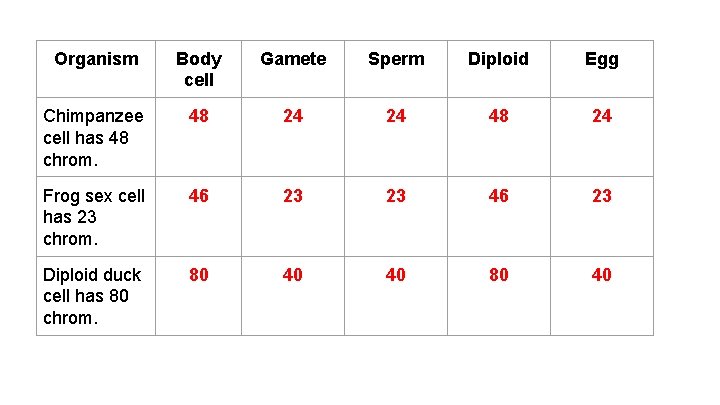
Organism Body cell Gamete Sperm Diploid Egg Chimpanzee cell has 48 chrom. 48 24 24 48 24 Frog sex cell has 23 chrom. 46 23 23 46 23 Diploid duck cell has 80 chrom. 80 40 40 80 40