
CELL CYCLE Mitosis DNA The cells genetic information
- Slides: 24
CELL CYCLE Mitosis
DNA § The cells genetic information is carried by the chromosomes which are formed by proteins and DNA. § The cells of all organisms have a specific number of chromosomes, for example: § Fruit flys have 8 chromosomes § Humans have 46 chromosomes
DNA (cont. ) § In order for the DNA to fit inside the nucleus, it must compact itself by coiling § When DNA is unwound, it is in long, thin strands called chromatin § When the DNA is completely compacted it is in the form of chromosomes and becomes visible under a microscope
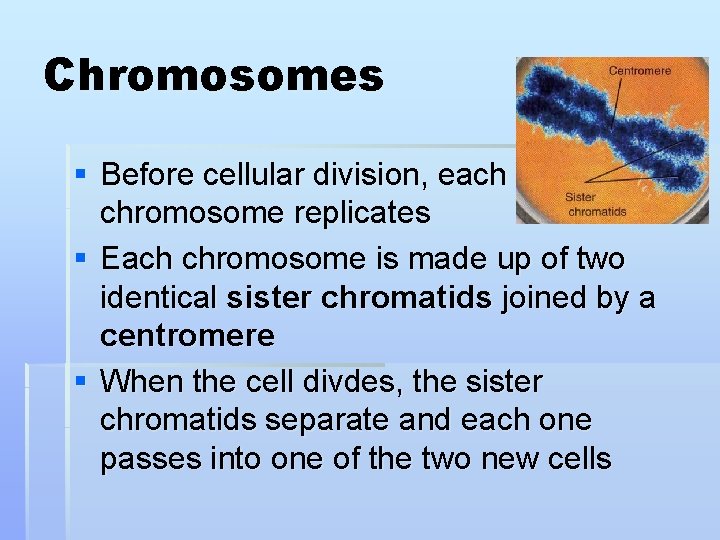
Chromosomes § Before cellular division, each chromosome replicates § Each chromosome is made up of two identical sister chromatids joined by a centromere § When the cell divdes, the sister chromatids separate and each one passes into one of the two new cells
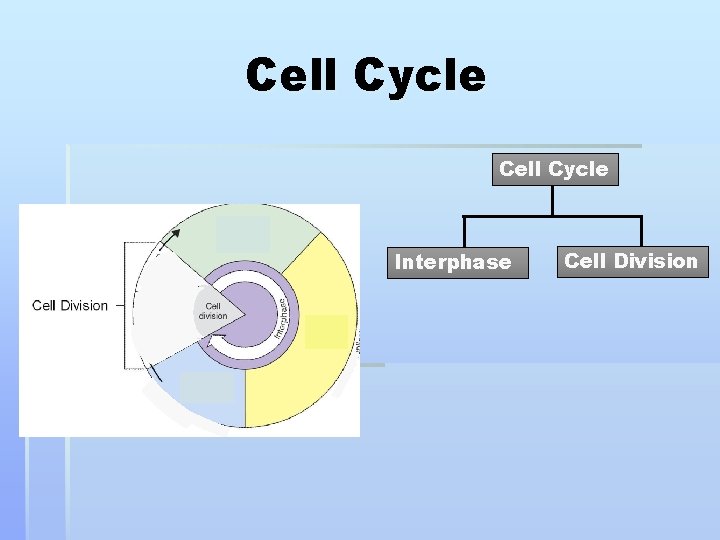
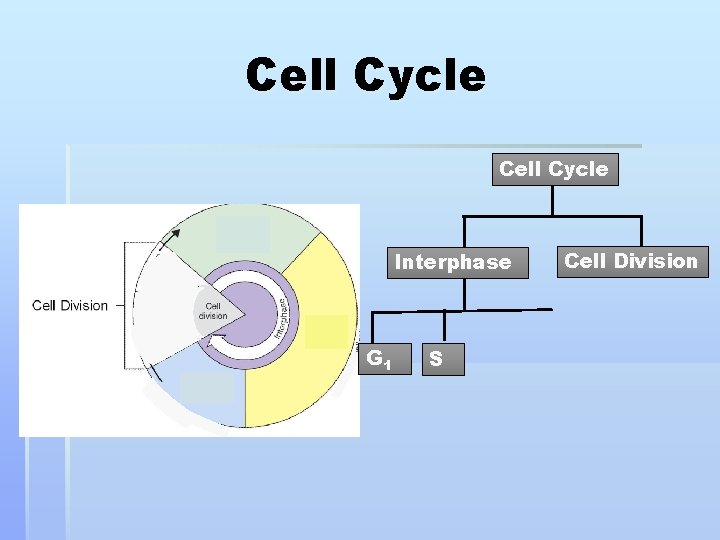
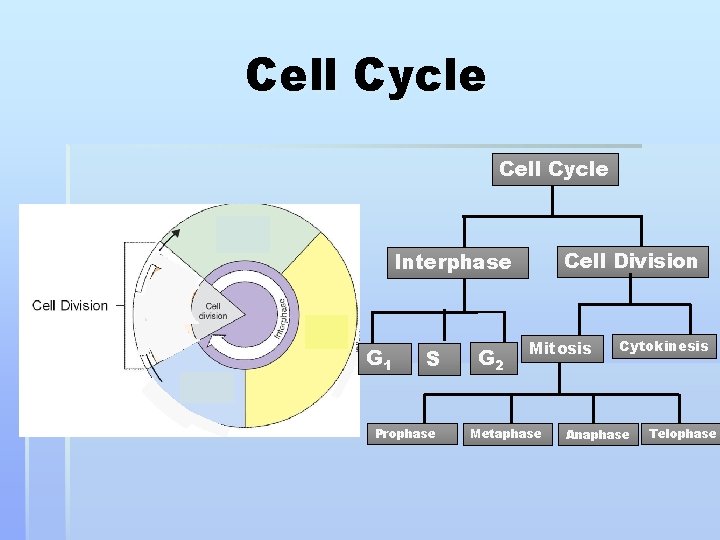
Cell Cycle § Period from the beginning of one cell division to the beginning of the next cell division § Divided into 2 parts: § Interphase § Cell Division
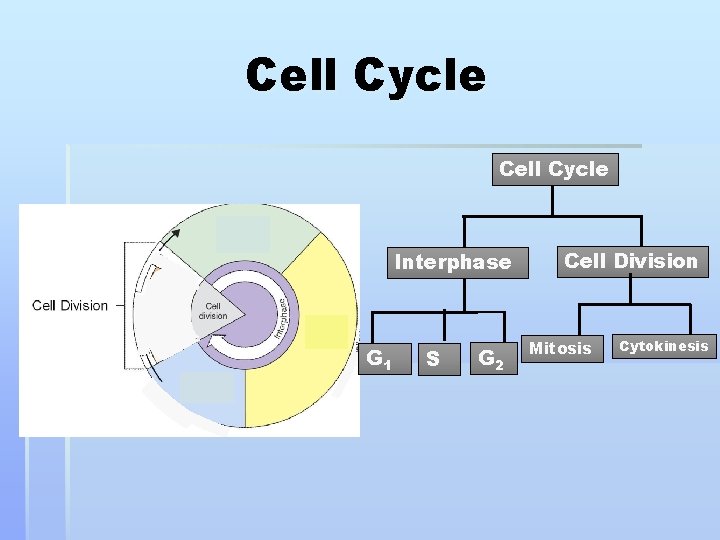
Cell Cycle Interphase Cell Division
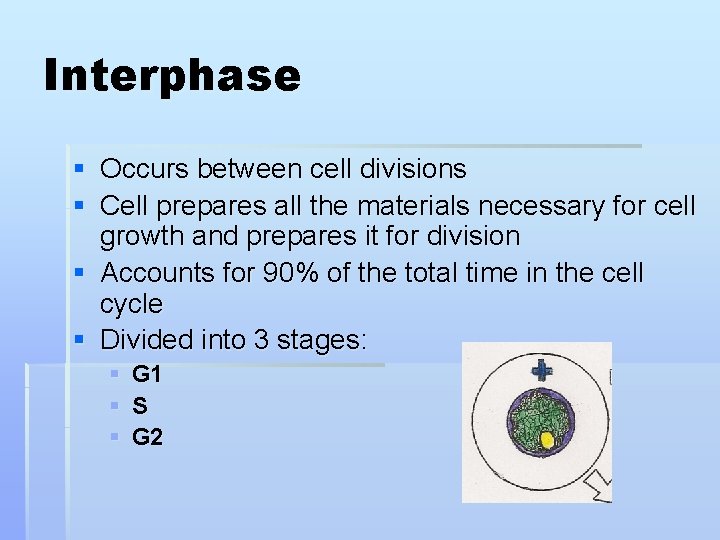
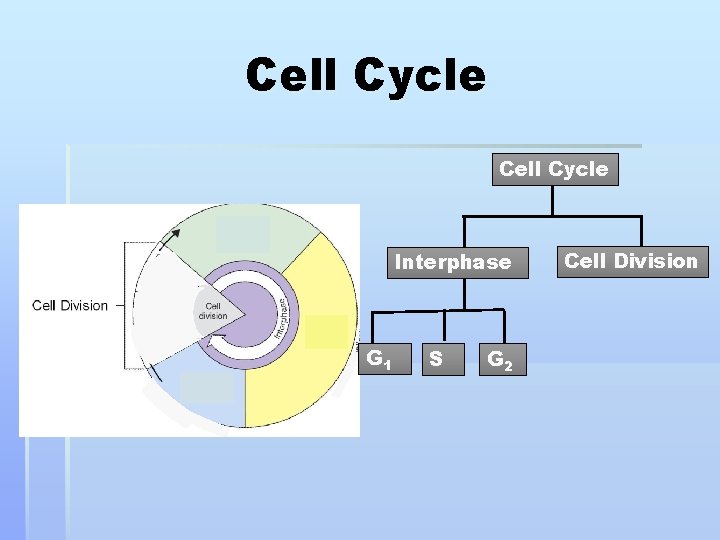
Interphase § Occurs between cell divisions § Cell prepares all the materials necessary for cell growth and prepares it for division § Accounts for 90% of the total time in the cell cycle § Divided into 3 stages: § G 1 § S § G 2
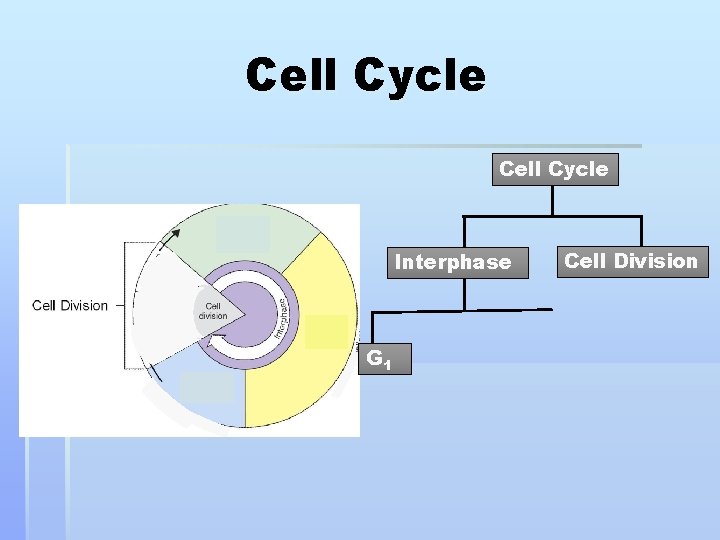
Cell Cycle Interphase G 1 Cell Division
G 1 § Also known as Gap 1 § Characterized by growth and development
Cell Cycle Interphase G 1 S Cell Division
S § Also known as the synthesis phase § Once the cell enters the S phase it is committed to cell division § Chromosomes in the nucleus replicate
Cell Cycle Interphase G 1 S G 2 Cell Division
G 2 § Also known as Gap 2 § This is the shortest of the 3 phases in interphase § Cell makes organelles and other materials § Centrioles replicate to form 2 pairs
Cell Division § Splitting of one cell to form 2 cells § Divided into 2 parts: § Mitosis § Cytokinesis
Cell Cycle Interphase G 1 S G 2 Cell Division Mitosis Cytokinesis
Mitosis § Process during which a cell’s nucleus divides into two identical nuclei § It is divided into 4 phases: § Prophase § Metaphase § Anaphase § Telophase
Cell Cycle Cell Division Interphase G 1 S Prophase G 2 Mitosis Metaphase Cytokinesis Anaphase Telophase
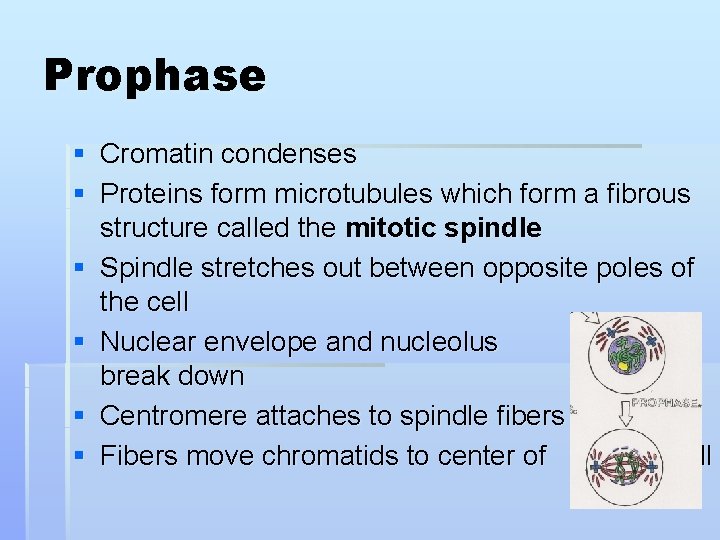
Prophase § Cromatin condenses § Proteins form microtubules which form a fibrous structure called the mitotic spindle § Spindle stretches out between opposite poles of the cell § Nuclear envelope and nucleolus break down § Centromere attaches to spindle fibers § Fibers move chromatids to center of cell
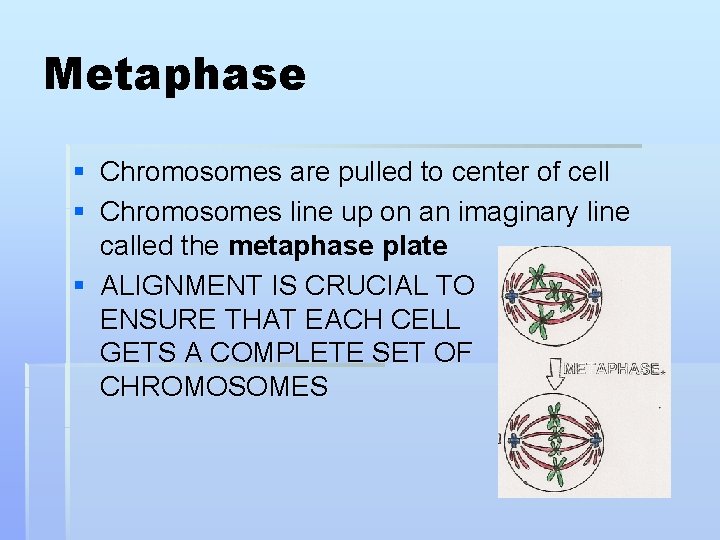
Metaphase § Chromosomes are pulled to center of cell § Chromosomes line up on an imaginary line called the metaphase plate § ALIGNMENT IS CRUCIAL TO ENSURE THAT EACH CELL GETS A COMPLETE SET OF CHROMOSOMES
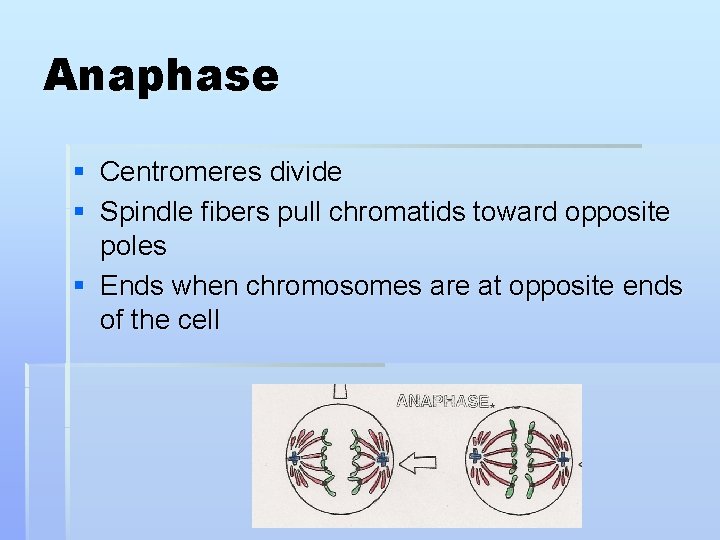
Anaphase § Centromeres divide § Spindle fibers pull chromatids toward opposite poles § Ends when chromosomes are at opposite ends of the cell
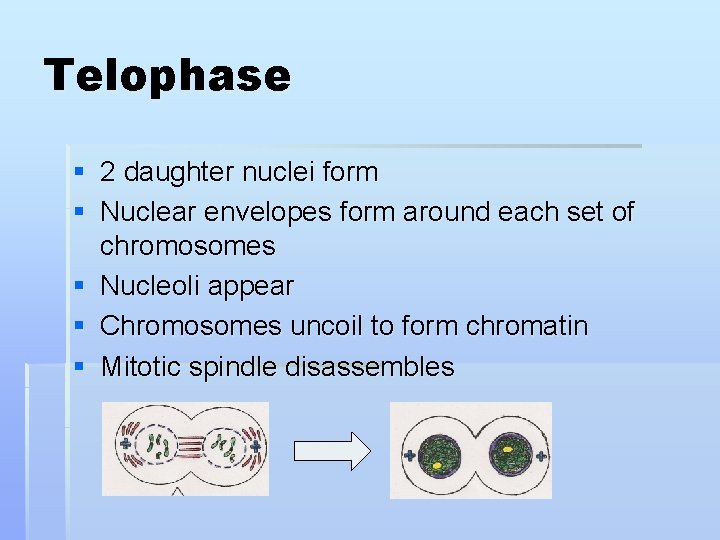
Telophase § 2 daughter nuclei form § Nuclear envelopes form around each set of chromosomes § Nucleoli appear § Chromosomes uncoil to form chromatin § Mitotic spindle disassembles
Cytokinesis § Process in which the cell’s cytoplasm divides to make 2 daughter cells § Each daughter forms around 1 of the 2 nuclei produced during mitosis § Begins during telophase
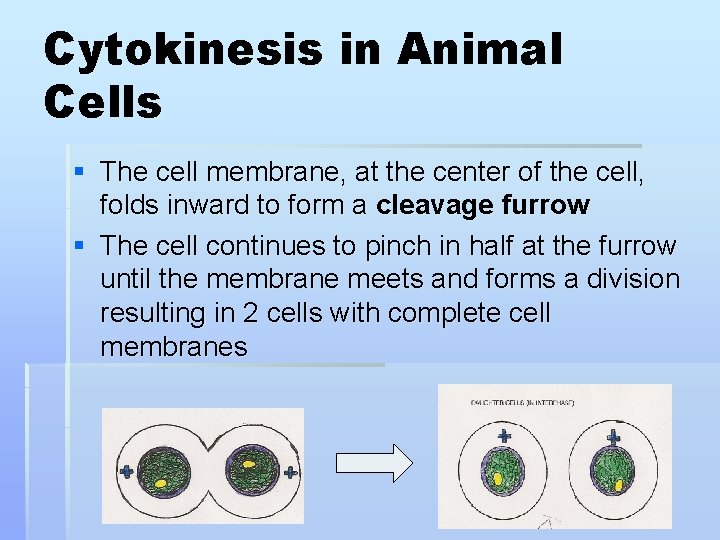
Cytokinesis in Animal Cells § The cell membrane, at the center of the cell, folds inward to form a cleavage furrow § The cell continues to pinch in half at the furrow until the membrane meets and forms a division resulting in 2 cells with complete cell membranes
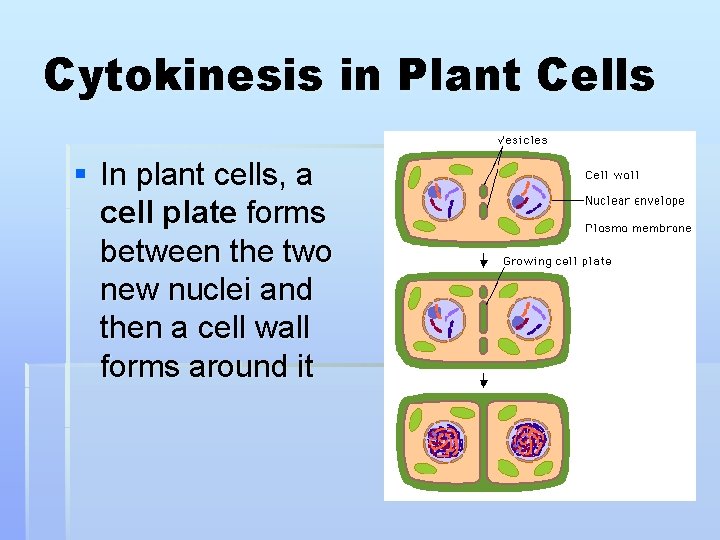
Cytokinesis in Plant Cells § In plant cells, a cell plate forms between the two new nuclei and then a cell wall forms around it