
Cell Cycle Mitosis and Meiosis Why do cells
- Slides: 18
Cell Cycle, Mitosis, and Meiosis
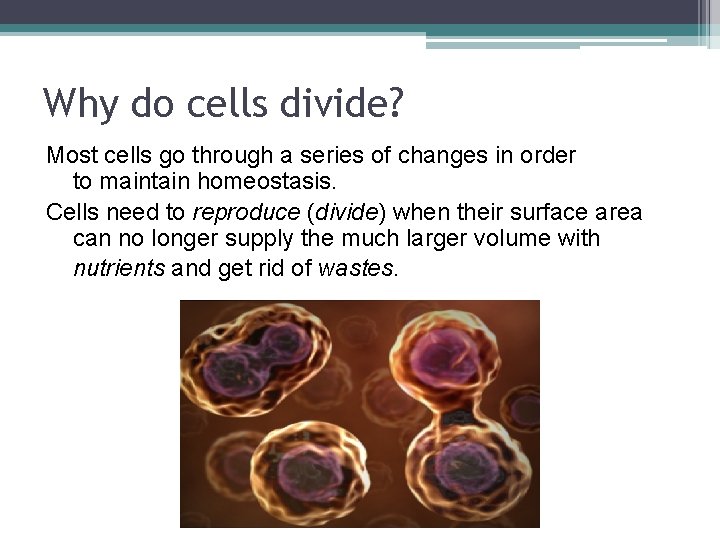
Why do cells divide? Most cells go through a series of changes in order to maintain homeostasis. Cells need to reproduce (divide) when their surface area can no longer supply the much larger volume with nutrients and get rid of wastes.
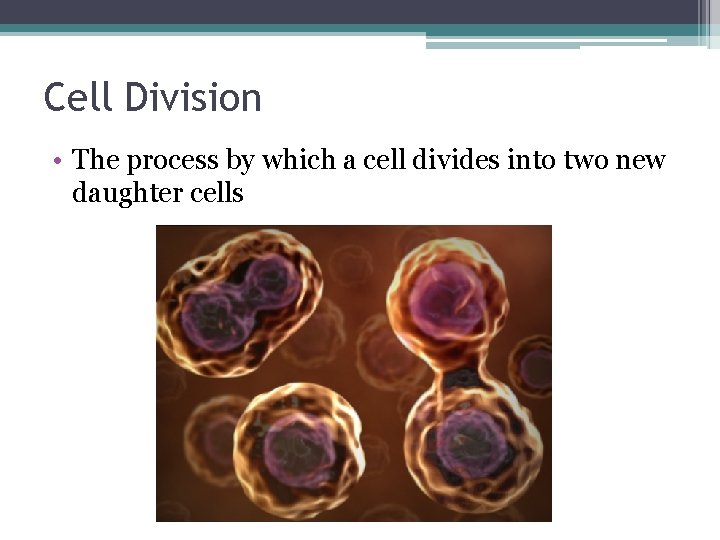
Cell Division • The process by which a cell divides into two new daughter cells
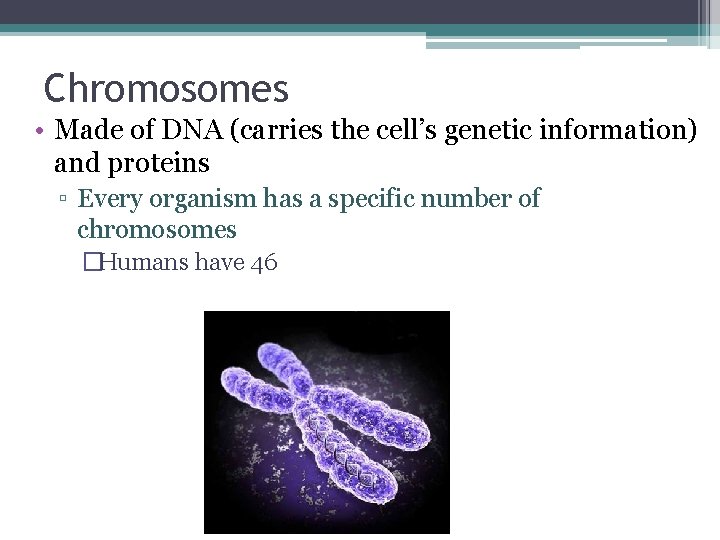
Chromosomes • Made of DNA (carries the cell’s genetic information) and proteins ▫ Every organism has a specific number of chromosomes �Humans have 46
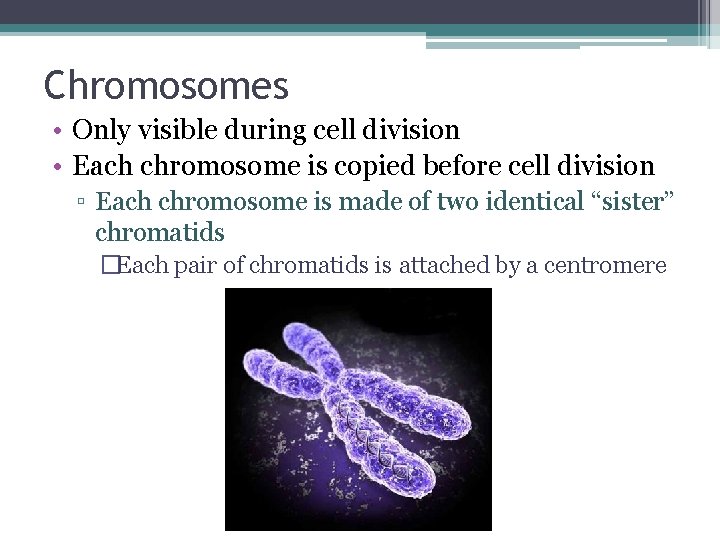
Chromosomes • Only visible during cell division • Each chromosome is copied before cell division ▫ Each chromosome is made of two identical “sister” chromatids �Each pair of chromatids is attached by a centromere
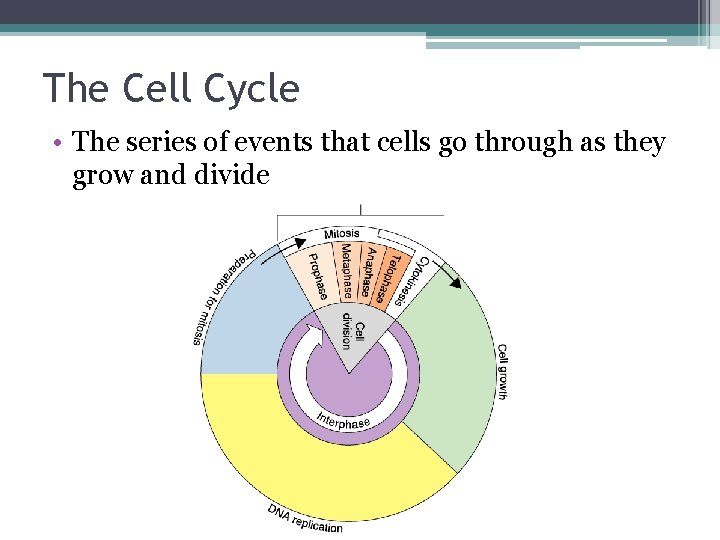
The Cell Cycle • The series of events that cells go through as they grow and divide
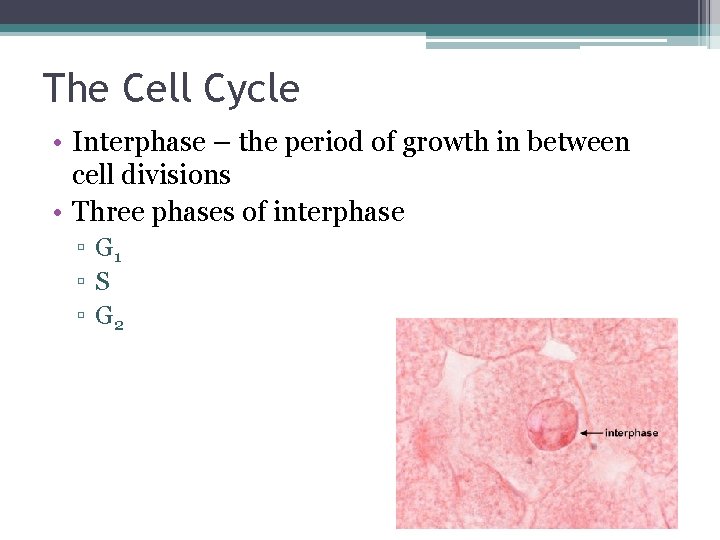
The Cell Cycle • Interphase – the period of growth in between cell divisions • Three phases of interphase ▫ G 1 ▫S ▫ G 2
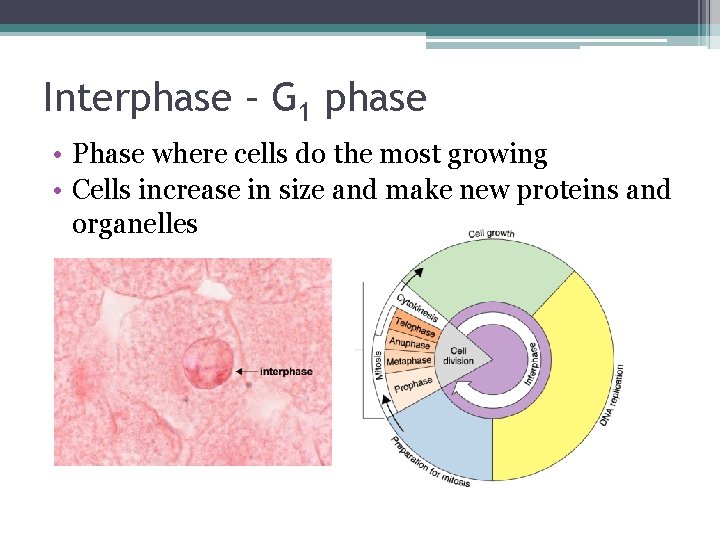
Interphase – G 1 phase • Phase where cells do the most growing • Cells increase in size and make new proteins and organelles
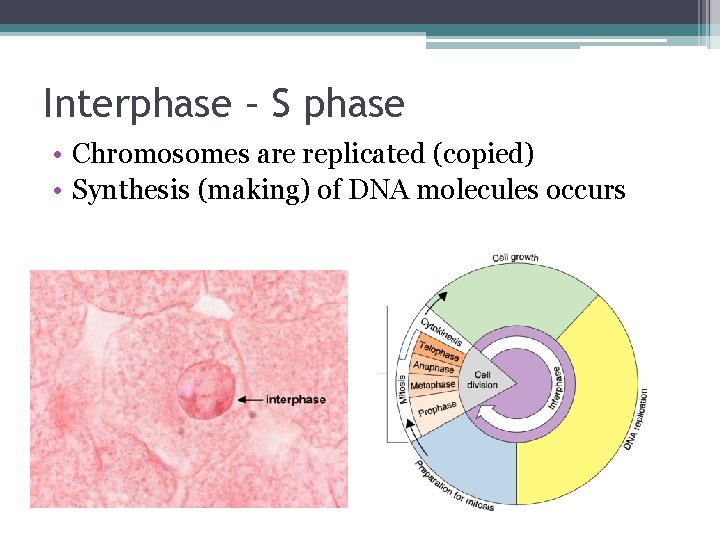
Interphase – S phase • Chromosomes are replicated (copied) • Synthesis (making) of DNA molecules occurs
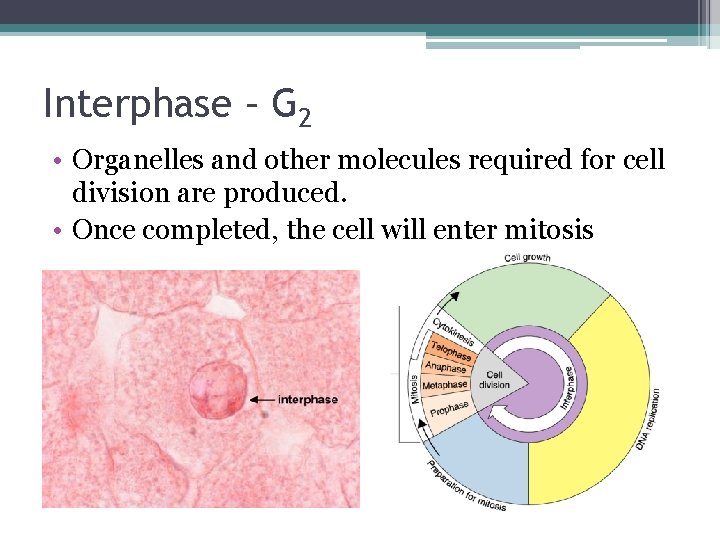
Interphase – G 2 • Organelles and other molecules required for cell division are produced. • Once completed, the cell will enter mitosis
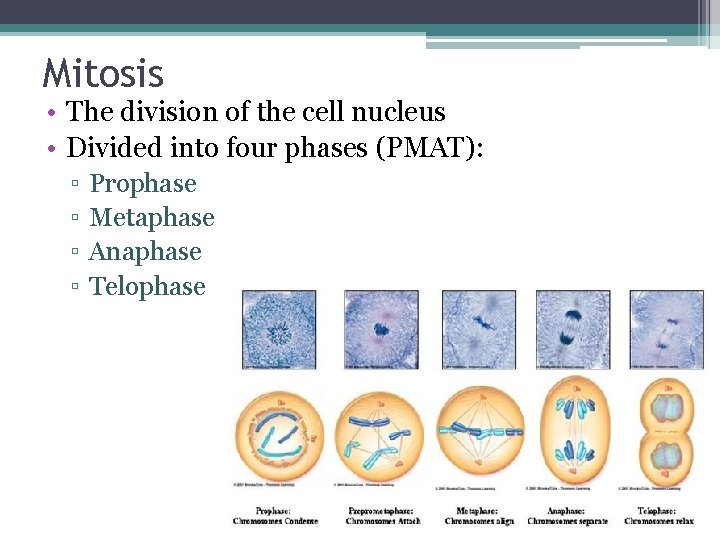
Mitosis • The division of the cell nucleus • Divided into four phases (PMAT): ▫ ▫ Prophase Metaphase Anaphase Telophase
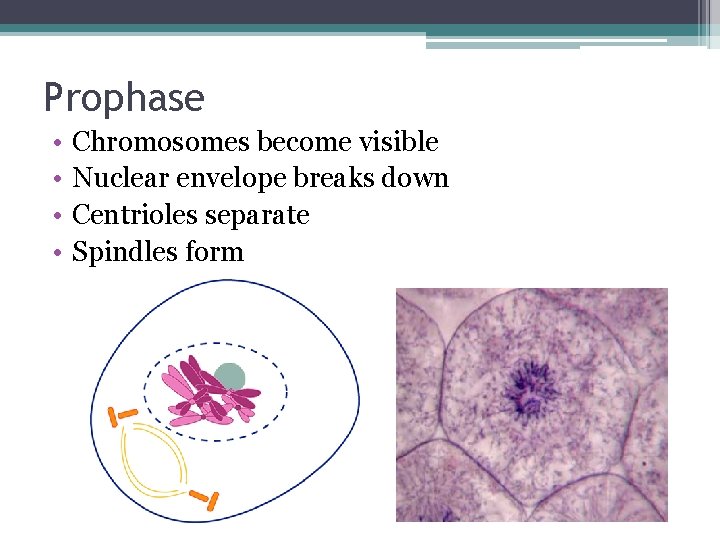
Prophase • • Chromosomes become visible Nuclear envelope breaks down Centrioles separate Spindles form
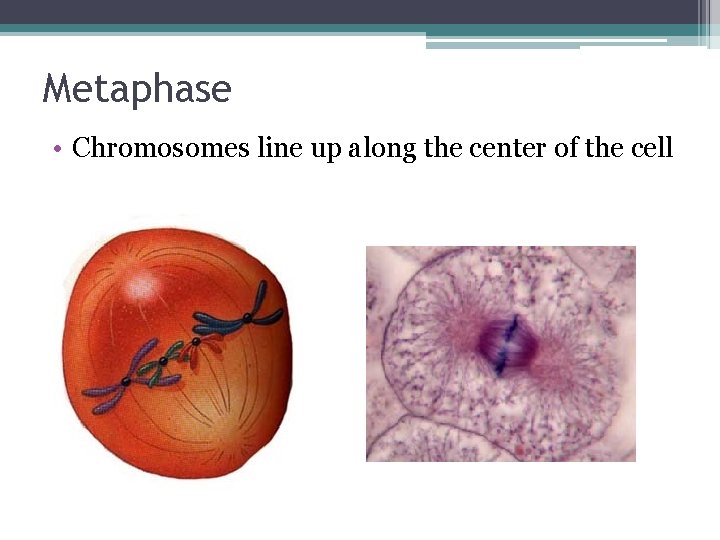
Metaphase • Chromosomes line up along the center of the cell
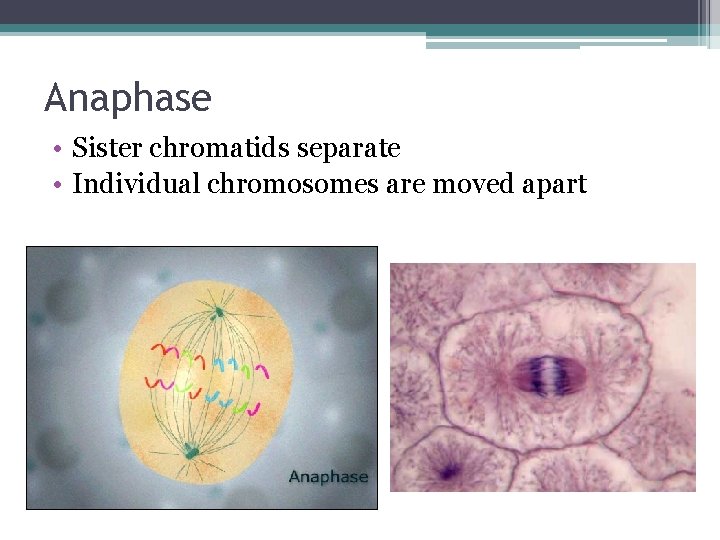
Anaphase • Sister chromatids separate • Individual chromosomes are moved apart
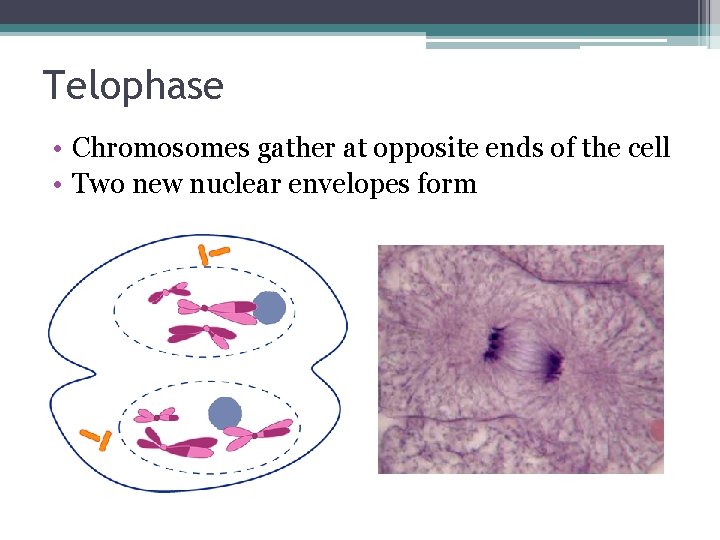
Telophase • Chromosomes gather at opposite ends of the cell • Two new nuclear envelopes form
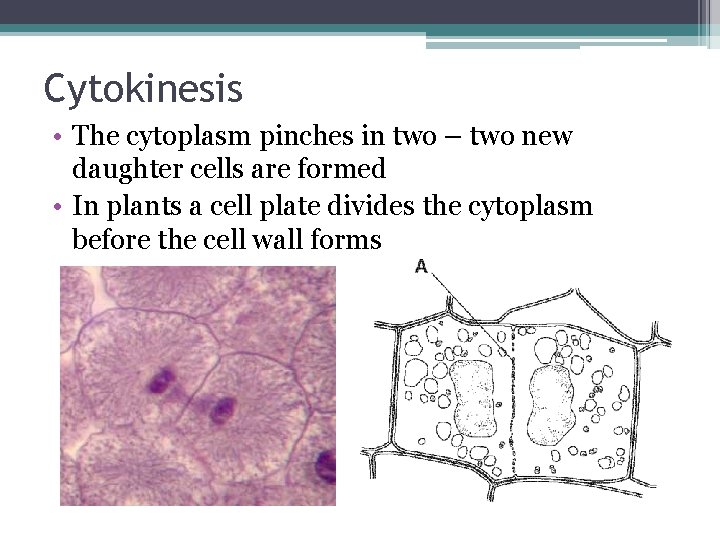
Cytokinesis • The cytoplasm pinches in two – two new daughter cells are formed • In plants a cell plate divides the cytoplasm before the cell wall forms
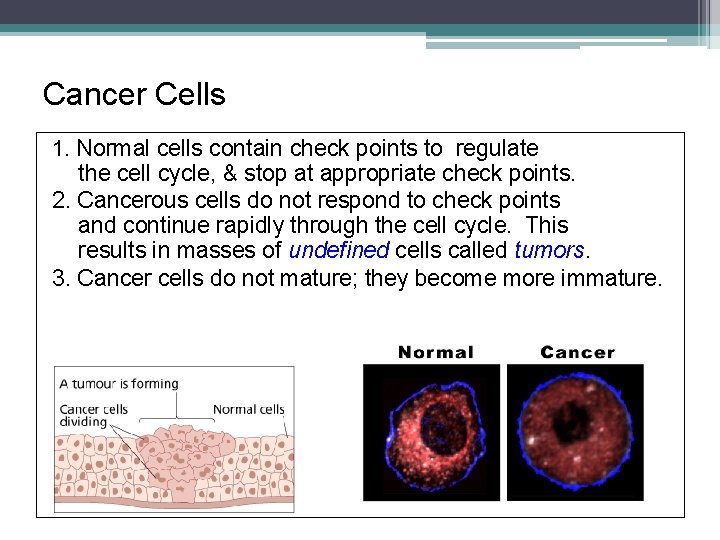
Cancer Cells 1. Normal cells contain check points to regulate the cell cycle, & stop at appropriate check points. 2. Cancerous cells do not respond to check points and continue rapidly through the cell cycle. This results in masses of undefined cells called tumors. 3. Cancer cells do not mature; they become more immature.
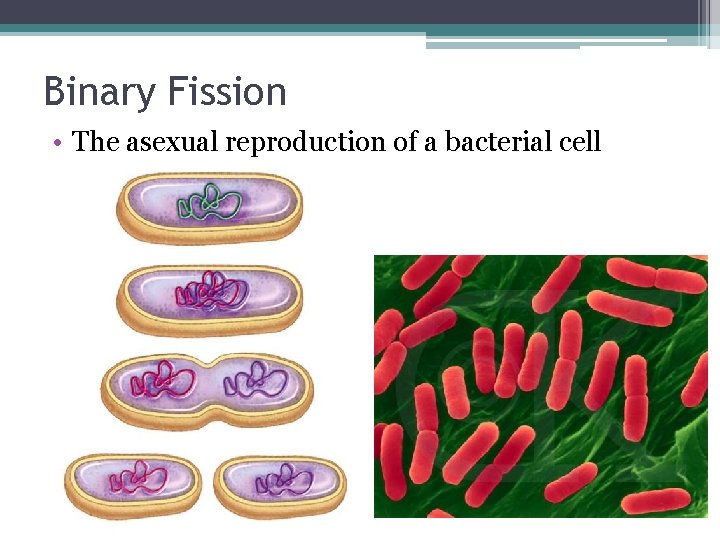
Binary Fission • The asexual reproduction of a bacterial cell