
Cell Cycle Interphase Mitosis Cytokinesis and Cancer Cell
- Slides: 36
Cell Cycle Interphase, Mitosis, Cytokinesis, and Cancer
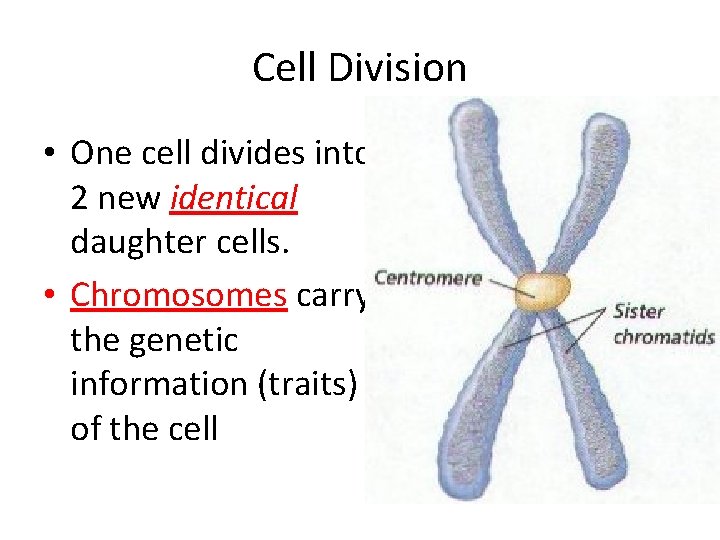
Cell Division • One cell divides into 2 new identical daughter cells. • Chromosomes carry the genetic information (traits) of the cell
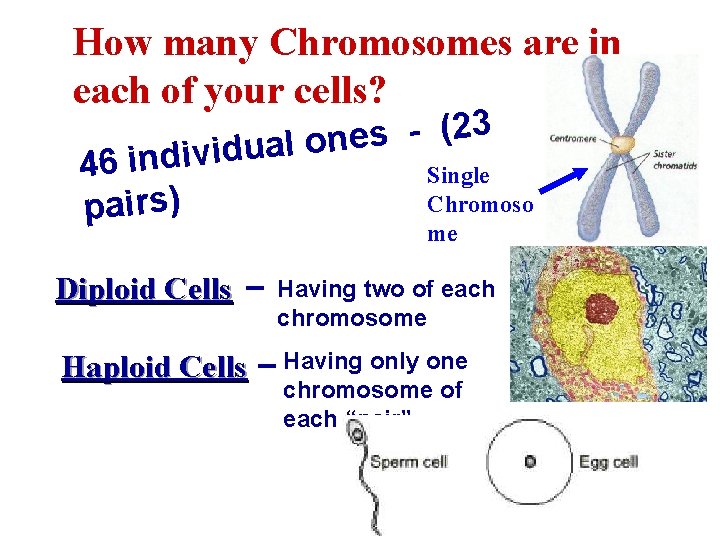
How many Chromosomes are in each of your cells? 3 2 ( s e n o l a u d i v i 46 ind Single Chromoso pairs) me Diploid Cells Having two of each chromosome Haploid Cells Having only one chromosome of each “pair”
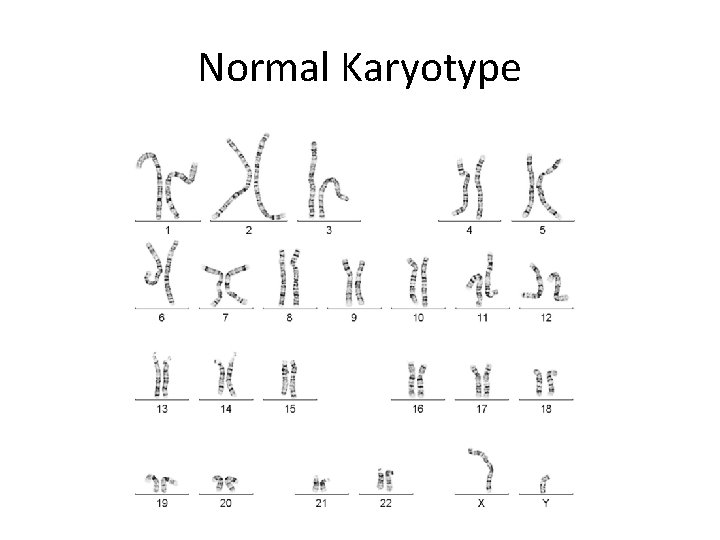
Normal Karyotype
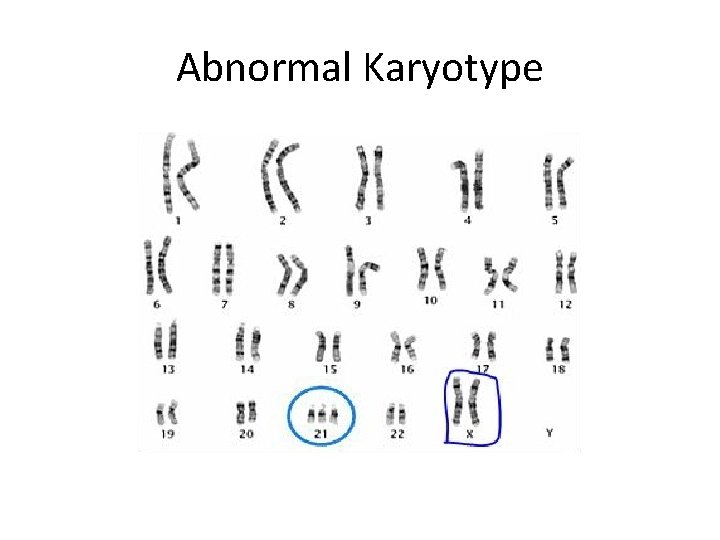
Abnormal Karyotype
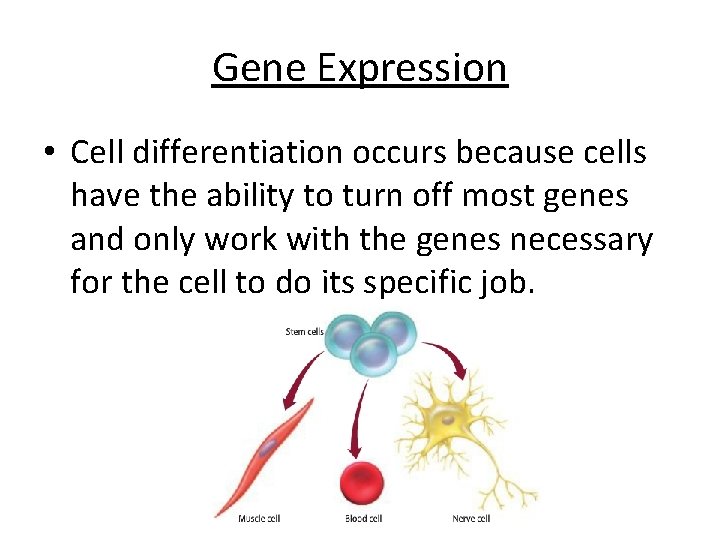
Gene Expression • Cell differentiation occurs because cells have the ability to turn off most genes and only work with the genes necessary for the cell to do its specific job.
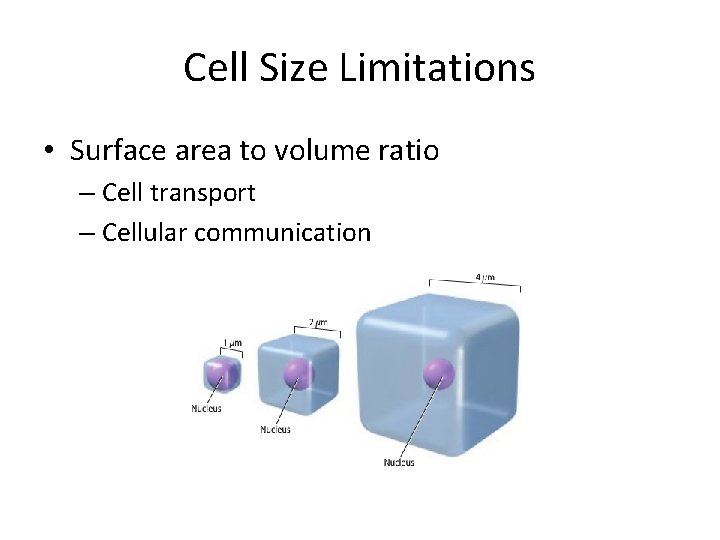
Cell Size Limitations • Surface area to volume ratio – Cell transport – Cellular communication
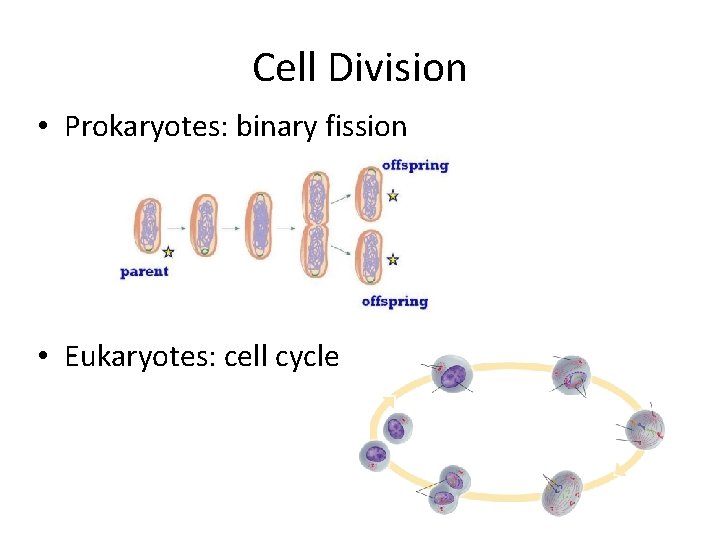
Cell Division • Prokaryotes: binary fission • Eukaryotes: cell cycle
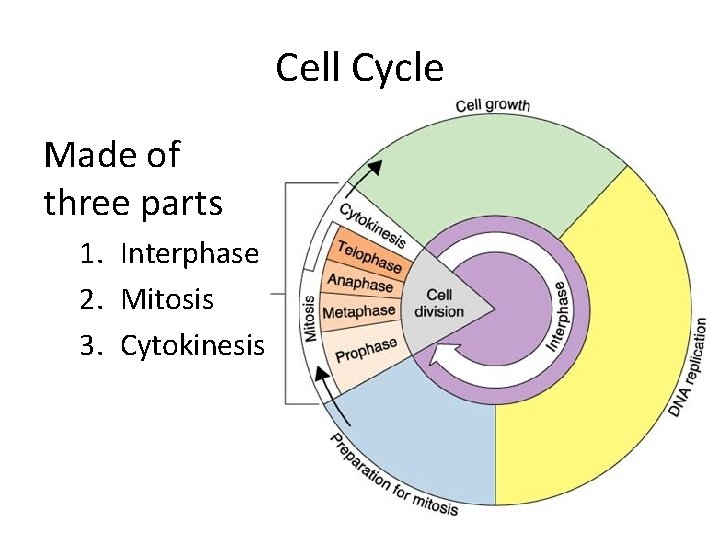
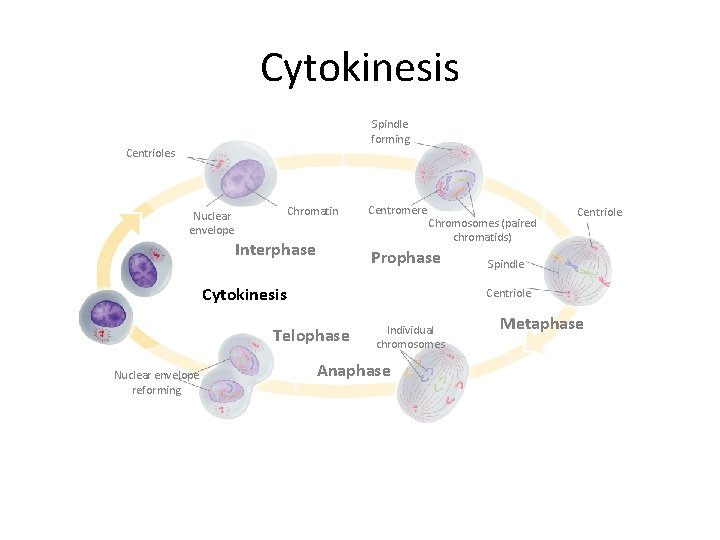
Cell Cycle Made of three parts 1. Interphase 2. Mitosis 3. Cytokinesis
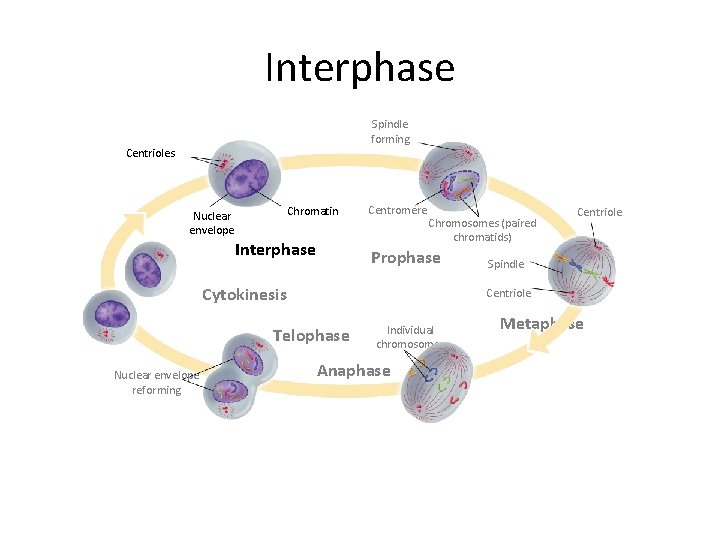
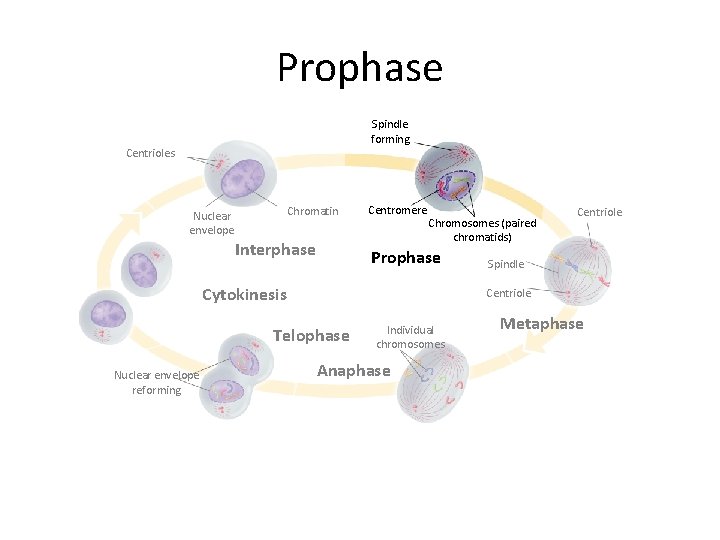
Interphase Spindle forming Centrioles Chromatin Nuclear envelope Interphase Centromere Chromosomes (paired chromatids) Prophase Cytokinesis Spindle Centriole Telophase Nuclear envelope reforming Centriole Individual chromosomes Anaphase Metaphase
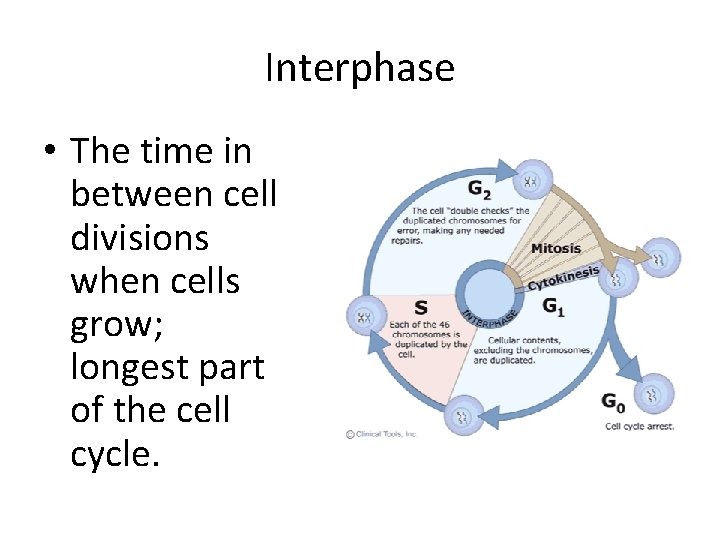
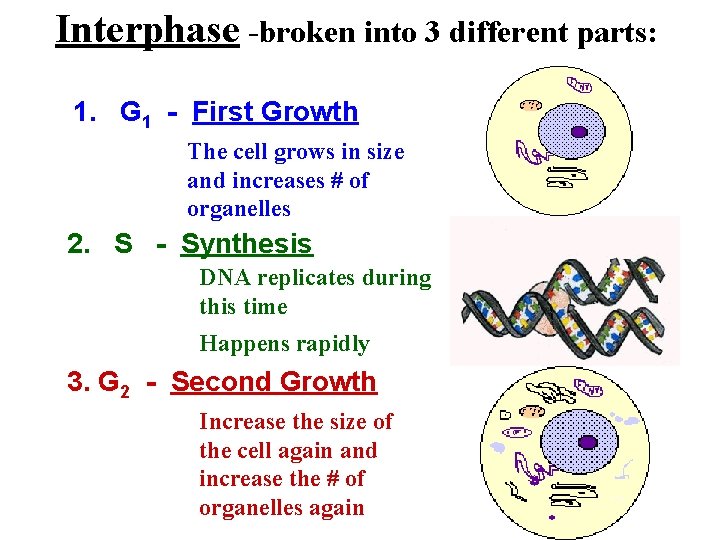
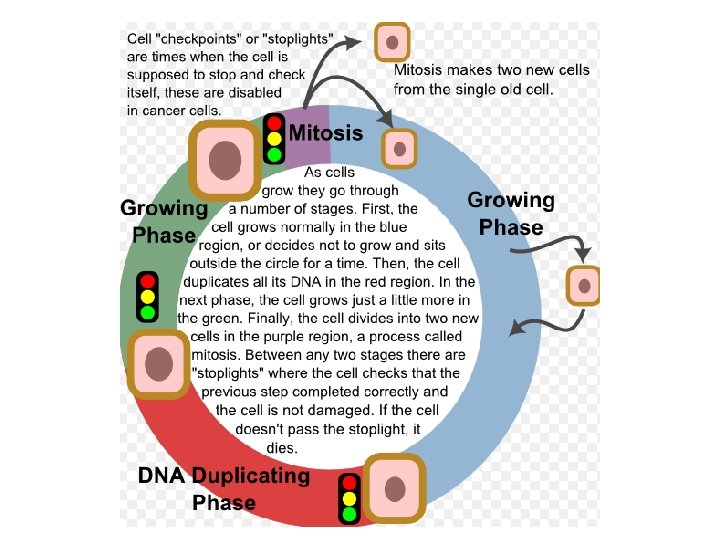
Interphase • The time in between cell divisions when cells grow; longest part of the cell cycle.
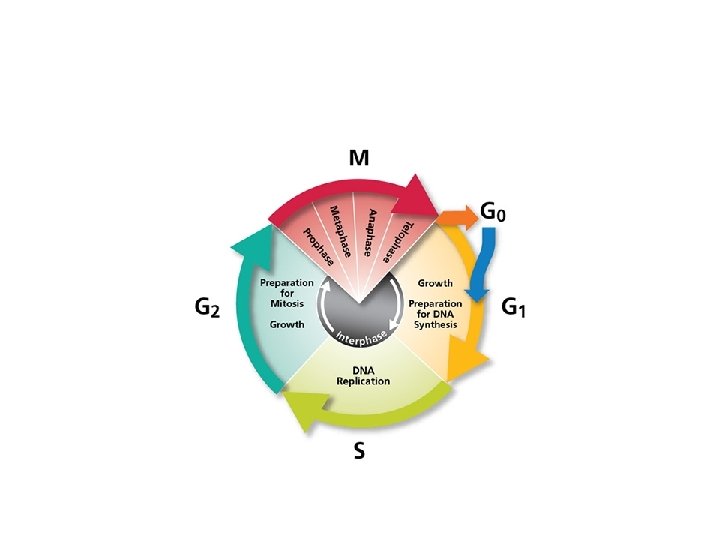
Interphase -broken into 3 different parts: 1. G 1 - First Growth The cell grows in size and increases # of organelles 2. S - Synthesis DNA replicates during this time Happens rapidly 3. G 2 - Second Growth Increase the size of the cell again and increase the # of organelles again
Prophase Spindle forming Centrioles Chromatin Nuclear envelope Interphase Centromere Chromosomes (paired chromatids) Prophase Cytokinesis Spindle Centriole Telophase Nuclear envelope reforming Centriole Individual chromosomes Anaphase Metaphase
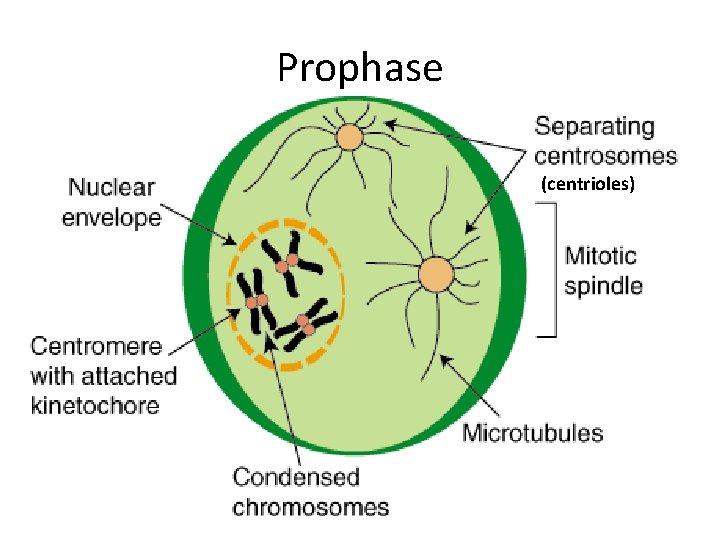
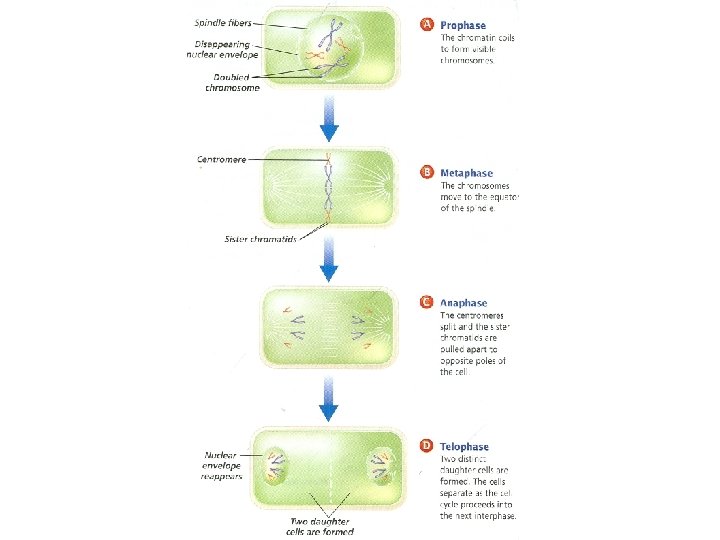
Mitosis • Prophase – Longest phase of mitosis – Early prophase: • Chromatin coils up into visible chromosomes • Sister chromatids are exact copies of each other
Mitosis • Prophase – Late Prophase: • The nucleus begins to disappear • Centrioles move to opposite ends of the cell • Spindle fibers form between the centrioles
Prophase (centrioles)
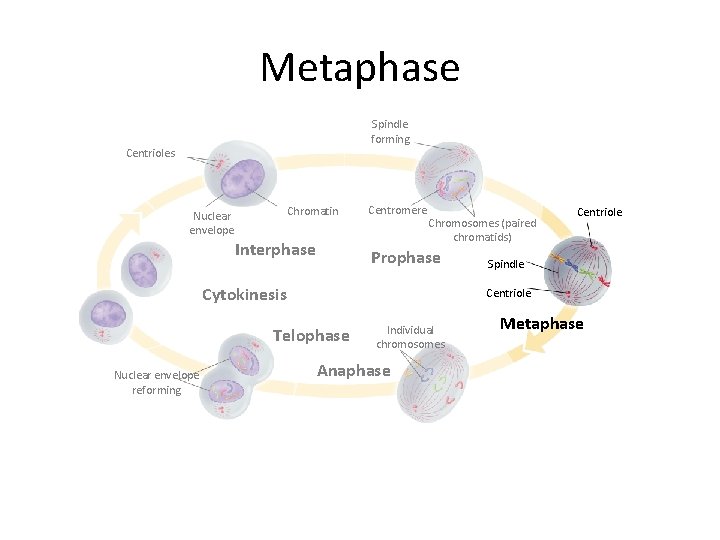
Metaphase Spindle forming Centrioles Chromatin Nuclear envelope Interphase Centromere Chromosomes (paired chromatids) Prophase Cytokinesis Spindle Centriole Telophase Nuclear envelope reforming Centriole Individual chromosomes Anaphase Metaphase
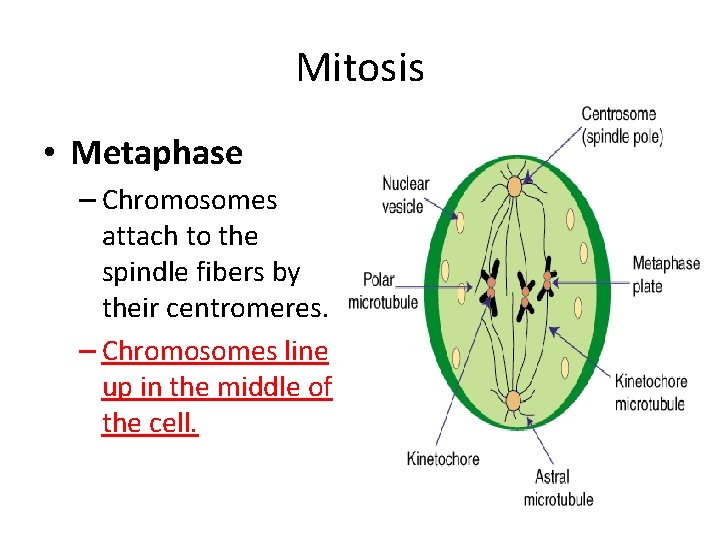
Mitosis • Metaphase – Chromosomes attach to the spindle fibers by their centromeres. – Chromosomes line up in the middle of the cell.
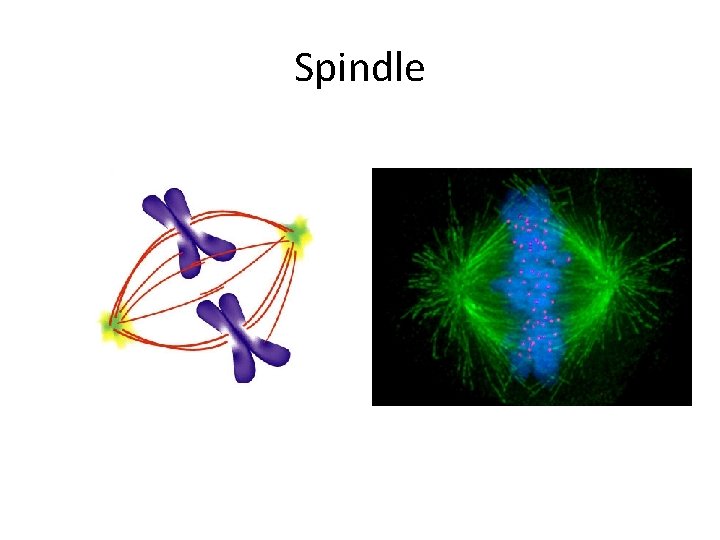
Spindle
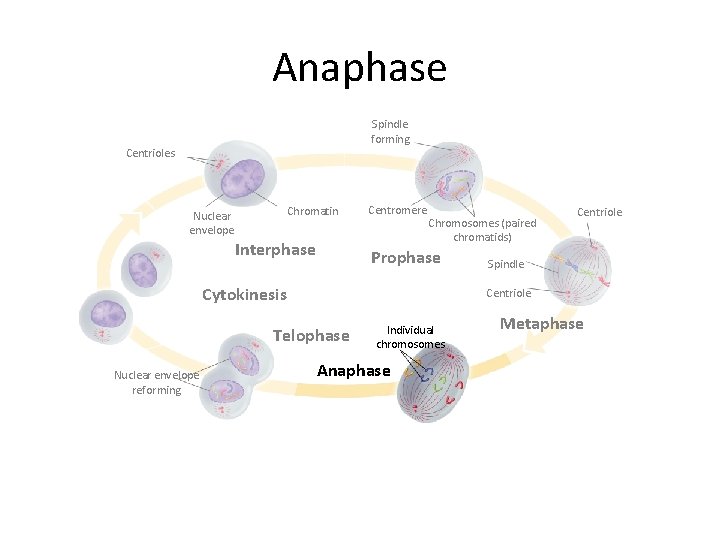
Anaphase Spindle forming Centrioles Chromatin Nuclear envelope Interphase Centromere Chromosomes (paired chromatids) Prophase Cytokinesis Spindle Centriole Telophase Nuclear envelope reforming Centriole Individual chromosomes Anaphase Metaphase
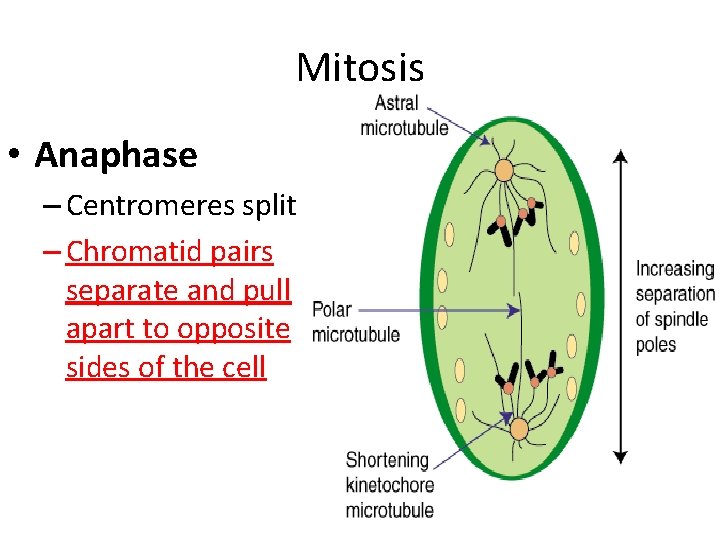
Mitosis • Anaphase – Centromeres split – Chromatid pairs separate and pull apart to opposite sides of the cell
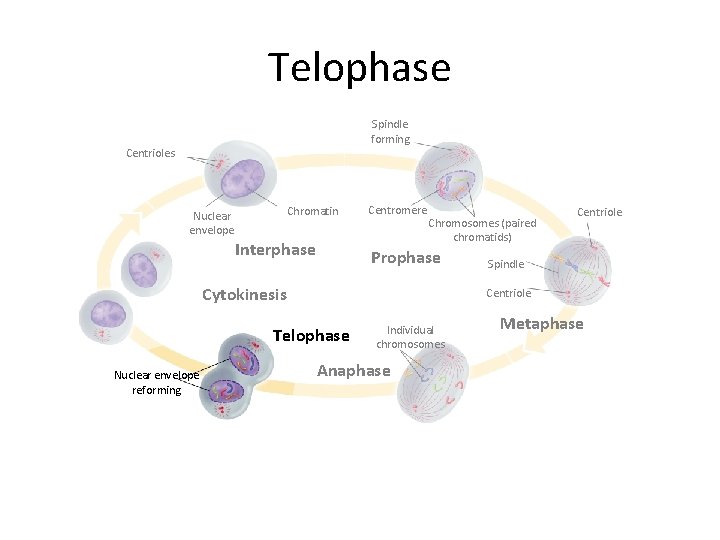
Telophase Spindle forming Centrioles Chromatin Nuclear envelope Interphase Centromere Chromosomes (paired chromatids) Prophase Cytokinesis Spindle Centriole Telophase Nuclear envelope reforming Centriole Individual chromosomes Anaphase Metaphase
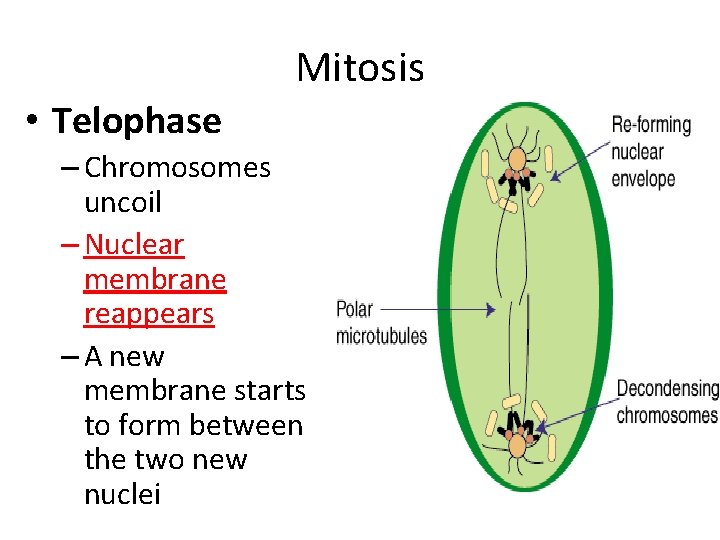
Mitosis • Telophase – Chromosomes uncoil – Nuclear membrane reappears – A new membrane starts to form between the two new nuclei
Cytokinesis Spindle forming Centrioles Chromatin Nuclear envelope Interphase Centromere Chromosomes (paired chromatids) Prophase Cytokinesis Spindle Centriole Telophase Nuclear envelope reforming Centriole Individual chromosomes Anaphase Metaphase
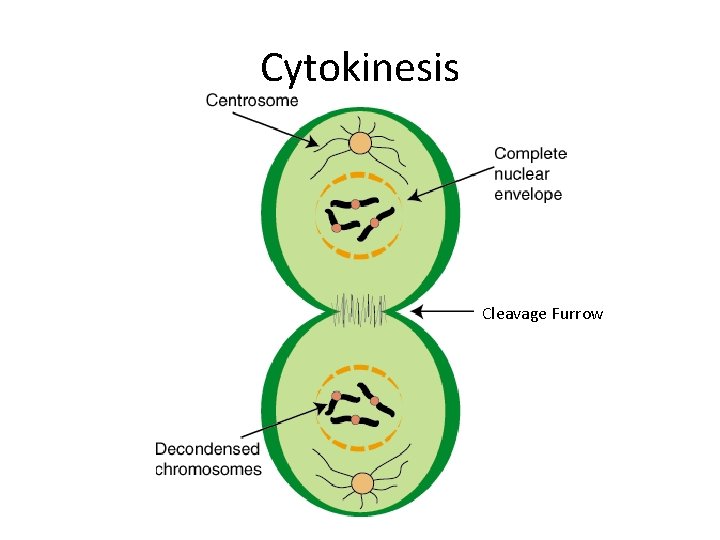
Cytokinesis • Cytoplasm divides • In Animals: cell membrane pinches in to form a furrow • In Plants: a cell plate is created to form a new cell wall
Cytokinesis Cleavage Furrow
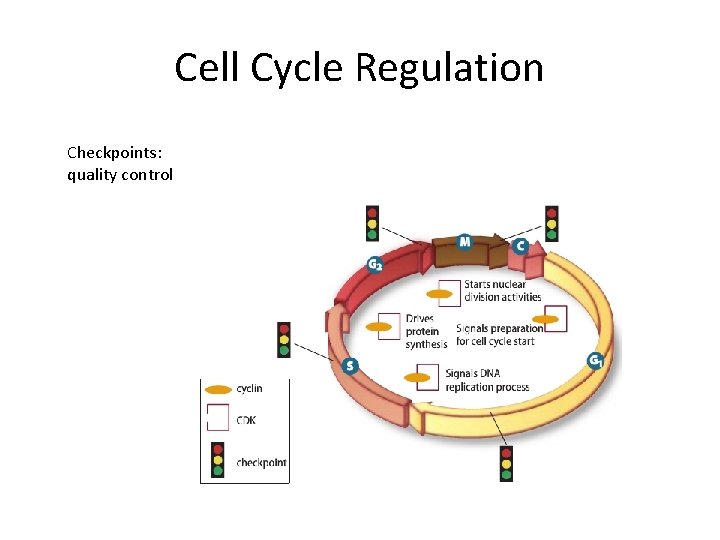
Cell Cycle Regulation Checkpoints: quality control
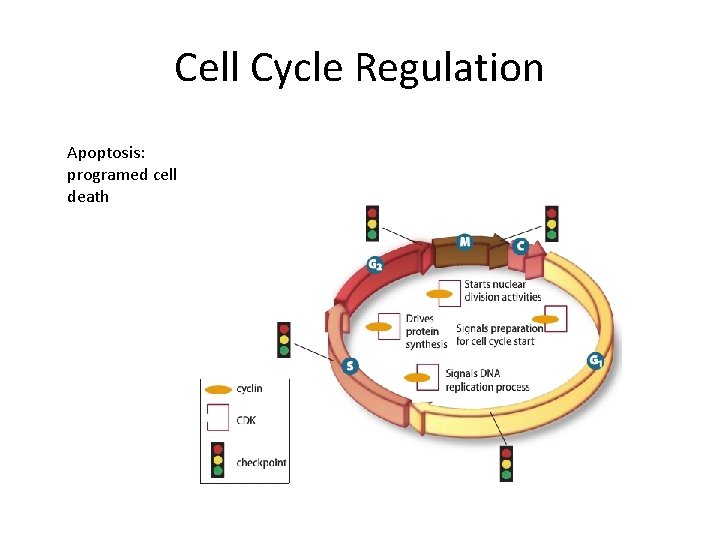
Cell Cycle Regulation Apoptosis: programed cell death
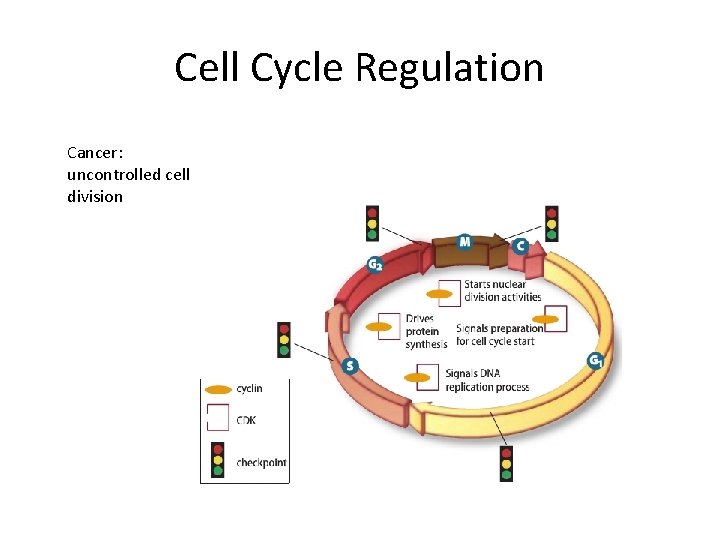
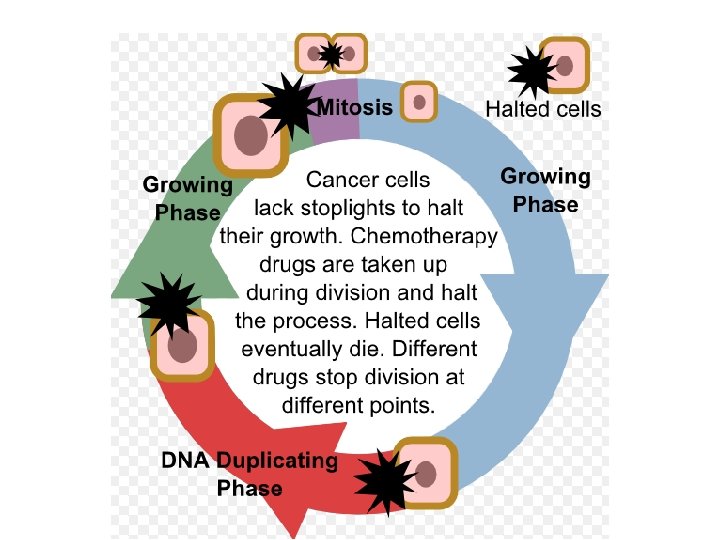
Cell Cycle Regulation Cancer: uncontrolled cell division
Control of the Cell Cycle • Cancer: uncontrolled cell division – Interfer with normal processes – Spread to other tissue (metastasize) – Crowd out healthy tissue
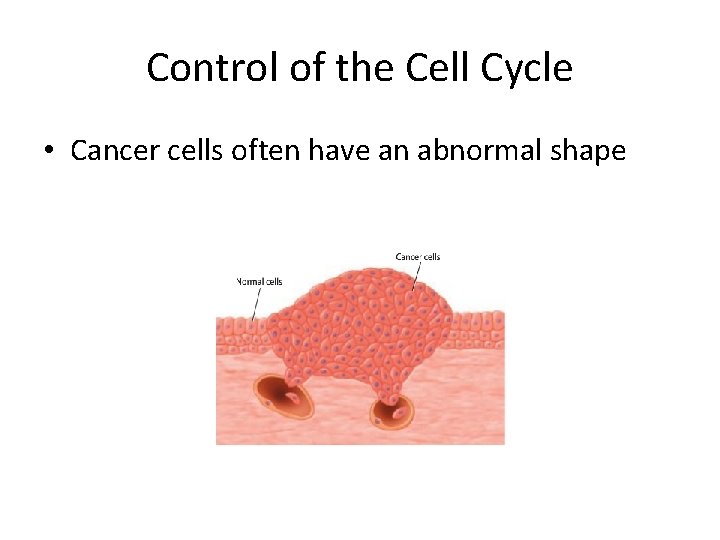
Control of the Cell Cycle • Cancer cells often have an abnormal shape
Control of the Cell Cycle – Cancer may be cause by many factors called carcinogens: • Environmental • Smoking • Pollution • Radiation • Viral Infections