
Cell Cycle Checkpoints Checkpoints They monitor the cell
- Slides: 20
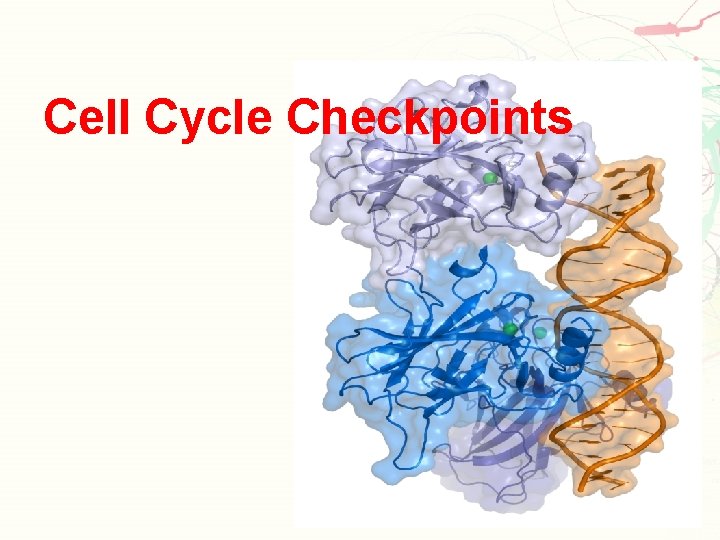
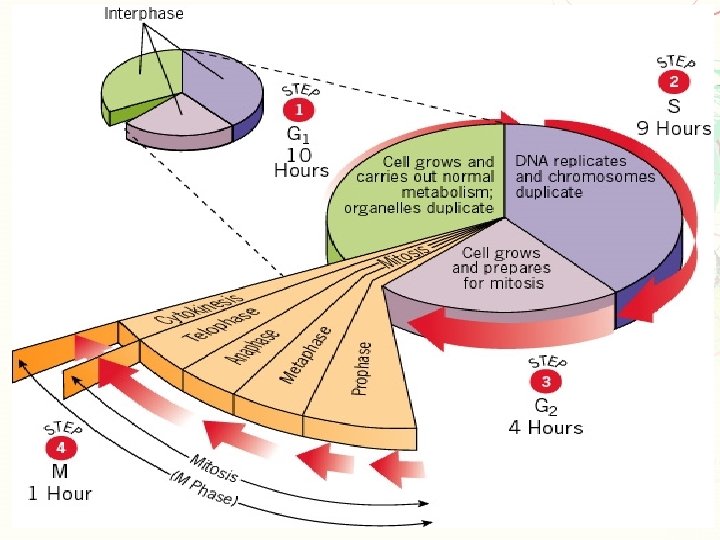
Cell Cycle Checkpoints
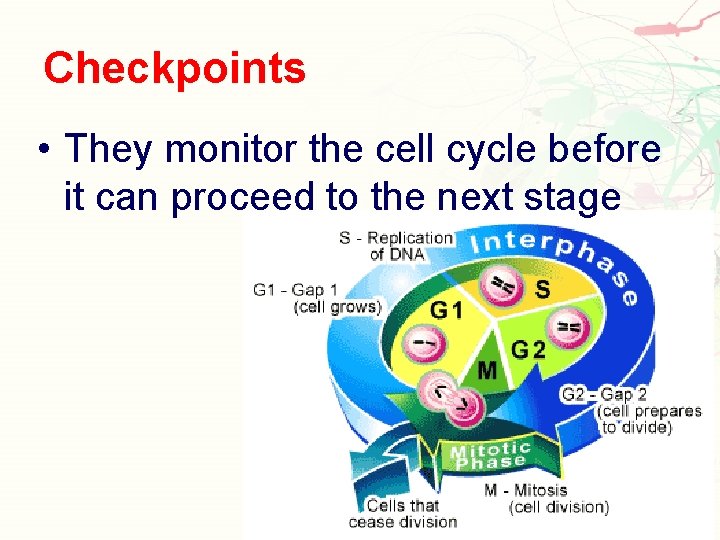
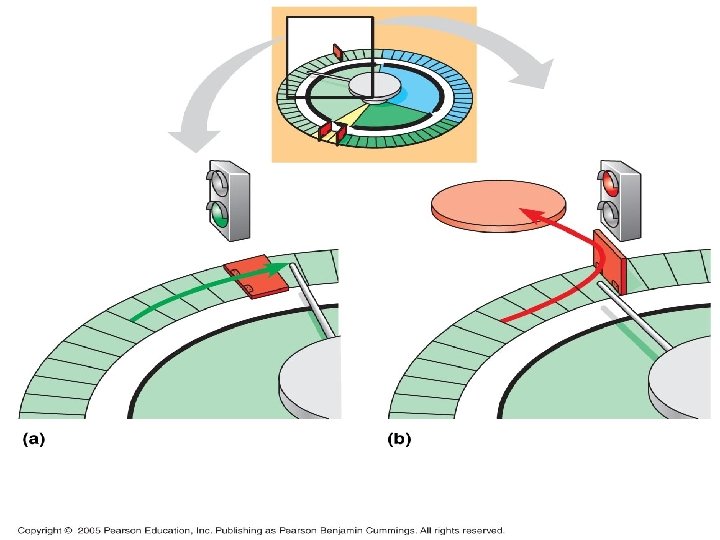
Checkpoints • They monitor the cell cycle before it can proceed to the next stage
Phosphorylation • The primary molecular mechanism of cell cycle • Addition of phosphate group to amino acids Kinases - enzyme that adds phosphate Phosphatases - enzyme that removes phosphate
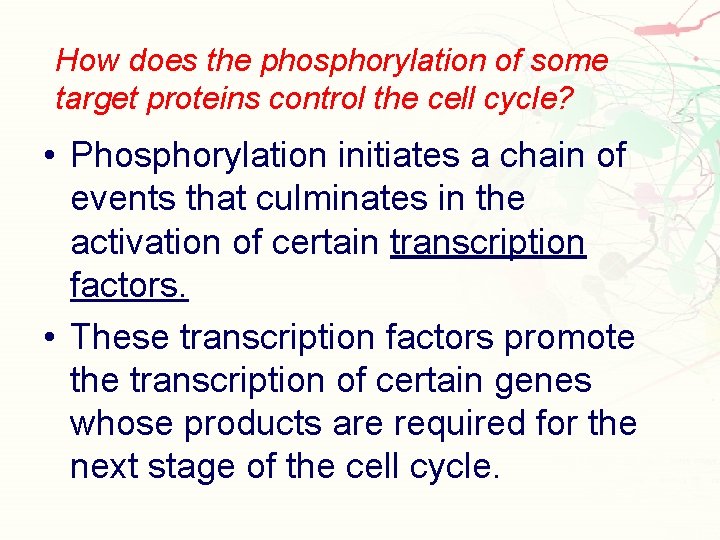
How does the phosphorylation of some target proteins control the cell cycle?
How does the phosphorylation of some target proteins control the cell cycle? • Phosphorylation initiates a chain of events that culminates in the activation of certain transcription factors. • These transcription factors promote the transcription of certain genes whose products are required for the next stage of the cell cycle.
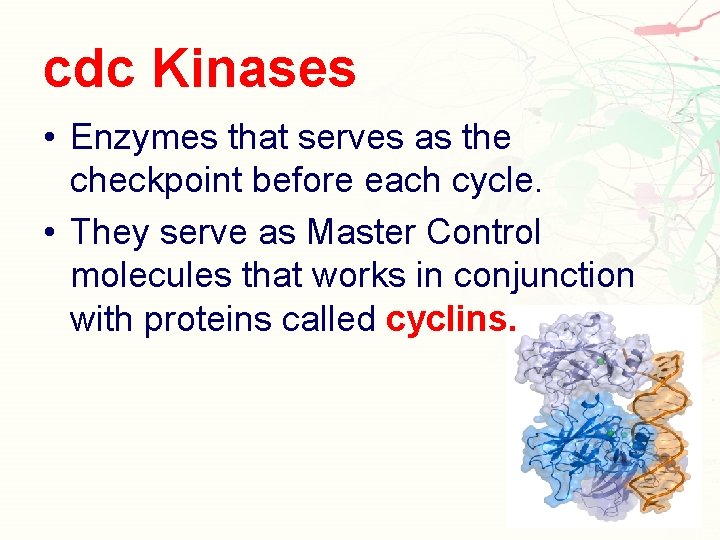
cdc Kinases • Enzymes that serves as the checkpoint before each cycle. • They serve as Master Control molecules that works in conjunction with proteins called cyclins.
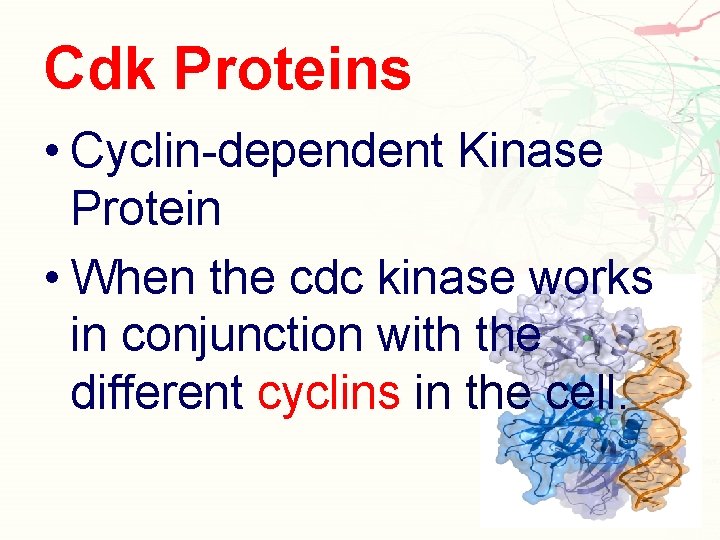
Cdk Proteins • Cyclin-dependent Kinase Protein • When the cdc kinase works in conjunction with the different cyclins in the cell.
CHECKPOINTS • G 1/ S Checkpoint • G 2/ M checkpoint • M Checkpoint
G 1/ S Checkpoint • Monitors the size that the cell has achieved following the previous mitosis, whether the DNA has been damage. • Decides whether or not to divide Example in Yeast: cdc 2 (important kinase in yeast) + S-phase-specific cyclin = G 1/S Cdk
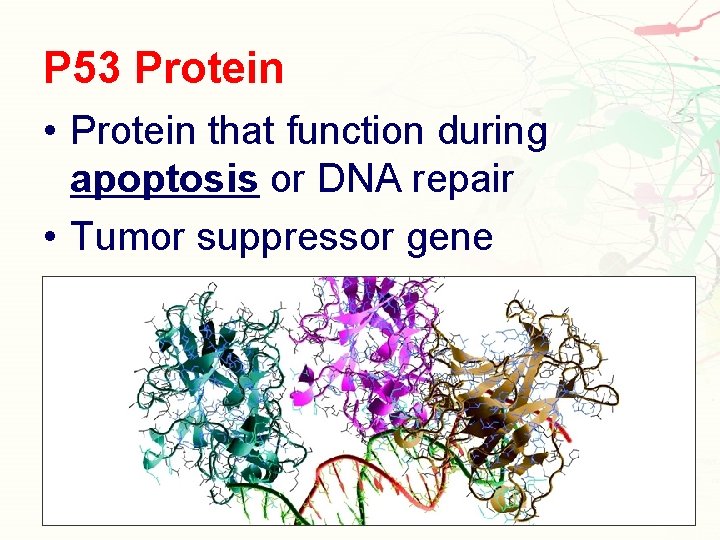
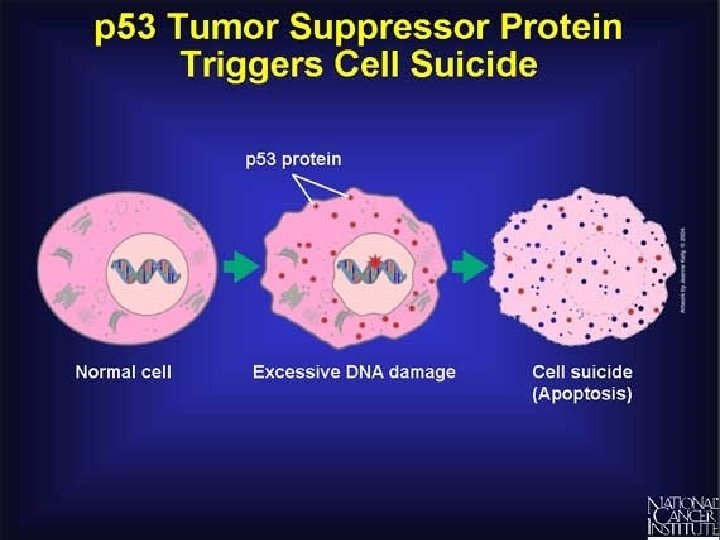
P 53 Protein • Protein that function during apoptosis or DNA repair • Tumor suppressor gene
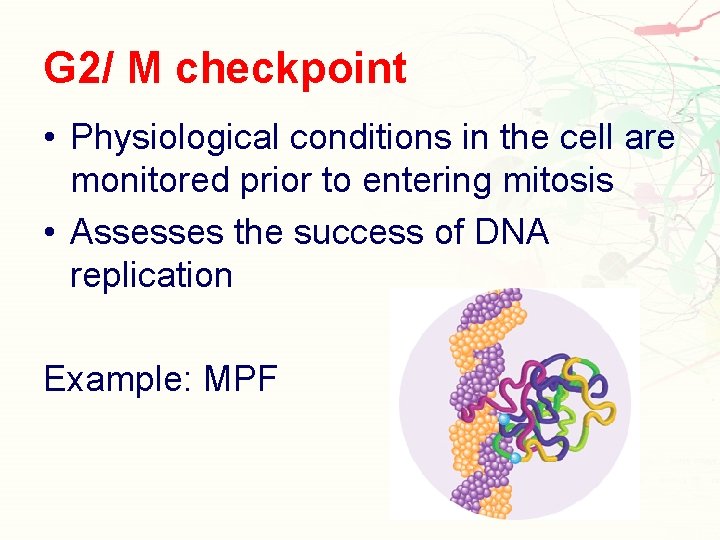
G 2/ M checkpoint • Physiological conditions in the cell are monitored prior to entering mitosis • Assesses the success of DNA replication Example: MPF
MPF (maturation/mitosis-promoting factors) • Cdk that acts at the G 2 checkpoint • Sensitive to agents that disrupt or delay replication and to agents that damage DNA
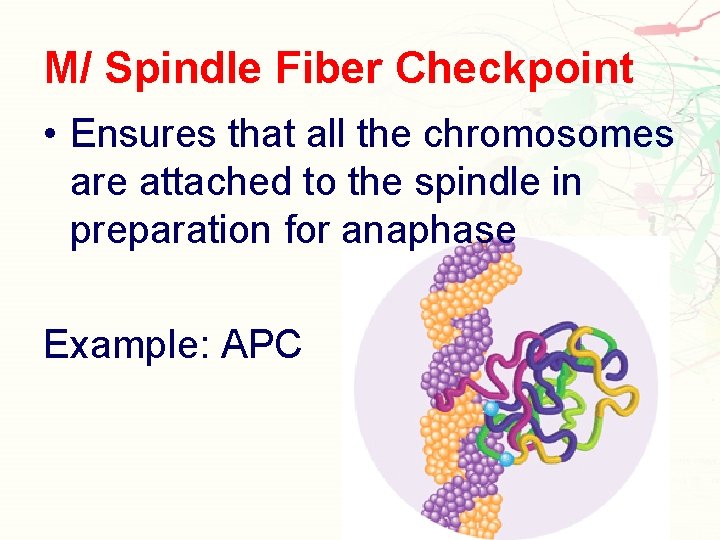
M/ Spindle Fiber Checkpoint • Ensures that all the chromosomes are attached to the spindle in preparation for anaphase Example: APC
APC (Anaphase Promoting Complex) • Releases protease that destroy cohesin Protease Cohesin - breaks down protein - protein that held together the sister chromatids
Importance of Checkpoints • It assess DNA damage • It function as a clock that will determine how long a phase should take. (Temple and Raff, 1986) • It ensure the fidelity of cell division in eukaryotic cells
Assignment: • Prepare for a Test on Wednesday (1 -22 -12) • Define the following: • • • Cancer Tumor Metastases Oncogenes Tumor Suppressor Genes • Top 10 Causes of Cancer Deaths in the Philippines