
Cell Cycle and Mitosis Objectives Describe the events
Cell Cycle and Mitosis
Objectives • Describe the events of cell division in prokaryotes. • Name the two parts of the cell that are equally divided during cell division in eukaryotes. • Summarize the events of interphase. • Describe the stages of mitosis. • Compare cytokinesis in animal cells with cytokinesis in plant cells. • Explain how cell division is controlled.
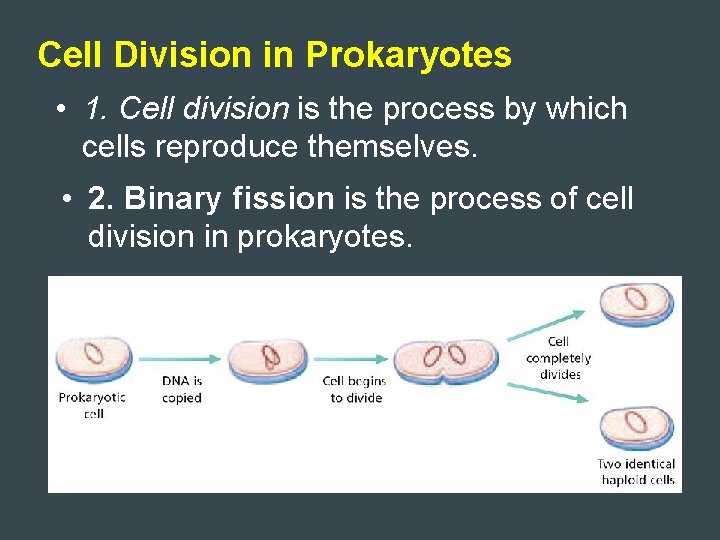
Cell Division in Prokaryotes • 1. Cell division is the process by which cells reproduce themselves. • 2. Binary fission is the process of cell division in prokaryotes.
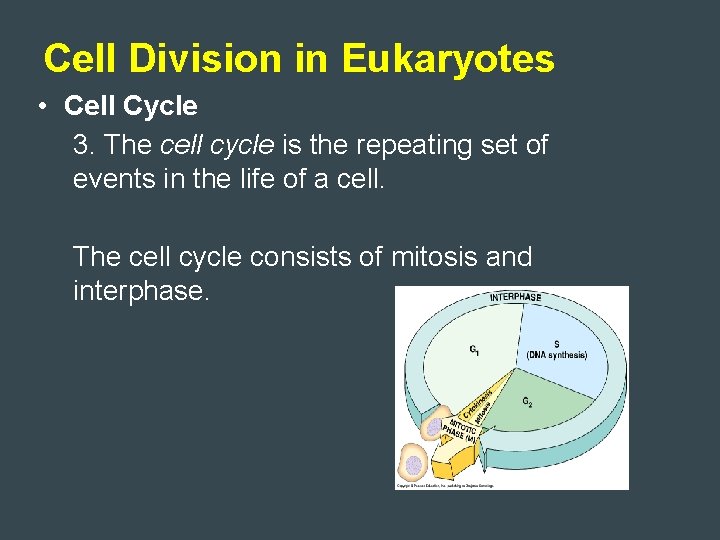
Cell Division in Eukaryotes • Cell Cycle 3. The cell cycle is the repeating set of events in the life of a cell. The cell cycle consists of mitosis and interphase.
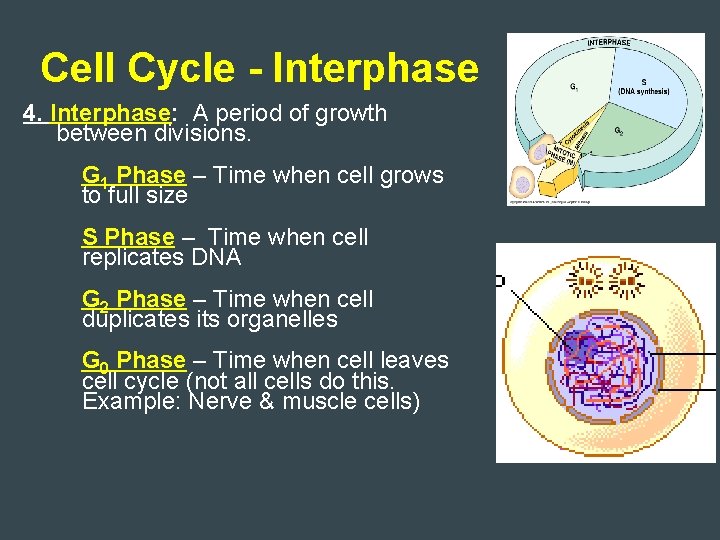
Cell Cycle - Interphase 4. Interphase: A period of growth between divisions. �G 1 Phase – Time when cell grows to full size �S Phase – Time when cell replicates DNA �G 2 Phase – Time when cell duplicates its organelles �G 0 Phase – Time when cell leaves cell cycle (not all cells do this. Example: Nerve & muscle cells)
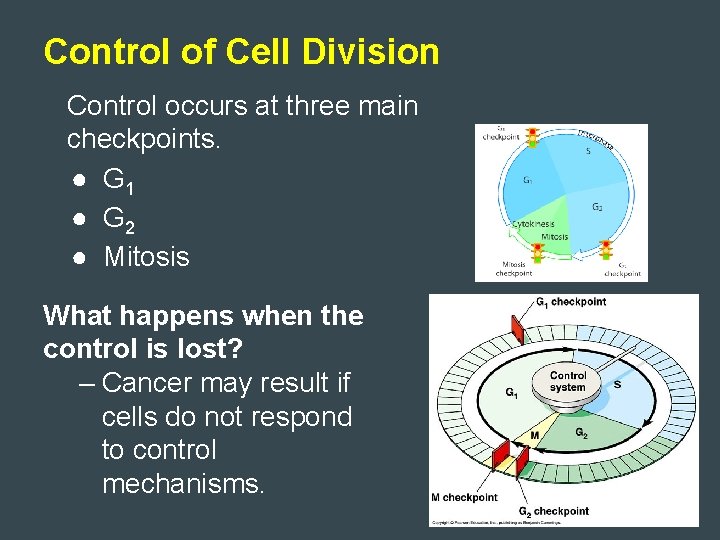
Control of Cell Division Control occurs at three main checkpoints. ● G 1 ● G 2 ● Mitosis What happens when the control is lost? – Cancer may result if cells do not respond to control mechanisms.
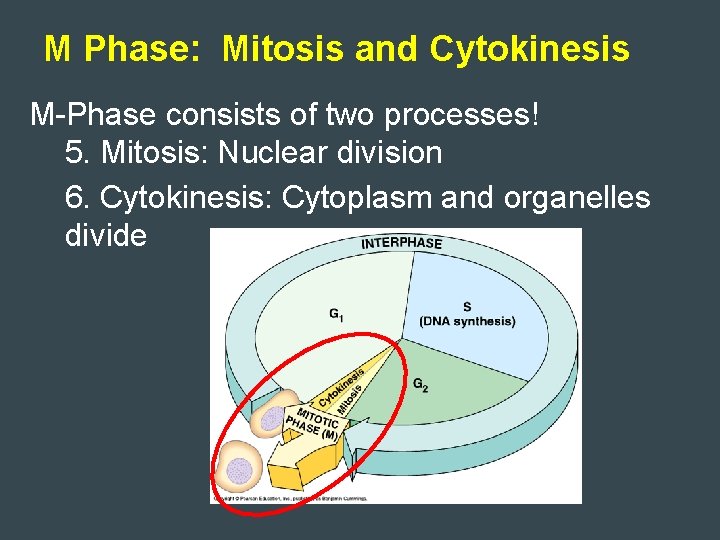
M Phase: Mitosis and Cytokinesis M-Phase consists of two processes! 5. Mitosis: Nuclear division 6. Cytokinesis: Cytoplasm and organelles divide
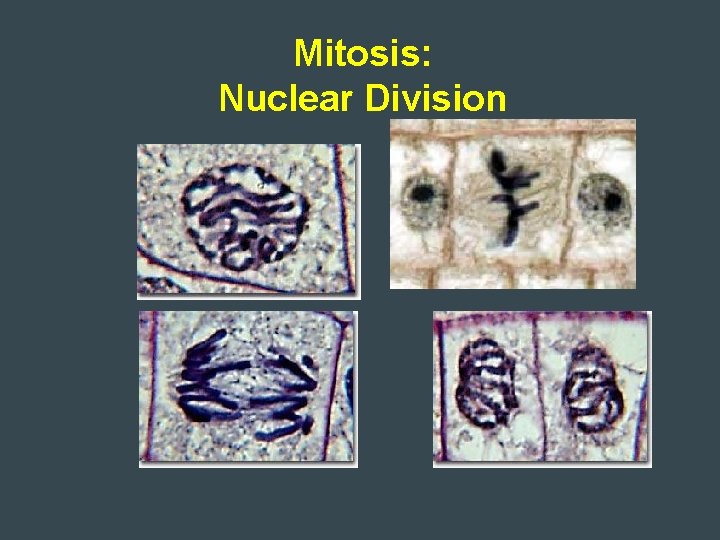
Mitosis: Nuclear Division
Mitosis The Result is two daughter cells that are identical to the original cell! Why does mitosis happen? � � GROWTH & REPAIR. Each daughter cell has exactly the same DNA as the parent cell. How long does it take for mitosis to happen? About an hour. (also depends on the cell)
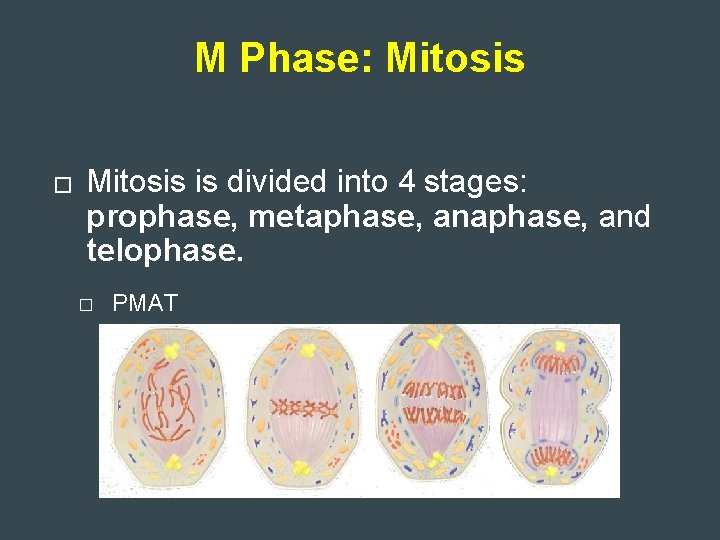
M Phase: Mitosis � Mitosis is divided into 4 stages: prophase, metaphase, and telophase. � PMAT
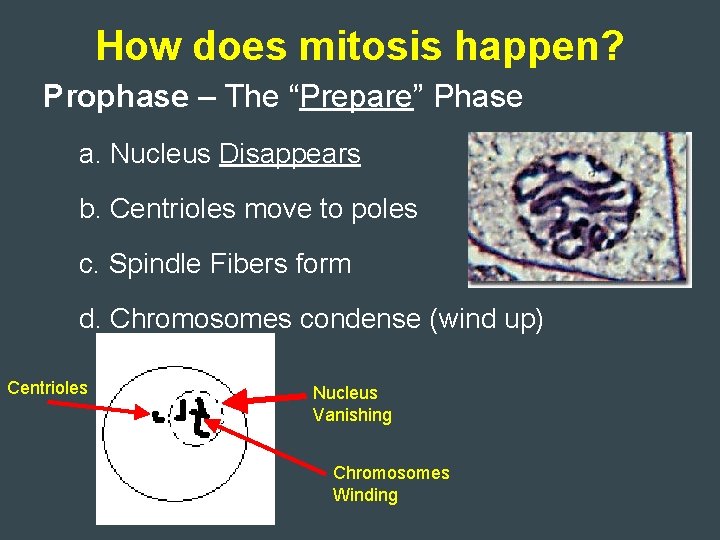
How does mitosis happen? Prophase – The “Prepare” Phase a. Nucleus Disappears b. Centrioles move to poles c. Spindle Fibers form d. Chromosomes condense (wind up) Centrioles Nucleus Vanishing Chromosomes Winding
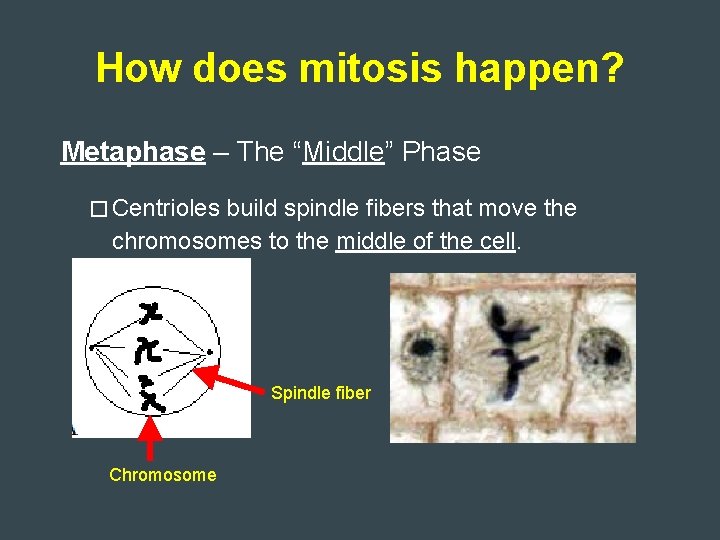
How does mitosis happen? Metaphase – The “Middle” Phase � Centrioles build spindle fibers that move the chromosomes to the middle of the cell. Spindle fiber Chromosome
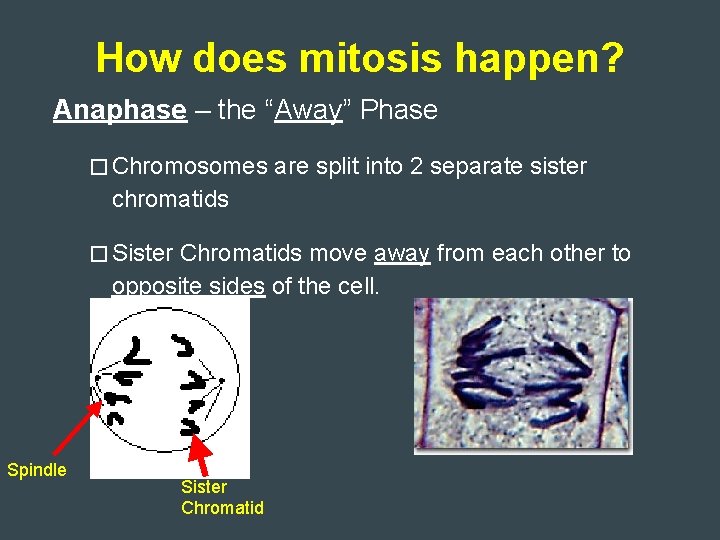
How does mitosis happen? Anaphase – the “Away” Phase � Chromosomes are split into 2 separate sister chromatids � Sister Chromatids move away from each other to opposite sides of the cell. Spindle Sister Chromatid
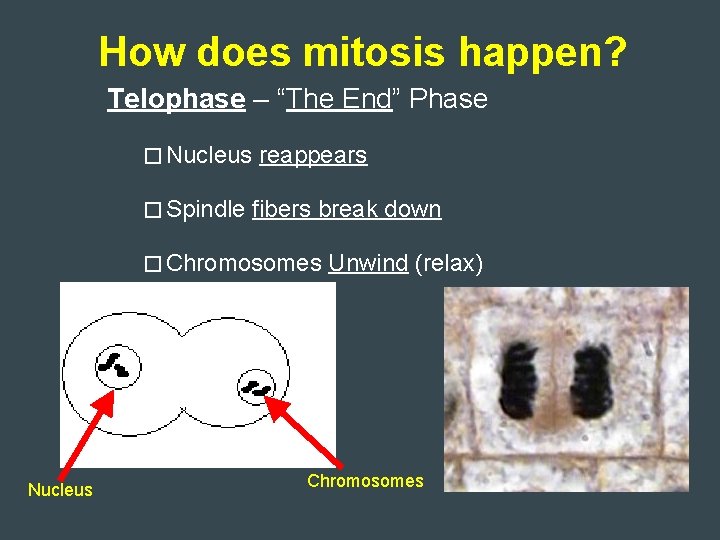
How does mitosis happen? Telophase – “The End” Phase � Nucleus � Spindle reappears fibers break down � Chromosomes Nucleus Unwind (relax) Chromosomes Unwind
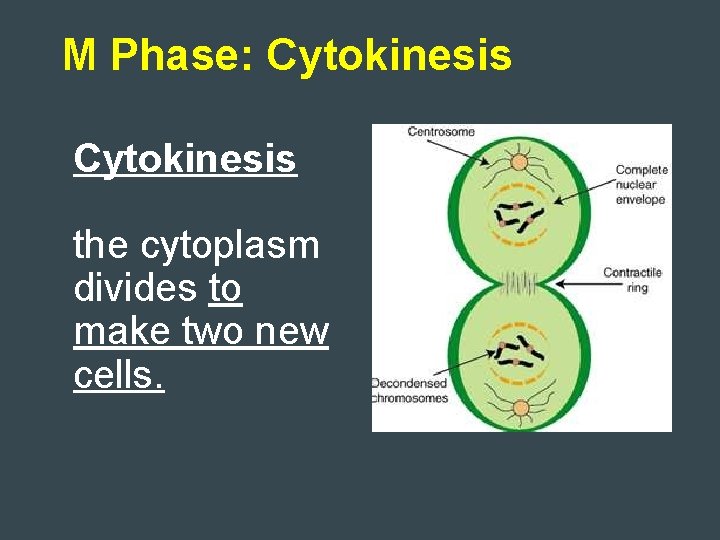
M Phase: Cytokinesis after mitosis, the cytoplasm divides to make two new cells.
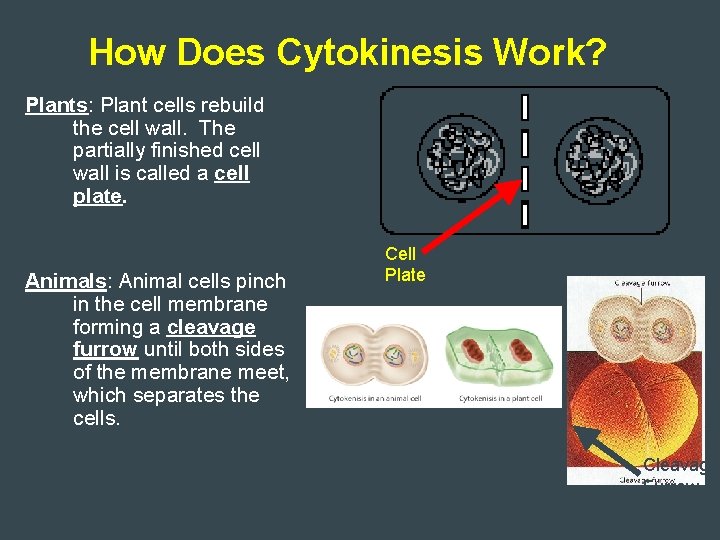
How Does Cytokinesis Work? Plants: Plant cells rebuild the cell wall. The partially finished cell wall is called a cell plate. Animals: Animal cells pinch in the cell membrane forming a cleavage furrow until both sides of the membrane meet, which separates the cells. Cell Plate Cleavage Furrow
Terms we just used that require some more explanation… � Chromosome � Centriole � Spindle Fibers � Sister Chromatids � Centromere (well, we actually didn’t use it yet…) All of these are associated with DNA during Mitosis… So, let’s learn a little more about DNA!
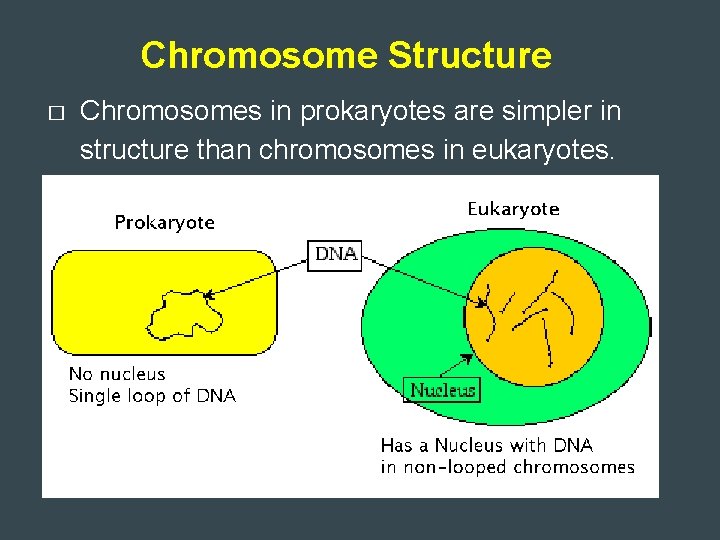
Chromosome Structure � Chromosomes in prokaryotes are simpler in structure than chromosomes in eukaryotes.
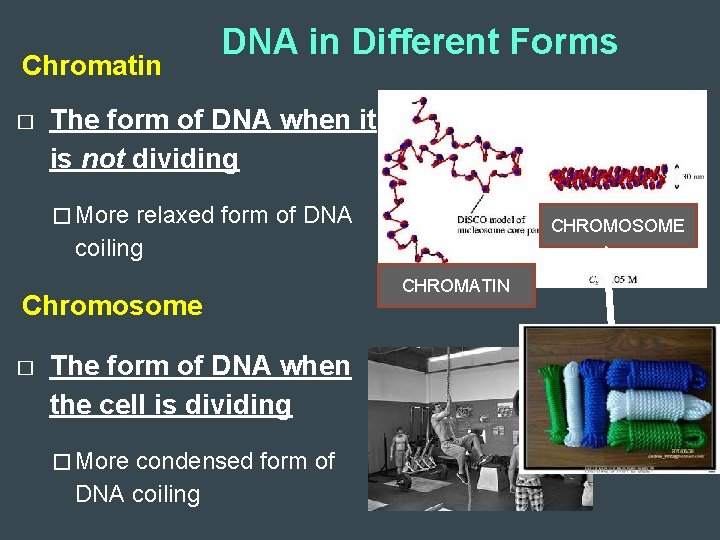
Chromatin � DNA in Different Forms The form of DNA when it is not dividing � More relaxed form of DNA coiling Chromosome � The form of DNA when the cell is dividing � More condensed form of DNA coiling CHROMOSOME CHROMATIN
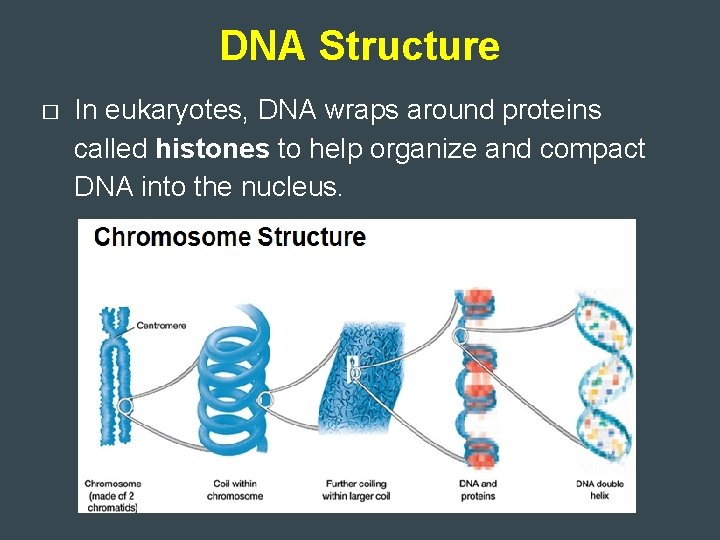
DNA Structure � In eukaryotes, DNA wraps around proteins called histones to help organize and compact DNA into the nucleus.
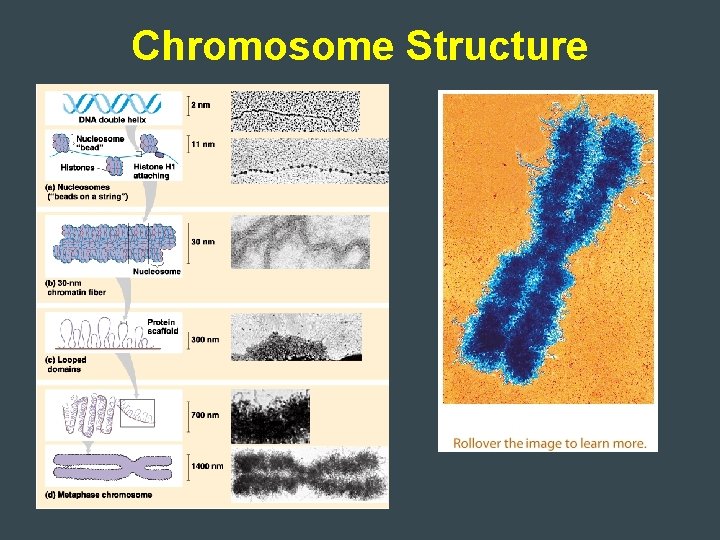
Chromosome Structure
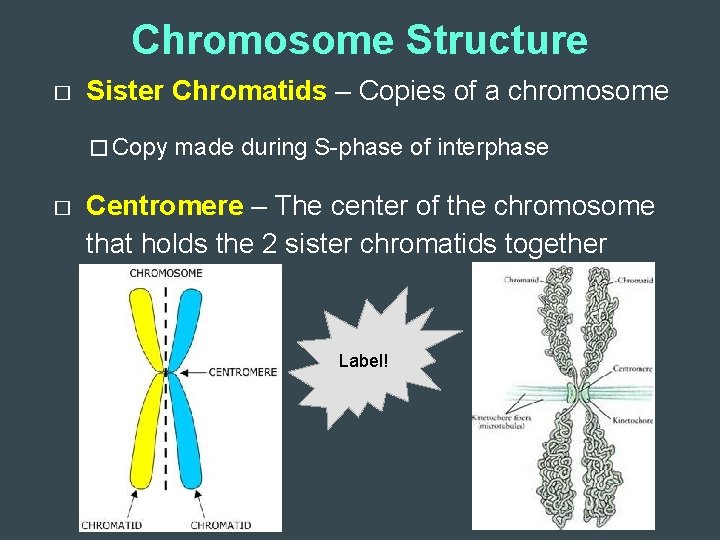
Chromosome Structure � Sister Chromatids – Copies of a chromosome � Copy � made during S-phase of interphase Centromere – The center of the chromosome that holds the 2 sister chromatids together Label!
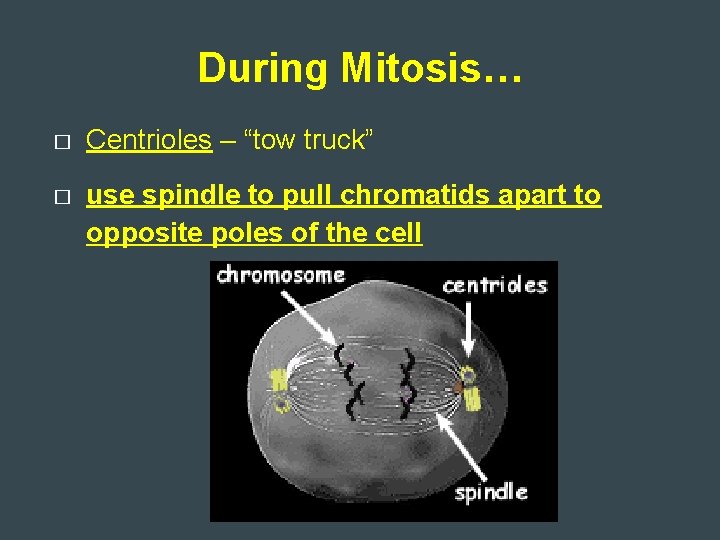
During Mitosis… � Centrioles – “tow truck” � use spindle to pull chromatids apart to opposite poles of the cell
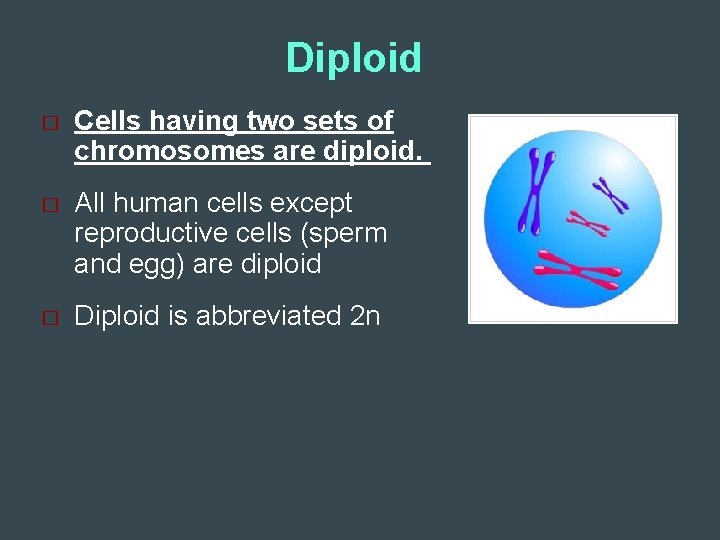
Diploid � Cells having two sets of chromosomes are diploid. � All human cells except reproductive cells (sperm and egg) are diploid � Diploid is abbreviated 2 n
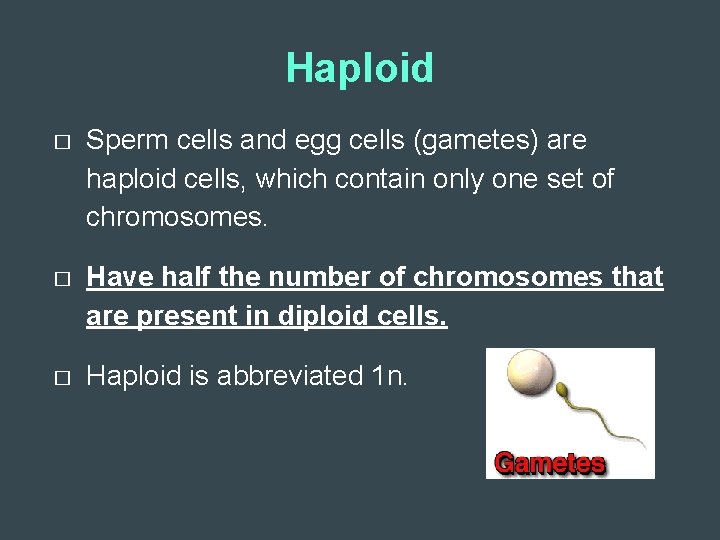
Haploid � Sperm cells and egg cells (gametes) are haploid cells, which contain only one set of chromosomes. � Have half the number of chromosomes that are present in diploid cells. � Haploid is abbreviated 1 n.
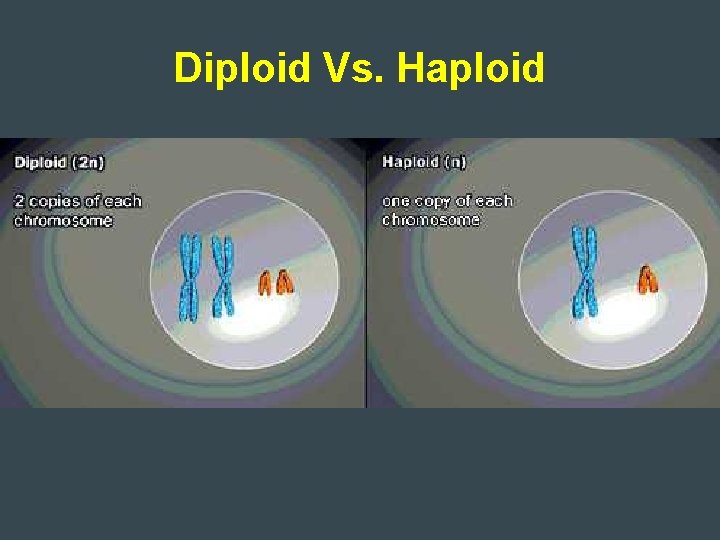
Diploid Vs. Haploid
Review of Meiosis! � When a sperm cell(1 n) and an egg cell (1 n) combine to create the first cell of a new organism, the new cell will be dipolid (2 n) � If the reproductive cells were diploid, the new cell would have too many chromosomes and would not be functional.
Videos � www. youtube. com/watch? v=VGV 3 fv-u. ZYI � https: //www. youtube. com/watch? v=gb. SIBh. Fw. Q 4 s ondensing DNA:
- Slides: 28