
Cell Cycle and Cell Division BIG PICTURE Mitosis
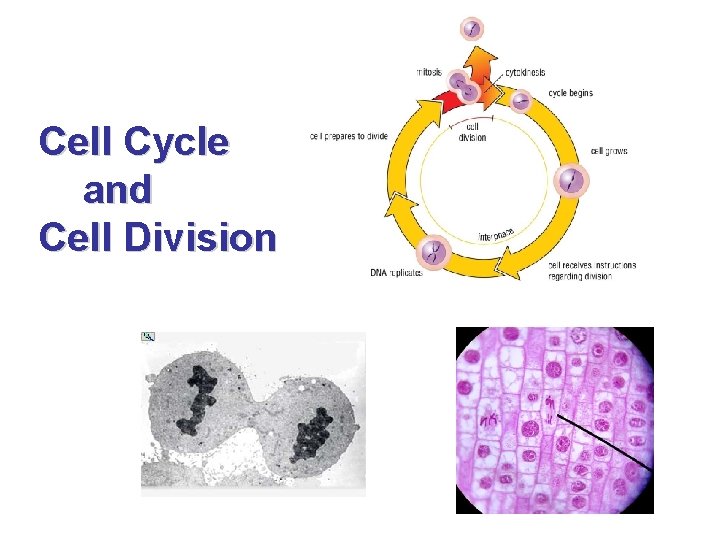
Cell Cycle and Cell Division
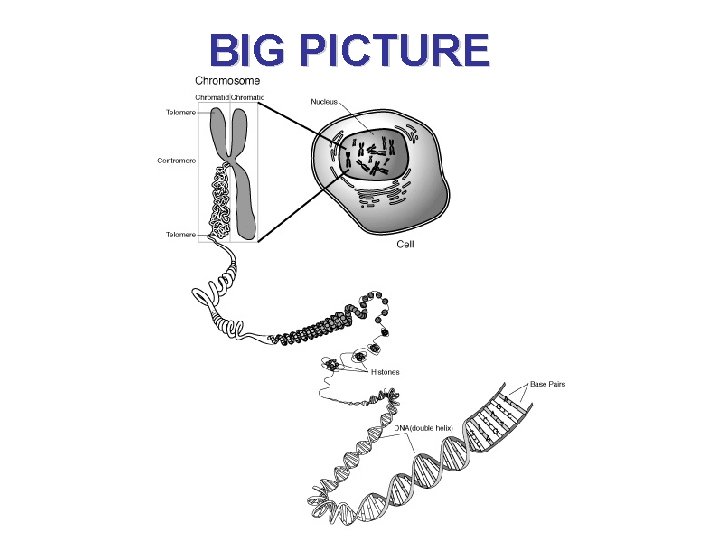
BIG PICTURE

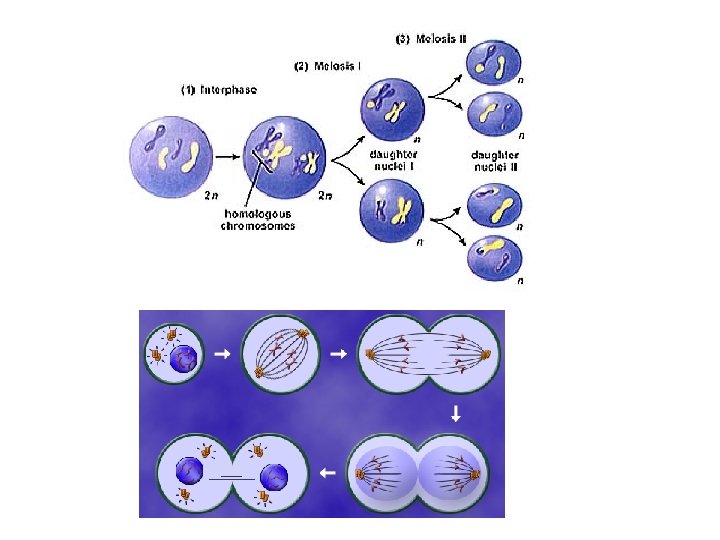
Mitosis 2 n 2 n 2 n One (Diploid) Cell becomes Two (Diploid) Cells Example : Cats Somatic Cells have 38 (2 n) chromosomes Sex cells have 19 (n) chromosomes
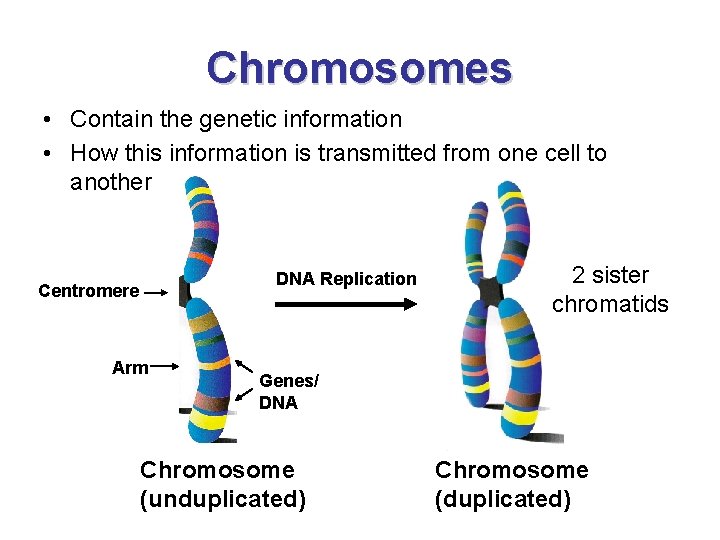
Chromosomes • Contain the genetic information • How this information is transmitted from one cell to another DNA Replication Centromere Arm 2 sister chromatids Genes/ DNA Chromosome (unduplicated) Chromosome (duplicated)
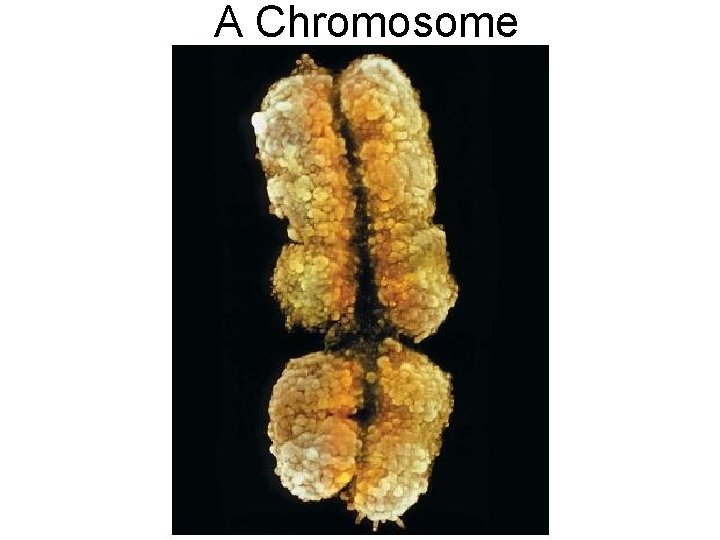
A Chromosome

Number of Chromosomes Types of Chromosomes (Humans) 1. Body (Autosomes) – 44 chromosomes (22 pairs) 2. Sex – 2 chromosomes (1 pair) (females XX, males XY) Total Number of Chromosomes = 46
To Begin - Terminology • Somatic cell – A body cell (muscle, skin, etc) • Cytokinesis – the cytoplasm of one cell is divided evenly into the two daughter cells • Sister Chromatids
The End Result Two cells are created with the same genetic information and number of chromosomes as their parent cell. • http: //www. johnkyrk. com/mitosis. html - * • http: //www. unitedstreaming. com/search/as set. Detail. cfm? guid. Asset. ID=9 B 385 B 50541 B-447 A-89 CF-2016 A 3 CFC 094
Where does Mitosis occur? • Only occurs in somatic cells (ex. muscle, skin) • Produces diploid somatic cells

Interphase During Interphase: • Growth -> Duplication of chromosomes -> Growth • Takes in nutrients to build proteins • Duplicates chromosomes within the nucleus to create sister chromatids (joined by the centromere)

Homologous Pairs

Prophase • Individual chromosomes shorten and thicken • Strengthens DNA for Mitosis
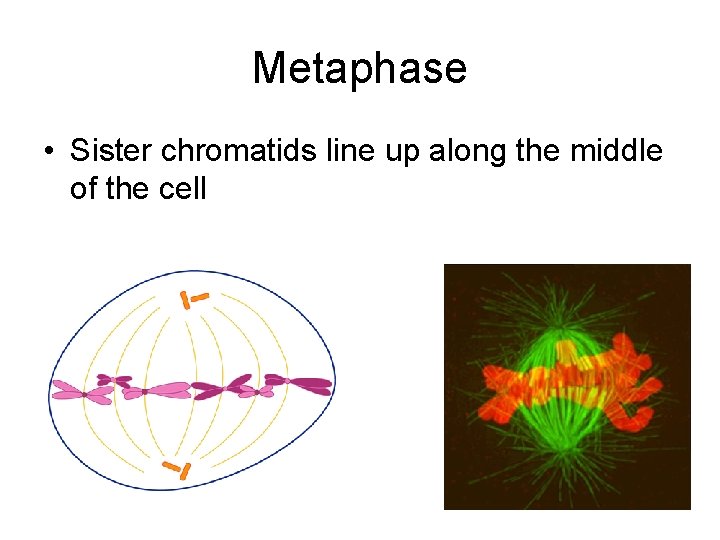
Metaphase • Sister chromatids line up along the middle of the cell

Anaphase • The sister chromatids split to form two individual chromosomes • The two individual chromosomes move to opposite ends of the cell
Telophase • Chromosomes reach the ends of the cell • Nuclear membrane begins forming • Cytokinesis occurs resulting in two daughter cells each containing all cell organelles and 2 n chromosomes • Interphase begins again
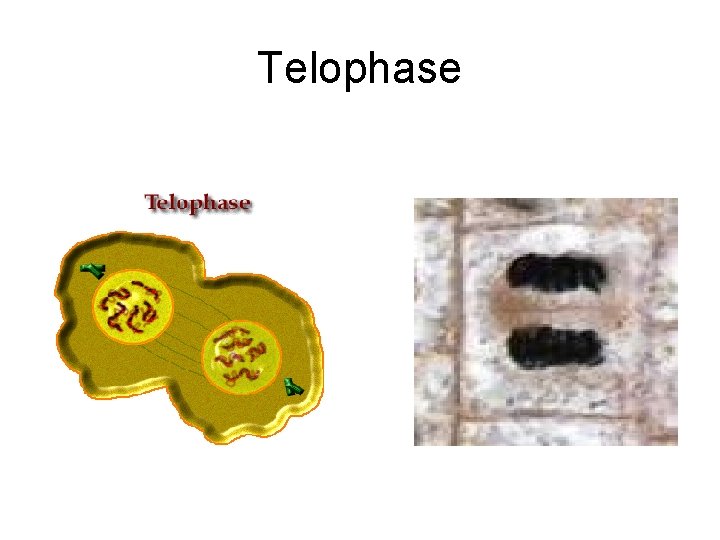
Telophase
Make A Chart • List IPMAT down the left side (below each phase list how to remember it!) • Across the top, put: – Genetic Information – Centrioles – Spindle Fibres – Nuclear membrane – Drawing (place a rough labelled sketch in here) • Describe how each of the cell parts involved are behaving in each stage
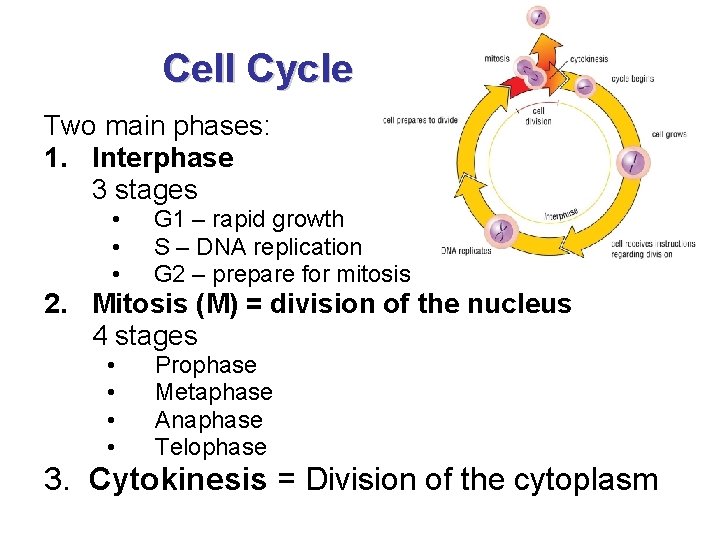
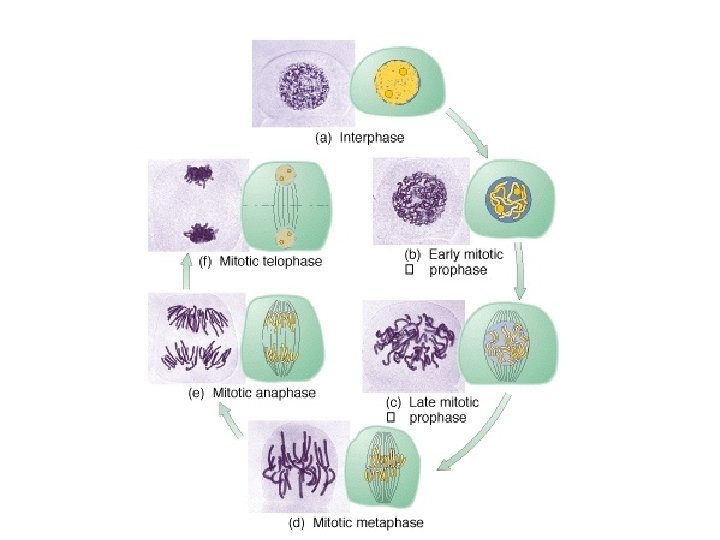
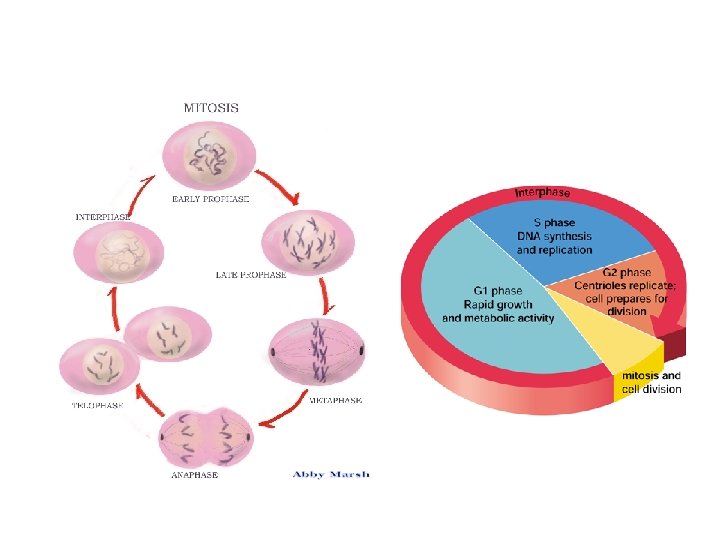
Cell Cycle Two main phases: 1. Interphase 3 stages • • • G 1 – rapid growth S – DNA replication G 2 – prepare for mitosis 2. Mitosis (M) = division of the nucleus 4 stages • • Prophase Metaphase Anaphase Telophase 3. Cytokinesis = Division of the cytoplasm
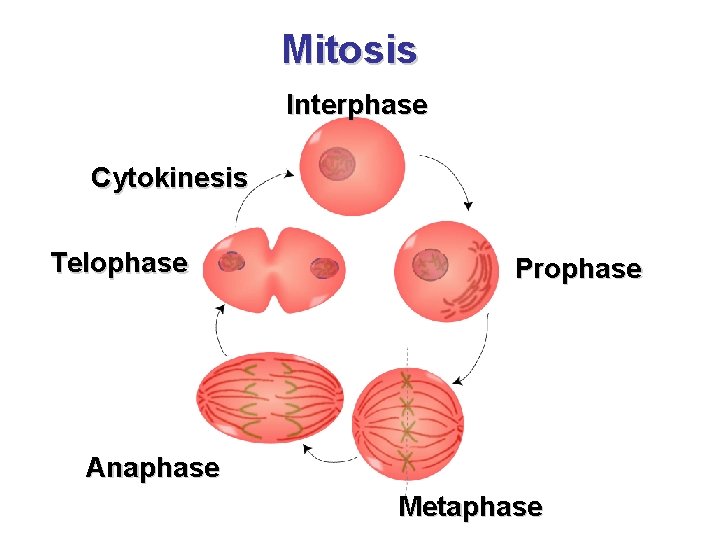
Mitosis Interphase Cytokinesis Telophase Prophase Anaphase Metaphase
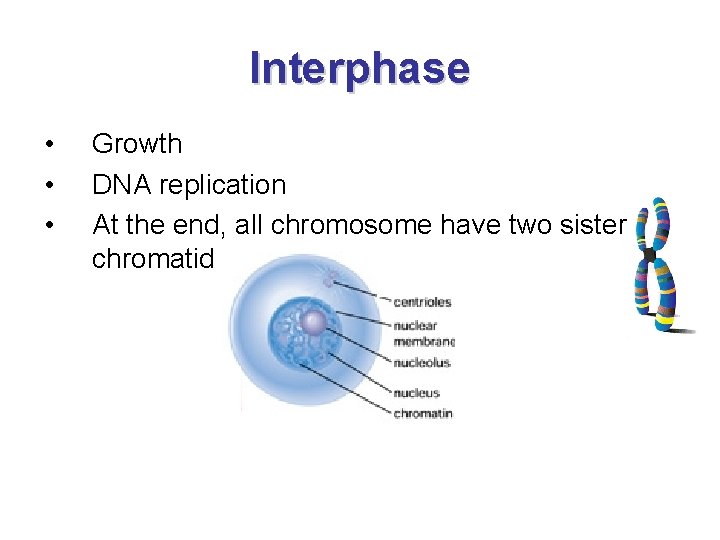
Interphase • • • Growth DNA replication At the end, all chromosome have two sister chromatids
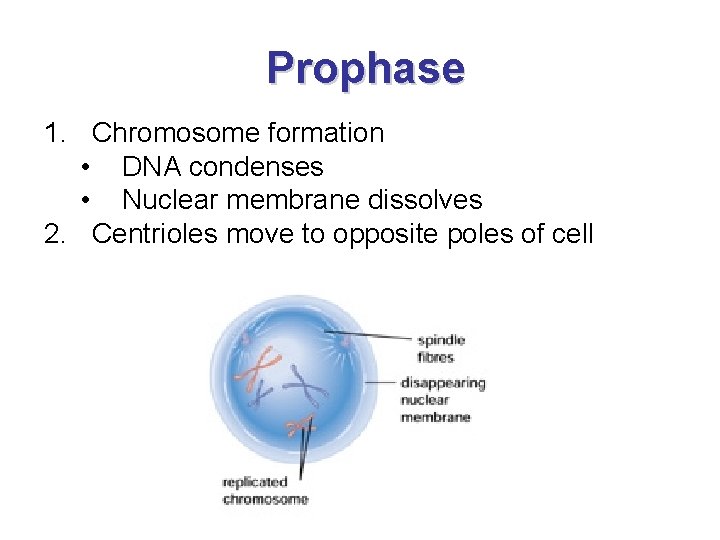
Prophase 1. Chromosome formation • DNA condenses • Nuclear membrane dissolves 2. Centrioles move to opposite poles of cell
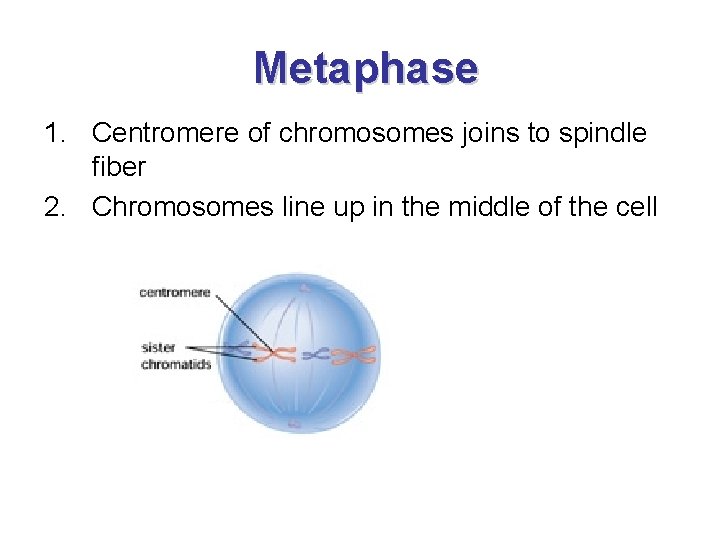
Metaphase 1. Centromere of chromosomes joins to spindle fiber 2. Chromosomes line up in the middle of the cell

Anaphase 1. Centromere doubles 2. Chromatids separate and are pulled to opposite poles by the spindle fibers
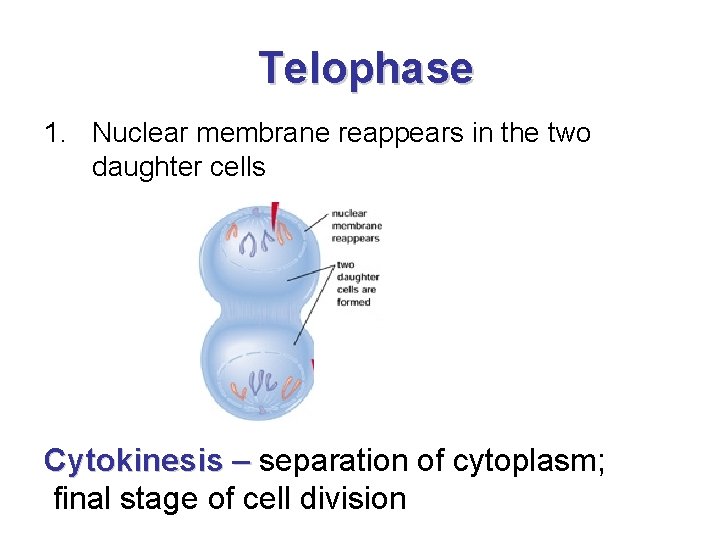
Telophase 1. Nuclear membrane reappears in the two daughter cells Cytokinesis – separation of cytoplasm; final stage of cell division
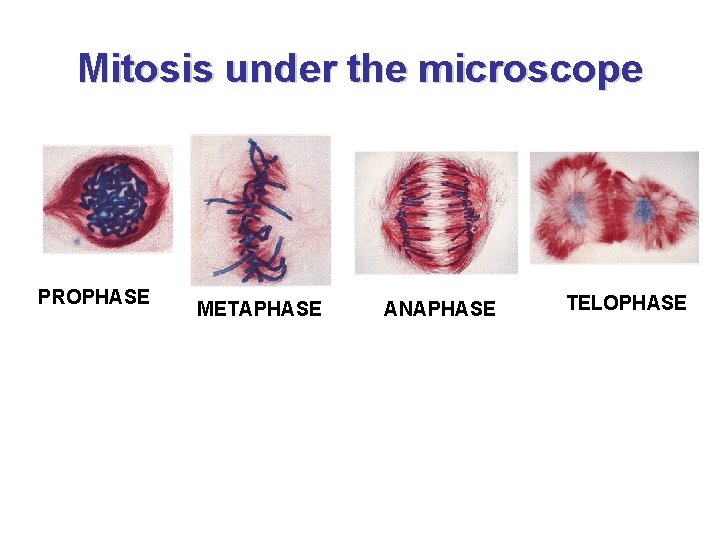
Mitosis under the microscope PROPHASE METAPHASE ANAPHASE TELOPHASE
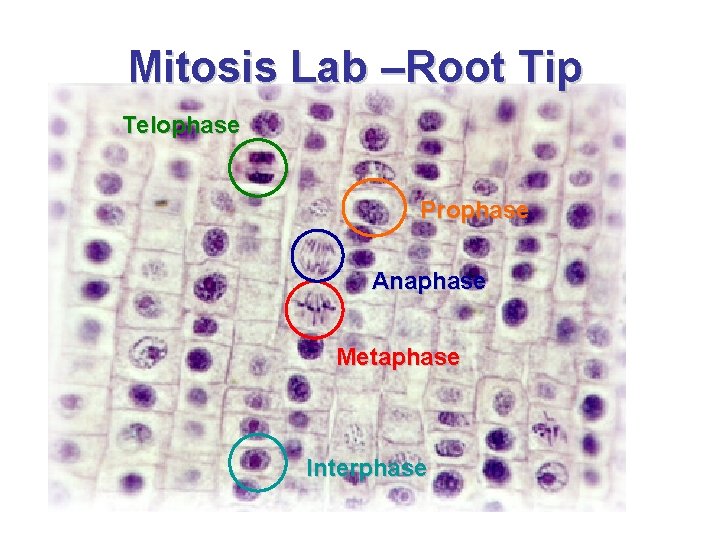
Mitosis Lab –Root Tip Telophase Prophase Anaphase Metaphase Interphase
Vocabulary The Cell Cycle Chromosomes Interphase Mitosis Prophase Metaphase Anaphase Telophase Cytokinesis
Homework ØPage 44 ØQuestions #1 - 7
Mitosis On the Table • Using pipe cleaners and your text, recreate the stages of mitosis on your desk with a partner • 1 partner tries each phase, and the other partner checks to make sure it’s done correctly • Raise your hand for teacher to check • Then switch roles
- Slides: 32