
Cell Culture IMAN BALUCHI Msc of hematology blood
Cell Culture IMAN BALUCHI Msc of hematology & blood banking Kerman University of Medical Sciences
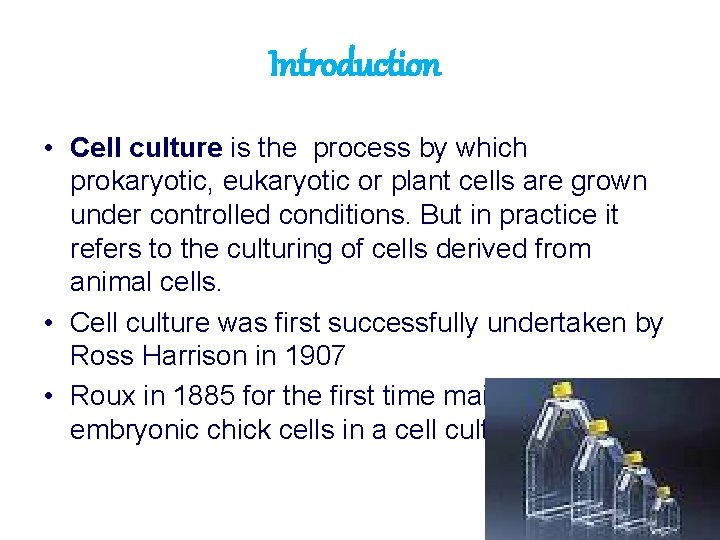
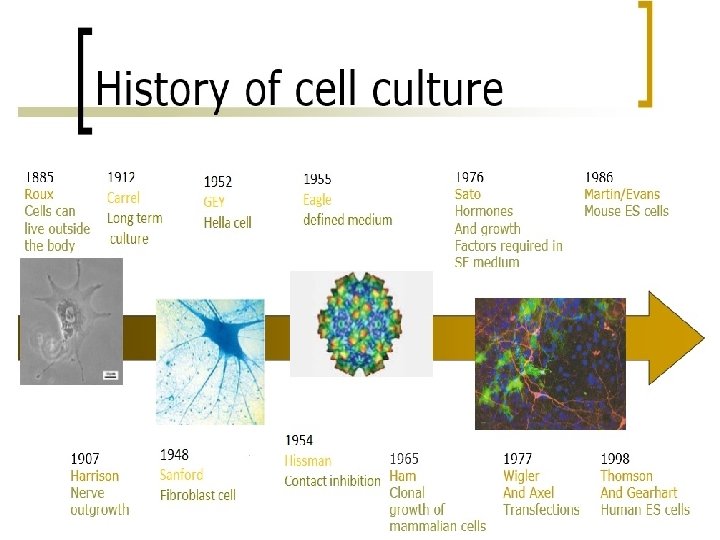
Introduction • Cell culture is the process by which prokaryotic, eukaryotic or plant cells are grown under controlled conditions. But in practice it refers to the culturing of cells derived from animal cells. • Cell culture was first successfully undertaken by Ross Harrison in 1907 • Roux in 1885 for the first time maintained embryonic chick cells in a cell culture
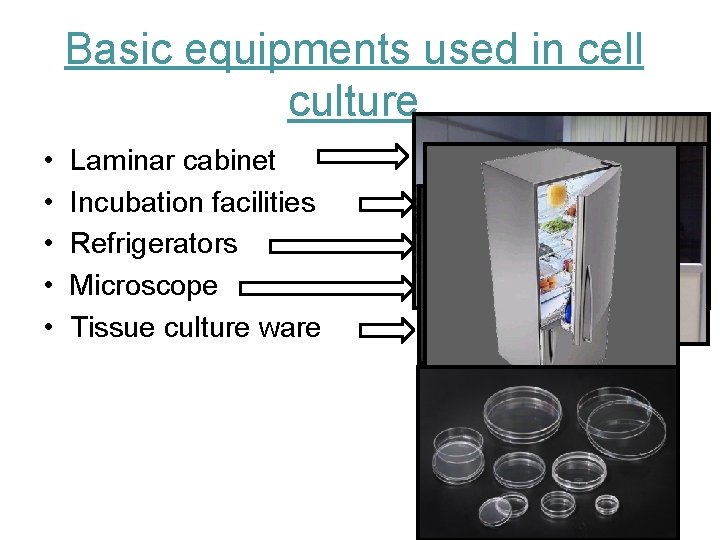
Basic equipments used in cell culture • • • Laminar cabinet Incubation facilities Refrigerators Microscope Tissue culture ware
Cell culture media
COMMON CELL CULTURE MEDIA • • • • Minimum Essential Medium (MEM) GMEMm (Glasgow Minimum Essential Medium) EMEM (Eagle’s MEM) DMEM (Dulbecco’s Modified Eagle Medium) Medium 199 BME (Basal Medium Eagle) Ham's F-10 Medium Ham's F-12 Medium RPMI 1640 medium Leibovitz L-15 medium CMRL 1066 Dulbecco's Modified Eagle's Medium (DMEM-001) MCDB 131 Mc. Coy's 5 A
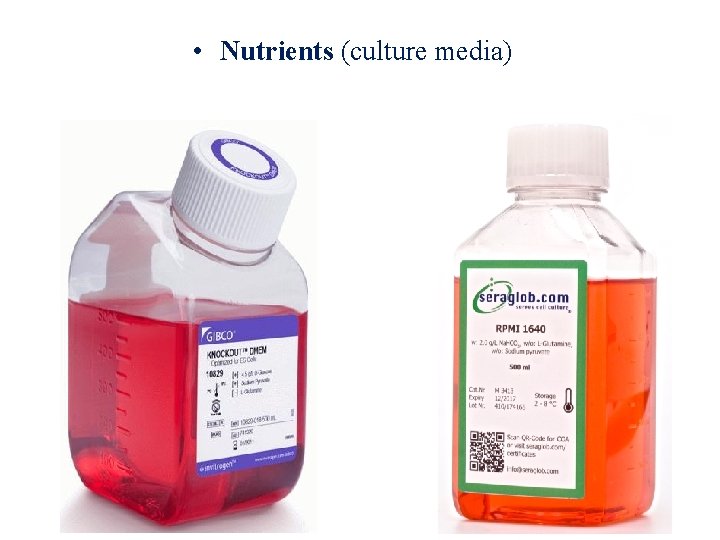
• Nutrients (culture media)
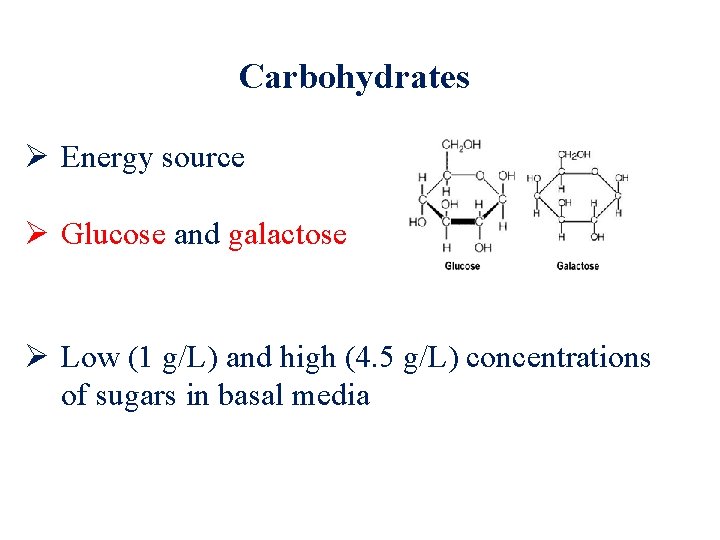
Carbohydrates Ø Energy source Ø Glucose and galactose Ø Low (1 g/L) and high (4. 5 g/L) concentrations of sugars in basal media
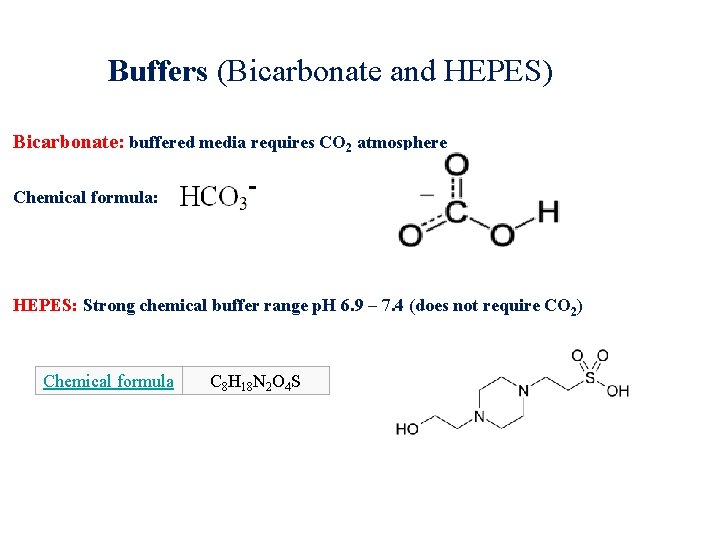
Buffers (Bicarbonate and HEPES) Bicarbonate: buffered media requires CO 2 atmosphere Chemical formula: HEPES: Strong chemical buffer range p. H 6. 9 – 7. 4 (does not require CO 2) Chemical formula C 8 H 18 N 2 O 4 S
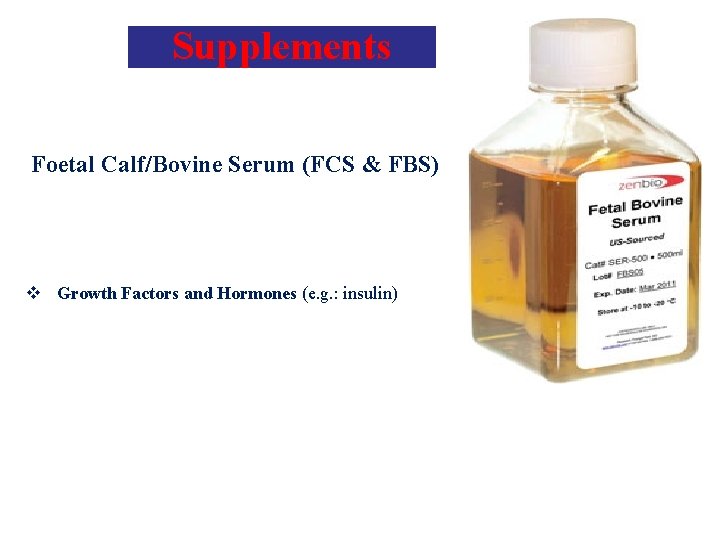
Supplements Foetal Calf/Bovine Serum (FCS & FBS) v Growth Factors and Hormones (e. g. : insulin)

Supplements Antibiotics and Antimycotics Penicillin, streptomycin, gentamicin, amphotericin B Reduce the risk of bacterial and fungal contamination.
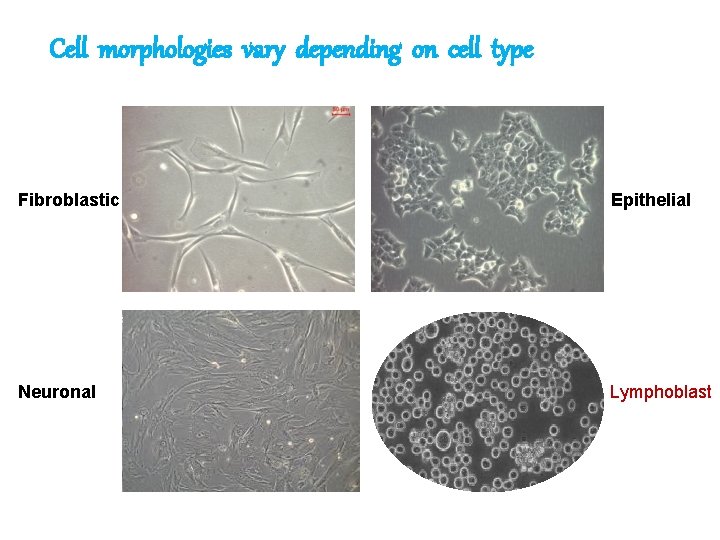
Cell morphologies vary depending on cell type Fibroblastic Epithelial Neuronal Lymphoblast

- Slides: 13