
Cell Coverings Section 4 7 Learning Objectives Identify
Cell Coverings Section 4. 7
Learning Objectives Identify different types of cell coverings Compare and contrast the extracellular matrix and the cell wall
Extracellular Matrix (ECM) ECM = A network of protein fibers & polysaccharides secreted by the cell • Main structural component is collagen • Connected to the outside of the cell membrane by integrins (a type of receptor protein) Found in animal cells
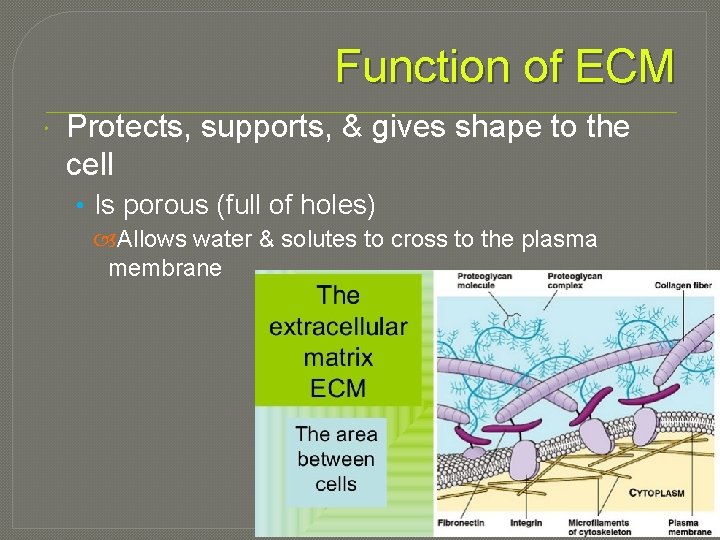
Function of ECM Protects, supports, & gives shape to the cell • Is porous (full of holes) Allows water & solutes to cross to the plasma membrane
Cell Wall Made of proteins & polysaccharides Found in plants, fungi, and bacteria • In plants it is made mainly of cellulose • In bacteria it is made mainly of peptidoglycan • In fungi it is made mainly of chitin
Function of Cell Wall Cements neighboring cells together Protection from disease-causing organisms In plant cells, prevent the cell from exploding due to increased pressure from the central vacuole
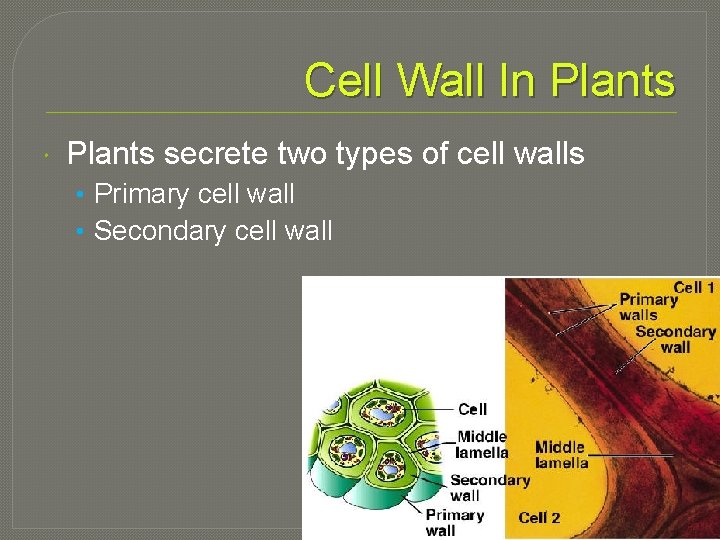
Cell Wall In Plants secrete two types of cell walls • Primary cell wall • Secondary cell wall
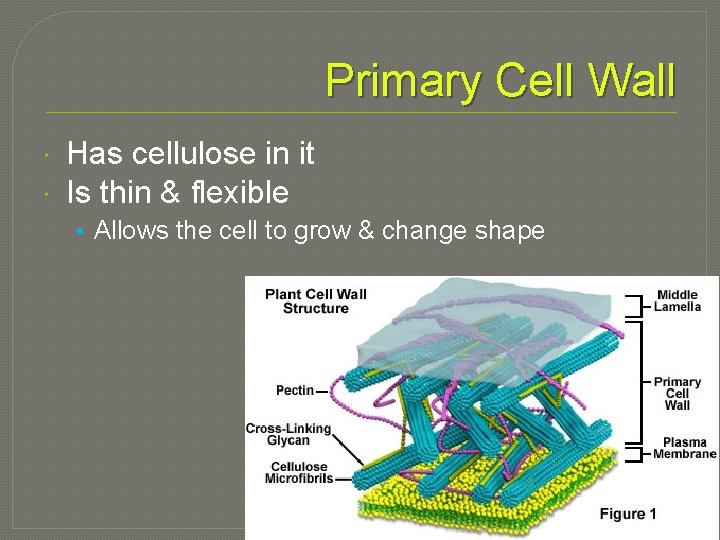
Primary Cell Wall Has cellulose in it Is thin & flexible • Allows the cell to grow & change shape
Secondary Cell Wall Forms in some types of plant cells Deposited between the plasma membrane & the primary cell wall Is a firm & rigid layer Contains lignin • Makes it stronger, waterproof, & protects against plant-attacking organisms Wood is made mainly of secondary cell walls

Secondary Cell Wall
- Slides: 10