
Cell Communication Signals and Responses Simple Communication Stimulatory
- Slides: 31
Cell Communication Signals and Responses
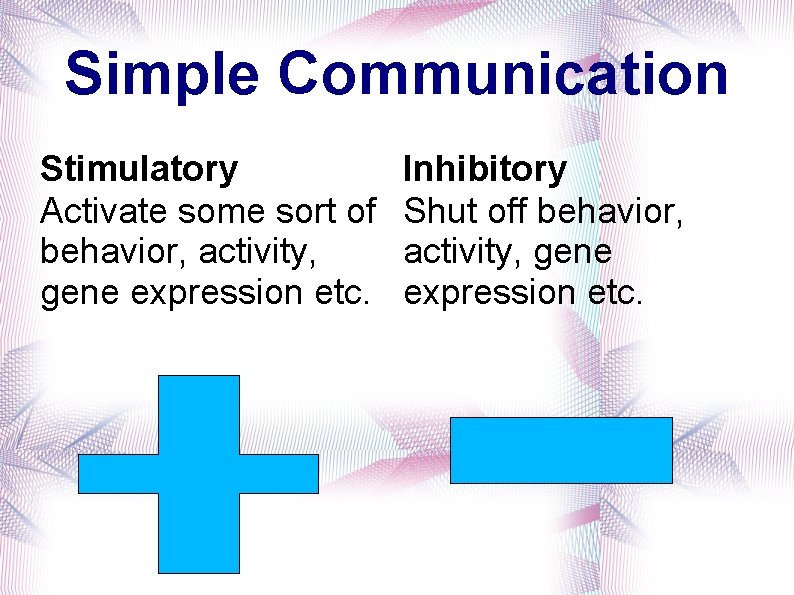
Simple Communication Stimulatory Activate some sort of behavior, activity, gene expression etc. Inhibitory Shut off behavior, activity, gene expression etc.
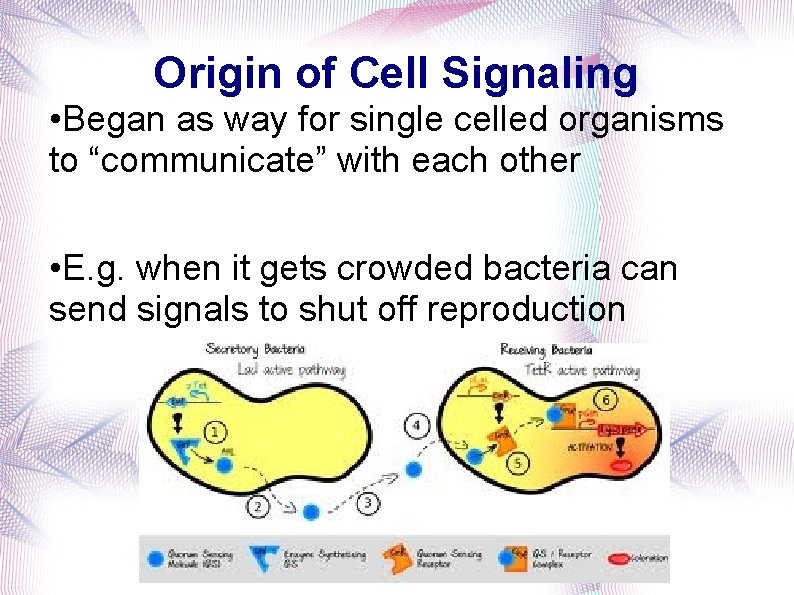
Origin of Cell Signaling • Began as way for single celled organisms to “communicate” with each other • E. g. when it gets crowded bacteria can send signals to shut off reproduction
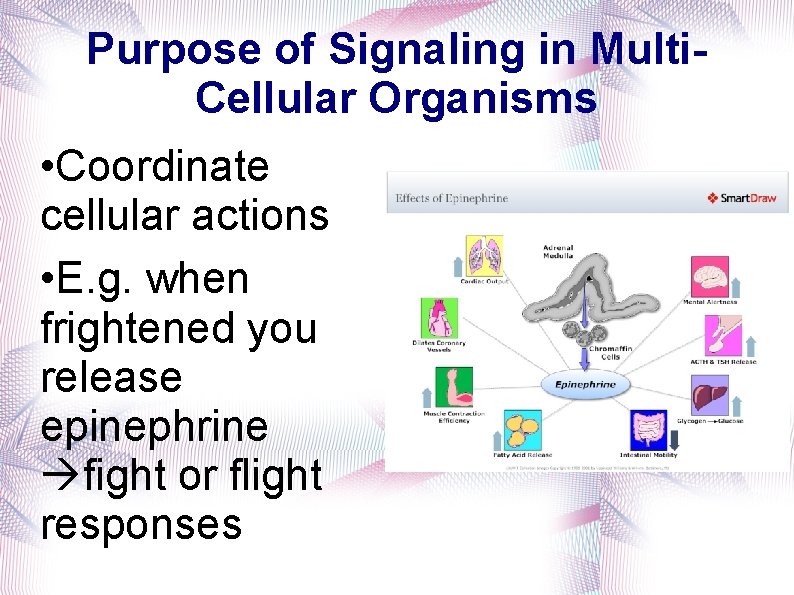
Purpose of Signaling in Multi. Cellular Organisms • Coordinate cellular actions • E. g. when frightened you release epinephrine fight or flight responses
Distance of Communication • Direct contact • Local communication • Long distance
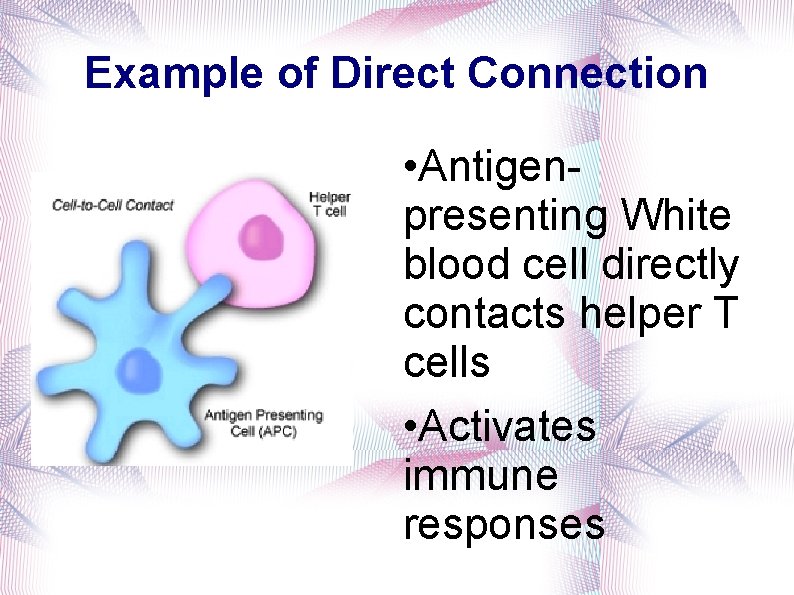
Example of Direct Connection • Antigenpresenting White blood cell directly contacts helper T cells • Activates immune responses
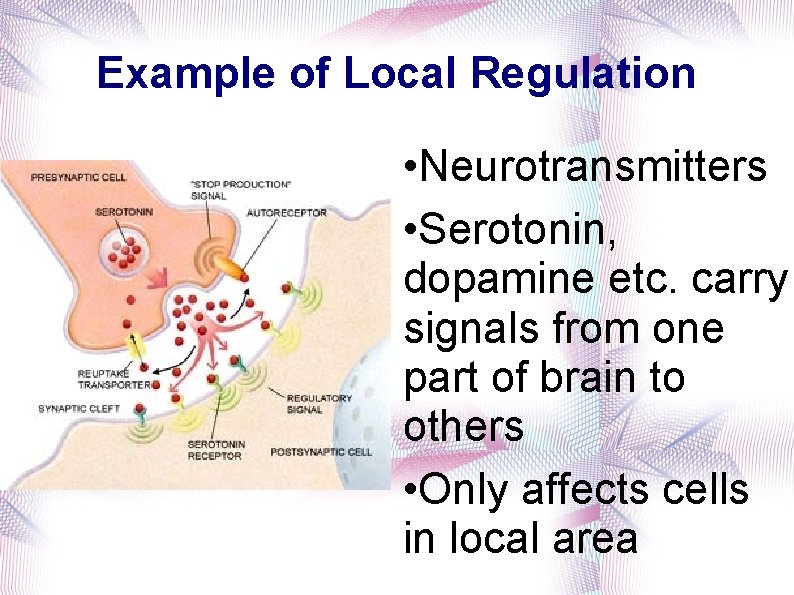
Example of Local Regulation • Neurotransmitters • Serotonin, dopamine etc. carry signals from one part of brain to others • Only affects cells in local area
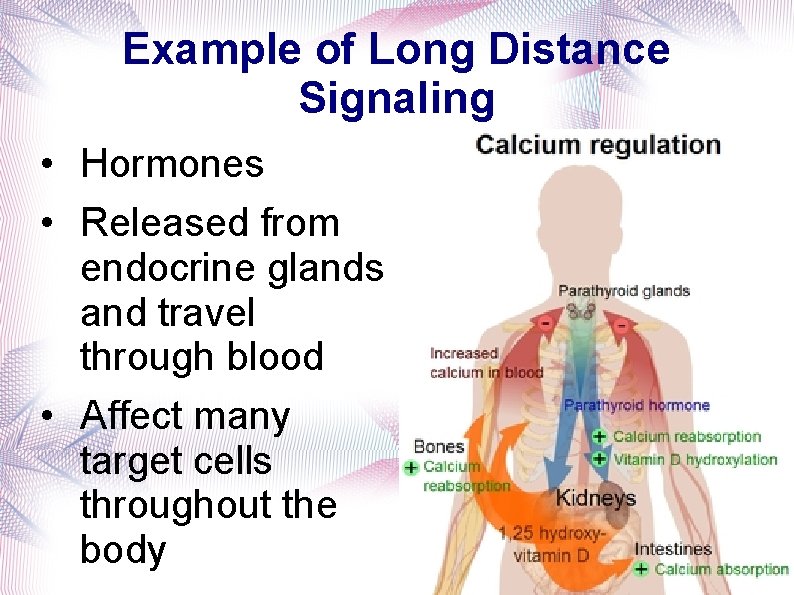
Example of Long Distance Signaling • Hormones • Released from endocrine glands and travel through blood • Affect many target cells throughout the body
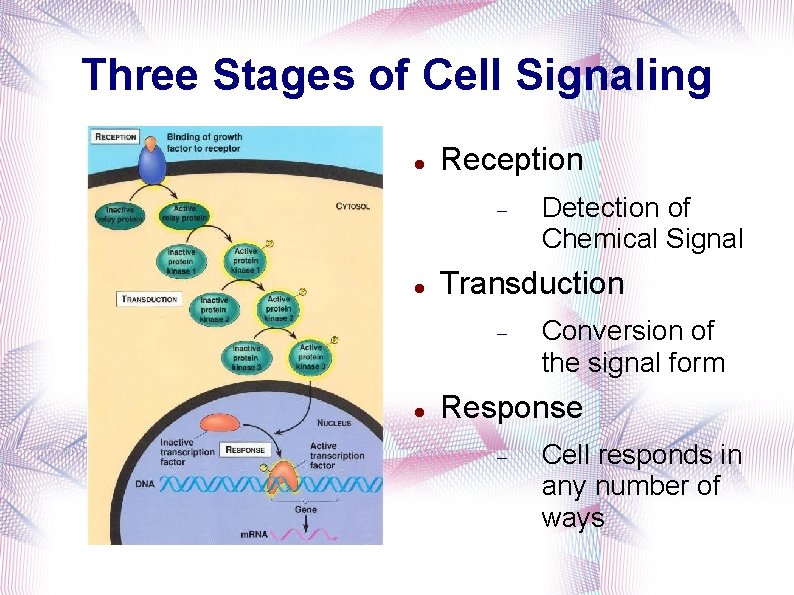
Three Stages of Cell Signaling Reception Transduction Detection of Chemical Signal Conversion of the signal form Response Cell responds in any number of ways
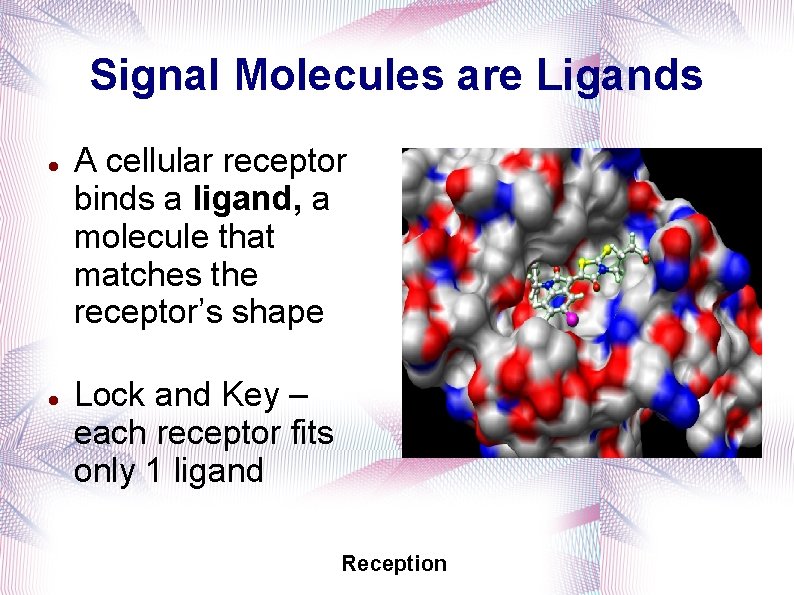
Signal Molecules are Ligands A cellular receptor binds a ligand, a molecule that matches the receptor’s shape Lock and Key – each receptor fits only 1 ligand Reception
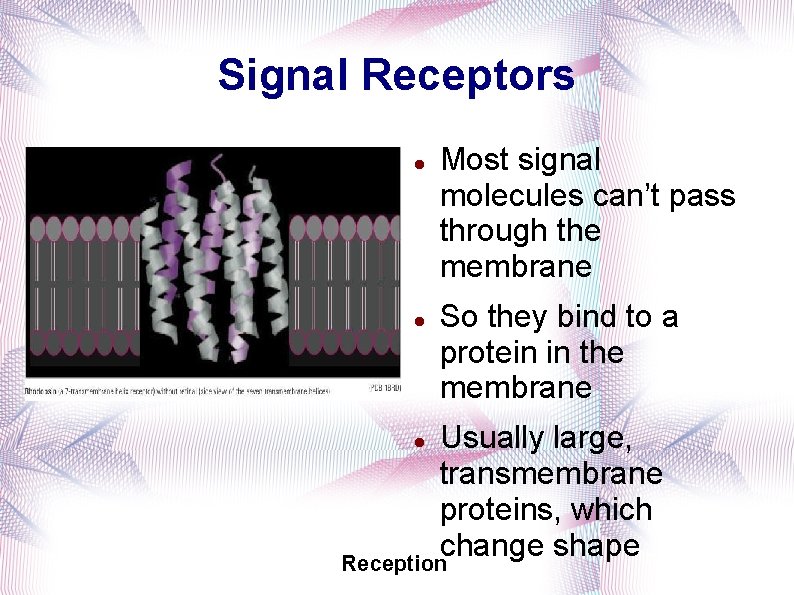
Signal Receptors Most signal molecules can’t pass through the membrane So they bind to a protein in the membrane Usually large, transmembrane proteins, which change shape Reception
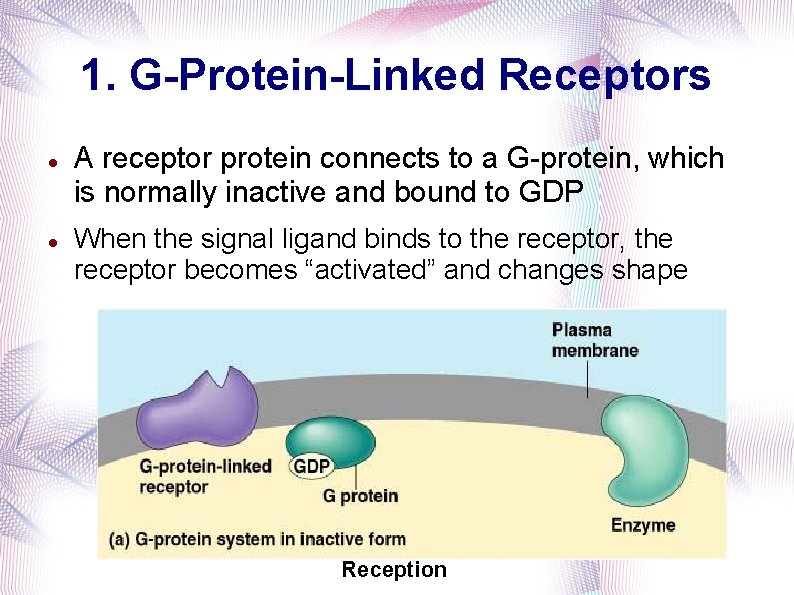
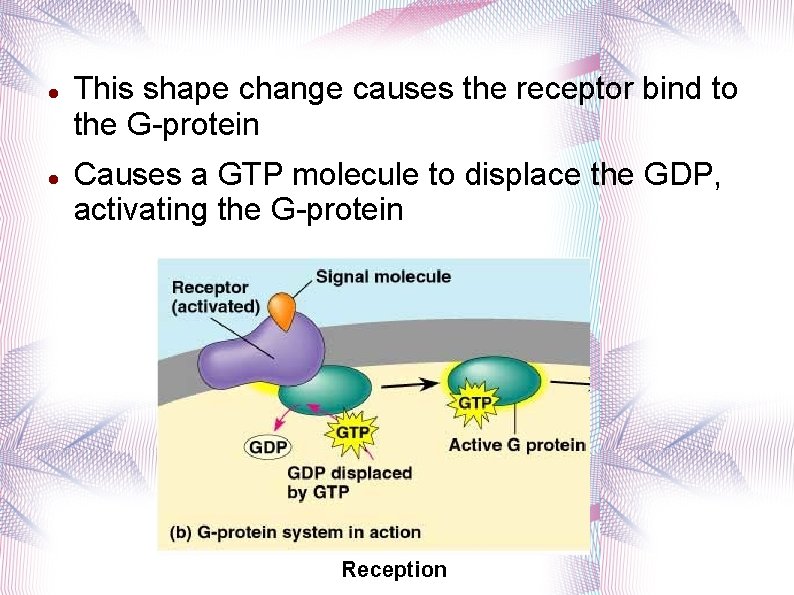
1. G-Protein-Linked Receptors A receptor protein connects to a G-protein, which is normally inactive and bound to GDP When the signal ligand binds to the receptor, the receptor becomes “activated” and changes shape Reception
This shape change causes the receptor bind to the G-protein Causes a GTP molecule to displace the GDP, activating the G-protein Reception
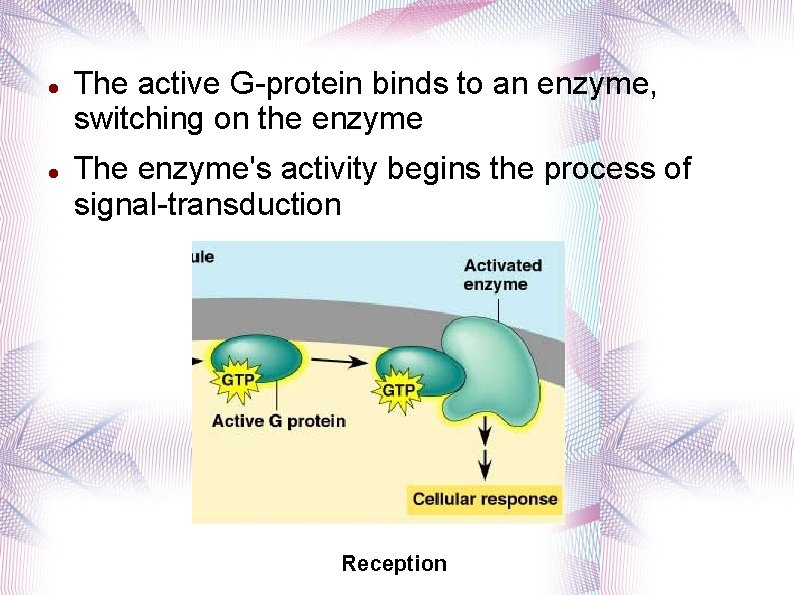
The active G-protein binds to an enzyme, switching on the enzyme The enzyme's activity begins the process of signal-transduction Reception
G Proteins and Medicine Diabetes, blindness, allergies, depression and some cancers are believed to come from dysfunctional G proteins Up to 60% of medicines used influence GProtein Pathways Reception
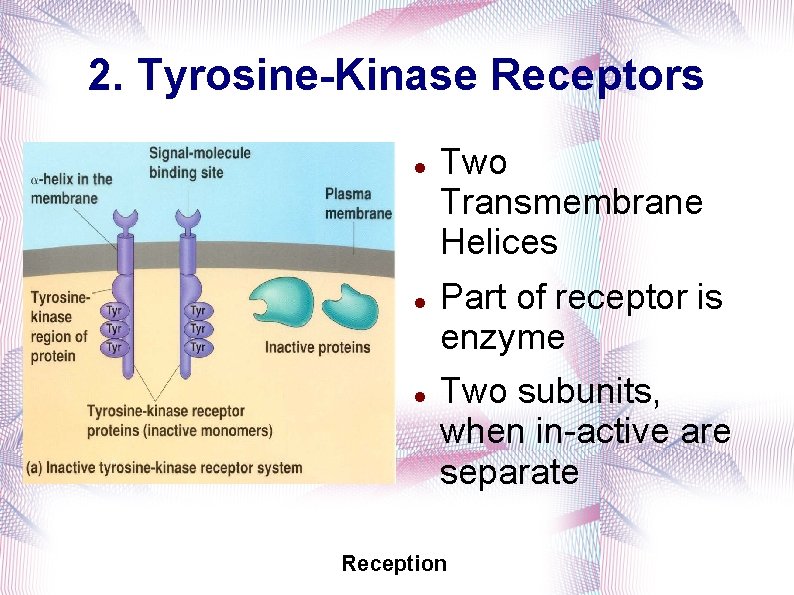
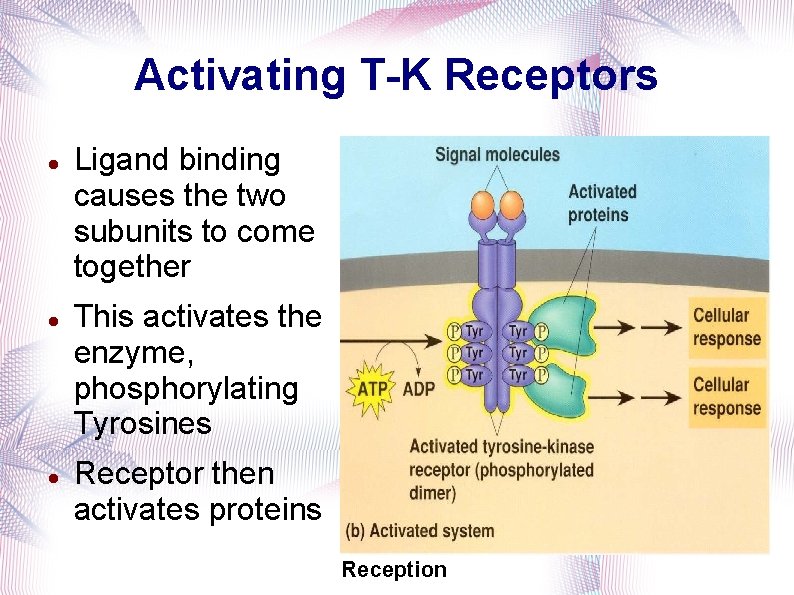
2. Tyrosine-Kinase Receptors Two Transmembrane Helices Part of receptor is enzyme Two subunits, when in-active are separate Reception
Activating T-K Receptors Ligand binding causes the two subunits to come together This activates the enzyme, phosphorylating Tyrosines Receptor then activates proteins Reception
Tyrosine-Kinase Triggers Multiple Pathways at Once A single dimer (two polypeptide protein) can activate more than ten proteins Growth factors are examples of Tyrosine. Kinase receptors Growth factors stimulate many cellular responses at once Important in Cell Reproduction Reception
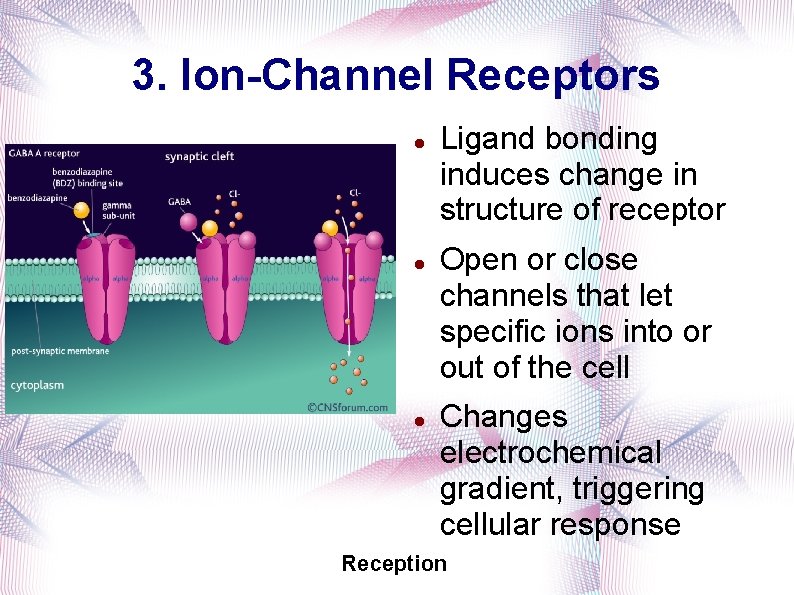
3. Ion-Channel Receptors Ligand bonding induces change in structure of receptor Open or close channels that let specific ions into or out of the cell Changes electrochemical gradient, triggering cellular response Reception
4. Intracellular Receptors Some chemical signals are hydrophobic lipids or small molecules that can pass through the plasma membrane Often bind to receptors in the cytosol or nucleus Examples include steroids, Nitric Oxide (NO) and some other small molecules Alter gene expression Reception
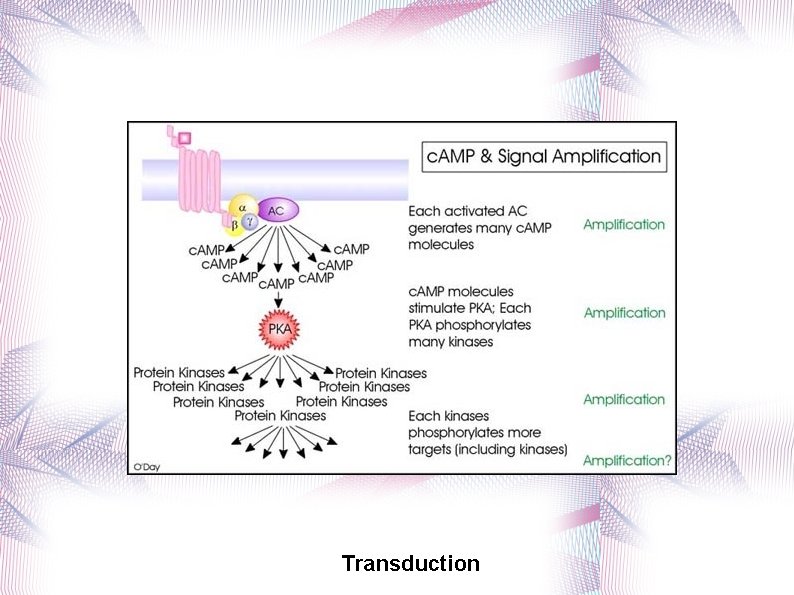
Signal-Transduction Pathways Relay signals from receptors to cellular responses Usually multi-step pathway Signal amplification – large numbers of molecules can be activated from a small number of signals More opportunities for regulation Transduction
Transduction
Second Messengers Small, non-protein, hydrophilic molecules or ions c. AMP Calcium Ions Spread through cell by diffusion Spread the signal from G-protein receptors and Tyrosine-Kinase receptors Transduction
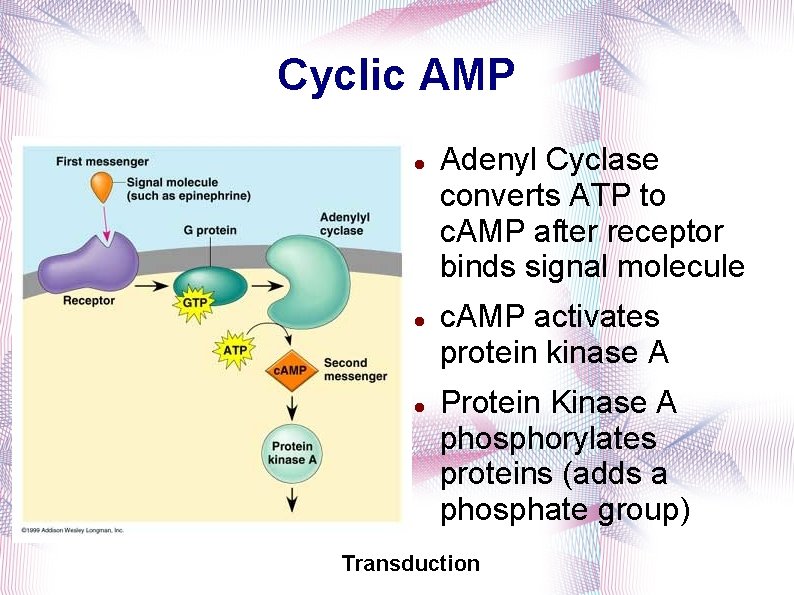
Cyclic AMP Adenyl Cyclase converts ATP to c. AMP after receptor binds signal molecule c. AMP activates protein kinase A Protein Kinase A phosphorylates proteins (adds a phosphate group) Transduction
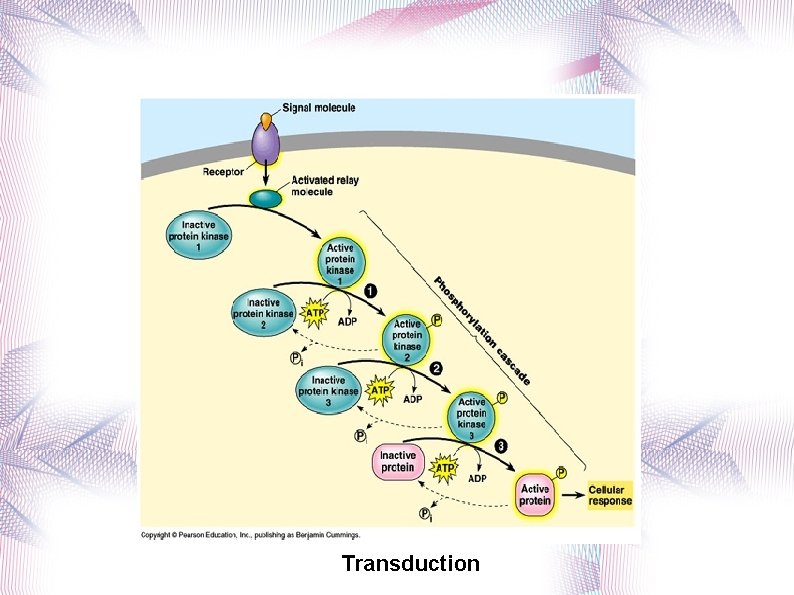
Protein Phosphorylation Very common mechanism for regulating protein activity A protein kinase is an enzyme that phosphorylates a proteins 1% of our genes are for these enzymes Many kinases act upon another kinase, creating a phosphorylation cascade Protein phosphatases remove the phosphate group, turning off the signal Transduction
Transduction
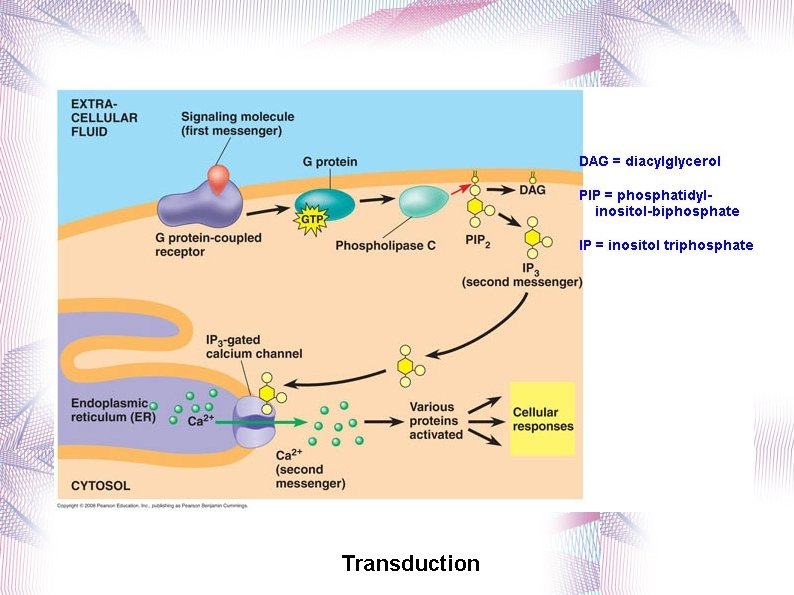
Calcium Ions DAG, PIP and IP 3 simulate release of Ca++ ions from the Endoplasmic Reticulum Ca binds to proteins and activates them Can also activate a phosphorylation cascade Transduction
Transduction
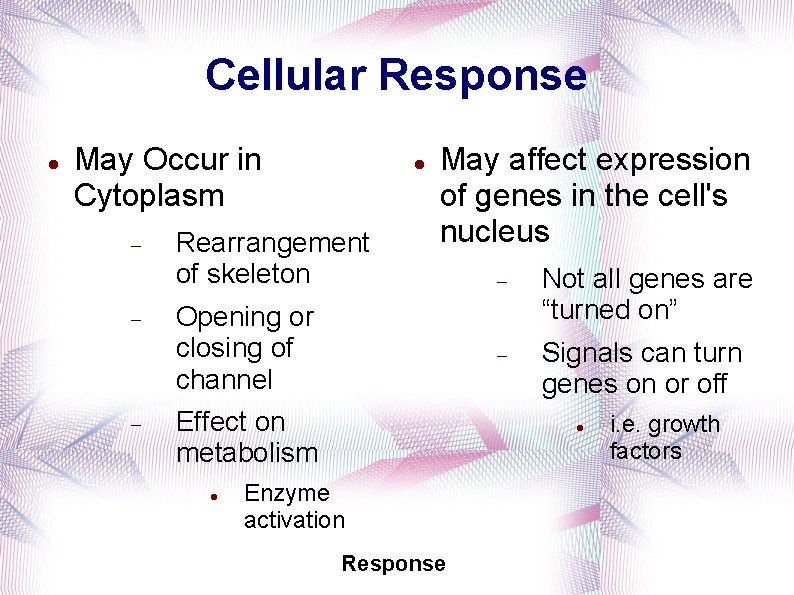
Cellular Response May Occur in Cytoplasm Rearrangement of skeleton May affect expression of genes in the cell's nucleus Opening or closing of channel Effect on metabolism Not all genes are “turned on” Signals can turn genes on or off Enzyme activation Response i. e. growth factors
Response Specificity A signal may have different response in different cells This depends on the receptors, second messengers and proteins present in the cell Ex. Adrenaline causes different reactions in different organs Response
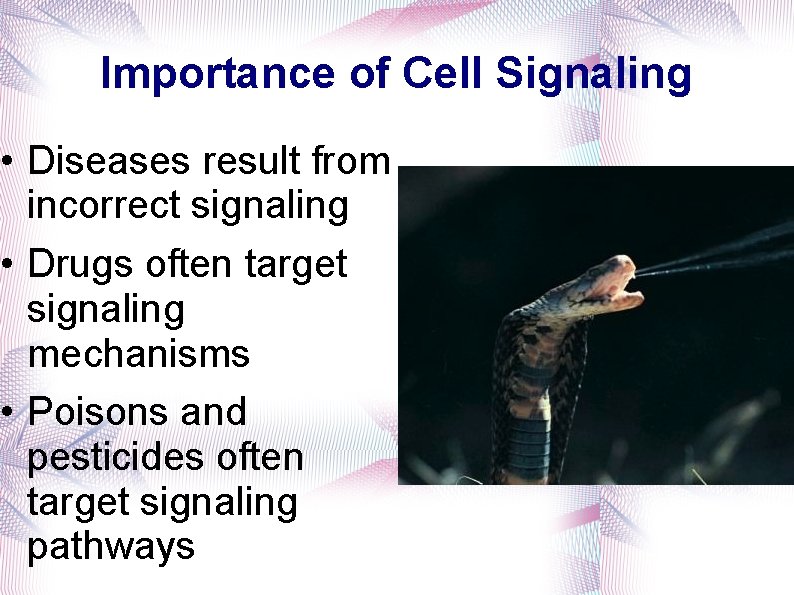
Importance of Cell Signaling • Diseases result from incorrect signaling • Drugs often target signaling mechanisms • Poisons and pesticides often target signaling pathways