
Cell Communication REVIEW Cell Signaling cells communicate by
Cell Communication REVIEW

Cell Signaling cells communicate by: 1. Direct Contact VERY short distances Examples: gap junctions plasmodesmata
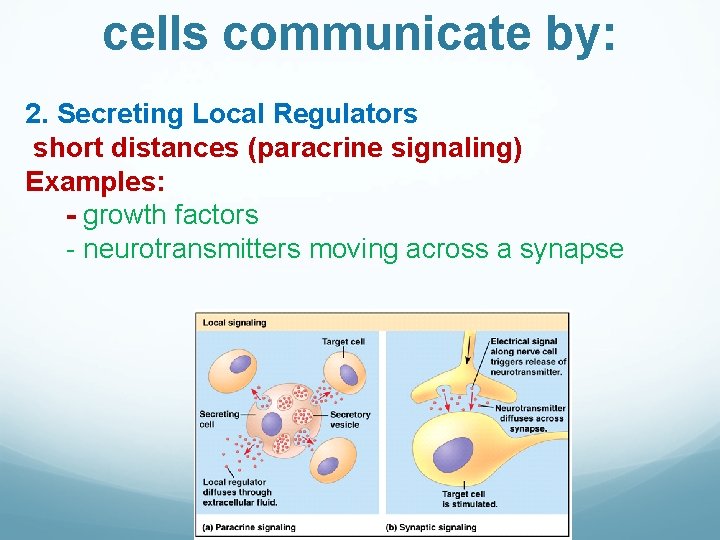
cells communicate by: 2. Secreting Local Regulators short distances (paracrine signaling) Examples: - growth factors - neurotransmitters moving across a synapse
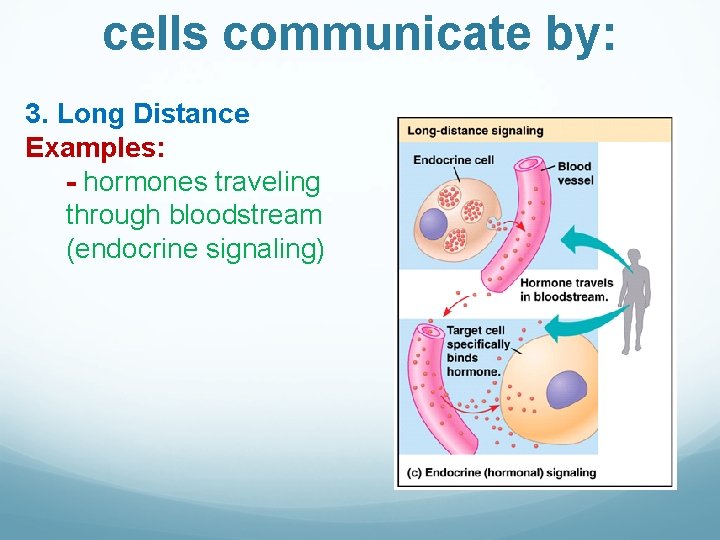
cells communicate by: 3. Long Distance Examples: - hormones traveling through bloodstream (endocrine signaling)
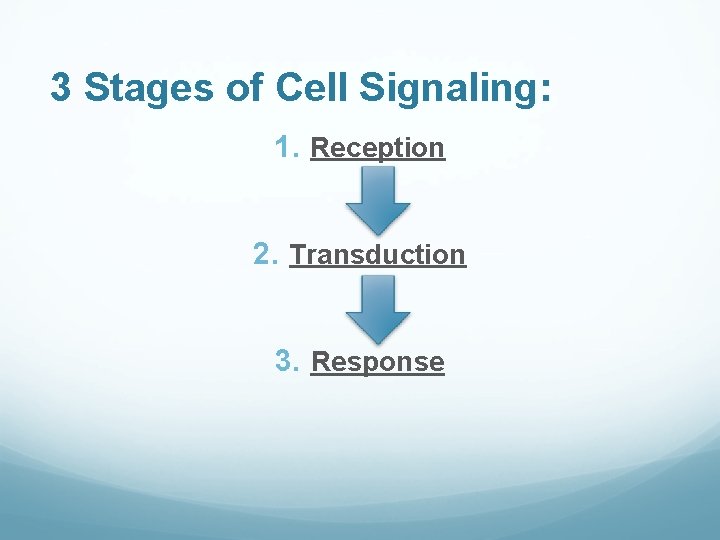
3 Stages of Cell Signaling: 1. Reception 2. Transduction 3. Response
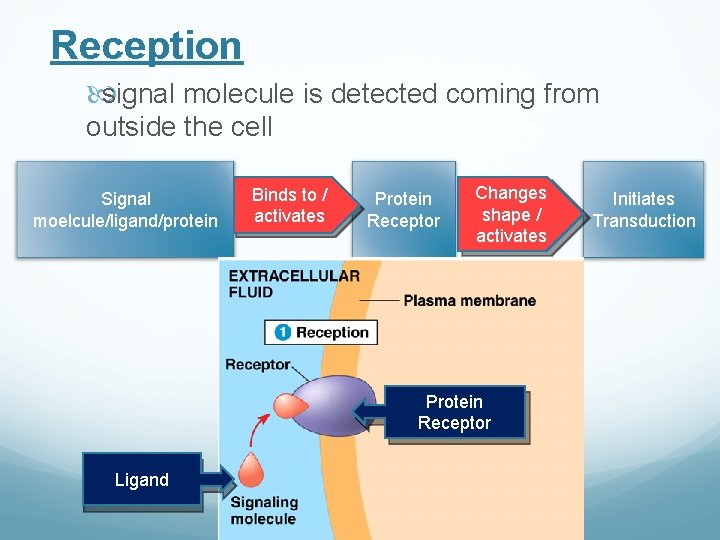
Reception signal molecule is detected coming from outside the cell Signal moelcule/ligand/protein Binds to / activates Protein Receptor Changes shape / activates Protein Receptor Ligand Initiates Transduction
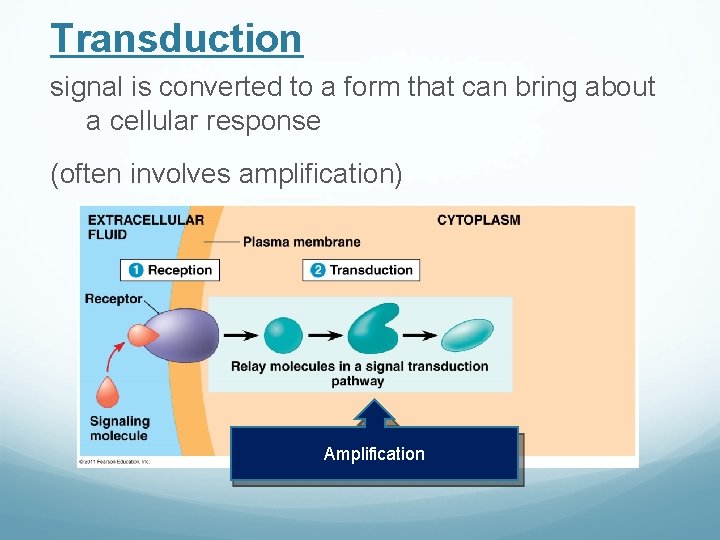
Transduction signal is converted to a form that can bring about a cellular response (often involves amplification) Amplification
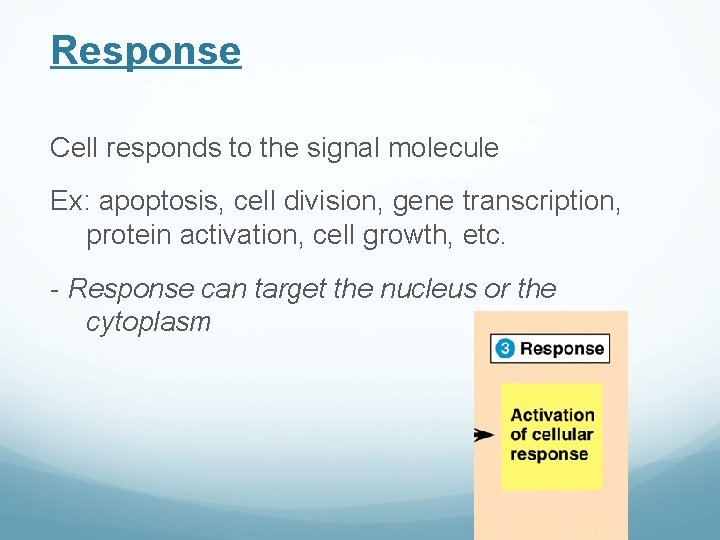
Response Cell responds to the signal molecule Ex: apoptosis, cell division, gene transcription, protein activation, cell growth, etc. - Response can target the nucleus or the cytoplasm
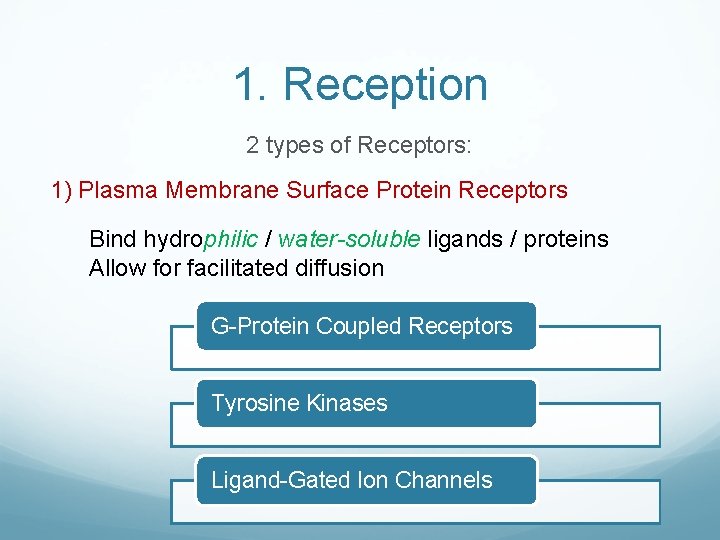
1. Reception 2 types of Receptors: 1) Plasma Membrane Surface Protein Receptors Bind hydrophilic / water-soluble ligands / proteins Allow for facilitated diffusion G-Protein Coupled Receptors Tyrosine Kinases Ligand-Gated Ion Channels
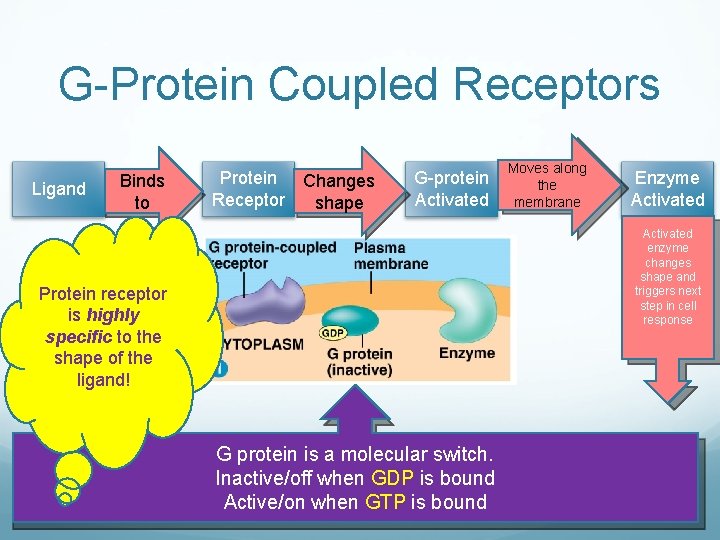
G-Protein Coupled Receptors Ligand Binds to Protein Receptor Changes shape G-protein Activated Moves along the membrane Enzyme Activated enzyme changes shape and triggers next step in cell response Protein receptor is highly specific to the shape of the ligand! G protein is a molecular switch. Inactive/off when GDP is bound Active/on when GTP is bound
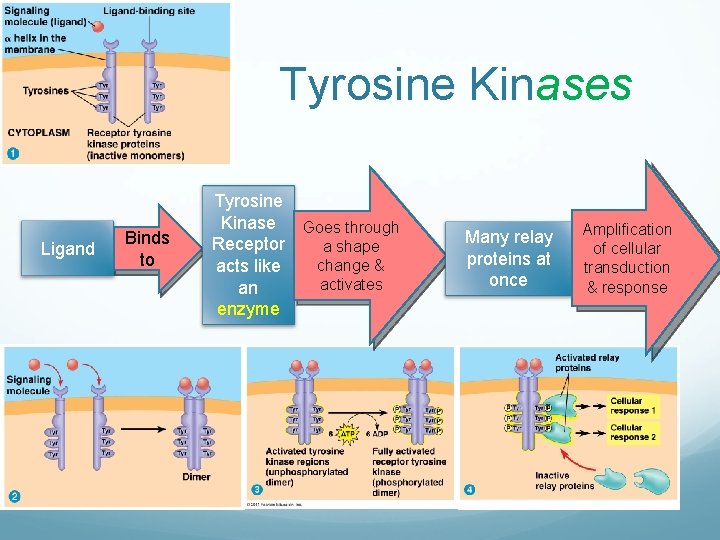
Tyrosine Kinases Ligand Binds to Tyrosine Kinase Goes through Receptor a shape change & acts like activates an enzyme Many relay proteins at once Amplification of cellular transduction & response
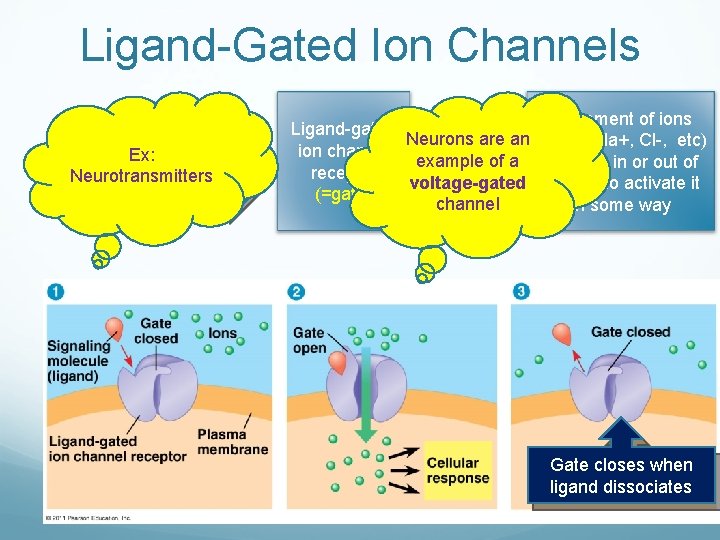
Ligand-Gated Ion Channels Ex: Binds to Ligand Neurotransmitters & opens Movement of ions Ligand-gated Neurons are an (Ca++, Na+, Cl-, etc) Changes ion channel example shape & of a to move in or out of receptor voltage-gated the cell to activate it allows (=gate) channel in some way Gate closes when ligand dissociates
1. Reception 2 types of Receptors: 2) Intracellular Receptors Allows hydrophobic , small, or lipid-soluble molecules to pass through the receptor/membrane Examples: Testosterone, Nitric Oxide (NO)
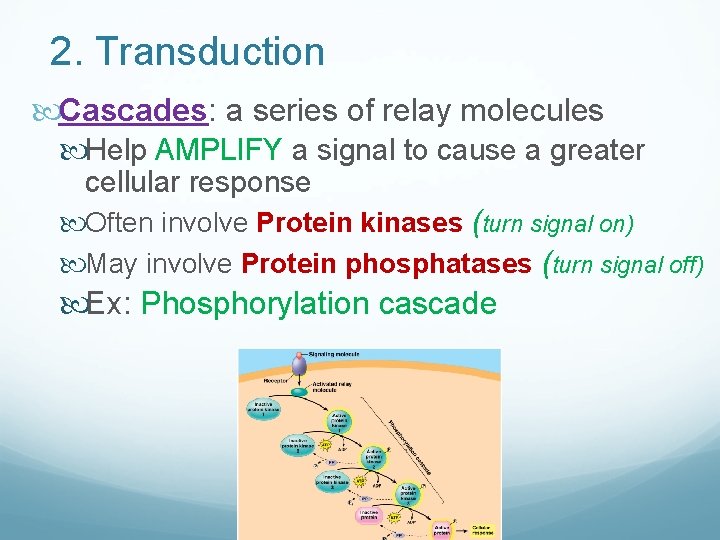
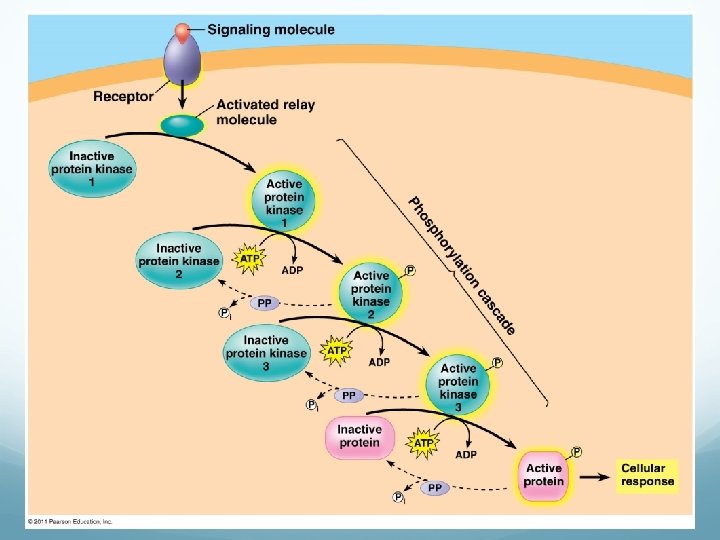
2. Transduction Cascades: a series of relay molecules Help AMPLIFY a signal to cause a greater cellular response Often involve Protein kinases (turn signal on) May involve Protein phosphatases (turn signal off) Ex: Phosphorylation cascade
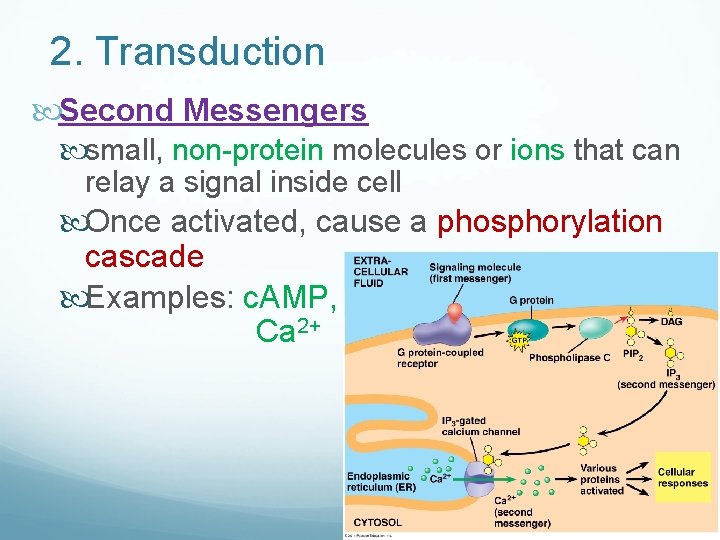
2. Transduction Second Messengers small, non-protein molecules or ions that can relay a signal inside cell Once activated, cause a phosphorylation cascade Examples: c. AMP, Ca 2+
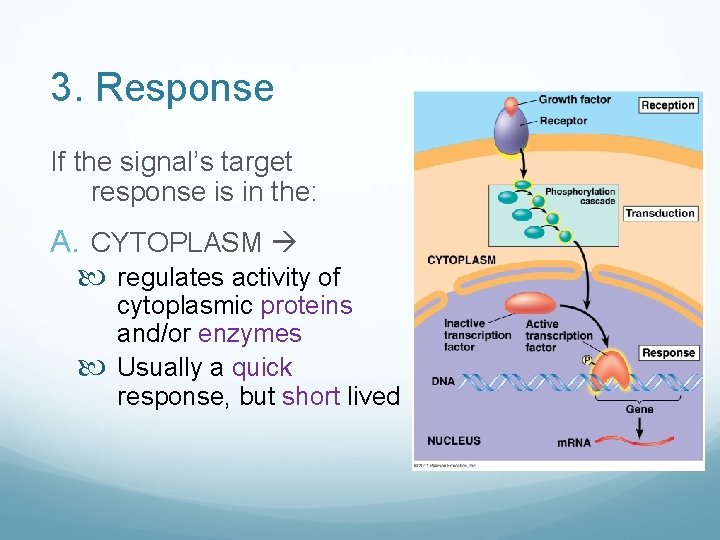
3. Response If the signal’s target response is in the: A. CYTOPLASM regulates activity of cytoplasmic proteins and/or enzymes Usually a quick response, but short lived
AP Test Prep Book Review pp. 62 -65 236 253
Sample Test P. 335 DO NOT TURN TO THE ANSWERS IN THE BACK
- Slides: 19