
Cell communication Modified slides from knuffke and biology
Cell communication Modified slides from knuffke and biology in focus (campbell)
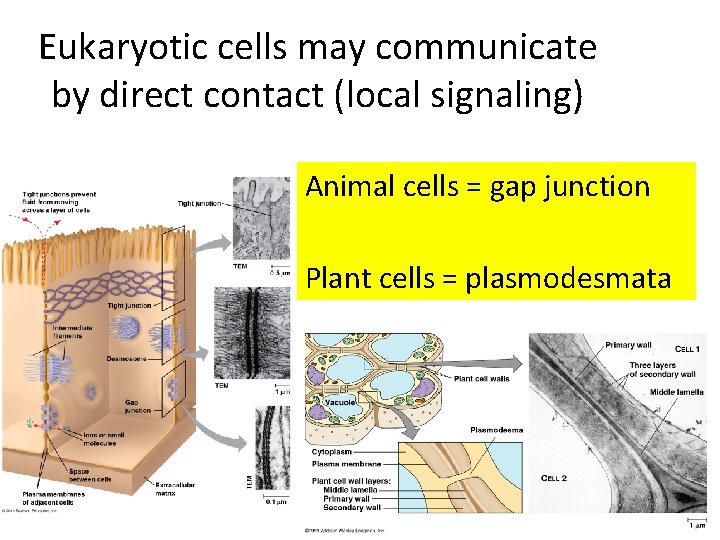
Eukaryotic cells may communicate by direct contact (local signaling) Animal cells = gap junction Plant cells = plasmodesmata
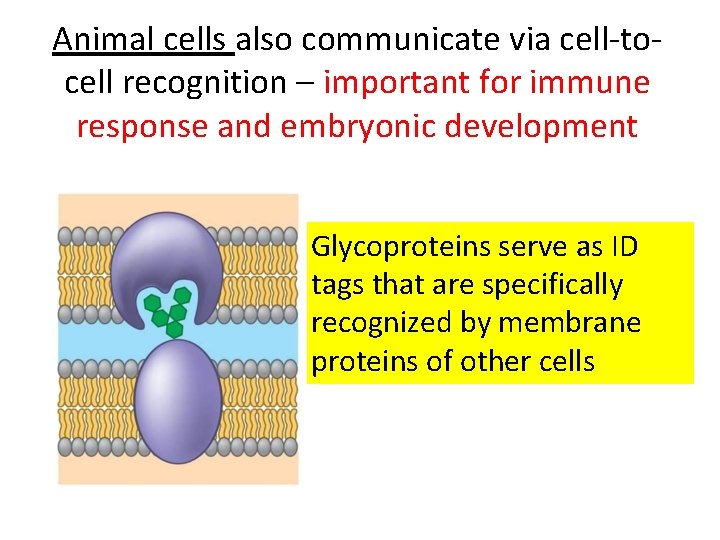
Animal cells also communicate via cell-tocell recognition – important for immune response and embryonic development Glycoproteins serve as ID tags that are specifically recognized by membrane proteins of other cells
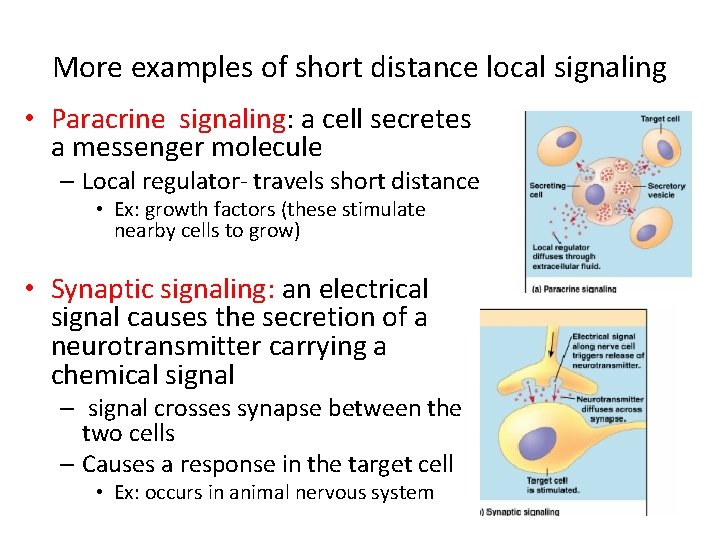
More examples of short distance local signaling • Paracrine signaling: a cell secretes a messenger molecule – Local regulator- travels short distance • Ex: growth factors (these stimulate nearby cells to grow) • Synaptic signaling: an electrical signal causes the secretion of a neurotransmitter carrying a chemical signal – signal crosses synapse between the two cells – Causes a response in the target cell • Ex: occurs in animal nervous system
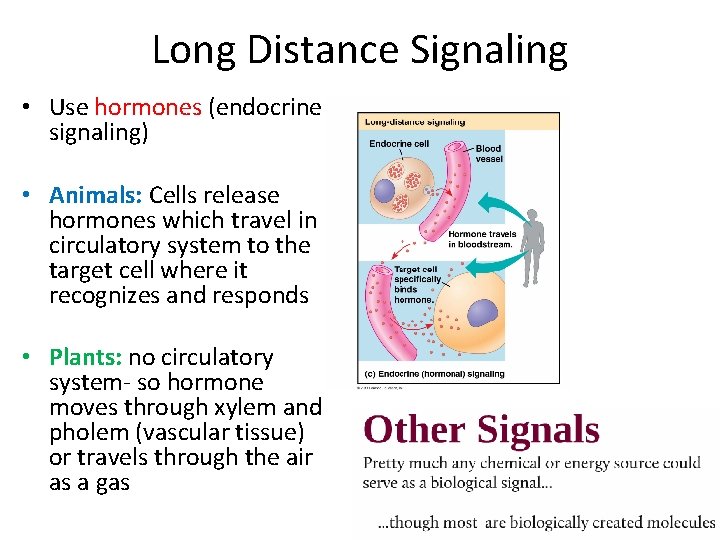
Long Distance Signaling • Use hormones (endocrine signaling) • Animals: Cells release hormones which travel in circulatory system to the target cell where it recognizes and responds • Plants: no circulatory system- so hormone moves through xylem and pholem (vascular tissue) or travels through the air as a gas
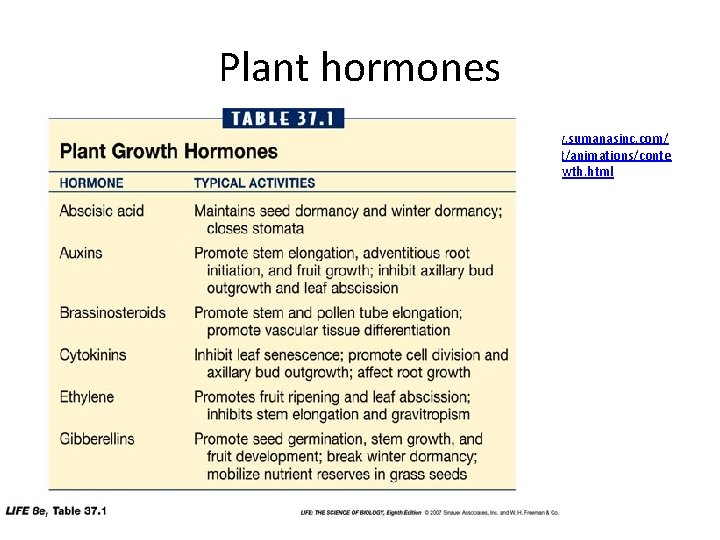
Plant hormones • http: //www. sumanasinc. com/ webcontent/animations/conte nt/plantgrowth. html
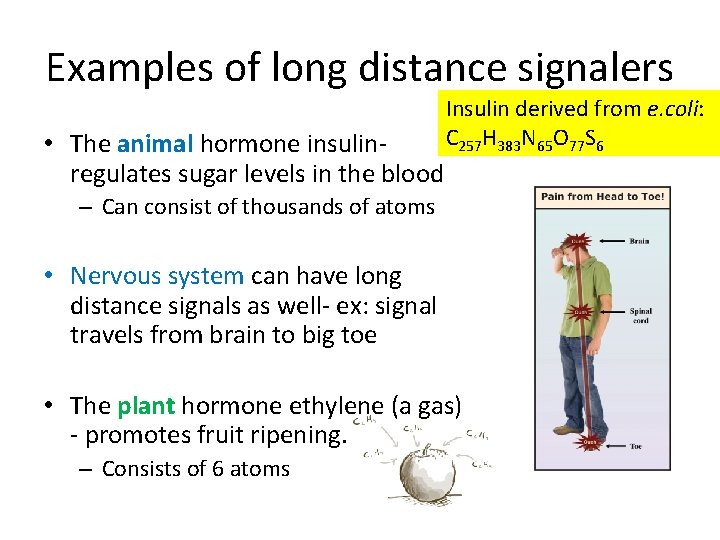
Examples of long distance signalers • The animal hormone insulinregulates sugar levels in the blood Insulin derived from e. coli: C 257 H 383 N 65 O 77 S 6 – Can consist of thousands of atoms • Nervous system can have long distance signals as well- ex: signal travels from brain to big toe • The plant hormone ethylene (a gas) - promotes fruit ripening. – Consists of 6 atoms
Basics of cell-to-cell communication • Reception: target cell’s detection of a signaling molecule coming from outside the cell – Signal molecule binds to a receptor protein at the cell’s surface or inside the cell • Transduction: step or series of steps that converts the signal to a form that can bring about a response – Requires a sequences of changes in a series of different molecules (signal transduction pathway) • Response: triggered cell reacts
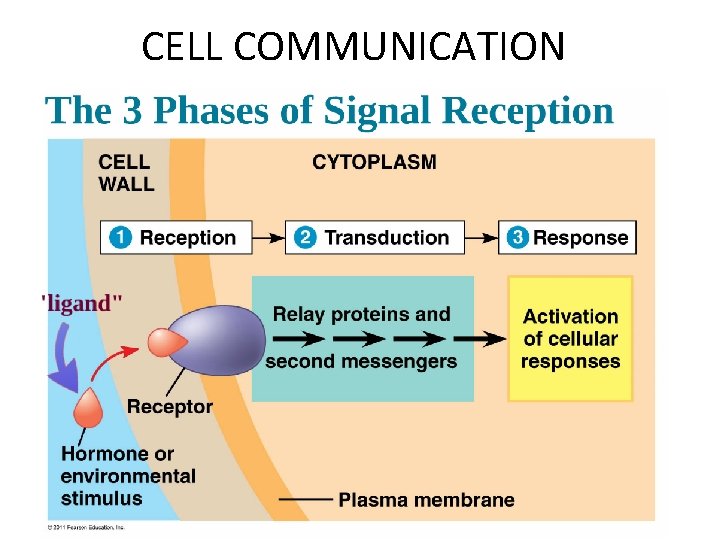
CELL COMMUNICATION
This is important because… • It ensures that crucial activities occur in the right cells, at the right time, and in proper coordination with the activities of other cells of the organism • Multicellular organisms are amazingly complex!!!!
• Any signaling molecule is called a ligand • Ligands are complementary in shape to a specific site on the receptor and attaches there like a key in a lock • Reception depends on the chemistry of the signal • A signaling molecule can bind to the receptor protein located: – at the cells surface or – inside the cell
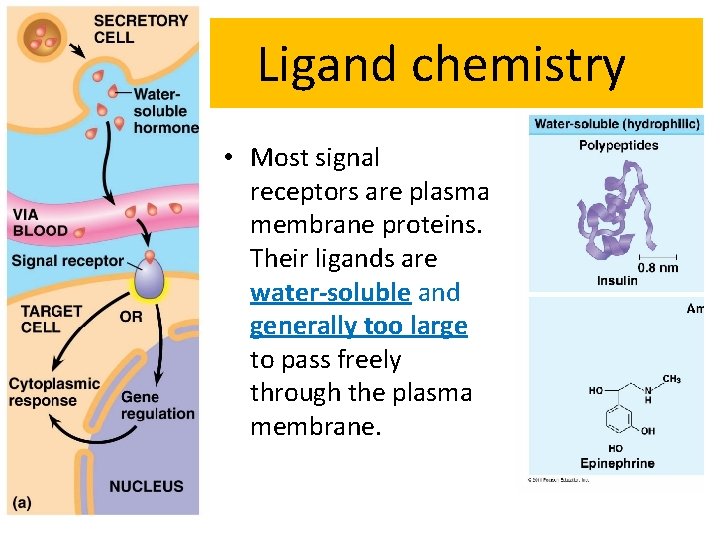
Ligand chemistry • Most signal receptors are plasma membrane proteins. Their ligands are water-soluble and generally too large to pass freely through the plasma membrane.
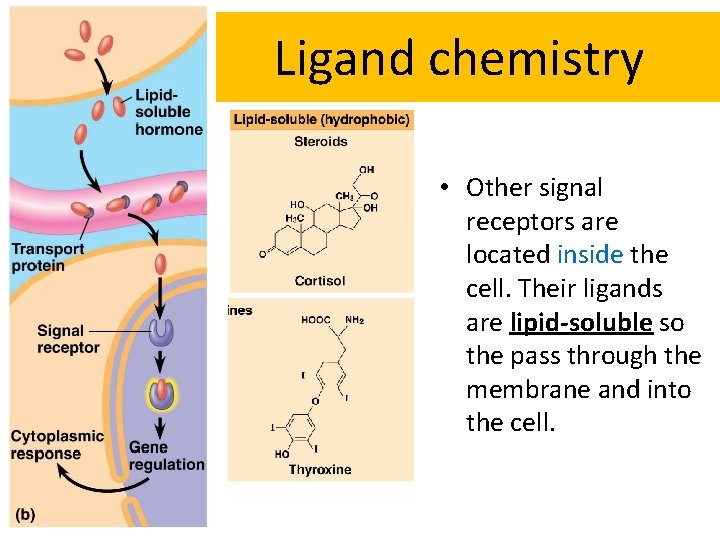
Ligand chemistry • Other signal receptors are located inside the cell. Their ligands are lipid-soluble so the pass through the membrane and into the cell.
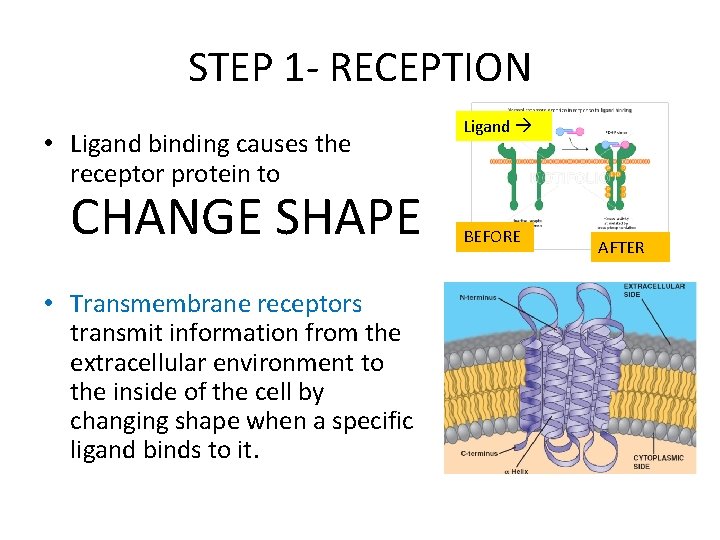
STEP 1 - RECEPTION • Ligand binding causes the receptor protein to CHANGE SHAPE • Transmembrane receptors transmit information from the extracellular environment to the inside of the cell by changing shape when a specific ligand binds to it. Ligand BEFORE AFTER
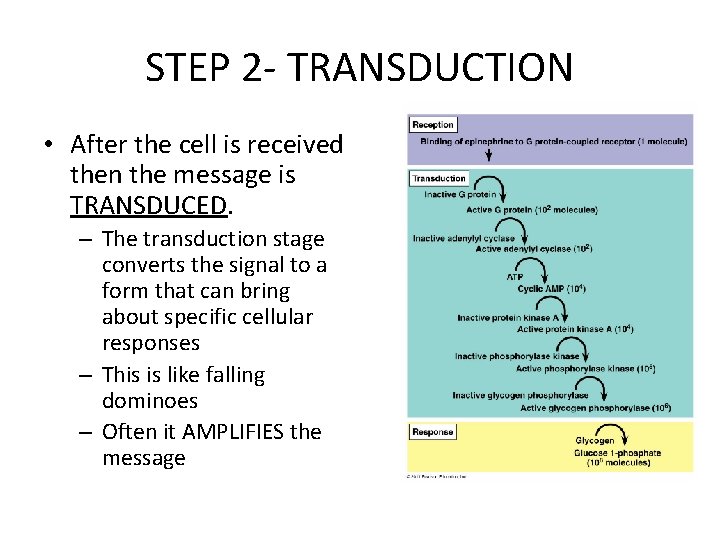
STEP 2 - TRANSDUCTION • After the cell is received then the message is TRANSDUCED. – The transduction stage converts the signal to a form that can bring about specific cellular responses – This is like falling dominoes – Often it AMPLIFIES the message
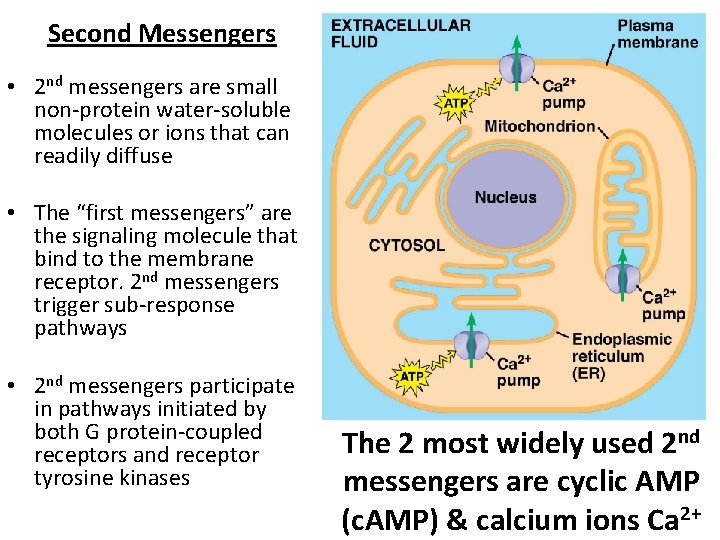
Second Messengers • 2 nd messengers are small non-protein water-soluble molecules or ions that can readily diffuse • The “first messengers” are the signaling molecule that bind to the membrane receptor. 2 nd messengers trigger sub-response pathways • 2 nd messengers participate in pathways initiated by both G protein-coupled receptors and receptor tyrosine kinases The 2 most widely used 2 nd messengers are cyclic AMP (c. AMP) & calcium ions Ca 2+
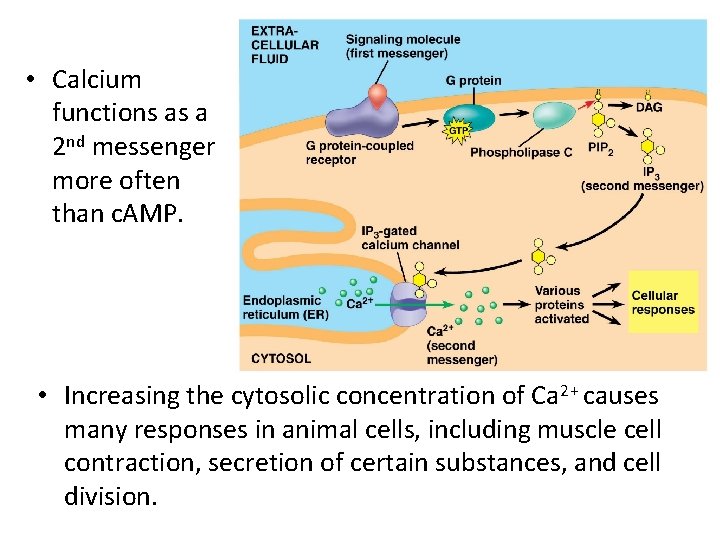
• Calcium functions as a 2 nd messenger more often than c. AMP. • Increasing the cytosolic concentration of Ca 2+ causes many responses in animal cells, including muscle cell contraction, secretion of certain substances, and cell division.
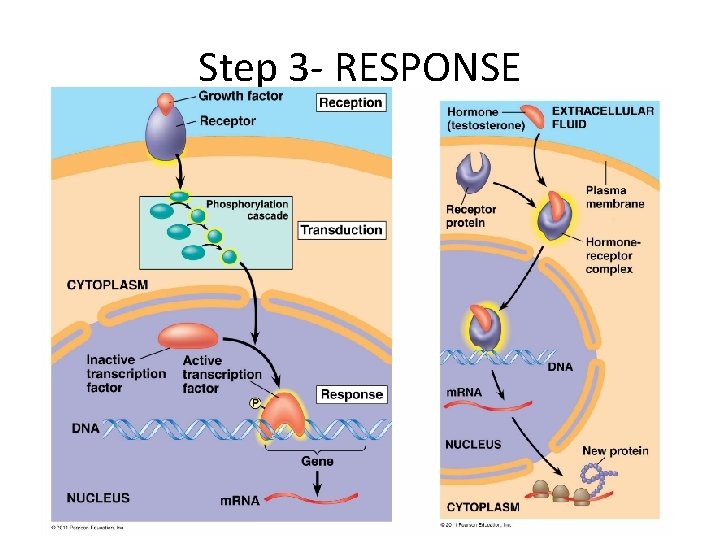
Step 3 - RESPONSE
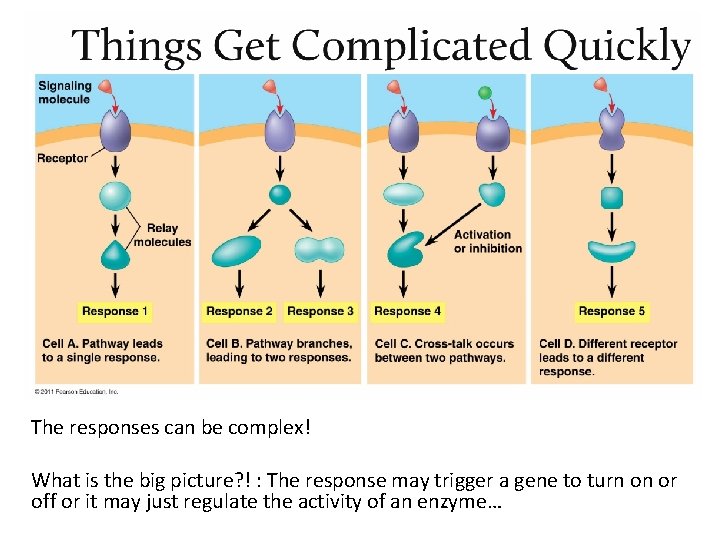
The responses can be complex! What is the big picture? ! : The response may trigger a gene to turn on or off or it may just regulate the activity of an enzyme…
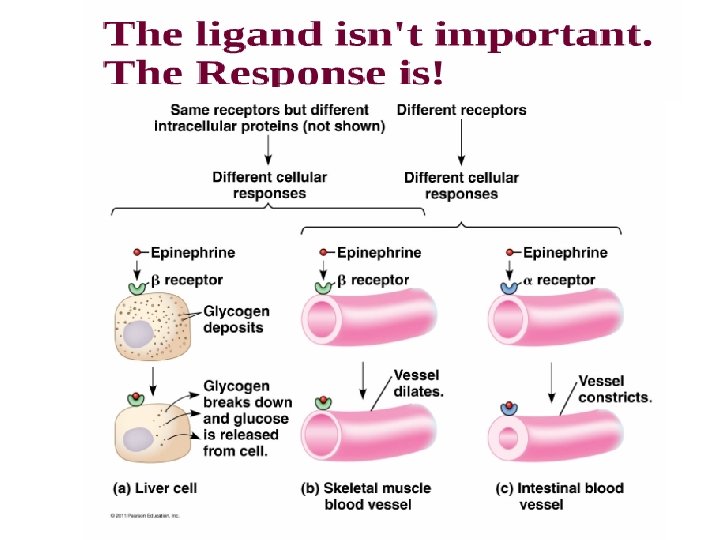
The L
DIFFERENT RECEPTOR SYSTEMS THAT YOU SHOULD BE FAMILIAR WITH: • G proteins • Ligand gated ion channels • Tyrosine kinases You don’t have to know many details about them- but you should know general info about them
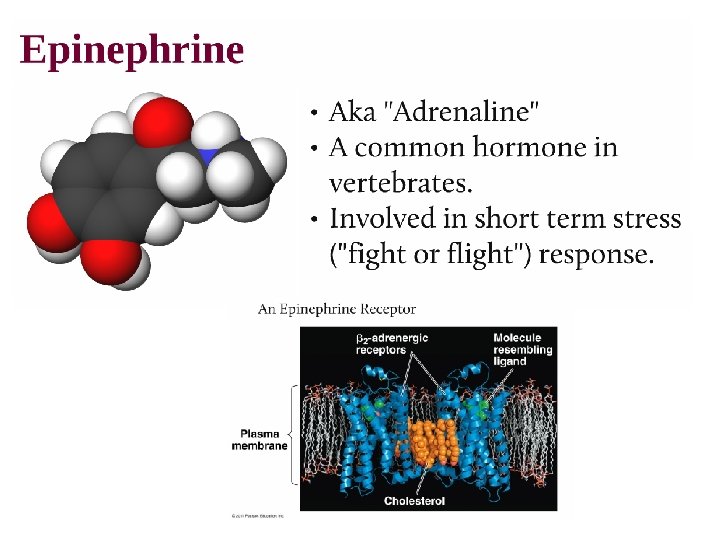
G protein-coupled receptor systems ONE TYPE OF MEMBRANE RECEPTOR: G-Protein coupled receptors (GPCR) • Many signaling molecules such as epinephrine, other hormones and neurotransmitters use GPCRs • G-proteins: proteins activated by the transfer of a phosphate from a molecule of GTP (an energy rich molecule like ATP).
G protein-coupled receptor systems • GPCR and G proteins are remarkably similar in structure – suggesting they evolved very early in the history of life • Widespread and diverse in their functions. Ex: These proteins are instrumental in human embryonic development, vision, and smell • Also play a role in human disease- bacteria that causes cholera, pertussis, and botulism make their victims ill by producing toxins that interfere with G-protein function. • Up to 60% of all medicines used today exert their effects by influencing G-protein pathways
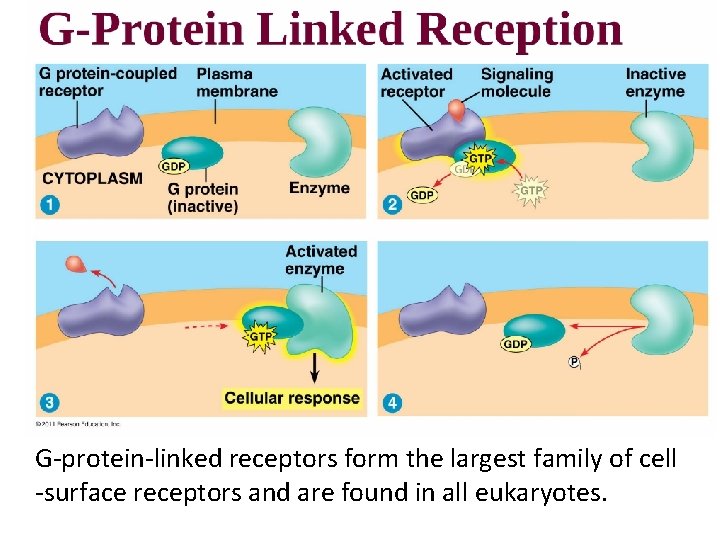
G-protein-linked receptors form the largest family of cell -surface receptors and are found in all eukaryotes.
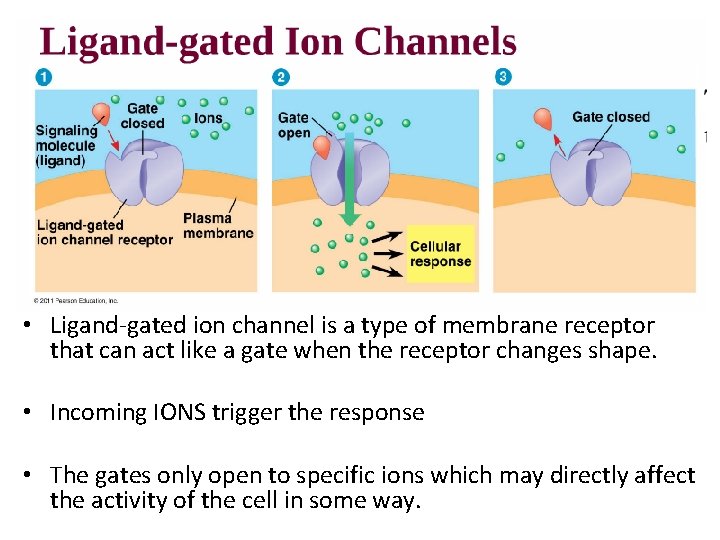
• Ligand-gated ion channel is a type of membrane receptor that can act like a gate when the receptor changes shape. • Incoming IONS trigger the response • The gates only open to specific ions which may directly affect the activity of the cell in some way.
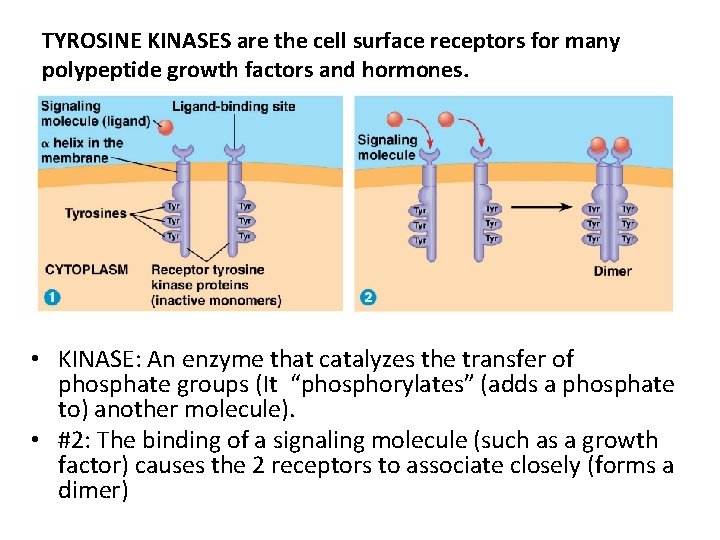
TYROSINE KINASES are the cell surface receptors for many polypeptide growth factors and hormones. • KINASE: An enzyme that catalyzes the transfer of phosphate groups (It “phosphorylates” (adds a phosphate to) another molecule). • #2: The binding of a signaling molecule (such as a growth factor) causes the 2 receptors to associate closely (forms a dimer)
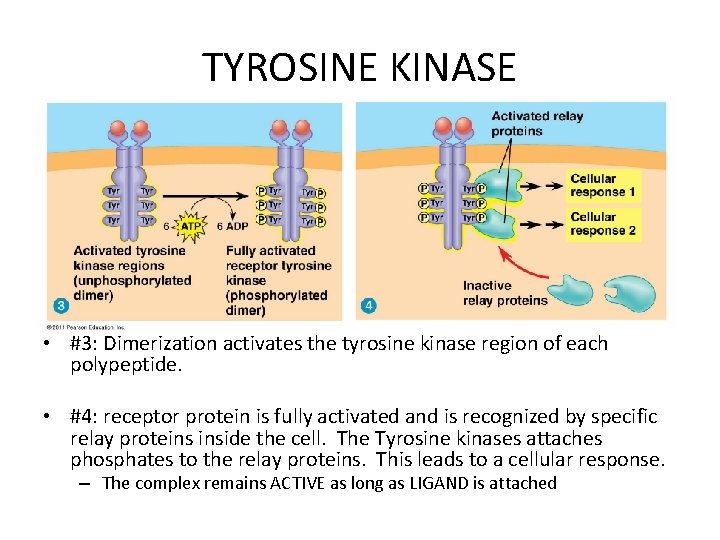
TYROSINE KINASE • #3: Dimerization activates the tyrosine kinase region of each polypeptide. • #4: receptor protein is fully activated and is recognized by specific relay proteins inside the cell. The Tyrosine kinases attaches phosphates to the relay proteins. This leads to a cellular response. – The complex remains ACTIVE as long as LIGAND is attached
Specific examples
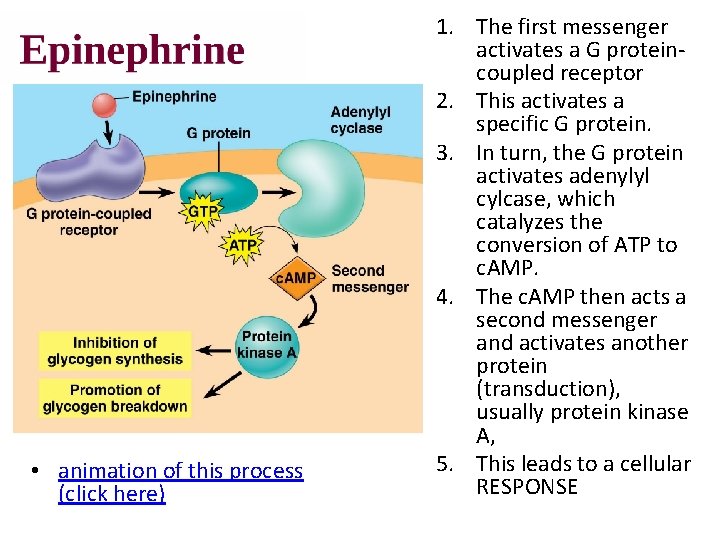
• animation of this process (click here) 1. The first messenger activates a G proteincoupled receptor 2. This activates a specific G protein. 3. In turn, the G protein activates adenylyl cylcase, which catalyzes the conversion of ATP to c. AMP. 4. The c. AMP then acts a second messenger and activates another protein (transduction), usually protein kinase A, 5. This leads to a cellular RESPONSE
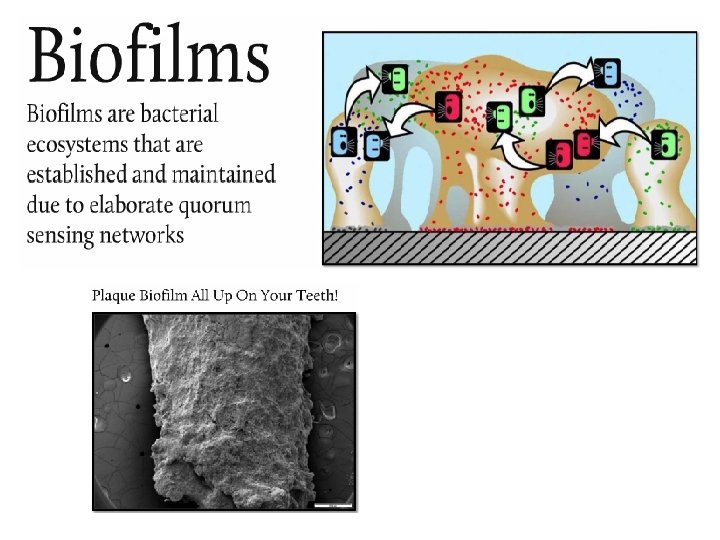
MORE EXAMPLES Why cells communicate? Multicellular examples: • Wound healing (click for animation) • APOPTOSIS- Programmed cell death Unicellular examples: • Yeast mating • Biofilms • Quorum sensing
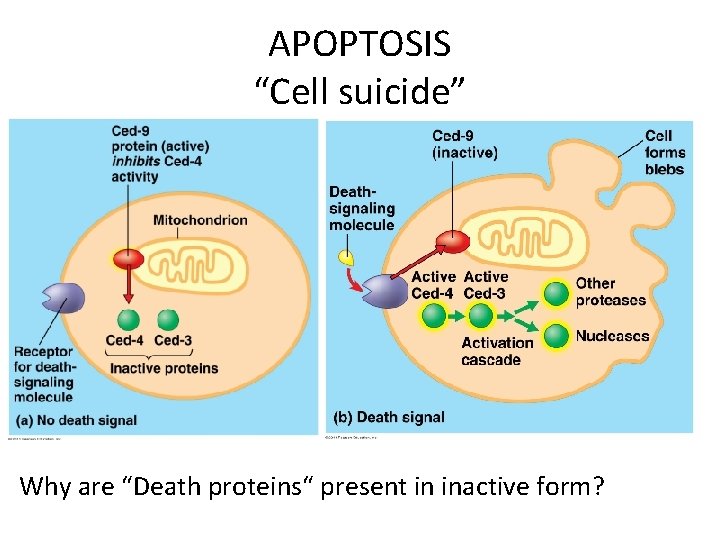
APOPTOSIS “Cell suicide” Why are “Death proteins“ present in inactive form?
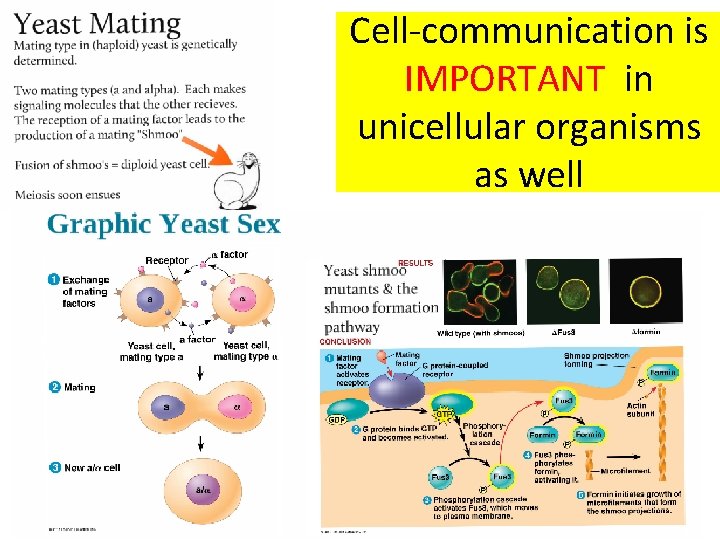
Cell-communication is IMPORTANT in unicellular organisms as well
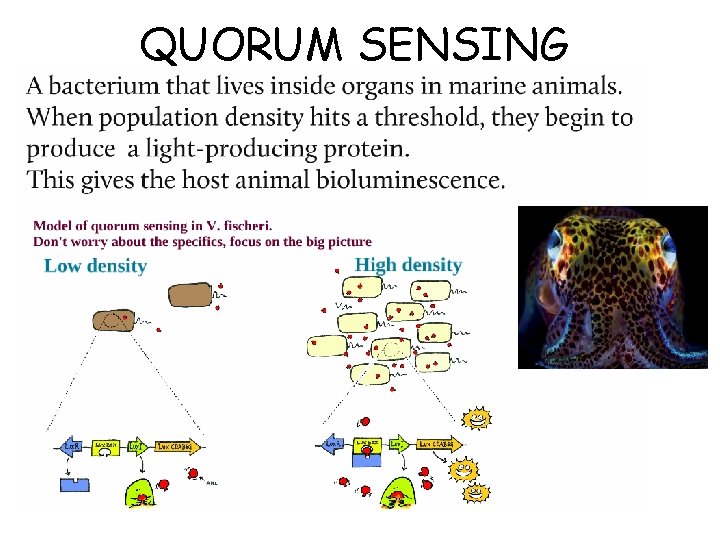
QUORUM SENSING
- Slides: 35